Whether you operate a small warehouse or a high‑bay DC, the question “is a walkie stacker a forklift?” matters for safety, training, and equipment selection. This article breaks down how walkie stackers fit into OSHA powered industrial truck definitions, how they differ from traditional forklifts in design and performance, and what that means for your applications and total cost of ownership. You will see where each machine excels in terms of capacity, maneuverability, and layout fit, so you can match the right powered industrial truck to your facility with confidence.
How Walkie Stackers Fit Into Forklift And PIT Standards
OSHA and ASME definitions of powered trucks
To answer “is a walkie stacker a forklift,” you first need the regulatory definition of a powered industrial truck (PIT). OSHA and ASME use broad language that clearly includes walk‑behind stackers.
| Standard / Term | Key wording | Implication for walkie stackers |
|---|---|---|
| ASME / OSHA – Powered industrial truck | Mobile, power‑propelled vehicle used to carry, push, pull, lift, stack, or tier materials; can be ridden or controlled by a walking operator; excludes earth‑moving and over‑the‑road vehicles definition excerpt | Walkie stackers are power‑propelled, mobile, and used to lift/stack loads while controlled by a walking operator → they meet the PIT definition. |
| OSHA 1910.178 scope | Applies to powered industrial trucks in general industry, maritime, and construction standard coverage | Walkie stackers used in these sectors fall under the same base standard as sit‑down forklifts. |
| Operator type | Operator may ride on the truck or walk and control it via a handle or controls walking operator language | Confirms that “pedestrian” or “walkie” equipment is still a powered industrial truck, not a lesser device. |
From an engineering and compliance standpoint, that means:
- Walkie stackers are powered industrial trucks, not just “fancy manual pallet jacks.”
- They are covered by OSHA 1910.178 training, operation, and maintenance rules.
- They must follow the same employer training and evaluation requirements as forklifts, even if the training content is shorter or simpler.
Training and certification obligations for walkie stackers
OSHA requires that only trained and evaluated operators use any powered industrial truck, including walkie stackers. The program must include formal instruction, practical training, and an evaluation of performance in the workplace training elements. Employers must certify each operator, keep records of training and evaluation dates, and provide refresher training after unsafe operation, incidents, or significant changes in truck type or workplace conditions refresher and certification rules.
This is the regulatory basis for treating walkie stackers as forklifts in many safety programs, even though their design and risk profile differ from ride‑on trucks.
Where walkie stackers sit in OSHA PIT classes
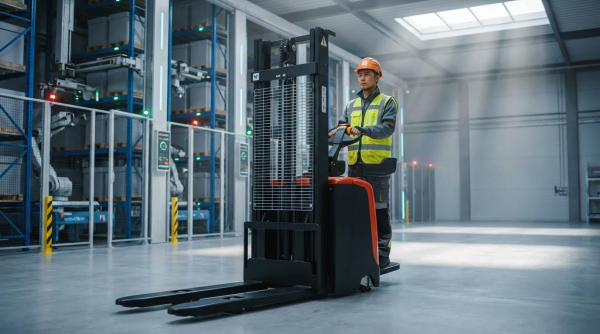
OSHA groups powered industrial trucks into seven classes based on power source, configuration, and typical application PIT classes. Understanding these classes clarifies where walkie stackers fit and why many people still ask “is a walkie stacker a forklift.”
Class IVInternal combustion engine trucks with solid/cushion tires for indoor floors Class IV traitsIC counterbalance forklifts (cushion tire)No overlap; these are ride‑on forklifts only.
| OSHA PIT class | Typical description | Examples | Walkie stacker relevance |
|---|---|---|---|
| Class I | Electric motor rider trucks; seated or stand‑up rider; no exhaust emissions Class I traits | Electric sit‑down counterbalance trucks | Not the usual category for walkie stackers; operators ride instead of walk. |
| Class II | Electric motor narrow aisle trucks for tight storage areas Class II traits | Reach trucks, order pickers | Some specialty pedestrian narrow‑aisle units can be specified here, but most walkie stackers are not Class II. |
| Class III | Electric motor hand trucks or hand/rider trucks Class III traits | Pallet jacks, walkie stackers, walkie/rider pallet trucks, small tow tractors | This is the primary class for walkie stackers; they are explicitly listed as “stackers.” |
| Class V | Internal combustion engine trucks with pneumatic tires for outdoor use Class V traits | Yard and construction forklifts (pneumatic tire) | No overlap; again, ride‑on counterbalance forklifts. |
| Class VI | Electric and IC tow tractors Class VI traits | Tuggers and tow tractors | Some small pedestrian tow units are Class III/VI hybrids, but not typical walkie stacker applications. |
| Class VII | Rough terrain forklifts with large off‑road tires, usually diesel Class VII traits | Construction and lumberyard rough‑terrain forklifts | No overlap with walkie stackers, which are indoor, smooth‑floor machines. |
Key takeaways for classification and policy:
- Walkie stackers are Class III powered industrial trucks.
- Class III explicitly includes “stackers” and other walk‑behind electric trucks Class III list.
- From OSHA’s perspective, Class III walkie stackers and sit‑down counterbalance forklifts are all PITs and all “forklifts” for training and enforcement purposes.
So is a walkie stacker a forklift under OSHA?
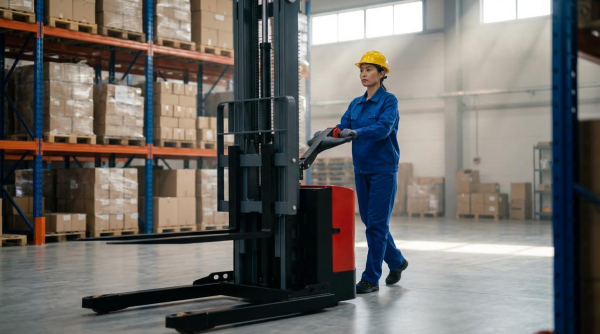
In everyday engineering language, many people distinguish “forklifts” (ride‑on counterbalance trucks) from “walkie stackers” (pedestrian stackers). But OSHA regulates by PIT class, not by shop slang. A walkie stacker is a Class III powered industrial truck with forks and a mast, used to lift and stack palletized loads. That puts it firmly within the family of forklifts for compliance, hazard analysis, and operator training, even though its operating envelope, speeds, and capacities differ from Class I, IV, or V rider trucks.
Engineering Differences: Walkie Stackers vs Forklifts
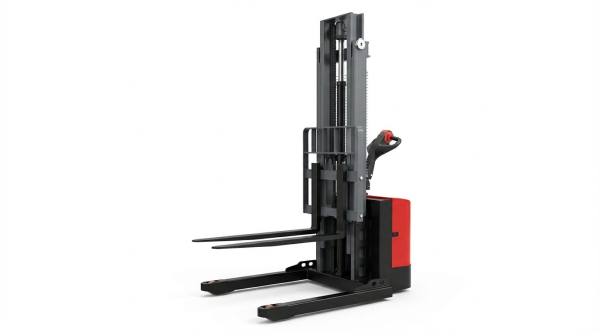
This section looks at the hard engineering differences that answer “is a walkie stacker a forklift” in real-world design terms. We compare structure, powertrain, and performance so you can match the right powered industrial truck to your layout, loads, and duty cycle.
Chassis, mast, and stability triangle design
From an engineering standpoint, walkie stackers and counterbalanced forklifts both follow the same basic stability physics, but the way they achieve it is very different. That difference is a big part of why many people ask “is a walkie stacker a forklift” even though both fall under powered industrial trucks.
| Design Aspect | Typical Walkie Stacker | Typical Counterbalanced Forklift | Practical Impact |
|---|---|---|---|
| Operator position | Walking behind or alongside, using a tiller handle (pedestrian control) | Seated (or standing) on board, steering wheel and pedals (rider truck) | Walkie stackers move at walking speed; forklifts can travel faster in larger facilities. |
| Chassis layout | Very compact, short wheelbase, straddle or outrigger legs under/around pallet | Longer wheelbase, solid counterweight at rear, no outriggers | Walkies excel in tight aisles; forklifts offer higher stability with heavier loads. |
| Stability triangle | Triangle defined by drive wheel and outrigger load wheels; load kept close to mast | Triangle defined by front drive/load wheels and rear steer axle pivot | Both rely on keeping the combined center of gravity inside this triangle. |
| Mast type and height | Simple 2‑ or 3‑stage masts, usually limited to about 10 ft lift height (approximate) | Heavier masts, multi‑stage, commonly up to ~30 ft or more | Forklifts support high‑bay racking; walkies are aimed at low to mid‑level stacking. |
| Structural mass | Lighter overall truck, smaller counterweight or reliance on outriggers | Heavy counterweight block sized to rated capacity and lift height | Forklifts tolerate more dynamic loading and outdoor conditions. |
| Turning geometry | Steers at drive wheel via tiller; pivot close to operator | Steers at rear axle; larger outside turning radius | Walkies can rotate in very narrow aisles; forklifts need more clearance. |
Walkie stackers are engineered to minimize truck length and overall mass so they can operate in narrow aisles and confined indoor spaces. Their stability comes from keeping the load close to the mast and using outriggers to widen the support base instead of a massive rear counterweight. Forklifts, by contrast, use a heavy counterweight and longer wheelbase to extend the stability triangle for higher loads and greater lift heights.
Why the stability triangle still matters on walkie stackers
Even though walkie stackers are smaller and slower, the same overturn risks apply as on a forklift. Turning with an elevated load, operating on ramps, or side‑loading pallets shifts the combined center of gravity toward the edge of the stability triangle. The shorter wheelbase and lighter mass of a walkie stacker leave less margin if operators misuse the equipment, which is one reason most models are limited to walking speed and indoor, flat floors.
Powertrain, batteries, and duty cycles
Both walkie stackers and many warehouse forklifts use electric powertrains, but they are sized for very different duty cycles. When you ask “is a walkie stacker a forklift” from a power and utilization standpoint, the answer is that walkies are engineered for lighter, shorter shifts and lower throughput.
| Powertrain Aspect | Walkie Stacker | Forklift (warehouse type) | Operational Effect |
|---|---|---|---|
| Power source | Almost always electric, low to moderate capacity battery (indoor focus) | Electric for indoor; internal combustion options for mixed or outdoor use (various PIT classes) | Walkies favor clean, quiet, low‑energy tasks; forklifts cover heavier and outdoor work. |
| Traction motor sizing | Smaller motors sized for walking speed and light gradients | Larger motors or engines for higher travel speeds and ramps | Forklifts move more pallets per hour over longer distances. |
| Hydraulic system | Compact pump and valves sized for modest lift heights | Higher‑capacity hydraulics for rapid lift at greater heights | Forklifts maintain lift speed even with heavy loads near max height. |
| Typical duty cycle | Intermittent use, short runs, frequent starts/stops in tight aisles (small to medium warehouses) | Continuous or near‑continuous use across full shifts | Forklifts are better for high‑throughput, multi‑shift operations. |
| Noise and emissions | Very quiet, zero local emissions indoors (suitable for noise‑sensitive areas) | Electric units similar; engine units generate noise and exhaust | Walkies are ideal where air quality and noise are critical. |
| Operating cost profile | Lower energy use, smaller batteries, simpler maintenance (reduced operating costs) | Higher energy consumption and more complex service, especially with engines | Walkies minimize total cost of ownership for lighter applications. |
- If your operation runs short, intermittent tasks in a compact indoor area, a walkie stacker powertrain is usually sufficient.
- If you need continuous pallet moves, long travel distances, or outdoor loading, a higher‑powered forklift platform is engineered for that workload.
- Trying to use walkie stackers for forklift‑level duty cycles often leads to overheating, premature component wear, and battery life issues.
Training and control feel
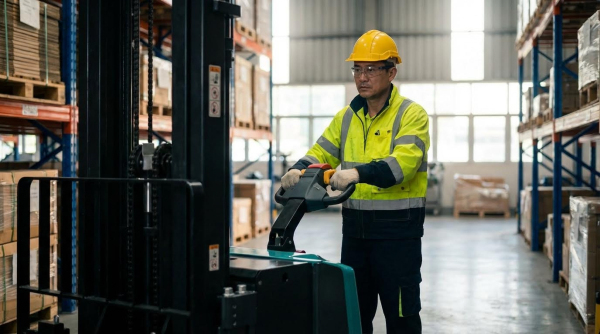
Walkie stackers use intuitive tiller controls and travel at walking speed, which keeps training time short and reduces risk for new operators (ease of operation). Forklifts, with higher speeds and more mass, require formal operator training and certification under powered industrial truck standards to manage momentum, visibility, and load handling safely (training requirements).
Capacity, lift height, and aisle width performance
This is where the engineering intent behind each machine becomes very clear. If you are asking “is a walkie stacker a forklift in terms of what it can lift and where it can work,” the numbers show that walkies are optimized for compact, moderate‑capacity indoor tasks, while forklifts cover heavier, higher, and more open layouts.
| Performance Metric | Walkie Stacker (typical) | Forklift (typical) | Application Impact |
|---|---|---|---|
| Rated load capacity | ≈ 2,000–4,000 lb (typical range) | ≈ 3,000–50,000 lb depending on truck class and model (wide range) | Forklifts handle heavier pallets, bulky loads, and attachments. |
| Maximum lift height | Up to ≈ 10 ft in many models (approximate) | Commonly up to ≈ 30 ft or more | Walkies work for floor‑level and low racking; forklifts support high‑bay storage. |
| Minimum practical aisle width | Very narrow; engineered for tight aisles and confined areas (compact design) | Requires wider aisles; better suited to larger warehouses and yards (larger footprint) | Walkies maximize storage density; forklifts trade space for speed and capacity. |
| Typical environment | Indoor, smooth floors, short runs between racks or staging (indoor suitability) | Indoor and outdoor, docks, yards, rougher surfaces (versatility) | Forklifts integrate truck loading, yard moves, and racking in one unit. |
| Maneuverability | High, thanks to compact length and walk‑behind steering (tight spaces) | Moderate; better in open aisles and outdoor areas | Walkies reduce the risk of infrastructure damage in cramped layouts. |
- Use Matching Equipment To Application And TCO
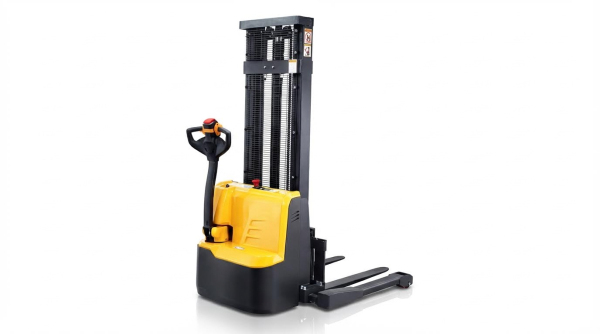
Facility layout, throughput, and load profile
Before you ask “is a walkie stacker a forklift for my facility?”, match the truck to your building, flow, and loads. Layout, throughput, and load profile usually decide the winner long before price.
Design / Operating Factor Walkie stacker best fit Forklift best fit Typical facility size Small to mid-size warehouses, retail backrooms, production cells designed for small to medium-sized warehouses Medium to very large sites, yards, docks, outside storage Aisle width / space Very tight aisles and confined areas; compact chassis and walk‑behind operation operate efficiently in narrow aisles Standard or wide aisles; more turning radius needed, but higher travel speed Travel distance per move Short runs between nearby storage, machines, or staging points Long horizontal runs across large facilities or between buildings Throughput (pallets/hour) Low to moderate throughput where walking speed is acceptable Moderate to very high throughput; seated operator and higher speed boost productivity forklifts are powerful machines capable of handling heavy loads and high volumes Load weight About 2,000–4,000 lb typical range walkie stackers generally support 2,000–4,000 lb Heavy loads; often 5,000 lb and much higher when required forklifts can handle significantly heavier loads Lift height Low to medium racking, roughly up to ~10 ft lift heights up to approximately 10 feet High-bay racking; up to ~30 ft or more depending on truck reach lift heights of up to 30 feet or more Operating environment Indoor, smooth floors, temperature‑controlled; noise‑sensitive or emission‑sensitive areas emission-free and ideal for indoor environments Mixed indoor/outdoor, docks, rougher surfaces, or yards forklifts navigate rough terrain and outdoor environments Staff turnover / skill level High‑turnover operations; simple controls and quick onboarding intuitive controls that require minimal training Stable workforce where formal operator training and certification are feasible When you evaluate “is a walkie stacker a forklift replacement for this task?”, start with three quick checks.
- Can it physically reach? If your top beam is above ~10 ft or your loads regularly exceed ~4,000 lb, you are in forklift territory.
- Can it safely maneuver? If your clear aisle plus clearance is under typical sit‑down forklift requirements, a walkie stacker’s compact footprint is often safer and faster.
- Does walking speed support your takt time? In very high‑throughput, long‑run applications, a rider forklift usually wins on labor cost per pallet moved.
Example application mapping
Best for walkie stackers: replenishing point‑of‑use racks on a production line, handling pallets in a back‑of‑store stockroom, or feeding a small cooler/freezer with tight aisles. Best for forklifts: truck loading at busy docks, serving high‑bay storage, or moving heavy pallets between buildings and outdoor yards.
Safety, training, and compliance considerations
From a regulatory standpoint, both walkie stackers and forklifts are powered industrial trucks. OSHA and ASME treat them under the same powered truck framework, so the “is a walkie stacker a forklift” question does not remove your compliance duties, it only changes how you meet them.
- Regulatory category: Walkie stackers fall under electric hand or hand/rider trucks within powered industrial trucks, alongside pallet jacks and similar equipment electric-powered hand trucks or hand/rider trucks available as stackers and pallet jacks. Forklifts span multiple powered truck classes depending on tire type, power source, and terrain.
- OSHA coverage: Both are covered by the powered industrial truck standards for general industry, maritime, and construction powered industrial truck standards cover general industry.
- Training requirement: Employers must run a formal training and evaluation program before allowing operators to use either type of truck only trained operators who have successfully completed the program may operate powered industrial trucks.
Safety / compliance aspect Walkie stacker Forklift Intrinsic risk level Lower kinetic energy (walking speed, smaller mass); operator alongside load; often perceived as “safer” when used correctly move at walking speed, reducing accident risk Higher speeds and heavier trucks increase potential severity of incidents forklifts pose higher risks due to their speed and size Required operator training depth OSHA still requires PIT training, but practical skill acquisition is usually faster and simpler; often minimal site‑specific instruction beyond core PIT topics walkie stackers require minimal training More extensive training and evaluation; multiple load types, attachments, surfaces, and traffic conditions to master training must include truck-related and workplace-related topics Refresher training triggers Same OSHA rules: unsafe operation, incidents or near misses, change in truck type, or changed workplace conditions require refresher training and re‑evaluation refresher training is required when conditions or performance change Certification records Employer must document operator name, training date, evaluation date, and trainer identity for any powered industrial truck, including walkie stackers and forklifts employers must certify that operators have been trained and evaluated Typical safety advantages Better visibility around the load; immediate stop by releasing controls; lower approach speed in congested areas operators can quickly stop the machine when walking behind it More stable with heavy, high loads when properly rated; enclosed operator area can add protection in some environments From a total cost of ownership (TCO) perspective, safety and training flow straight into your budget.
- Training cost and time: Walkie stackers usually mean shorter training sessions and faster cross‑training, which helps when turnover is high. Forklifts demand longer, more formal training and periodic refreshers.
- Incident cost: The lower mass and speed of walkie stackers can reduce the severity of impacts, but they still cause serious injuries if misused. Forklift incidents tend to be more expensive in damage, downtime, and claims.
- Compliance risk: Treat both as powered industrial trucks in your written program, inspections, and recordkeeping. Misclassifying a walkie stacker as “just a pallet mover” is a common mistake that increases regulatory and liability risk.
When you decide whether a walkie stacker is a forklift alternative for your site, combine the engineering fit with these safety and compliance costs. The lowest purchase price is rarely the lowest lifetime cost if the truck is mismatched to your layout, loads, or workforce.
“”
Final Considerations When Choosing Walkie Stackers Or Forklifts
Walkie stackers and forklifts share the same regulatory status as powered industrial trucks, but they solve different engineering problems. Walkie stackers use compact frames, outriggers, and modest powertrains to excel in tight, indoor layouts with moderate loads and lift heights. Forklifts use heavier structures, longer wheelbases, and higher‑capacity powertrains to handle taller racking, heavier pallets, longer runs, and mixed indoor–outdoor work.
These design choices drive safety behavior. Shorter wheelbases and lighter trucks reduce energy but also narrow the stability margin if operators misuse the equipment. Higher‑capacity forklifts tolerate tougher conditions yet create higher incident severity when things go wrong. In every case, OSHA still expects full PIT training, written programs, and documented evaluations, whether the truck is a walkie stacker or a rider forklift.
For operations and engineering teams, the best practice is clear. Start with geometry, loads, and travel distance, then overlay duty cycle, staffing, and training realities. Select the smallest, lowest‑energy truck that safely meets reach, capacity, and throughput targets. Treat every unit as a powered industrial truck in your safety system. When in doubt, engage a specialist or a supplier like Atomoving to validate stability, capacity, and lifecycle cost before you buy.
Frequently Asked Questions
Is a walkie stacker considered a forklift?
A walkie stacker is indeed considered a type of forklift. Specifically, it falls under Class III forklifts, which include electric motor hand trucks or hand/rider trucks OSHA Forklift Classes. Walkie stackers are compact and versatile machines commonly used in warehouses and storage facilities.
What is the difference between a walkie stacker and a forklift?
A walkie stacker is a type of forklift designed for light to medium loads, typically up to 2 tons, and is ideal for small warehouses. In contrast, traditional forklifts are more powerful, built for heavy-duty lifting of 1–5+ tons, and are suitable for larger warehouses, factories, or outdoor areas Stacker vs Forklift Guide.
- Walkie stackers are operated by walking behind the machine.
- Traditional forklifts often have a seat for the operator.
Why is it called a walkie stacker?
The term “walkie stacker” comes from the way these machines are operated—by walking with them while directing movement via their handle. This is why they are also referred to as “walk-behind forklifts” or “walk-behind stackers” Walkie Stacker Uses.