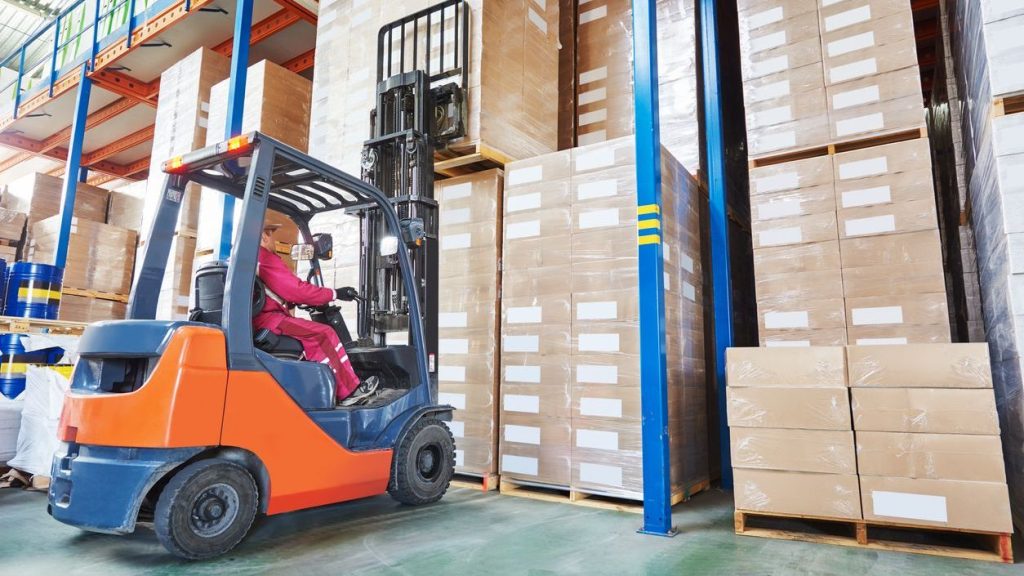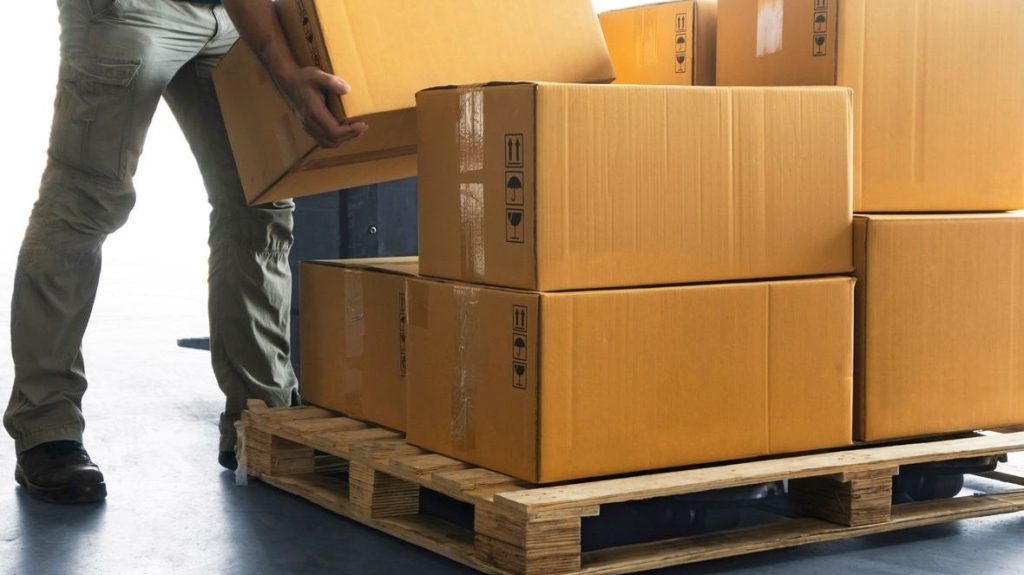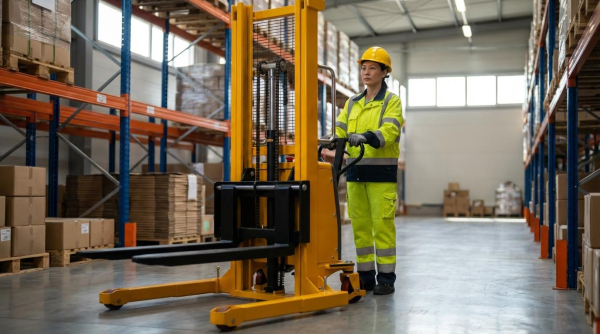
If you work around pallets, racking, and tight aisles, you have probably asked yourself “what is a counterbalanced stacker” and how it really differs from a straddle stacker or a counterbalance forklift. This guide breaks down how each machine is built, where it is strongest, and what that means for safety, capacity, and aisle design. You will see typical capacities, lift heights, and duty cycles side by side so you can match the right machine to your loads and layout. By the end, you will be able to specify equipment with confidence instead of guessing from spec sheets.
What A Counterbalanced Stacker Is And How It Works
Core design and counterweight principle
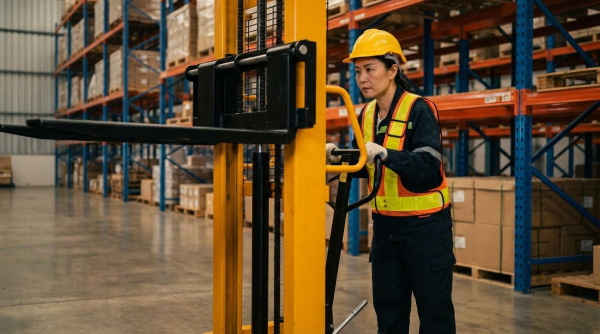
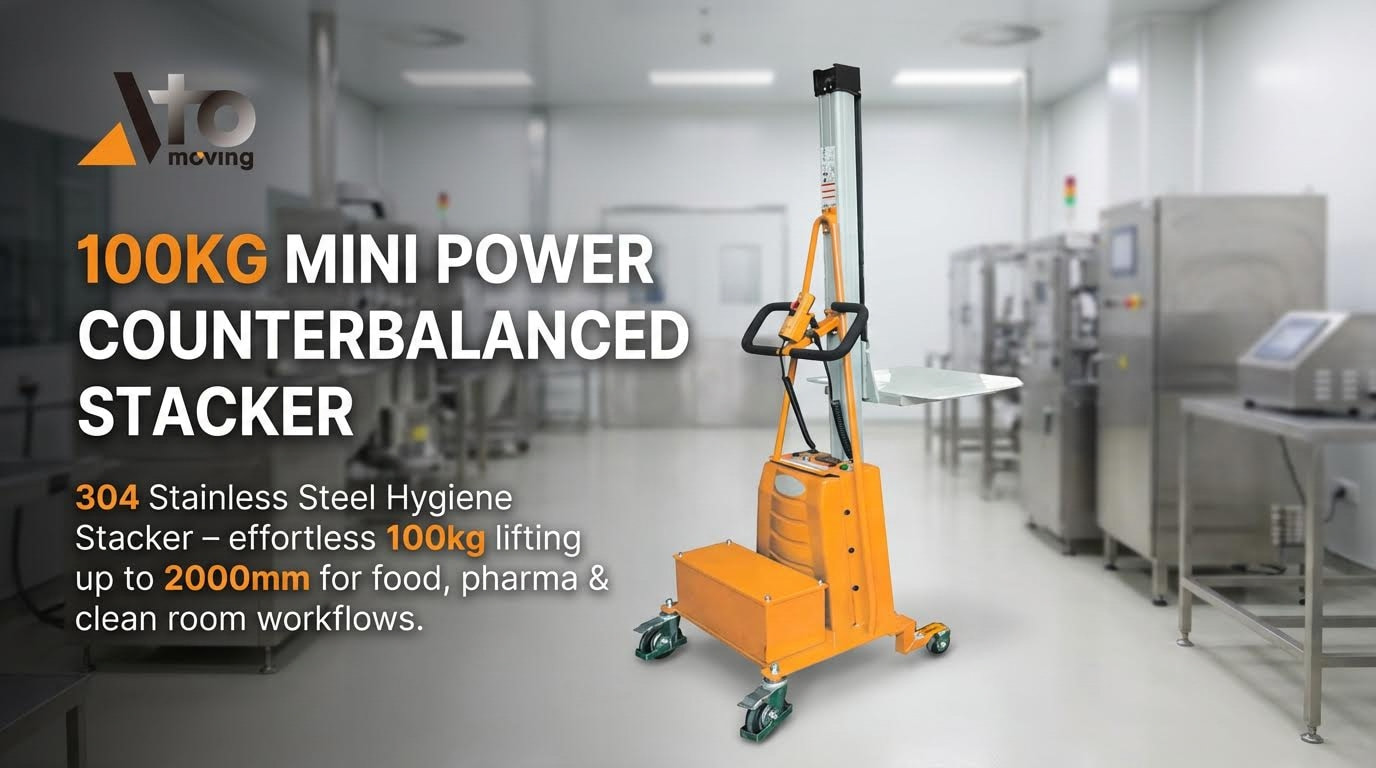
If you are asking “what is a counterbalanced stacker,” you are looking at a walk-behind or ride-on pallet stacker with a built‑in counterweight instead of outrigger legs. It is designed to lift and stack palletized loads in tight warehouse or production areas where a full forklift is not practical. The machine uses the same basic physics as a counterbalance forklift but in a smaller, simpler package. Understanding the core components makes it easier to specify the right unit for your layout and loads.
- Compact chassis with a power unit and counterweight at the rear
- Vertical mast with lift chains or cylinders to raise and lower the forks
- Standard forks that enter the pallet like a small forklift
- Tiller or control handle for steering, travel, lift, and lower
- Drive system that can be manual, semi‑electric, or fully electric designed for confined spaces
The “counterbalanced” part comes from the heavy mass in the rear of the chassis. That counterweight offsets the load on the forks so the combined center of gravity stays inside the wheelbase. When you pick up a pallet, the load tries to tip the machine forward around the front axle. The rear counterweight produces an opposite moment, keeping the machine stable as long as you stay within the rated capacity and keep the mast reasonably vertical.
Unlike a straddle stacker, there are no front outriggers under or beside the pallet. This lets a counterbalanced stacker handle closed‑bottom pallets, stillages, and small racks that straddle legs cannot enter. The trade‑off is that the truck must be heavier for the same capacity, and operators must respect the stability limits just as they would with a small counterbalance forklift.
Key operating steps (high level)
- Approach the pallet square with forks at the correct entry height.
- Drive in until the pallet is fully on the forks.
- Lift just enough to clear the floor, then travel with the load low.
- Position in front of the rack or stack and raise to the required height.
- Place the load, lower the forks, and back straight out.
Typical capacities, lift heights, and duty cycles
Most users asking “what is a counterbalanced stacker good for” really want to know how much it can lift, how high, and for how long in a shift. Counterbalanced stackers sit in the light‑ to medium‑duty range between manual equipment and full counterbalance forklifts. They are optimized for short travel distances, intermittent lifting, and narrow aisles.
| Parameter | Typical counterbalanced stacker range | Typical counterbalance forklift range (for context) |
|---|---|---|
| Rated capacity | 1,000–2,500 kg (approx. 2,200–5,500 lb) light to medium duty | 1,000–>20,000 kg (2,200–>44,000 lb) heavy duty for heavy materials |
| Typical lift height | Up to about 3–4 m (10–13 ft) for most models suited to low/medium racking | Up to ~10 m (33 ft) or more for high‑bay storage in tall warehouses |
| Duty cycle | Intermittent: low to moderate hours per shift, shorter travel, frequent short lifts | Continuous: multiple shifts, long travel runs, high lift frequencies |
| Typical application profile | Production cells, small warehouses, point‑of‑use storage, occasional truck loading | Bulk loading, high‑bay racking, outdoor yards, heavy manufacturing |
In real operations, a counterbalanced stacker usually runs in one or two shifts with breaks between tasks, not nonstop. Electric versions are sized for this duty cycle with battery capacities that support several hours of active use and then recharging. Manual or semi‑electric units rely more on operator input and suit very low‑throughput areas.
- Best suited to loads comfortably inside the nameplate rating, not at the extreme limit.
- Most efficient when lift heights stay in the low‑ to mid‑racking levels (first 2–3 beam levels).
- Ideal where you need forklift‑style access to pallets but want lower cost and simpler training than a full truck.
- Less suitable for continuous dock work, long travel runs, or high‑bay storage where a counterbalance forklift is more appropriate.
When you define “what is a counterbalanced stacker” in a spec sheet, you should always pair the capacity and lift height with the intended duty cycle. Matching all three to your real‑world usage prevents premature wear, overheating, and battery issues, and it keeps stability margins where they need to be for safe operation.
Technical Comparison: Counterbalanced Stacker Vs Straddle Stacker Vs Counterbalance Forklift
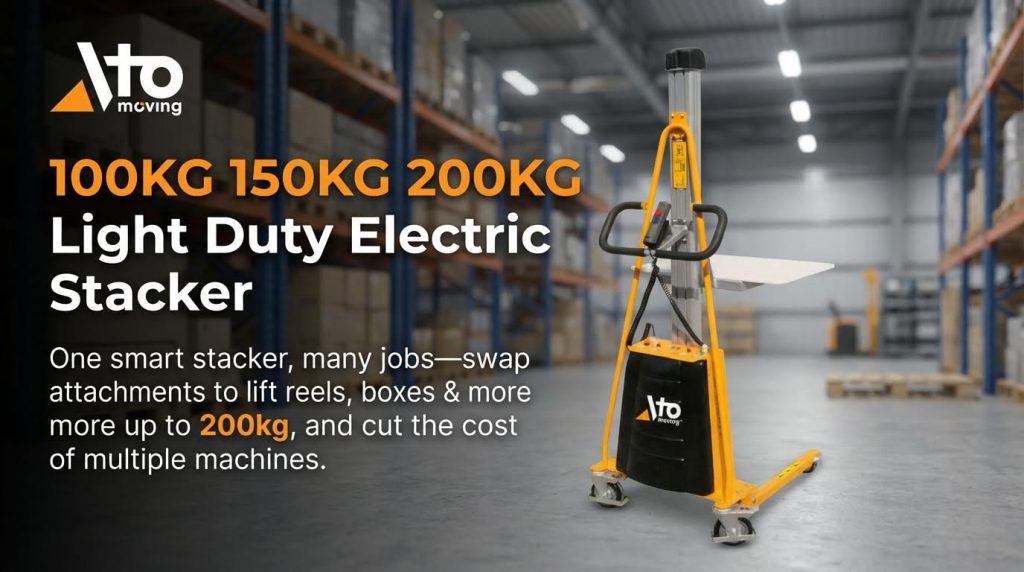
This section compares how the three machines are built, how they behave in real aisles, and what they demand from your power and maintenance budget. If you are asking what is a counterbalanced stacker in practical terms, this is where the differences become clear in day‑to‑day warehouse use.
Mast, chassis, and load support differences
The three machine types share the same basic job—lifting pallets—but their structures are very different. Those structural choices drive where each one works best and how much floor space they need.
| Feature | Counterbalanced stacker | Straddle stacker | Counterbalance forklift |
|---|---|---|---|
| Basic answer to “what is a counterbalanced stacker” | Compact pedestrian or ride-on truck with rear counterweight; forks cantilever out in front like a small forklift Cited Text or Data | Pedestrian stacker with outrigger “straddle” legs that go each side of the pallet Cited Text or Data | Ride-on industrial truck with large rear counterweight and drive axle, forks project ahead of front wheels Cited Text or Data |
| Mast design | Simple 2‑stage or 3‑stage mast, typically to 3–4 m lift height for warehouse racking Cited Text or Data | Similar 2‑stage or 3‑stage mast; optimized for vertical lifting of lighter goods to high racks Cited Text or Data | Heavier mast sections, often 3–4 stages, reaching up to ~10 m or more in high‑bay storage Cited Text or Data |
| Chassis / frame | Short wheelbase; rear counterweight in or around battery compartment; walk‑behind or platform type | Chassis extended by two low outriggers that carry front load wheels; battery and drive unit central | Larger, automotive‑style chassis; operator seat and overhead guard; front drive axle and steer axle at rear |
| Load support method | Load is supported only by forks and mast; no legs under the pallet, so it can straddle closed‑bottom pallets and block stacks | Outrigger legs support most of the load; forks sit between legs and usually require open‑bottom pallets or clearance under the load | Load supported only by forks and mast, similar to counterbalanced stacker but at much higher capacities |
| Typical capacity range | ~1,000–2,500 kg for light to medium‑duty work Cited Text or Data | Several hundred kilograms to about 1,000 kg for lighter goods Cited Text or Data | ~1,000 kg up to >20,000 kg for heavy materials handling Cited Text or Data |
| Typical use case | Stacking and short‑shuttle moves in confined warehouse aisles where a full forklift is overkill | High‑rack storage of lighter goods where outriggers can run under racks and between pallet legs | Loading trucks, yard work, long horizontal moves, and heavy pallet stacking indoors and outdoors |
Key structural takeaways
- If you need to handle closed‑deck pallets or block‑stacked loads in tight aisles, a counterbalanced stacker’s cantilever forks are a major advantage.
- If floor loading is a concern and pallets are light, a straddle stacker’s outriggers spread the load better.
- If you must lift very heavy loads or go to high‑bay racking, the counterbalance forklift’s heavier mast and frame are the correct tool.
Stability, aisle width, and turning radius
Stability and maneuverability are where the three designs separate most clearly. The combination of wheelbase, counterweight position, and outrigger legs defines how narrow your aisles can be and how forgiving the machine is to operator error.
| Criterion | Counterbalanced stacker | Straddle stacker | Counterbalance forklift |
|---|---|---|---|
| Primary stability mechanism | Rear counterweight plus wheelbase form a small “stability triangle” similar to a forklift, but scaled down | Wide outrigger legs create a broad base under the load, improving lateral stability for light pallets | Large stability triangle between front drive axle, steer axle, and counterweight; designed for high loads |
| Typical lift height range | Up to ~3–4 m for racking in low to medium warehouses Cited Text or Data | Designed for vertical lifting of lighter cargo into high racks; commonly used in dense storage Cited Text or Data | Up to ~10 m or more in high‑bay warehouses Cited Text or Data |
| Aisle width requirement (qualitative) | Very narrow compared with forklifts; optimized for confined warehouse aisles and short turns | Also suited to very narrow aisles, but outriggers need clearance around racking, pallets, and floor obstacles | Widest aisle requirement of the three, especially at higher capacities due to longer wheelbase and swing radius |
| Turning radius (qualitative) | Small; walk‑behind steering allows tight pivoting at low speeds | Small to moderate; outriggers can restrict pivoting close to obstacles | Larger; truck body and counterweight swing require more clearance in cross‑aisles and intersections |
| Outdoor suitability | Best on smooth, level floors; small wheels are not ideal for rough yards | Primarily indoor; outriggers and small castors are vulnerable on uneven surfaces | Designed for both indoor and outdoor work, including ramps and uneven yards Cited Text or Data |
| Operator stability considerations | Pedestrian operator walks close to the load; low travel speed reduces kinetic energy but demands good training on the stability triangle and center of gravity Cited Text or Data | Very stable in vertical lifts of light loads; outriggers reduce risk of side tip‑over when used correctly | High mass and speed mean tip‑overs are more severe; operators must understand the stability triangle and safe load handling Cited Text or Data |
- If you are trying to decide what is a counterbalanced stacker good at, think “tight aisles, smooth floors, and moderate lift heights.”
- If your layout is extremely dense and loads are light, a straddle stacker’s outriggers let you run even closer to racking.
- If you need to combine long travel distances, ramps, and outdoor loading, only a counterbalance forklift will be stable enough at speed.
Power options, batteries, and maintenance demands
Powertrain and maintenance needs also differ sharply. Energy use, charging infrastructure, and component complexity should match your duty cycle and budget.
| Aspect | Counterbalanced stacker | Straddle stacker | Counterbalance forklift |
|---|---|---|---|
| Typical power source | Manual, semi‑electric, or fully electric battery power for lift and drive Cited Text or Data | Mainly electric, with battery‑powered lift and travel for indoor use | Electric, LPG, diesel, or gasoline depending on environment and load; highly versatile across applications Cited Text or Data |
| Energy use and duty cycle | Optimized for light to medium‑duty, intermittent use over a shift; lower energy consumption than forklifts | Similar or slightly lower energy use than counterbalanced stackers, because loads are lighter | Designed for continuous, heavy‑duty shifts, including multi‑shift operations with battery change or refueling |
| Maintenance complexity | Relatively simple; fewer mechanical systems and lower operating stresses mean reduced maintenance demands Cited Text or Data | Also simple; focus is on hydraulic system, mast, and battery care | Most complex: engine or high‑capacity electric systems, transmission, hydraulics, steering, and braking all require scheduled service |
| Typical maintenance tasks | Battery checks, charger inspection, hydraulic oil level, chain and mast inspection, brake and wheel checks | Same as counterbalanced stacker, plus inspection of outrigger wheels and leg alignment | In addition to stacker tasks: engine or motor servicing, cooling systems, fuel system, and more extensive brake and steering checks |
| Cost profile | Lower purchase and maintenance cost than forklifts; ideal where budgets are tight and loads are moderate Cited Text or Data | Generally lowest cost option if loads and lift heights stay within limits | Highest capital and maintenance cost, but justified where heavy loads, long runs, and high lifts are daily needs |
- If you run single‑shift, light to medium‑duty warehouse work, counterbalanced or straddle stackers keep both energy and maintenance costs down.
- If your operation runs multiple shifts, outdoors, or on ramps, the higher maintenance overhead of a counterbalance forklift is often unavoidable.
Where Each Machine Fits And How To Specify The Right One
Matching equipment to load, height, and aisle layout
If you are asking “what is a counterbalanced stacker” in practical terms, the real question is where it fits versus a straddle stacker or a counterbalance forklift. The right choice depends on three hard constraints: load, lift height, and aisle geometry. Get those wrong and no amount of operator skill will fix the mismatch.
Use the following quick-fit matrix as a starting point before you dive into detailed specs.
Equipment type Typical load range Typical lift height Best aisle width / space Typical duty Counterbalanced stacker ≈ 1,000–2,500 kg (light–medium duty) Up to ≈ 3–4 m (low–medium racking) Narrow aisles, confined spaces (good maneuverability) Occasional to regular internal moves and stacking Straddle stacker Several hundred kg to ≈ 1,000 kg (light duty) Low–medium racking (often similar to stackers) Very narrow, dense storage (high vertical space use) Occasional stacking in compact rack areas Counterbalance forklift ≈ 1,000 kg up to > 20,000 kg (light to very heavy duty) Up to ≈ 10 m or more (high-bay) Wider aisles, docks, indoor/outdoor yards Continuous, high-throughput handling and loading This table already shows why knowing what is a counterbalanced stacker is only step one. The next step is mapping your loads and building to the right machine envelope.
Step-by-step selection checklist
Use this sequence to narrow down the right equipment for a given application.
- Define the heaviest real load (pallet + product + packaging + attachments). Add at least 10–20% safety margin.
- Measure the top storage height (floor to top pallet position) and add clearance for fork thickness and safe placement.
- Measure clear aisle width between racking, posts, and obstacles, not just drawing dimensions.
- Classify duty cycle: shifts per day, lifts per hour, average travel per move.
- Note pallet type and load shape: closed/open boards, overhang, drums, stillages, etc.
- Identify floor and ramp constraints: gradients, thresholds, dock plates, surface condition.
- Check access paths: door widths, low beams, tight turns into the racking runs.
Once you have this data, you can match each environment to the best machine type.
- Choose a counterbalanced stacker when you handle up to roughly 2,500 kg, lift to about 3–4 m, and must work in relatively narrow internal aisles without the legs of a straddle design getting in the way.
- Choose a straddle stacker when your loads are lighter (up to about 1,000 kg), pallets are standard, and you want maximum stability and space use in very narrow, dense racking.
- Choose a counterbalance forklift when you need much higher capacities, higher lift, outdoor operation, or frequent loading of vehicles and containers.
In short, the counterbalanced stacker sits between the light, very compact straddle stacker and the heavier, more versatile forklift, filling the gap for medium loads in confined indoor spaces.
Safety, standards, and operator training factors
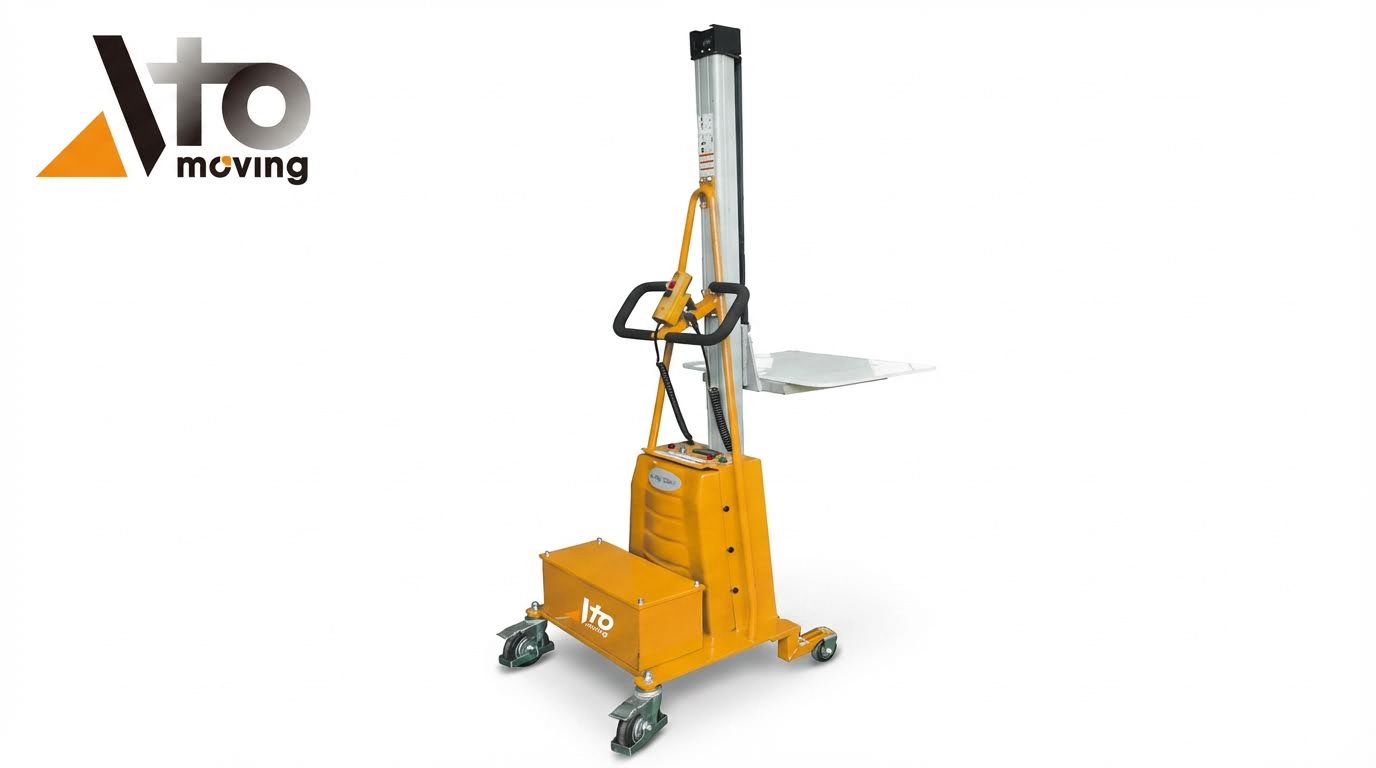
Even if a machine “fits” on paper for load and aisle width, you still need to check safety, standards, and operator competence. These points often drive the final choice between a stacker and a forklift.
- Equipment condition and inspections
- Plan regular maintenance and safety checks for all stackers and forklifts. Routine inspections are essential for safe stacker operation.
- Take defective units out of service immediately and tag them clearly.
- Operator training and licensing
- Provide formal training for stacker operators on safe handling, emergency procedures, and correct use of each control. Training and certification are required for safe stacker use.
- For counterbalance forklifts, ensure operators hold the required certification and that recertification is done regularly. OSHA specifies training and certification requirements for forklift operators.
- Stability and load handling
- Teach operators the stability triangle and center-of-gravity concepts, especially on counterbalance forklifts, to avoid tip-overs. Understanding the stability triangle is crucial for safe forklift operation.
- Set clear rules for travel speed, cornering, and maximum lift height when travelling.
- Warehouse layout and markings
- Mark pedestrian routes, emergency exits, and height limits clearly. Good work area arrangement is critical for safe stacker use.
- Remove floor obstacles and ensure adequate lighting at rack faces and intersections.
- PPE and ergonomics
- Provide and maintain PPE such as safety shoes, high-visibility clothing, and where needed, helmets. PPE and ergonomic measures support worker health and safety.
- Consider walk-behind stackers for short distances and ride-on or seated equipment for longer runs to reduce fatigue.
- Emergency readiness and documentation
- Prepare emergency plans for fires, collisions, and power failures, and drill them regularly. Emergency procedures and drills are a key part of safe stacker operations.
- Keep accurate records of operator training, maintenance, and incidents so you are inspection-ready. Good recordkeeping supports compliance and audit readiness.
From an engineering and safety standpoint, the “right” answer to what is a counterbalanced stacker is not just a definition. It is a machine with a defined capacity, lift height, and stability envelope that matches your layout, backed by training, inspections, and clearly managed risk controls.
“”
Final Thoughts On Choosing Between Stackers And Forklifts
Counterbalanced stackers, straddle stackers, and counterbalance forklifts all move pallets, but they do it within very different engineering limits. Wheelbase, counterweight, mast height, and outrigger design set a hard envelope for safe load, lift, and aisle width. When you respect that envelope, stability margins stay high and operators work with predictable, forgiving behavior.
In practice, you should start with measured data, not guesses. Define the true maximum load, top lift height, narrowest aisle, floor condition, and real duty cycle. Then choose the machine type that sits comfortably inside those limits, rather than right on the edge. A counterbalanced stacker often gives the best answer for medium loads in tight indoor aisles, especially when closed pallets or stillages rule out straddle legs.
Safety and cost follow from that technical fit. Correct sizing reduces tip‑over risk, cuts maintenance, and keeps batteries and hydraulics within design stress. Formal training, clear traffic layouts, and strict inspection routines then close the loop. The best practice is simple: engineer the application first, pick the machine second, and treat the rated capacity and stability triangle as non‑negotiable. Done this way, Atomoving equipment becomes a controlled, reliable part of your material flow instead of a daily safety concern.
Frequently Asked Questions
What is a counterbalanced stacker?
A counterbalanced stacker, often referred to as a counterbalance forklift, is designed with forks protruding out at the front. It doesn’t have outrigging legs or arms to stabilize it, allowing the forklift to drive right up to the precise spots where the load or racking is located. This design uses the weight of the machine itself as a counterbalance to the load being lifted. ForkliftHub Guide.
Are all forklifts counterbalanced?
No, not all forklifts are counterbalanced. For example, side loaders are specialized forklifts used for handling long loads like timber and pipes. They lift and carry loads on the side of the vehicle, which allows them to navigate narrow aisles and tight spaces efficiently. Counterbalance forklifts, on the other hand, lift loads from the front using the machine’s weight as a counterbalance. Inbound Logistics Article.
What are the advantages of counterbalance forklifts?
Counterbalance forklifts offer several advantages:
- They can operate in tight spaces without needing outriggers.
- The design allows for easy access to loads in racking systems.
- They are versatile and suitable for various material handling tasks.
This makes them the most common type of forklift used across different industries. SB Skills Solutions.