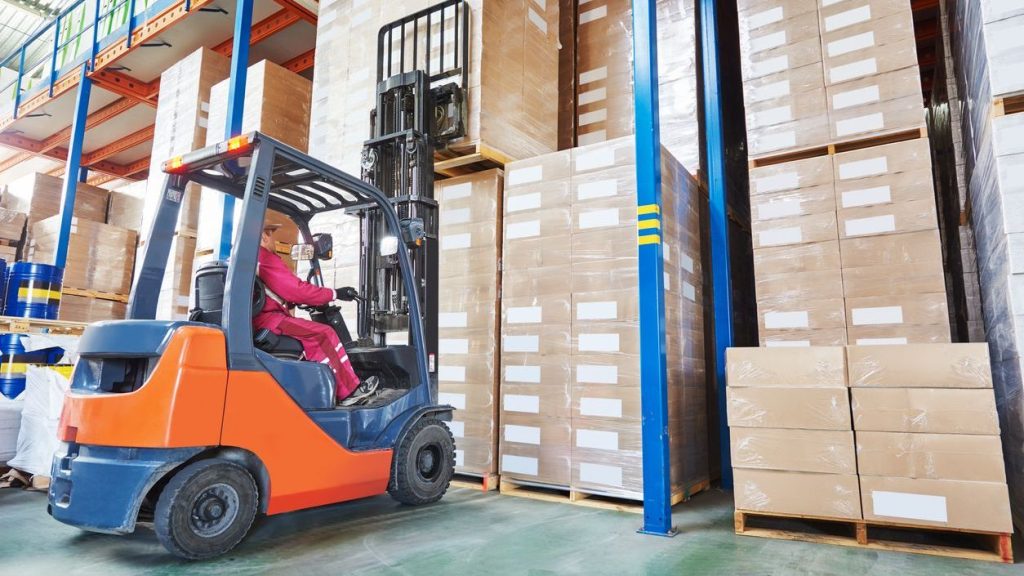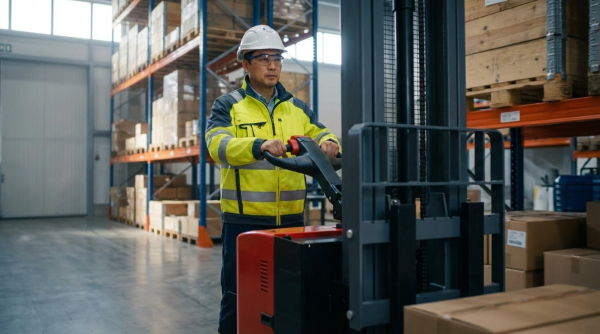
Electric pallet stackers sit between manual pallet jacks and full forklifts, giving warehouse managers a compact, powered way to lift and store palletized loads. This guide explains what an electric stacker is, how it works, and how to align models with your layout, load profile, and safety targets. You will see how engineering specs, batteries, ergonomics, and maintenance routines impact uptime and total cost of ownership. By the end, you can confidently answer “what is electric stacker” to your team and select the right machines for your operation.
Understanding Electric Stackers And Core Functions
What Is An Electric Stacker?
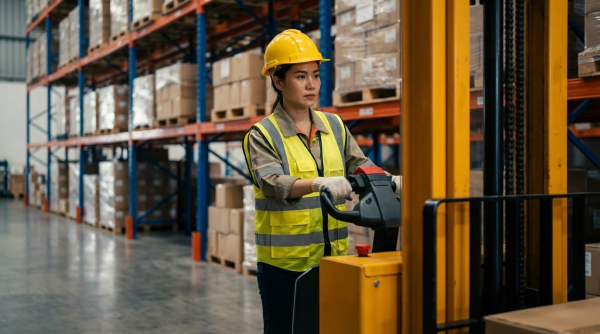
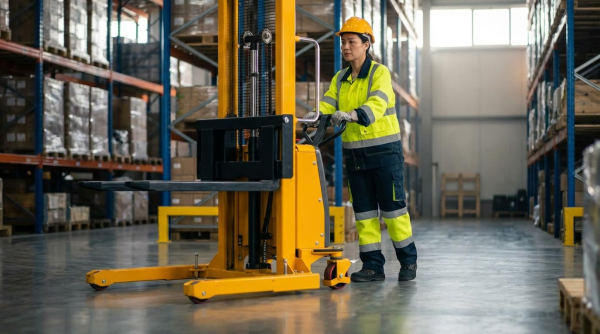
An electric stacker is a battery-powered pallet handling truck designed to lift, transport, and stack palletized loads in confined warehouse spaces. It combines the functions of a pallet truck and a small forklift, but with a much more compact chassis that is ideal for narrow aisles and small storage rooms. Typical electric pallet stacker handle loads in the range of 800–2,500 kg and can lift to heights up to about 6 m depending on model and mast configuration. Because they are fully electric, they remove most of the physical effort of manual pallet handling and are well suited for repetitive lifting tasks and multi-shift operations in space-constrained warehouses.
In practical warehouse language, the answer to “what is electric stacker” is: a walk-behind or ride-on truck that lets one operator pick up a pallet at floor level, travel, then raise it to racking height without manual pumping. Electric stacker are widely used for rack storage, bulk storage, and narrow-aisle operations, and they can also serve as adjustable-height work platforms for picking and sorting to improve ergonomics and throughput. Their smaller size and lower purchase price compared with forklifts make them attractive where loads are moderate and travel distances are short to medium such as in retail backrooms, manufacturing cells, and distribution centers. Many regions do not require a formal driving license to operate them, but structured safety training is still strongly recommended to reduce incident risk.
Key Components And Operating Principles
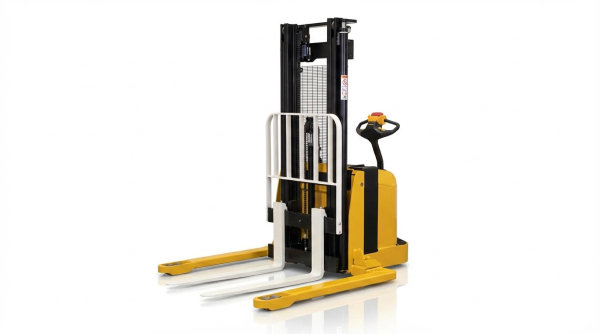
An electric pallet stacker integrates several core systems that work together to lift and move loads safely and efficiently. The main components typically include:
- Chassis and mast structure
- Forks and load wheels
- Electric drive motor and transmission
- Hydraulic lifting system
- Battery and electronic controller
- Tiller or steering/drive controls
- Braking and safety systems
The mast, carriage, and forks form the load-handling assembly. When the operator actuates the lift control, an electric motor drives a hydraulic pump that pressurizes oil and extends the lift cylinder, raising the carriage and forks. Oil volume increases with lift height; for example, a typical stacker may require about 5–6 L of hydraulic oil between 2.5–3.5 m lift to maintain proper cylinder performance. The drive unit powers the load wheels for horizontal travel, while the operator steers via a tiller arm or steering wheel depending on the design.
The powertrain and control system are centered on a rechargeable battery and an electronic controller. Electric stacker commonly use either lead-acid or lithium-ion batteries; lithium-ion options support opportunity charging, reduce maintenance, and can be around 30% more energy-efficient than lead-acid in typical warehouse duty cycles. Control parameters such as acceleration and maximum speed are programmable to match the application, which helps optimize throughput and safety for different aisle widths and operator skill levels from slow, precise handling to faster transport. Modern designs add stability features like 5-point chassis layouts for better control on inclines and creep-speed modes that allow very slow, precise movements in tight spaces improving safety near racking and personnel..
Engineering Specs, Powertrains, And Performance
Load, Lift, And Stability Parameters
When warehouse teams ask what is electric stacker in practical terms, they usually mean: what loads can it safely handle, to what height, and with what stability margin. Typical electric pallet stackers cover a working load range of about 800–2,500 kg lift capacity range of 800–2,500 kg. Maximum lift heights commonly extend up to around 6 m for racking applications with lift heights up to 6 m. To maintain stability at height, modern stackers use multi‑point chassis designs; a 5‑point layout improves lateral stability and control, especially on ramps and uneven floors 5‑point chassis stability feature.
| Parameter | Typical Range / Feature | Operational Impact |
|---|---|---|
| Rated capacity | ~800–2,500 kg | Defines pallet weight and stacking application window |
| Max lift height | Up to ~6 m | Determines usable racking level and aisle design |
| Chassis design | 5‑point support | Improves stability on turns and slopes |
In tight aisles, control of low‑speed manoeuvres is as important as raw capacity when evaluating what is electric stacker performance. Click‑to‑creep functions allow the operator to switch to creep speed with a double‑click of the control lever, improving control in very narrow spaces click‑2‑creep manoeuvring function. Programmable acceleration and travel speed let supervisors tune the truck for heavier loads, slopes, or high‑traffic zones adjustable driver parameters. Combined, these parameters define the safe operating envelope of each stacker model and should be matched carefully to pallet weights, lift heights, and floor conditions.
Battery Technologies And Charging Strategies
Powertrain choice in an electric stacker is mainly about battery chemistry, charging method, and duty cycle fit. Most warehouse fleets still run lead‑acid batteries, while newer installations increasingly specify lithium‑ion packs lead‑acid and lithium‑ion options. Lithium‑ion systems support opportunity charging, so operators can plug in during breaks instead of swapping heavy batteries, and they are reported to be about 30% more energy‑efficient than lead‑acid ~30% higher energy efficiency. Typical cycle life is roughly 400–600 cycles for lead‑acid versus about 800–1,200 cycles for lithium batteries battery life ranges for both chemistries.
| Battery Type | Key Characteristics | Charging Strategy |
|---|---|---|
| Lead‑acid | Lower upfront cost; more maintenance; shorter cycle life | Recharge below ~20% charge; avoid overcharging; ensure ventilation lead‑acid charging guidance |
| Lithium‑ion | Higher efficiency; longer life; higher purchase price | Frequent opportunity charging; avoid full depletion; less routine maintenance opportunity charging benefit |
For many sites asking what is electric stacker advantage versus combustion equipment, everyday charging convenience is a major factor. Stackers can usually charge from standard mains outlets, avoiding the need for specialized high‑capacity infrastructure standard power outlet charging. Good practice includes daily checks of charge level, using the specified charger, maintaining ventilation during charge, and avoiding high‑temperature or very humid charging areas battery maintenance recommendations. These routines protect battery life and keep performance consistent across shifts.
Safety, Ergonomics, And Maintenance Requirements
From a safety engineering perspective, what is electric stacker performance without robust protection systems and predictable maintenance is incomplete. Some pedestrian stackers use advanced sensors to monitor the operator’s position continuously and help prevent contact accidents operator position monitoring sensors. Brake systems require regular checks; weekly inspections include verifying brake function, cleaning steering gear, and keeping brake clearance in the specified 0.2–0.8 mm range recommended brake clearance and checks. Hydraulic systems also need periodic checks of oil level versus lift height and inspection for hose or cylinder leaks hydraulic oil and leak inspection.
Ergonomically, electric stackers are designed to reduce operator strain by eliminating manual lifting and pushing. Some models include automatic fork height adjustment so the forks move to an ergonomic level as items are added or removed, reducing bending during picking and sorting automatic height adjustment feature. Foldable platforms and side gates improve comfort and stability for longer travel distances platform and gate options. Routine maintenance tasks include:
- Daily: check battery charge, inspect bolts and nuts, and verify horn and safety devices daily structural and battery checks.
- Weekly to monthly: inspect brakes, hydraulic hoses, electrical contacts, and wheels; lubricate chains, bearings, and mast rails scheduled inspections and lubrication.
- Quarterly: repeat full inspections and replace worn components as required quarterly maintenance scope.
Consistent adherence to these routines, together with basic PPE and operator training, keeps electric stacker fleets reliable and minimizes unplanned downtime safety and training recommendations.
Application Scenarios And Selection Criteria
Matching Stackers To Warehouse Layouts
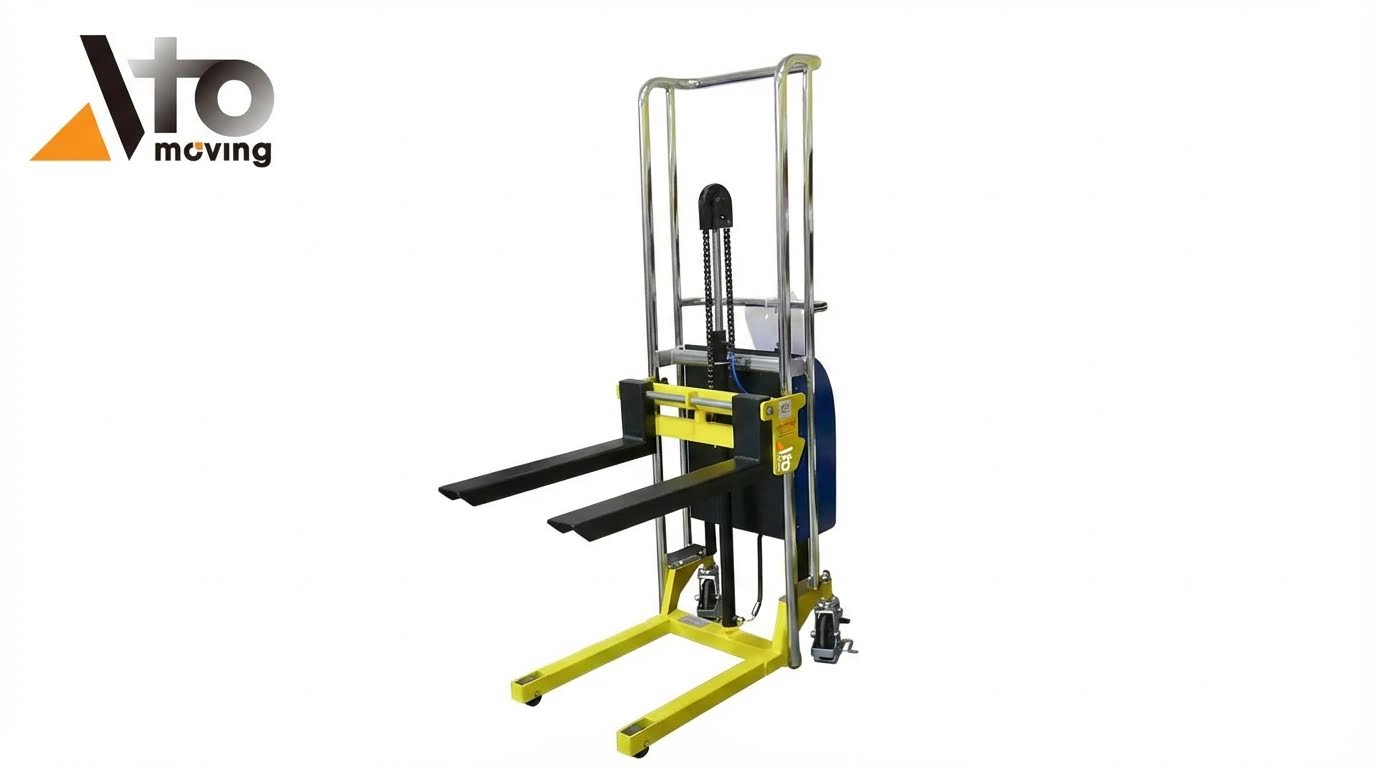
When warehouse managers ask what is electric stacker in practical terms, the answer is closely tied to building layout and pallet flow. Electric pallet stackers work best in compact facilities with narrow aisles, moderate racking heights, and predominantly palletized loads. They support rack storage, bulk floor storage, narrow-aisle picking, and even work-positioning at packing or assembly stations for use as mobile work platforms and ergonomic handling. Your layout, travel distances, and turn radii should drive the decision.
- Narrow aisles and dense racking: Stackers are compact and highly maneuverable, making them ideal for tight cross-aisles and selective racking where a full forklift cannot safely turn due to their smaller overall size.
- Moderate lift heights and loads: Typical electric stackers cover about 800–2,500 kg lift capacity and lift heights up to around 6 m, which suits most low- to mid-bay racking for pallet storage and retrieval.
- Short to medium travel distances: Because travel speeds are lower than forklifts, stackers are best for compact sites rather than very long shuttle runs where speed and versatility are critical.
- Task-specific zones: In packing, kitting, or light assembly cells, features such as automatic height adjustment of forks improve ergonomics for frequent picking and sorting by keeping the load at an optimal working height.
Practical layout checklist
Use electric stackers when: aisle widths are tight; racking is within low- to mid-height ranges; floors are smooth and mainly indoors; and the operation is focused on pallet handling rather than very heavy, mixed, or outdoor loads. Programmed parameters for acceleration and speed allow you to tune each unit to specific zones, such as slowing them down automatically in congested pick aisles through adjustable driver settings.
Comparing Stackers To Forklifts For TCO
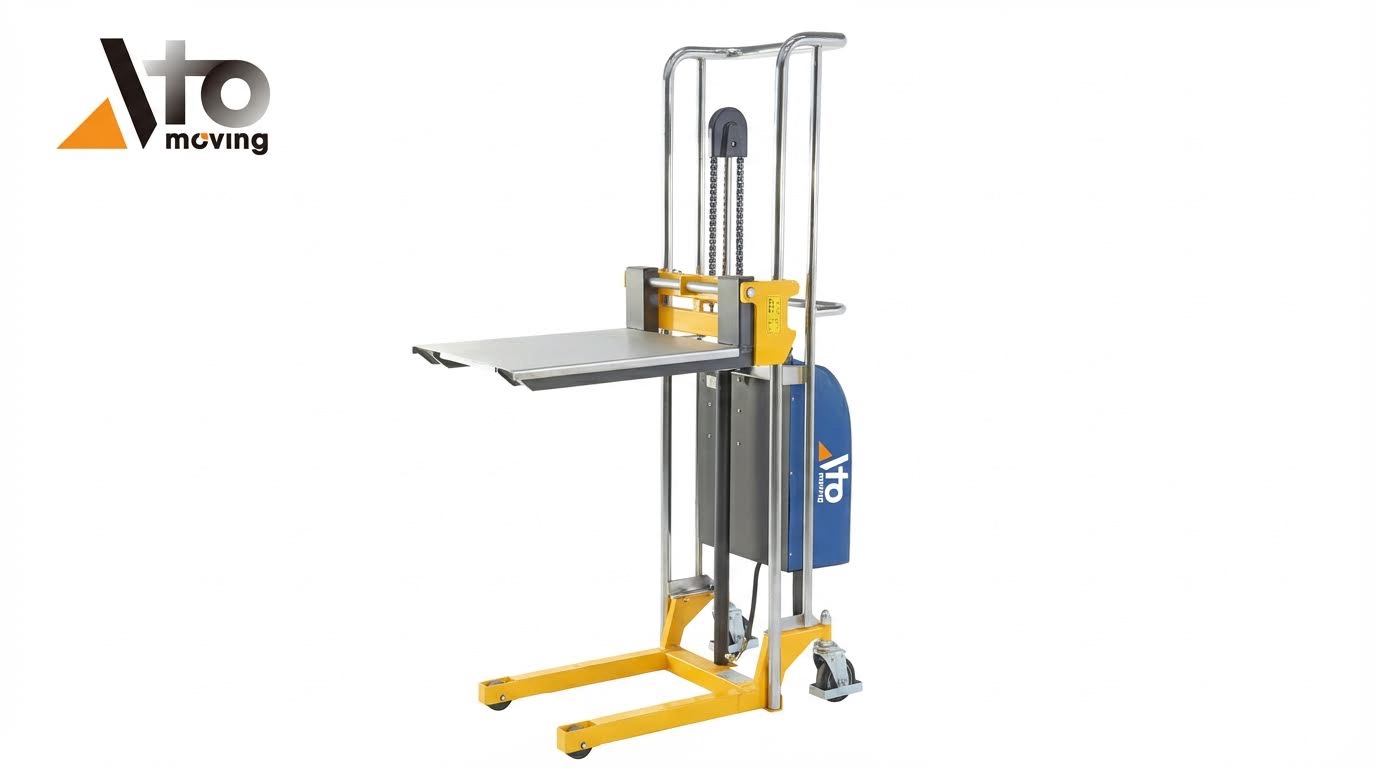
Understanding total cost of ownership (TCO) is essential once you know what is electric stacker and how it differs from a forklift. Stackers are fully electric, compact machines aimed at lighter to medium-duty pallet handling in confined areas eliminating most manual effort in tight warehouse spaces. Forklifts, by contrast, are larger industrial trucks built for heavier loads, higher speeds, and indoor–outdoor versatility with higher capacities and more powerful drivetrains. These engineering differences drive long-term cost patterns.
| Factor | Electric Pallet Stacker | Forklift (Electric or IC) |
|---|---|---|
| Acquisition cost | Lower purchase price and simpler construction making them cost-effective for small and mid-size sites | Higher upfront cost, especially for heavy-duty or high-mast models |
| Operating & maintenance | Fewer mechanical components and no fuel system reduce maintenance; Li-ion options can be around 30% more energy-efficient than lead-acid supporting lower energy use | Electric forklifts can cut energy costs by about 30% and maintenance by about 40% versus traditional combustion units in some case studies |
| Infrastructure & charging | Often charge from standard mains outlets, avoiding specialized infrastructure and simplifying installation | High-capacity electric forklifts may need dedicated chargers and power feeds; IC units require fuel storage and handling |
| Labor & licensing | Typically no formal license requirement in many regions, though training is still recommended reducing onboarding barriers | Often require licensed operators, increasing training and compliance costs |
| Productivity envelope | Best in small to mid-sized warehouses; slower travel speed and limited versatility can constrain throughput over long distances especially in large facilities | Higher travel speeds, greater capacity, and indoor–outdoor use allow more tasks per shift, especially in large or mixed-use sites thanks to larger wheels and more powerful drivetrains |
How to frame the TCO decision
Choose electric pallet stackers when your operation is primarily indoor, space-constrained, and focused on pallet moves within moderate lift and capacity ranges, and when minimizing upfront spend and infrastructure is a priority. Choose forklifts when you handle heavier loads, need higher travel speeds, or must operate outdoors or across long distances, accepting higher capital and training costs for broader capability and throughput where versatility and speed drive payback. In many warehouses, the optimal TCO solution is a mixed fleet, using stackers for dense storage and point-of-use tasks and forklifts for bulk moves and yard work.
“”
Strategic Takeaways For Warehouse Decision-Makers
Electric pallet stackers fill the space between manual jacks and forklifts by combining compact geometry, controlled lifting, and efficient powertrains. Their rated capacity, mast height, and chassis design define a clear safe operating window. When teams respect this envelope and match stackers to pallet weights, rack heights, and floor quality, stability margins stay high and tip risks stay low.
Battery choice and charging policy directly shape uptime and lifecycle cost. Lead-acid suits lighter duty and tighter budgets but needs disciplined charging and more service. Lithium-ion supports longer shifts, fast opportunity charging, and lower energy use, which benefits multi-shift or high-intensity sites. In both cases, daily checks and correct chargers protect capacity and avoid early failures.
Safety, ergonomics, and maintenance routines turn engineering potential into real-world reliability. Programmable speeds, creep modes, and operator-position protection reduce incidents. Ergonomic fork heights and ride-on options cut strain and fatigue. Structured inspections of brakes, hydraulics, and structures keep failure rates low and extend service life.
The best practice is simple: define your layout and duty cycle first, then select stacker models, batteries, and control settings to fit. Combine this with Atomoving’s application support, clear operating rules, and a fixed maintenance schedule. You will gain safe, predictable pallet handling with strong total cost of ownership.
Frequently Asked Questions
What is an electric stacker?
An electric stacker is a compact lifting machine used for light to medium loads, typically up to 2 tons. It is ideal for small warehouses and tight spaces. Unlike forklifts, stackers are semi-electric or fully electric and are designed for vertical storage needs. Stacker vs Forklift Guide.
Do you need certification to operate an electric stacker?
Yes, OSHA requires formal instruction and hands-on evaluation for all powered industrial truck operators, including electric stackers. Certification ensures safe operation in the workplace. OSHA Certification Guide.
What skills are needed to operate a stacker?
To operate a stacker effectively, you need mechanical aptitude, attention to detail, and a basic understanding of warehouse operations. A high school diploma or equivalent is often sufficient for entry-level positions.
What are the advantages of using an electric stacker?
- Maximizes vertical storage space, improving floor area usage.
- Enhances productivity in small or crowded warehouses.
- Offers versatility and adaptability for various tasks.
- Maintains high safety standards during operations.