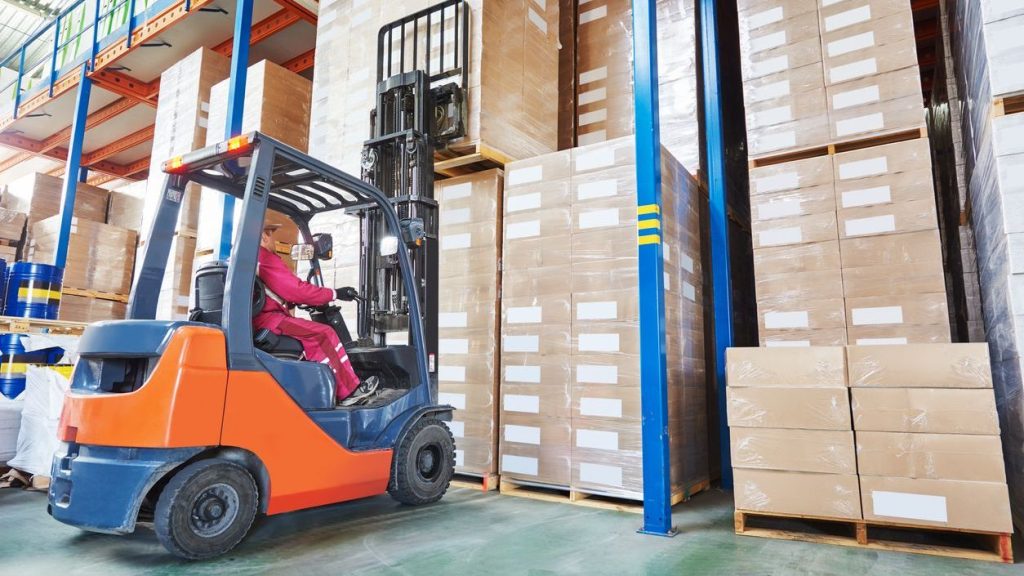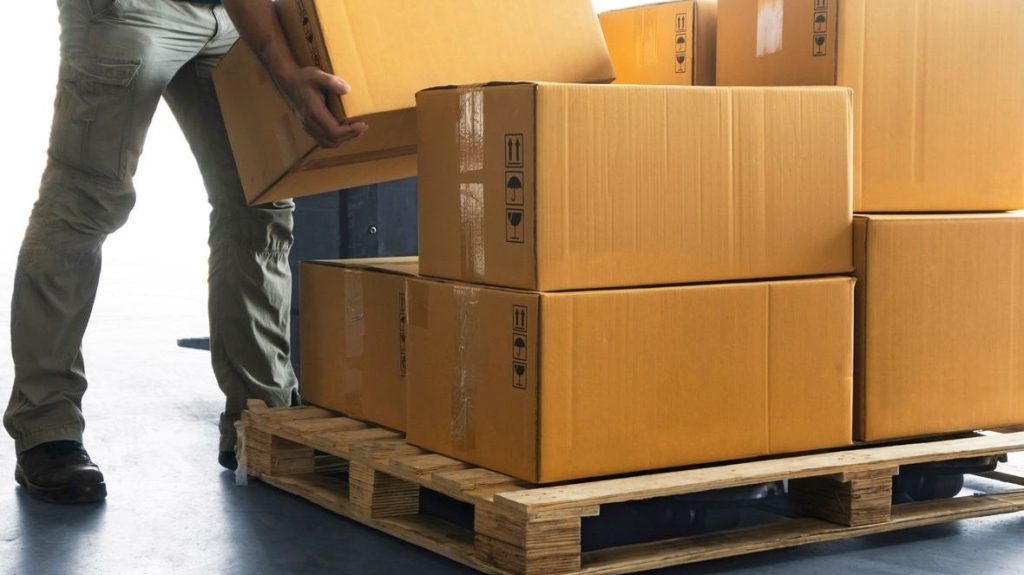
Electric stackers played a central role in modern intralogistics, bridging the gap between manual pallet trucks and full counterbalance forklifts. This article explained what an electric stacker is in engineering terms, and compared electric, walkie, rider, reach, pedestrian, and manual stackers across mechanics, capacities, and duty cycles. It then analyzed performance, safety, ergonomics, and maneuverability in narrow aisles, followed by a cost and lifecycle view including TCO, maintenance, diagnostics, and energy systems. Finally, it summarized how to choose the right stacker configuration for a plant based on throughput, labor costs, environment, and long‑term return on investment.
Core Functions And Types Of Industrial Stackers
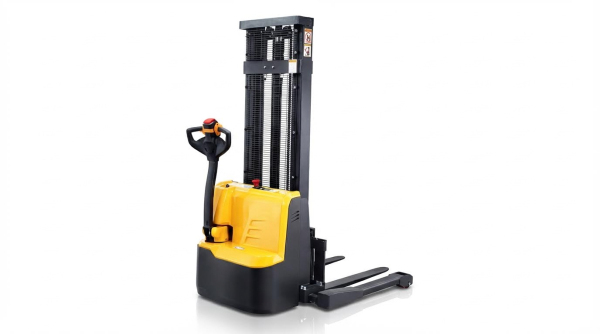
Industrial stackers handled vertical pallet movement and short-range transport in warehouses, plants, and logistics hubs. Engineers classified them by power source, control mode, and mast architecture to match throughput, aisle width, and lift height requirements. Understanding what is lift stacker technology versus manual variants allowed plants to balance capital cost, labor intensity, and safety performance.
What Is An Electric Stacker In Engineering Terms
An electric stacker was a powered industrial truck that combined an electric drive unit, hydraulic lift system, and mast to raise palletized loads. From an engineering standpoint, it integrated a traction motor, pump motor, power electronics, and a battery pack, controlled by a tiller or steering wheel. Typical rated capacities ranged from 1,000 kilograms to 3,000 kilograms with lift heights around 2 metres to 5 metres for indoor racking. Engineers specified electric stackers where duty cycles exceeded roughly 60 pallets per day and where low noise, zero local emissions, and precise low-speed control were critical. Compared with combustion forklifts, electric stackers traded absolute travel speed for compact chassis dimensions and tighter turning radii, which favored narrow-aisle applications.
Walkie, Rider, Reach, And Pedestrian Stackers
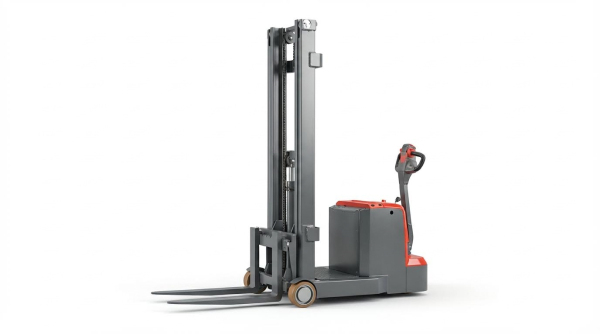
Walkie stackers used a rear tiller arm, with the operator walking behind the chassis while controlling traction and lift. They suited short travel distances, confined aisles, and loads up to roughly 1.2 tonnes to 1.6 tonnes at moderate lift heights. Rider stackers incorporated a standing or small platform, allowing the operator to ride, which reduced walking time and fatigue on longer runs or higher pallet volumes. Reach stackers added a moving mast or pantograph mechanism so the forks could extend into racking, improving storage density in deep or double-deep racks without increasing aisle width. Pedestrian stackers was a broader term covering walk-behind units, often with enhanced control electronics, creep-speed modes, and fine-positioning features for precise pallet placement in tight tolerances.
Manual Stackers: Mechanics, Limits, And Use Cases
Manual stackers relied on human push or pull for travel and either a foot pump or hand pump for hydraulic lifting. Their mechanical architecture remained relatively simple: a hydraulic cylinder, manual pump, mast, and fork carriage mounted on a compact frame with poly or rubber wheels. Typical rated capacities stayed in the 500-kilogram to 1,000-kilogram range, with lift heights comparable to low racking, but practical throughput dropped when operators needed to lift above roughly 500 millimetres repeatedly. Manual stackers worked best in low-frequency tasks, maintenance stores, light manufacturing cells, or backup roles where capital budgets were tight and daily pallet counts stayed below about 60. Engineering analyses showed manual stacking could take 30–50% more time than electric stacking, which translated into higher operator fatigue and significant incremental labor cost over multi-year horizons.
Typical Capacities, Lift Heights, And Duty Cycles
Across the family of industrial stackers, design envelopes balanced capacity, lift height, and duty cycle. Electric walkie and pedestrian stackers commonly handled 1,000 kilograms to 1,600 kilograms at lift heights between 2.5 metres and 4.5 metres, with some models reaching higher for specialized racking. Their electric motors and hydraulic systems supported advised daily throughputs around 60 to 180 pallets per shift, with lift speeds near 0.12 metres per second under rated load. Manual stackers, in contrast, operated efficiently only at lower duty cycles, around 500 operating hours per year and roughly 60 pallets per day, before fatigue and cycle times became constraints. When engineers sized equipment, they evaluated not only nameplate capacity but also realistic duty cycles, including expected operating hours per year, number of shifts, and typical rack heights, to prevent overspecification or premature wear.
Performance, Safety, And Ergonomics In Operation
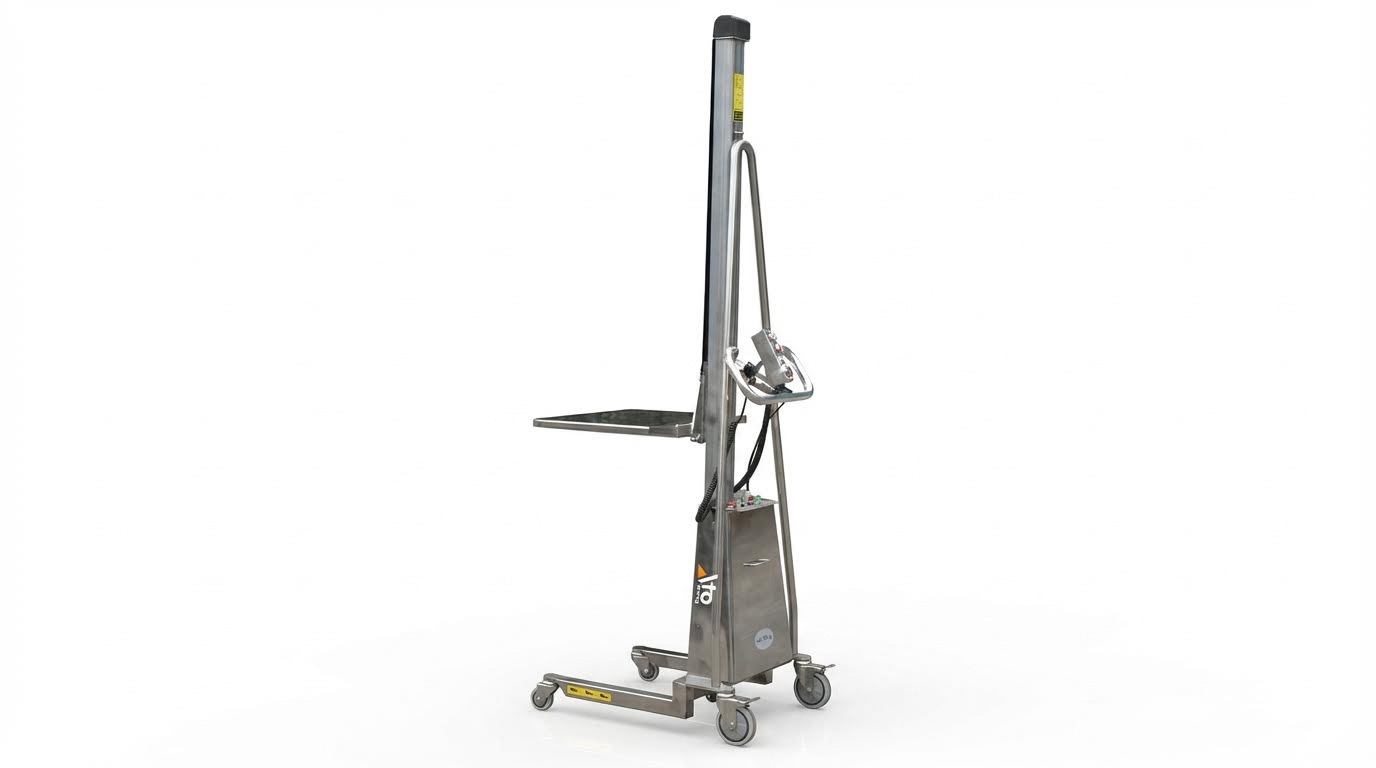
Understanding how different stackers behave in real workflows is essential when engineers ask what is electric stacker performance versus manual. This section compares operational metrics, safety behavior, and human-factor impacts to support data-driven equipment selection. It focuses on cycle times, stability, OSHA-aligned practices, ergonomics, and maneuverability in constrained warehouse geometries.
Cycle Times, Throughput, And Pallet Volume Ranges
When engineers evaluate what is electric stacker performance, cycle time is usually the first metric. Under full load, electric stackers reached lift speeds around 0.12 m/s, while hand stackers achieved about 0.08 m/s. For a 2.7 m rack, this produced typical cycle times near 28 s for electric units versus 55 s for manual units. In practice, this allowed recommended daily throughputs of roughly 180 pallets for electric stackers and 60 pallets for manual stackers in single-aisle, single-shift scenarios. Electric walkie and rider stackers also reduced manual handling between pick faces, which increased line-side replenishment stability at higher pallet volumes. For operations above 70 pallets per day, electric stackers typically reached positive ROI because throughput gains combined with reduced labor hours per pallet.
Stability, Load Handling, And OSHA-Driven Practices
From a safety engineering viewpoint, what is electric stacker stability depends on center-of-gravity control and mast design. Electric stackers used powered lift and controlled lowering valves, which reduced manual-lowering incidents; manual-lowering accidents represented about 12% of OSHA-reported events, whereas powered units contributed fewer than 2%. Operators had to keep forks fully inserted, loads centered, and travel height around 300–400 mm to maintain longitudinal stability. OSHA-aligned practices required pre-shift inspections of forks, chains, hydraulic circuits, and emergency stops, regardless of drive type. Electric walkie and rider stackers often integrated interlocks that disabled travel with raised forks or open side gates, which reduced tip-over risk during tight turns. Manual stackers lacked electronic safeguards, so training and procedural controls carried more of the safety burden during high stacking or uneven floor transitions.
Ergonomics, Fatigue, And Human Factors By Stackers
When facilities assessed what is electric stacker benefit beyond speed, ergonomics usually dominated the discussion. Manual stackers required significant push, pull, and pump forces, which increased operator heart rate and joint loading during each lift cycle. Field data showed manual stacking could take 30–50% more time per cycle, translating into roughly one extra labor hour per operator per day at moderate volumes. That additional effort raised fatigue levels and increased the probability of errors such as misaligned forks or unstable pallet picks late in the shift. Electric walkie and rider stackers shifted effort from muscular work to low-force control inputs on a tiller or steering wheel. This reduction in biomechanical load improved endurance and allowed consistent performance across two-shift operations. Plants that implemented ergonomic training with electric stackers reported fewer strain complaints and better adherence to safe travel speeds and turning behavior.
Maneuvering In Narrow Aisles And Confined Spaces
Warehouse designers asking what is electric stacker suitability for narrow aisles focused on turning radius and visibility. Electric walkie and pedestrian stackers offered compact chassis lengths and tight steering angles, which allowed operation in aisles narrower than typical counterbalance forklifts. Operators walked beside or behind the machine, maintaining a clear line of sight around racking uprights and end-of-aisle intersections. In contrast, manual stackers had similar basic footprints but lost maneuverability as fatigue increased, especially when pushing into dense pallet blocks or slight floor gradients. Electric reach and walkie stackers also provided precise creep-speed control for docking into racks with minimal clearance, which reduced rack impacts and pallet damage. In confined loading docks or cold rooms, electric units with appropriate tires and, where required, heated battery options maintained predictable traction and steering response, while manual units became harder to control as hydraulic oils thickened and push forces rose.
Cost, Lifecycle, And Technology Selection Criteria
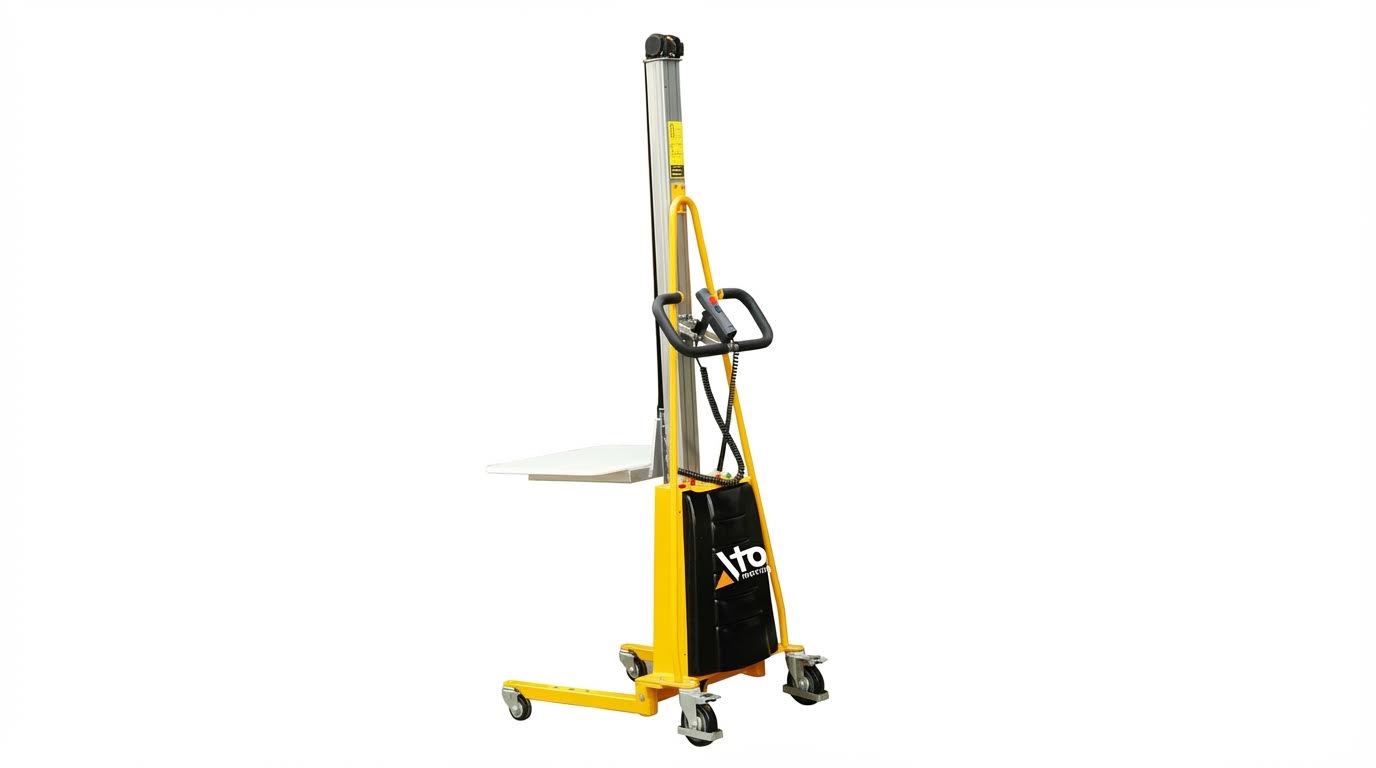
Cost and lifecycle analysis for stackers must link engineering performance with financial outcomes. Understanding what is electric stacker from an economic perspective means quantifying how power-assisted lifting affects labor, energy, and maintenance over defined planning horizons. This section compares manual and electric stackers using three- to five-year models, then connects those models to uptime, diagnostics, and energy system choices for ambient and cold storage applications.
Three To Five Year Total Cost Of Ownership Models
Total cost of ownership (TCO) models for stackers typically include acquisition, labor, maintenance, energy, and depreciation over three to five years. Manual stackers showed upfront costs around USD 800–1,200 with lifespans of 3–5 years, while electric stackers ranged from USD 3,500–5,000 and operated 5–8 years. In a 2024–2025 five-year study, hand stackers had an FOB price of USD 450 versus USD 2,150 for a 1.2 t electric stacker with a lead-acid battery, excluding labor. Over five years, cash costs excluding labor reached about USD 625 for hand units and USD 3,060 for electric units when including consumables, energy, battery replacement, and depreciation. Engineers should model TCO separately for low-throughput and high-throughput plants, because labor dominates cost structures once pallet volumes exceed roughly 60 pallets per day per shift. Sensitivity analyses should vary wage rates, working days per year, and duty hours to identify the break-even point where the higher capital cost of electric stackers becomes economically justified.
Labor Savings, Payback, And ROI Threshold Analysis
Labor is usually the largest differentiator between manual and electric stackers in ROI calculations. Manual stacking required 30–50% more time per cycle than electric stacking, which translated into roughly one extra labor hour per day over three years, or about USD 15,000 at typical wage levels. A separate 2025 model with two shifts, 250 working days, and USD 15 per hour showed annual labor costs of USD 60,000 for hand stackers versus USD 30,000 for electric units because manual equipment needed two operators per shift while electric required one. With an incremental investment of about USD 1,700 for electric stackers and annual savings near USD 29,925, the calculated payback period dropped below one month, or roughly three weeks. For engineering decision-making, ROI thresholds should consider minimum pallet volumes: operations handling fewer than 60 pallets per day often accept longer payback horizons with manual equipment, while flows above 70 pallets per day usually made lift stackers immediately profitable. Including non-financial benefits such as reduced fatigue and fewer safety incidents improves the qualitative case for electric solutions even when pure payback calculations appear marginal.
Maintenance, Uptime, And Predictive Diagnostics
Manual stackers exhibited low annual maintenance costs, typically around USD 100 per year, focused on basic hydraulic checks, greasing, and wheel inspection. Electric stackers required higher annual maintenance in the range of USD 300–500 due to batteries, motors, contactors, and control electronics, plus a battery replacement between years three and five. However, uptime performance favored electric units in intensive duty cycles: with spare batteries, electric stackers could support 24-hour operation, whereas hand stacker efficiency dropped about 18% after six hours because of operator fatigue. From a reliability engineering perspective, electric stackers enabled more structured preventive and predictive maintenance regimes, using periodic inspections of hydraulic oil levels, brake clearances, and motor wear to detect degradation before functional failures. Integrating maintenance logs with hour-meters and fault codes supported data-driven planning, reducing unplanned downtime and enabling higher utilization rates. Safety data also indicated that manual lowering incidents accounted for about 12% of OSHA-reported accidents, compared with less than 2% for battery-powered stackers, which further influenced lifecycle risk assessments.
Energy Systems, Batteries, And Cold Storage Design
Energy system choices for electric stackers affected both operating cost and application suitability. Annual electricity consumption for a 1.2 t electric stacker was about 126 kWh, or roughly USD 15 at USD 0.12 per kWh, which remained negligible compared with labor savings. Lead-acid batteries remained common in standard ambient warehouses, with one planned replacement typically scheduled in year three or four for high-utilization fleets. For cold storage facilities operating near −25 °C, engineers increasingly specified heated lithium-ion battery systems, because hydraulic oils in hand stackers thickened and reduced performance, while conventional lead-acid batteries lost capacity at low temperatures. Energy design for what is electric stacker in modern plants also considered charging strategies: centralized charging rooms for lead-acid packs versus distributed opportunity charging for lithium-ion solutions. In high-throughput double-shift operations, specifying spare batteries and fast-change systems preserved uptime, while in low-throughput sites a single pack with overnight charging minimized capital expenditure. When combined with accurate duty-cycle estimation, these energy system decisions ensured that electric stackers delivered consistent performance in both ambient and sub-zero environments without unexpected capacity loss or thermal issues.
Summary: Choosing The Right Stacker For Your Plant
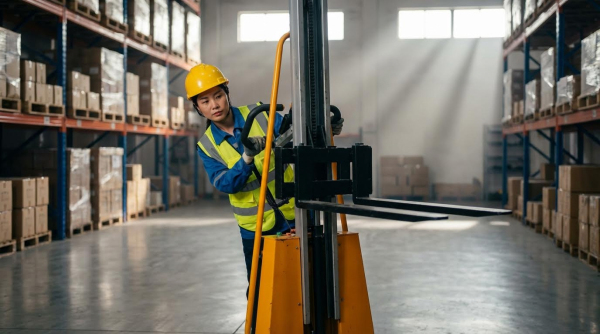
Choosing between manual, walkie, and electric stackers starts with a clear view of your duty profile. Engineers should quantify pallet moves per shift, lift heights, aisle widths, and labor rates before asking what is electric stacker best suited for that profile. Manual stackers fit plants handling fewer than 60 pallets per day, single-shift work, and low capital budgets. Their low purchase price offsets slower cycle times only where labor is inexpensive and utilization is low.
Electric stackers, including walkie and pedestrian variants, justified their higher capital cost in high-throughput environments. When daily volume exceeded 70 pallets and plants ran double shifts, electric units delivered annual labor savings near USD 30,000, with payback in weeks rather than years. Faster lift speeds, shorter cycle times, and reduced operator fatigue increased effective capacity and supported lean-flow layouts with narrow aisles and higher racking. In cold storage or multi-shift operations, heated lithium-ion packs and spare-battery strategies further improved uptime.
From a lifecycle perspective, engineers should model at least three to five years of ownership. Models must include equipment price, maintenance, battery renewal, energy use, and fully burdened labor. Manual stackers showed the lowest five-year cash cost if labor was excluded, but became uneconomic once extra handling hours were costed. Electric stackers carried higher maintenance and battery costs, but their superior availability and safety performance reduced unplanned downtime and OSHA-reportable incidents.
Looking ahead, electric stackers will continue to gain ground as energy systems, diagnostics, and ergonomics improve. Plants will increasingly integrate telematics, predictive maintenance, and right-sized energy storage into stacker selection. A balanced decision framework compares manual versus electric options on throughput, safety, ergonomics, and total cost, not on purchase price alone. For any engineer asking what is electric stacker value to the plant, the answer lies in matching stacker technology tightly to volume, labor economics, and future growth plans.