Walkie stackers sit in a grey area for many operations leaders who ask, “do you need a forklift license for a walkie stacker, or just internal sign-off?” This guide explains how safety regulators classify walkie stackers, what training and documentation are mandatory, and how engineering and workplace design affect compliance. You will see how operator authorization, equipment design, and site controls work together to reduce incidents and legal exposure. Use it as a practical reference when setting policy, buying equipment, or auditing your current walkie stacker program.
Do You Need A “Forklift License” For A Walkie Stacker?
How OSHA And Other Standards Classify Walkie Stackers
From a regulatory standpoint, the key question behind “do you need a forklift license for a walkie stacker” is how the equipment is classified. OSHA defined a powered industrial truck as a mobile, power‑propelled truck used to carry, push, pull, lift, stack, or tier materials, and this definition explicitly included units operated by a walking operator as well as ridden trucks in its general industry guidance. That means a walkie stacker is treated as a powered industrial truck (PIT), not as a simple pallet jack or hand truck, and it falls under OSHA 1910.178 training and operation rules for general industry, maritime, and construction sectors. Other jurisdictions follow the same logic: international and regional safety regulations require theoretical and practical training for walkie stacker operators as mobile equipment, with emphasis on controls, capacity labels, confined‑space maneuvers, and risk assessment in the work area as summarized in international guidance. In some regions, walkie stackers are explicitly classified as pedestrian‑operated lift trucks that do not require a national high‑risk work licence, but still require structured training and documented employer authorization before use under local standards aligned with AS 2359.2. In practice, this classification means walkie stackers must be managed like compact forklifts: subject to PIT rules, pre‑use inspection expectations, and formal operator training, even though the operator walks behind or beside the truck instead of riding on it.
License Vs. Employer Authorization: What’s Really Required?
When people ask “do you need a forklift license for a walkie stacker,” they usually mean a government‑issued or nationally recognized forklift licence, but OSHA did not create or issue any such licence. Instead, OSHA 1910.178(l) required employers to implement a training program and ensure that only trained and evaluated operators use powered industrial trucks, with evaluations at initial training, at least every three years, and after any required refresher training in its training library. Certification in OSHA terms is employer documentation that the operator has been trained and evaluated; it must record the operator’s name, training date, evaluation date, and the identity of the person who conducted the training or evaluation, and this document functions as proof of authorization to operate that truck type at that site for compliance purposes. Other frameworks took a similar approach: some explicitly stated that walkie stackers do not require a national high‑risk work licence, but still mandated structured training covering routine checks, planning work, shifting loads, shutdown, and battery maintenance, plus written and practical assessment, with certification issued as evidence of competency for employer authorization only in their course descriptions. International guidance for walkie stacker safety also emphasized that operators must receive both theoretical and practical training, with periodic refresher courses to maintain skills and stay current on new safety measures, reinforcing that ongoing employer authorization is central, not a one‑time licence card according to international safety overviews. For procurement and operations leaders, the compliance takeaway is that the critical obligation is a documented, site‑specific training and evaluation program for walkie stackers, not chasing a generic “forklift licence,” and that any operator’s card or certificate is only valid when backed by current employer authorization and workplace‑relevant training records.
Mandatory Training, Evaluation, And Documentation
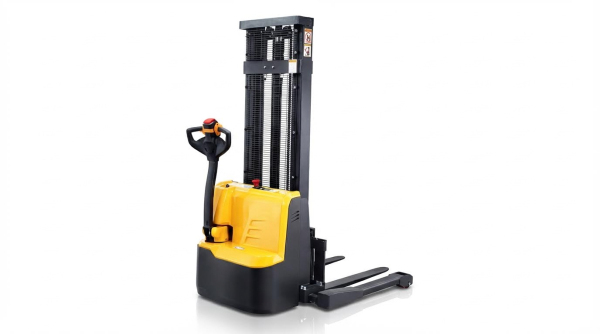
Core Operator Training Content And Delivery
For walkie stackers, OSHA treats operators the same as other powered industrial truck drivers, so the real compliance question is not “do you need a forklift license for a walkie stacker” but whether your training program meets 1910.178(l) requirements. Employers must ensure operators complete a structured program before unsupervised use, combining formal theory and hands‑on practice in the actual workplace. Formal instruction can include classroom teaching, videos, and online modules, but it must be paired with practical exercises and on‑the‑job demonstrations that reflect your site’s loads, aisles, and traffic patterns. Training content needs to cover truck‑related topics (controls, stability, capacity, batteries) and workplace‑related topics (floor conditions, ramps, pedestrians, and site rules) as well as the governing standard itself. OSHA 1910.178(l) requires this blend of formal and practical training with site‑specific content. Purpose‑built walkie stacker courses typically compress this into a short format, often less than a full day for existing workers, while new operators may require longer programs. Course outlines usually include: routine pre‑use checks, planning the lift, verifying capacity and stability, shifting and stacking loads, shutdown and securing procedures, and battery charging and maintenance. Common walkie stacker training topics also cover safe stacking, palletizing, equipment balance, preventative maintenance, and manual handling interfaces. Some programs deliver the classroom portion online for flexibility, but operators still need a supervised practical component and performance assessment before they are considered fully trained and can be authorized to operate.
Practical Evaluation, Recertification, And Refresher Triggers
Beyond initial training, OSHA requires that each walkie stacker operator be evaluated on the job to confirm they can apply safe practices in real conditions. This evaluation must occur during or at the end of initial training and then at least once every three years, and it has to be performed by someone with the knowledge, training, and experience to assess powered industrial truck operation. The same OSHA standard specifies that refresher training and a follow‑up evaluation are mandatory after unsafe operation, an accident or near‑miss, a poor evaluation, assignment to a different truck type, or significant changes in workplace conditions. In practice, this means a structured, observed driving test in the operator’s normal aisles and dock areas, including tasks such as picking up, transporting, and stacking loads, negotiating tight turns, and parking and securing the unit. Many walkie stacker courses formalize this with a written theory test plus a practical driving assessment, and some safety programs adopt shorter validity periods (for example, one‑year certificates) to keep skills current even where regulations allow longer intervals. Typical programs based on CSA and OHSA guidance use an 8‑hour format with hazard identification, stability principles, and pedestrian safety, followed by theory and practical evaluation, and require periodic renewal. For supervisors and safety managers, the operational takeaway is that ongoing evaluation and targeted refreshers are non‑negotiable elements of compliance and risk control, even if your jurisdiction does not issue a formal “forklift license” for walkie stackers.
Recordkeeping, Audits, And Legal Liability
From a compliance and liability standpoint, documentation is as important as the training itself. OSHA requires employers to certify that each powered industrial truck operator has been trained and evaluated, and that certification must include at minimum the operator’s name, the training date, the evaluation date, and the identity of the person or people who conducted the training or evaluation. This documentation is the primary evidence that your organization met its duty to train and assess operators under the powered industrial truck standard. Walkie stacker‑specific programs typically issue a certificate or wallet card per equipment type, which serves as proof of competency for employer authorization and internal audits. These records normally capture the course completed, session duration, trainer identity, and the fact that both theory and practical assessments were passed. To strengthen your position if an incident occurs, it is good practice to link operator records with incident logs, near‑miss reports, and refresher triggers, and to retain copies of training materials and test results. Regular internal audits should verify that every person currently operating a walkie stacker appears on the training and evaluation roster, that recertification is tracked, and that your documented process clearly answers the question “do you need a forklift license for a walkie stacker” in terms of what your site requires for authorization, not just what the law minimally demands..
Engineering, Safety, And Technology Factors In Compliance
Equipment Design, Stability, And Capacity Ratings
From a compliance standpoint, walkie stackers are powered industrial trucks, so their engineering design, stability, and capacity ratings must be understood and respected as part of any answer to “do you need a forklift license for a walkie stacker.” OSHA defined powered industrial trucks as mobile, power‑propelled trucks used to carry, push, pull, lift, stack, or tier materials, including units operated by a walking operator, but excluding earth‑moving or over‑the‑road vehicles. Definition of powered industrial trucks This classification means walkie stackers fall under the same performance‑based safety principles as ride‑on forklifts, even if formal licensing rules differ by jurisdiction.
Engineering controls on walkie stackers support stability but do not eliminate risk. Stability is governed by the combined center of gravity of truck and load, the stability triangle, and the height of the load; as the mast raises, the stability margin shrinks, so operators must keep loads as low as practical during travel and only elevate at the destination. Training content for walkie stackers therefore emphasizes equipment stability, balance and capacity, and safe stacking and palletizing practices. Training topics for walkie stacker operators Capacity plates and load‑center ratings must be read and applied; overloading or off‑center loads are a primary cause of tip‑overs and falling loads. Common forklift hazards
Modern training standards require operators to understand how design and labeling interact with real‑world loads. International guidance stressed that operators must understand equipment controls, capacity labels, risk assessments, and safe maneuvers in confined spaces before being allowed to operate. Operator training and certification This engineering literacy is what most regulators and employers look for when deciding whether a person is “licensed” or authorized to use a walkie stacker safely in their facility.
Pre-Shift Inspections, Maintenance, And Battery Safety
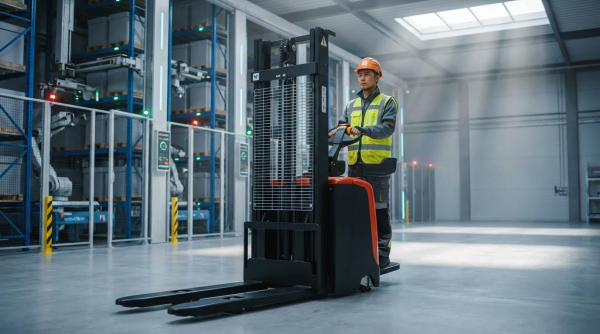
Daily pre‑shift inspections are a core compliance requirement for powered industrial trucks and apply directly to walkie stackers. Guidance on forklift safety required checks on brakes, tires, steering, and all essential components before each shift, with detailed maintenance records kept to anticipate failures. Daily equipment inspections For walkie stackers specifically, recommended pre‑operation inspections include battery charge level, cables and connectors, hydraulic system, brakes, horn, emergency stop, mast, forks, and wheels; any defect must be reported and the unit removed from service until repaired. Pre-operation inspection items
Battery systems are a major risk area and a focus of operator training. Walkie stackers typically use lead‑acid or lithium batteries, which require well‑ventilated charging areas free from ignition sources, with no smoking or open flames allowed. Operators must use appropriate PPE such as gloves and safety glasses, neutralize acid spills with suitable materials, and remove damaged batteries from service. A recommended waiting period after charging helps reduce overheating or unwanted electrical discharge. Battery charging and maintenance safety
These engineering and maintenance controls tie directly into training and authorization decisions. Typical walkie stacker training programs covered routine checks, battery charging and maintenance, and safe shutdown and securing of the equipment. Course content for walkie stacker training Even in regions where a national high‑risk work licence is not required for pedestrian‑operated walkie stackers, employers are still expected to maintain training records and verify competency before authorizing operators. Licensing requirements for walkie stackers This is a key nuance when answering “do you need a forklift license for a walkie stacker” from a compliance and risk‑engineering perspective.
Workplace Layout, Traffic Management, And Narrow Aisle Risks
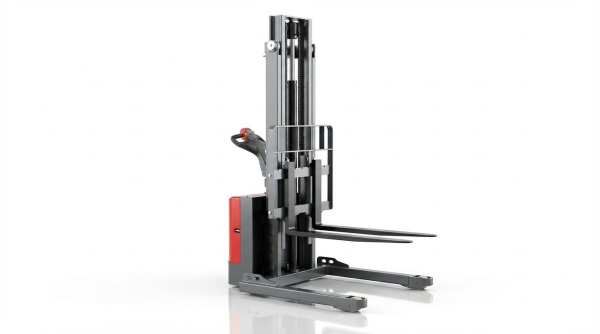
Engineering compliance for walkie stackers extends beyond the truck to the workplace layout and traffic management system. Safe working conditions for powered industrial trucks include clear pathways, adequate lighting, and visible signage for pedestrian zones and vehicle routes to reduce collisions and near misses. Workplace safety conditions Narrow aisles, blind corners, and shared pedestrian areas significantly increase risk, so engineered controls such as dedicated walkways, floor markings, and speed‑limited zones are recommended.
Best‑practice guidance for walkie stackers stressed that the work environment should be organized, clean, and well‑lit, with aisles wide enough for safe passage and maneuvering. Clear traffic routes should separate pedestrians from equipment, with convex mirrors at corners, audible alarms, and flashing lights to reduce accident risk. Floors must be free of obstacles, liquids, or debris that could cause slips or instability, and specific ramps should be designated for walkie stacker traffic where possible. Work environment and traffic management
These layout and traffic controls are also reflected in formal training programs. Typical walkie stacker training, based on industrial safety standards, covered planning work, shifting loads in confined spaces, pedestrian safety, and safe travel on ramps and uneven surfaces. Walkie stacker training program When organizations ask do you need a forklift license for a walkie stacker, regulators typically look less at the label “license” and more at whether this full system is in place: trained operators, engineered traffic controls, and a workplace layout that supports safe, compliant operation.
“”
Key Takeaways For Procurement And Operations Leaders
Walkie stackers are powered industrial trucks, so you must treat them like compact forklifts, not oversized pallet jacks. The law focuses on employer authorization, not a plastic “license” card. This means you must run a structured training program, test operators in your real aisles, and keep proof of competency on file.
Engineering limits drive most risk. Capacity plates, load centers, and stability rules set hard boundaries that operators must respect. Pre‑shift inspections, defect tagging, and disciplined battery handling stop small faults from turning into serious injuries or fires. Workplace layout then completes the system. Clear routes, marked walkways, and controlled speeds in narrow aisles protect pedestrians and keep trucks stable.
For leaders, the best practice is simple. Specify compliant walkie stackers from suppliers such as Atomoving. Build a site‑specific training and evaluation program around OSHA‑style requirements. Enforce daily inspections and preventive maintenance. Design traffic flows and storage patterns that match the equipment’s geometry and limits. When you align authorization, engineering controls, and workplace design, you reduce incidents, satisfy regulators, and gain a safer, more productive material‑handling operation.
Frequently Asked Questions
Do you need a license to operate a walkie stacker?
A walkie stacker is considered a type of forklift, and operators typically require certification to use one. According to OSHA regulations, employers must ensure that all powered industrial truck operators, including those using walkie stackers, are properly trained and certified. Forklift Certification Guide.
What happens if you operate a forklift or walkie stacker without certification?
If someone operates a forklift or walkie stacker without proper certification, the employer could face significant penalties. OSHA can impose fines of up to $7,000 per uncertified operator, and this can increase to $70,000 for willful negligence. OSHA Compliance Details.
Is forklift certification worth it for walkie stacker operators?
Yes, forklift certification is beneficial and often required by employers. It ensures safety, compliance with OSHA standards, and prepares operators to handle equipment like walkie stackers effectively. Even if not immediately required, certification is valuable for anyone planning to work in material handling. Certification Benefits.