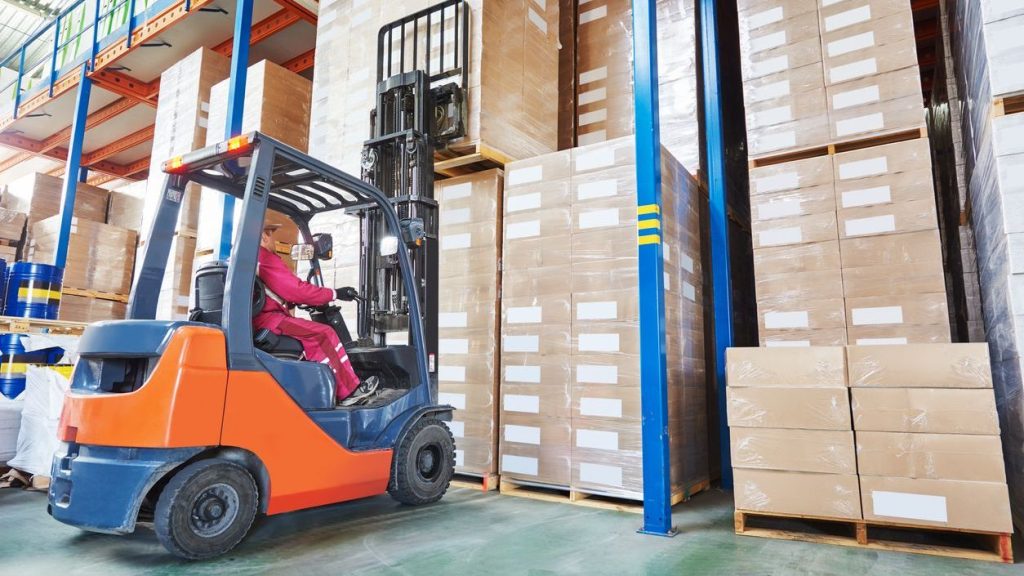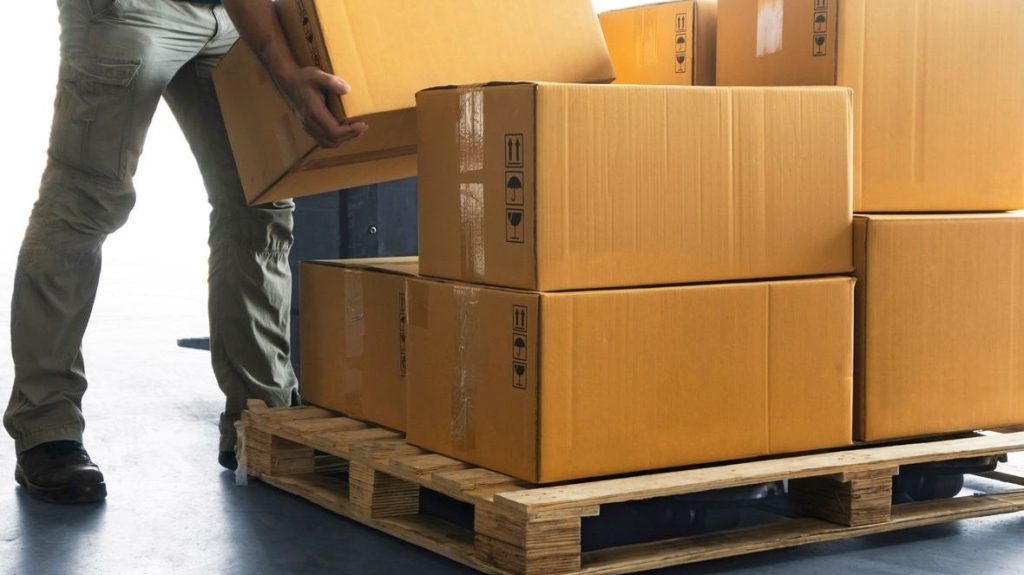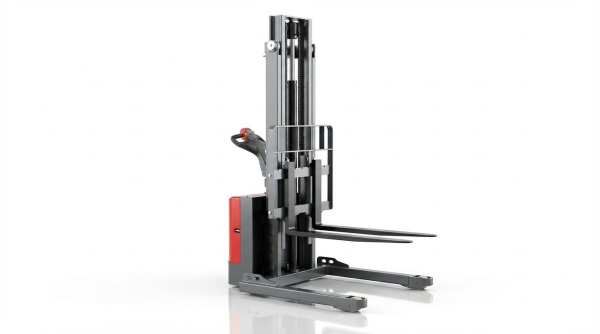
Manual pallet stacker requires clear engineering limits for safe heights, stable layouts, and compliant storage around how high to manually stack pallets. Facilities must balance space utilization with stability ratios, fire codes, and insurance rules while controlling worker exposure to high lifts. This article explains safe manual stack heights by pallet material, stability design and securing methods, ergonomic controls and assist devices, and finally integrates these aspects into a concise summary for safe heights, stable stacks, and healthy workers.
Readers will see how pallet material, load geometry, and warehouse clearances define safe stack limits, how layout and stacking methods affect collapse risk, and how ergonomic design and training reduce musculoskeletal injuries during manual pallet jack stacking. Additionally, tools like a hydraulic pallet truck can further enhance safety and efficiency.
Engineering Limits For Safe Manual Stack Heights
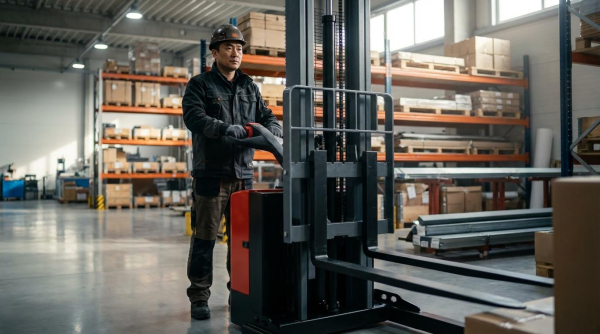
When facilities ask how high to manually stack pallets, engineers first define structural and regulatory limits. Manual stacking height depends on pallet material, load geometry, and the required safety factor against tipping and collapse. Fire codes and insurance rules further restrict how high operators may stack, regardless of theoretical stability. Clearance to ceilings and sprinklers then constrains the usable range even more in real warehouses.
Height Ranges By Pallet Material (Wood, Plastic, Steel)
When deciding how high to manually stack pallets, pallet material sets an upper bound before ergonomics and codes. Wood pallets typically support stack heights around 4.5–5.5 m when loads are uniform, interlocked, and kept within rated capacity. Engineers still derate these values for manual stacking because damaged deck boards or stringers reduce stiffness and increase tipping risk. Plastic pallets usually suit 3–4.5 m manual stack heights since flex under load can amplify sway, especially with tall, compressible cartons. Steel pallets tolerate the greatest structural height, often above 6 m, but manual stacking rarely approaches this because access and fall risks rise sharply. Across all materials, engineers inspect for cracks, deformation, or broken components before allowing higher tiers, and they align stack height with the weakest pallet in the column.
Applying 4:1 Height-To-Base Stability Ratios
Engineers commonly apply a 4:1 height-to-base ratio when defining how high to manually stack pallets on the floor. This rule limits free-standing stack height to roughly four times the smallest base dimension, measured between outer load edges, not just pallet size. For a 1.0 m by 1.2 m pallet with cartons flush to the edges, a conservative manual stack height target is about 4.0 m, then reduced for uneven loads or pedestrian traffic. Irregular, fragile, or top-heavy loads require lower ratios, sometimes 3:1 or 2:1, to maintain sufficient restoring moment against push or impact. Engineers also account for floor flatness, vibration from truck aisles, and potential impact from manual pallet jack when validating the selected ratio. Where stacks sit near walkways or exits, safety managers often impose additional internal limits below the theoretical 4:1 threshold.
NFPA, OSHA, ANSI And Insurance Constraints
Even if geometry suggests higher limits, how high to manually stack pallets is often capped by NFPA, OSHA, ANSI, and insurer rules. OSHA required that tiered materials be stacked, blocked, interlocked, and limited in height so they remain stable and secure against sliding or collapse; this effectively restricts tall free-standing manual stacks with poor interlock. NFPA guidance for idle pallets capped stack height at about 4.6 m and limited footprint area, mainly to control fire load and sprinkler effectiveness. Many insurers adopted similar thresholds and sometimes lowered maximum heights for wood pallets in high-hazard commodities. ANSI and related consensus standards addressed manual material handling, pushing employers to keep hand-stacked tiers low enough that workers do not exceed recommended lift heights or forces. In practice, risk assessments often set manual stack limits below code maxima, especially in mixed-storage and high-traffic zones.
Floor, Ceiling And Sprinkler Clearance Design
Warehouse geometry finally converts theoretical limits into practical answers for how high to manually stack pallets in each zone. Engineers start from the underside of the roof or deck, subtract required sprinkler clearance, and then subtract an operational buffer, often 450–600 mm, to account for stacking variation. Sprinkler design criteria and NFPA guidance required that stacks not obstruct water distribution, which effectively capped storage height even when pallet strength allowed more. Floor capacity and flatness also constrained stack height, since local settlement or slopes increase tipping moments at the same 4:1 ratio. Designers placed tall stacks away from columns, mezzanine edges, and doors to prevent impact or partial obstruction of egress routes. Where ceiling heights were generous, they still limited manual stacking to ergonomic reach zones and relied on mechanical handling for any higher tiers to keep workers off ladders and off the stack itself.
Stability Design: Layouts, Loads And Stack Methods
Stability design determines how high to manually stack pallets without losing control of the load. Good layouts, correct load preparation, and suitable stack methods reduce the risk of collapse and ergonomic strain. Engineers must integrate floor conditions, pallet type, and manual handling limits into one coherent stacking strategy.
Load Type, Weight Distribution And Base Preparation
Load characteristics largely decide how high to manually stack pallets safely. Uniform, rigid cartons allow higher stacks than shrink-wrapped bags, pails, or irregular items because they transmit compressive forces more predictably. Fragile or top‑heavy products require lower stack heights and tighter securing methods to avoid tilt and product damage.
Always place the heaviest cases in the lowest tiers and progressively lighter units above. This creates a low center of gravity and keeps the height‑to‑base ratio closer to the recommended 4:1 stability limit. In practice, that means a 1.0 m wide pallet stack should rarely exceed about 4.0 m when handled manually, and often less where loads are irregular.
Base preparation starts with the floor. Use only flat, clean, non‑slip surfaces, and remove debris that can introduce tilt or point loading. Align pallets square to aisles and avoid gaps between adjacent stacks that encourage leaning. Check each pallet for cracked boards or twisted stringers before building the stack, because defects amplify instability as height increases.
Block, Column And Pinwheel Stacking Compared
Stacking pattern selection directly affects how high to manually stack pallets while maintaining stability. Block stacking interlocks cases between layers, producing a brick‑like pattern. This method improves resistance to lateral shifting and suits most cartonized loads where minor carton deformation is acceptable. It generally supports higher manual stack heights within ergonomic limits.
Column stacking aligns cases vertically with no interlock between tiers. It maximizes vertical compression capacity but offers poor lateral stability. Column stacks should therefore be lower, wrapped more aggressively, or supported by corner posts or frames. Column patterns fit rigid containers, such as pails or drums, but are less forgiving for corrugated cartons.
Pinwheel stacking rotates cases or pallets 90 degrees in alternating positions to improve stability and airflow. At the pallet level, a pinwheel pattern can lock the footprint, reducing the risk of the entire pallet sliding on smooth floors. For manual operations, pinwheel layouts work well where aisles are narrow or where operators must change approach direction, but they add complexity and time.
Engineers should standardize stacking patterns by SKU family and publish visual patterns at workstations. This reduces variability in how workers decide how high to manually stack pallets and supports consistent load quality. Periodic drop‑test and push‑test trials help validate chosen patterns against real handling conditions.
Securing Loads: Wrap, Straps, Bands And Anti-Slip Sheets
Securing methods define the practical ceiling for how high to manually stack pallets without unacceptable movement. Stretch wrap provides continuous surface containment and suits most cartonized loads. Use multiple wraps at the base to lock the load to the pallet deck, then spiral upwards with at least 50% film overlap. Taller stacks require higher pre‑stretch, more layers, or stronger film gauges.
Straps and bands, made from polyester or steel, deliver high tensile restraint along defined paths. They are effective for heavy rigid items, drums, or bricks, where film alone cannot prevent bulging or shear. However, bands create concentrated pressure points, so edge protectors are essential to avoid product crushing and strap damage.
Anti‑slip sheets increase friction between layers, reducing the tendency for cases or bags to slide as the stack height grows. They are especially valuable for smooth packaging films, shrink‑wrapped bundles, or bagged products. Strategic placement, such as between every second or third layer, often achieves adequate stability without excessive cost.
Combining methods usually gives the best result. For example, interlocked block stacking with anti‑slip sheets every third layer and full‑height stretch wrap can safely support higher manual stacks than any single method. Engineers should validate configurations with tilt tests and transport simulations before approving target manual stack heights.
Empty Pallet Storage: Floor, Rack And Idle Stack Rules
Empty pallet storage strongly influences how high to manually stack pallets in staging zones and long‑term storage. Empty wood pallets are relatively light but create significant fire and collapse risks if stacked too high. NFPA guidance historically limited idle pallet stacks to about 4.6 m and 400 m² per pile, with stricter limits for unprotected areas. Many facilities adopted internal rules that cap manual floor stacks of empties at approximately 1.8 m to 2.0 m, or about six to eight pallets, to keep handling ergonomic.
Best practice for floor stacking empties keeps individual stacks low and separated. Guidance often recommended no more than 6 ft (about 1.8 m) per stack, with gaps of at least 2.4 m between clusters to slow fire spread and allow access. Pallets should lie flat, never on edge, with consistent orientation to avoid leaning towers. Workers must not climb stacks; they should use manual pallet jack or powered stackers to add or remove units from taller piles.
Rack storage of empty pallets uses otherwise under‑utilized beam levels to free floor space. Engineers must verify beam load ratings, pallet support conditions, and sprinkler coverage, especially where ESFR systems were installed. Pallets should sit on full‑coverage decking or closely spaced beams to prevent tip‑through. In racks, the practical question of how high to manually stack pallets becomes a question of how high to hand‑place or hand‑retrieve units, which usually limits manual work to lower levels only.
Clear rules for idle pallet storage, including maximum stack height, minimum separations, and access aisles, reduce fire risk and manual handling injuries. Posting these limits at storage zones and integrating them into training ensures operators understand not only how high to manually stack pallets, but also where and under which conditions those heights are acceptable.
Ergonomic Controls For Manual Pallet Stacking
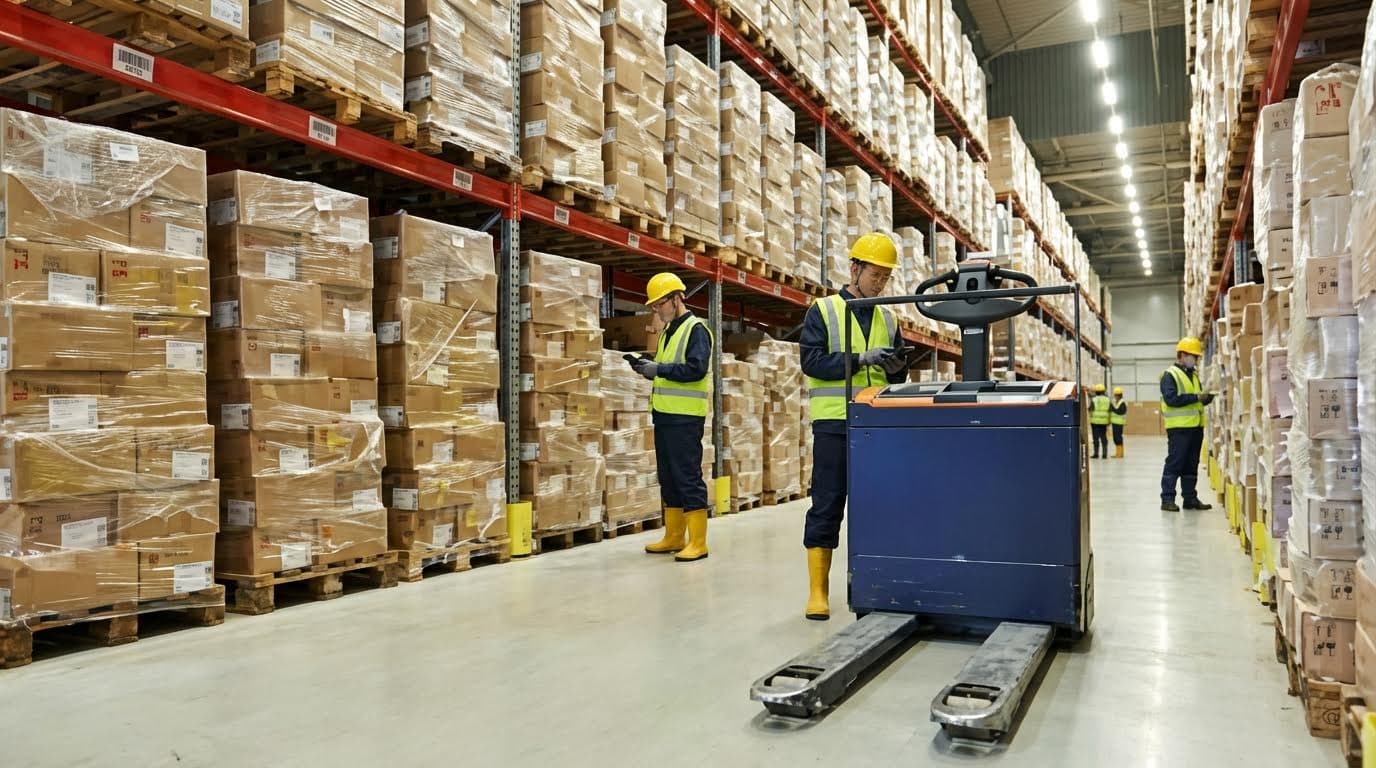
Ergonomic controls answer the core question “how high to manually stack pallets” without overloading workers. Engineering, equipment, and training decisions all interact to define safe manual stack heights, acceptable unit weights, and suitable mechanical assistance. Well-designed controls reduce musculoskeletal disorders, keep productivity high, and ensure compliance with occupational safety guidance.
Limiting Manual Stack Height And Unit Weights
Ergonomic design starts by limiting both manual stack height and individual unit weights. As a practical rule, workers should not hand-stack above shoulder height, typically 1.5–1.7 meters for most adults, to avoid overhead reaching and loss of control. For the lower levels, raising the first layer off the floor with height-adjustable supports reduces deep bending that occurs when placing boxes at ankle level. Facilities should set explicit weight limits per lift, often in the 10–20 kilogram range, and require team lifts or mechanical aids above that. When deciding how high to manually stack pallets, combine these limits with stability rules so the highest hand-placed layer remains within safe reach and within the load’s 4:1 height-to-base ratio.
Lift Tables, Self-Levelers, Tilt And Vacuum Aids
Lift tables and self-leveling devices keep the working height near the operator’s waist, which is the strongest and safest lifting zone. Spring or hydraulic self-levelers automatically rise as layers are removed or added, so workers rarely bend or reach above chest height. Adding turntables allows operators to rotate the pallet instead of walking around it, which cuts twisting and step count per cycle. Tilt tables and vacuum lifters further reduce strain when handling small items or high-frequency picks, because the load can be presented at an angle and lifted with minimal gripping force. These technologies do not change the theoretical maximum stack height, but they shift the manual work into a narrow, ergonomically preferred height band.
Pallet Jacks, Powered Stackers And Atomoving Use
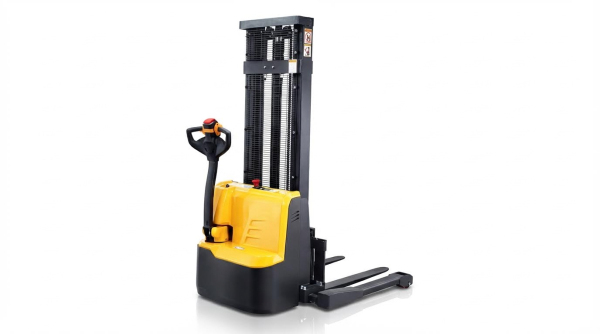
Pallet jacks and powered stackers move the effort away from pure manual lifting and toward mechanical handling. Operators can use high-lift pallet jacks or stackers to bring the pallet surface up to elbow height, stack within that range, then lower for transport, which directly limits how high workers must reach by hand. Powered stackers also allow building higher overall stacks while keeping manual stacking to the lower and middle tiers only. Atomoving systems can integrate with pallet jacks and stackers to automate repetitive moves, further reducing push–pull forces and the need to manually rework tall stacks. When defining how high to manually stack pallets, facilities can allow greater total stack height if the upper tiers are placed exclusively with powered equipment rather than by hand.
Training, Task Rotation And Inspection Practices
Engineering controls only work when combined with strong training and administrative practices. Training should cover safe lifting techniques, recognizing when a pallet is too high to continue manual stacking, and when to switch to mechanical aids. Task rotation limits exposure to repetitive bending and reaching, especially in high-volume palletizing zones. Supervisors should inspect stacking areas, lift tables, pallet jacks, and powered stackers regularly, checking that workers are not exceeding defined manual stack heights or unit weight limits. Clear visual markers on walls, posts, or equipment showing “maximum manual stacking height” help operators decide in real time how high to manually stack pallets without guesswork.
Summary: Safe Heights, Stable Stacks, Healthy Workers
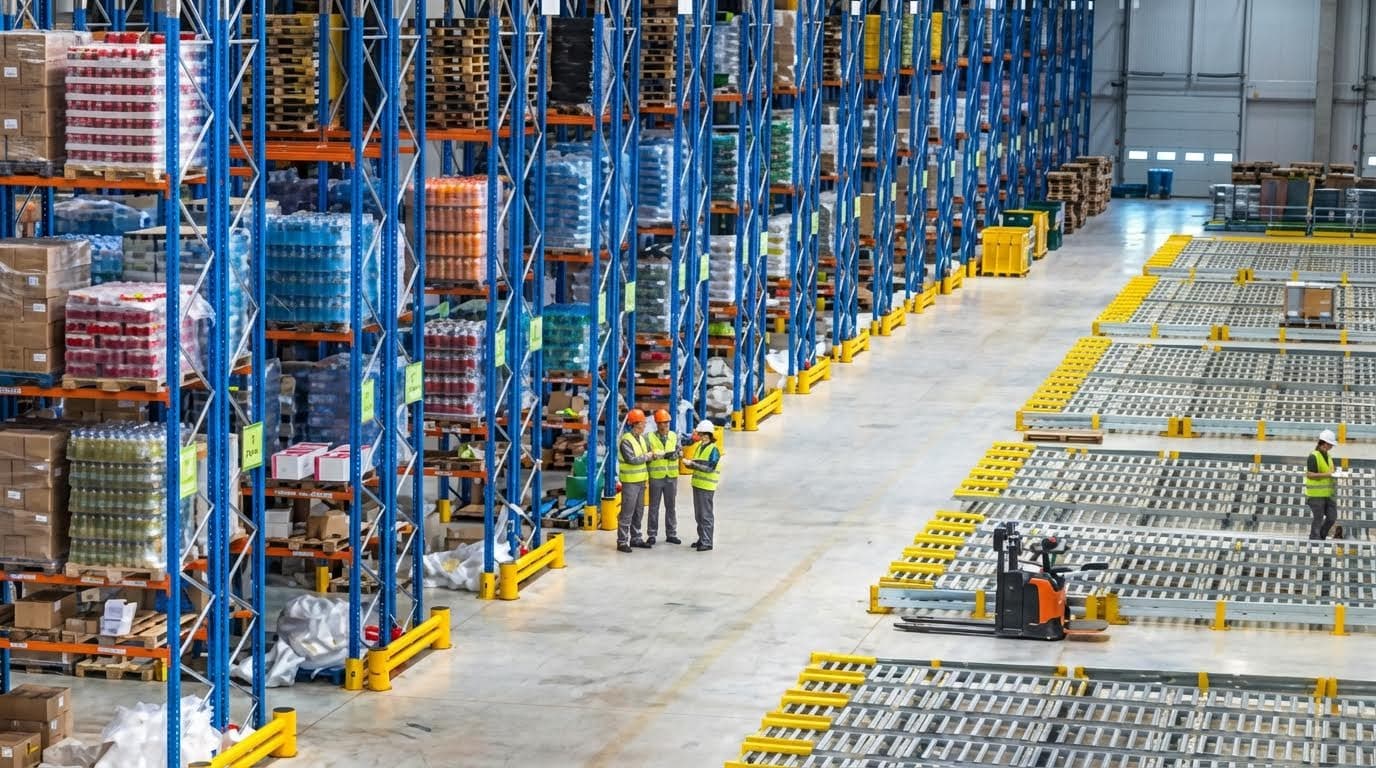
Facilities that ask how high to manually stack pallets must balance three factors: engineering limits, stability, and ergonomics. Technically, pallet material, load geometry, and the 4:1 height-to-base ratio defined the upper stability boundary. Regulators and insurers further constrained heights through NFPA idle pallet rules, OSHA tiered-storage requirements, and sprinkler clearance criteria. At the same time, ergonomics research showed that manual stacking above shoulder height and frequent lifts near 20 kg rapidly increased musculoskeletal risk.
From an engineering standpoint, safe manual stack heights rarely matched the absolute structural capacity of wood, plastic, or steel pallets. Wood stacks that theoretically reached 4.5–5.5 m, or steel stacks that exceeded 6 m, still required reduction when workers stacked by hand. Practical limits typically kept manual stacking to about head height, then shifted to pallet jacks, powered stackers, or Atomoving solutions for higher tiers. Correct load patterns, such as block or pinwheel stacking, and securing methods like wrap, straps, and anti-slip sheets, preserved the 4:1 stability envelope.
Industry trends moved toward engineered layouts that integrated clear sprinkler paths, defined idle pallet zones, and strict height rules for both loaded and empty stacks. Facilities used lift tables, self-levelers, tilt devices, and vacuum lifters to keep the work zone around waist height and to reduce bending. Future practice will likely combine real-time monitoring of stack geometry, codified ergonomic limits on manual reach height, and automated assistance for any layer above safe hand-stack range.
To implement these principles, engineers should treat “how high to manually stack pallets” as a multi-constraint design problem, not a single number. They must verify pallet condition, floor flatness, and load stability; apply the 4:1 ratio; and then cap manual stacking at ergonomically acceptable reach heights. Above that level, mechanical aids like powered stackers should complete the stack. This approach keeps heights safe, stacks stable, and workers healthy while allowing dense, compliant storage.