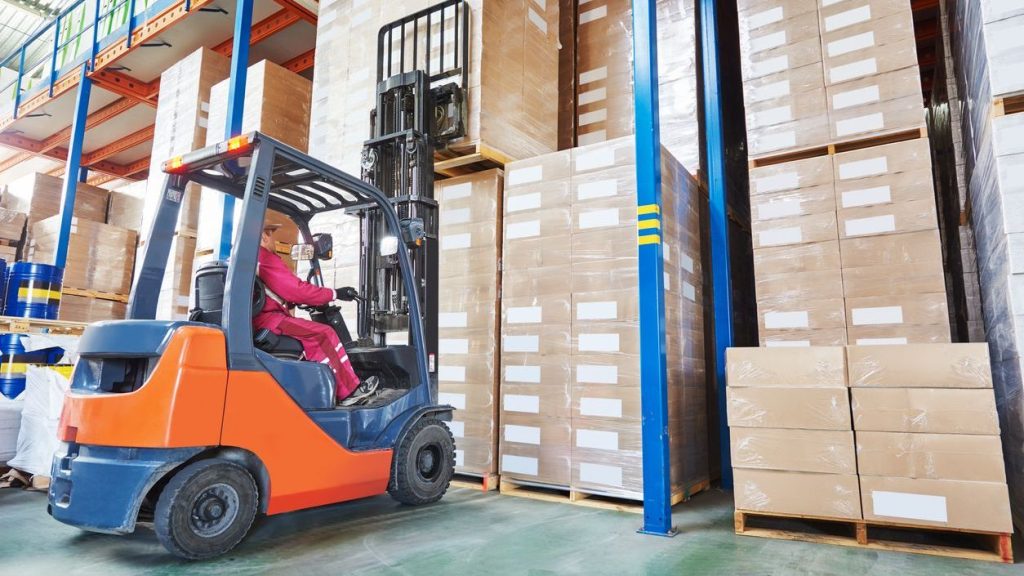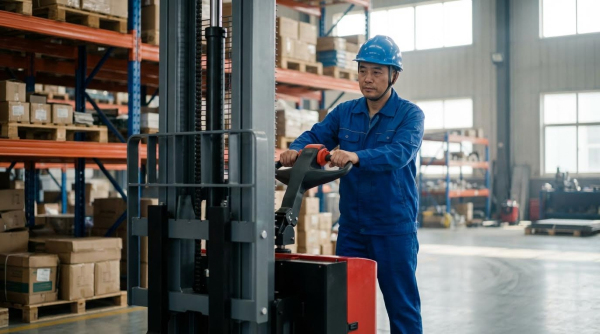
Safe and efficient walkie stacker operation in industrial facilities depended on disciplined training, structured procedures, and robust maintenance practices. This article examined core operating principles, regulatory-aligned competency and record-keeping, and the technical foundations of stability and load control for pedestrian-operated lift trucks.
It then detailed pre-operation inspections, PPE requirements, and safe driving rules, including slope limitations, speed management, and traffic coordination within busy warehouse environments. Subsequent sections addressed load handling techniques, battery care, hydraulic and brake checks, and preventive maintenance routines with fault diagnostics.
The final section integrated these themes into a lifecycle view, showing how structured risk reduction practices extended equipment life, improved uptime, and supported compliant, high-throughput material handling using lift stacker in modern industrial operations.
Core Principles Of Walkie Stacker Operation
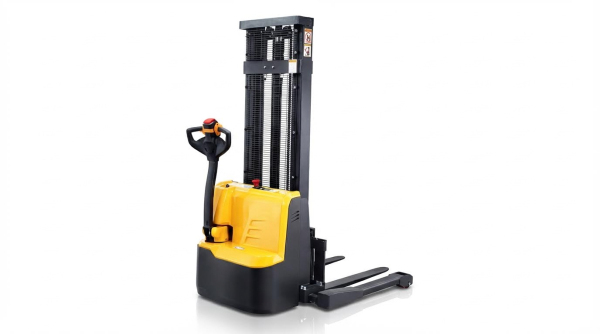
Core principles for walkie stacker operation in industrial facilities focused on safety, predictable performance, and regulatory alignment. Operators applied standardized procedures for inspection, travel, and load handling to control risk. Facilities integrated these pedestrian-operated trucks into wider material handling systems to support throughput and minimize damage. The following subsections detailed foundational concepts that underpinned safe and efficient use.
Walkie Stackers In Modern Material Handling
Walkie stackers functioned as pedestrian-operated lift trucks for palletized loads in tight aisles and near production lines. Their compact chassis and electric drive allowed precise positioning at high-bay racking or workstations without exhaust emissions. Facilities used them where full counterbalance forklifts lacked maneuvering space or created excessive pedestrian risk. Typical applications included case-pick zones, buffer storage, small parts warehouses, and machine-feed areas. Choosing the correct walkie stacker type, such as straddle, reach-style, or counterbalanced stacker, depended on pallet type, aisle width, and required lift height. Correct matching of equipment to task reduced product damage, congestion, and cycle times.
Operator Competency, Licensing, And Records
Operator competency relied on formal training that covered equipment controls, stability principles, and site-specific hazards. Training programs typically aligned with standards such as CSA B335-15, OHSA, and related regulations or guidance in the relevant jurisdiction. Courses combined theory, hazard identification, and practical driving assessments, with certificates usually valid for about one year before renewal. Walkie stackers were classified as pedestrian-operated trucks and often did not require a national high-risk work licence, but employers still had to verify competence. Organizations maintained training records, evaluation results, and authorization lists to demonstrate due diligence during audits or incident investigations. Refresher training followed near-misses, equipment changes, or process modifications that altered risk profiles.
Stability, Capacity Plates, And Load Centers
Safe operation depended on understanding the relationship between rated capacity, load center, and lift height. The capacity plate on each walkie stacker specified maximum mass at defined load centers and mast heights using SI units. Operators had to read this plate and compare it with pallet weight, load geometry, and any attachments before lifting. Exceeding rated capacity or extending the load center by poorly placed or overhanging goods reduced the stability margin. Training covered the stability triangle concept and how mast tilt, slope, and braking affected the combined center of gravity. Operators kept loads low during travel, tilted back within design limits, and avoided side slopes to maintain stability.
Integrating Walkie Stackers With Other Systems
Industrial facilities integrated walkie stackers into broader material handling flows that included conveyors, pallet flow racks, and automated storage systems. Clear traffic plans defined pedestrian walkways, crossing points, and interaction rules with ride-on forklifts or automated guided vehicles. Staging areas near docks or production cells were dimensioned so walkie pallet truck could maneuver without blocking emergency routes or fixed equipment. Data from maintenance records, incident reports, and cycle counts supported decisions on fleet size, charging infrastructure, and shift allocation. When facilities adopted new technologies such as warehouse management systems or semi-automation, procedures for walkie stacker routing, task assignment, and parking were updated. This systems-level approach minimized congestion, improved throughput, and maintained consistent safety performance across the site.
Pre-Operation Checks, PPE, And Safe Driving
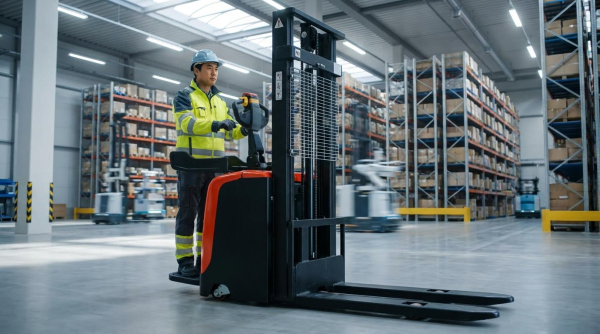
Safe walkie stacker operation in industrial facilities relied on disciplined preparation and controlled driving behavior. This section linked personal protection, systematic inspections, and dynamic traffic management into a single operational framework. It connected regulatory expectations, training outcomes, and practical site rules to reduce collision, tip-over, and mechanical failure risks. The focus remained on repeatable routines that supervisors could audit and operators could apply consistently across shifts.
Required PPE And Pedestrian-Safe Work Zones
Operators and nearby pedestrians had to wear safety footwear with reinforced toes and slip-resistant soles. High-visibility vests or jackets improved conspicuity in aisles with intersecting traffic and blind corners. Facilities added task-specific PPE such as hard hats, safety glasses, gloves, or hearing protection where overhead loads, flying particles, or noise exceeded limits. Supervisors defined pedestrian-safe zones using painted walkways, barriers, and exclusion areas around loading, charging, and high-density racking. Clear signage indicated no-go zones for pedestrians during stacking, battery maintenance, and tight maneuvering operations. These controls reduced struck-by incidents and ensured predictable interaction between walkie stackers and foot traffic.
Daily Pre-Shift And Pre-Use Inspection Checklist
Operators performed a documented pre-shift inspection before using any lift stacker. They reviewed previous logbook entries, then conducted a visual walk-around to detect leaks, structural damage, loose fasteners, or deformed forks. Checks included tires for cuts or excessive wear, wheels and casters for free rotation, and guards for correct fit. Operators tested controls, travel and lift functions, horns, emergency stop, and braking response in a clear area. They verified battery charge status, cable condition, connectors, and electrolyte levels where applicable. Fluid checks covered hydraulic oil level and visible hoses or fittings for seepage. Any abnormal noise, vibration, or control lag required immediate reporting and removal of the unit from service until qualified inspection.
Safe Start-Up, Travel, Turning, And Parking Rules
Before start-up, operators ensured the area was clear, forks lowered, and the tiller in the correct operating position. They selected the appropriate travel mode and direction slowly, confirming smooth acceleration and predictable braking. During travel, they maintained a clear line of sight, kept forks low, and adjusted speed to surface conditions and congestion. Operators approached intersections and doorways at reduced speed, sounding the horn and yielding to pedestrians. Sharp, high-speed turns, sudden braking, and reverse travel with poor visibility were prohibited. For parking, they fully lowered forks, set the tiller to neutral, cut power, and applied any mechanical or electrical parking brake. Facilities restricted parking near fire equipment, exits, emergency routes, and on slopes unless additional wheel blocking and circuit isolation were in place.
Slope Operation, Speed Limits, And Traffic Control
Industrial sites defined maximum allowable gradients, typically restricting operation on slopes above approximately 7° for loaded travel. When operating on approved inclines, operators kept the load upgrade where practicable and avoided turning on the slope. Speed limits were set based on floor conditions, aisle width, and shared traffic density, with lower thresholds in high-pedestrian or confined areas. Supervisors implemented one-way systems in narrow aisles, marked stop lines at blind intersections, and required horn use at crossings. Separation distances between walkie stackers and other powered trucks minimized rear-end collisions and allowed controlled stopping. Traffic management plans integrated signage, mirrors, floor markings, and procedural rules into site-specific safe driving standards that training programs reinforced and audits verified.
Load Handling, Batteries, And Maintenance Routines
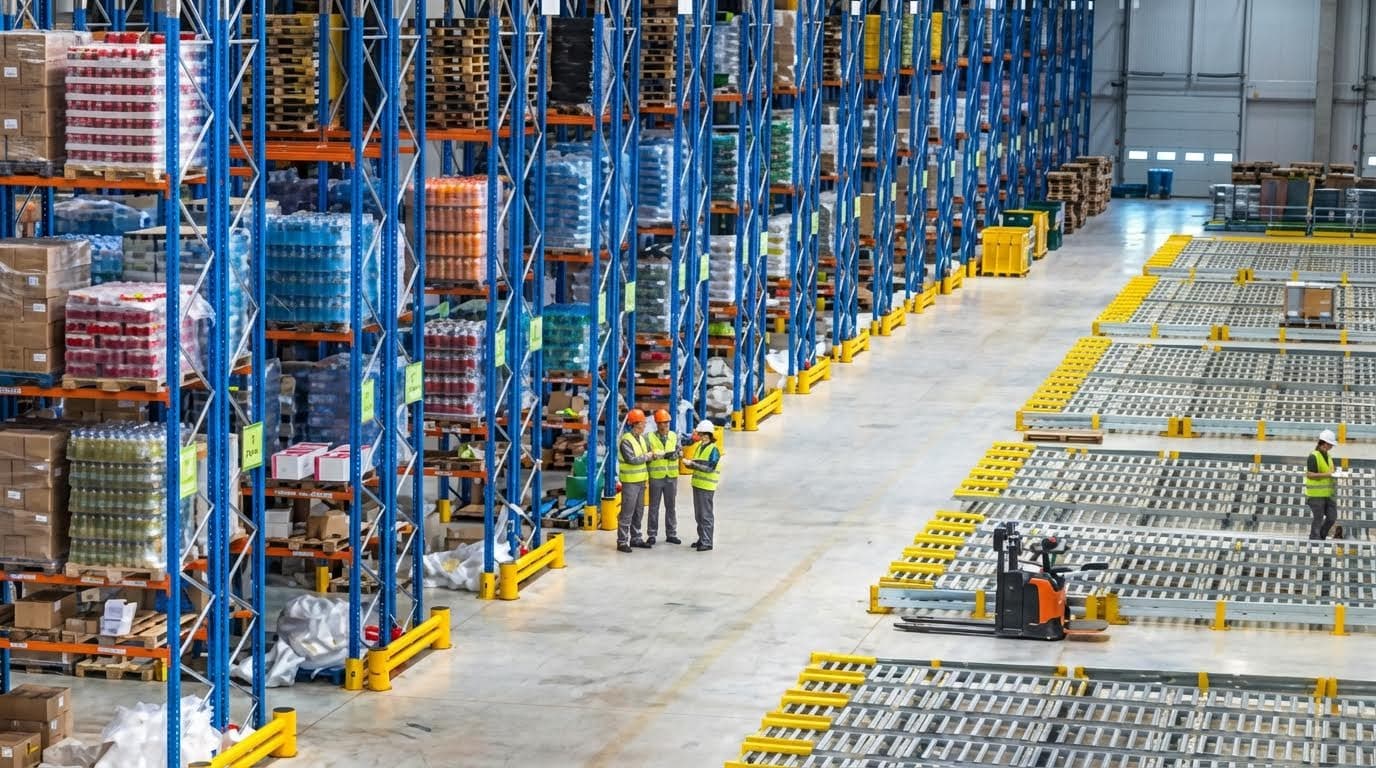
Safe walkie stacker operation in industrial facilities relied on disciplined load handling, robust battery management, and structured maintenance. These elements directly affected incident rates, component life, and equipment availability. A systematic approach to assessment, operation, and inspection allowed facilities to control risk and total cost of ownership. The following subsections detail practical methods and key technical controls for day-to-day operation.
Load Assessment, Fork Positioning, And Stacking
Operators first assessed load weight against the rated capacity on the stacker’s data plate at the specified load center. They checked that the load was compact, stable, and correctly packaged, with small or loose items secured in containers to prevent falling. Forks had to be fully inserted under the pallet, spaced evenly, and set at equal height to avoid twisting the mast. Operators centered the load laterally on the forks and kept the carriage tilted back to the allowable limit for stability.
During travel, operators maintained fork height around 300–400 millimeters above the floor on level surfaces. They avoided sudden direction changes, harsh braking, or tight-radius turns with elevated loads, which reduced the risk of tip-over. When stacking, operators stopped square to the rack, raised the load to the target level, then inched forward slowly before lowering. They ensured clearances around uprights and overhead structures and avoided pushing racks or other pallets with the forks.
De-stacking followed the reverse sequence, with operators lifting slightly to clear, reversing straight back, then lowering to transport height before travel. On uneven or sloped floors, operators minimized lift height and reduced speed to preserve stability margins. They never exceeded rated capacity, even for short moves, and reported any instability, uneven lifting, or unusual mast noises immediately.
Battery Charging, Change-Out, And Care Practices
Electric walkie stackers required batteries matched to the charger’s voltage and capacity to prevent overheating and reduced service life. Operators avoided deep discharge, typically recharging when battery charge indicators approached the recommended minimum threshold. Before charging, they parked in a designated charging area, lowered forks, turned off the power, and applied brakes. They connected and disconnected the charger with power off, then stored the charger cable to prevent trip hazards.
Routine battery care included inspecting casings for cracks, checking terminals for corrosion, and cleaning contact surfaces. For flooded lead-acid batteries, operators checked electrolyte levels after charging and topped up with purified water as required. They monitored electrolyte specific gravity according to manufacturer guidance to assess charge quality and battery health. Adequate ventilation in charging zones controlled hydrogen accumulation and complied with safety standards.
Change-out procedures used appropriate mechanical aids or purpose-designed change systems to avoid manual handling injuries. Operators wore eye protection, chemical-resistant gloves, and safety shoes when working around batteries. They secured batteries mechanically and electrically before returning the stacker to service. Any signs of overheating, unusual odor, or rapid voltage drop triggered removal from service and technical inspection.
Hydraulic, Brake, And Tire Inspection Procedures
Hydraulic systems required daily visual checks for leaks at hoses, fittings, cylinders, and the tank. Operators verified reservoir levels using sight glasses or dipsticks and replenished with filtered hydraulic oil of the specified grade. They correlated oil volume with mast height requirements, for example around 5 liters for 2.5 meters and up to 6 liters for 3.5 meters. Foam, discoloration, or metal particles in the oil indicated contamination or internal wear and required technician intervention.
Brake checks included functional tests of service and parking brakes at low speed in a clear area. Operators confirmed that tiller movement into the braking zones produced the expected resistance or clicking feedback. Maintenance personnel measured brake clearances within specified ranges, such as 0.2–0.8 millimeters, and cleaned oil or dust from steering and brake components. Any extended stopping distance, pull to one side, or inconsistent pedal or tiller feel triggered immediate reporting.
Tire inspections focused on tread wear, cuts, flat spots, and embedded debris that could affect traction and stability. Operators confirmed that tire diameters remained within tolerance across an axle to avoid uneven load distribution. Damaged or severely worn tires were replaced instead of patched when structural integrity was in doubt. Clean, undamaged tires and correct hydraulic and brake performance together maintained predictable handling and reduced collision risk.
Preventive Maintenance, Faults, And Troubleshooting
Facilities implemented tiered preventive maintenance schedules based on operating hours and manufacturer recommendations. Daily pre-shift checks covered leaks, visible damage, controls, indicators, horn, and emergency stop function, plus basic travel and lift tests. Weekly tasks often included cleaning batteries, checking electrolyte levels and specific gravity, and polishing contactor surfaces. Monthly and quarterly inspections by qualified technicians verified powertrain, lifting mechanisms, chains, electrical systems, and safety devices against specification.
Six-monthly or major services involved partial strip-down, measurement of wear on forks, chains, and brake components, and replacement of degraded parts. Inspectors reviewed operator logbooks, training records, and incident reports to correlate technical findings with operational patterns. Common faults, such as failure to lift or move, were traced to causes like blown fuses, low battery voltage, blocked hydraulic filters, or misadjusted overflow valves. Standardized troubleshooting trees helped technicians isolate issues efficiently.
Operators monitored for unusual noises, vibration, slow operation, or uneven lifting and reported them without attempting complex repairs. They stored lift stackers in clean, dry areas to limit corrosion and electrical tracking. Systematic preventive maintenance reduced unplanned downtime, extended component life, and maintained compliance with safety and regulatory expectations.
Summary: Risk Reduction And Lifecycle Optimization
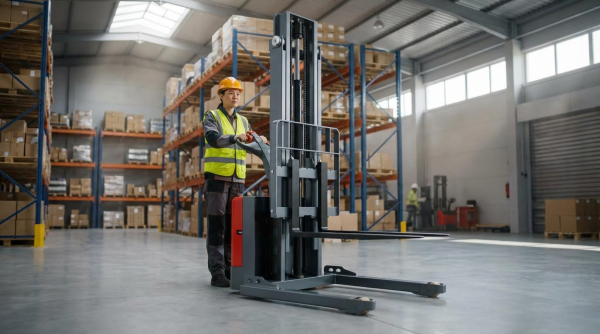
Safe and efficient walkie stacker operation relied on three pillars: trained operators, disciplined procedures, and structured maintenance. Facilities that embedded these elements into daily practice reduced incident rates, unplanned downtime, and product damage. Risk reduction started with formal operator training aligned to standards such as CSA B335-15 and relevant occupational health and safety regulations. Documented competency, refresher training, and accurate license and training records ensured only authorized personnel operated equipment.
Operational risk control depended on consistent pre-use inspections, correct PPE, and adherence to speed, slope, and traffic rules. Clear pedestrian exclusion zones, horn use at blind spots, and prohibitions on high-speed turns or sharp braking minimized collision and tip-over hazards. Load risk decreased when operators respected capacity plates, load centers, and height limits, kept forks low during travel, and stabilized small or loose items before lifting. Correct fork insertion and mast tilt, combined with controlled stacking on racking, protected both structures and inventory.
Lifecycle optimization required a preventive maintenance regime that combined daily checks with weekly, monthly, quarterly, and six‑monthly inspections by qualified technicians. Systematic monitoring of hydraulic oil levels, brake clearances, battery condition, and tire wear extended component life and preserved performance. Early detection of faults such as uneven lifting, slow operation, or unusual noise limited secondary damage and reduced repair costs.
Future practice in industrial facilities increasingly integrated lift stacker into broader fleet management and safety systems, including digital inspection logs and telematics-based usage data. These tools supported data-driven scheduling of maintenance and targeted retraining where incident trends appeared. Organizations that balanced technological enhancements with rigorous fundamentals of training, inspection discipline, and standards compliance achieved lower total cost of ownership and a safer, more reliable battery-powered stacker fleet over its full service life.