
If you run walkie stackers every day, knowing exactly how to charge walkie stacker batteries is as important as knowing how to drive them. Done right, charging boosts uptime, extends battery life, and keeps operators safe. Done wrong, it creates fire, explosion, and acid hazards. This guide walks you through safe, compliant charging for both lead‑acid and lithium batteries, with clear steps, checklists, and engineering‑based best practices. By the end, you’ll have a practical, repeatable process you can train your team on and audit against.
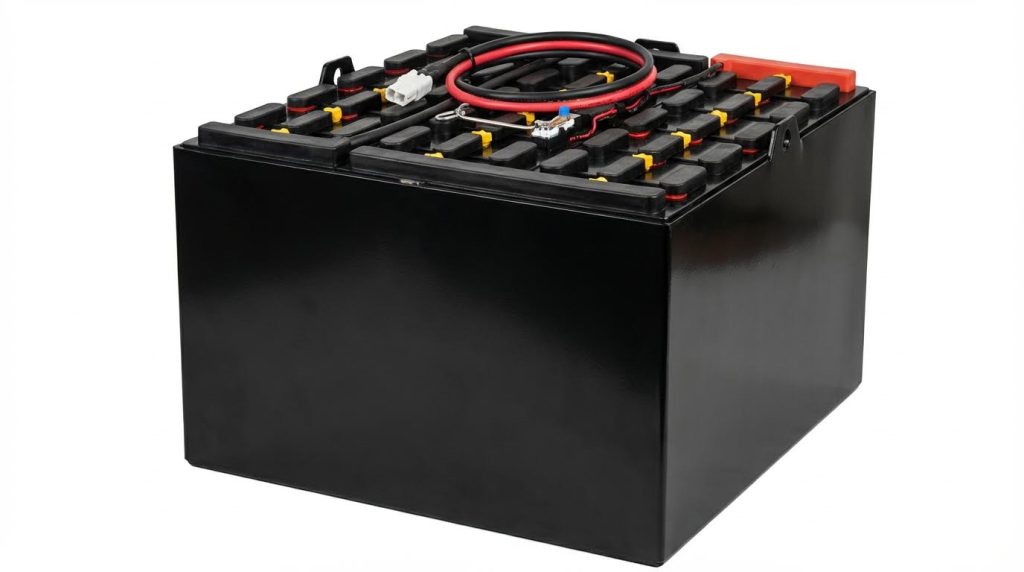
Fundamentals Of Walkie Stacker Battery Charging

Understanding the fundamentals of walkie stacker batteries is the first step in learning how to charge walkie stacker equipment safely and efficiently. Two things matter most: the battery chemistry you are dealing with and the safety rules that govern charging areas and procedures. Get these foundations right and you reduce fire, explosion, and damage risks before you even connect a charger.
Common battery types in walkie stackers
Most modern walkie stackers use either industrial lead‑acid batteries or lithium‑ion packs. Each chemistry has different charging behavior, hazards, and maintenance needs, which directly affects how to charge walkie stacker units correctly.
| Battery type | Typical use in walkie stackers | Charging behavior | Main hazards | Maintenance needs |
|---|---|---|---|---|
| Flooded lead‑acid (FLA) | Common in standard-duty warehouse walkie stackers | Slow charge (often 8–10 hours to ~80% at ~0.1C) with long absorption phase | Hydrogen gas generation, acid spills, corrosion, over‑temperature | Regular water top‑up, terminal cleaning, vent opening checks |
| Sealed lead‑acid (AGM / Gel) | Less common; used where low maintenance and low spill risk are required | Similar voltage profile to flooded, but no watering; sensitive to overcharge | Hydrogen gas (lower volume), thermal stress from overcharge | Visual inspection, torque and cable checks, no watering |
| Lithium‑ion (e.g., Li‑ion, LiFePO₄) | Increasingly used for high‑throughput, opportunity‑charging operations | Fast charge (often 1.5–3 hours to ~80% at 0.5–1C) with BMS control and communication to charger | Thermal runaway, high‑energy electrical faults, over‑voltage on cells | BMS monitoring, connector and cable inspection, no watering |
Key charging differences you must respect
Lead‑acid batteries emit hydrogen during charging, so they rely heavily on ventilation and spark control. Lithium batteries do not emit hydrogen but are more sensitive to over‑voltage and temperature, which is why they use a battery management system and often communicate with the charger over CAN bus or RS485 to enforce safe limits. Using the wrong charger on a different chemistry can be catastrophic.
Before you decide how to charge walkie stacker batteries in a given fleet, you should confirm the exact chemistry, voltage, and amp‑hour rating from the nameplate. That information drives charger selection, charge rate, and the required monitoring thresholds for temperature and cell voltage.
Key OSHA and safety compliance requirements
OSHA rules focus on trained people, controlled charging areas, and engineered safeguards around hydrogen gas, electrolyte, and electrical hazards. These are non‑negotiable foundations for any walkie stacker charging program.
- Trained personnel only: Only designated and trained workers may perform battery charging operations. OSHA requires that charging tasks are restricted to trained personnel.
- Designated charging areas: Battery charging must occur in clearly designated areas with proper safety measures and signage, not ad‑hoc locations on the warehouse floor. The standard calls for employer‑designated charging locations.
- No ignition sources: Smoking and other ignition sources are prohibited near charging batteries because hydrogen gas from lead‑acid units is highly flammable. OSHA explicitly bans smoking and ignition sources in charging areas.
| Safety aspect | OSHA / best‑practice requirement | Why it matters when charging |
|---|---|---|
| Ventilation | Charging areas must have adequate ventilation to disperse hydrogen gas. OSHA requires adequate ventilation and hydrogen gas hazard controls. Lead‑acid batteries generate hydrogen during charging. | Prevents explosive gas buildup around lead‑acid batteries and reduces heat accumulation around all chemistries. |
| Charger connections | Chargers must be turned off when leads are connected or disconnected to eliminate spark risk. OSHA specifies power off during lead connection changes. | Reduces ignition risk in hydrogen‑rich atmospheres and protects connectors from arcing damage. |
| Battery condition | Batteries must be free of corrosion, and vent holes must remain open. OSHA requires corrosion control and open vents. | Ensures safe gas release and minimizes resistance heating at terminals during charging. |
| Parking and securing equipment | Parking brakes must be applied before charging, and installed batteries must be secured to prevent contact with compartment walls or components. The standard addresses parking brakes and battery securement. | Prevents unintended movement, electrical shorts, and mechanical damage during the charge cycle. |
| Electrolyte handling | Use carboy tilters or siphons for large electrolyte containers, and keep filler caps in place when batteries are moved. OSHA specifies safe electrolyte handling methods. | Reduces spill risk and exposure to corrosive acid during watering and transport of lead‑acid batteries. |
| Emergency facilities | Eye and body flushing facilities with water must be available wherever electrolyte is handled, with limited exceptions. The standard requires flushing facilities near electrolyte handling areas. | Provides immediate response capability for acid splashes during post‑charge watering or maintenance. |
| Tools and objects | Battery handling equipment that could contact terminals must be insulated, and metallic objects must not be placed on uncovered batteries. OSHA addresses insulation and metallic object restrictions. | Prevents accidental short circuits that can cause arcing, burns, and battery damage during charging work. |
- Vent caps during charging: Vent caps must be securely in place when lead‑acid batteries are charged to control gas release paths and prevent electrolyte ejection. OSHA requires vent caps in place during charging.
- Hydrogen gas awareness: Lead‑acid charging produces hydrogen, which can create explosive atmospheres if ventilation is poor. Hydrogen is highly flammable and demands proper venting.
- Support infrastructure: Spill containment, hydrogen venting, no‑smoking zones, insulated tools, and local fire protection are all part of a compliant charging environment. Best practice includes spill containment and gas venting systems.
When you define how to charge walkie stacker batteries in your facility, build your procedures around these OSHA requirements first, then add battery‑specific steps. That way, every operator follows the same safe pattern, regardless of whether the truck uses lead‑acid or lithium power.
Final Thoughts On Safe, Efficient Walkie Stacker Charging
Safe, efficient walkie stacker charging starts with knowing the battery chemistry and its limits. Lead‑acid units demand strong ventilation, strict spark control, and careful electrolyte handling. Lithium packs demand tight control of voltage, temperature, and charger compatibility through the BMS. If you mix these rules or ignore the nameplate data, you increase fire, explosion, and damage risk with every charge.
OSHA requirements give a clear engineering framework. You must control ignition sources, gas buildup, and acid exposure. You must also secure trucks, keep terminals clean, and use insulated tools. These controls turn a high‑energy process into a predictable, low‑risk routine.
The best approach is simple. Standardize one written charging procedure per battery type. Train only designated operators on it. Build charging areas with correct ventilation, spill control, emergency wash stations, and clear signage. Then audit behavior and hardware on a fixed schedule.
When you combine correct chemistry‑specific charging with OSHA‑based layout and training, you protect people, trucks, and buildings. You also cut downtime and extend battery life. That is how operations teams should treat charging in an Atomoving walkie stacker fleet: not as an afterthought, but as a core engineered process.
Frequently Asked Questions
How to Charge an Electric Walkie Stacker?
Charging an electric walkie stacker is a simple process, but it’s important to follow safety guidelines for proper charging. First, locate the charging port on the equipment and ensure the unit is powered down before connecting the charger. Once connected, check the charging indicator light to confirm the process has started. Avoid overcharging by disconnecting the charger once the battery is fully charged. Always use the correct charger recommended by the manufacturer and charge in a well-ventilated area to prevent overheating. Electric Pallet Jack Charging Guide.
What Class Is a Walkie Stacker?
A walkie stacker falls under Class III of powered industrial trucks according to OSHA classifications. This class includes electric motor hand trucks or hand/rider trucks designed for low-lift operations like pallet handling. These machines are commonly used in warehouses for stacking and moving materials efficiently. OSHA Forklift Classification.