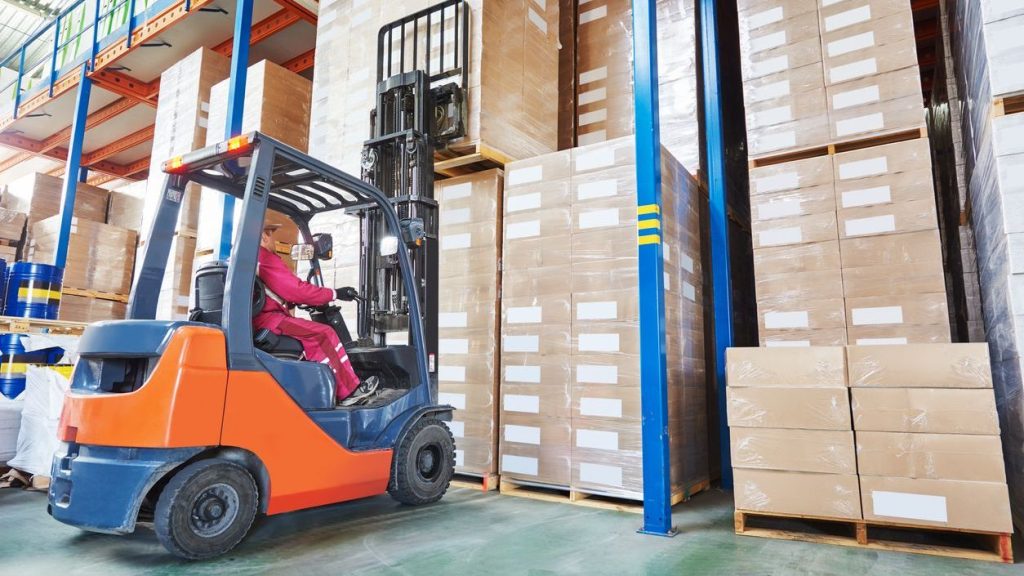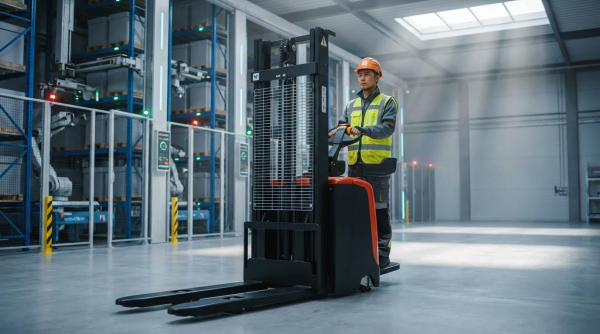
Knowing how to use a walkie stacker safely is the difference between smooth material flow and costly incidents. This guide walks operators and supervisors through core duties, daily inspections, control functions, and step-by-step operating procedures. You will also see how advanced maneuvers, technology, and maintenance practices support long-term safety and uptime. Use it as a practical field reference to tighten compliance and cut avoidable risk in any warehouse or plant using walkie stackers.
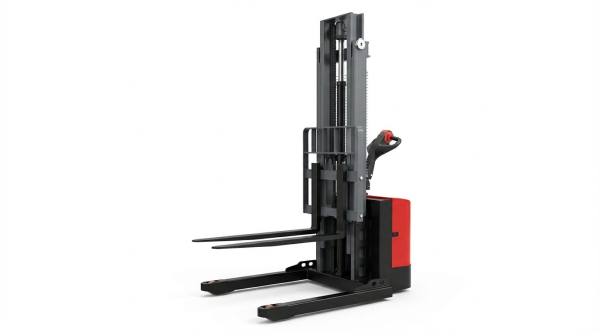
Understanding Walkie Stackers And Core Safety Duties
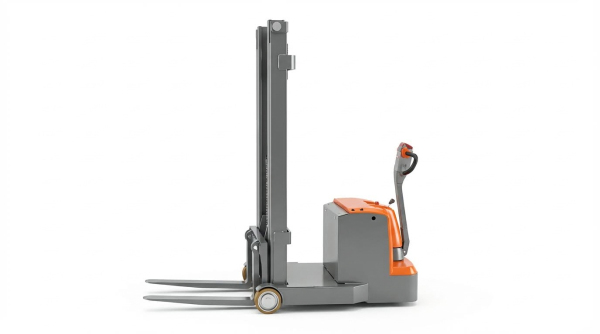
What A Walkie Stacker Is And Where It Fits
To understand how to use a walkie stacker safely, you first need to know what the machine is designed to do and where it works best. A walkie stacker is a compact, electric-powered pedestrian forklift built for tight, indoor spaces. Operators walk behind or alongside the truck, and in some models can ride on a small platform. These trucks fit between a manual pallet jack and a full sit-down forklift in both capability and risk level. They are common in warehouses, retail backrooms, and light manufacturing where aisles are narrow and floor surfaces are smooth. Typical uses include shelf replenishment, staging pallets, and feeding production lines.
The key design idea is vertical storage with minimal footprint. Walkie stackers lift higher than pallet jacks but carry less than most counterbalance forklifts. They trade ultimate capacity and outdoor capability for maneuverability and lower operating cost. That makes them ideal where space is expensive and travel distances are moderate.
Main types of walkie stackers and best-fit applications
| Walkie stacker type | Key design feature | Best-fit applications |
|---|---|---|
| Standard walkie stacker | Basic mast and forks, no outriggers or reach | Light–moderate pallet stacking, short moves, upgrade from pallet jacks |
| Straddle stacker | Outriggers straddle the pallet for stability | Narrow aisles, mixed pallet sizes, close stacking in racking |
| Reach stacker | Scissor or pantograph mast reaches forward | Loading deep racks or truck decks without repositioning |
| Ride-on / platform stacker | Flip-down or fixed operator platform | Longer travel distances in warehouses and distribution centers |
| Counterbalance stacker | Rear counterweight, no front outriggers | Handling closed-bottom pallets or where outriggers would interfere |
- Use walkie stackers on flat, smooth, well-maintained floors.
- Keep them indoors or under cover; they are not built for rough outdoor yards.
- Match mast height to your highest rack level plus clearance for safe placement.
- Match capacity to your heaviest pallet including wrapping, dunnage, and attachments.
- Choose straddle or counterbalanced stacker based on pallet style and rack clearances.
When operators understand where the machine fits in the material handling system, they make better decisions about route selection, load limits, and when to refuse a task that needs a different truck.
Operator Training, OSHA/ANSI Rules, And Limits
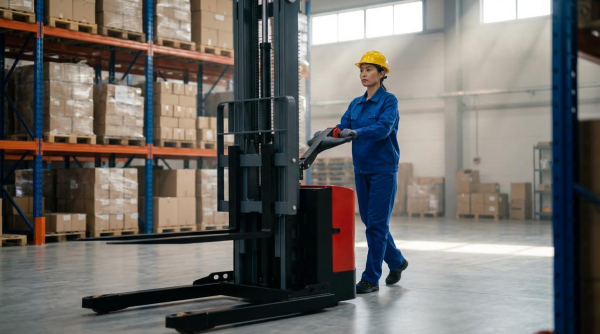
Safe, compliant operation is not just about knowing the buttons. It is about structured training, testing, and respecting the design limits of the truck and the standard that governs it. All walkie stackers are classified as powered industrial trucks, so formal instruction and hands‑on evaluation are mandatory. Regulations required operators to complete compliant training and evaluation before unsupervised use. Training content typically covered truck anatomy, inspection, safe operation, and site‑specific hazards, followed by a written and practical exam. Typical course duration ran about 1–1.5 hours with an 80% pass mark.
Knowing how to use a walkie stacker also means knowing the safety standards that apply. In North America, low‑lift and high‑lift trucks followed ANSI/ITSDF B56.1, while some programs also referenced CAN/CSA-B335 standards for lift trucks. Training courses aligned their content with these standards, covering inspections, operations, and hazard recognition.
- Training must be specific to the walkie stacker type and the actual workplace.
- Refresher training is needed after incidents, near-misses, or observed unsafe behavior.
- Only trained and evaluated operators should adjust programmable performance settings.
- Supervisors must enforce speed limits and traffic rules in shared aisles.
- Pedestrians must never ride on the forks, load, or chassis.
Typical topics in a compliant walkie stacker training program
| Topic area | Key learning points | Why it matters |
|---|---|---|
| Truck anatomy & controls | Identify mast, forks, tiller, throttle, horn, emergency stop, brake | Reduces control errors and wrong‑button reactions in emergencies |
| Pre‑shift inspection | Check forks, mast, wheels, battery, horn, brakes, hydraulics | Prevents failures in service and supports maintenance planning |
| Load handling | Fork placement, full insertion, center of gravity, stack height | Improves stability and reduces dropped or tipped loads |
| Travel rules | Speed limits, right‑of‑way, visibility, ramps, intersections | Protects pedestrians and prevents collisions in aisles |
| Worksite hazards | Uneven floors, dock edges, blind corners, congestion | Links generic rules to real conditions in the facility |
| Parking & shutdown | Park in marked areas, forks down, power off, secure truck | Prevents roll‑aways, trip hazards, and unauthorized use |
Standards and training also define clear operating limits. Operators must know the nameplate capacity at specific lift heights and attachments, and must never exceed it. They must keep loads low while traveling, avoid side loading racks, and refuse unsafe pallets or damaged racking. When people ignore these limits, the truck can become unstable long before it “feels” overloaded.
- Never operate a walkie stacker without documented training and evaluation.
- Never exceed rated capacity or lift height on the data plate.
- Never bypass safety devices such as emergency stops or dead‑man controls.
- Never use a walkie stacker to lift people, even for “quick” tasks.
- Always follow site traffic plans, floor markings, and speed limits.
When training, standards, and limits are treated as hard rules—not suggestions—operators create a consistent safety baseline. That baseline is the foundation for every detailed procedure in how to use a walkie stacker in the rest of the article.
Pre-Use Inspection, Controls, And Operating Steps
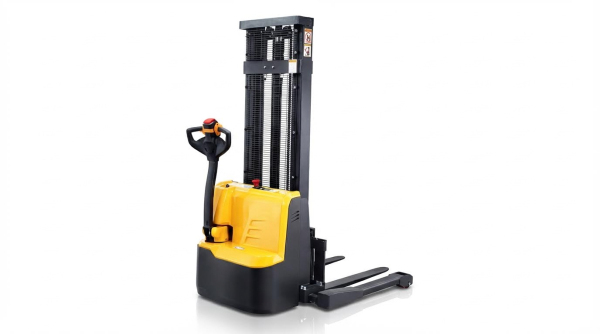
This section explains how to use a walkie stacker safely before and during each shift. Focus on three things: daily checks, knowing your controls, and following a repeatable operating sequence for every move.
Daily Walk-Around And Functional Safety Checks
Before you think about how to use a walkie stacker, you confirm that the machine is safe. A consistent walk-around routine catches most failures before they become accidents. Do this at the start of every shift and after any incident such as an impact or overload.
- Never operate a damaged or leaking unit.
- Tag out and report any safety-critical defect immediately.
- Follow your site’s checklist plus the operator manual.
| Check Area | What To Inspect | What “OK” Looks Like | Action If Not OK |
|---|---|---|---|
| General condition | Body, covers, guards, data plates | No cracks, missing panels, or unreadable labels | Report damage; do not use if guards or ID plates are missing |
| Mast & carriage | Rails, welds, rollers, chains | No cracks, bends, or loose parts; smooth movement | Remove from service; have maintenance inspect |
| Forks | Tips, heels, alignment, locking pins | Forks straight, no cracks; locks fully engaged | Do not use with bent or cracked forks |
| Hydraulics | Cylinders, hoses, fittings, underbody | No oil leaks, cuts, or bulges in hoses | Tag out; leaks must be repaired before use |
| Wheels / tires | Tread, chunks, flat spots, casters | No deep cuts; free rotation; no wobble | Schedule replacement; do not use if steering or stability is affected |
| Battery & cables | Charge level, cables, connectors | Adequate charge, clean and tight terminals | Charge battery; report frayed or hot cables |
| Controls | Throttle, lift/lower, horn, emergency stop | All functions respond correctly and smoothly during pre-operation inspection | Do not operate if any control sticks or fails |
| Brakes | Service brake, parking brake | Unit stops promptly and holds position | Remove from service until repaired |
| Warning devices | Horn, lights (if fitted), alarms | Clearly audible / visible in the work area | Repair before use in pedestrian areas |
Functional checks come immediately after the visual walk-around. Perform them in a clear area with no pedestrians.
- Turn on power and check battery indicator is in the safe range.
- Test horn and any lights or alarms.
- Verify forward and reverse travel, then steering response.
- Raise and lower the mast through a short stroke with no load.
- Test brakes from low speed to confirm quick, straight stops.
- Confirm emergency stop and any “belly button” or dead-man features work.
Why daily checks matter
Most walkie stacker incidents involve poor brakes, leaking hydraulics, or stuck controls that operators could have found during pre-use inspection. A 3–5 minute check is the cheapest safety measure you have.
Control Layout, Travel Modes, And Emergency Features
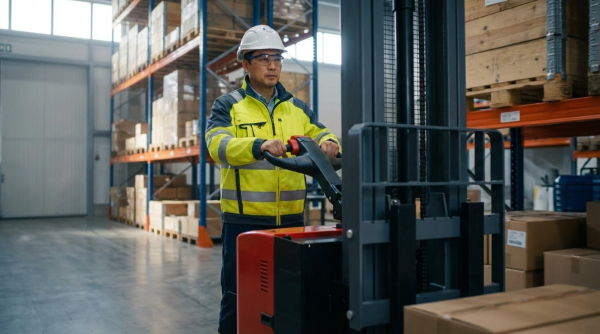
Knowing how to use a walkie stacker starts with knowing every control by feel, not just by sight. Practice in an open area with no load until you can operate all functions smoothly. This reduces errors once you are near racking, doors, and people. Control familiarization in a safe area is a key best practice.
| Control / Feature | Typical Location | Main Function | Safe-Use Notes |
|---|---|---|---|
| Steering / tiller arm | Central handle at rear | Steers unit and houses most controls | Keep both hands on the handle; never pull from the side of the forks |
| Travel throttle | On tiller handle (thumb or twist) | Controls direction and speed | Feather the control; avoid full-speed starts or sudden reversals |
| Lift / lower switches | On tiller head | Raise or lower forks / mast | Never lift or lower while someone is near the load or pallet |
| Horn | Tiller head button | Warn pedestrians and other operators | Use at intersections, blind spots, and when entering aisles |
| Key / power switch | Dashboard or side panel | Turns truck on and off | Remove key or disable power when parking |
| Emergency stop button | Top of dash or chassis | Cuts all power instantly | Use only in an emergency; reset and test before resuming work as part of post-event checks |
| “Belly” or anti-crush button | Rear of tiller head | Reverses or brakes if operator is pinned | Stay out of pinch zones between truck and fixed objects |
| Parking brake (if separate) | Pedal or lever | Holds unit when parked | Apply whenever stopped on any slope |
Most walkie stackers offer at least two travel modes. Use the correct one for your space and load.
- Normal mode: Full-speed range for open, clear areas with good visibility.
- Turtle / creep mode: Reduced speed for tight spaces, docking, and fine positioning.
- Reverse mode: Used for backing out of aisles; walk beside the truck for visibility.
Emergency features only protect you if you know exactly what they do and how to reset them. Train yourself to hit the horn or emergency stop without looking down. That muscle memory can prevent a crush or collision.
Practice drill for new operators
With forks fully lowered and no load, practice: starting, stopping, short forward and reverse moves, tight turns, and emergency stop activations in a marked-off area. Only move to loaded practice after you can perform all actions smoothly.
Step-By-Step Safe Lifting, Travel, And Load Placement
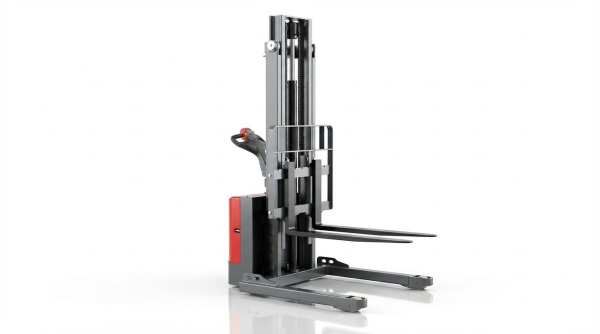
This is the core sequence for how to use a walkie stacker with real loads. Follow the same steps every time to keep the load stable and the machine within its design limits.
- Plan the move
- Confirm load weight and compare to the truck’s capacity plate.
- Check that pallet and packaging are intact.
- Walk the route for spills, slopes, and obstructions.
- Approach the load
- Travel with forks low and level.
- Align the truck square to the pallet; avoid diagonal approaches.
- Stop with forks centered on the entry openings.
- Insert the forks fully
- Drive slowly forward until the forks are fully under the pallet.
- Verify that the pallet deck boards rest on the full fork length, not just the tips.
- Partial fork entry greatly increases tipping risk and can break the pallet due to poor contact area.
- Lift to travel height
- Raise the load just enough to clear the floor and any minor unevenness.
- Do not travel with the load high; a higher center of gravity reduces stability and increases tip risk.
- Travel with the load
- Walk beside or slightly ahead of the stacker, never directly in front.
- Keep speed low, especially with heavy or high loads to maintain control.
- Avoid sudden turns and quick reversals; these side-load the mast and pallet.
- Use the horn at intersections and when exiting aisles.
- Position at the destination
- Stop square to the rack, stack, or floor position.
- Check that the surface is level and can support the load.
- For racking, confirm beam spacing matches pallet size.
- Place the load
- Raise to the correct height only when you are in final position.
- Move forward slowly until the pallet is fully supported by the rack or stack.
- Lower the load gently until it is fully resting and stable before withdrawing the forks.
- Withdraw and clear
- Once the weight is off the forks, back out slowly and straight.
- Lower forks to travel height before moving away.
- Never turn with forks inside a pallet or under a load.
- Parking and post-operation checks
- Park in a designated area, on level ground, clear of exits and equipment.
- Lower forks fully to the floor and neutralize controls.
- Turn off power and remove the key or follow your site’s lockout process.
- Visually check for new leaks, damage, or unusual noises, and report issues as part of post-operation checks.
Quick recap: Safe sequence every time
Plan the move → Inspect the truck → Approach square → Insert forks fully → Lift just clear → Travel slow with low load → Position accurately → Lower and place → Withdraw straight → Park and power down. This repeatable sequence is the backbone of safe, efficient walkie stacker operation.
Advanced Maneuvers, Technology, And Maintenance
Working In Narrow Aisles, Ramps, And Tight Spaces
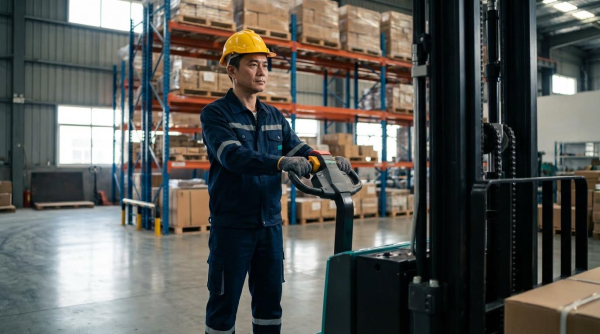
Knowing how to use a manual pallet stacker in tight, real-world spaces is just as important as basic operation. Advanced maneuvering focuses on keeping the truck stable, the operator clear of pinch points, and pedestrians protected. Practice in open areas before attempting these techniques under load. Skilled operators navigated inclines, tight spaces, and reverse operations safely by following defined guidelines.
Narrow aisle operating principles
Use these rules whenever aisle clearance is limited.
- Keep forks and load as low as practical while moving to maintain a low center of gravity.
- Walk slightly ahead and to the side of the truck, never directly in line with the forks or chassis.
- Reduce speed well before turns; avoid sudden steering inputs that can cause side loading of the mast.
- Use horn and visual checks at intersections and rack ends to warn pedestrians.
- Avoid “tail swing” impacts by allowing extra clearance at the rear of the truck when turning.
- Do not attempt to pass pedestrians or other equipment inside a narrow aisle; wait for a clear path.
Ramps, slopes, and dock plates
Ramps and dock plates add gravity forces that affect traction and stopping distance. When learning how to use a walkie pallet truck on slopes, apply these rules.
- Travel with the load upgrade (uphill) whenever possible so the load cannot roll over the operator.
- On steep slopes, avoid turning; keep the truck straight to prevent lateral tip-over.
- Use the lowest speed setting; allow extra stopping distance because braking effectiveness decreases on slopes.
- Verify dock plates and bridge plates are rated for the combined weight of truck and load before crossing.
- Do not stop and restart mid-ramp with heavy loads unless the manufacturer allows it; risk of rollback increases.
Tight turns, reverse travel, and precision positioning
Complex maneuvers demand clear visibility and predictable truck response.
- Use reverse travel when the load blocks your view, always checking behind before moving.
- Feather the throttle and steer in small inputs for fine positioning in front of racks or machinery.
- Stop and re-align if the pallet is not square to the rack; do not twist the load into position with steering alone.
- Use short “bump” movements of the drive control instead of continuous high-speed travel in congested areas.
- Practice advanced maneuvers unloaded in an open area before attempting them with real loads. Operators who practiced controls in open areas reduced maneuvering errors under load.
Battery Care, Li-Ion Options, And Charging Safety
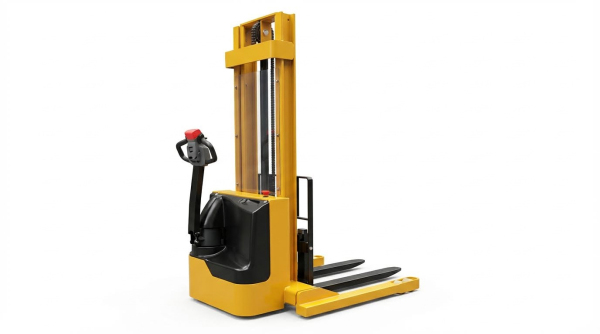
Battery reliability is central to safe uptime and low total cost of ownership. Poor charging habits shorten battery life and increase failure risk. Whether you use lead-acid or lithium-ion, build a consistent routine for inspection, charging, and storage.
Battery care and charging checklist
Use this daily and weekly checklist to manage battery health.
- Check charge level and cables during pre-shift inspection; confirm connectors are secure and undamaged. Pre-operation checks included verifying that the battery was fully charged and controls functioned correctly.
- Avoid discharging below roughly 20% state of charge to limit deep-cycle damage. Guidance warned against over-discharging batteries below 20%.
- Use chargers with automatic cut-off to prevent overcharge and overheating.
- Keep the charging area ventilated, clean, and free of ignition sources.
- Inspect for corrosion on terminals and clean according to facility procedures.
- Monitor ambient temperature during charging; avoid charging in very hot or very cold conditions when possible. Battery maintenance guidelines emphasized temperature control during charge cycles.
Li-ion vs lead-acid: practical differences
Both chemistries are used in walkie stackers. This comparison helps you choose and operate each type correctly.
| Aspect | Lead-Acid (Typical) | Lithium-Ion (Typical) |
|---|---|---|
| Charging pattern | Prefers full charge cycles; avoid frequent short “opportunity” charges. | Handles opportunity charging well; can charge during breaks. |
| Maintenance | May require water level checks and venting (for flooded types). | Generally sealed and maintenance-light. |
| Energy efficiency | Lower round-trip efficiency; more heat loss. | Higher round-trip efficiency, better energy use. |
| Weight contribution | Acts as counterweight; heavier package. | Lighter; may change truck balance by design. |
| Upfront cost | Lower initial cost, shorter life in harsh use. | Higher initial cost, longer cycle life when managed correctly. |
When teaching new staff how to use a battery-powered stacker with Li-ion power, stress that state-of-charge can be managed with many short charges instead of a single long one, provided the charger and battery are approved for that pattern.
Seasonal and storage considerations
Environment strongly affects battery and electronic reliability.
- Shorten hydraulic oil change intervals in cold seasons by around one-third to keep viscosity within range. Guidance recommended reducing hydraulic oil change intervals by 30% in winter.
- Protect chargers and batteries from condensation and humidity to prevent circuit oxidation.
- For longer-term storage, park in a dry, clean location and isolate the battery per manufacturer instructions to limit self-discharge. Storage recommendations included clean, dry locations and battery isolation for electric models.
Preventive Maintenance, Records, And TCO Impact
Preventive maintenance directly drives uptime, safety, and total cost of ownership (TCO). Small scheduled tasks cost far less than unscheduled failures, product damage, or injuries. A structured PM program also shows regulators that you operate powered industrial trucks responsibly.
Core preventive maintenance tasks
These tasks form the backbone of any walkie stacker PM plan.
- Perform daily safety inspections of mast, forks, chassis, wheels, and visible hydraulics for cracks, leaks, or loose parts. Daily inspections covered body, mast, forks, tires, hoses, fluids, and electrical connections.
- Lubricate chains, bearings, and pivot points on a regular schedule using specified lubricants. Biweekly lubrication of moving parts reduced friction and wear.
- Clean the truck body, mast, and controls to prevent corrosion and keep switches and contact points reliable. Cleaning procedures focused on body, wheels, mast, and controls.
- Check and tighten loose nuts, bolts, and screws to avoid vibration-related failures.
- Test brakes and horn frequently to confirm predictable stopping and warning capability. Weekly brake and horn checks were recommended to avoid accidents.
- Inspect the mast and lift mechanism for wear, cracks, and smooth operation before heavy use.
- Schedule technician inspections based on hours of operation and duty cycle to check hydraulics, electrical systems, and internal components. Technician inspections included filter changes, lubrication, and system checks.
Maintenance intervals and responsibilities
Assign clear ownership for each maintenance layer.
| Task Layer | Typical Frequency | Primary Responsible | Examples |
|---|---|---|---|
| Pre-shift checks | Every shift | Operator | Visual damage check, controls test, horn and brake function, battery level. |
| Routine cleaning & tightening | Weekly or biweekly | Operator / in-house maintenance | Cleaning, fastener tightening, simple adjustments. |
| Lubrication & functional tests | Biweekly to monthly | Maintenance technician | Lubricating chains and bearings, detailed mast function tests. |
| Comprehensive service | Quarterly or by hours | Service technician | Hydraulic checks, electrical diagnostics, component replacements. |
| Major inspection | Annually or as required | Qualified technician | Full structural and safety inspection, capacity and performance verification. |
Records, training, and TCO impact
Documentation and training link daily actions to long-term cost and safety.
- Maintain a maintenance log for every unit, recording inspections, defects, and completed repairs. Maintenance records were used to optimize preventive schedules and prove compliance.
- Use records to spot patterns such as repeated hose failures or brake wear, then adjust PM intervals or operating practices.
- Train operators not only on how to use a electric high lift pallet truck, but also on how to recognize early signs of wear or malfunction. Operator training included inspection and safety procedures to catch early wear.
- Replace worn components promptly—tires, brakes, hoses, chains, and mast parts—to prevent secondary damage and unplanned downtime. Common replacement items included tires, brakes, hoses, chains, and mast components.
- Include downtime, emergency repairs, and product damage in your TCO analysis; a strong PM program typically lowers all three over the life of the truck.
Final Safety Takeaways For Walkie Stacker Use
Safe walkie stacker use depends on one clear idea: treat the truck as a precise lifting system, not a simple cart. Geometry, capacity, and center of gravity set hard limits. Operators must respect these limits every time they plan a route, choose a pallet, or raise a mast. Low travel height, full fork insertion, and square approaches keep loads inside the stability envelope and prevent tip events.
Daily inspections and control checks turn hidden defects into known issues before work starts. Strong training and clear site rules then guide how operators move in aisles, on ramps, and around pedestrians. Advanced maneuvers build on the same basics: slow speed, clear visibility, and keeping the operator out of crush zones.
Battery care and preventive maintenance protect the powertrain and structure that carry every load. Good records let supervisors tune PM intervals, cut downtime, and prove compliance. Operations and engineering teams should standardize one safe sequence for lifting and travel, enforce documented training, and align maintenance with actual duty cycles. When you combine these elements into one system, walkie stackers from Atomoving deliver stable loads, predictable handling, and lower total risk across the facility.
Frequently Asked Questions
How to Use a Walkie Stacker?
A walkie stacker is a versatile tool for lifting and moving pallets in warehouses. To use it, first ensure the equipment is in safe working condition by checking for damages, fluid levels, and operational controls. Safety Tips. Next, position the forks under the pallet and adjust the height using the lift controls. Move the stacker carefully to the desired location.
- Inspect the equipment before use.
- Position forks correctly under the pallet.
- Use controls to lift and move the load safely.
How High Can a Walkie Stacker Reach?
Walkie stackers are designed to handle various stacking heights. For example, the T-Series walkie reach stacker can lift pallets up to 5.5 meters high with a capacity of 1500 kg. T-Series Stacker Details.
Do You Need Certification to Use a Walkie Stacker?
While specific certification requirements may vary by region, operators should always undergo proper training to ensure safe and efficient use of a walkie stacker. Understanding safety protocols and equipment handling is essential for preventing accidents.