If you’re asking yourself “what is a straddle stacker lift” and when it makes sense over a forklift, this guide walks through the engineering, not the hype. We break down how the outrigger geometry works, key performance specs, and the real stability and safety limits you must design around. You’ll see where straddle stackers shine in tight-aisle warehouses, where they struggle, and how to match models to your layout, duty cycle, and budget. Use this as a practical spec and selection roadmap, from core design all the way to final application fit.
What A Straddle Stacker Lift Is And How It Works
Core design and outrigger leg geometry
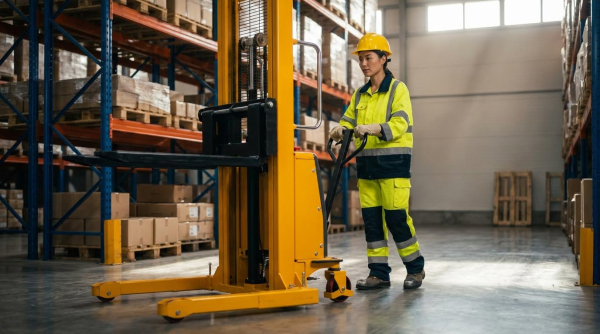
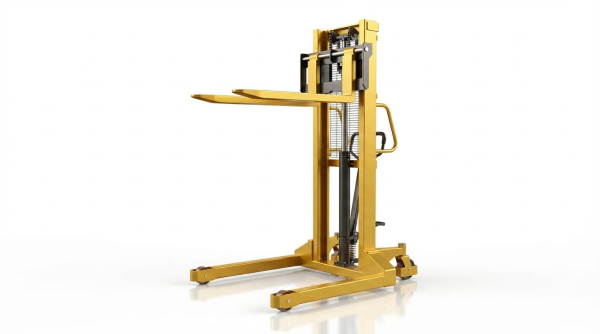
When people ask “what is a straddle stacker lift,” they are really asking how its frame and outrigger legs let it do what a regular manual pallet jack or forklift cannot. A straddle stacker is a walk-behind or ride-on lift truck with a central mast and forks, plus two low outriggers that “straddle” the pallet from the outside instead of going into the pallet openings. This geometry is what gives it stability in narrow aisles and with tall loads.
The outriggers (also called straddle legs) carry much of the load and keep the center of gravity inside a wide support polygon. Their spacing and height relative to the forks determine which pallets you can handle and how close you can work to racking and walls.
- The truck body sits between or above the outrigger legs.
- The mast and forks lift the load; the outriggers stay at floor level.
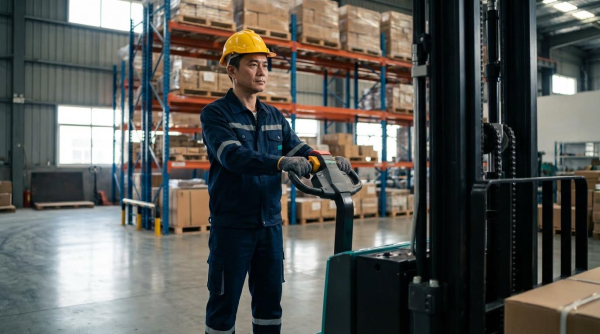
- The operator steers using a tiller arm or handle with integrated controls.
- Drive and brake forces act through the drive wheel, with outriggers stabilizing side loads.
On many electric straddle stackers, the outrigger leg width is adjustable, typically in the 1000–1500 mm range, so one truck can cover common pallet sizes while maintaining stability 1000–1500 mm adjustable support legs. The legs extend around the pallet rather than under it, so you do not rely on pallet bottom-deck strength for stability.
| Design element | Typical values / behavior | Engineering impact |
|---|---|---|
| Outrigger leg inside width | Approx. 1000–1500 mm adjustable adjustable support leg width | Matches common 1000 × 1200 mm pallets while maximizing lateral stability. |
| Supported pallet size | Designed around ~1000 × 1200 mm pallets standard pallet reference | Straddles outer edges to reduce pallet damage and tipping risk. |
| Outrigger function | Carry part of load at floor level, outside pallet footprint | Lowers effective center of gravity and increases tip resistance. |
| Wheel configuration | Drive wheel plus front and balance wheels (often polyurethane) polyurethane wheels data | Spreads loads, reduces floor wear, and improves traction. |
| Floor requirement | Relatively flat, even floors | Uneven floors can unload one outrigger and reduce stability. |
Because the outriggers sit outside the pallet, straddle stackers can operate in much tighter aisles than most counterbalanced forklifts, sometimes down to about 2.3 m right‑angle stacking aisles 2305 mm right-angle aisle width. This is a core reason they are popular in small warehouses and back‑of‑store areas.
How the geometry affects “real world” use
The question “what is a straddle stacker lift good for?” is mostly answered by its geometry. Wide outriggers plus a relatively light truck mean you can get high stability with a smaller, cheaper machine than a counterbalanced truck. The trade‑off is that the outriggers limit which pallets you can enter and how close you can get to obstacles; they also demand good floor quality so all wheels share the load properly.
Key performance specs and operating envelope
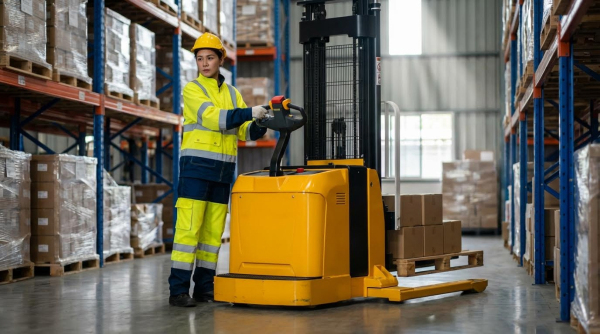
To fully understand what is a straddle stacker lift from an engineering standpoint, you need its operating envelope: how much it can lift, how high, how fast, and in what space. The values below are typical of electric walkie straddle stackers built for standard warehouse duty.
| Category | Typical spec range | Implication for use |
|---|---|---|
| Rated capacity | 1000–1500 kg at 500 mm load center 1000/1500 kg at 500 mm | Suited to most palletized goods, but not heavy steel coils or oversized loads. |
| Max lift height | ≈ 3500 mm 3500 mm max height | Comfortable up to ~3‑level racking in many warehouses. |
| Mast lowered / raised | ≈ 2080 mm lowered, ≈ 3560 mm raised mast height figures | Check doorway heights and mezzanine clearances before specifying. |
| Fork dimensions | ≈ 1150 × 160 × 60 mm, width 560–685 mm fork size and width | Covers common pallet depths; check compatibility with non‑standard pallets. |
| Lifting motor power | ≈ 2.2 kW 2.2 kW lift motor | Provides smooth vertical motion with rated loads. |
| Lifting speed | ≈ 100 mm/s no load, ≈ 50 mm/s full load lift speed data | Defines cycle times for put‑away and retrieval tasks. |
| Travel speed | ≈ 4 km/h no load, ≈ 3.5 km/h loaded driving speed figures | Safe walking‑pace operation in busy aisles. |
| Gradeability | ≈ 3% loaded, 6% unloaded gradeability data | Best suited to flat floors; not for steep ramps. |
| Battery | 24 V, ≈ 80 Ah for smaller units 24 V / 80 Ah example | Supports typical light‑to‑medium warehouse shifts. |
| Turning radius | ≈ 1431 mm 1431 mm turning radius | Enables tight maneuvering in narrow aisles. |
| Right‑angle stacking aisle | ≈ 2305 mm 2305 mm aisle width | Key parameter when designing or checking racking layouts. |
These specs define the “safe box” in which the machine should operate. If the load is heavier than the rating, the center of gravity shifts too far out and the outriggers and mast can no longer guarantee stability. If the lift height you need exceeds the mast rating, you must either change the racking or specify a different class of equipment.
- Always check the data plate for capacity at specific lift heights.
- Confirm aisle width against the right‑angle stacking spec, not just pallet size.
- Verify floor flatness and ramp gradients against the gradeability limit.
- Match daily run time to battery capacity and charging opportunities.
From a controls standpoint, most modern straddle stackers use an ergonomic handle with integrated travel and lift/lower functions, often via thumbwheels and buttons handle and control design. Brake‑override or “creep” modes allow the operator to maneuver with the handle in a near‑vertical position, keeping the operator close to the truck footprint for tight turns at low speed.
Why these numbers matter when choosing a stacker
When you evaluate what is a straddle stacker lift for your site, translate each spec into a yes/no question. Can it lift your heaviest pallet to your top beam? Can it turn in your narrowest aisle with a pallet on the forks? Can it run a full shift without mid‑shift charging? This data‑driven approach avoids oversizing (wasting money) or undersizing (creating safety and productivity problems).
“”
Ideal Applications And Selection Criteria
Matching stackers to warehouse layout and aisles
Straddle stackers shine where space is tight, loads are palletized, and travel distances are short to medium. Before you decide what is a straddle stacker lift good for in your building, match its geometry and performance to your layout.
Key layout fit checks:
- Aisle width vs. right‑angle stacking – Typical walkie straddle stackers need around a 2305 mm right‑angle stacking aisle and have a turning radius near 1431 mm for standard pallet work. Ensure your clear aisle (rack to rack, or obstruction to obstruction) is at least this wide, plus a small safety margin.
- Rack height vs. lift height – Many units lift up to about 3.5 m with a mast extended height around 3560 mm and lowered mast height about 2080 mm. Check that lift height clears your top beam plus pallet, and lowered mast clears doors, mezzanines, and tunnels.
- Floor conditions – Outrigger legs need flat, even floors. Uneven joints or ramps can destabilize the outriggers and reduce safe capacity especially at height.
- Pallet / load interface – Adjustable support legs in the 1000–1500 mm range let outriggers straddle 1000 × 1200 mm pallets securely. Confirm your pallet sizes, overhang, and any bottom boards will clear the legs and load wheels.
- Travel pattern – Straddle stackers are ideal for dock‑to‑rack, in‑aisle picking, and short transfers between zones. Long runs across very large sites may favor ride‑on trucks.
Typical “good fit” environments for straddle stackers:
- Small and medium warehouses needing more vertical storage without widening aisles to avoid the bulk of larger forklifts.
- Food and beverage operations handling ~1200 kg pallets in aisles around 2.5 m wide where double‑deep or vertical stacking is needed.
- Retail backrooms and light manufacturing cells with frequent put‑away and retrieval but limited floor space.
Quick geometry and clearance checklist
Use this as a fast screening tool before you go deeper into what is a straddle stacker lift best used for in your site.
- Measure narrowest aisle and compare to required right‑angle stacking width.
- Confirm turning space at aisle ends and intersections vs. turning radius.
- Check door and tunnel heights against lowered mast height.
- Verify top rack level + pallet height vs. maximum lift height.
- Walk the floor to note ramps, drains, and damaged slabs that could affect outriggers.
Key technical fit points:
| Layout / Task Factor | Typical Straddle Stacker Capability | Engineering Note |
|---|---|---|
| Right‑angle stacking aisle | ≈ 2305 mm for standard pallets | Ensure at least this clear width plus safety margin. |
| Turning radius | ≈ 1431 mm walkie configuration | Critical at aisle ends, docks, and doorways. |
| Lift height | Up to about 3500 mm for common models | Match to top rack beam plus pallet and clearance. |
| Mast height (lowered / raised) | ≈ 2080 mm lowered, 3560 mm raised typical figures | Check against doors, mezzanines, and sprinklers. |
| Outrigger (straddle) width | Adjustable ≈ 1000–1500 mm for stability | Must clear pallet width and any load overhang. |
| Typical load capacity | 1000–1500 kg at 500 mm load center for many units | Compare to heaviest pallet including packaging. |
Comparing TCO versus forklifts and other options
Total cost of ownership (TCO) for a straddle stacker is usually lower than for a sit‑down or reach forklift, especially in small and mid‑size facilities. The right way to answer what is a straddle stacker lift worth over its life is to break costs into buckets and compare against alternatives.
Key TCO dimensions:
- Acquisition cost – Walkie straddle stackers typically cost less than ride‑on forklifts of similar capacity. This makes them attractive for low‑to‑medium throughput sites or as supplemental machines.
- Energy and fuel – Most straddle stackers use 24 V electric systems, often around 80 Ah for light‑duty operation. Higher‑end units may use larger or LiFePO4 packs offering 8–10 hours runtime with fast recharge for multi‑shift work. Electric energy cost per pallet moved is usually much lower than diesel or LPG.
- Maintenance and downtime – Electric stackers have fewer moving parts than internal‑combustion forklifts. Routine work focuses on batteries, hydraulics, and wear components, rather than engines and exhaust systems.
- Productivity vs. travel distance – Travel speeds around 3.5–4 km/h under load are fine for compact sites but slower than ride‑on trucks. Over very long routes, extra labor time can offset the lower equipment cost.
- Training and safety – Walk‑behind operation, lower speeds, and visibility around the mast can reduce incident severity compared with larger forklifts when properly managed.
High‑level TCO comparison (conceptual):
| Cost / Performance Area | Straddle Stacker | Conventional Forklift (sit‑down / reach) | Engineering Implication |
|---|---|---|---|
| Purchase price (like‑for‑like capacity) | Lower | Higher | Stackers win in small fleets or as incremental units. |
| Energy / fuel cost | Low (24–72 V electric, efficient use) with long runtimes | Medium to high (LPG / diesel / large traction batteries) | Electric stackers typically have lower operating energy cost per hour. |
| Routine maintenance | Minimal: battery care, hydraulic checks, wheel and mast service at set intervals | Higher: engine, transmission, emissions plus hydraulics | Stackers often deliver lower annual service spend. |
| Throughput in large buildings | Moderate (walk‑behind, ≈3.5–4 km/h) under load | High (ride‑on, higher speeds, longer duty cycles) | Forklifts win where long‑distance or high‑throughput is critical. |
| Space utilization | Excellent in narrow aisles; can work in 2.5–2.7 m aisles in some applications | Needs wider aisles for turning and counterweight clearance | Stackers reduce building size or increase pallet positions. |
| Noise / emissions | Low noise, zero point‑of‑use emissions | Higher noise and emissions for IC trucks | Stackers are better for indoor, clean, or food environments. |
When a straddle stacker usually wins on TCO:
- Facility is compact, with short travel distances and narrow aisles.
- Loads are within roughly 1–1.5 ton range and lift heights around 3–4 m.
- Utilization is moderate, so you avoid paying for high‑speed ride‑on capacity you do not need.
- You want lower upfront cost and simpler maintenance than a full forklift fleet while still improving productivity.
Simple TCO screening questions
Use these questions to decide if you should prioritize a straddle stacker over a forklift.
- Are most of your moves under 50–70 m per trip?
- Is your heaviest pallet comfortably under 1500 kg at a 500 mm load center?
- Can you design or already have aisles near 2.5–2.7 m wide?
- Is indoor air quality or noise a concern (food, retail, cold storage)?
- Is capital budget tight, but you still need to increase vertical storage?
If you answered “yes” to most of these, a straddle stacker is likely the lower‑TCO, higher‑fit option compared with a conventional forklift.
Final Thoughts On Specifying Straddle Stackers
Straddle stackers work because their geometry, capacity ratings, and control systems form a single safety envelope. Outrigger legs keep the center of gravity inside a wide support base, but only if pallet size, floor flatness, and load center stay within design limits. Rated capacity and lift height charts are not paperwork; they define how far you can push the mast before stability margins collapse.
Warehouse layout and aisle width turn into hard pass/fail checks. If aisles are tighter than the right‑angle stacking spec, operators will cut corners, scrape racks, and risk tip‑overs. If floors are uneven, one outrigger can unload and the whole stability model breaks down. Battery size and duty cycle also matter. Undersized power forces mid‑shift charging and tempts operators to rush or bypass safe practices.
The best practice is simple. Start with your heaviest pallet, highest rack, narrowest aisle, worst floor area, and longest run. Then select a straddle stacker with clear margin above each of those demands. Train operators to respect capacity plates and use low‑speed maneuver modes. When you follow this engineering‑first approach, a well‑matched straddle stacker from Atomoving can deliver safe, low‑cost, high‑density storage in compact facilities.
Frequently Asked Questions
What is a straddle stacker lift?
A straddle stacker lift is a specialized pallet-handling truck designed with two support legs that extend on either side of the pallet rather than directly beneath it. This design allows for better stability and the ability to handle wider loads. Straddle Stacker Guide.
Can a straddle stacker lift loads?
Yes, a straddle stacker can lift loads, often as high as 140 inches, depending on the model. These lifts are highly maneuverable and productive, making them ideal for warehouse operations. Raymond Basics.
What is the difference between a stacker and a straddle stacker?
A traditional stacker typically supports the load from beneath, while a straddle stacker uses two support legs that extend on either side of the pallet. This difference allows straddle stackers to handle wider and more irregularly shaped loads. Poker Straddle Explained.