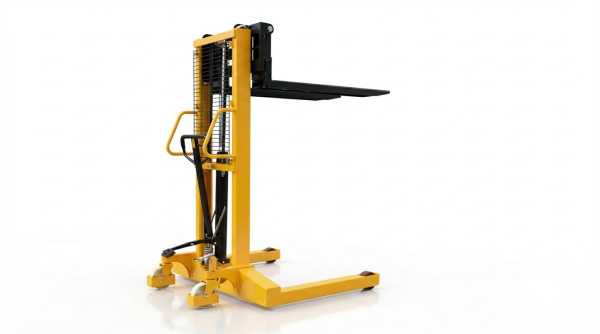
Straddle stackers operated on ramps and inclines face elevated risks related to stability, braking performance, visibility, and load control. This article examines how center of gravity, load height, travel direction, and rated capacity affect tip-over behavior on grades, and explains why diagonal movement on slopes is particularly dangerous.
It then explores engineering controls such as braking systems, wheel chocks, cameras, inclinometers, guarding, access systems, and emergency shutdown logic that enhance safety on inclines. Subsequent sections address OSHA-aligned driving practices, operator training, and structured maintenance programs, including detailed inspection routines and fault management processes on ramps.
Finally, the article summarizes best practices for planning, operating, and maintaining straddle stackers on slopes, integrating design features, site infrastructure, and digital monitoring to keep operations stable, compliant, and predictable over the machine’s lifecycle.
Core Stability Risks Of Straddle Stackers On Slopes
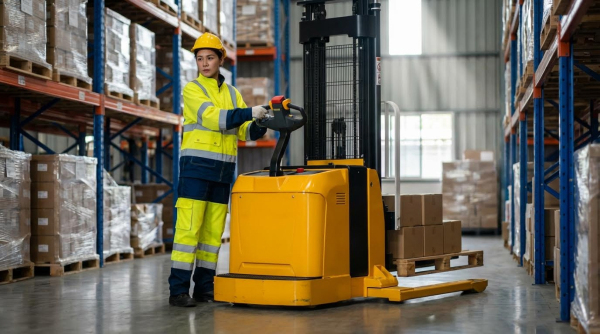
Straddle stackers operated on ramps and inclines faced complex stability challenges. Gravity, surface conditions, and dynamic load shifts interacted and could rapidly reduce the safety margin. Understanding how center of gravity, direction of travel, and rated capacity changed on grades allowed engineers and supervisors to define safe operating envelopes. Clear appreciation of these risks supported robust procedures, design choices, and training for incline work.
Center Of Gravity, Load Height, And Tip-Over Risk
The combined center of gravity of truck and load moved whenever the operator raised the forks or changed slope angle. On an incline, lifting the load increased the vertical and downhill offset of the center of gravity relative to the wheelbase. This reduced the restoring moment and increased the risk of forward or rearward tip-over, especially during braking or acceleration. Industry guidance therefore required operators to travel with the load as low as practicable and to avoid raising or lowering while moving on a slope. Load checks before entry to a ramp helped prevent overload conditions that pushed the center of gravity beyond the stability polygon.
Longitudinal And Lateral Stability On Grades
Longitudinal stability on grades depended on the relationship between slope angle, wheelbase length, and the position of the center of gravity along the travel axis. Steep ramps, abrupt transitions, or surface defects could shift the effective support points and reduce the tipping margin. Lateral stability was more sensitive on inclines because any side slope or steering input created a lateral component of gravitational force. Uneven ground, potholes, or edge drop-offs near ramp sides further reduced lateral stability and increased roll-over probability. For this reason, guidance advised straight, controlled travel up or down the fall line, with strict avoidance of side slopes or combined steering and braking shocks.
Rated Capacity, De-Rating, And Safe Slope Limits
Manufacturers rated straddle stacker capacity for level ground, with the load center specified in millimetres and mass in kilograms. On inclines, effective capacity decreased because part of the truck’s weight shifted downhill, reducing available stabilizing reaction at uphill wheels. Engineering risk assessments therefore de-rated allowable load on ramps and sometimes prohibited loaded travel above a defined gradient, such as 10% or lower, depending on design. Operators needed to confirm that the actual load, including manual pallet jack and attachments, stayed within the de-rated limit before entering a slope. Safe slope limits also considered braking performance, traction, and the ability to stop and park without wheel slip or rollback.
Why Diagonal Travel On Inclines Is Highly Unsafe
Diagonal travel on an incline combined longitudinal and lateral destabilizing forces, which severely reduced the available stability margin. When the truck pointed across the slope, gravity created a significant side force through the center of gravity, increasing the overturning moment about the downhill wheels. Any steering correction, bump, or braking event could then trigger a rapid roll toward the low side. Standards-based guidance therefore instructed operators to move straight up or straight down ramps, never diagonally, and to reverse orientation on level ground if visibility with the load leading was restricted. Where the load blocked the forward view, safe practice required travelling with the load trailing while still maintaining straight-line motion along the gradient. Additionally, equipment like the semi electric order picker or scissor platform should only be used on level surfaces to ensure maximum safety.
Engineering Controls And Design Features For Incline Safety
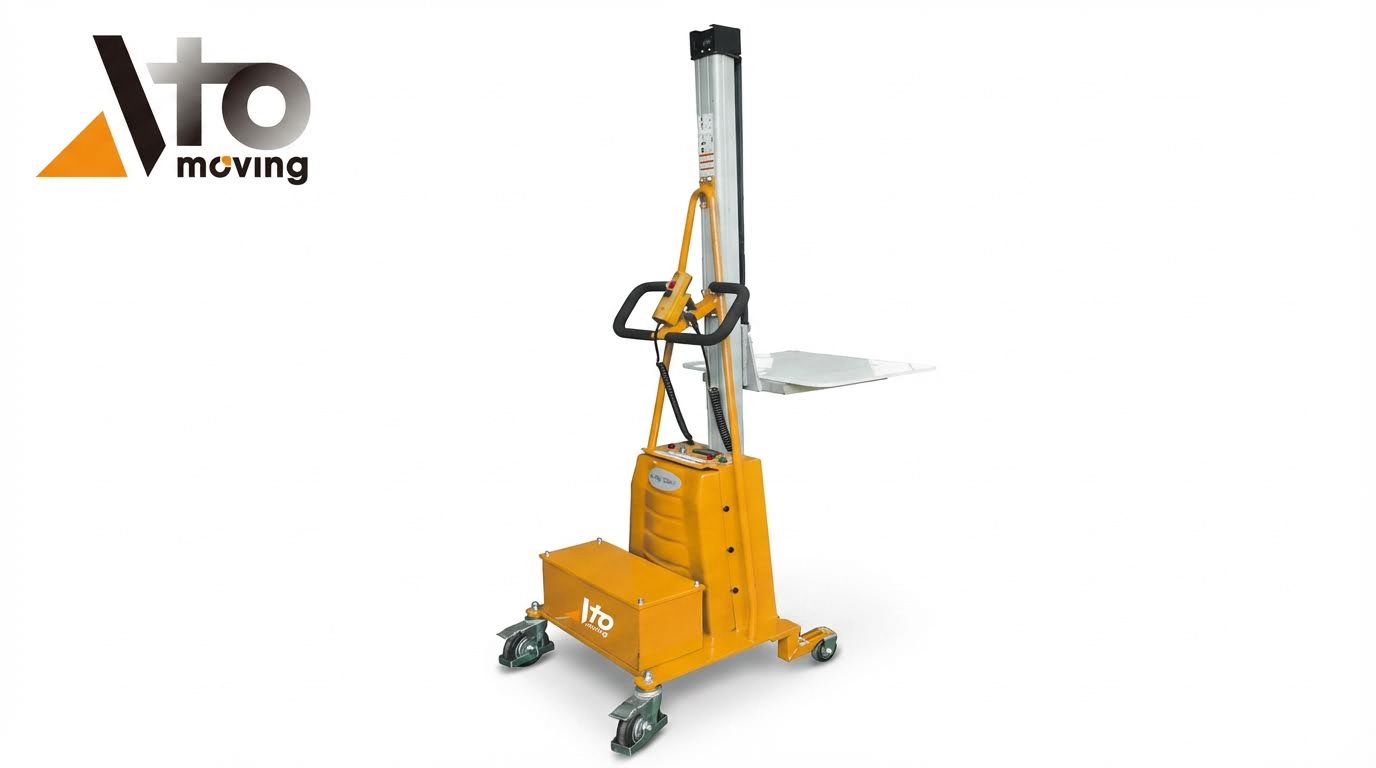
Engineering controls determined how safely a counterbalanced stacker operated on ramps and inclines. Properly designed braking, visibility aids, guarding, and control systems reduced the likelihood of loss of control and tip-over events. These features complemented operator training and procedures, and standards-based design helped align equipment performance with regulatory expectations on graded surfaces.
Braking Systems, Wheel Chocks, And Parking On Grades
Braking systems on straddle stackers needed to stop and hold the machine on specified gradients without drift. Engineers specified service and parking brakes with sufficient torque margins above expected maximum grade loads, then validated performance through instrumented tests. Pre-use checks of brake travel, response, and absence of slipping were critical, especially before operating on slopes. When a stacker was left unattended on an incline, operators had to apply the park brake and block or curb wheels using chocks to prevent unintended movement. Wheel chocks were ideally stored on the machine in easily accessible positions, with sizes and materials matched to wheel diameter and surface friction. Maintenance programs included regular inspection of friction linings, linkages, and hydraulic components, ensuring no leaks or abnormal noises that could impair braking efficiency on ramps.
Visibility, Cameras, Mirrors, And Inclinometers
Visibility determined the operator’s ability to detect hazards early on inclines where stopping distances increased. Designers positioned masts, guards, and cab structures to minimize blind spots, then supplemented natural sightlines with mirrors or Fresnel lenses to meet all-direction visibility criteria. Where mirrors were insufficient, color camera systems, including infrared or thermal imaging units, supported 360-degree awareness in low light or confined ramp areas. Inclinometers provided continuous feedback on the machine’s angle relative to horizontal, warning operators before reaching unsafe slope limits. Effective systems combined visual indicators with audible alerts in the cab, helping operators keep loads low and avoid raising or lowering while moving on a grade. Daily checks confirmed that displays, cameras, and lighting, preferably LED clusters to reduce total light failure risk, functioned correctly before ramp use.
Guarding, FOPS, Access Systems, And Operator Restraints
Guarding reduced the consequence of incidents when operating near people or beneath overhead hazards on slopes. Personnel-deflecting guards around leading wheel edges limited the risk of crushing injuries to nearby workers during maneuvering on ramps. Where there was a risk of falling objects striking the cab, engineers specified Falling Object Protective Structures upgraded to level 2 performance. Access systems to the operator’s station included non-slip steps, handholds, and platforms that were not integrated into tracks or recessed into frames, improving secure entry and exit on inclined approaches. Guardrails or handrails on adjacent walkways were typically designed to heights around 1200 mm, with a minimum of 1100 mm above the platform when fall heights exceeded 2 m. Highly visible inertia-reel seat belts, combined with warning devices, restrained operators during roll or impact events, which were more likely when center-of-gravity shifts occurred on ramps.
Control Governance, Interlocks, And Emergency Shutdown
Control governance features prevented unintended or unsafe movements that could quickly become critical on inclines. Designers used governing devices such as check valves on loader frame cylinders to stop uncontrolled lowering if a hose burst, maintaining load height and stability. Interlocks inhibited raising or lowering loads while the machine moved, enforcing adjustments only on level ground to avoid sudden center-of-gravity changes on slopes. Emergency alarms warned operators of incorrect park brake settings or unsafe configurations when leaving the cab. Automatic shutdown systems detected absence of body mass in the seat or operator presence and stopped propulsion after a defined delay, reducing runaway risks. Isolation switches that could be locked off from ground level, along with clear decals marking lifting and support points, supported safe maintenance and recovery operations on ramps. Together, these engineered controls formed a layered safety architecture for incline operation.
Operational Practices, Training, And Maintenance On Ramps

Operational discipline determined incident rates on ramps more than hardware specifications. Straddle stackers remained stable on inclines only when operators applied slope-specific techniques, respected capacity limits, and followed structured procedures. Training, inspections, PPE, and site engineering controls worked together as a single safety system. Digital monitoring and maintenance data then closed the loop by identifying high-risk patterns before they produced failures.
Safe Driving Techniques And OSHA-Aligned Procedures
Operators should avoid ramps wherever feasible, because inclines reduce both traction and stability. When slopes are unavoidable, travel must be straight up or straight down, never diagonally, to preserve lateral stability. Loads should stay as low as possible, within the rated capacity, and never raised or lowered while moving on the incline. OSHA-aligned practice required slow, controlled ascent and descent, with speed matched to gradient and surface condition. Operators had to sound the horn before turns and at blind spots, stop for pedestrians, and maintain clear visibility, using trailing travel when the load blocked the forward view. When a counterbalanced stacker was left unattended on a grade, the operator needed to fully apply the parking brake and block or curb the wheels.
Pre-Use Inspection, Preventive Maintenance, And Repairs
Pre-use checks on ramps had to focus on components affecting control, braking, and stability. Operators should visually inspect hydraulic cylinders, hoses, mast, chains, forks, and tyres or rollers for leaks, cracks, deformities, or excessive wear. Daily functional tests needed to confirm steering freedom, horn output, brake performance, park brake holding ability, and correct response of lift and lower controls. For electric machines, operators should verify battery charge, check for leaks, and inspect cables, connectors, and covers. Scheduled maintenance intervals, based on operating hours, should include hydraulic oil level checks versus lift height, brake clearance measurements, and inspection of electrical contactors, motors, and wiring. Any abnormal noise, oil leakage, or control malfunction required immediate removal from service, fault documentation, and formal work orders before the battery-powered stacker returned to ramp duty.
PPE, Site Design, Guardrails, And Traffic Management
PPE complemented but did not replace engineering and procedural controls on inclines. Operators should wear safety shoes, high-visibility clothing, hard hats, and eye protection, especially where overhead or falling-object risks existed. Site design needed defined pedestrian and equipment routes, non-slip ramp surfacing, adequate drainage, and lighting that prevented glare and shadows on slopes. Guardrails or handrails at open edges above 2 m should be at least 1.1 m high, with 1.2 m preferred, to prevent falls. Clearly marked speed limits, ramp gradient signs, and painted stop lines at intersections improved driver awareness. Traffic management plans had to prioritize right-of-way rules, pedestrian crossings, exclusion zones near ramp pinch points, and procedures for reversing or using a guide in low-visibility areas.
Digital Monitoring, Tracking, And Predictive Maintenance
Digital systems allowed supervisors to monitor how straddle stackers operated on ramps in real time. Machine tracking platforms could log travel paths, speed, ramp usage, and impact events, helping identify unsafe driving patterns or high-risk zones. Integrated sensors and inclinometers could record slope angles reached, warning operators and flagging operations that exceeded safe gradients. Maintenance software should consolidate inspection results, fault reports, and operating hours to schedule preventive tasks before component degradation affected braking or lifting performance. Predictive analytics on vibration, motor current, and hydraulic temperature trends could then forecast failures, particularly for units that frequently worked on inclines. Combined with access control and operator ID logging, digital tools supported targeted retraining, incident investigations, and continuous improvement of ramp safety procedures.
Summary Of Best Practices For Straddle Stacker Inclines
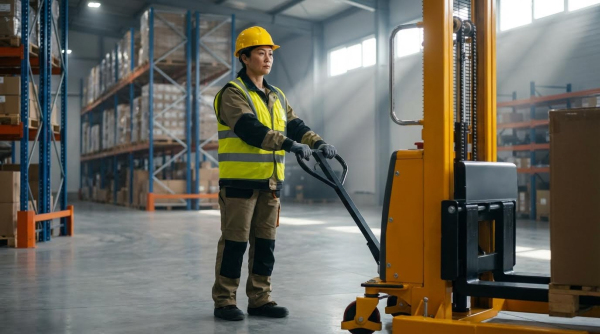
Safe use of straddle stackers on ramps and inclines relied on a combination of sound engineering controls, disciplined operating practices, and systematic maintenance. The core technical principle was stability management: operators had to keep loads low, within rated capacity, and avoid raising or lowering while moving on a slope to prevent center-of-gravity shifts and tip-over risk. Travel needed to be straight up or straight down the grade at low speed, never diagonally, with the load trailing if it blocked forward visibility.
Engineering measures that improved incline safety included effective service and parking brakes, wheel chocks for any parked machine on a grade, and verified braking performance during pre-use checks. Visibility aids such as mirrors, Fresnel lenses, and cameras, supported by adequate LED lighting and inclinometers with visual or audible alerts, helped operators maintain awareness of slope angle and surroundings. Guardrails on elevated edges, personnel-deflecting guards near wheels, upgraded FOPS where overhead hazards existed, and high-visibility restraint systems reduced injury severity during incidents.
Operationally, OSHA-aligned procedures required slow ascent and descent, horn use before turns, stopping for pedestrians, and strict adherence to rated capacity with de-rating on slopes. Employers needed to enforce training that covered stability, center-of-gravity effects, and ramp-specific techniques, alongside PPE use and site traffic management. Preventive maintenance programs with structured daily, weekly, and periodic inspections of hydraulics, brakes, tyres, electrical systems, controls, and safety devices were essential, with immediate withdrawal from service for leaks, abnormal noises, or faults.
Looking ahead, wider use of digital monitoring, machine tracking, and predictive maintenance would continue to strengthen incline safety by detecting emerging issues before failure. Integrated sensors, automatic shutdown systems, and enhanced diagnostic data supported a balanced approach where design, procedures, and technology collectively minimized risk while preserving operational efficiency on ramps and inclines.