Walkie stackers bridge the gap between manual pallet trucks and full-sized forklifts, especially in dense storage environments. This article reviews typical lift height ranges, from 2.5 m class units up to high-lift models exceeding 5 m, and explains how load capacity changes with height across walkie, reach, and counterbalance types. It then analyzes the engineering constraints that limit lift height, including mast design, hydraulic sizing, powertrain capability, and floor and racking conditions. Finally, it provides a structured selection method so facilities can match stacker lift height to rack layouts, safety rules, maintenance practices, and future automation plans.
Typical Walkie Stacker Lift Height Ranges
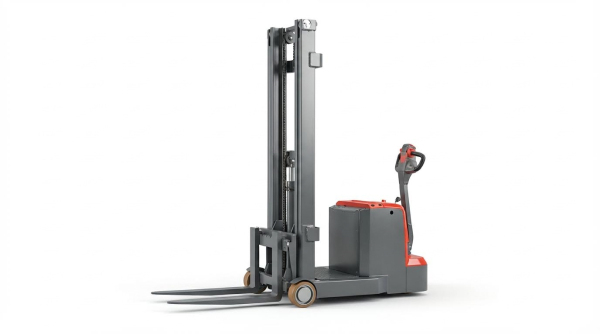
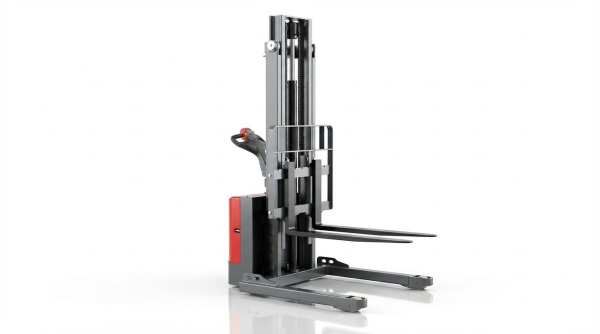
Walkie stacker lift heights historically covered a broad range, from low-level handling to high-bay storage. Manufacturers specified these heights based on mast geometry, hydraulic stroke, and stability criteria. Operators selected height classes primarily from racking requirements and aisle constraints. Understanding the typical bands helped engineers balance performance, safety, and cost.
Common Height Classes: 2.5 m To 3.5 m
The 2.5 m to 3.5 m class historically covered standard low to mid-level racking in small warehouses and workshops. Hydraulic data showed walkie stacker with 2.5 m lift using about 5.0 L of hydraulic oil, rising to about 6.0 L at 3.5 m. This band typically supported full rated capacity, because mast deflection and stability margins remained conservative at these heights. Facilities used this range for ground plus one or two beam levels, order picking, and transfer to conveyors. Engineers favored this class where building clear height or sprinkler mains limited vertical reach.
High-Lift Models: 4.0 m To 5.4 m
High-lift walkie stackers extended capability into 4.0 m to about 5.4 m for high-bay and dense storage. Market data showed models reaching 4.5 m for 1 t loads, 5.2 m for 0.5 t, and up to 5.4 m on dedicated pallet stackers. Crown designs historically lifted to around 4.9 m on straddle and reach types, and about 5.4 m on fork-over and platform pallet stackers. At these heights, manufacturers often derated capacity to maintain tip-over stability and acceptable mast deflection. These models suited narrow-aisle warehouses, supermarkets with tall gondolas, and light industrial production storage.
Load Capacity Versus Maximum Lift Height
Load charts consistently showed an inverse relationship between lift height and allowable capacity. One example stacker lifted 2.0 t only to about 3.0 m, 1.0 t to 4.5 m, and 0.5 t to 5.2 m. This pattern reflected growing overturning moments as the load center rose, which increased mast bending and reduced residual stability. Engineers specified rated capacity at a defined load center, often 600 mm, and then applied derating curves above reference heights. When selecting equipment, users had to verify that the heaviest pallet at its actual load center remained within the residual capacity at target rack beam level. Ignoring this trade-off risked mast overstress or loss of lateral stability during stacking.
Comparing Walkie, Reach, And Counterbalance Types
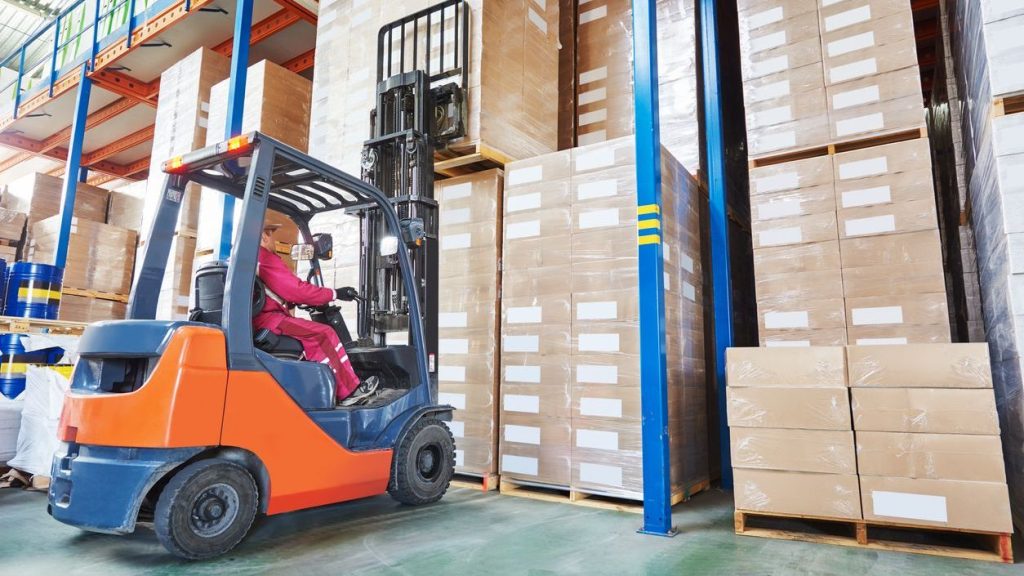
Walkie stackers historically provided economical lift heights up to roughly 3.5 m to 5.4 m, depending on mast type and straddle configuration. Reach stackers, with pantograph or moving mast, extended effective reach into deeper racking while maintaining similar or slightly higher maximum lift heights. Counterbalance trucks usually offered comparable or higher lift capability, but required wider aisles due to their longer wheelbase and rear counterweight. Walkies excelled in tight aisles and lighter duty cycles, while reach trucks served higher-density racking with better load placement accuracy at height. Counterbalance forklifts remained preferable where dock work, mixed outdoor use, or non-palletized loads dominated, even if their aisle width demand exceeded that of walkie stackers.
Engineering Factors That Limit Lift Height
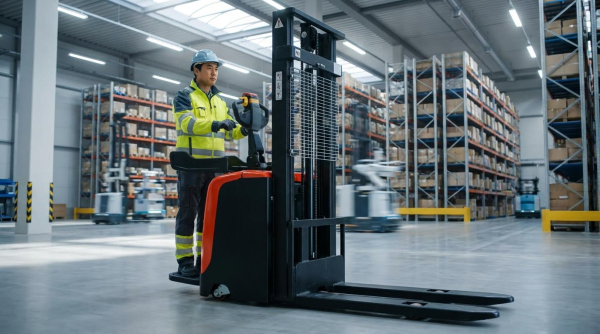
Engineering constraints defined how high walkie stackers safely lifted loads. Designers balanced mast strength, hydraulic capacity, power system limits, and site conditions to set rated heights. These factors interacted; changing one parameter often required compensating changes in others. Understanding these dependencies helped engineers and buyers interpret lift height specifications realistically.
Mast Design, Stability, And Center Of Gravity
Mast design governed structural stiffness and deflection at height. Two-stage and three-stage telescopic masts used nested channels with precise clearances and high-yield steels to control bending. As lift height increased, the combined center of gravity of truck and load moved forward and upward, reducing the stability margin against tipping. Engineers used stability triangles, load center assumptions, and ISO/EN stability tests to define safe rated capacities at specific heights. They also limited maximum lift height for given wheelbase, counterweight, and straddle leg geometry to maintain adequate overturning resistance.
Hydraulic System Sizing And Oil Volume
The hydraulic system set practical limits on achievable lift height and speed. Data showed walkie stackers with 2.5 m to 3.5 m lift heights required approximately 5.0 L to 6.0 L of hydraulic oil, with volume increasing as height increased. Higher masts needed larger cylinders, longer stroke lengths, and stronger hoses, which raised oil volume and system pressure requirements. Insufficient oil level prevented full stroke, so the forks could not reach rated height. Engineers sized pumps, valves, and reservoirs to control temperature rise, avoid cavitation, and maintain stable lift speeds under rated load across the full height range.
Battery, Motor Power, And Duty Cycle Limits
Battery capacity and motor power constrained how often and how fast a lift stacker lifted to maximum height. Taller masts required longer lift times and higher energy per cycle, especially near the top where mechanical leverage worsened. Designers matched traction and lift motors, controllers, and battery packs to a defined duty cycle, such as a specified number of full-height lifts per hour. Excessive high-lift operation caused voltage sag, thermal stress on motors, and reduced shift length. Manufacturers therefore balanced maximum lift height with acceptable acceleration, lift speed, and battery life for typical warehouse duty profiles.
Floor Flatness, Aisle Width, And Racking Interface
Site conditions also limited usable lift height, even when the machine could technically reach higher. Floor flatness tolerances, such as those defined in warehouse slab standards, affected mast lean and lateral deflection at height. Narrow aisles increased the risk of pallet or mast contact with racking during turning or side-shift, so engineers specified minimum aisle widths for given lift heights. Rack beam elevations, top-of-load clearances, and overhead obstructions constrained the practical maximum storage height. Designers integrated fork dimensions, load backrests, and tilt limits with typical rack geometries to ensure that operators could place and retrieve pallets without structural interference or visibility loss.
Selecting The Right Lift Height For Your Facility
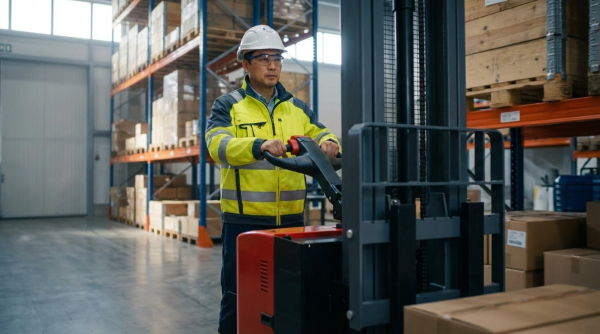
Selecting lift height started with a clear view of storage geometry, equipment limits, and safety rules. Engineers evaluated rack elevations, pallet formats, and aisle constraints before specifying walkie stackers. They then balanced maximum lift height against capacity derating, energy use, and life-cycle cost. A structured approach reduced retrofit work and improved throughput in warehouses, production plants, and distribution centers.
Matching Lift Height To Rack Design And Clearance
Engineers first mapped all rack beam levels, including top beam height and any tunnel bays. They then added pallet height and a vertical safety clearance, typically 150 mm to 250 mm, above the highest stored unit load. This sum defined the minimum required lift height, which they compared with standard walkie classes from roughly 2.5 m to 3.5 m and high-lift machines up to about 5.4 m. They also checked whether heavier upper-level loads required models with reduced maximum height or higher-capacity masts to avoid excessive derating.
Safety Rules For Travel And Load Handling Heights
Operating rules limited fork height far below the maximum rating during travel. Typical guidelines kept unloaded forks about 100 mm to 200 mm above the floor and loaded forks around 300 mm to 400 mm for in-aisle movement. Facilities prohibited long-distance travel with loads raised above roughly 500 mm to maintain stability and visibility. Procedures also required operators to fully lower forks when parking and to raise to stacking height only once correctly positioned at the rack face.
Maintenance Practices To Preserve Rated Lift Height
Maintenance teams monitored hydraulic oil volume because insufficient fluid prevented the mast from reaching its design height. Data showed, for example, that systems lifting to 2.5 m needed about 5.0 L of oil, increasing to around 6.0 L for 3.5 m. Technicians checked levels, inspected for leaks, and bled trapped air at defined intervals. They also verified chain tension, mast roller condition, and battery health, since voltage sag under load reduced achievable lift near the top of stroke.
Planning For Future Automation And Digital Twins
Facilities that expected automation evaluated lift height with future sensors, guidance systems, and digital twins in mind. Engineers specified extra clearance at the top rack levels to accommodate mast-mounted cameras, lidar, or positioning antennas without reducing usable storage. They captured accurate mast and rack geometries in digital models to simulate trajectories and deflection at high lift. This approach simplified later migration to semi-automated or fully automated walkie and stacker solutions, while keeping current manual operations efficient and compliant.
Summary And Practical Selection Conclusions
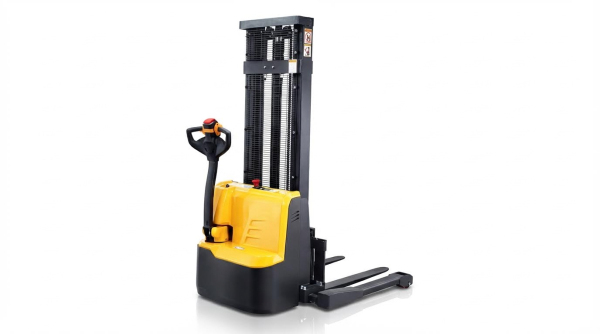
Walkie stacker lift heights historically ranged from about 2.5 m to 3.5 m for standard units, with high-lift designs reaching approximately 5.4 m. Manufacturers coupled higher masts with carefully sized hydraulic systems, increased oil volumes, and reinforced mast sections to maintain stability and rated capacity. Engineering limits arose from mast deflection, center-of-gravity shift, hydraulic pressure constraints, and battery-motor duty cycle. Operators needed to respect strict rules for travel height, usually keeping forks 100–400 mm above the floor during horizontal movement.
For facility design, engineers had to map required lift height directly to rack beam levels and clearance, not just nominal mast rating. A stacker rated at 5.0 m lift typically required 150–250 mm extra mast stroke to cover pallet thickness, beam depth, and safety clearance. Selection also depended on aisle width, floor flatness, and whether the application favored walkie, reach, or counterbalance configurations. Narrow-aisle, high-bay storage often suited walkie or reach stackers, while mixed indoor–outdoor use and dock work favored counterbalance types with lower lift but higher versatility.
In practice, buyers benefited from specifying lift height by the top usable beam level plus defined safety margins, then validating that against the truck’s rated capacity at that height. They also needed maintenance plans that protected hydraulic integrity and mast alignment, because fluid loss or wear directly reduced achievable lift. Looking forward, facilities increasingly integrated digital models and automation-ready layouts, so choosing walkie stackers with well-documented lift curves and data interfaces supported future digital twins and semi-automated workflows. A balanced approach combined realistic height requirements, conservative safety assumptions, and lifecycle cost analysis instead of chasing maximum possible mast height.