Walkie stacker lift performance depended on mast design, stability limits, and the operating environment, so engineers always evaluated these together. This article outlined typical lift heights, how high a battery-powered stacker could safely lift, and how those ranges matched common warehouse racking. It then compared mast configurations and their impact on capacity retention, before examining stability, safety factors, and modern control technologies that supported safer operation at height. The final section connected these aspects into a practical framework for selecting electric platform stacker that lifted high enough for the task while maintaining safety and efficiency.
Typical Lift Heights And Application Ranges
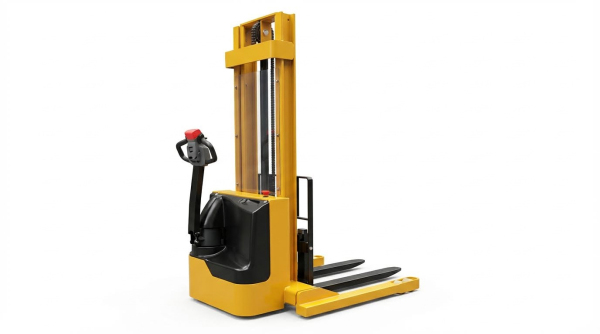
Walkie stackers operated as compact, electric-powered alternatives to sit-down forklifts. Their lift heights, mast options, and stability envelopes defined which racking systems and workflows they could safely support. Understanding how high a walkie stacker could lift, and where capacity started to derate, allowed engineers and warehouse planners to match models to specific storage heights and aisle geometries.
Common Lift Ranges For Walkie Stackers
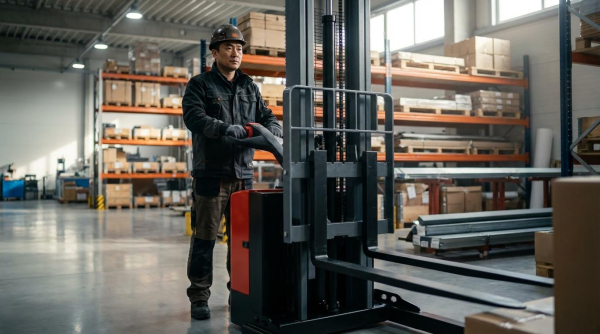
When engineers asked “how high can a walkie stacker lift,” they typically worked within a band of standardized mast heights. Typical pedestrian walkie stackers offered maximum fork heights from about 3.8 m to 4.9 m, which equated to roughly 152 in to 192 in. Optional high-lift configurations extended this range to about 5.5 m, or approximately 217 in, for specialized applications. Walkie straddle stackers usually covered the upper end of this range for pallet racking, while walkie counterbalance stackers focused on lower to mid-range heights up to roughly 4.4 m due to stability limits. Engineers selected within these common lift ranges by mapping required beam elevations, pallet heights, and clearance allowances against the rated maximum fork height for the mast class.
How High Is “High Enough” For Your Racking?
“High enough” depended less on theoretical maximum lift and more on the top usable beam level in the rack. A practical rule was to add pallet height plus at least 150 mm to 200 mm of working clearance above the highest beam where pallets were stored. For example, a 1.2 m tall pallet on a 4.0 m beam typically required a walkie stacker that could safely lift forks to about 5.2 m, including clearance for tilt and mast deflection. Designers also considered future growth; specifying a mast height that covered one extra beam level avoided early obsolescence. However, going significantly higher than the racking requirement increased cost, weight, and mast sway, so engineers balanced headroom against stability, floor flatness, and operator visibility.
Examples: 152–217 In. And 3–5.5 m Mast Classes
Manufacturers organized walkie stacker offerings into discrete mast classes expressed in both inches and metres. A common low to mid-height class delivered about 3.0 m to 3.9 m lift, equivalent to roughly 118 in to 152 in, which suited floor-level and second-tier beams or truck loading. The next class ranged around 4.0 m to 4.9 m, or 157 in to 192 in, covering typical two to three level warehouse racking. High-lift three-stage masts extended to approximately 3.7 m, 4.5 m, and 5.5 m (about 146 in, 177 in, and 217 in) with collapsed heights near 1.68 m, 2.09 m, and 2.58 m respectively, which mattered for low doorways or mezzanines. When answering “how high can a walkie stacker lift” for a specific project, engineers matched these mast classes to beam elevations, ceiling height, sprinkler clearances, and the required ability to service truck decks or mezzanine edges without compromising residual capacity or stability.
Mast Types, Configurations, And Capacity Retention
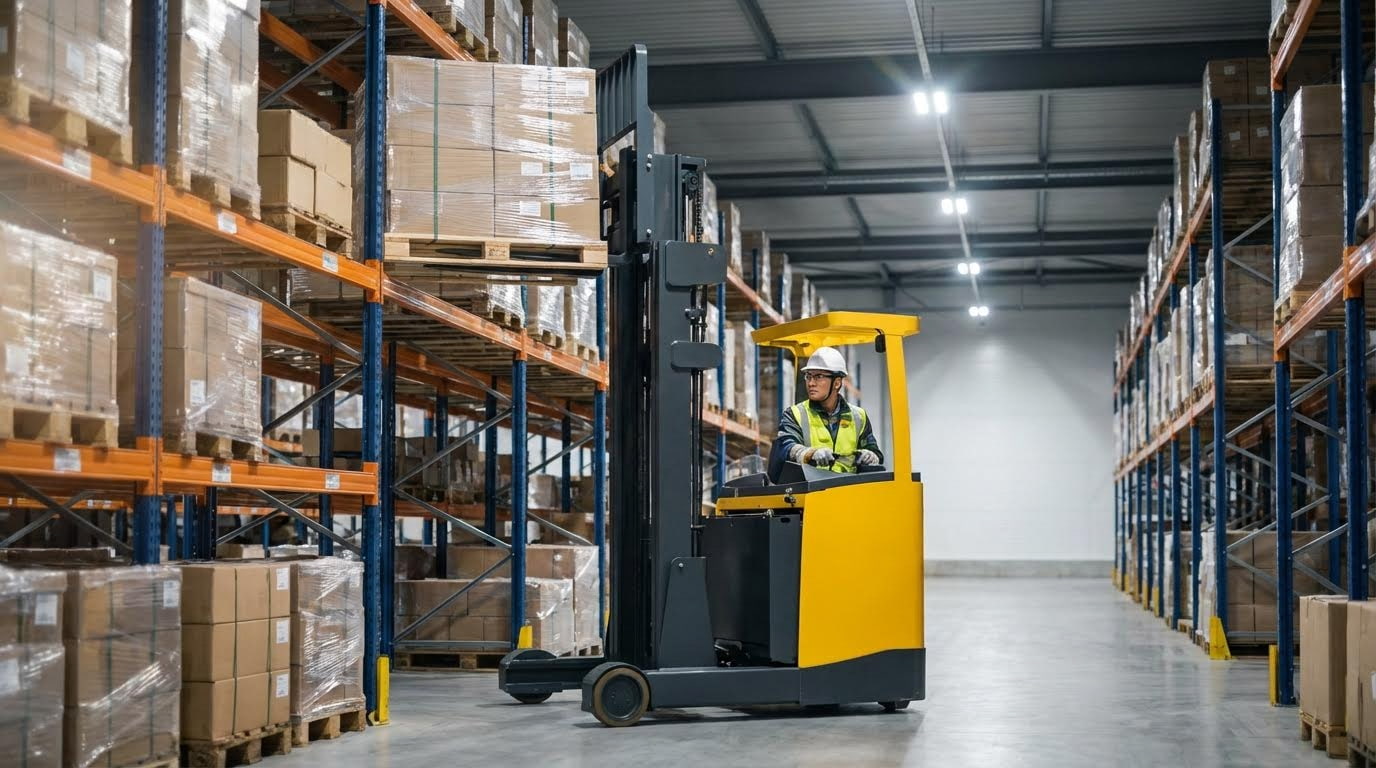
Mast configuration answered a key part of the question “how high can a walkie stacker lift” because it governed both maximum fork height and how much rated capacity remained available at that height. Engineers evaluated mast stage count, rail geometry, and section stiffness together with the truck’s wheelbase and straddle geometry. Correct selection linked lift height to aisle width, beam elevations, and truck access to docks or trailers. Poor matching reduced throughput, increased damage risk, and forced operators to run below the theoretical lift envelope.
Single, Two-Stage, And Three-Stage Mast Designs
Single-stage masts used one fixed outer channel and a single moving inner rail. They offered high stiffness, simple chains, and good visibility but limited lift, typically up to about 3–3.5 m. Two-stage masts added a free-lift or main-lift section, which allowed greater fork heights around 3.7–4.5 m while keeping collapsed height moderate. Three-stage masts extended this further, with typical lift stacker lift heights of 3.7 m, 4.5 m, and 5.5 m, answering “how high can a walkie stacker lift” in higher bay warehouses. However, more stages increased complexity, chain routing, and potential deflection, so capacity charts always de-rated more aggressively at the top of a three-stage mast compared with a single-stage design.
Flat Face Masts, Rail Sections, And Deflection
Flat face mast designs used rolled steel channels with large cross sections and thick inner rails. This geometry increased second moment of area, which reduced forward and lateral deflection at high lift. Lower deflection helped maintain capacity retention, especially above 152 in (about 3.86 m) where small mast bending produced large load-tip displacements. Engineers specified rail thickness and overlap length so the mast could support loads up to 1,400 kg without excessive sway on two- and three-shelf racking. Clear-view, flat face arrangements also improved line of sight through the mast, which supported precise pallet placement while still achieving lift heights up to 192–217 in where required.
Capacity De-Rating At Height And Load Moment
Capacity retention depended on load moment, which equaled load mass multiplied by its horizontal distance from the drive axle or stability line. As mast height increased, the same load created a larger overturning moment due to higher center of gravity elevation, even if horizontal distance stayed constant. Manufacturers therefore published capacity tables that de-rated nominal capacities, for example from 1,400 kg at low lift to lower values near 192–217 in. Walkie stackers that lifted to 5.5 m with three-stage masts typically carried their full nameplate capacity only up to a mid-height band. Above that band, allowable load decreased stepwise to keep the truck within its stability triangle and to limit mast stress and deflection.
Matching Mast Type To Aisles, Beams, And Trucks
Engineers matched mast type to racking beam elevations, bottom beam clearances, and aisle width before asking “how high can a walkie stacker lift.” Single-stage masts suited low-level racking, dock work, and mobile work platform tasks where lift heights stayed below about 3 m and doorway clearance was not an issue. Two-stage and three-stage masts fit narrow aisle rack storage, where operators needed to reach 152–192 in beams while still clearing low doors, mezzanines, or trailer roofs. Features such as pantograph reach allowed operators to access pallets in trucks or behind front legs when bottom beams blocked straddle legs. Correct mast selection ensured the stacker could reach the highest pallet position, articulate safely in the available aisle, and maintain rated capacity at the target beam level without overloading the structure or compromising stability.
Stability Limits, Safety Factors, And Controls
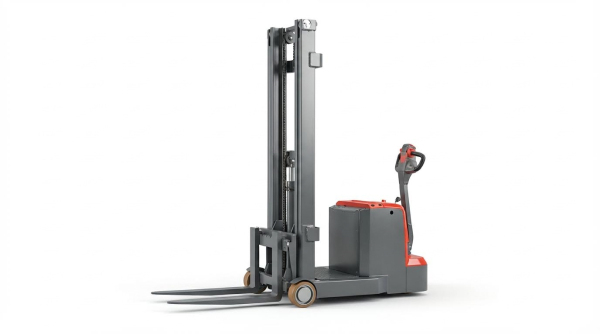
Stability limits defined how high a walkie stacker could lift without exceeding design safety margins. Engineers evaluated center of gravity travel, load moment, and mast deflection before specifying maximum fork heights between about 3.8 m and 5.5 m. Safe use depended on matching rated lift height to pallet weight, aisle conditions, and racking geometry. Modern controls and monitoring systems supported operators by constraining speed, lift, and braking within validated envelopes.
Stability Triangle And Center Of Gravity Shift
The stability triangle concept described the support polygon formed by the drive wheel and load wheels. As a lift stacker lifted a pallet toward 192 in or higher, the combined center of gravity moved forward and upward toward the triangle edge. Any additional disturbance, such as braking, turning, or floor irregularities, reduced the safety margin and could trigger tip risk. Engineers therefore set the rated maximum lift height for a given capacity so the center of gravity stayed inside the triangle under worst-case test conditions. Operators maintained stability by keeping loads low while traveling and lifting to full height only when stationary and aligned with the rack.
Straddle Vs. Counterbalance Stackers In Tight Aisles
Straddle walkie stackers used outriggers that widened the base and improved lateral stability at height. This design allowed higher lift ratings, often up to 192 in and beyond, in narrow aisles that approached racking on both sides. Counterbalanced stacker relied on rear ballast instead of outriggers, which simplified front access to pallets and truck decks but reduced stability margins at comparable heights. In tight aisles, counterbalance units typically accepted lower maximum lift or capacity to keep the center of gravity within the stability triangle during steering corrections. Engineers selected between straddle and counterbalance layouts by balancing aisle width, bottom beam locations, and target lift height.
Speed Control, Braking, And Slope Limitations
Electronic controllers limited travel speed automatically as mast height increased, because tall loads raised the center of gravity and amplified sway. AC drive systems with regenerative torque provided smooth deceleration and reduced reliance on mechanical braking, which helped preserve stability when stopping with forks at 3 m to 5.5 m. Manufacturers specified maximum allowable gradients, often about 7°, and prohibited turning or braking on slopes with elevated loads. Safe practice kept forks under 500 mm while traveling and required uphill orientation of the load when driving on ramps. Parking rules mandated level ground, forks fully lowered, and the tiller in neutral so the parking brake could hold the machine without creep.
AI Monitoring, Digital Twins, And Predictive Safety
AI monitoring systems used sensor data from mast encoders, load cells, and accelerometers to estimate real-time stability margins. These systems could derate allowed lift height dynamically when they detected overloads, off-center pallets, or operation on uneven floors. Digital twins of walkie stackers and warehouse layouts enabled engineers to simulate how high a walkie stacker could lift safely for specific racking designs and aisle geometries before deployment. Predictive safety analytics identified patterns such as frequent near-capacity lifts at 5 m or repeated high-speed travel with raised forks, prompting training or parameter adjustments. Over time, fleets that adopted such tools reduced tip-over incidents and aligned actual usage more closely with engineered stability limits.
Summary: Selecting Safe, Efficient Walkie Stackers
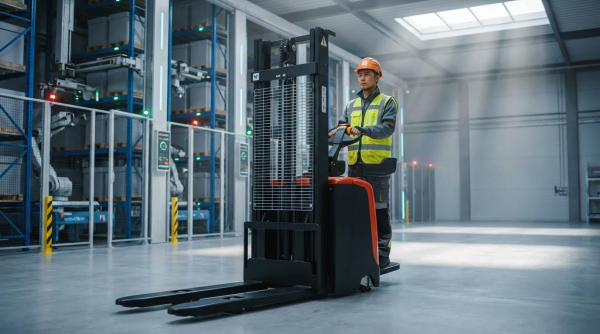
When you evaluate how high can a lift stacker lift, the decision should link mast height, load capacity, and aisle geometry. Typical walkie stacker lift heights ranged from about 3.8 m (152 in) up to 4.9–5.5 m (192–217 in) for high-reaching electric units, with three-stage masts in some classes extending to 3.7–5.5 m while maintaining acceptable collapsed heights for dock doors and low mezzanines. Engineers needed to match these mast classes to racking beam elevations, truck bed heights, and clearance under sprinklers or lighting, rather than chasing maximum height alone.
Safe selection always depended on capacity at height, not just rated capacity at ground level. As mast extension increased, effective capacity decreased due to load moment and deflection, especially with long or offset pallets. Flat face mast designs with large rail sections and thick inner channels improved stiffness and capacity retention at upper levels, which supported two to three beam levels in standard warehouse racks. Stability analysis around the stability triangle, plus understanding center-of-gravity shift on slopes or during braking, remained critical for both straddle and counterbalanced stacker.
From an operational perspective, electronic speed control, regenerative braking, and slope limits around 7° for loaded travel helped keep dynamic loads within safe envelopes. Advanced monitoring, including AI-based analytics and digital twins, started to predict overloads, near-tip events, and component wear before failures occurred. Practitioners who combined correct mast class selection, realistic “high enough” definitions for their racking, and disciplined training and maintenance achieved lower incident rates and longer service life. Future walkie stacker designs would likely push lift heights further while embedding more intelligent controls, but the core engineering trade-off between height, capacity, and stability would remain unchanged.