
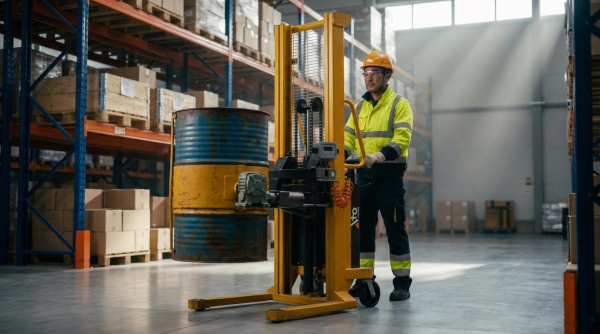
Engineering fundamentals of steel drum lifting devices cover how these below‑the‑hook tools grip, lift, and move drums safely within their rated capacity and geometry limits. A lifting device for transporting steel drums is shown solutions in real plants whenever manual handling becomes unsafe or inefficient. This article explains key device types, how load ratings and safety factors work in practice, and how to match each device to real-world drum handling tasks. You will see how design choices affect stability, floor loading, operator ergonomics, and compliance with standards such as ASME B30.20, ASME BTH‑1, and OSHA material handling rules, so you can specify drum lifters that are both safe and productive.
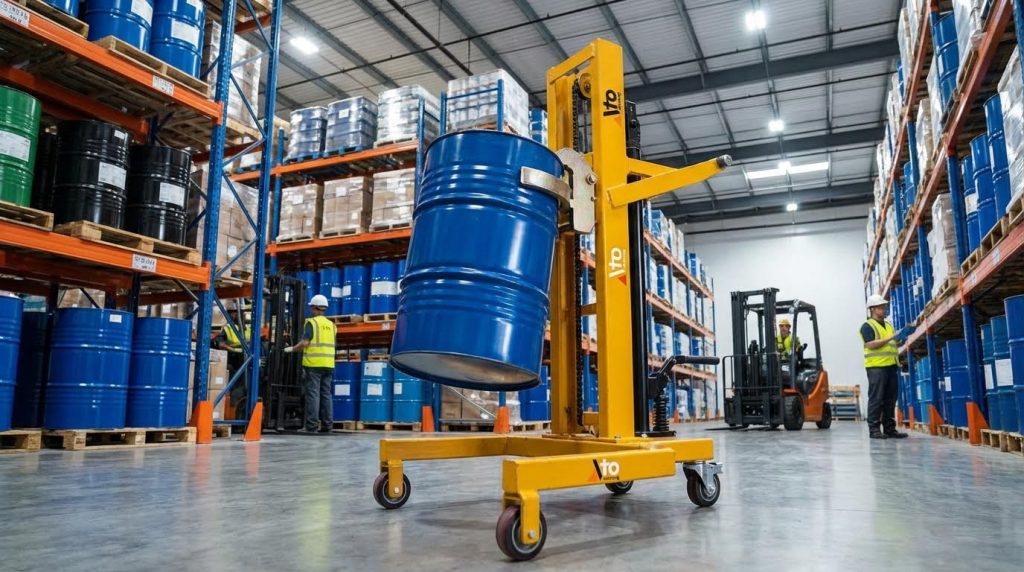
Key Types Of Lifting Devices For Steel Drums
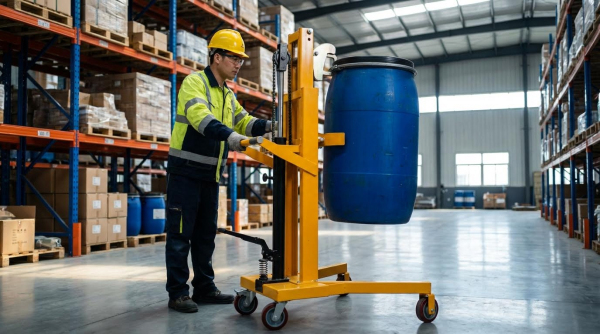
Steel drum lifting devices are engineered interfaces that grip the drum body or chime so cranes, hoists, or forklifts can lift, rotate, and transport drums safely without manual handling or uncontrolled swinging.
This section explains how a lifting device for transporting steel drums is shown solutions in two main families: vertical clamps and tongs for upright drums, and horizontal tongs and below‑the‑hook lifters for drums on their sides. You will see how geometry, capacity, and grip style translate into real-world safety margins and throughput in filling, decanting, and storage operations.
Vertical clamps and tongs for upright drums
Vertical drum clamps and tongs grip the drum in an upright position, allowing a hoist or crane to lift, move, and set down steel or plastic drums while maintaining vertical orientation and preventing tipping.
| Device Type / Example | Typical Rating / Key Dimensions | Use Case & Compatibility | Field Impact (What It Means In Operation) |
|---|---|---|---|
| Three-point vertical drum lifting clamp | Up to 750 kg capacity, approx. 8–9 kg self-weight, max opening ≈ 610 mm three-point clamp data | Grips around drum circumference at three points; suitable for steel drums, some plastic barrels, and open-top barrels. | Three-point contact spreads clamping force, reducing local denting and improving stability when lifting full 180–360 kg drums in tight process areas. |
| Vertical oil drum lifting clamp | Approx. 300 kg capacity, about 5,2 kg self-weight; lifting ring inner diameter ≈ 60 mm high × 40 mm wide oil drum clamp data | Designed for single steel or plastic oil drums lifted vertically by a hook or shackle. | Compact ring fits standard crane hooks, making it easy to rig quickly without extra hardware, which reduces changeover time between drum types. |
| Vertical barrel lifting clamp / YQC-style vertical grabber | Rated around 0,6 t (600 kg); low-carbon alloy steel construction with integrated central shaft YQC clamp data | Handles upright cylindrical barrels; some designs allow both vertical and horizontal positions for steel and plastic drums. | Higher capacity and robust shaft alignment help keep the drum plumb, reducing swing and side-load on crane hooks during travel. |
| Generic vertical below-the-hook drum clamp | Working load limit around 1.0 t; jaw opening ≈ 0–25 mm; clamp self-weight ≈ 3,4 kg clamp dimensions and WLL | Clamps onto drum rim or lifting lugs and connects to Grade 80 chains or slings. | Thin jaw opening works with narrow rims and brackets, so one clamp style can service mixed fleets without changing rigging hardware. |
In practice, a lifting device for transporting steel drums is shown solutions when it keeps the center of gravity directly under the hook, which these vertical clamps do by gripping at the drum’s upper body or chime. For typical 55-gallon drums weighing 180–360 kg when full drum weight reference, a 600–750 kg rated clamp provides a practical safety margin when you include rigging mass and dynamic factors.
- Alloy steel construction: High-strength, low-carbon alloy steels used in vertical clamps provide a good balance of tensile strength and toughness for repeated lifting cycles in industrial environments. clamp materials
- Automatic grip under load: Many vertical tongs use cam or scissor geometry so grip force increases with load, which mitigates slip risk as long as the drum diameter is within the rated range.
- Hook ring dimensions: Lifting ring inner diameters (around 45–60 mm) are sized to fit common crane hooks without binding, which reduces side-loading and wear on hook throats.
- Compatibility with steel and plastic drums: Smooth, contoured jaws and three-point grips reduce local stresses, making some models suitable for both rigid steel and more flexible plastic barrels.
💡 Field Engineer’s Note: Vertical clamps are unforgiving of out-of-round or dented drums; always test-grip a few centimeters off the floor first to confirm jaw engagement before committing to a full-height lift.
How to choose between single-point and three-point vertical clamps
Single-point vertical clamps are compact and quick to rig, but they concentrate load at one chime or lug, which can deform thin-wall drums over time. Three-point clamps distribute contact around the circumference, improving stability and reducing permanent ovalisation of the drum body. In high-throughput plants or where drums are reused many times, three-point designs usually offer better lifecycle economics despite slightly higher tare weight.
Horizontal tongs and below‑the‑hook lifters
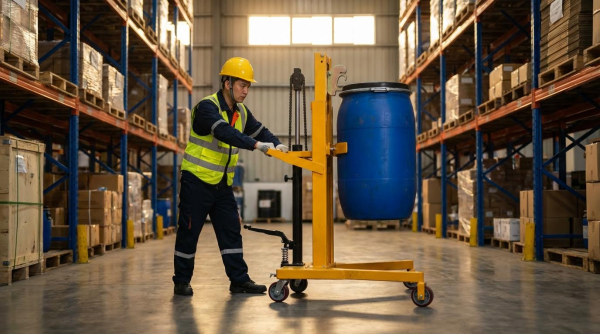
Horizontal drum tongs and below-the-hook lifters support drums laid on their sides, enabling crane-based loading of racks, conveyors, or process lines where drums must be stored or rotated horizontally.
| Device Type / Example | Typical Rating / Dimensions | Use Case & Orientation | Field Impact (What It Means In Operation) |
|---|---|---|---|
| Manual horizontal drum tongs | Rated load ≈ 500 kg; dimensions about 670 × 80 mm; self-weight ≈ 4 kg manual tongs data | Engage drum in horizontal position using fixed rings or chimes; suited for steel or plastic oil drums. | Lightweight design allows one operator to hook and unhook quickly, improving pick rates when transferring drums between horizontal storage racks. |
| Semi-automatic horizontal drum tongs | Rated load ≈ 500 kg; self-weight ≈ 7,6 kg semi-automatic tongs data | Designed for repetitive handling of steel or plastic drums with fixed rings; arms open/close with load, reducing manual intervention. | Semi-automatic engagement reduces the need for the operator to work in the crush zone, lowering incident risk and cycle time in high-volume operations. |
| Rotating lifting and positioning devices | Capacity up to about 750–1,000 kg; rotation up to ≈ 350°; hydro-pneumatic or electric actuation rotating device data | Handles drums, containers, and IBCs; can lift vertically, then rotate to horizontal for pouring, docking, or machine feeding. | Controlled rotation and precise docking allow one device to replace separate hoists and tilters, simplifying layouts and improving ergonomics. |
| General below-the-hook drum lifter | Working load limit commonly 450–1,000 kg with ≥3:1 design safety factor capacity and safety factor data | Suspended from cranes or monorails to lift drums either vertically or horizontally depending on attachment geometry. | Standardized WLL and safety factors aligned with ASME B30.20/BTH-1 make it easier to document compliance and perform risk assessments. |
Horizontal tongs are especially useful where drums feed gravity racks, mixers, or decanting skids in a horizontal attitude. When a lifting device for transporting steel drums is shown solutions in this orientation, the design must control both axial rotation and side slip, which is why many tongs engage fixed rings or chimes rather than the smooth drum body.
- Manual vs semi-automatic actuation: Manual tongs are simple and light, but semi-automatic versions reduce hands-on time under suspended loads, which helps align with good practice under OSHA and ASME below-the-hook guidelines. selection criteria
- Rotation capability: Devices with powered rotation up to roughly 350° allow precise pouring and docking, avoiding sudden sloshing that can create dynamic overloads on the clamp and crane structure. rotation capability
- Load path and safety factor: For a 360 kg full drum plus rigging, a 500–1,000 kg WLL device with ≥3:1 design factor leaves adequate margin for minor impacts and acceleration during hoisting.
- Integration with cranes and forklifts: Many below-the-hook lifters connect directly to overhead cranes or to forks via shackles and chains, creating flexible systems that can serve multiple bays with one device.
💡 Field Engineer’s Note: Horizontal tongs magnify the effect of drum ovality—if the drum has been dropped or crushed, expect the jaws to loosen mid-air; always verify engagement with a low test lift and avoid sudden trolley movements.
When to choose horizontal tongs vs a rotating drum positioner
Use simple horizontal tongs when you only need to move drums between horizontal storage positions at roughly the same elevation, such as from pallet to rack. Choose a powered rotating positioner when your process requires frequent tilting, controlled pouring, or docking to a fixed inlet, because the integrated rotation and braking reduce spill risk and operator strain. In many plants, pairing a basic below-the-hook clamp for vertical moves with one dedicated rotating station gives the best balance of capital cost and safety.
“”
Selecting Devices For Real-World Drum Handling Tasks
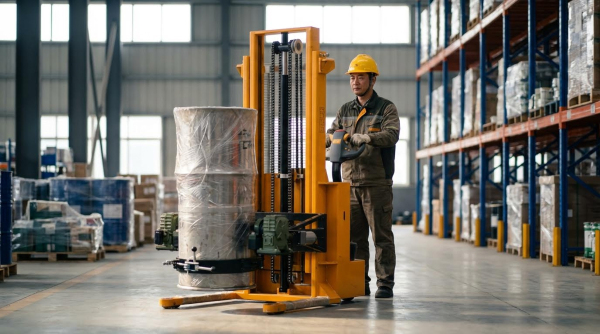
Selecting drum lifting devices means matching the clamp or tong not just to drum weight, but to orientation, contents, route, and how the drum fits into your wider handling system and risk controls.
💡 Field Engineer’s Note: When you see “a lifting device for transporting steel drums is shown solutions” in a spec or drawing, read it as a prompt to ask: which exact motions, routes, and hazards must this device solve in your plant?
Matching device type to process and drum orientation
Drum orientation and process steps dictate whether you use vertical clamps, horizontal tongs, dollies, or powered positioners, because each device is optimized for specific lift paths, clearances, and rotation needs.
| Use Case / Process Step | Recommended Device Type | Typical Capacity Range | Best For Drum Orientation | Field Impact |
|---|---|---|---|---|
| Unload upright drums from truck to floor or pallet | Vertical drum lifting clamps (two- or three-point) | 300–750 kg per drum (example ranges) | Upright (vertical axis) | Fast single-point pick with good control; minimizes manual rolling and tipping. |
| Transfer horizontal drums between racks or conveyors | Manual or semi‑automatic horizontal drum tongs | ≈500 kg per drum (typical) | Horizontal (on side, fixed rings) | Maintains drum on its side for storage or process lines; reduces re‑orientation steps. |
| Frequent lifting, inverting, and dosing into reactors or mixers | Lifting and positioning device with powered rotation | ≈750–1,000 kg per unit (example) | Upright to inverted (rotating up to ~350°) | Allows controlled pouring, docking, and precise alignment; improves ergonomics and reduces spills. |
| Short internal moves on flat floors (filling, staging, decanting) | Drum dollies (ring, flat platform, tilting) | Start from heaviest drum × 1.25–1.5 safety factor (guideline) | Upright (on base) | Reduces manual lifting; low center of gravity improves stability during pushing and pouring. |
| Occasional lifts with existing overhead crane or forklift | Below‑the‑hook drum clamps / crane‑suspended lifters | ≈0.6–1.0 tonne working load limit (example) | Upright or horizontal (depending on design) | Leverages existing lifting infrastructure; must comply with ASME B30.20 / BTH‑1 for below‑the‑hook gear. |
Start by mapping your full process: receiving, internal transport, storage, decanting, and waste handling. For each step, define whether the drum must stay upright, be rotated, or be held horizontal.
Then, select the lifting device whose geometry and grip mechanism match that orientation and motion, while accommodating drum type (steel, plastic), rings, and closure style.
How to translate process requirements into device specs
1. List drum types (volume, material, ring style, typical mass). A standard 200 L (55‑gallon) drum often weighs 180–360 kg full, but dense products can push total mass much higher. Reference data helps anchor your calculations.
2. For each route, record floor type, slopes, thresholds, and congestion. Drum dollies, for example, benefit from polyurethane wheels ≥150 mm diameter on sealed concrete to reduce push force and clear obstacles. Caster guidance ties directly to operator effort and noise levels.
3. Decide which steps must be mechanical rather than manual. Given the mass of full drums, manual handling should be limited to empty or near‑empty units, with mechanical aids for all full drum lifts. Best practice strongly discourages manual lifting of full drums.
💡 Field Engineer’s Note: If you routinely roll drums on their chimes to “save time,” it’s a signal your current lifting solution doesn’t match the process. The right clamp or dolly usually pays back in reduced injuries and floor damage.
- Upright-only moves: Use vertical clamps or dollies where the drum must stay sealed and vertical, such as flammables or corrosives in compliant storage.
- Rotation-intensive processes: Use powered positioners or inverters where drums are routinely tipped for controlled pouring or docking into closed systems.
- Horizontal storage: Use horizontal tongs or cradles for drum racks that store drums on their sides, ensuring ring compatibility and anti‑roll features.
- Mixed fleets (steel and plastic): Choose clamps explicitly rated for both materials and verify jaw profiles and chain geometry for reliable engagement on each drum style. Device data often specifies material compatibility.
Integrating drum lifters into wider handling systems
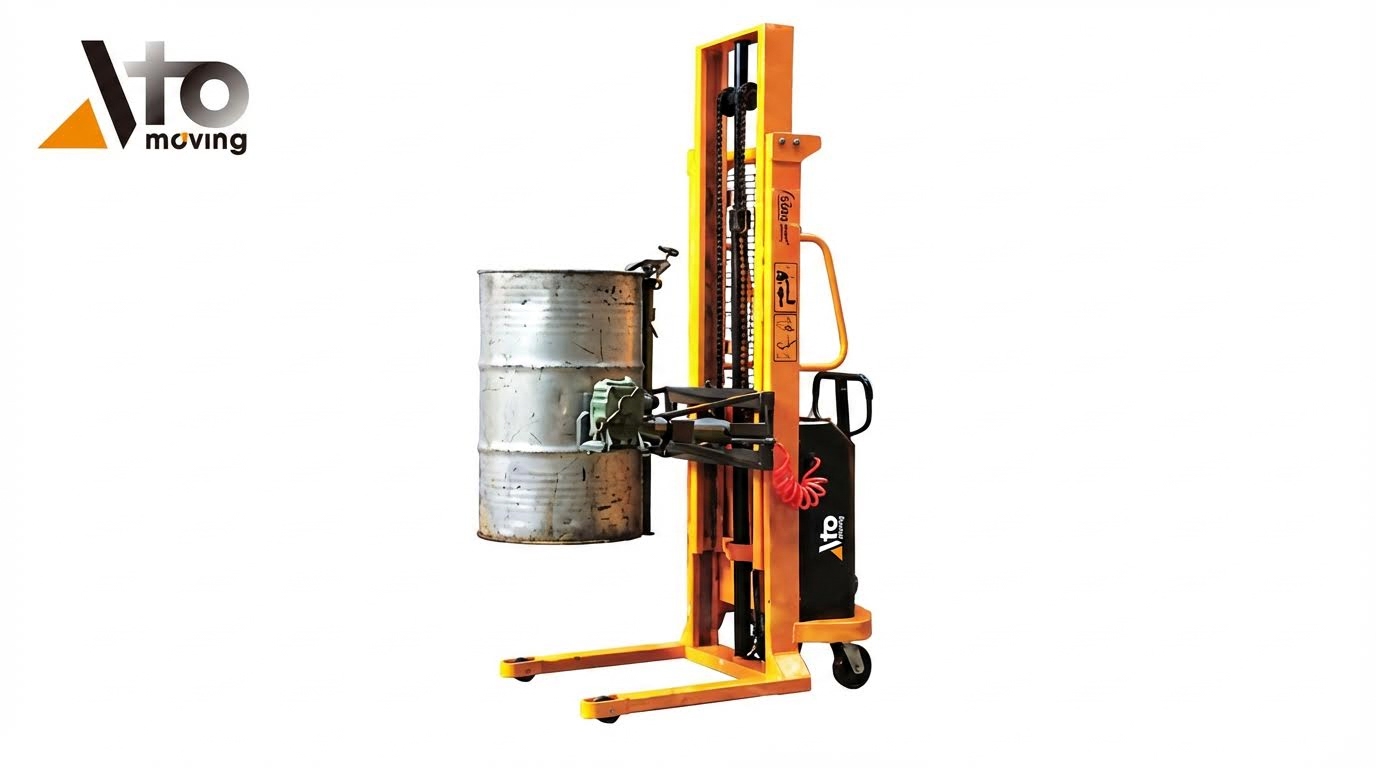
Integrating drum lifters into your system means treating each clamp, tong, or dolly as one link in a material flow chain that includes floors, traffic, storage, filling stations, and safety systems.
| Integration Aspect | Key Considerations | Field Impact |
|---|---|---|
| Route and floor design | Provide clear, level paths with minimal slopes and joints; match caster material and diameter to floor condition and chemicals. Guidelines | Reduces push forces, tipping risk, and noise; improves throughput and operator comfort. |
| Interfaces with filling / decanting stations | Check that lifter geometry fits under funnels, over scales, and into containment; powered lifters need clearance for rotation and docking. Example device | Prevents last‑minute manual “muscling” of drums; keeps operations within ergonomic limits. |
| Regulatory and standards alignment | Ensure below‑the‑hook devices meet ASME B30.20/BTH‑1 and operations comply with OSHA material handling and flammable liquid rules. Compliance overview | Reduces legal exposure and ensures inspection, marking, and training are structured and auditable. |
| Traffic flow and segregation | Separate pedestrian walkways from powered truck routes; design drum storage to avoid over‑stacking and blind corners. Risk assessment guidance | Minimizes collision risk between lifters, forklifts, and people; improves visibility and access. |
| Static control and hazardous zones | For flammables, coordinate lifters and dollies with grounding, bonding, and antistatic requirements; use conductive wheels and bonding paths where specified. Static control | Reduces ignition risk from electrostatic discharge during rolling, lifting, and pouring. |
| Standardization and training | Limit to a small family of lifter types; create simple visual SOPs for engagement, lifting, and parking; embed daily inspection checks. Inspection tips | Cuts error rates, speeds up training, and ensures consistent safe use across shifts. |
When a lifting device for transporting steel drums is shown solutions in a project layout or risk assessment, verify that it “plugs into” the rest of your system: storage patterns, spill control, grounding points, and evacuation routes.
Risk assessments should explicitly link hazards (mass, chemicals, routes) to chosen drum lifters, associated dollies, and controls like grounding cables, spill pallets, and ventilation. This closes the loop between equipment selection and safe operation.
- Before deployment: Validate that rated capacities (often 450–900 kg for drum devices) exceed worst‑case drum + contents + rigging mass with an adequate safety factor, typically ≥3:1 on material yield. Capacity guidance
- In operation: Enforce daily visual checks for cracks, deformation, and chain elongation on clamps and tongs, and frame and caster condition on dollies. Inspection practices
- Over lifecycle: Plan lubrication intervals (e.g., 10–15 days for clamp moving parts) and scheduled component replacement to maintain low failure rates and predictable handling performance. Maintenance notes
💡 Field Engineer’s Note: The most reliable drum systems standardize on 2–3 device families (e.g., one vertical clamp, one dolly type, one inverter) and then engineer routes and stations around those, instead of buying one-off gadgets for each new product.
Final Thoughts On Safe, Efficient Drum Lifting Devices
Safe drum lifting starts with clear limits. Engineers must respect drum mass, center of gravity, and route geometry before choosing any clamp or tong. Vertical and horizontal devices each control different motions, so the wrong choice can create side‑loads, swing, or slip that no safety factor can fully cover.
Load ratings and design factors only protect you when you treat them as hard boundaries. Always size devices from the heaviest credible drum plus rigging, then add margin for dynamic effects, not just “typical” loads. Match jaw profiles to drum rings and materials so grip remains secure even with wear, dents, or minor ovality.
Real safety comes from system thinking. The lifter must fit your floors, storage, filling stations, and traffic plan, and must align with ASME, OSHA, and site rules. Standardize on a small set of device types, write simple procedures, and enforce daily inspections and scheduled maintenance.
For operations and engineering teams, the best practice is simple: engineer the whole handling chain around a few proven drum lifters, such as those from Atomoving, and never ask people to “work around” poor geometry or undersized gear. When in doubt, re‑check the load path, not the paperwork.
Frequently Asked Questions
What is a drum lifter and how does it work?
A drum lifter is a device designed to lift and transport cylindrical objects like steel drums, plastic drums, or barrels. It operates using a hydraulic system to lift the object off the ground safely. For heavy loads, extended-reach models allow operators to move drums in and out of storage areas or machinery. Hydraulic Drum Lifter Guide.
What safety precautions should be followed when lifting drums?
When lifting drums, ensure proper planning and positioning before starting the lift. Use tools like shafts or wire spreaders to avoid damaging the drum or cables. Always protect the cable head to prevent pinching between the drum and wires. Following these steps minimizes risks during operations. Drum Lifting Safety Tips.