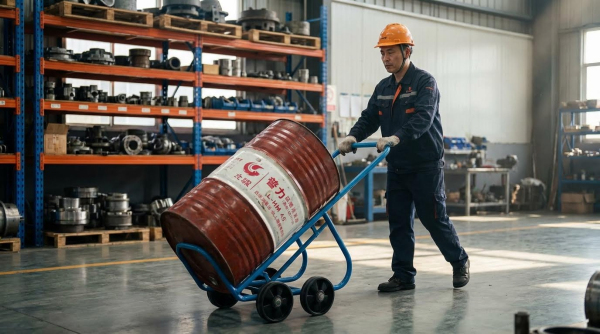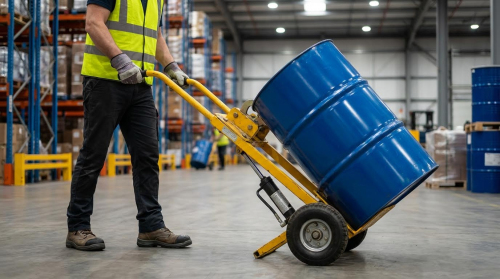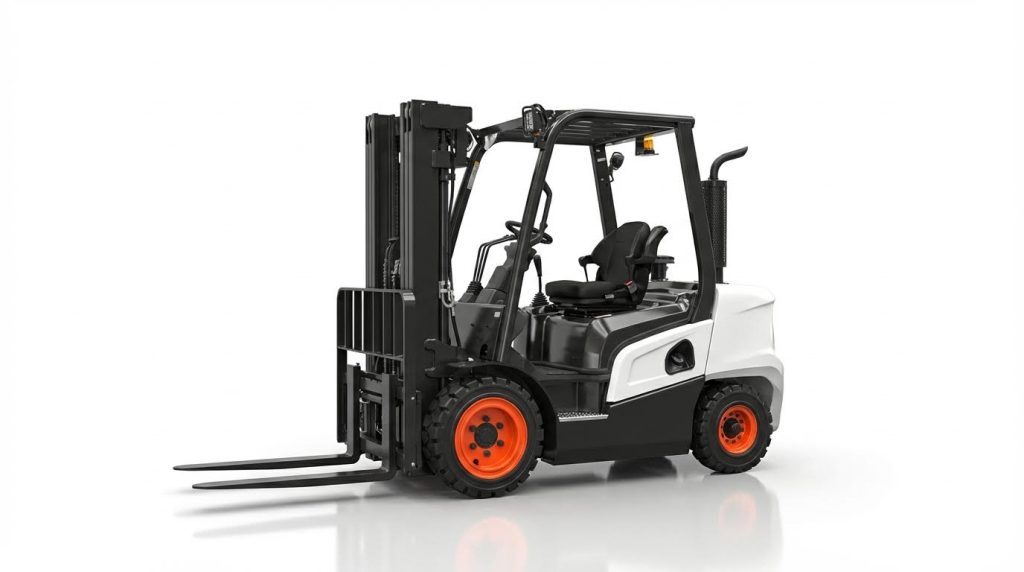
If you are asking yourself how much does a diesel forklift weigh, the honest answer is that it varies a lot with capacity, load center, and truck design. A “small” 1–2 ton diesel forklift can already weigh over 2–3.5 tonnes, while heavy 20–25 ton trucks exceed 30 tonnes of operating weight across common models. This article walks through typical diesel forklift weights by capacity, then links those masses to axle loads, tire contact pressures, and concrete floor limits so you can check your slab, mezzanine, or dock. Use it as a practical engineering guide to pick the right truck size, avoid floor damage, and keep operators and structures within safe loading limits. Consider using equipment like a manual pallet jack or a drum dolly for lighter material handling tasks.
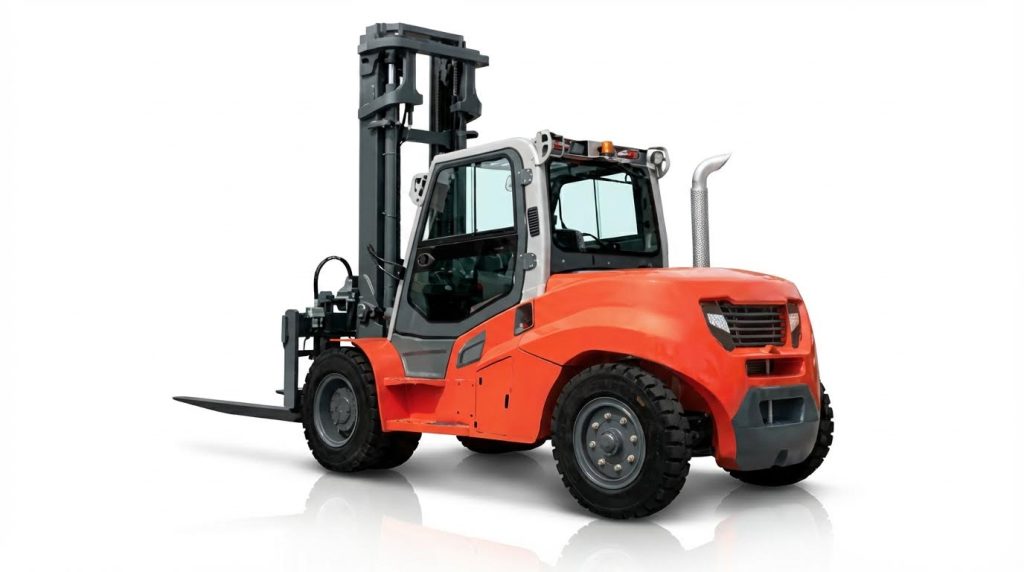
Typical Diesel Forklift Weights By Capacity
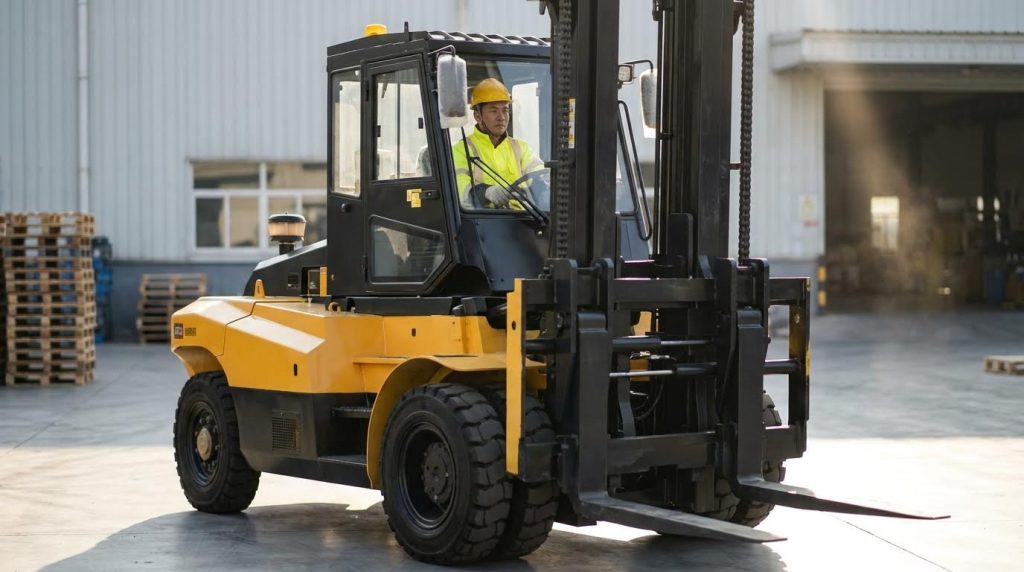
Rated capacity vs. actual truck weight
When people ask “how much does a diesel forklift weigh”, they usually mean the rated lifting capacity. In reality, the truck itself is much heavier than the load it can lift, because the chassis acts as a counterweight.
For planning and floor loading, you must distinguish clearly between rated capacity (what it can lift) and operating weight (what the whole machine actually weighs with fuel and fluids).
- Rated capacity = maximum load (at a defined load center, often 600 mm).
- Operating weight = truck mass including counterweight, mast, forks, fuel, and standard equipment.
- Rule of thumb: diesel forklifts often weigh about 1.5–3 times their rated capacity, depending on size and design.
The table below shows how operating weight grows faster than capacity as trucks get larger. Values are typical examples from common diesel models. Do not use them as design data without checking the specific data plate for your truck.
| Rated capacity (kg) | Approx. rated capacity (ton) | Typical operating weight (kg) | Weight ÷ capacity (ratio) |
|---|---|---|---|
| 1,000 | 1.0 t | 2,450 (example model) | ≈ 2.5 × |
| 2,000 | 2.0 t | 3,440 (example model) | ≈ 1.7 × |
| 2,500 | 2.5 t | 3,850 (example model) | ≈ 1.5 × |
| 3,000 | 3.0 t | 4,380 (example model) | ≈ 1.5 × |
| 3,500 | 3.5 t | 4,750 (example model) | ≈ 1.4 × |
| 4,000 | 4.0 t | 6,300 (example model) | ≈ 1.6 × |
| 5,000 | 5.0 t | 6,750 (example model) | ≈ 1.4 × |
| 7,000 | 7.0 t | 9,400 (example model) | ≈ 1.3 × |
| 8,000 | 8.0 t | 11,300 (example model) | ≈ 1.4 × |
| 10,000 | 10.0 t | 13,000 (example model) | ≈ 1.3 × |
| 16,000 | 16.0 t | 19,200 (example model) | ≈ 1.2 × |
| 20,000 | 20.0 t | 33,500 (example model) | ≈ 1.7 × |
| 25,000 | 25.0 t | 35,500 (example model) | ≈ 1.4 × |
For a common 5,000 lb (≈2,270 kg) class forklift, a typical diesel unit can weigh around 9,000 lb (≈4,100 kg) unloaded and about 14,000 lb (≈6,350 kg) when carrying a full‑rated load, with 87–94% of that total on the front drive axle. (axle load data)
Why the truck must be heavier than the load
The counterweight and wheelbase keep the combined center of gravity inside the stability triangle when the mast is raised and tilted. As capacity and lift height increase, the manufacturer increases truck mass, counterweight size, and sometimes overall length to maintain stability. This is why the answer to “how much does a diesel forklift weigh” is almost always “much more than its rated capacity suggests.”
Example weight ranges from 1–25 ton diesel trucks
The next question is usually how much does a diesel forklift weigh across the full size range, from small warehouse trucks up to heavy yard and port machines. The examples below combine several data sets to give realistic planning numbers.
Use these bands for early layout, transport, and floor‑load studies, then refine with the exact model data sheet before final design.
| Rated capacity class | Typical rated capacity (kg) | Typical operating weight range (kg) | Example point data |
|---|---|---|---|
| 1–2 ton | 1,000–2,000 | ≈ 2,400–3,500 | 1,000 kg capacity → 2,450 kg truck; 2,000 kg capacity → 3,440 kg truck (examples) |
| 2.5–3.5 ton | 2,500–3,500 | ≈ 3,800–4,800 | 2,500 kg → 3,850 kg; 3,000 kg → 4,380 kg; 3,500 kg → 4,750 kg (examples) |
| 4–5 ton | 4,000–5,000 | ≈ 6,300–6,800 | 4,000 kg → 6,300 kg; 5,000 kg → 6,750 kg (examples) |
| 7–10 ton | 7,000–10,000 | ≈ 9,400–13,000 | 7,000 kg → 9,400 kg; 8,000 kg → 11,300 kg; 10,000 kg → 13,000 kg (examples) |
| 10–16 ton | 10,000–16,000 | ≈ 13,000–19,200 | 16,000 kg → 19,200 kg truck (example); another 16‑ton model ≈ 18,000 kg (example) |
| 20–25 ton | 20,000–25,000 | ≈ 33,500–35,500 | 20,000 kg → 33,500 kg; 25,000 kg → 35,500 kg truck (examples) |
| 35–42 ton (very heavy duty) | 35,000–42,000 | ≈ 42,000–56,000 | 35‑ton truck ≈ 42,000 kg; 42‑ton truck ≈ 56,000 kg (examples) |
From a facility point of view, these ranges answer the practical version of “how much does a diesel forklift weigh” for each capacity band. They also highlight how quickly floor and ramp loads grow once you move beyond the 5‑ton class into double‑digit tonnages.
- Small indoor diesel forklifts (1–3.5 t) typically weigh 2,400–4,800 kg.
- Mid‑range yard trucks (4–10 t) typically weigh 6,300–13,000 kg.
- Heavy industrial / port trucks (16–25 t) typically weigh 18,000–35,500 kg.
- Very heavy special‑duty units (35–42 t) can reach 42,000–56,000 kg.
Quick usage tips for planners and engineers
For early design, you can conservatively assume the truck operating weight is 1.5–2.0 times the rated capacity up to about 10 tons, and 1.3–1.7 times capacity for heavy trucks above 10 tons, then verify against the chosen model. Always check both unloaded and fully loaded gross weight when assessing axle loads and floor capacity, because the front axle can see over 85–90% of the total when loaded.
How Forklift Weight Affects Axle Loads And Floors
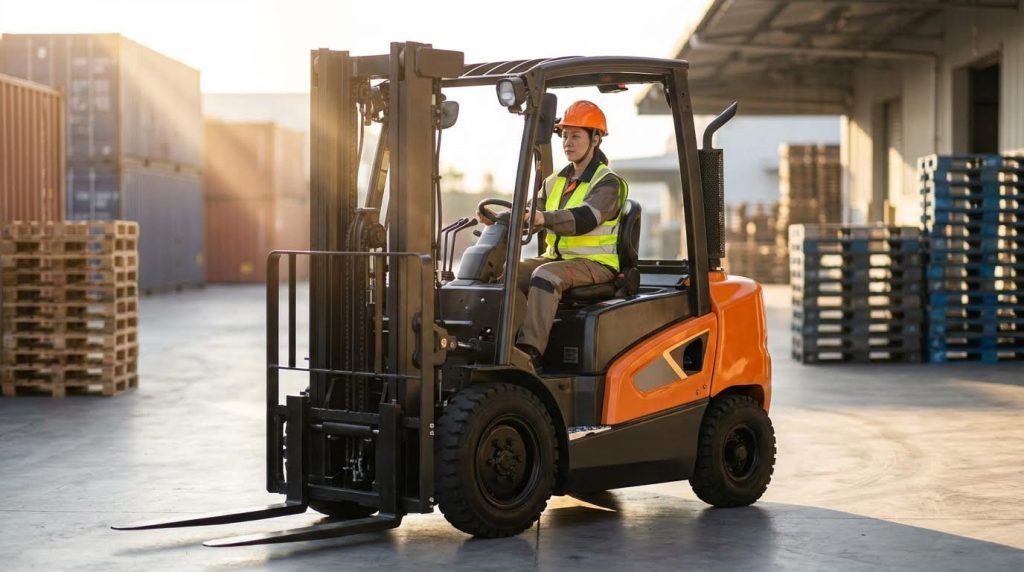
Static vs. dynamic axle loading in operation
Before you ask how much does a diesel forklift weigh, you need to know where that weight actually goes. Forklifts are rear‑counterbalanced machines, so most of the weight sits on the front (drive) axle when you pick a load.
- Unloaded forklifts typically carry more weight on the rear axle, because of the counterweight.
- When you pick up a load, the center of gravity moves forward toward the front axle.
- With a rated load on the forks, 87–94% of the total truck + load weight can sit on the front axle. Typical drive axle share of 87–94% on loaded forklifts
- Dynamic effects (braking, turning, mast tilting, hitting floor joints) can momentarily increase effective axle loads well above static values.
Quick example: static vs. dynamic load
Take a diesel forklift that weighs 6,750 kg with a 5,000 kg rated capacity. Typical 5,000 kg diesel forklift operating weight ≈ 6,750 kg At full load, total gross weight is about 11,750 kg. If 90% sits on the front axle, that axle carries around 10,600 kg statically. A sudden brake or bump can push the instantaneous load significantly higher, which is what your floor must safely handle.
When you plan floor strength, always design for the worst‑case: fully loaded truck, on the front axle, with an allowance for dynamic impact from real driving behavior.
Tire contact area and floor pressure calculation
Axle load only matters to your floor once you convert it into pressure under the tires. Diesel forklifts usually run on solid or pneumatic industrial tires with relatively small contact patches, which drives up floor pressure.
- Find the front axle load
- Add truck operating weight + carried load.
- Multiply by front axle share (use 0.9 as a reasonable design value if you lack exact data).
- Estimate tire contact area
- Divide front axle load by number of front tires (usually 2).
- Estimate contact area per tire from tire supplier data, or approximate from footprint dimensions.
- Calculate floor pressure
- Floor pressure (psi or MPa) = wheel load / contact area.
- Compare to slab design pressure and local crushing limits.
For reference, a standard industrial floor might be designed for about 500 psi concrete bearing, while a solid‑tire forklift at maximum load can reach roughly 350 psi at the front tires. Typical 350 psi front tire pressure vs. 500 psi floor limit That leaves little safety margin if you underestimate the truck weight or overload the forks.
| Rated capacity (kg) | Typical operating weight (kg) | Approx. gross weight at full load (kg) | Assumed front axle share at full load | Approx. front axle load (kg) |
|---|---|---|---|---|
| 2,000 | 3,440 Typical 2,000 kg diesel forklift weight | 5,440 | 90% | ≈ 4,900 |
| 5,000 | 6,750 Typical 5,000 kg diesel forklift weight | 11,750 | 90% | ≈ 10,600 |
| 8,000 | 11,300 Typical 8,000 kg diesel forklift weight | 19,300 | 90% | ≈ 17,400 |
Worked floor‑pressure example
Assume a 5,000 kg diesel forklift (6,750 kg operating weight) at full load. Total ≈ 11,750 kg, front axle ≈ 10,600 kg. Each front tire carries ≈ 5,300 kg. If each tire contact patch is about 90 cm² (0.009 m²), then pressure is ≈ 5,300 / 0.009 ≈ 589,000 N/m², or about 85 psi. Real industrial tires often have smaller contact areas, so actual pressures can approach a few hundred psi, which lines up with published values for solid‑tire forklifts.
This is why the question “how much does a diesel forklift weigh” is directly tied to floor damage risk: higher truck mass and capacity mean higher axle loads and higher local floor pressures.
Using standards and formulas to verify floor capacity
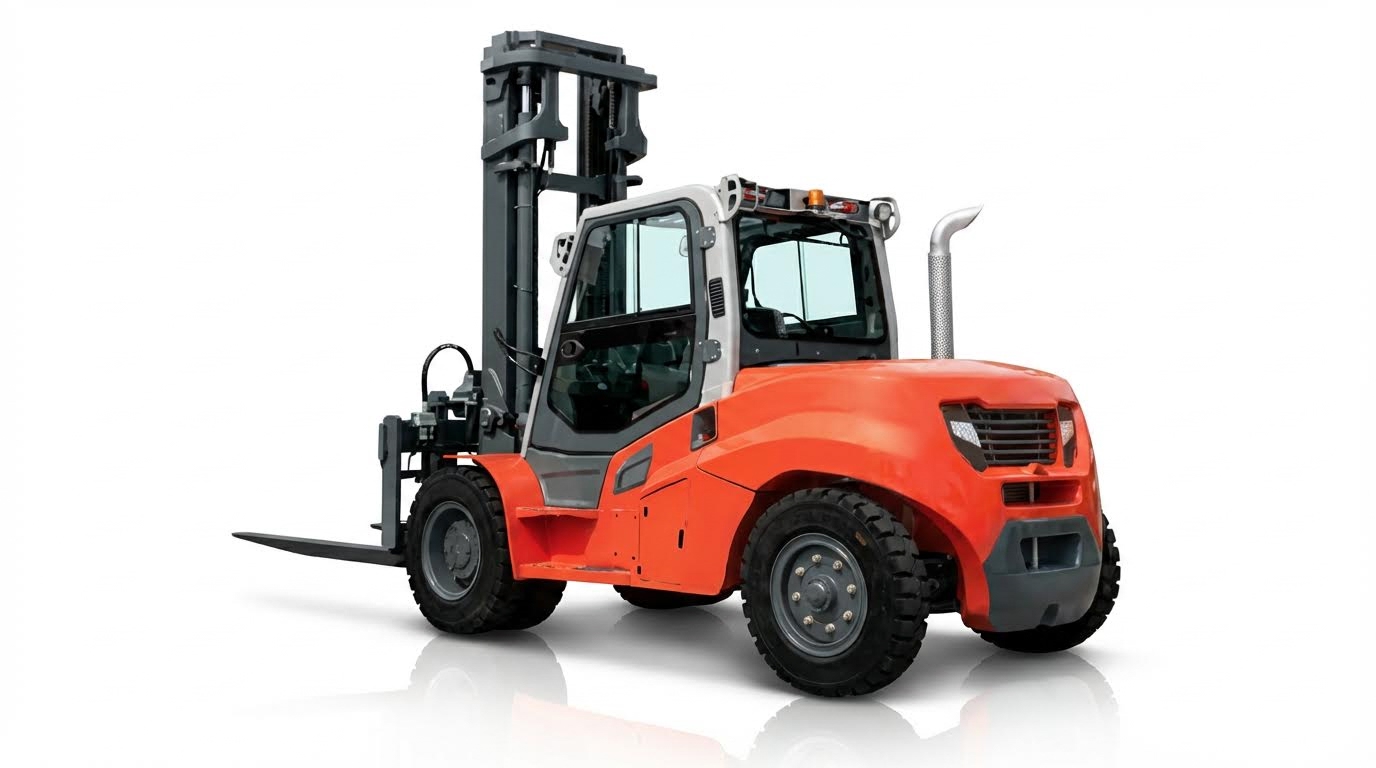
You should not guess whether a floor or mezzanine can take a given diesel forklift. Use structured checks based on published axle‑load categories, floor ratings, and load‑distribution formulas.
- Check axle‑load category vs. floor design
- Forklifts are grouped by maximum axle load and rated capacity into categories I–VI, from about 5 kips up to 120 kips axle load. Standard forklift axle‑load categories
- Match your truck’s worst‑case front axle load to the category used in the original floor or slab‑on‑grade design.
- Compare tire pressure to floor bearing capacity
- Typical industrial concrete floors might be designed around 500 psi bearing capacity.
- Loaded forklifts with solid tires can reach about 350 psi at the front tires. Example of 350 psi tire contact pressure
- Allow a safety factor for dynamic effects, surface defects, and joint crossings.
- Use area‑load formulas for elevated floors
- For mezzanines or framed floors, convert the moving forklift into an equivalent distributed load.
- A reference method uses: (machine weight + (15 lb/ft² × 0.5 × service clearance) + (10 lb/ft² × total area)) / total area, with a typical limit of 50 lb/ft² (240 kg/m²) plus 20 lb/ft² (100 kg/m²) partition allowance, for a total of 70 lb/ft² (340 kg/m²). Example floor loading formula and limits
- Compare the resulting value with the floor rating on your structural drawings.
Practical checklist before running a diesel forklift on a floor
- Confirm truck operating weight and rated capacity from the data plate (this answers “how much does a diesel forklift weigh” for your exact unit).
- Estimate maximum front axle load at full rated load using 87–94% front‑axle share.
- Obtain tire type and size to estimate contact area and pressure.
- Check building drawings for slab thickness, reinforcement, and any specified forklift or axle‑load limits.
- For mezzanines, compare equivalent distributed load to the floor’s lb/ft² or kg/m² rating.
- Consult a structural engineer if calculated pressures or loads approach the design limits.
By tying forklift weight, axle loads, and tire contact pressure back to recognized categories and formulas, you can safely match diesel trucks to your floors without relying on guesswork or rules of thumb.
Selecting The Right Diesel Forklift For Your Facility
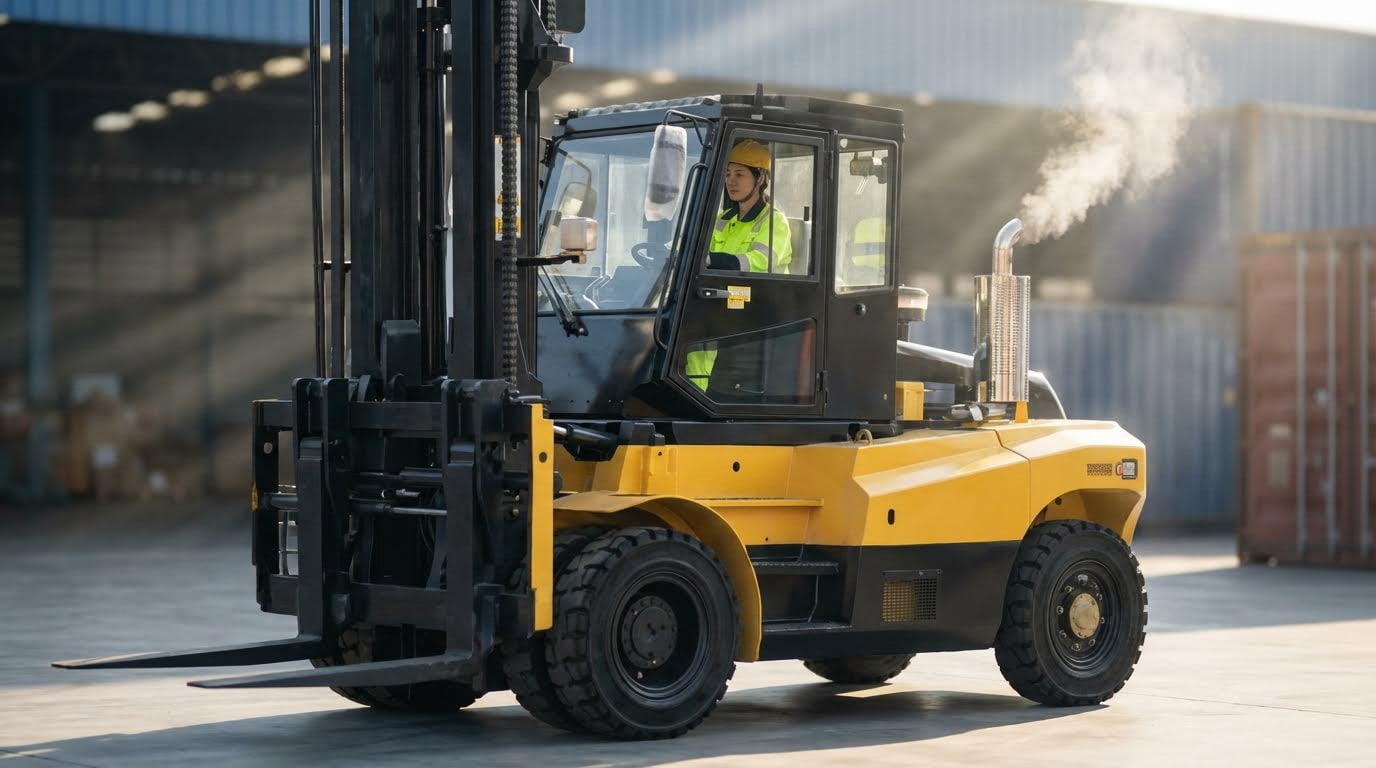
Matching capacity, load center, and truck weight
When people ask how much does a diesel forklift weigh, the real engineering question is how truck weight scales with capacity and load center. You must size the truck so it safely lifts your heaviest load at the actual load center, without over-stressing floors, docks, or slabs.
Use this table as a quick selection guide for typical diesel forklifts with a 600 mm load center. It links rated capacity to approximate operating weight so you can estimate floor and axle loading early in the project.
| Rated capacity (kg) | Typical operating weight (kg) | Weight ÷ capacity (approx.) | Typical use case |
|---|---|---|---|
| 1,000 | 2,450 (example spec) | 2.4 × | Light pallets, small warehouses |
| 2,000 | 3,440 (example spec) | 1.7 × | General warehouse, loading docks |
| 2,500 | 3,850 (example spec) | 1.5 × | Heavier pallets, block stacking |
| 3,000 | 4,380 (example spec) | 1.5 × | Outdoor yards, loading steel, timber |
| 3,500 | 4,750 (example spec) | 1.4 × | Heavy pallets, machinery |
| 4,000 | 6,300 (example spec) | 1.6 × | Fabrication shops, heavy industry |
| 5,000 | 6,750 (example spec) | 1.4 × | Steel coils, dies, molds |
| 7,000 | 9,400 (example spec) | 1.3 × | Ports, heavy fabrication |
| 8,000 | 11,300 (example spec) | 1.4 × | Yards, steel service centers |
| 10,000 | 13,000 (example spec) | 1.3 × | Large machinery, containers |
| 16,000 | 19,200 (example spec) | 1.2 × | Heavy plant, casting, ingots |
| 20,000 | 33,500 (example spec) | 1.7 × | Ports, steel plate, wind components |
| 25,000 | 35,500 (example spec) | 1.4 × | Ultra-heavy industrial loads |
For very high capacities, truck weight grows rapidly and often exceeds 1.5–2.0 times the rated load. For example, 10–16 ton diesel forklifts weigh roughly 13,000–19,200 kg, while 35–42 ton units can reach 42,000–56,000 kg. These heavy trucks require careful floor and route checks.
Quick steps to match capacity, load center, and truck weight
Use this checklist when selecting a diesel truck for a new or existing facility.
- List your heaviest routine load, plus a realistic safety margin (10–25%).
- Determine the real load center: pallet depth, attachment length, or load overhang.
- Read the forklift capacity plate for capacity at that load center and lift height.
- Confirm the truck’s operating weight from the data sheet, not from assumptions.
- Estimate loaded truck weight (truck + rated load) for floor and axle checks.
- Check if attachments (clamps, booms, sideshifts) reduce effective capacity.
Checking building, mezzanine, and slab load ratings
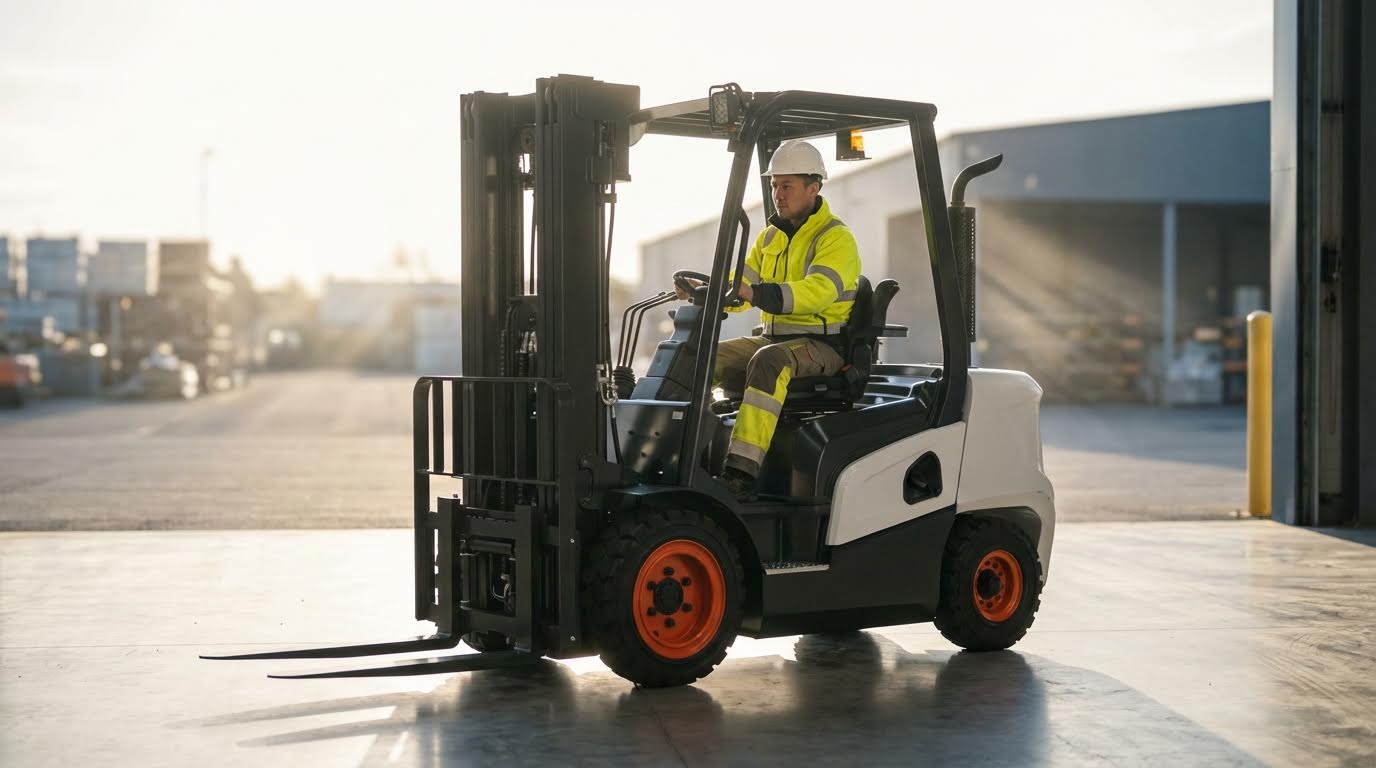
Once you know how much a diesel forklift weighs (unloaded and fully loaded), you must verify that floors, mezzanines, and routes can safely carry the concentrated axle loads. Forklifts are not uniform loads; they put 87–94% of the total gross weight on the front axle when loaded. This front-axle bias drives floor design.
Use this sequence to check compatibility between a candidate diesel forklift and your structure.
- Collect structural data
- Slab-on-grade: thickness, concrete strength, reinforcement, sub-base type.
- Mezzanines: design live load rating (e.g., 50–70 lb/ft² or 240–340 kg/m²). Typical office/IT floors use this range.
- Ramps and docks: posted axle or vehicle load limits, if available.
- Determine forklift gross and axle loads
- Unloaded truck weight from spec sheet (see table above).
- Loaded weight ≈ truck weight + rated capacity (worst case).
- Front axle load (loaded) ≈ 0.87–0.94 × total gross weight. This reflects typical counterbalanced trucks.
- Convert axle load to floor pressure
- Estimate tire contact area: number of front tires × contact patch per tire.
- Floor pressure ≈ front axle load ÷ total contact area on that axle.
- Compare to concrete limits; typical floors may be designed around 500 psi, while a loaded forklift front axle can approach 350 psi with solid tires. This leaves limited surplus capacity.
- Check against floor load ratings
- For mezzanines and framed floors, compare equivalent uniform load using the engineer’s method or a conservative formula from your structural consultant.
- As a screening check, some guidance uses a total floor load rating of about 340 kg/m² (70 lb/ft²) including partitions, with 240 kg/m² (50 lb/ft²) for general loading. This is not a forklift design value but a comparison point.
- Classify the truck by axle load category
- Compare your calculated axle load to published forklift axle load categories (e.g., Category I: 5–10 kips axle load, Category VI: 43–120 kips). These categories help structural engineers size floors.
- Ensure your floor system was designed for the same or higher category.
- Confirm with a structural engineer
- Provide truck weight, capacity, wheelbase, tire type, and operating routes.
- Request written confirmation that the proposed forklift is acceptable.
Practical tips before approving a diesel forklift on upper levels
Use these quick checks before you allow diesel forklifts on mezzanines or suspended slabs.
- Avoid running high-capacity diesel forklifts on floors rated only for light pallet storage.
- Ban turning in place on thin slabs or near slab joints and column lines.
- Keep travel paths away from floor openings, trenches, and weak infill panels.
- Use smaller electric or walkie equipment on marginal floors instead of heavy diesels.
- Document allowable truck types and routes in your site traffic plan.
Final Thoughts On Diesel Forklift Weight And Floor Loading
Diesel forklifts deliver high capacity, but they also bring high concentrated loads into your building. The truck usually weighs far more than its rated capacity, and most of that weight shifts onto the front axle when you lift. That combination drives local floor pressure, joint damage, and long‑term slab fatigue.
Engineering teams must treat “how much does a diesel forklift weigh” as a structural design input, not a trivia question. Start with accurate operating weight and rated load. Convert these into front axle load, tire contact pressure, and equivalent floor loading. Then compare those values to slab design data, mezzanine ratings, and axle‑load categories.
Operations teams should match truck size to real handling needs and route strength. Use heavy diesel forklifts only where floors, docks, and yards are proven to support them with margin. On weaker slabs, upper levels, or near openings, switch to lighter equipment such as pallet jacks or drum carts from Atomoving.
The best practice is clear. Never guess. Always verify truck data, floor capacity, and operating routes before a diesel forklift ever drives on a surface. This disciplined approach protects people, product, and structures while still giving you the lifting power your facility needs.
Frequently Asked Questions
How much does a diesel forklift weigh?
The weight of a diesel forklift varies depending on its lifting capacity and design. Typically, a small 2-ton diesel forklift weighs around 3,000 kg, while larger models with capacities of 10 tons or more can weigh over 15,000 kg. Factors like the mast height, tire type, and additional attachments also influence the overall weight.
- Small forklifts (2-3 ton capacity): 3,000–4,500 kg
- Medium forklifts (5-7 ton capacity): 5,000–9,000 kg
- Large forklifts (10+ ton capacity): 10,000–15,000+ kg
To ensure safety, always check the manufacturer’s specifications for the exact weight before operation. For more details, refer to this OSHA Material Handling Guide.