Diesel and propane forklifts addressed distinct engineering and operational needs across ports, yards, and warehouses. Their differences in power density, emissions, maintenance, and safety drove application-specific choices rather than simple substitution. This article examined power and duty-cycle fit, emissions and regulatory constraints, lifecycle cost and reliability, and practical selection criteria for both technologies. It provided engineers and fleet managers with a structured framework to specify, compare, and justify diesel or propane platforms for future projects.
Power, Duty Cycle, And Application Fit
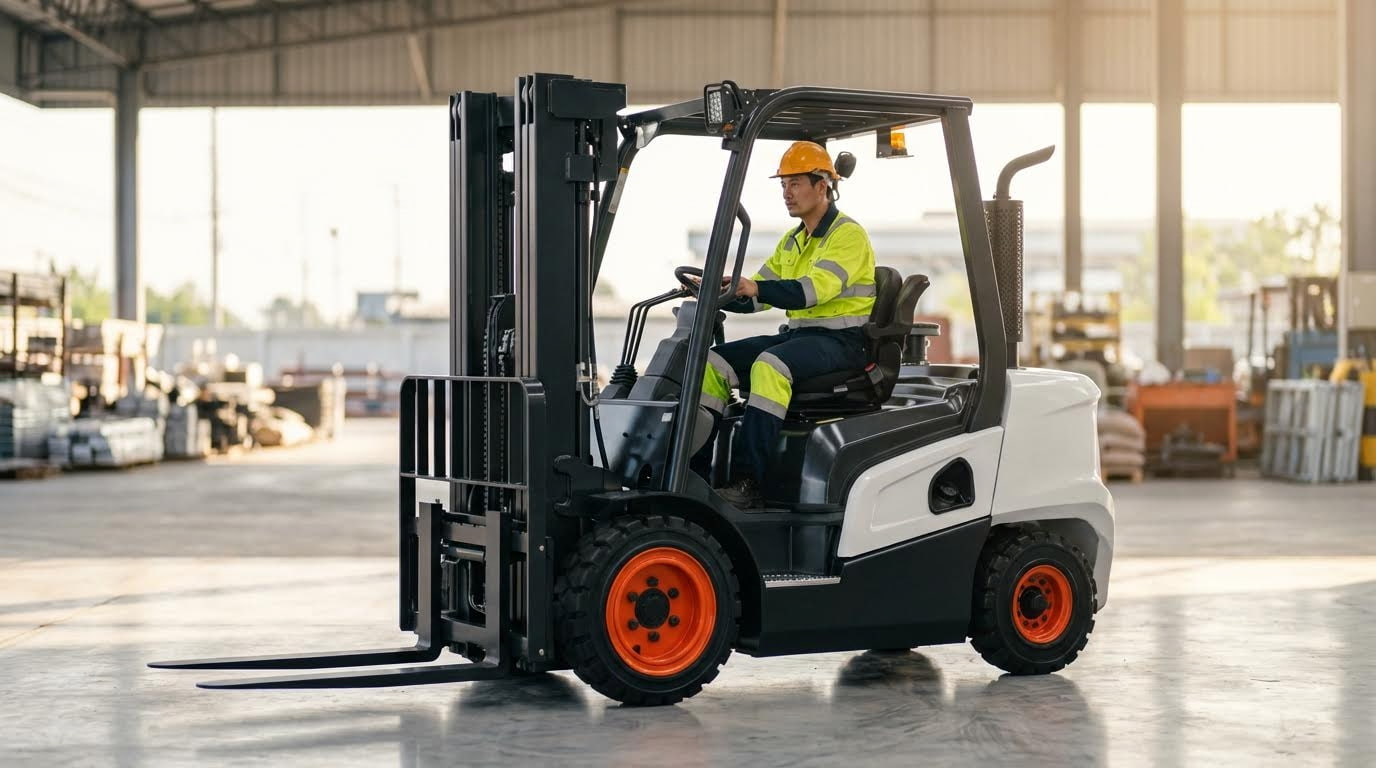
Powertrain selection between diesel and propane forklifts directly affected usable torque, duty cycle capability, and application fit. Engineers evaluated not only peak engine output but also how that power translated into tractive effort, gradeability, and thermal robustness over full shifts. Matching fuel type to environment and terrain remained critical to control emissions, ensure safety, and maintain productivity. Correct pairing of load profile, runtime, and refueling strategy minimized lifecycle cost and unplanned downtime.
Torque, Tractive Effort, And Gradeability
Diesel forklifts historically delivered higher low-end torque and superior tractive effort for a given truck class. This characteristic made them suitable for heavy container handling, steel coils, and palletized loads above several tonnes on ramps. High torque at low engine speed also improved gradeability on dock approaches, yard inclines, and uneven outdoor surfaces. Propane units provided more modest torque but offered relatively smooth, consistent power curves, adequate for standard warehouse loads and moderate slopes. When specifying trucks, engineers considered required drawbar pull, maximum ramp gradient, and surface friction to determine whether diesel performance margins were necessary.
Indoor vs. Outdoor And Terrain Constraints
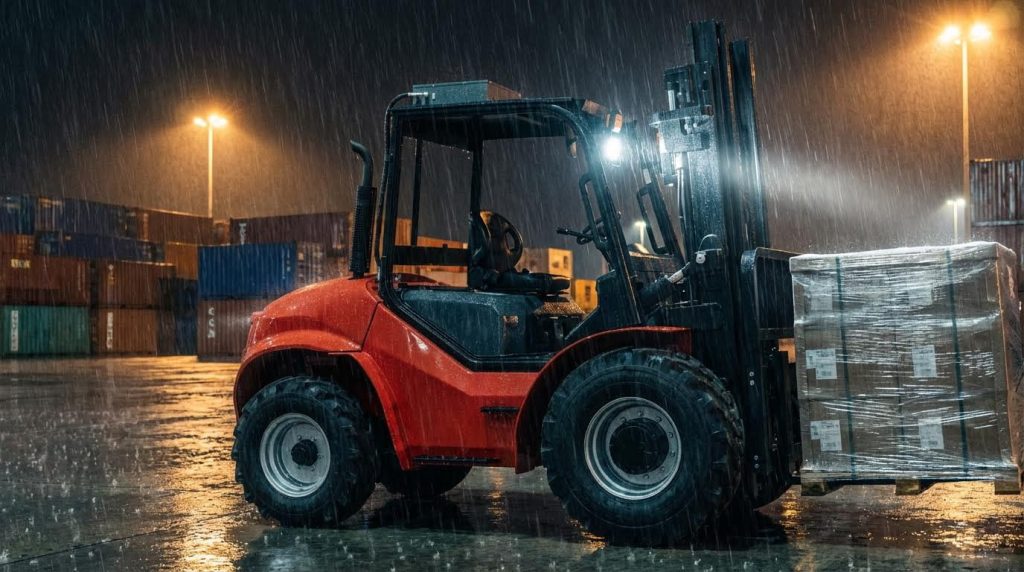
Diesel forklifts operated effectively in harsh outdoor environments such as construction sites, mines, and unpaved yards. Their engines tolerated wide ambient temperature ranges and humidity, provided cooling systems and filters received proper maintenance. However, diesel exhaust and noise limited their suitability for enclosed spaces or areas with strict air-quality limits. Propane forklifts, by contrast, fitted mixed indoor–outdoor operations where floor conditions were generally firm and level. They handled loading docks, paved yards, and internal aisles without major performance penalties. Low-temperature environments required attention for propane vaporization and cylinder icing, which could reduce available power and starting reliability.
Load Profiles, Duty Cycles, And Shift Patterns
Application engineering relied on accurate characterization of load spectra and duty cycles. Diesel forklifts excelled under high-load, high-duty scenarios, including continuous operation near rated capacity and long travel distances between pick and drop points. Their higher energy density fuel and robust cooling packages supported extended multi-shift use with limited refueling interruptions. Propane forklifts suited moderate load profiles, frequent starts and stops, and mixed handling tasks in warehousing or light manufacturing. Quick cylinder change enabled flexible shift patterns but imposed planning for cylinder inventory and handling. For intermittent or variable workloads, propane units often provided adequate performance with lower perceived operator fatigue due to smoother engine response.
Case Examples: Ports, Yards, And Warehouses
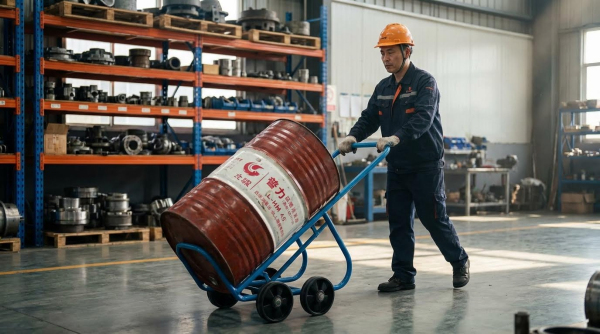
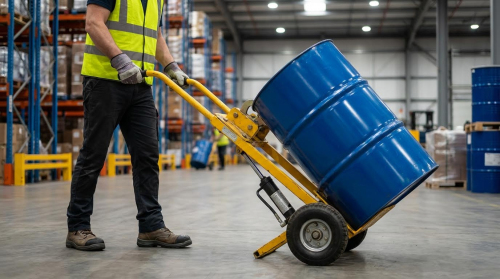
At ports and intermodal terminals, diesel forklifts handled containers, breakbulk cargo, and oversized loads where mass, inertia, and gradients demanded maximum torque and traction. Operations in bulk material yards or timber facilities also favored diesel due to rough terrain and long outdoor travel paths. In contrast, high-bay distribution centers, food logistics hubs, and electronics warehouses typically adopted propane units for dock work and internal manual pallet jack movement. These environments prioritized indoor air quality, controlled noise, and predictable refueling by cylinder swap. Mixed-use sites, such as manufacturing plants with adjacent yards, often deployed a blended fleet, assigning diesel trucks to heavy outdoor tasks and propane trucks to indoor or interface zones near production lines and storage racks. For specific applications like lifting drums, equipment such as the forklift barrel grabber proved essential. Additionally, tools like the electric drum stacker streamlined operations in confined spaces.
Emissions, Safety, And Regulatory Compliance
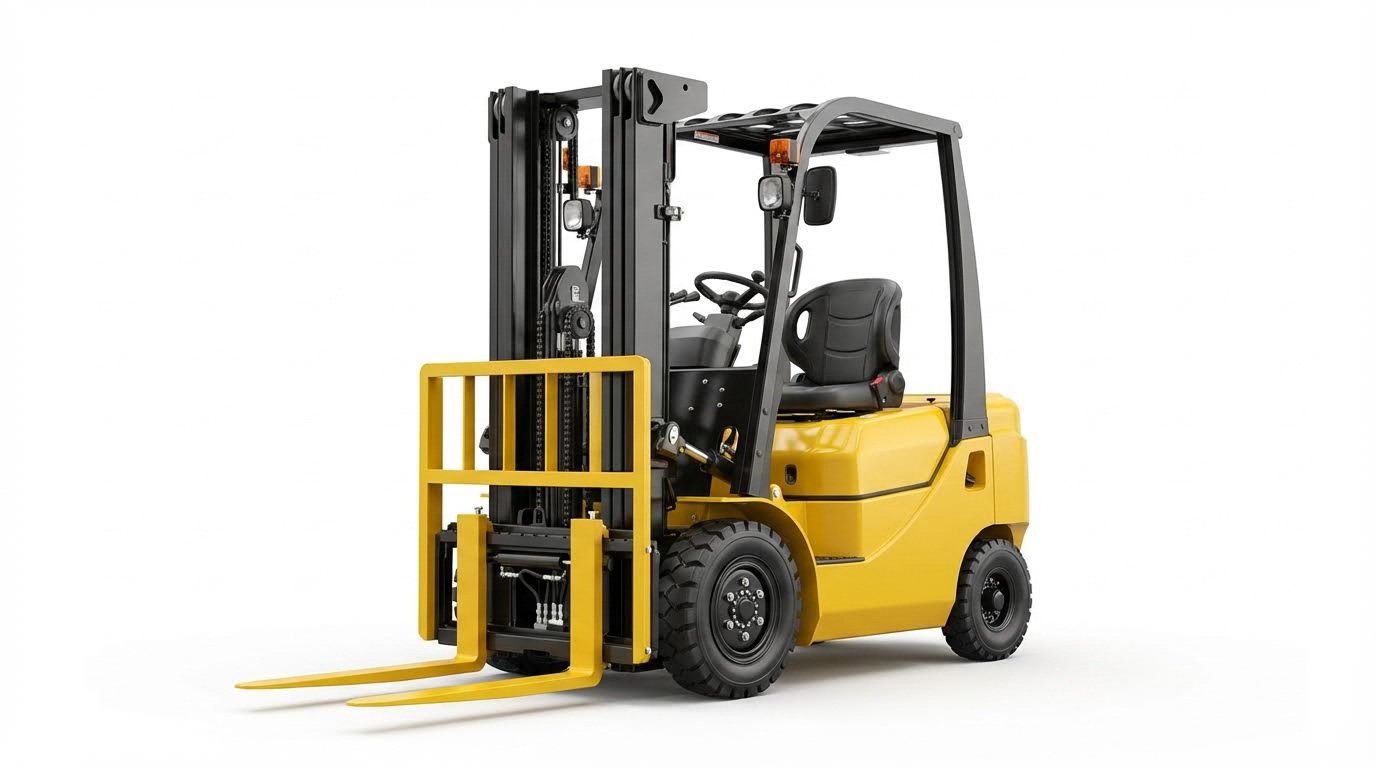
Emissions, safety, and regulatory constraints strongly influence the choice between diesel and propane forklifts. Engineers must match exhaust characteristics and fuel risks to indoor air-quality limits, ventilation capacity, and local codes. Compliance decisions affect not only equipment selection but also building design, operating procedures, and monitoring systems. A structured comparison of exhaust profiles, fuel handling risks, and applicable standards supports defensible fleet decisions.
Exhaust Profiles And Air-Quality Limits
Diesel forklifts historically produced higher nitrogen oxides, particulate matter, and soot than propane units. Even with modern aftertreatment, diesel exhaust remained problematic in enclosed spaces before 2026 due to residual particulates and NOx. Propane forklifts emitted lower particulate and greenhouse-gas levels and significantly less visible smoke, which improved indoor air quality. Engineers therefore favored propane or electric units for food, pharmaceutical, and electronics facilities subject to strict indoor limits and hygiene requirements.
Carbon monoxide remained a critical parameter for both fuel types, especially under poor combustion or inadequate maintenance. Regulatory frameworks such as occupational exposure limits for CO, NOx, and respirable dust constrained the allowable fleet size and runtime indoors. Operators needed calibrated exhaust analyzers or third-party tests to verify that tuned engines and catalytic devices met specified limits. In practice, diesel units were often restricted to outdoor yards or well-ventilated loading docks, while propane units operated across mixed indoor–outdoor routes.
Ventilation, Detection, And Operator Exposure
Ventilation design directly controlled exposure to exhaust gases and vapors from diesel and propane forklifts. Indoor diesel use required high air-change rates and directed airflow to dilute carbon monoxide and nitrogen oxides below occupational limits. Propane forklifts still needed engineered ventilation, because incomplete combustion could elevate CO even with cleaner nominal emissions. Facilities often sized ventilation systems based on worst-case simultaneous forklift operation and maximum duty cycles.
Detection systems complemented ventilation, particularly where forklifts operated in confined or partially enclosed spaces. Carbon monoxide detectors were widely recommended in areas with propane forklifts to detect combustion issues early. In diesel applications, CO and NOx monitoring helped verify that ventilation performance matched design assumptions during peak activity. Alarm setpoints, annunciation methods, and automatic responses, such as increased fan speed or interlocks, reduced operator exposure risk.
Fuel Handling, Storage, And Fire Protection
Diesel fuel handling focused on liquid spill prevention, vapor control, and ignition source separation at refueling points. Operators refueled diesel forklifts with engines off, in designated outdoor or well-ventilated areas, and avoided overfilling to accommodate thermal expansion. Storage tanks required secondary containment, grounding, and fire separation distances according to applicable fire codes. Fire protection strategies emphasized spill control, foam-compatible extinguishers, and emergency shutdown procedures.
Propane forklifts introduced different hazards due to liquefied petroleum gas under pressure. LPG vapor was heavier than air and accumulated in low points, which increased explosion risk without adequate dispersion. Cylinders required upright outdoor storage in locked, ventilated cages, shielded from direct sun and physical damage. Cylinder change-out procedures emphasized closing service valves, leak checks, and use of trained personnel, supported by dry-chemical extinguishers and restricted ignition sources.
OSHA, NFPA, And Local Code Considerations
Regulatory compliance for diesel and propane forklifts relied on overlapping occupational safety and fire-protection standards. OSHA rules governed powered industrial truck operation, training, and inspection practices, including pre-shift checks and annual safety inspections. NFPA standards addressed storage and handling of diesel and LPG, specifying separation distances, ventilation criteria, and hardware requirements such as pressure relief devices and emergency shutoffs. Facilities had to integrate these requirements into written procedures, signage, and operator training.
Local building and fire codes often added stricter provisions on indoor fuel storage, cylinder quantities, and use of internal combustion forklifts in basements or mezzanines. Authorities having jurisdiction interpreted these codes and could limit diesel use indoors or cap the total LPG inventory on site. Engineering teams therefore coordinated early with regulators when planning new warehouses or fleet conversions. Documented compliance, including inspection records and training logs, reduced liability and supported safe, sustainable forklift operations.
Lifecycle Cost, Maintenance, And Reliability
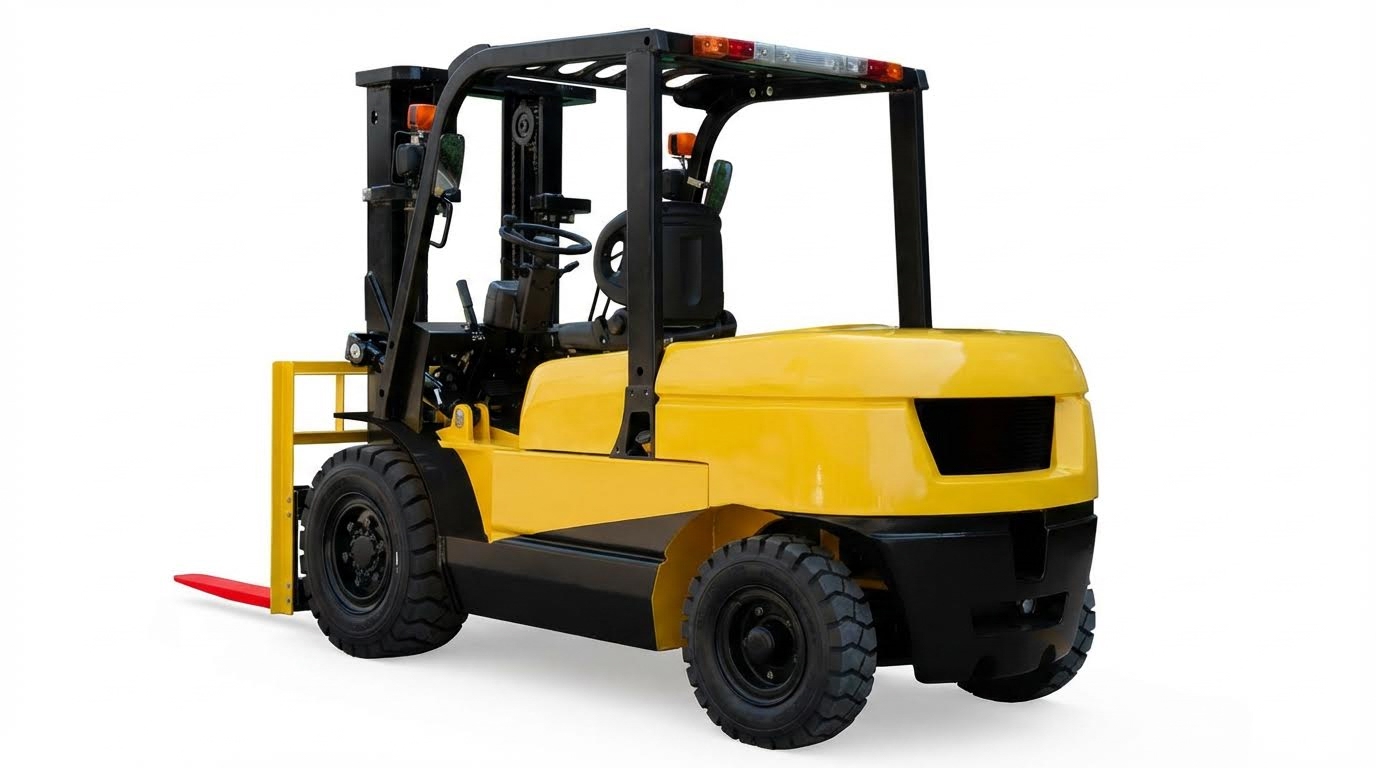
Lifecycle cost analysis compared diesel and propane forklifts across fuel, maintenance, and availability. Engineers evaluated not only purchase price, but also fuel burn per hour, shop time, and failure risk over multi‑year horizons. Reliability engineering focused on how fuel type affected engine wear, ancillary components, and unplanned downtime. Digital monitoring tools increasingly supported condition-based decisions instead of purely calendar-based maintenance.
Fuel Cost, Energy Density, And Refueling Logistics
Diesel fuel had higher volumetric energy density than LPG, which supported longer runtime per tank for comparable engine output. This characteristic favored diesel in high-utilization fleets with long outdoor shifts or remote sites where refueling pauses were costly. LPG offered cleaner combustion and stable supply pricing, but unit fuel price was often higher per kilowatt-hour delivered. Refueling logistics differed: diesel required fixed fueling points and spill control, while LPG allowed quick cylinder swaps but needed cylinder inventory, cages, and periodic inspections.
Operators typically refueled diesel trucks at central dispensers, which simplified bulk purchasing and inventory control. LPG fleets balanced on-site bulk storage with exchange programs, trading lower fueling time per truck for higher logistics complexity. In indoor or mixed-use fleets, LPG’s indoor refueling capability reduced deadhead travel to outdoor diesel pumps. Lifecycle fuel cost modeling therefore had to include not only unit price and consumption rate, but also labor time spent traveling to and performing refueling.
Preventive Maintenance Tasks And Intervals
Diesel forklifts required structured preventive maintenance at 250, 500, and 1 000 hour intervals or equivalent calendar periods. Typical 250 hour tasks included engine oil and filter changes, air filter inspection, and fuel system leak checks. At 500 hours, technicians inspected cooling systems, radiators, hoses, and replaced fuel filters to control injector wear. Around 1 000 hours, fleets scheduled broader inspections of engines, transmissions, and hydraulic circuits, including hydraulic fluid and filter replacement.
Propane trucks shared core internal combustion tasks but benefited from cleaner combustion and lower carbon deposits. Maintenance intervals for tune-ups often extended to about 2 000 hours, provided operators adhered to daily checks. LPG-specific tasks included inspecting cylinders, valves, and flexible hoses, and verifying leak-tight connections with approved test solutions. Both fuel types needed daily or pre-shift checks of oil level, hydraulic fluid, tires, forks, mast chains, brakes, lights, and horn to comply with safety requirements.
Component Wear, Failure Modes, And Uptime
Diesel engines operated with higher compression ratios and mechanical loads, which increased stress on pistons, rings, bearings, and fuel injection components. Soot and particulate formation, if not controlled by timely filter maintenance, accelerated wear in turbochargers and exhaust paths. Outdoor duty in dusty or muddy environments further increased contamination risk, making air and fuel filtration critical to uptime. Common diesel failure modes included injector fouling, overheating from clogged radiators, and oil degradation leading to bearing damage.
Propane engines experienced lower soot loading and cleaner combustion chambers, which reduced valve and piston deposit-related issues. However, LPG systems introduced their own failure modes, such as regulator icing in cold conditions or leaks at cylinder connections. Improper cylinder handling could damage valves or fittings, causing intermittent fuel starvation or safety shutdowns. Overall, fleets often recorded slightly higher mechanical uptime for LPG units in clean, indoor service and higher uptime for diesel units in heavy outdoor service, when maintenance matched environmental severity.
Digital Monitoring And Predictive Maintenance
Telematics and onboard controllers increasingly tracked engine hours, fuel burn, coolant temperature, and fault codes for both diesel and propane fleets. This data allowed maintenance planners to schedule service based on actual utilization and thermal stress instead of fixed calendar intervals. Vibration and temperature trends on engines, transmissions, and hydraulic pumps helped identify early-stage bearing wear or cavitation. Operators could flag anomalies through human–machine interfaces, which integrated with fleet management platforms.
Predictive maintenance algorithms used historical failure patterns to estimate remaining useful life of filters, fluids, and critical components. For diesel units, monitoring exhaust backpressure, injector balance, and cooling performance helped prevent catastrophic failures. For LPG trucks, leak detection trends and regulator performance metrics supported proactive cylinder and fuel-system inspections. Digital records also improved regulatory documentation, demonstrating that both fuel types received inspections at required intervals, which supported safety compliance and higher long-term reliability.
Summary: Choosing Between Diesel And Propane Forklifts
Engineering teams compared diesel and propane forklifts across power density, emissions, safety, and lifecycle cost. Diesel units delivered higher torque and tractive effort, which supported heavy-duty work such as container handling, outdoor yards, and rough terrain. Propane units provided sufficient power for most warehouse loads, quicker refueling than battery charging, and cleaner exhaust suitable for controlled indoor environments when ventilation met code requirements.
Emissions and safety considerations drove many procurement decisions. Diesel exhaust contained higher nitrogen oxides, particulates, and carbon monoxide, which constrained use in enclosed spaces without robust ventilation and monitoring. Propane forklifts emitted fewer pollutants and greenhouse gases, but introduced pressurized gas handling risks and required disciplined cylinder storage, leak checks, and compliance with standards such as OSHA 29 CFR 1910 and NFPA guidance for LPG systems. Both fuel types demanded structured procedures for refueling, spill or leak response, and hot-surface and ignition control.
Lifecycle economics depended on local fuel pricing, utilization intensity, and maintenance strategy. Diesel fuel generally offered high energy density and long runtime per tank, but engines had more complex systems, shorter service intervals, and higher parts consumption. Propane units benefited from cleaner combustion, longer engine life, and lower routine maintenance, while cylinder swap systems reduced downtime. Digital monitoring and preventive or predictive maintenance programs improved uptime for both technologies by stabilizing service intervals and catching emerging faults early.
In practice, operators selected diesel where load magnitude, gradients, and harsh outdoor conditions dominated, and propane where indoor air quality, regulatory constraints, and refueling agility were critical. Future tightening of emission limits and broader adoption of telematics and condition monitoring would continue to shift the trade space, but diesel and propane remained viable when matched carefully to duty cycle, environment, and safety requirements.