Electric forklift battery specification affected truck performance, safety, and lifecycle cost in every industrial fleet. This article examined core voltage classes from 24V pallet jacks to 80–96V high‑reach trucks, and how these map to load capacity and OEM requirements. It then related power demand and shift patterns to amp‑hour sizing, including right‑sizing strategies when switching from lead‑acid to LiFePO₄ under varying temperature and depth‑of‑discharge conditions. Finally, it addressed pack quantity, form factor, BMS and CANbus integration, safety standards, and distilled these aspects into a practical framework for selecting optimal forklift battery specs.
Core Voltage Ranges for Electric Forklifts
Standard 24V, 36V, 48V, 72–80V, and 96V Classes
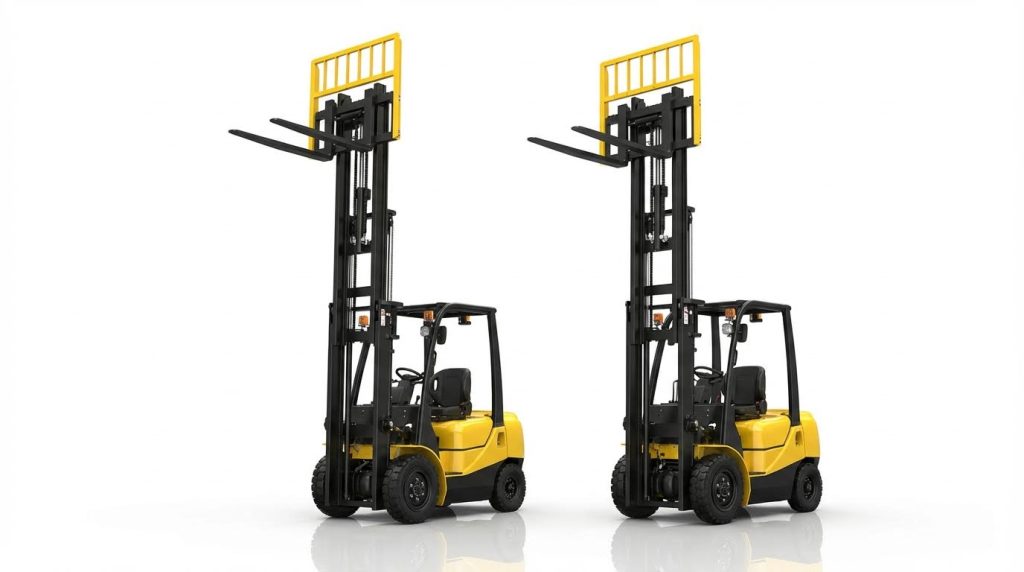
Industrial electric forklifts historically used standardized DC bus voltages to simplify design and servicing. Common LiFePO4 forklift systems operated at 24V, 36V, 48V, and 80V, with some heavy-duty or high-reach equipment moving into 72–96V ranges. Data from several manufacturers showed 24V packs in the 150–300Ah range for pallet jacks and low-level order pickers. Mid-range trucks used 36V or 48V packs, while reach trucks and high-capacity counterbalance forklifts often adopted 80V or higher systems. Higher voltage reduced current for the same power, which lowered conductor sizes, I²R losses, and connector heating.
Manufacturers such as CIC, BSLBATT, and LEMAX offered LiFePO4 packs from 12V up to about 96V nominal, but forklift-optimized lines clustered around 24V, 36V, 48V, and 80V. Example products included 48V 600Ah, 80V 690Ah, and 96V 960Ah packs for heavy-duty applications. An 80V class battery could deliver over 90kWh in large-capacity models, supporting multi-shift operation. Standardization around these voltage classes simplified charger selection, BMS programming, and OEM controller integration. It also aligned with legacy lead-acid system voltages, easing retrofits.
Matching Voltage to Truck Type and Load Capacity
Voltage selection closely followed truck architecture, rated capacity, and lift height. Low-voltage systems between 24V and 48V generally powered pallet jacks, stackers, and small counterbalance trucks handling loads under about 1.5 tonnes. Typical pallet trucks used 24V packs around 200–300Ah, while compact counterbalance trucks used 36V or 48V systems with 300–600Ah capacities. These configurations delivered adequate traction torque and moderate hydraulic flow without excessive current.
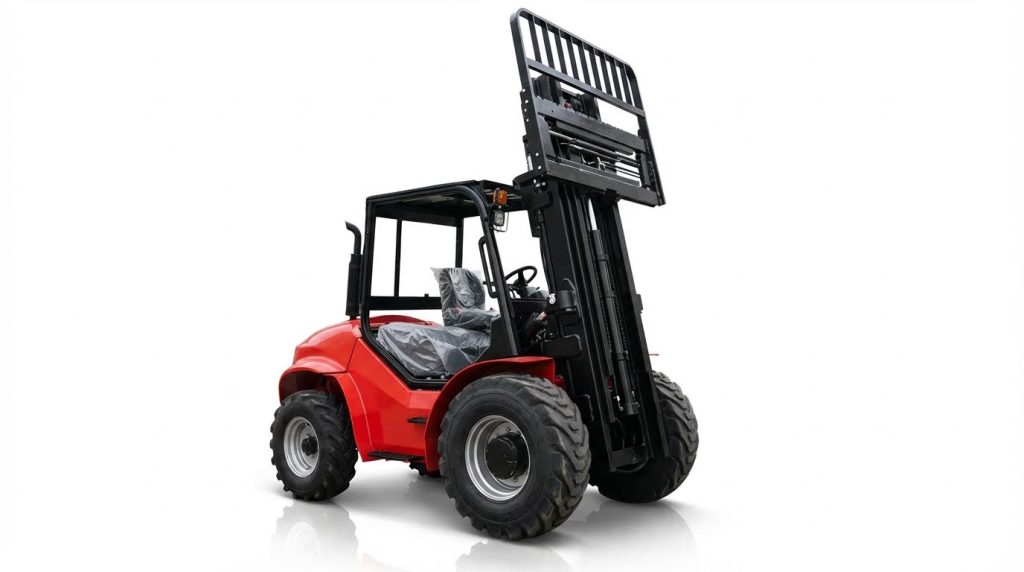
Higher-capacity counterbalance forklifts and reach trucks handling 3–10 tonne loads often required 72V or 80V systems, and high-reach trucks above 10m sometimes used custom 96V buses. Higher voltage improved hydraulic stability at high mast heights by allowing finer current control and reduced voltage sag under peak demand. For example, Crown and Hyundai high-capacity models used 80V packs between about 560Ah and 690Ah. Three-shift warehouses moving 3 tonne pallets often specified 80V packs in the 600–700Ah range to avoid mid-shift charging. Engineers therefore treated voltage as a primary sizing parameter tied to rated truck capacity and duty cycle.
OEM-Specific Requirements and Nonstandard Voltages
Although industry practice converged on 24V, 36V, 48V, and 80V, several OEMs implemented nonstandard nominal voltages or tight voltage windows. Some traction inverters operated optimally at 64V or specific 80V profiles, with firmware expecting defined charge curves and cut-off limits. Legacy equipment that originally used 36V lead-acid packs sometimes migrated to 40V LiFePO4 systems to exploit higher energy density. In such cases, voltage adapters or DC-DC conditioning modules were required to protect older controllers from overvoltage stress.
Manufacturers like BSLBATT and CIC offered customized voltage ranges, for example 77.28V or 83.72V nominal, to match OEM requirements while still labeling the systems as “80V class.” These small deviations allowed better utilization of LiFePO4 cell groupings without violating controller limits. However, voltage mismatches between pack and truck could cause efficiency losses of around 18–22% due to converter overhead and suboptimal motor operation. Engineers therefore validated open-circuit voltage, working range, and charger profile against OEM documentation before approving a retrofit or upgrade.
Integration Issues When Converting From Lead-Acid
Converting from lead-acid to LiFePO4 introduced several electrical and control integration challenges beyond simple voltage matching. Lead-acid systems exhibited wider voltage sag under load, and many legacy controllers implicitly relied on that behavior for state-of-charge estimation and derating. LiFe
Amp-Hour Sizing and Runtime Calculations
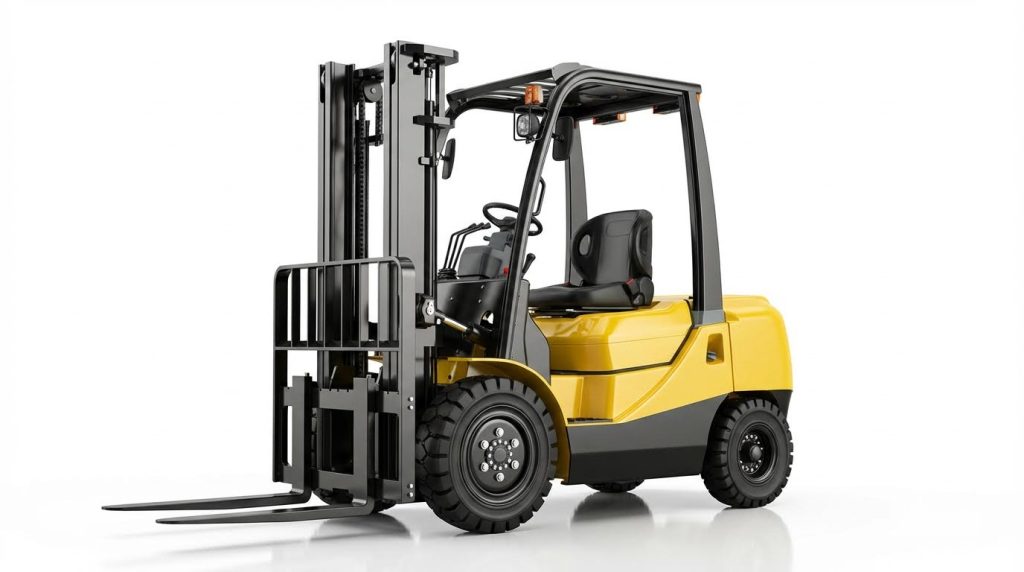
Amp-hour sizing determined whether an electric forklift met its planned shift length without opportunity charging. Engineers linked motor and hydraulic power demand in kilowatts to usable battery energy in kilowatt-hours, then converted that to required amp-hours at the chosen system voltage. Correct sizing also accounted for peak loads, depth-of-discharge limits, and aging margins. The following sections outlined a practical framework for specifying Ah capacity by duty cycle, chemistry, and environment.
Relating kW Demand, Shift Length, and Required Ah
Engineers first estimated average power demand in kilowatts from drive, lift, and auxiliary loads. For example, a 48V, 15kW forklift running 8 hours required roughly 15kW × 8h = 120kWh at the terminals. Dividing energy by nominal voltage gave theoretical amp-hours: 120kWh ÷ 48V ≈ 2500Ah, but actual required Ah was lower because average power stayed below nameplate and duty cycles were intermittent. Field data indicated that such a truck typically operated with about 520Ah at 48V plus a 20% buffer for peaks, giving ≈625Ah nameplate. Engineers always applied usable-energy limits based on chemistry, keeping lithium within the recommended state-of-charge window.
Typical Ah Ranges by Truck Class and Duty Cycle
Different truck classes used distinct Ah bands tied to load and mast height. Pallet jacks usually operated at 24–36V with 200–300Ah packs, supporting light-duty warehouse tasks. Counterbalance forklifts handling 1.5–3t loads commonly used 48–72V systems with 400–600Ah, while heavier 3–10t trucks ran 72V+ with 600–800Ah or more. Reach and high-reach trucks with masts near or above 10m often required 80–96V systems and 500–800Ah to stabilize hydraulics and maintain lift speed at end-of-shift. Three-shift, 3t warehouses often specified around 700Ah capacity with opportunity charging, whereas single-shift 1.5t operations could work reliably with about 400Ah.
Lithium vs. Lead-Acid: Right-Sizing Ah Capacity
LiFePO4 technology allowed lower nameplate Ah than legacy lead-acid while delivering equivalent runtime. Suppliers reported that lithium packs could run 30–40% lower in capacity than replaced lead-acid batteries because of higher usable DoD, better charge acceptance, and reduced voltage sag. For instance, a Hyster truck that previously used a 500Ah lead-acid battery could shift to a 180–420Ah lithium pack without loss of productivity when paired with fast charging. Typical lithium forklift batteries ranged from about 100Ah for small pallet trucks up to 2000Ah for heavy industrial units. Engineers sized lithium packs around realistic usable DoD (often 70–80%), planned opportunity charging windows, and required cycle life rather than simply matching the lead-acid Ah label.
Temperature, DoD, and Cycle Life Trade-Offs
Ambient temperature and allowed depth of discharge strongly influenced required Ah and expected life. Premium LiFePO4 cells operated down to about -30°C with less than 20% capacity loss, while comparable lead-acid batteries lost around 50% capacity at 0°C, forcing oversizing in cold stores. Designers often limited lithium discharges to about 70–80% DoD and kept state of charge above 20% to extend life by roughly 30% compared with deep cycling. High-capacity packs of 600Ah or more supported multi-shift use with moderate DoD, which improved cycle counts beyond 3500–4000 cycles in industrial products. Engineers also avoided charging lithium below 0°C and incorporated thermal management where sub-zero operation was routine, ensuring that nameplate Ah translated into consistent field runtime.
Battery Quantity, Form Factor, and System Design
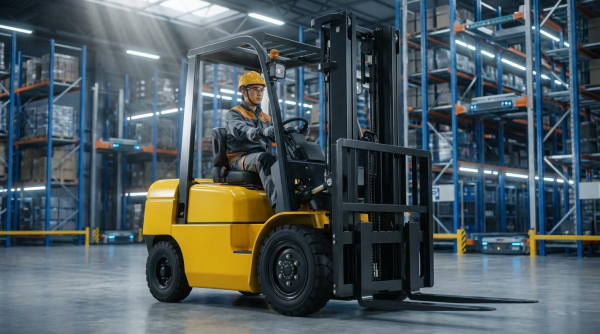
Battery system design for electric forklifts linked electrical architecture with mechanical constraints and shift patterns. Engineers selected pack quantity, geometry, and mass to satisfy uptime targets while preserving stability and compliance. Lithium iron phosphate (LiFePO4) technology enabled higher energy density and modularity compared with legacy lead-acid systems. Correct integration minimized voltage mismatch losses, thermal stress, and structural issues over the battery life.
Single vs. Multiple Packs and Multi-Shift Strategy
Engineers typically used a single high-capacity pack for standard single-shift operations and moderate loads. For three-shift warehouses handling 3-ton pallets, high-capacity packs of 600–700Ah at 48–80V enabled continuous operation with only planned charging windows. In some fleets, two interchangeable packs per truck supported hot-swapping between shifts, reducing downtime but increasing capital cost and connector wear. Multi-pack architectures also appeared in AGVs, where several smaller 48V modules in parallel simplified maintenance and allowed staged replacement. Designers considered charger availability, peak power demand, and facility workflow to decide between large single packs and modular multi-pack systems.
Physical Envelope, Weight, and Counterbalance Needs
Forklift battery dimensions had to match the OEM battery compartment, including length, width, height, and rail interfaces. Examples such as CIC and LEMAX packs showed footprints around 700–1000mm in one dimension and heights near 600–800mm, illustrating the bulk envelope for 80V 400–600Ah systems. Lithium packs weighed significantly less than equivalent lead-acid units; a 48V 600Ah LiFePO4 battery weighed roughly 380kg versus about 900kg for lead-acid. Engineers often added steel ballast or re-optimized counterweights to maintain rated load capacity and mast stability when switching to lighter lithium systems. High-reach trucks above 10m height required especially tight control of center of gravity and moment distribution, so pack placement and mass became part of the stability calculation.
BMS, CANbus, and Predictive Maintenance Integration
Modern LiFePO4 forklift packs incorporated a Battery Management System (BMS) with cell monitoring, balancing, and protection. CANbus integration allowed the truck controller to read voltage, current, temperature, State of Charge (SOC), and fault flags in real time. AGVs typically used tightly regulated 48V CANbus packs with ±1% voltage control to protect motor drives and navigation electronics. Advanced systems supported predictive maintenance, logging cycle counts, depth of discharge, and internal resistance trends, with some vendors claiming failure prediction horizons above 400 operating hours. Firmware updates on the BMS could improve balancing algorithms and extend service life by roughly 10–15%, particularly in high-cycle fleets.
Safety, Certifications, and Regulatory Compliance
Safety requirements for industrial battery packs covered electrical, thermal, and mechanical risks. Designers avoided voltage mismatches, since deviations could reduce efficiency by roughly 18–22% and stress motor controllers. UL and CE certifications, along with adherence to OSHA Standard 1926.441 for handling and charging, formed the baseline for regulatory compliance in harsh warehouse environments. Packs required short-circuit, overcharge, and overtemperature protection in the BMS, plus insulation coordination and guarded terminals to support safe service work. IP65 or higher ingress ratings, as seen in several commercial 80V packs, protected against dust and water spray, which was important for outdoor or washdown applications. Training programs for operators and technicians complemented hardware safeguards and significantly extended battery life and reliability.
Summary: Selecting Optimal Forklift Battery Specs
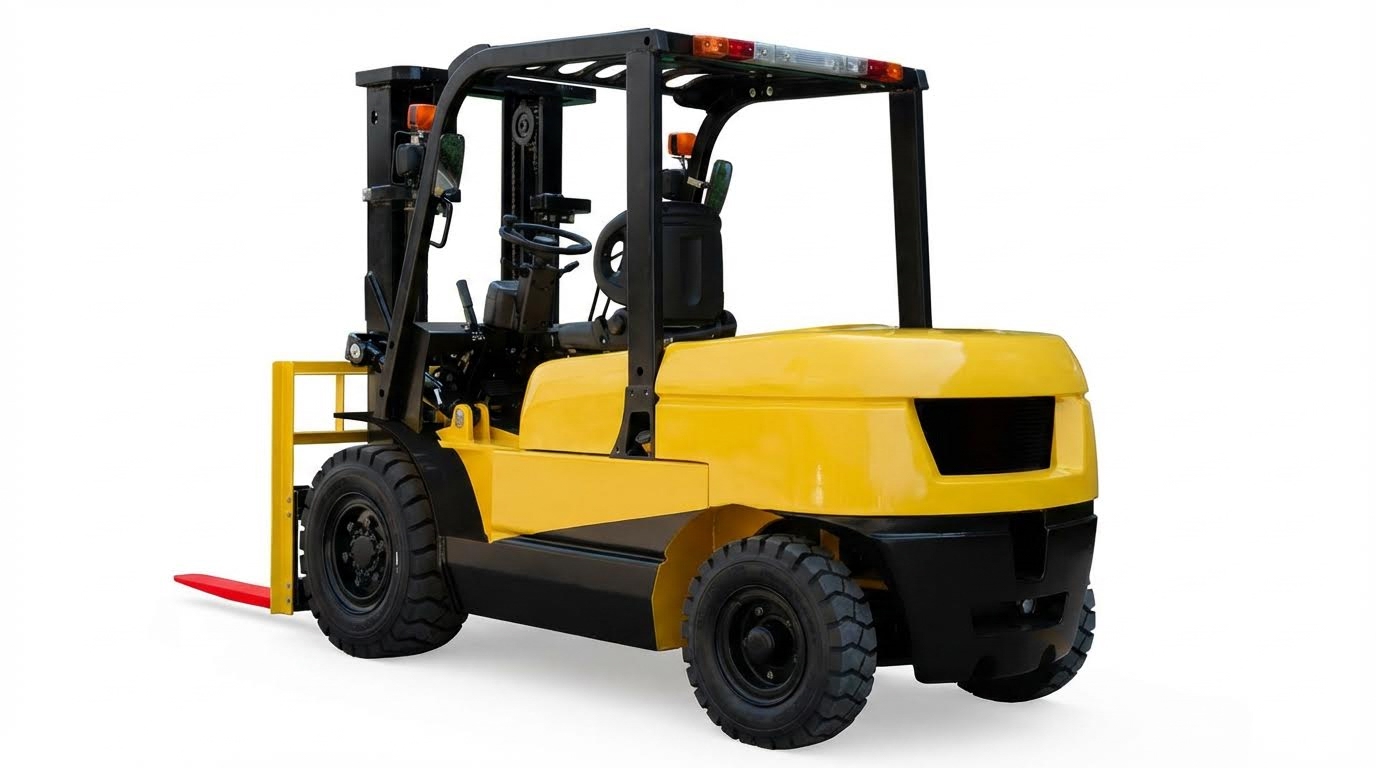
Selecting electric forklift battery specifications required a structured balance between voltage class, amp-hour capacity, and pack configuration. Engineers first defined truck class, rated load, and mast height, then aligned these with standard voltage tiers such as 24 V, 36 V, 48 V, and 80 V. High-reach and heavy counterbalance trucks often benefited from 72–96 V architectures to limit current and cable losses while stabilizing hydraulics at large lift heights.
Amp-hour sizing depended on motor power, shift length, and duty cycle. For example, a 48 V, 15 kW truck running 8 hours typically needed around 520 Ah plus a 20% reserve. Lithium packs allowed 30–40% lower nominal Ah than legacy lead-acid while maintaining runtime due to higher usable depth of discharge and lower Peukert losses. Designers also considered ambient temperature, targeting reduced depth of discharge and higher capacity margins for cold storage applications.
System design extended beyond a single pack. Multi-shift warehouses either specified high-capacity LiFePO₄ packs, often ≥600 Ah, to avoid change-outs, or used multiple smaller packs with rapid swap strategies. Battery mass and envelope had to match the counterweight role in counterbalance trucks, so lightweight lithium systems sometimes required steel ballast. Integrated BMS with CANbus provided accurate state-of-charge, protected against abuse, and enabled predictive maintenance with cycle logging and fault forecasting.
Safety and compliance remained central. Specifiers prioritized UL and CE certifications, adherence to OSHA 1926.441 for maintenance practices, and correct voltage matching to avoid 18–22% efficiency losses or controller damage during conversions. Future trends pointed toward higher-voltage standardized platforms, smarter BMS analytics, and OEM-approved lithium retrofit kits. A disciplined specification process, supported by real energy-use data and regulatory awareness, delivered optimal lifecycle cost and reliable multi-shift operation.