Electric forklifts reshaped material handling economics by combining high energy efficiency with lower lifecycle operating costs. Understanding how trucks consume electricity, how batteries age, and how charging practices affect uptime became essential for engineering and operations teams.
This article examined the key factors driving electric forklift energy demand, from duty cycles and motor technologies to regenerative braking and site power conditions. It then compared lead-acid and lithium-ion batteries, detailed charging and thermal management strategies, and linked maintenance and OSHA-compliant safety practices to battery life.
Finally, the article evaluated methods to cut electricity costs across the truck lifecycle, including fleet-level planning, predictive maintenance, and data-driven optimization, before summarizing best practices and emerging trends in electric forklift power management.
Key Factors In Electric Forklift Energy Demand
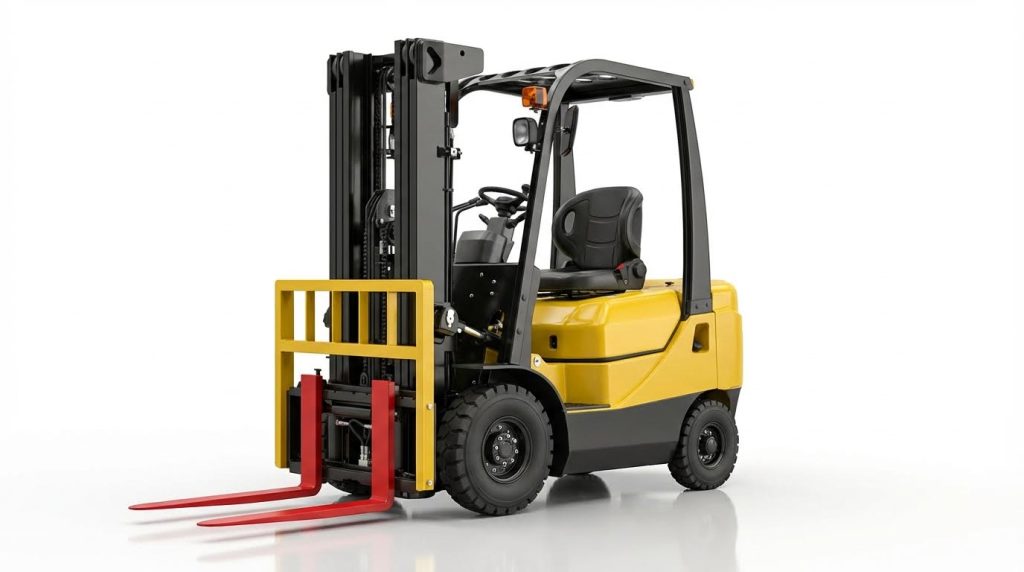
Electric forklift energy demand depended on a tightly coupled set of mechanical, electrical, and operational parameters. Engineers evaluated not only nameplate battery capacity, but also how trucks accelerated, lifted, and idled across complete shifts. Realistic assessments therefore considered duty cycles, motor and drivetrain technologies, braking strategies, and site power quality. Understanding these factors allowed operators to size batteries correctly, select appropriate technologies, and manage total lifecycle electricity costs.
Duty Cycles, Load, And Drive Profiles
Duty cycle defined the proportion of time a forklift spent lifting, driving loaded, driving unloaded, and idling. High-intensity multi-shift operations with frequent full-capacity lifts and rapid accelerations drew significantly higher average current from the battery. Energy demand increased non-linearly as loads approached rated capacity, because motors needed higher torque and hydraulic systems operated at higher pressure. Drive profiles with repeated stop-start operation and short travel distances also raised consumption due to frequent acceleration losses. Accurate energy modeling therefore required time-resolved data on load mass, lift height, travel distance, and acceleration patterns over an entire shift.
Motor Technologies And Transmission Losses
Motor type and drivetrain architecture strongly influenced conversion efficiency between electrical and mechanical power. High-torque brushless direct-drive motors, such as those used in Jiangsu Shangqi’s 1.5-ton and 2-ton pallet trucks introduced in 2025, eliminated traditional gearboxes and associated transmission losses. These designs achieved zero nominal transmission loss, increased drive power by about 25%, and reduced noise by roughly 30% compared with geared drives. Brushless motors also delivered 5,000+ hours of maintenance-free operation, stabilizing efficiency over time by avoiding brush wear and commutator losses. When paired with modern controllers like Curtis 1232E units, system-level optimization improved operational efficiency by around 18% and cut energy consumption by about 15% versus older motor-control combinations.
Regenerative Braking And Energy Recovery
Regenerative braking converted kinetic energy during deceleration into electrical energy stored back into the battery. During braking, the traction motor operated as a generator, reducing energy otherwise dissipated as heat in friction brakes. This process lowered net electricity use, extended runtime per charge, and reduced brake wear and associated maintenance. Actual recovery levels depended on forklift design, controller algorithms, battery acceptance rate, and operating environment, including the frequency of deceleration events and slopes. Most electric forklifts combined regenerative and friction braking to maintain predictable stopping distances and safety while still capturing a significant portion of recoverable energy.
Environmental And Facility Power Conditions
Ambient temperature, floor conditions, and facility power quality all affected energy demand and usable battery capacity. High temperatures accelerated battery degradation and increased internal resistance, while cold environments reduced available capacity and peak power, requiring higher current draw for the same work. Advanced thermal management systems, like those that reduced motor temperature by about 12 °C in next-generation pallet trucks, limited overheating and avoided power derating during continuous high-load operation. Facility-side factors, including voltage stability, harmonics, and charging infrastructure layout, influenced charger efficiency and idle losses. Poorly maintained floors, steep ramps, and tight aisles increased rolling resistance and maneuvering energy, whereas smooth surfaces and optimized traffic routes reduced total kilowatt-hours per shift.
Battery Technologies And Charging Strategies
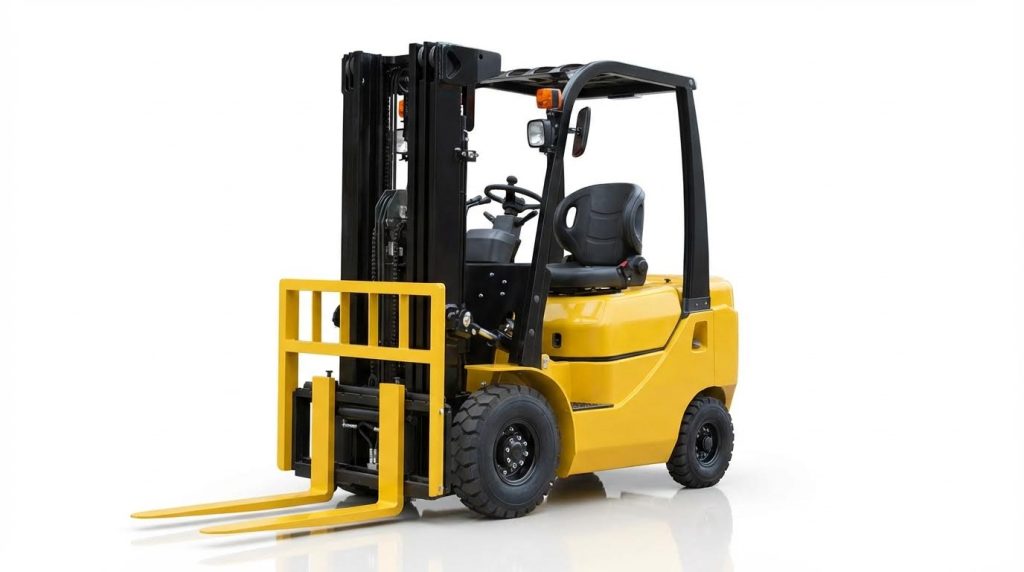
Battery technology determined the usable runtime, peak power, and lifecycle cost of electric forklifts. Energy strategies had to align chemistry, charger, and duty cycle to avoid premature degradation. Engineers evaluated trade-offs between lead-acid and lithium-ion systems, then tuned charging, cooling, and maintenance to the actual application profile. This section focused on how those decisions affected efficiency, availability, and safety.
Lead-Acid Versus Lithium-Ion Performance
Lead-acid batteries historically dominated due to low upfront cost and mature standards. They offered acceptable performance for single-shift operations but required strict watering and ventilation. Depth of discharge limits near 80% and sensitivity to partial charging reduced usable capacity in high-intensity duty cycles. Lithium-ion batteries delivered higher energy density, faster charging, and better cycle life, especially for multi-shift fleets.
Lithium-ion packs did not require watering and tolerated frequent opportunity charging, which improved scheduling flexibility. Typical cycle lives near 2,000 full cycles at 20–30% alarm levels matched or exceeded major engine overhaul intervals of IC trucks. Higher purchase price shifted total cost of ownership analysis toward energy savings, reduced maintenance, and higher uptime. These characteristics made lithium-ion preferable where downtime and space for battery rooms were constrained.
Charging Profiles, Depth Of Discharge, And Life
Charging strategy strongly influenced battery longevity and energy efficiency. For lead-acid systems, best practice limited discharge to about 80% of rated capacity and triggered recharge near 20–30% remaining. Operators avoided frequent partial “opportunity” charges because they shortened life through increased cycle counts and sulfation. Once a charge cycle started, guidance recommended completing it to avoid stratification and premature capacity loss.
Lithium-ion systems supported more flexible charging profiles, including short top-up charges during breaks. Nevertheless, manufacturers still specified preferred state-of-charge windows to balance life and availability. Over-discharge and chronic overcharge remained harmful for all chemistries, stressing cells and electronics. Using matched, manufacturer-approved chargers helped maintain correct voltage curves and prevented both undercharging and thermal runaway risks.
Thermal Management And Battery Health
Temperature control remained critical for both battery and motor systems. High temperatures accelerated chemical degradation in lead-acid plates and lithium-ion electrodes, reducing cycle life. Cold environments reduced available capacity and peak power, which affected lifting and travel performance. Advanced forklifts integrated thermal management that limited temperature rise during intensive operation and charging.
In next-generation electric pallet trucks, optimized thermal paths and control electronics reduced motor temperatures by about 12 °C. This mitigation eliminated performance “derating” from overheating in high-duty cycles. Similar principles applied to battery packs, where forced-air or liquid cooling stabilized cell temperatures. Allowing batteries to cool after charging before heavy use reduced risks of plate warping in lead-acid designs and improved long-term reliability.
Maintenance, OSHA Compliance, And Safety
Structured maintenance programs underpinned safe and efficient battery use. For lead-acid batteries, weekly checks of electrolyte levels and monthly measurements of cell voltage and density were standard. Technicians added only distilled water after charging, keeping plates covered but avoiding overfill and spills. Regular cleaning of cases and terminals minimized leakage currents, corrosion, and overheating at connections.
Operators followed OSHA battery-handling rules, including use of eye protection, gloves, and exclusion of open flames or metal tools near exposed cells. Annual professional inspections verified insulation resistance of both truck and charger, as well as correct charger function. Lithium-ion packs reduced tasks such as watering but still required periodic diagnostic checks and firmware updates. Training operators on correct charging, avoiding excessive acceleration and hard braking, and shutting trucks off during idle extended both battery life and overall system efficiency.
Reducing Electricity Costs Over The Truck Lifecycle
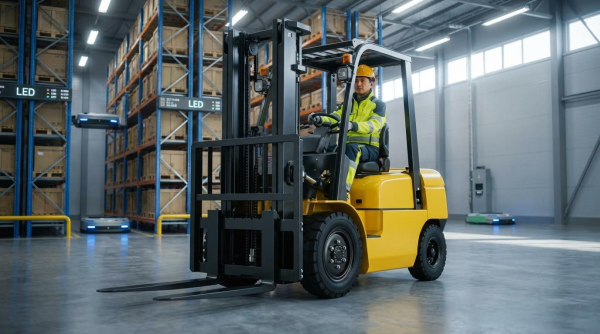
Lifecycle electricity costs depended on how facilities planned shifts, maintained equipment, and controlled charging behavior. Engineers evaluated not only battery efficiency but also utilization rates, idle time, and charging tariffs. Integrated fleet energy strategies reduced both direct kWh consumption and indirect costs such as downtime and premature battery replacement.
Shift Planning And Fleet Energy Optimization
Structured shift planning limited peak power demand and avoided unnecessary battery swaps. Operators scheduled high-energy tasks, such as full-load handling and long travel runs, into periods with available charged trucks and, where possible, off-peak electricity tariffs. For multi-shift operations, lithium-ion batteries with 0.5C fast charging and 6-second pack swaps, as used in next-generation pallet trucks, supported opportunity charging without breaching depth-of-discharge limits. Fleet managers sized the truck population so average utilization stayed high but did not force trucks to exceed 80% discharge per shift. Telematics-derived hour-meter and state-of-charge data helped reassign trucks to balance cycles, extending battery life and reducing the number of replacement packs over the lifecycle.
Predictive Maintenance And Motor Efficiency
Predictive maintenance programs focused on motors, controllers, and drivetrains to prevent efficiency losses. High-torque brushless direct-drive motors eliminated gearbox transmission losses and reduced noise, but they still required condition monitoring of bearings, temperature, and vibration. Advanced models with thermal management held motor temperatures about 12 °C lower in continuous duty, preventing overheat derating and maintaining stable efficiency. Facilities tracked current draw, motor temperature, and fault codes to detect misalignment, brake drag, or hydraulic bypass that increased kWh per operating hour. Scheduled inspections of terminals, insulation resistance, and cooling paths minimized resistive losses and unplanned downtime. Predictive analytics based on historical data allowed maintenance during planned stops instead of energy-inefficient failure modes.
Comparing Electric And IC Forklift Energy Costs
Lifecycle analyses showed electric forklifts used roughly 44,764 kWh under standard duty assumptions. At historical electricity prices around 0.0684 USD per kWh, this resulted in energy costs near 3,062 USD. In contrast, propane, diesel, and gasoline models incurred lifecycle energy costs of approximately 44,653, 56,772, and 75,205 USD, respectively. A 3-ton electric truck with an 80 V, 500 Ah battery consumed about 40 kWh per shift, costing roughly 5.53 USD and saving about 19.35 USD per day versus a diesel unit. Over 250 working days, this equated to around 4,838 USD annual savings, or 9,675 USD over a two-year battery life of about 500 cycles. Although internal combustion trucks had shorter payback periods because of lower acquisition cost, total cost of ownership favored electric units when engineers accounted for lower maintenance, longer service intervals, and zero local emissions.
Digital Tools, Telematics, And Data Monitoring
Digital tools and telematics platforms provided the data foundation for energy cost reduction. Fleet managers monitored state of charge, depth of discharge, and charging timestamps to enforce correct charging windows and avoid harmful partial charging patterns. Hour-meter data, combined with travel and lift profiles, revealed underutilized trucks and allowed right-sizing of the fleet to reduce idle capacity. Energy dashboards compared kWh per tonne-metre moved across trucks, highlighting units with deteriorating motors, hydraulics, or batteries. Integration with warehouse management systems aligned task allocation with battery status, ensuring high-demand tasks went to trucks with higher charge and healthier packs. Over time, this closed-loop monitoring supported continuous improvement of energy KPIs and validated investments in technologies such as regenerative braking, lithium-ion packs, and direct-drive motors.
Summary Of Best Practices And Future Trends
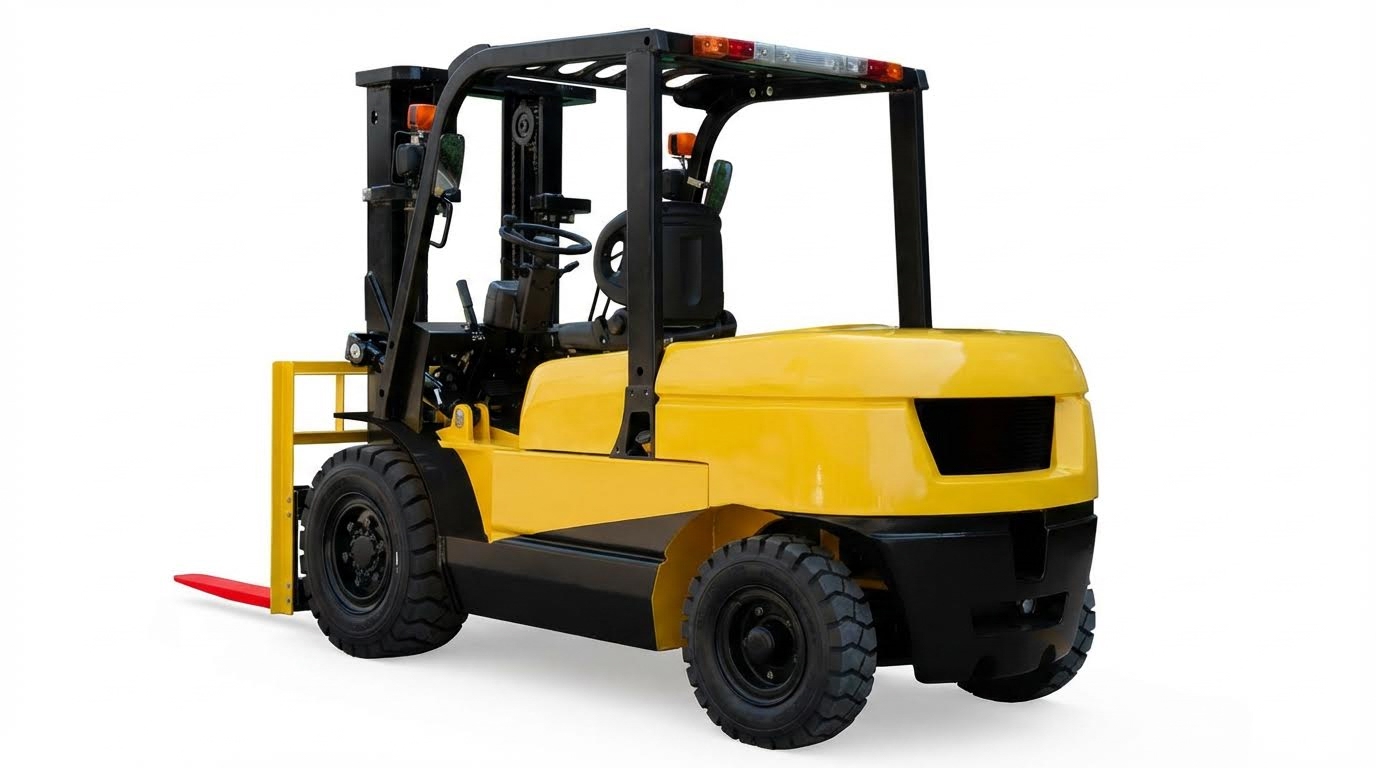
Effective energy use in electric forklifts depended on coordinated management of duty cycles, batteries, motors, and charging infrastructure. Operators and fleet managers achieved the lowest lifecycle electricity cost when they limited depth of discharge to about 70–80% and recharged near 20–30% remaining capacity instead of opportunity charging. Disciplined practices such as completing full charge cycles, using manufacturer-specified chargers, and avoiding extreme temperatures extended battery life toward typical 2,000-cycle and 10,000-hour targets. Regular maintenance, including terminal cleaning, voltage and electrolyte checks, and adherence to OSHA 1926.441 safety protocols, reduced failures and preserved electrical efficiency.
From a cost perspective, lifecycle analyses showed electric forklifts consumed far less energy expenditure than diesel, propane, or gasoline trucks, despite higher upfront cost. Energy savings, lower maintenance frequency, and reduced brake wear with regenerative braking typically yielded a payback of about two years under 2019–2025 electricity prices. Modern designs with brushless direct-drive motors, regenerative braking, and modular lithium packs further improved efficiency, runtime, and availability while cutting noise and maintenance requirements. Fleet-level optimization using shift planning, off-peak charging, and telematics-based monitoring allowed operators to match truck allocation to real energy demand and avoid oversizing fleets.
Future trends pointed toward broader adoption of lithium-ion and other advanced chemistries, higher integration between motor control, battery management, and regenerative systems, and increased use of data analytics for predictive maintenance. Manufacturers already implemented high-torque direct-drive architectures, enhanced hydraulic systems, and compact turning radii to support dense warehouse layouts without sacrificing efficiency. Over the next product generations, tighter coupling of energy-aware control algorithms with cloud-based fleet management should enable dynamic power limiting, automated charging orchestration, and more accurate total cost-of-ownership forecasting, while regulatory pressure on emissions continued to favor electric over internal combustion forklifts.