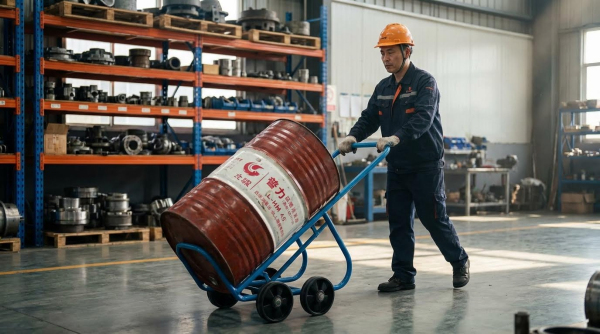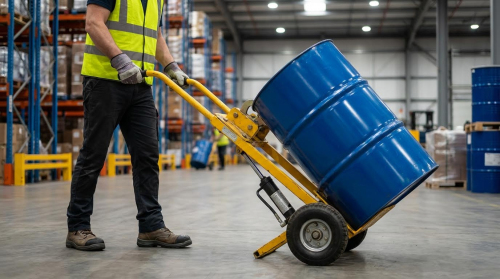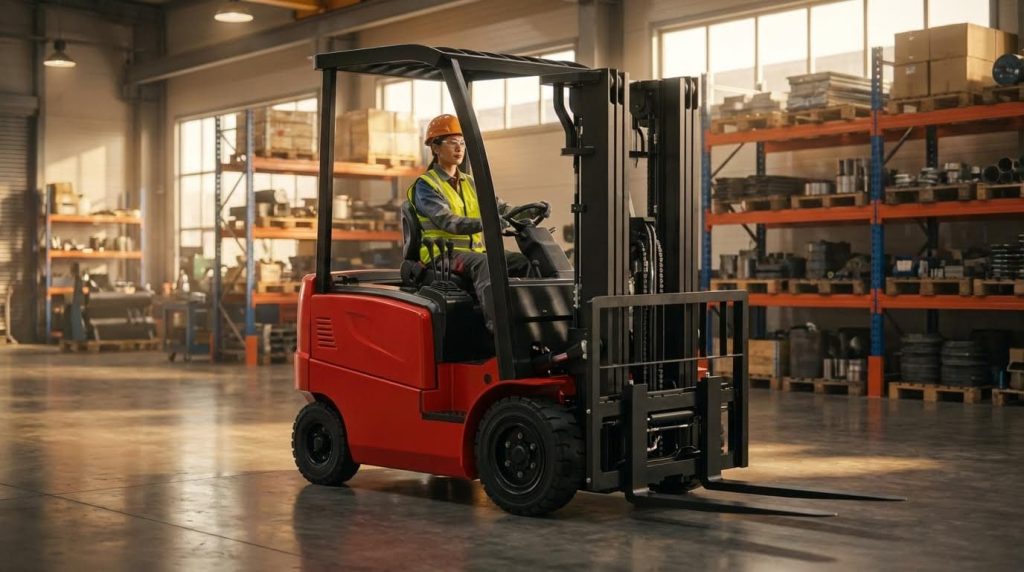
Electric forklift operating principles for modern plants covered powertrain fundamentals, battery technologies, stability and safety, and maintenance digitalization. The article examined how batteries, controllers, drivetrains, and hydraulics converted stored electrical energy into controlled traction and lift forces. It compared lead-acid and lithium-ion batteries, explored charging and thermal management strategies, and described regenerative energy recovery. It also addressed stability triangles, OSHA-aligned operating protocols, predictive maintenance, and the role of connected, sensor-driven systems in future-ready material handling fleets.
Core Powertrain And Control Fundamentals
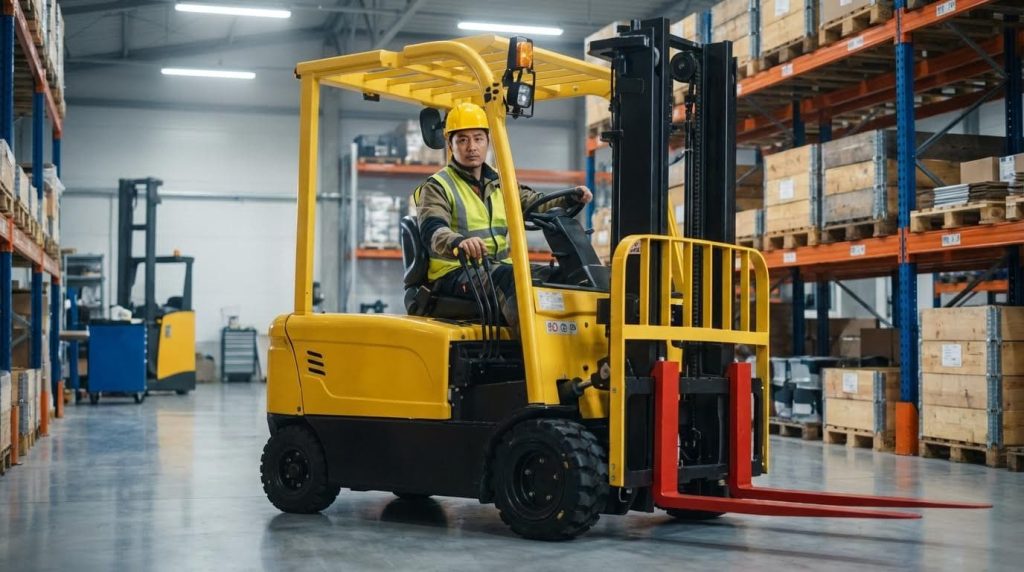
Electric forklifts in modern plants used an integrated electro-mechanical powertrain to convert stored electrical energy into controlled tractive and lifting forces. The core subsystems included the traction battery, power electronics, drive motor, drivetrain, steering and braking assemblies, and hydraulic circuits. Their coordination determined acceleration, gradeability, lifting speed, and energy efficiency. Understanding these fundamentals allowed engineers to size components correctly, diagnose faults, and optimize duty cycles.
Battery-To-Motor Energy Conversion
The traction battery acted as the primary DC energy reservoir, typically operating between 24 V and 80 V depending on capacity and truck class. Lead-acid and lithium-ion chemistries delivered different voltage stability profiles over discharge, which directly affected motor torque consistency. Power flowed from the battery through fuses and disconnects into the traction controller, which metered current to the electric motor according to operator input. Within the motor, current in the stator windings generated magnetic fields that interacted with the rotor field to produce torque. This torque created shaft rotation, which the drivetrain transmitted to the drive wheels and, via a pump, to the hydraulic system.
Controllers, Contactors, And Speed Regulation
The controller regulated both magnitude and direction of current to the traction motor using high-frequency switching devices such as IGBTs or MOSFETs. It converted the operator’s accelerator and direction commands into precise torque and speed profiles, enforcing limits for current, temperature, and ramp rates. Reversing contactors or solid-state bridges set the motor’s rotation direction for forward and reverse travel. Speed regulation relied on closed-loop feedback from motor speed or wheel encoders, allowing smooth acceleration, creep speeds in tight aisles, and consistent performance on inclines. Integrated diagnostics recorded overcurrent, overtemperature, and undervoltage events, supporting predictive maintenance and safe shutdown behavior.
Drivetrain, Steering, And Braking Mechanics
The drivetrain coupled the motor shaft to the drive axle through reduction gearing that increased wheel torque while limiting top speed for safety. Engineers selected gear ratios to balance acceleration, maximum grade, and energy consumption for typical warehouse duty cycles. Most electric counterbalance trucks used rear-wheel steering with a steer axle that pivoted about a central point, enabling tight turning radii in narrow aisles. Braking combined mechanical friction brakes with electric regenerative braking, where the motor operated as a generator and returned energy to the battery. Control logic blended regenerative and friction braking to maintain predictable deceleration while preventing battery overcharge and ensuring stopping distances met regulatory requirements.
Hydraulic Circuits For Lift And Tilt
A dedicated hydraulic pump, usually driven by a separate electric motor or by the main traction motor via a coupling, supplied pressurized fluid for lift and tilt functions. The hydraulic circuit included a reservoir, pump, relief valves, directional control valves, and cylinders for mast lift, tilt, and sometimes side-shift attachments. When the operator actuated a hydraulic lever or joystick, proportional valves modulated flow to the cylinders, setting lift speed and mast angle. System pressure limits protected structural components and prevented overloads beyond the rated capacity on the data plate. Smooth hydraulic control helped keep the combined center of gravity within the stability triangle during lifting, tilting, and stacking operations, directly influencing safety and cycle time.
Battery Technologies And Energy Management
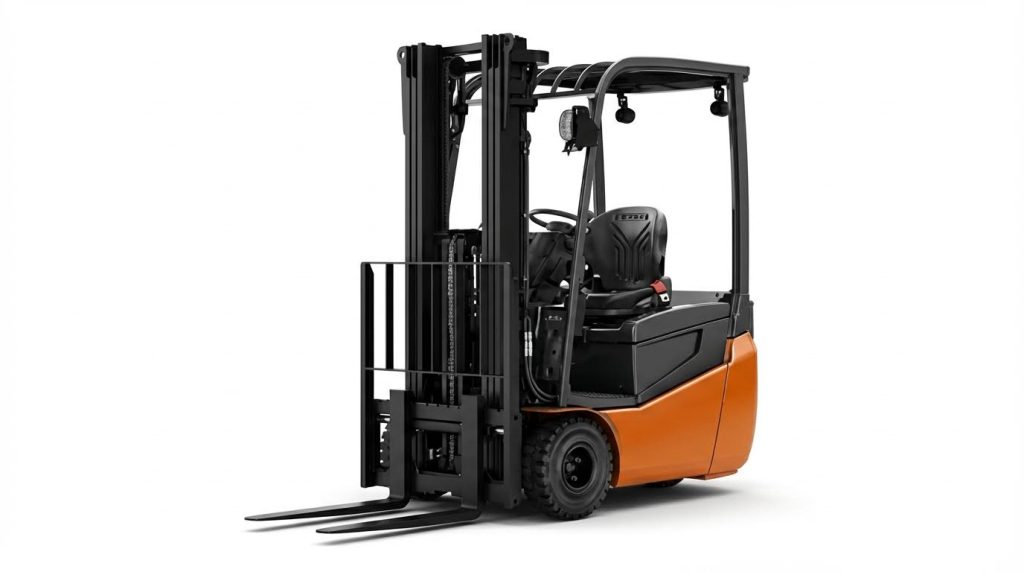
Battery technologies defined the performance envelope of electric forklifts in industrial plants. Engineers selected chemistries and management strategies to balance energy density, runtime, safety, and lifecycle cost. Effective energy management integrated hardware, charging infrastructure, operating practices, and digital monitoring. This section examined the main battery options and the engineering principles that governed their use.
Lead-Acid Versus Lithium-Ion Characteristics
Lead-acid batteries used flooded or sealed cells with lead plates and sulfuric acid electrolyte. They offered low initial cost and high mass, which contributed to counterweight requirements but limited energy density. Typical traction lead-acid packs delivered about 500 full charge cycles, 8–10 hour charging times, and required routine watering and equalization. They also contained hazardous materials that demanded controlled handling and recycling under environmental regulations.
Lithium-ion batteries used intercalation chemistries with higher gravimetric and volumetric energy density. Plants reported lifetimes up to 3 500 full charge cycles with stable voltage output, even at low state of charge. Lithium packs supported fast charging in roughly 2 hours and opportunity charging during breaks without strong memory effects. Their higher purchase price was offset by reduced maintenance, smaller battery rooms, and better availability in multi-shift operations.
From a systems perspective, lithium-ion batteries reduced forklift mass variation because operators no longer swapped heavy packs. Battery management systems (BMS) monitored cell voltages, temperatures, and currents to prevent overcharge, over-discharge, and short circuits. Engineers evaluated total cost of ownership by combining energy efficiency, maintenance labor, ventilation requirements, and downtime for each chemistry. This allowed objective selection for high-throughput warehouses versus lower-utilization plants.
Charging Strategies And Lifecycle Impacts
Charging strategy strongly influenced battery degradation mechanisms and effective service life. For lead-acid batteries, best practice charged the pack when remaining capacity dropped to roughly 20–30 percent. Plants avoided frequent shallow opportunity charges because they promoted sulfation on plates and reduced usable capacity. Full charge cycles, including absorption and equalization phases when specified, minimized stratification and extended life.
Lithium-ion batteries tolerated partial and opportunity charging far better, which suited multi-shift duty cycles. However, keeping cells persistently at 100 percent state of charge or near zero accelerated aging. Many fleets therefore targeted an operating window around 20–80 percent state of charge for maximum cycle life. Smart chargers and BMS coordinated current, voltage, and cut-off thresholds to enforce these limits automatically.
Correct charger selection was critical for both chemistries. Mismatched chargers risked overcharge, undercharge, or incorrect temperature compensation. Overcharging created heat and gas evolution in lead-acid cells and accelerated electrolyte loss. Undercharging led to chronic deficit operation and early capacity fade. Plants that implemented controlled charging schedules and trained operators on plug-in discipline reported lower battery replacement rates and higher forklift uptime.
Thermal Management And Environmental Limits
Battery performance and safety depended strongly on temperature control. Lead-acid traction batteries operated best near 20–25 °C; higher temperatures increased corrosion and water loss, while low temperatures reduced available capacity and increased internal resistance. Regular watering after charging and proper ventilation limited heat accumulation and hydrogen concentration in battery rooms. Cleaning terminals and checking torque on connectors reduced resistive heating at interfaces.
Lithium-ion systems required tighter thermal management, particularly during charging. Typical recommended charging temperatures ranged from about 0 °C to 45 °C. Charging below freezing promoted lithium plating on anodes, which reduced capacity and created safety risks. Charging at elevated temperatures accelerated electrolyte and electrode degradation. Many industrial packs integrated temperature sensors and, in some cases, active thermal control to keep cells in a safe operating window.
Environmental conditions in plants, such as cold storage or outdoor yards, demanded specific countermeasures. In freezers, engineers sometimes specified insulated or heated battery enclosures and derated runtime expectations. In hot foundry or casting areas, shading, airflow management, and duty-cycle planning reduced thermal stress. Storage procedures kept batteries in cool, dry locations at partial state of charge, with periodic top-up charges to prevent over-discharge during long idle periods.
Regenerative Braking And Energy Recovery
Regenerative braking recovered kinetic and potential energy that would otherwise dissipate as heat in friction brakes. During deceleration or downhill travel, the traction motor operated as a generator and returned current to the battery. Control algorithms limited regenerative current to protect cells and maintain predictable stopping distances. This function reduced overall energy consumption and extended runtime between charges, especially in duty cycles with frequent starts and stops.
Hydraulic systems also supported partial energy recovery in modern designs. Lowering heavy loads allowed hydraulic pumps or electro-hydraulic units to back-drive and generate electrical power. Integration with the main DC bus and BMS ensured that this recovered energy charged the pack without exceeding voltage or temperature limits. Plants with high vertical handling profiles, such as high-bay warehouses, measured noticeable gains from lift-lower energy balancing.
Effective use of regeneration required calibrated operator training and parameter tuning. Excessively aggressive regenerative settings could cause uncomfortable deceleration and reduced traction on low-friction floors. Balanced tuning combined moderate regenerative torque with conventional friction braking to meet safety standards. When properly configured, regenerative strategies reduced brake wear, lowered thermal stress on components, and contributed to the overall energy management strategy of the forklift fleet.
Stability, Safety, And Operational Protocols
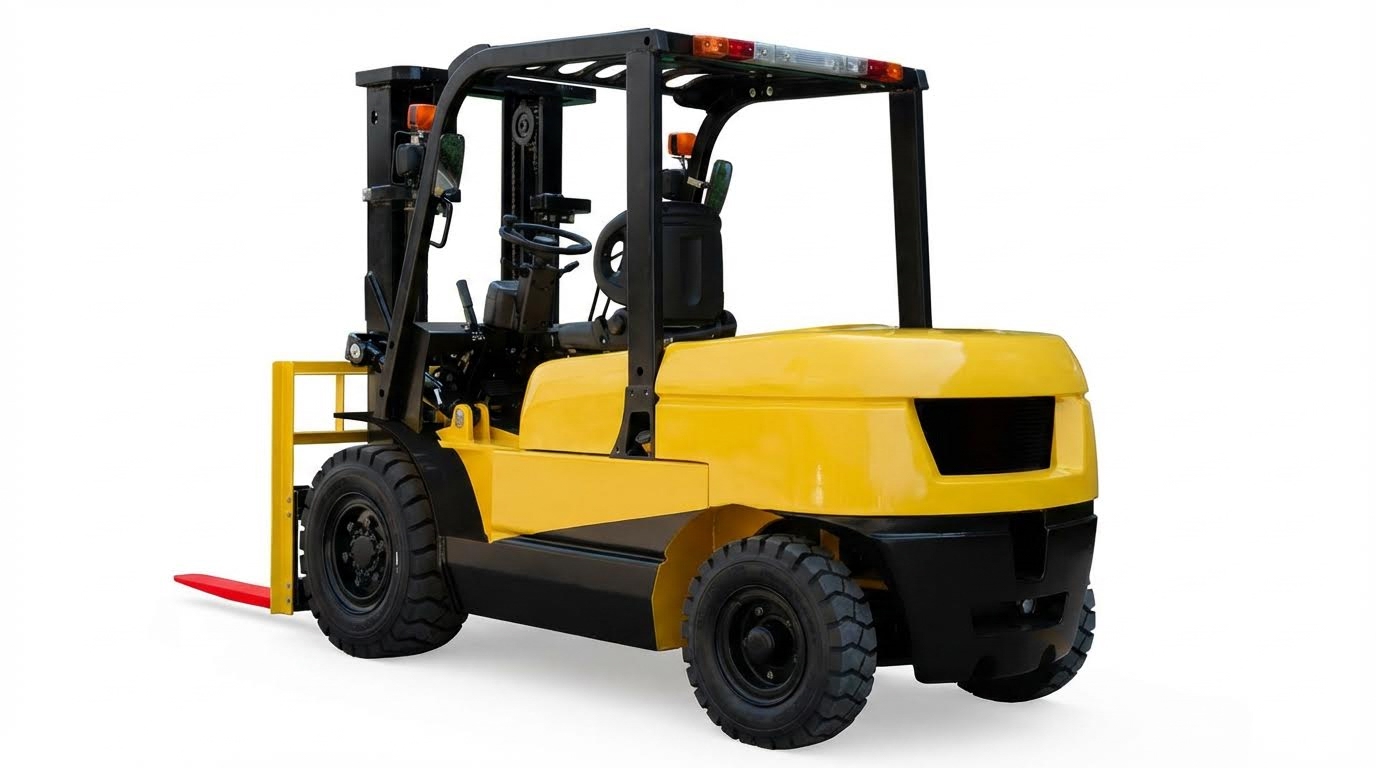
Electric forklifts relied on strict stability rules and codified operating procedures to control risk. Engineers and safety managers focused on center-of-gravity behavior, compliant inspections, and repeatable driving practices. These protocols reduced tip-overs, protected batteries and drivetrains, and aligned fleets with OSHA requirements. The following subsections described the core technical principles that governed safe deployment in modern plants.
Stability Triangle And Center Of Gravity Control
The stability triangle concept modeled the forklift’s support polygon using the two front wheels and the rear axle pivot. The combined center of gravity (CCG) of truck and load had to remain inside this triangle to avoid tipping. Unloaded, the truck’s center of gravity sat low and near the counterweight, which increased static stability. Adding a load shifted the CCG forward and upward along the mast, narrowing the stability margin, especially during acceleration, braking, or turning.
Longitudinal stability addressed forward and rearward tip risks when braking hard, climbing ramps, or over-tilting the mast. Lateral stability governed side tip risks during cornering, side slopes, or uneven floors. Operators maintained stability by keeping loads low, mast slightly tilted back, and travel speeds moderate. Engineering controls, such as rated capacity plates, overhead guards, and load backrests, supported operators by defining safe envelopes and preventing unstable load placement.
Load Handling, Stacking, And Travel Practices
Safe load handling started with verifying that the load mass and load center fell within the capacity stated on the data plate. Operators positioned forks evenly spaced and fully under the pallet, with fork length exceeding the load depth when possible. They lifted only enough to clear the floor or obstacles, then tilted the mast fully or nearly back to pull the CCG toward the counterweight. During horizontal travel, the standard practice kept the fork height roughly 100–150 millimetres above the floor.
For stacking, the truck approached racks square and at low speed, with the load low until near the bay. The operator raised the mast to the required level, leveled the forks, then moved forward slowly to place the pallet without forward tilt at height. After depositing, the forks were lowered slightly before reversing to avoid dragging. When visibility through the mast and load was restricted, operators traveled in reverse with clear sight lines or used a spotter, which reduced collision and pedestrian impact risk.
Inspections, OSHA Compliance, And Training
Regulations such as OSHA standards required pre-shift inspections before placing an electric forklift into service. Visual checks covered forks, mast welds, chains, hoses, tires, guards, and the battery compartment for cracks, leaks, wear, or loose fasteners. Operators confirmed the presence and legibility of data plates, warning labels, and capacity markings. Operational checks with power on verified steering response, service and parking brakes, hydraulic lift and tilt smoothness, lights, horns, and other warning devices.
Any defect affecting safety mandated immediate removal from service until repair by qualified personnel. Formal operator training programs addressed truck classes, rated capacities, stability triangle behavior, and site-specific hazards. Refresher training followed incidents, near misses, or changes in operating conditions or equipment. Documented inspection records and training logs supported regulatory compliance audits and helped safety managers trend recurring issues for corrective actions.
Maneuvering On Ramps, Grades, And Tight Aisles
On ramps and grades, longitudinal stability dominated operating rules. With a load, the forklift traveled uphill with the load facing uphill and reversed downhill in the same orientation. Unloaded trucks used the opposite pattern to keep the heavier counterweight upgrade. Turning on slopes was prohibited because the combined lateral and longitudinal forces drove the CCG toward the triangle edge, significantly increasing tip-over probability. Operators also avoided gear changes and sudden braking on grades to limit dynamic load transfer.
In tight aisles, safe maneuvering depended on controlled speed, clear line-of-sight, and strict lane discipline. Horn use at intersections, aisle ends, and blind spots warned pedestrians and other vehicles. Engineers specified minimum aisle widths based on truck type, load dimensions, and turning radius, leaving clearance for sway, pallet overhang, and rack deflection. Where visibility remained constrained, plants implemented one-way traffic patterns, mirrors, and pedestrian exclusion zones to maintain separation and reduce collision energy.
Maintenance, Digitalization, And Final Summary
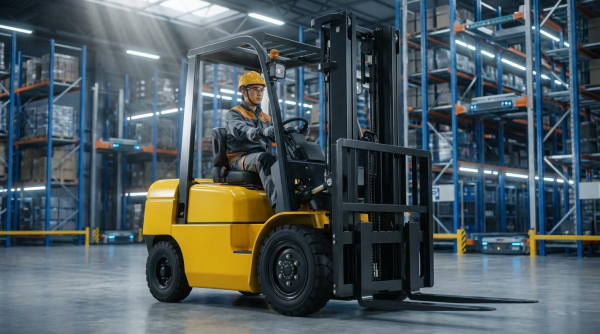
Electric forklifts relied on structured maintenance and disciplined operation to deliver low total cost of ownership. Battery care dominated maintenance schedules, since improper watering, cleaning, or charging shortened service life and reduced shift endurance. Plants inspected electrolyte levels, terminals, cables, and casings on fixed intervals, and they kept lead-acid batteries clean, dry, and within recommended temperature bands. Tire condition, hydraulic leaks, mast lubrication, and brake performance also received routine attention to preserve stability and comply with safety regulations.
Digitalization reshaped service practices through IoT sensors, smart chargers, and connected fleet platforms. Sensors tracked vibration, temperature, brake wear, and battery metrics, enabling predictive maintenance that historically reduced maintenance expenses by roughly 30% in documented deployments. Battery monitoring systems logged charge cycles, depth of discharge, and temperature excursions, while smart chargers prevented overcharge and undercharge events. Plants used these data streams to optimize load profiles, extend battery life, and schedule service during low-production windows.
Modern plants integrated electric forklifts into broader Industry 4.0 strategies. Forklifts interfaced with warehouse management systems, automatic guided vehicles, and AI-based analytics that forecast component failures and optimize routing. Case studies reported double‑digit reductions in fuel or energy costs and significant cuts in unplanned downtime after such upgrades. However, facilities balanced these gains against higher capital cost, cybersecurity risks, and the need for continuous operator and technician training.
Implementation required clear maintenance standards, OSHA-compliant procedures, and realistic lifecycle cost models. Engineers specified appropriate battery chemistry, charger infrastructure, and sensor packages for each duty cycle. A balanced roadmap combined proven mechanical design, robust safety culture, and phased digital adoption. Plants that aligned these elements achieved safer operations, higher energy efficiency, and a scalable path toward increasingly autonomous material handling.