Forklift operation in the United States fell under strict OSHA and ASME definitions, training rules, and documentation requirements. Employers had to align programs with 29 CFR 1910.178, state OSHA plans, and site-specific hazards to remain compliant. Operator training combined formal instruction, hands-on practice, and workplace evaluation, with certification and recertification tied to documented performance. This article outlined those legal foundations, core training content, certification mechanics, and practical strategies for maintaining a robust, auditable safety program.
OSHA And ASME Definitions And Legal Scope
This section frames how U.S. regulations defined powered industrial trucks and who regulated operator training. It connected ASME’s technical definition with OSHA’s legal requirements at federal and state levels. It also clarified minimum age, licensing, and employer duties, plus which truck classes fell under the rules. Understanding this scope helped safety managers design compliant, site-specific training programs.
What Counts As A Powered Industrial Truck
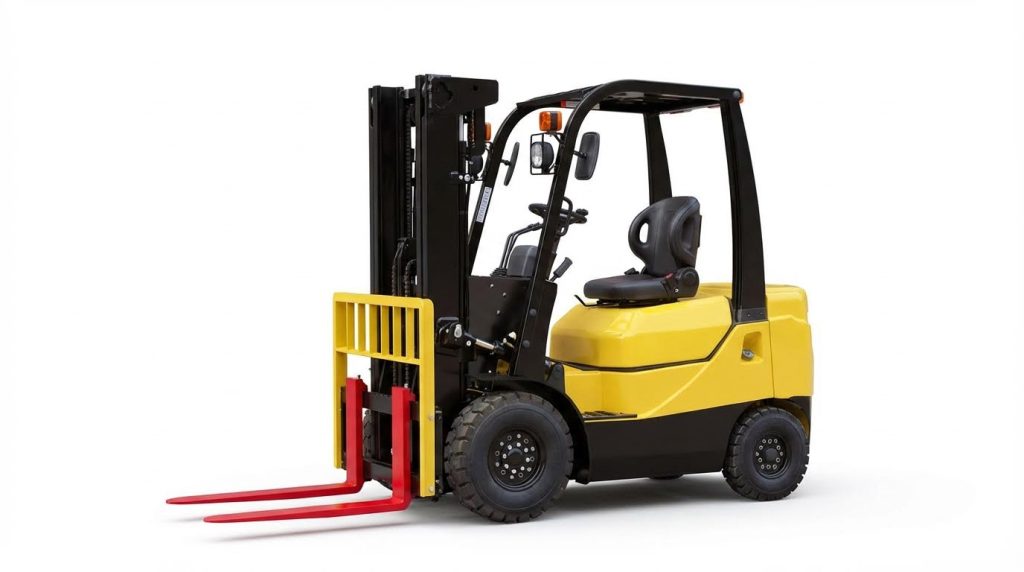
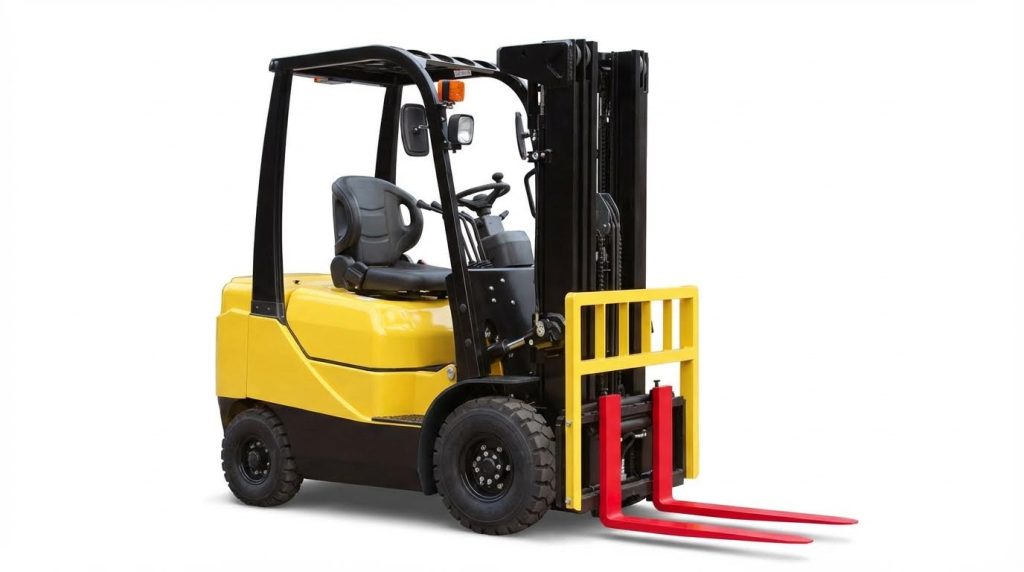
ASME defined a powered industrial truck as a mobile, power-propelled truck that carried, pushed, pulled, lifted, stacked, or tiered materials. These trucks could be ridden or controlled by a walking operator, such as typical sit-down forklifts or walkie pallet trucks. OSHA adopted a similar scope in 29 CFR 1910.178 and treated these units as powered industrial trucks. Vehicles used primarily for earth moving or over-the-road haulage fell outside this definition and standard. Compressed air or nonflammable gas-operated trucks and typical farm vehicles were also excluded from the covered forklift categories.
Federal OSHA Vs. State OSHA Plan Requirements
Under U.S. law, federal OSHA set baseline requirements for powered industrial truck training in 29 CFR 1910.178. Some states operated under the federal program, while others ran OSHA-approved state plans with equal or more stringent rules. State-plan programs, such as Cal/OSHA or Oregon OSHA, enforced their own regulations but had to be at least as effective as federal OSHA. Private-sector employers in federal OSHA states followed federal rules directly, including training, evaluation, and documentation obligations. When operators moved between states, their certification remained valid only if it met OSHA standards and they passed any site-specific evaluations or state additions.
Age, Licensing, And Employer Responsibilities
Federal law required forklift operators to be at least 18 years old to run powered industrial trucks in general industry. OSHA did not mandate a state-issued driver’s license, although individual employers or worksites could impose that requirement. Employers bore full responsibility for developing and implementing a compliant training program. They had to ensure only trained and evaluated operators drove forklifts, and they documented each operator’s training and performance evaluation. Qualified trainers, with sufficient knowledge and experience, delivered both the formal instruction and hands-on components and assessed competency in the actual workplace.
Forklift Classes Covered And Exclusions
OSHA’s powered industrial truck standard applied to the main forklift classes I through VII, which covered electric rider trucks, internal combustion trucks, and rough-terrain units. Certification programs typically addressed these classes, ensuring operators trained on the specific truck types they used. The standard explicitly excluded vehicles used primarily for earth moving, such as loaders or bulldozers, and over-the-road trucks designed for highway hauling. Farm vehicles used in traditional agricultural activities and compressed air or nonflammable gas-powered trucks fell outside typical forklift certification scope. Employers needed to verify that each operator’s training matched the exact truck class and configuration present on site.
Core OSHA Training And Evaluation Requirements
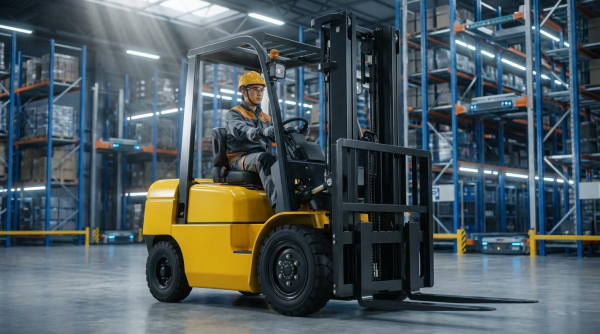
OSHA codified core forklift training and evaluation requirements in 29 CFR 1910.178(l). These requirements defined how employers structured programs, qualified trainers, and documented operator competence. The standard linked training content directly to both the truck type and the actual workplace hazards. Compliance reduced incident rates, supported enforceable accountability, and created a consistent national baseline for powered industrial truck safety.
29 CFR 1910.178 Training Structure And Content
Section 1910.178(l) required a three-part structure: formal instruction, practical training, and performance evaluation. Formal instruction included lectures, discussions, written materials, videos, or interactive computer modules. Practical training covered demonstrations by a qualified trainer and hands-on operation by the trainee under close supervision. The evaluation component verified the operator’s performance in the real workplace, not only in a classroom or simulator.
OSHA required that qualified persons with appropriate knowledge, training, and experience conduct all three components. Training content had to address truck-related topics and workplace-related topics relevant to the specific site. Employers could credit prior training, but only if they evaluated the operator and confirmed competence under current conditions. Generic training alone, without site-specific coverage and evaluation, did not satisfy the standard.
Truck-Related Topics: Controls, Stability, And Capacity
Truck-related topics focused on the mechanical and operational characteristics of the specific forklift class. Required coverage included operating instructions, control functions, steering, braking, and visibility limitations. Training addressed engine or power source operation, including internal combustion, electric, and associated refueling or charging procedures. Operators learned pre-use inspections, maintenance reporting protocols, and operating limitations defined by the manufacturer.
Stability and capacity formed a critical subset of truck-related content. Operators studied load capacity plates, center of gravity, and the combined center of gravity of truck and load. Instructors explained stability triangles, effects of mast tilt, lift height, attachments, and dynamic forces during acceleration and braking. Proper understanding reduced tip-over risk, structural overload, and damage to forks, masts, or attachments. OSHA expected trainers to tie these concepts to real examples using the actual lift stacker in service.
Workplace Hazards: Traffic, Surfaces, And Ventilation
Workplace-related topics addressed how the forklift interacted with the specific facility environment. Training covered surface conditions such as wet floors, slopes, ramps, dock plates, and unguarded edges. Operators learned to manage mixed traffic with pedestrians, other vehicles, and narrow aisles or blind intersections. Site rules for speed limits, right-of-way, horn use, and designated travel paths formed part of this content.
Ventilation and hazardous atmospheres were mandatory considerations where internal combustion trucks or confined spaces existed. Instruction addressed carbon monoxide buildup, exhaust routing, and requirements for powered industrial trucks in classified hazardous locations. Operators learned to recognize overhead obstructions, racking clearances, and load stacking stability. OSHA required that employers update workplace-related training whenever conditions or processes changed in ways that affected safe operation.
Initial Training, Supervision Limits, And Three-Year Cycle
OSHA required that operators complete initial training and evaluation before operating a forklift independently. During training, trainees could operate a powered industrial truck only under direct supervision of a qualified trainer. The trainer had to ensure that training activities did not expose the trainee or others to unsafe conditions. This restriction prevented unsupervised practice and limited operation to controlled scenarios until competence was proven.
After initial qualification, employers had to evaluate each operator at least once every three years. Refresher training and re-evaluation became mandatory sooner if the operator drove unsafely, had an accident or near-miss, received a poor evaluation, changed truck type, or if workplace conditions changed significantly. OSHA allowed targeted refresher content, focusing on identified gaps instead of repeating all topics. This three-year cycle, combined with event-driven refreshers, created a continuous competence management process rather than a one-time certification event.
Certification, Recertification, And Program Design
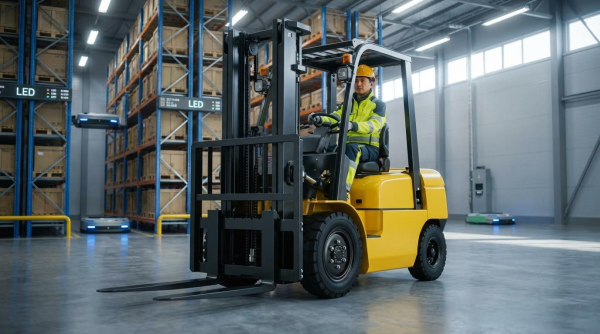
Certification, recertification, and structured program design formed the backbone of compliant forklift safety management. OSHA required employers to document operator competence, maintain a defined recertification cycle, and link training to real workplace risks. Effective programs integrated legal requirements from 29 CFR 1910.178 with ASME definitions and site-specific hazards. Robust documentation and tracking systems supported audits, reduced incident rates, and reinforced an enduring safety culture.
Documentation Elements For OSHA-Compliant Certification
OSHA required employers to certify that each operator had been trained and evaluated according to 29 CFR 1910.178. The written certification needed to include, at minimum, the operator’s name, the date of training, the date of evaluation, and the identity of the person or persons conducting the training or evaluation. Employers often added truck class, model, and primary work area to improve traceability and audit readiness. Inspectors expected documentation to correlate with actual training content, performance evaluations, and the specific types of powered industrial trucks in use. Centralized records, whether digital or paper-based, reduced the risk of expired certifications and missing evaluation evidence. Employers also used structured forms and checklists to standardize evaluations and simplify later regulatory reviews.
Triggers For Refresher Training And Re-Evaluation
OSHA mandated refresher training when specific performance or workplace triggers occurred. These triggers included unsafe driving behavior, involvement in an accident or near-miss, or an evaluation indicating unsafe operation. Assignment to a different type of powered industrial truck or significant changes in workplace conditions, such as new layouts, traffic patterns, or hazards, also required refresher training. After any refresher event, employers had to re-evaluate the operator to verify restored competency. Outside of these triggers, operators needed a performance evaluation at least once every three years, which effectively set the typical recertification cycle. Well-designed programs monitored incident reports, near-miss data, and supervisor feedback to identify when additional unplanned refresher training was warranted.
Online Courses Vs. Hands-On Site-Specific Training
OSHA treated online or classroom courses only as part of the “formal instruction” component of training. These courses efficiently delivered standardized content on regulations, stability principles, capacity, and general safe operating practices. However, they did not replace the required practical training and workplace performance evaluation conducted by a qualified person. Hands-on training needed to cover the specific truck type, control layout, load characteristics, and site conditions such as ramps, aisles, and pedestrian routes. Site-specific programs addressed unique hazards, including confined storage lanes, dock edges, and ventilation constraints for internal combustion trucks. Effective program design therefore combined OSHA-compliant online modules, structured practical exercises, and on-site evaluations into a single integrated curriculum.
Tracking Systems, Audits, And Safety Culture Practices
Compliance-focused employers used tracking systems to manage training dates, evaluation schedules, and refresher triggers. Digital platforms or centralized spreadsheets recorded operator status, truck authorizations, and upcoming recertification deadlines, often with automated reminders. Internal audits periodically compared training records, evaluation forms, and incident histories against OSHA requirements and company policies. Strong safety cultures reinforced this framework through monthly safety meetings, near-miss reporting, and visible management participation in training and evaluations. Programs encouraged operators to report hazards and procedural gaps without retaliation, which supported continuous improvement. By integrating documentation, tracking, audits, and cultural elements, organizations reduced regulatory risk and improved real-world forklift safety performance.
Summary Of Forklift Training And Certification Compliance
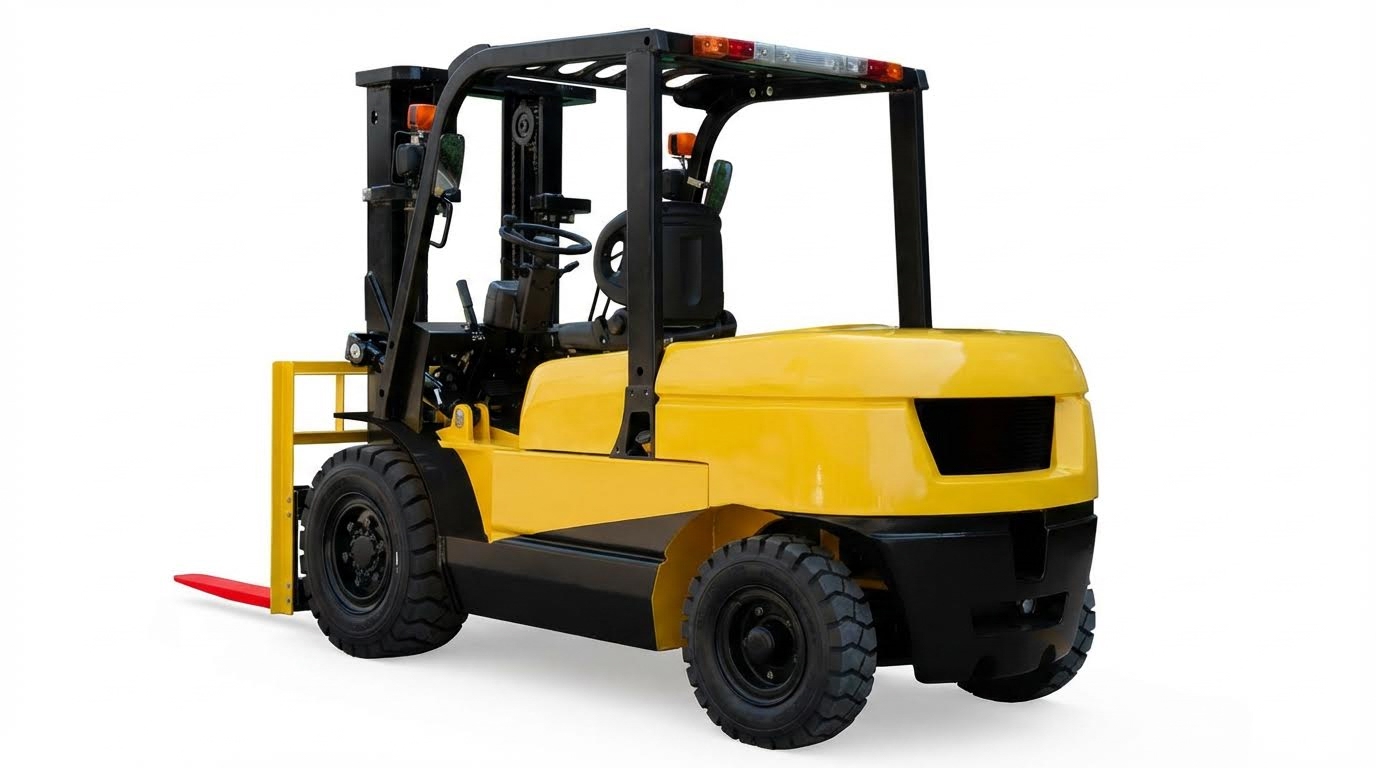
Forklift training and certification compliance rested on OSHA’s 29 CFR 1910.178 framework, supported by ASME definitions of powered industrial trucks. Employers bore the legal duty to ensure that only trained and evaluated operators used forklifts, and that training matched both the truck class and site hazards. Programs combined formal instruction, supervised practical exercises, and workplace performance evaluations, with documentation that identified each operator, training dates, and the qualified trainers or evaluators. Certifications remained valid for up to three years, but incidents, unsafe behavior, truck changes, or altered site conditions triggered earlier refresher training and re-evaluation.
Industry practice increasingly integrated online theory modules with structured, on-site hands-on training to satisfy OSHA’s requirements for both knowledge and demonstrated competence. Organizations had to account for differences between federal OSHA states and OSHA-approved state plans, adding any state-specific rules to their internal procedures. Robust compliance programs used centralized tracking systems, scheduled audits, and clear written policies to manage expirations, site-specific orientations, and record-keeping for inspectors. Forward-looking operations treated forklift training as part of a wider safety culture, emphasizing hazard identification, near-miss reporting, and continuous improvement rather than minimum legal compliance alone.
Future trends pointed toward more data-driven oversight, with digital logs, automated reminders, and standardized evaluation checklists improving consistency and traceability. As equipment technologies and work environments evolved, companies needed to periodically update training content, adapt to new truck features, and refine procedures for mixed fleets and complex traffic patterns. A balanced approach combined regulatory adherence, practical risk reduction, and worker engagement, ensuring that forklift operator training remained both compliant and operationally effective over the full life cycle of each operator’s qualification.