Forklift pallet handling sat at the center of modern material flow, yet incident data showed persistent stability failures, struck‑by events, and structural damage. This article structured safe pallet lifting from an engineering standpoint, covering load ratings, pallet integrity, fork positioning, and floor and dock capacity across diverse facilities. It then detailed standardized operating procedures for approaching, moving, stacking, and truck loading, aligned with OSHA and ANSI requirements and field-proven practices. Finally, it examined inspection regimes, operator training, and emerging tools such as AI, telematics, predictive maintenance, and digital twins to build data-driven, continuously improving safety programs.
Core Principles Of Safe Pallet Lifting
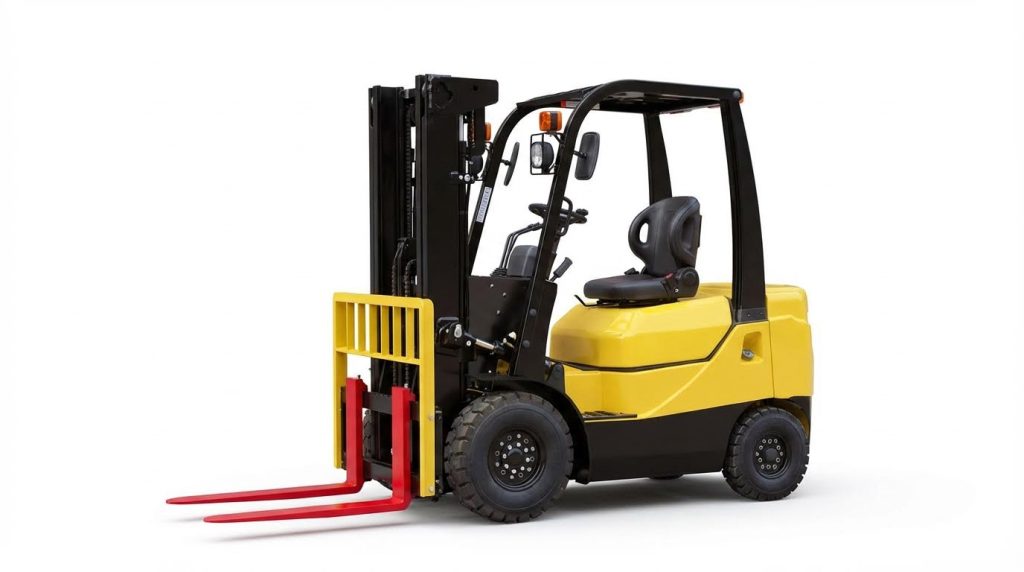
Core principles for safe pallet lifting defined the engineering envelope in which forklifts operated without loss of stability. These principles linked load geometry, pallet condition, fork configuration, and floor capacity into a single stability problem. When operators respected these constraints, incident rates, structural damage, and unplanned downtime decreased significantly. The following subsections detailed the critical parameters that engineers and safety managers specified, monitored, and audited.
Load Ratings, Load Centers, And Stability Limits
Forklift capacity ratings referred to a specific load, at a defined load center, with a vertical mast. Nameplates stated rated capacity, typical load center distance (often 500 mm), and any attachment derations. When the load center increased, or the load became off-center, the overturning moment increased and effective capacity decreased. Oversized, uneven, or high-stacked pallets could exceed stability limits even when the nominal mass stayed below the plate rating.
Engineers treated the truck and load as a lever system pivoting about the front axle. Stability triangles and test procedures in ANSI B56.1 defined acceptable margins against tip-over. Operators had to keep the heaviest part of the load against the carriage to minimize the moment arm. They also had to avoid lifting with one fork, which created torsional loading and side instability. Approaching loads slowly and squarely, then inserting forks fully under at least two-thirds of the load length, maintained a predictable load center.
Pallet And Skid Integrity Requirements
Safe lifting assumed the pallet or skid could carry both its own load and dynamic handling forces. Damaged, deformed, or decayed pallets introduced unpredictable failure modes under fork tine contact and local bearing stresses. Engineering practice required rejecting pallets with broken deck boards, split stringers, exposed nails in load paths, or significant rot. Pallets had to remain flat, without severe warping that could shift the center of gravity during travel.
Pallets and skids also needed sufficient stiffness to limit deflection between forks. Excessive sag increased the risk of load shift and fork heel overstress. Operators had to position forks to support stringers or structural members, not only deck boards. Loads had to be stable and correctly stacked on the pallet, with shrink wrap, banding, or corner posts where necessary. If the pallet or load stability remained in doubt, operators should not lift and supervisors had to arrange repalletization or rework.
Fork Positioning, Mast Tilt, And Load Height
Correct fork positioning governed both structural loading and overall truck stability. Operators had to level the forks before entry and align them at the correct height to avoid impacting deck boards. Forks needed to sit at equal heights, spaced to distribute the weight evenly and fully inserted under the load. Partial insertion or nose lifting increased bending at the fork heels and raised the risk of pallet breakage.
Mast tilt controlled the relationship between the load center and the stability triangle. Tilting back slightly and keeping the load low, typically 100–150 mm above the floor during travel, improved resistance to forward tip-over. Excessive rear tilt at height, however, could move the combined center of gravity outside safe limits in rearward directions. Standards and best practice recommended tilting backward only enough to stabilize the load during stacking and tiering. Operators had to raise or lower forks only when stopped with brakes set, reducing dynamic instabilities and mast oscillations.
Floor Capacity, Dockboards, And Trailer Stability
Floor and support structure capacity defined the boundary conditions for safe pallet handling. Operators had to verify that floors, mezzanines, and dock plates could support the combined mass of forklift and load, including dynamic factors. Loading or unloading on ramps or uneven surfaces significantly reduced stability margins and therefore was not acceptable for normal pallet handling. Maximum floor loading signs and dock rating plates provided design limits that supervisors had to enforce.
Dockboards and bridge plates required sufficient strength and positive securing against slipping or uplift. Portable and powered dockboards had to match or exceed the imposed load and stay locked to the dock and trailer. Before entering a trailer, operators needed to check trailer floor integrity, chock wheels, and ensure brakes were set. They also had to confirm that the doorway height cleared the truck by at least 50 mm. Driving straight across dockboards, sounding the horn when entering or exiting trailers, and avoiding sharp turns on plates or trailer floors preserved both structural safety and truck stability.
Safe Operating Procedures For Pallet Handling
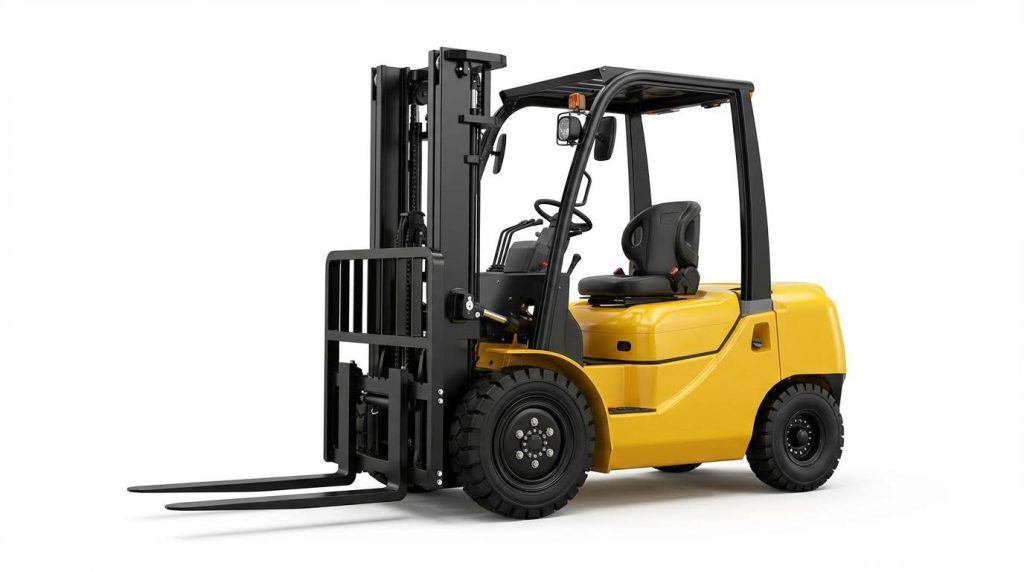
Safe operating procedures for pallet handling converted design assumptions into repeatable field behaviors. Engineers and safety managers translated stability charts, floor ratings, and pallet specifications into stepwise rules for approach, travel, stacking, and vehicle interface. These procedures reduced variability between operators and aligned daily practice with OSHA and ANSI requirements.
Pre-Lift Positioning And Approach To The Load
Operators positioned the forklift square to the pallet before any lift. They approached slowly and stopped approximately 0.2 m to 0.3 m in front of the load to avoid impact. Forks were leveled and set to the correct height so they entered the pallet pockets without scraping deckboards. The forks then traveled under the load as far as possible, at least two-thirds of the load length, to maintain the rated load center. Operators centered the load laterally between the forks and adjusted fork spacing to support outer stringers or blocks. They raised or lowered forks only with the truck stopped and the parking brake applied to avoid dynamic instability. Before lifting, they verified pallet integrity, overhead clearance, and that the floor could support the combined mass of truck and load.
Travel, Turning, And Visibility With Raised Loads
During travel, operators kept the load low, typically 0.1 m to 0.15 m above the floor, with a slight rearward mast tilt. This geometry moved the load’s center of gravity back toward the truck, increasing longitudinal stability. Operators maintained moderate speeds, especially on turns, to limit lateral acceleration and rollover risk. They avoided sharp steering inputs with raised loads and never turned on slopes. When the load obstructed forward visibility, they traveled in reverse while maintaining a clear view of the path. Horn use at intersections, trailer doors, and blind corners alerted pedestrians and other vehicles. Operators monitored floor conditions, avoiding potholes, dock edges, and transitions that could induce mast sway or load shift. They planned routes in advance to minimize tight turns, gradients, and congested areas.
Stacking, Tiering, And Racking Best Practices
Stacking procedures prioritized stability of both the load and the storage structure. Operators placed the heaviest pallets on the lowest tiers and progressively lighter units above to keep the stack center of gravity low. Before stacking, they confirmed pallet compatibility, stack height limits, and rack beam load ratings. When placing a pallet on a stack or rack, they aligned the truck squarely, raised the load just above the target elevation, then leveled the forks. The load was eased into position without impact, then the operator lowered the pallet fully onto the support surface before withdrawing the forks. Mast tilt returned to vertical before final placement to avoid pushing racks or destabilizing stacks. For high tiering or reach trucks, operators reduced load mass below maximum capacity at full mast extension to maintain the rated stability envelope.
Loading And Unloading Trucks And Trailers
Loading and unloading trucks required controlling both vehicle and dock interface risks. Before entry, operators verified trailer brakes were applied or wheel chocks were installed, and that dockboards or bridge plates were rated and secured. They inspected trailer floors for rot, damage, or insufficient structural capacity to support the forklift plus load. The truck approached straight onto the dockboard to avoid lateral shear and potential plate displacement. Inside the trailer, operators checked for overhead obstructions and maintained low travel speed due to confined clearances and flexible floors. Pallets were positioned to maintain even axle loading and prevent trailer imbalance. During unloading, the operator set the parking brake, lifted the load smoothly, and checked for shifted goods that might fall when restraints were removed. Horn signals when entering or exiting trailers enhanced communication with dock personnel and pedestrians.
Inspection, Training, And Technology Integration
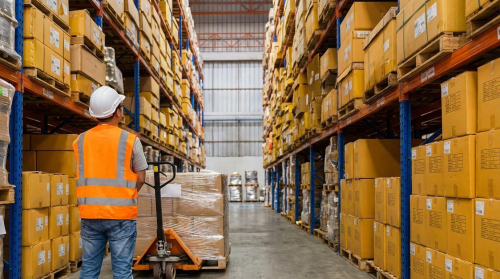
Inspection, competence, and technology formed a three‑pillar system for controlling forklift pallet handling risk. Regulatory bodies such as OSHA and ANSI defined minimum inspection and training baselines, while industry added telemetry and analytics on top. Modern fleets increasingly integrated sensors, connectivity, and digital models to predict failures and optimize behavior. This section linked those elements into a coherent engineering and operations framework.
OSHA/ANSI Pre-Shift Inspection Requirements
OSHA required powered industrial trucks to be inspected at the start of each shift, with unsafe units removed from service. Checklists typically captured date, operator, truck ID, model, serial number, and hour‑meter reading for traceability. Visual checks covered manuals and warning labels, nameplate and capacity plate legibility, overhead guard, load backrest, forks, chains, tires, and the absence of fluid leaks or structural damage. Operational checks then verified steering, service and parking brakes, horn, lights, hydraulic lift and tilt, mast chains, hydraulic hoses, and any attachments.
Engine‑on tests validated smooth acceleration, directional control, and absence of abnormal noises or vibrations. OSHA and ANSI B56.1 required that capacity plates matched installed attachments and that all safety devices, including seat belts and deadman seat switches, operated correctly. Inspectors documented defects and tagged non‑compliant trucks out of service until repair. Consistent inspection timing, such as pre‑shift “circle checks,” improved detection of gradual wear like fork heel loss or chain elongation before they compromised pallet handling stability.
Operator Training, Certification, And Refresher Needs
OSHA mandated formal operator training that combined theory, practical driving, and evaluation specific to the site and truck type. Programs addressed load ratings, load centers, pallet integrity, approach speeds, stacking methods, and truck‑trailer interface risks. Trainees practiced controlled lifting, mast tilting, and precise pallet placement while maintaining low travel heights and correct fork insertion depth. Certification followed documented performance evaluation and remained truck‑ and environment‑specific, not universally transferable.
Regulations required refresher training after incidents, near‑misses, unsafe observations, or significant changes in equipment or layout. Periodic refresher intervals, often every three years or less, reinforced hazard recognition and updated operators on procedural or regulatory changes. High‑performing facilities supplemented formal courses with toolbox talks, peer mentoring, and scenario‑based drills. This continuous learning approach reduced normalization of deviance, kept attention on floor capacity, dockboard limits, and trailer stability, and aligned human behavior with engineered safety margins.
AI, Telematics, And Predictive Maintenance Tools
Telematics modules collected data on travel speed, impact events, lift heights, and load handling patterns. Fleet managers used these data to identify high‑risk behaviors, such as frequent cornering with elevated pallets or repeated impacts near dock edges. AI‑based analytics processed historical sensor data, maintenance records, and fault codes to predict component failures, including hydraulic leaks, brake degradation, or mast chain wear. Predictive models then triggered maintenance work orders before defects affected pallet lifting safety or violated OSHA inspection requirements.
Access control integrated with telematics restricted truck activation to certified operators and logged individual usage. Real‑time alerts notified supervisors of overload attempts, bypassed seat belts, or operation in restricted zones. Some systems coupled cameras and proximity sensors with AI to detect pedestrians or obstacles, supporting better visibility in blind rack aisles and trailer interiors. When correctly configured, these tools complemented—not replaced—pre‑shift inspections and operator vigilance, yielding measurable reductions in impacts, unplanned downtime, and load damage.
Digital Twins And Data-Driven Safety Improvements
Digital twins represented virtual models of warehouses, docks, and forklift fleets that mirrored real‑world operating conditions. Engineers used these models to simulate pallet flows, rack layouts, turning radii, and dockboard loading scenarios under varying traffic and load mixes. Simulation runs evaluated the effect of different speed limits, one‑way systems, or staging zones on near‑miss rates and congestion. This allowed organizations to redesign routes, aisle widths, and pallet positions before investing in physical changes.
Data from telematics, inspection findings, and incident reports continuously updated the digital twin, improving its predictive accuracy. Safety teams could test “what‑if” cases, such as heavier pallets, new trailer types, or alternate dockboard configurations, and verify that floor and dock capacities remained within limits. Over time, the twin helped optimize inspection focus areas, training content, and technology deployments. This closed feedback loop turned raw operational data into targeted engineering controls and procedural refinements for safer forklift pallet handling.
Summary: Key Takeaways For Forklift Pallet Safety
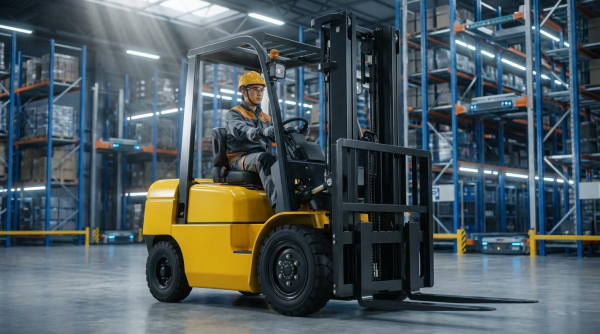
Forklift pallet safety relied on three pillars: engineered limits, disciplined procedures, and systematic verification. Engineers and safety managers had to respect rated capacity, load center, and floor or dock load limits, while ensuring pallet integrity and correct fork engagement. Operators needed repeatable practices for approach, lifting, travel, stacking, and loading trailers, including low travel height, slight rear tilt, controlled speed, and strict respect for clearances and stability envelopes.
Regulators such as OSHA and standards like ANSI B56.1 required documented pre‑shift inspections and removal of defective trucks from service. Structured training and recertification programs, combining theory and hands‑on evaluation, reduced incidents and protected pedestrians and infrastructure. Inspection checklists, including tires, forks, hydraulics, brakes, steering, and safety devices, formed the baseline for compliance and incident prevention.
Telematics, AI analytics, and predictive maintenance platforms increasingly supported these fundamentals. They enabled monitoring of overload events, impact forces, pre‑shift compliance, and component health, while digital twins allowed simulation of layouts, racking strategies, and traffic flows before physical changes. The practical challenge was integration: aligning data outputs with existing safety management systems, work instructions, and operator behavior.
Future forklift pallet handling strategies would blend conservative engineering design with richer real‑time data. Sites that combined robust mechanical safeguards, codified operating procedures, and data‑driven oversight would achieve lower incident rates and higher equipment availability. The core principle remained stable: technology could enhance, but never replace, strict adherence to fundamental load handling physics and codified safety standards.