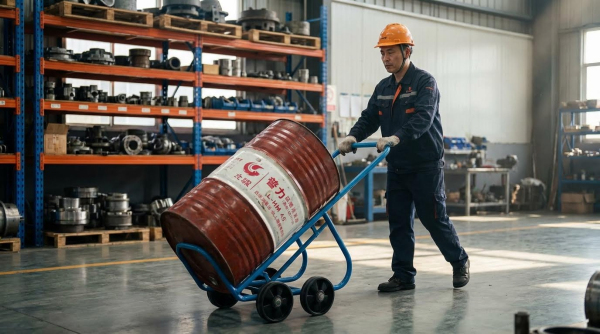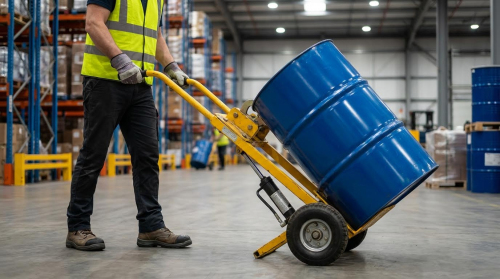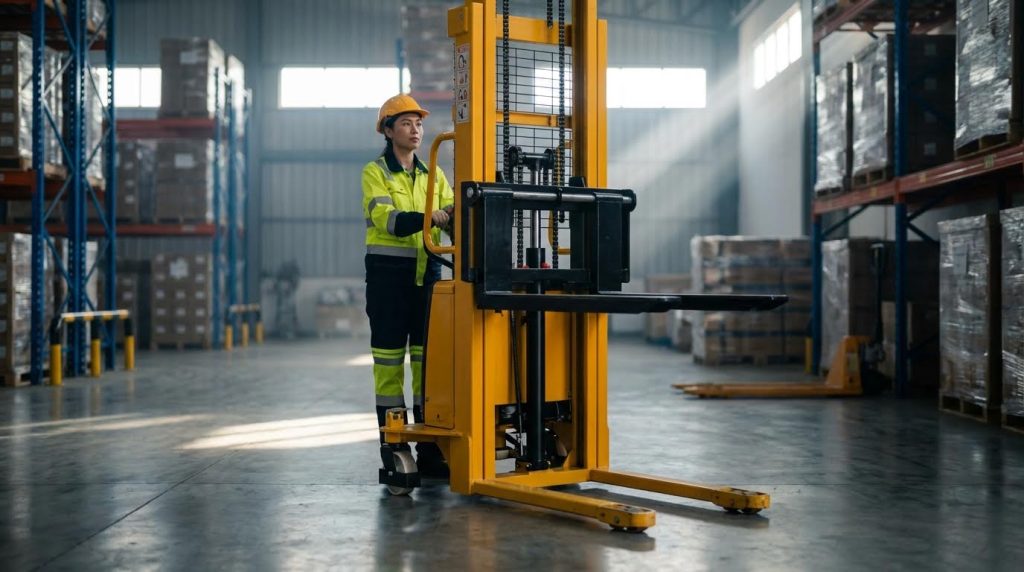
Understanding how to lift a pallet with a forklift required precise control of fork entry depth, load center, and truck stability. This article walked through the fundamentals of safe pallet lifting, from stability triangles and capacity de‑rating to pallet types and fork approach. It then examined correct fork positioning and entry techniques, followed by best practices for racks, flow lanes, and modern safety accessories. Together, these sections provided a structured reference for engineers, supervisors, and operators who aimed to design, specify, and execute safer pallet handling systems in demanding industrial environments.
Fundamentals Of Safe Pallet Lifting
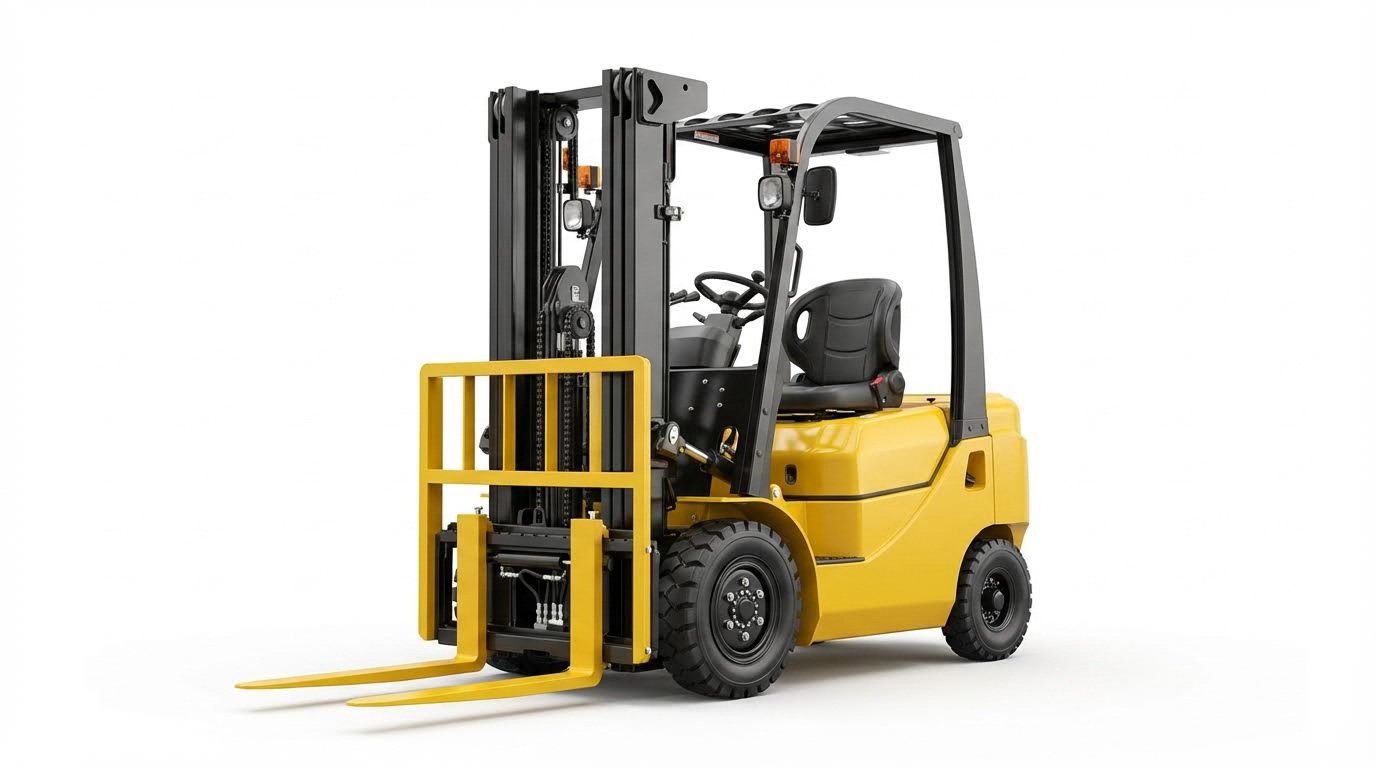
Understanding how to lift a pallet with a forklift starts with fundamentals. Safe pallet lifting depends on stability, rated capacity, pallet design, and operator training. Each factor influences tip‑over risk, load loss, and structural damage. This section explains the core engineering and legal concepts behind safe pallet handling.
Forklift Load Center And Stability Triangle
The load center defined how far the load’s center of gravity sat from the fork face. Most counterbalance forklifts used a nominal 600 mm load center rating. When operators lifted long or poorly positioned pallets, the actual load center shifted forward. That shift moved the combined center of gravity toward the front axle and outside the stability triangle.
The stability triangle was the area between the two front wheels and the pivot point of the steer axle. As the combined center of gravity moved near or beyond this triangle, tip‑over risk increased sharply. Incomplete fork entry, uneven loads, or excessive mast tilt forward all pushed the center of gravity outward. To lift a pallet safely with a forklift, operators kept the mast near vertical during pickup, achieved deep fork insertion, and tilted back only after the pallet contacted the fork heel.
Rated Capacity, Data Plates, And De-Rating
The data plate stated the rated capacity at a specified load center and lift height. For example, a truck might be rated for 2 500 kg at 600 mm load center to a defined mast height. If the pallet overhung the forks or the load sat further out, the effective capacity reduced. Attachments such as fork positioners or clamps also added mass and shifted the load center, which de‑rated capacity further.
Operators needed to read and understand the data plate before planning how to lift a pallet with a forklift. They treated the plate rating as a maximum under ideal conditions and reduced target loads for weak, damaged, or high‑stacked pallets. Regulatory guidance required that modified trucks received updated plates reflecting attachment weight and revised capacities. Working beyond the de‑rated capacity increased structural stress on the mast, chains, and steer axle and raised the probability of catastrophic instability.
Pallet Types And Fork Entry Options
Pallet construction strongly affected fork entry technique and stability. Two‑way stringer pallets allowed entry from only two opposite sides, so operators had to align squarely and set fork height between the top and bottom deck boards. Four‑way or block pallets allowed entry from all sides, which improved routing flexibility and reduced tight maneuvers. However, notched stringers and partial openings limited fork thickness and height.
Safe methods for how to lift a pallet with a walkie pallet truck required deep fork insertion. Industry practice recommended full depth where possible or at least 80% of pallet depth. For a 1 165 mm pallet, this meant approximately 900 mm to full entry. Deep entry kept the load center close to the fork face and reduced bending moments on fork tips. Poor entry left the tips carrying most of the load, which cracked deck boards, punched through timber, and allowed rocking or shedding of cartons during travel.
Legal Duties, Standards, And Training Needs
Work health and safety laws placed clear duties on employers using forklifts. They needed to provide suitable equipment, maintain it, and implement safe systems of work for pallet handling. Jurisdictions referenced standards for forklift design, rated capacity marking, and operator training content. Regulators expected businesses to assess pallet quality, floor condition, and traffic management as part of their risk controls.
Formal training taught operators how to lift a pallet with a manual pallet jack using correct approach, fork positioning, and mast control. Programs covered pre‑use inspection, load assessment, stability principles, and emergency procedures. Refresher training addressed drift in habits and changes in equipment or layouts. Documented procedures, visible signage, and supervision supported consistent compliance with legal requirements. Together, these measures reduced collision risk, falling load incidents, and long‑term mechanical failures in pallet‑based operations.
Correct Fork Positioning And Entry Technique
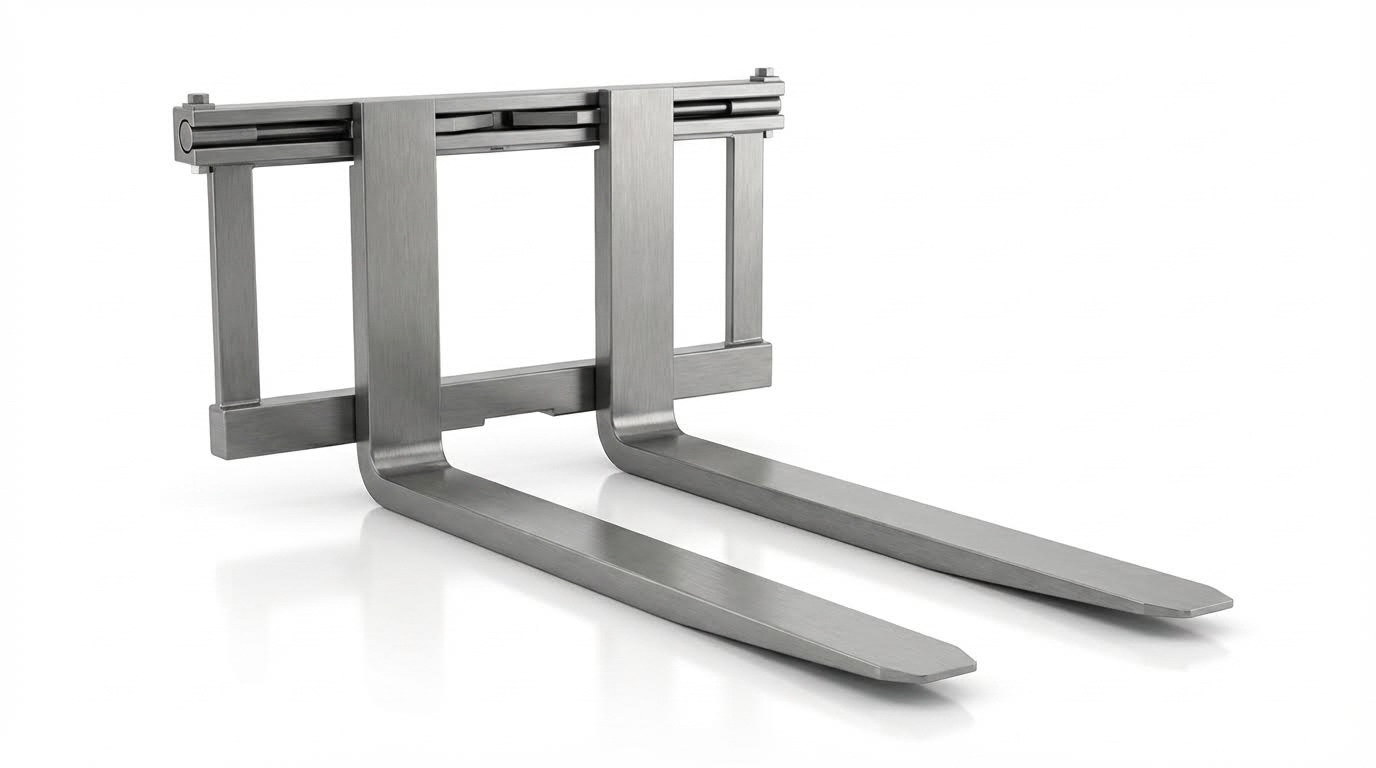
Correct fork positioning is the core of how to lift a pallet with a forklift safely and efficiently. Operators must control fork width, height, mast angle, and depth to keep the load center within the truck’s stability envelope. Technique changes slightly between two-way and four-way pallets, and visibility or floor gradients further influence travel direction and speed. This section explains the practical, step-by-step approach that aligns real-world warehouse practice with regulatory expectations and manufacturer guidance.
Setting Fork Width, Height, And Mast Angle
Correct fork width spreads the load across the strongest pallet members. Set the forks as wide as the pallet allows without contacting the stringers or blocks. As a rule, position each fork under a main stringer or outer deck board to avoid point loading. Adjusting width before approaching the pallet reduces steering corrections and impact risk.
Fork height must align with the pallet entry openings. For standard wooden pallets, raise the forks to roughly halfway between the top and bottom deck boards. The forks should clear the floor by a small margin, typically 50 mm to 100 mm, to avoid dragging. Level forks reduce snagging and prevent the tips from gouging boards.
Set the mast to vertical before entry. A tilted-forward mast can cause the forks to dig into the pallet, while excessive back tilt during entry can lift the front edge and jam the boards. Approach square to the pallet with low travel speed, then stop and fine-tune height and mast angle before inserting. This sequence minimizes structural damage and keeps the load center predictable once lifted.
Fork Depth: 80% Rule, Full Entry, And Load Center
Fork depth directly controls load stability and the effective load center. Best practice is full fork entry so the pallet sits against the fork face. If full entry is not possible, maintain at least 80% of pallet depth. For a 1165 mm pallet, that means a minimum fork entry of about 900 mm. Anything less shifts the center of gravity outward and increases tip-over risk.
Forks that stop short concentrate stress at the tips. Deck boards may crack, and the pallet can hinge or rock under acceleration or braking. This instability often appears only when the truck turns or encounters uneven flooring. By contrast, full-depth support spreads the load along the fork blade and keeps deflection within the design range.
Most counterbalanced stacker forklifts were rated at a 600 mm load center. If the forks do not reach far enough, the effective load center can exceed this rating even when the mass stays within the nominal capacity. Operators should visualize the horizontal distance from fork face to the load’s center of gravity and compare it with the data plate. Applying the 80% rule every time is a simple operational control that supports compliance with manufacturer limits and safety regulations.
Approaching Two-Way Vs Four-Way Pallets
Understanding pallet design is essential for planning how to lift a pallet with a forklift. Two-way pallets only accept forks from the front or rear, through the main stringer openings. This restriction requires accurate alignment and usually a straight-on approach. Operators should avoid diagonal entries, which twist the pallet and overload corner boards.
Four-way pallets offer more flexibility. Block pallets typically allow full-depth entry from all sides, which helps in tight aisles and cross-docking layouts. Stringer pallets with notches may permit side entry, but the notches often reduce capacity and may not accept full fork height. Operators should check that forks fit fully into the intended openings without lifting the pallet prematurely.
For two-way pallets in racks or trailers, approach square, center the mast on the middle stringer, and ensure forks are level before entry. For four-way pallets, choose the entry side that gives the best visibility and shortest travel distance while still allowing adequate fork depth. In both cases, avoid using the fork tips to “nudge” or rotate pallets, which can splinter boards and create future failure points.
Visibility, Travel Direction, And Grade Handling
Visibility governs how to lift a pallet with a forklift without exposing pedestrians and equipment to unnecessary risk. Before lifting, confirm a clear line of sight to fork tips and pallet openings. Use slow, controlled movements while inserting forks so you can see any deflection or snagging. If stacked loads block the forward view after lifting, travel in reverse while maintaining awareness of the load with frequent checks.
Travel direction must adapt to gradient. On ramps or docks, keep the load facing uphill, whether ascending or descending. This orientation keeps the center of gravity closer to the truck and reduces the chance of the pallet sliding off. Maintain the load just high enough to clear the floor, typically 100 mm to 200 mm, with a slight back tilt to lock it against the fork face.
Speed changes should remain gradual. Sudden acceleration, braking, or sharp steering inputs can shift the load even when fork depth is correct. Operators should slow further when crossing thresholds, drains, or damaged floor sections. Combining proper fork positioning with conservative travel behavior creates a stable system: the truck, pallet, and load act as one unit, rather than three separate, competing masses.
Best Practices For Racks, Flow Lanes, And Accessories
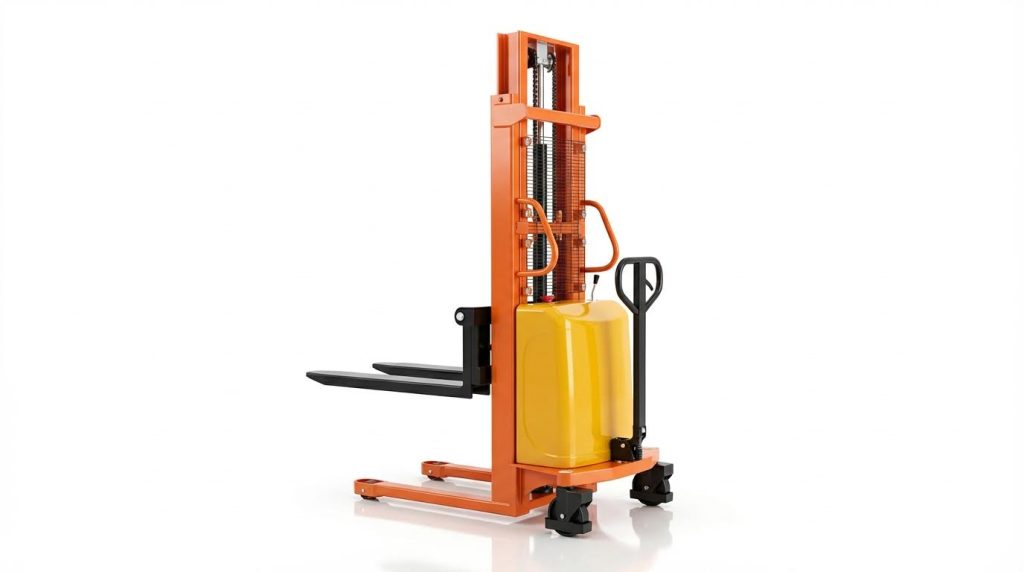
When planning how to lift a pallet with a forklift in racking or flow lanes, the interface between pallet, rack, and truck controls stability. Operators must combine correct fork entry, controlled tilt, and smooth hydraulic operation with good visibility and floor conditions. The following best practices focus on pallet flow rack systems, damaged pallets and floors, hydraulic fork positioners, and electronic assist devices that support safer, more repeatable pallet handling.
Loading And Unloading Pallet Flow Rack Systems
In pallet flow racks, gravity and roller friction controlled pallet movement, so entry geometry was critical. To load safely, position the forklift square to the lane on the charge side, align the forks with the center stringer or entry guides, and raise the pallet 50–75 mm above the first rollers. Enter slowly with level forks and avoid “launching” by pushing; instead, set the pallet down with the mast close to vertical, then tilt slightly forward so the pallet transfers cleanly onto the rollers and rolls away under control. This technique reduces impact loads on the rack, prevents pallets hanging on guides, and keeps the load center close to the fork face during the lift phase.
When learning how to lift a pallet with a forklift from the discharge side of a flow lane, keep the truck square to the rack face and stop before contacting the pallet. Raise the forks to just clear the front beam, then insert until the pallet contacts the fork heel, not just the tips. Lift only enough to clear the beam, then apply slight back tilt to stabilize the load before reversing. If rear pallets did not flow forward, operators used a controlled “plugging” method: lift the front pallet slightly above the rollers, push the rear pallets back a short distance, then draw the front pallet out so the remaining load can roll forward without shock. This minimized roller damage and reduced the risk of pallets stalling mid-lane.
Dealing With Damaged Pallets And Poor Floors
Safe practice required strict rejection criteria for pallets entering flow racks or high-bay racking. Pallets with missing or broken bottom boards, cracked stringers, or exposed nails concentrated load on individual rollers or beams and increased the chance of collapse during lifting. Before lifting, operators visually inspected deck boards and bottom runners and checked that fork pockets were unobstructed. If a pallet showed structural damage, they removed it from service rather than attempting to “nurse” it through the system, because even a correctly positioned forklift could not compensate for inadequate pallet strength.
Floor quality also influenced how to lift a pallet with a forklift without losing stability. Uneven concrete, spalled joints, and potholes created dynamic shocks that shifted the load center and overloaded one fork arm or one front wheel. Facilities reduced risk by repairing damaged floor areas in main travel paths, marking exclusion zones around worst defects, and lowering travel speed near transitions. Operators kept loads as low as practicable, used maximum rear tilt consistent with clearance, and avoided turning on steep crossfall or over broken surfaces. Regular inspection of tires for flat spots and proper inflation, combined with housekeeping to remove debris, cut the likelihood of tip-overs and falling loads due to sudden jolts.
Hydraulic Fork Positioners And Multi-Pallet Handling
Hydraulic fork positioners helped operators set fork spacing precisely without dismounting, which improved alignment with pallet stringers and reduced damage. When handling a single pallet, the forks were positioned just inside the outer stringers, keeping the load symmetric about the truck centerline and the load center within rated limits on the data plate. For multi-pallet handling attachments, such as double or triple pallet handlers, the same principles applied but with greater emphasis on even loading across all forks and strict adherence to the attachment’s de-rated capacity. Operators verified that the combined mass of all pallets and their contents remained below the modified capacity at the specified load center.
In practice, multi-pallet handling was reserved for uniform, stable loads, such as wrapped cartons on high-quality pallets, on level floors with generous aisle widths. The operator approached square, set fork groups to match pallet spacing, and ensured full or at least 80% fork entry into each pallet before lifting. Mast tilt and lift height were kept to the minimum necessary, because the effective load center moved forward when multiple pallets sat on extended forks. Facilities documented attachment-specific procedures and trained operators that the truck’s original nameplate capacity no longer applied once a fork positioner or multi-pallet attachment was fitted, reinforcing the need to read and follow the updated data plate.
Cameras, Lasers, And Sensors For Safer Operation
Electronic assist devices supported operators wherever direct line-of-sight was limited, especially at high lift heights or deep racking. Mast or fork-mounted cameras transmitted real-time images of fork tips and pallet pockets to an in-cab display, allowing precise vertical alignment with rack beams and horizontal centering on the pallet. This technology reduced trial-and-error movements that could strike beams or rack bracing. Laser fork level indicators projected a visible line at fork level onto the pallet face or rack beam, helping operators hold forks level and at the correct entry height, which is critical for smooth fork insertion and full-depth engagement.
Proximity sensors and warning lights added another layer of control when learning how to lift a pallet with a forklift in congested aisles. Ultrasonic or infrared sensors detected nearby obstacles, triggering audible alarms or flashing LEDs when the truck approached pedestrians, rack uprights, or other equipment. Facilities integrated these devices with traffic management measures such as marked forklift lanes, stop lines at intersections, and speed-limited zones near docks. While cameras, lasers, and sensors did not replace operator training or legal obligations, they provided valuable feedback that reduced contact incidents, improved pallet placement accuracy, and supported consistent, repeatable handling in demanding warehouse environments.
Summary: Key Rules For Safe, Stable Pallet Lifts
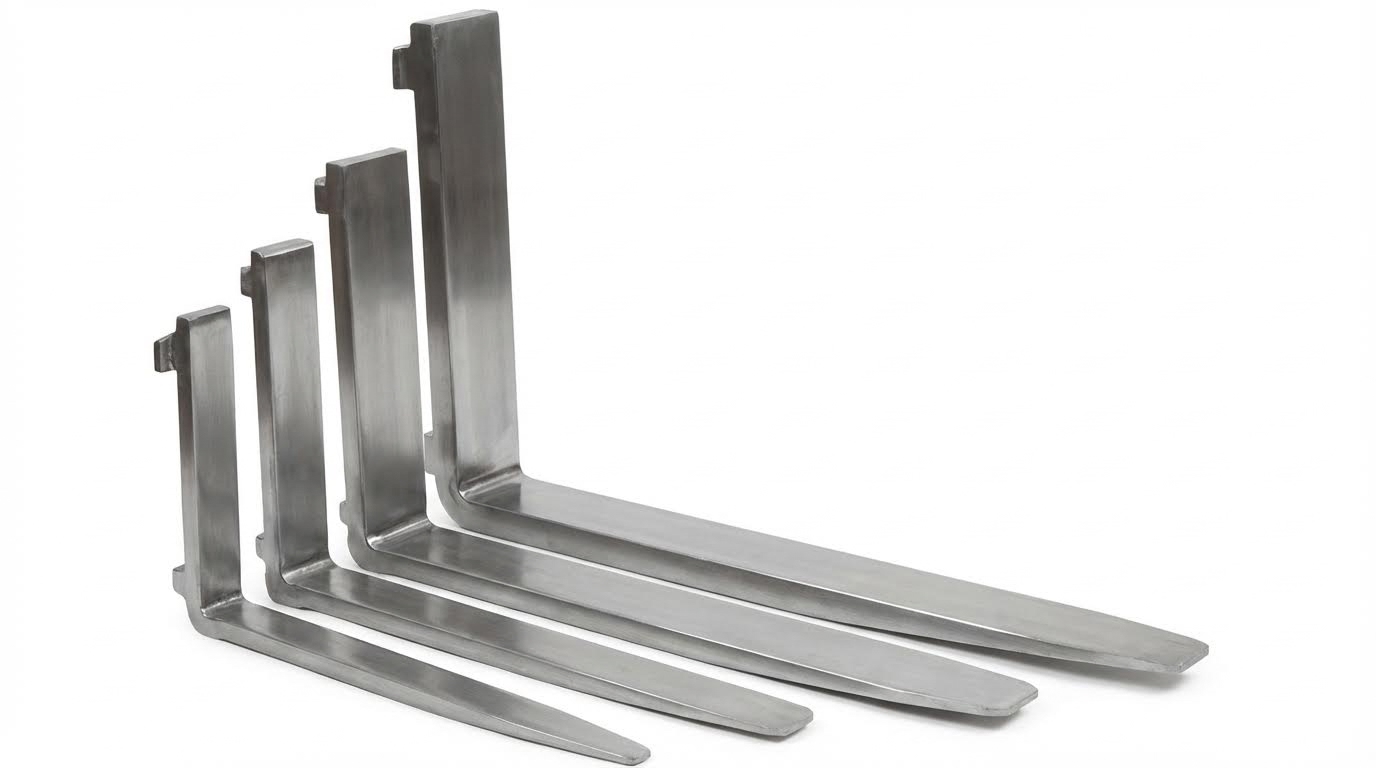
Knowing how to lift a pallet with a forklift safely required strict control of fork entry depth, load center, and truck stability. Operators needed to insert the forks fully, or at least 80% of pallet depth, to keep the center of gravity close to the carriage and within the stability triangle. Typical counterbalanced stacker forklifts used a 600 mm rated load center, so any increase in horizontal distance between the fork face and load center reduced the effective capacity and increased tip‑over risk. Two-way and four-way pallets also demanded different entry approaches, with block and stringer designs affecting where the forks could safely bear the load.
From a legal and standards perspective, regulators such as Safe Work Australia required businesses to provide competent training, maintain equipment, and manage load handling risks, even though fork depth values themselves sat in guidance rather than explicit law. Industry best practice converged on full fork insertion where possible, conservative use of mast tilt, and travel with the load low, tilted back, and pointed upgrade on slopes above roughly 10%. Future trends pointed toward wider adoption of hydraulic pallet truck, multi-pallet attachments, and integrated cameras, lasers, and sensors that assisted operators in aligning forks, confirming fork depth, and maintaining visibility when the load blocked the view.
In practice, facilities that wanted to improve how to lift a pallet with a forklift safely needed to combine engineered controls with operator discipline. That meant specifying pallets compatible with four-way entry where feasible, maintaining flat, damage-free floors, and enforcing inspection regimes for forks, tyres, and mast components. At the same time, training had to stress reading the data plate, never exceeding rated capacity, adjusting for off-center or tall loads, and rejecting damaged pallets or flow-lane components. As technology evolved, electronic aids reduced error margins but did not replace fundamental techniques: square approach, level forks at the correct height, controlled full-depth entry, verification of load stability, and smooth, predictable travel behavior. Additionally, tools like a manual pallet jack could assist in pre-positioning loads for safer lifting.