Forklift operations historically posed significant risk in warehouses, plants, and construction sites, especially where pedestrians and mobile equipment interacted. This article examined core OSHA-driven forklift safety controls, including operator certification, recurrent training, and mandatory daily inspections. It then analyzed horn protocols, visibility management, and the correct use of spotters as critical layers in preventing collisions and tip-overs. Finally, it connected these practices into an integrated control strategy that reduced incidents, improved compliance, and supported safer, more efficient material handling environments.
Core Forklift Safety And OSHA Compliance
Core forklift safety depended on competent operators, reliable equipment, and controlled environments. OSHA framed these elements through prescriptive rules on training, inspection, and operation. Understanding these requirements reduced incident rates and supported defensible safety programs. The following subsections outlined the foundational controls that facilities used to align with OSHA expectations.
Operator Certification And Recurrent Training
OSHA required that only trained and certified operators used powered industrial trucks. Employers had to provide truck‑ and site‑specific training, including formal instruction, practical exercises, and performance evaluation. Regulations mandated re‑evaluation at least every three years, or sooner after incidents, near misses, or unsafe operation. Operators were only allowed to drive the truck classes and configurations for which they had been evaluated as competent.
Effective programs covered load charts, stability, speed control, pedestrian interaction, and site traffic rules. Facilities often integrated horn‑use protocols, spotter coordination, and communication standards into this training. Refresher sessions used recent incident data, audits, and behavior observations to close performance gaps. Documented training records supported OSHA compliance and facilitated internal safety governance.
Daily Inspections And Defect Management
OSHA 29 CFR 1910.178(q)(7) required industrial trucks to be inspected at least once per operating day. Multi‑shift operations typically performed pre‑shift inspections for each shift. Checklists included tires, brakes, steering, mast, forks, chains, hydraulic hoses, guards, seat belts, lights, and horns. Operators verified horn audibility above ambient noise, since a weak horn that could not be heard clearly was considered unsafe.
If inspections identified defects affecting safety, §1910.178(p)(1) required that the truck be removed from service until repaired. Under §1910.178(q)(5), replacement parts had to be equivalent in safety to the original design. Supervisors needed a clear lockout, tag, or “out‑of‑service” process to prevent unauthorized use. Maintenance teams documented repairs, functional tests, and return‑to‑service approvals to maintain traceability.
Load Handling, Stability, And Capacity Limits
OSHA rules and manufacturer instructions required operators to respect the rated capacity at the specified load center. Overloading or extending the load center reduced the stability margin and increased tip‑over risk. Operators positioned loads evenly across both forks, fully engaged the pallet, and avoided single‑fork lifting. During travel, they kept the load low, typically 100–150 mm above the floor, with the mast slightly tilted back.
Visibility constraints dictated additional controls. When loads blocked forward view, operators traveled in reverse, except when ascending ramps. Long, tall, or wide loads required reduced speed and, where necessary, a trained spotter. No one was allowed under suspended loads, and forklifts were not used to lift people, even with makeshift platforms, because this violated OSHA guidance. These practices directly addressed the high proportion of serious injuries linked to struck‑by and crushed‑by incidents.
Site Layout, Pedestrian Control, And Housekeeping
Effective forklift safety programs treated facility layout as a primary control. Warehouses used clearly marked travel lanes, crossing points, and pedestrian‑only walkways with floor markings and signage. Speed limits varied by zone, with stricter limits near docks, picking areas, and intersections. Mirrors and, where appropriate, traffic lights or stop signs improved visibility at blind corners and doorways.
Housekeeping supported traction and stability. Supervisors enforced prompt cleanup of spills, removal of debris, and repair of damaged floor surfaces. Designated refuelling and charging areas were well ventilated, free of ignition sources, and equipped with clear procedures, including shutting trucks off during refuelling or charging. Parking rules required operators to fully lower forks, apply the parking brake, turn the truck off, and remove the key in authorized areas. Regular safety meetings and feedback loops reinforced these layout and housekeeping controls and helped sustain a safety‑first culture.
Horn Use, Alarms, And Visibility Management
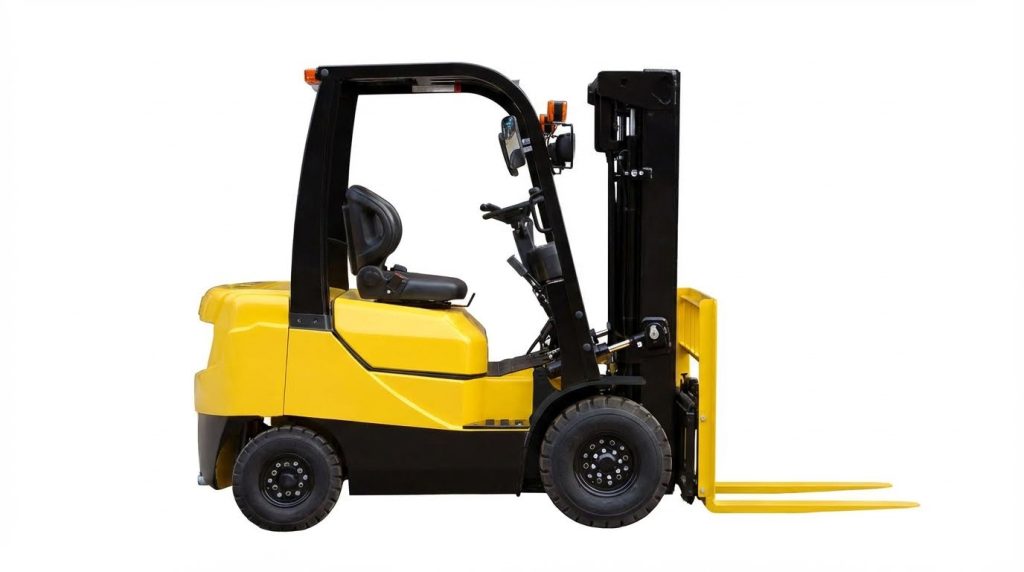
Horn use, alarms, and visibility controls formed a critical layer in forklift risk management. These measures complemented operator training, traffic planning, and load handling rules. When implemented consistently, they reduced collision risk, especially with pedestrians and at crossings.
OSHA Requirements For Functional Forklift Horns
OSHA standard 29 CFR 1910.178 required powered industrial trucks to have an operable horn or equivalent audible warning device. Under §1910.178(q)(7), employers had to inspect forklifts at least once per day, which included verifying horn function. A horn that sounded weak or could not be heard above ambient noise was considered defective and unsafe, so the truck had to be removed from service under §1910.178(p)(1) until repaired. Replacement horn components had to meet §1910.178(q)(5), meaning they were equivalent in safety to the original design. Facilities with high ambient noise often supplemented horns with visual warnings, but this did not eliminate the requirement for a clearly audible horn.
Standard Horn-Use Protocols At Intersections
Standard operating procedures required operators to stop or slow significantly and sound the horn before entering intersections, doorways, and other crossing points. OSHA guidance and industry best practice recommended using the horn at every blind intersection, even when traffic appeared light. Operators should have kept the load low, faced the direction of travel, and made eye contact with pedestrians where possible after sounding the horn. If visibility remained obstructed, the operator should have stopped completely and only proceeded when certain the path was clear, using a spotter when necessary. Consistent horn use at intersections reduced pedestrian-involved incidents, which historically accounted for nearly 20% of forklift injuries.
Managing Blind Corners, Aisles, And High Traffic
In areas with blind corners, congested aisles, or high pedestrian density, facilities typically enforced reduced speed limits and mandatory horn use. Operators should have slowed well before turns and used the horn continuously or in repeated short blasts when approaching corners, exits, stairways, and crossing walkways. Mirrors and floor markings at blind spots improved mutual awareness but did not replace the horn requirement. When large or tall loads blocked forward visibility, operators should have traveled in reverse while facing the travel direction and using the horn, except on ramps where forward travel remained mandatory. In extremely tight or visually complex zones, supervisors often assigned spotters to guide trucks and manage pedestrian exclusion zones.
Integration With Lights, Alarms, And New Tech
Modern forklift safety programs integrated horns with visual and audible technologies such as blue or red proximity lights, backup alarms, and strobe beacons. Backup alarms activated automatically during reverse travel, reinforcing horn signals and alerting workers who might not face the truck. Where trucks operated in low-light or noisy environments, managers specified high-intensity front and rear work lights and floor-projected warning lights to delineate approach paths. Proximity sensors, cameras, and collision-avoidance systems further enhanced visibility, but did not remove the operator’s duty to use the horn and maintain line of sight. Facilities that combined horns, alarms, engineered traffic separation, and trained spotters typically achieved lower incident rates and better compliance with OSHA’s powered industrial truck requirements.
Effective Use Of Spotters In Forklift Operations
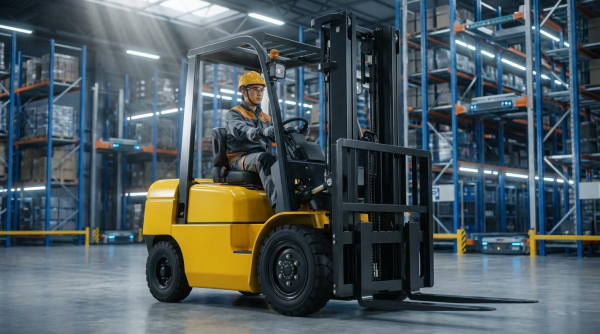
Spotters played a critical role in reducing visibility‑related forklift incidents in industrial and construction environments. Their primary value lay in providing a second, independent risk assessment in dynamic work areas where cameras and sensors could not detect every hazard. Effective spotter programs combined clear role definition, standardized communication, robust training, and disciplined positioning rules. When implemented correctly, spotters helped organizations close key OSHA and OH&S compliance gaps around mobile equipment and pedestrian interaction.
When A Forklift Spotter Is Required Or Recommended
Organizations used spotters whenever the operator’s field of view was partially or fully obstructed. Typical triggers included high, long, or wide loads, reversing in congested aisles, and operating near blind corners or intersections. Sites with high pedestrian density, multiple machines in close quarters, or tight laydown areas also mandated spotters. Regulatory frameworks, such as Ontario Regulation 213/91 or similar provisions, required a signaler whenever the operator could not see clearly. Best practice procedures minimized reversing through route planning, but required a spotter whenever reversing with restricted visibility remained unavoidable.
Spotters also supported work near drop‑offs, ramps, mezzanine edges, and overhead utilities. They monitored clearances to piping, sprinklers, cables, and low structural beams during lifting or stacking. In project work, contractors assigned spotters for precision placement of heavy items, such as HVAC units, steel members, or concrete barriers. Even with proximity alarms and camera systems, safety managers continued to recommend spotters because human judgment adapted better to changing site conditions. Formal risk assessments usually documented when spotters were mandatory and when they were strongly recommended.
Standard Hand Signals And Radio Communication
Effective spotting depended on unambiguous, pre‑agreed communication. Teams adopted standardized hand signals, often aligned with OSHA, ANSI, or local OH&S signal charts, for commands such as stop, slow, reverse, and turn. Before each job, the operator and spotter reviewed the signal set and clarified any site‑specific variations. The rule that “stop” overrode all other instructions remained non‑negotiable. Operators had to stop immediately if they lost sight of the spotter or did not understand a signal.
Two‑way radios supplemented hand signals in low‑visibility or noisy environments. Radios improved communication when the spotter could not remain in the operator’s direct line of sight, for example around structural columns or racking. Procedures required concise, standardized phrases, confirmation repeats, and closed‑loop communication to avoid misinterpretation. Spotters focused solely on the task and avoided phones, side conversations, or other distractions. Many organizations documented signal protocols in site orientations, toolbox talks, and posted visual charts near loading areas.
Positioning, Line Of Sight, And Exclusion Zones
Spotter positioning determined their ability to detect hazards and avoid being struck. Good practice placed the spotter where they could see both the forklift path and surrounding pedestrians while remaining outside the machine’s blind spots. They stayed clear of the truck’s rear swing radius and never walked directly behind or immediately alongside the forklift while it moved. Spotters maintained constant visual contact with the operator whenever possible, using radios only as a supplement. If either party lost visual contact, movement stopped until the line of sight was re‑established.
Exclusion zones around the forklift and load reduced the risk of struck‑by or crushed‑by incidents. Sites marked these zones using cones, barriers, painted lines, or temporary signage to keep pedestrians out of the travel path. Spotters enforced these boundaries, redirecting workers away from danger areas and preventing anyone from entering under a raised or suspended load. Before a move, the spotter scanned the route for drop‑offs, obstructions, spills, and overhead hazards and had these corrected or bypassed. Planning the route to minimize backing and tight turns further reduced risk and simplified the spotter’s task.
Training, PPE, And Performance Auditing For Spotters
Spotters required structured training rather than informal on‑the‑job instruction. Training content typically covered forklift fundamentals, blind‑spot patterns, hazard recognition, and standard signaling methods. Programs also addressed emergency procedures, such as how to stop work when a worker entered an exclusion zone or when conditions changed suddenly. Employers refreshed this training periodically and whenever incident trends or audits identified weaknesses. OSHA and similar regulators expected employers to prove that workers assigned to spotting duties were competent and understood their responsibilities.
Personal protective
Summary Of Key Forklift Safety And Spotter Controls
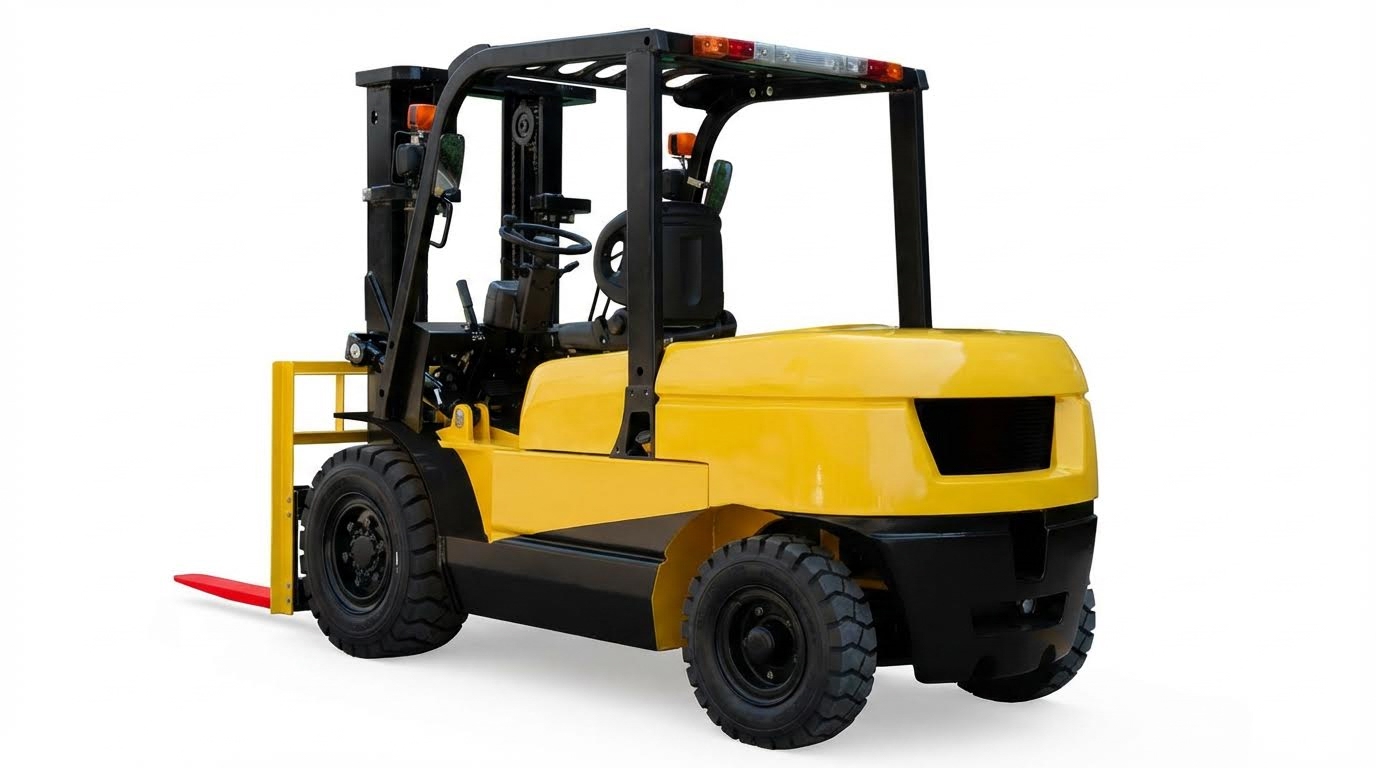
Forklift safety depended on a layered control system that combined trained operators, engineered safeguards, and disciplined procedures. OSHA-required operator certification and three‑year recertification cycles established a baseline of competence, while daily inspections under 29 CFR 1910.178(q) ensured equipment remained in safe operating condition. Enforcing load charts, capacity limits, and correct stacking practices reduced tip‑overs and dropped loads, which historically contributed to a significant share of the roughly 34,900 serious forklift injuries reported annually. Well‑designed site layouts with marked pedestrian routes, speed limits, and clean, level floors further reduced collision and slip hazards.
Horn protocols and visibility management formed a second critical layer. OSHA treated a weak or inaudible horn as a defect requiring removal from service, because audible warnings at intersections, doors, and blind corners were essential for protecting pedestrians. Best practice kept loads low, required operators to face the direction of travel, and integrated horn use with lights, backup alarms, and, where available, cameras or proximity sensors. However, newer technologies did not eliminate the need for human judgment or clear communication.
Spotters played a decisive role wherever visibility was constrained, pedestrian density was high, or large loads obstructed the operator’s view. Regulations and provincial or state codes often required signalers when operators lacked a clear line of sight, and case experience showed that trained spotters prevented serious incidents around cranes and forklifts alike. Effective spotting relied on pre‑agreed hand signals or radios, high‑visibility PPE, disciplined positioning outside blind spots, and the rule that operators must stop immediately if they lost sight of the spotter. Periodic audits, refresher training, and review of near misses helped maintain performance.
Looking ahead, facilities increasingly supplemented forklifts with alternatives such as Vertical Reciprocating Conveyors to reduce person‑forklift interaction, especially between levels. Future safety programs would likely blend automation, zone control, and advanced detection systems with robust OSHA‑compliant training and spotter programs. Operations leaders implementing these controls needed to treat them as an integrated system: certified operators, serviceable equipment, enforced horn and speed rules, engineered traffic separation, and competent spotters working together to keep risk as low as reasonably practicable while accommodating evolving technology and regulatory expectations.