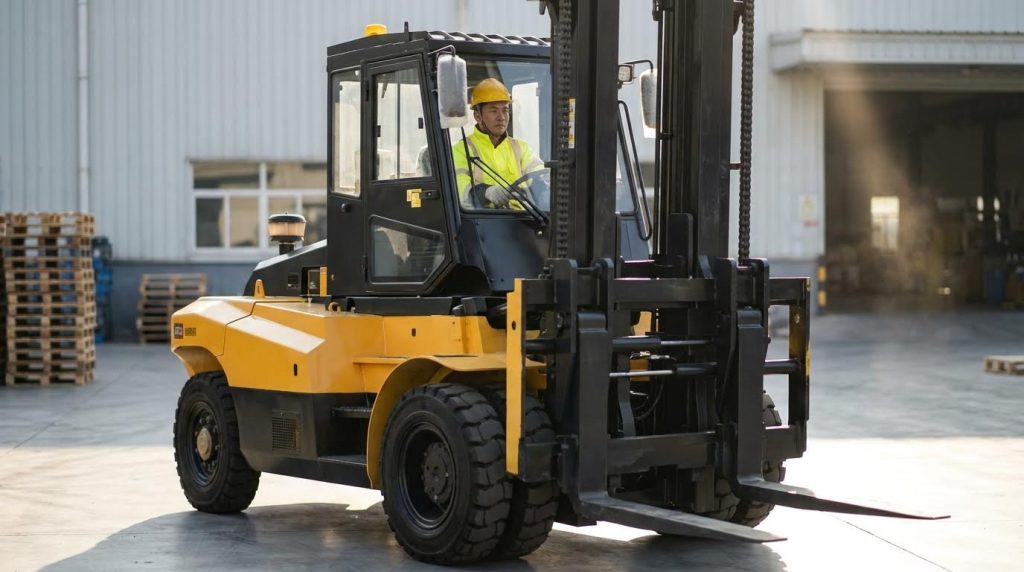
Knowing how to drive a diesel forklift safely starts long before you touch the throttle. This guide walks through core controls, pre‑shift checks, and real‑world driving and load‑handling practices so operators can work efficiently without compromising safety. You will see how daily inspections, correct use of hydraulic pallet truck, and disciplined site traffic planning all fit together. Use it as a structured reference for training, supervision, and continuous improvement on any industrial site that runs diesel forklifts.
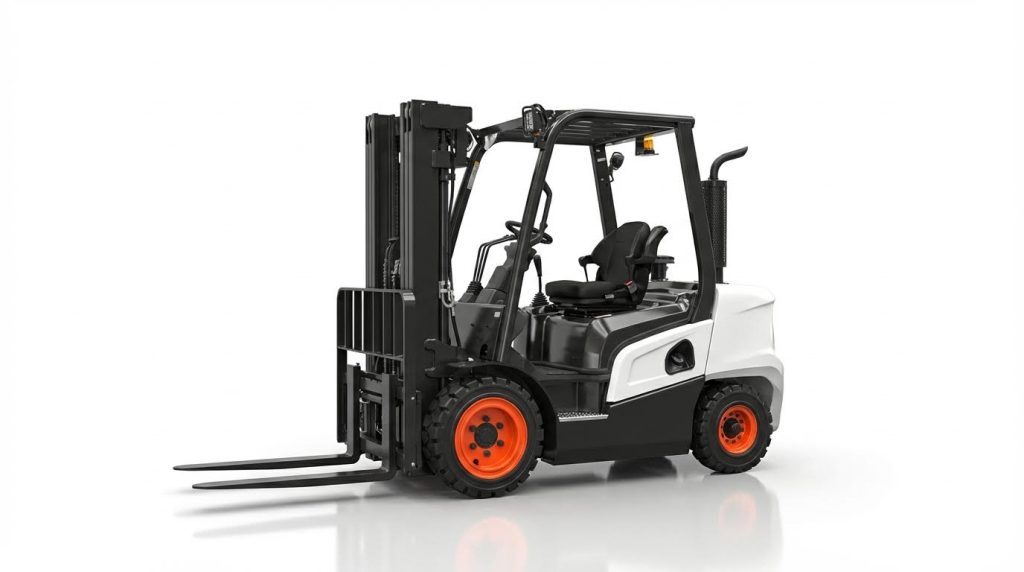
Core Diesel Forklift Controls And Operating Sequence
Operator authorization and safety standards
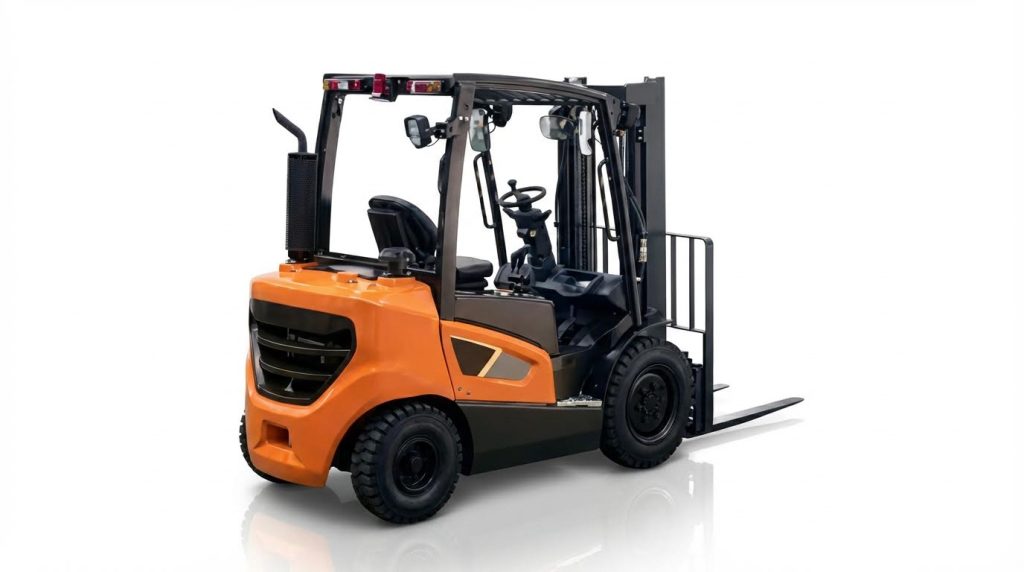
Anyone learning how to drive a diesel forklift must first be formally trained, evaluated, and authorized by the site employer, in line with local powered industrial truck regulations. Operators should complete theory and practical training, including stability, load handling, and site‑specific hazards, and this authorization must be kept current through periodic re‑evaluation. Before each shift, the operator conducts a pre‑operational inspection, checking for damage, leaks, and confirming that seatbelts, horn, mirrors, and lights function correctly as part of basic safety practice. Site rules should define pedestrian walkways, speed limits, and right‑of‑way, and operators must always wear the seat belt and follow posted load‑rating plates.
Understanding drivetrain, hydraulics, and stability
A diesel forklift uses an internal combustion engine to drive the transmission and drive axle, while separate hydraulic pumps power mast lift, tilt, and auxiliary functions. Smooth steering and reliable braking are critical; brakes, clutch, and steering must operate freely during pre‑operation checks to support safe maneuvering and stopping distances in daily inspections. Hydraulic controls typically include levers to lift and lower the carriage, tilt the mast forward or backward, and sometimes side‑shift; the operator uses these to keep the load low, tilted back slightly, and close to the load backrest for stability as recommended in load‑handling guidance. Understanding the “stability triangle” and how load height, load center, mast tilt, and travel speed shift the combined center of gravity helps the operator avoid tip‑overs when turning, braking, or working on slopes.
Step‑by‑step driving and load‑handling sequence
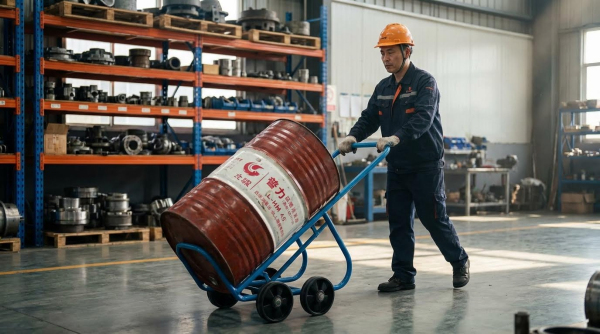
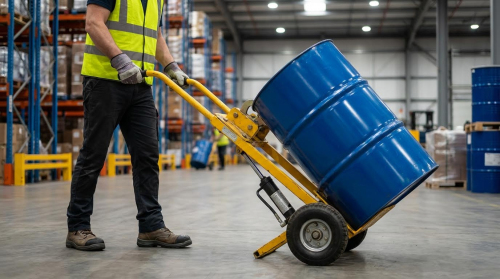
To start a diesel forklift, the operator first applies the parking brake and ensures direction control is in neutral, then turns the ignition key to start the engine; to stop, the key is turned back to the off position and any startup malfunctions are reported immediately according to typical operating manuals. When approaching a load, the truck is driven slowly, stopped about 20–30 cm in front of the pallet, and aligned square; the forks are leveled and inserted as far as possible, at least two‑thirds of the load length, with the weight centered between the forks manual pallet jack to maintain stability. The operator then lifts the load just clear of the stack, checks overhead clearance, and tilts the mast slightly back so the heaviest part of the load rests against the carriage and backrest before traveling, always keeping the load low and avoiding forward tilt while moving as part of proper load‑handling technique. To deposit the load, the truck is stopped 20–30 cm from the stack, the mast is returned to vertical, the load is raised or lowered to the correct height, then lowered until just above the surface, the forks are leveled, and the truck is reversed straight back before turning, completing a controlled and repeatable operating sequence for anyone applying best practice in how to drive a diesel forklift. Additionally, specialized equipment like a drum dolly or hydraulic pallet truck can assist in material handling tasks.
Critical Pre‑Operation Checks And Preventive Maintenance
Daily fluid, tire, and safety device inspections
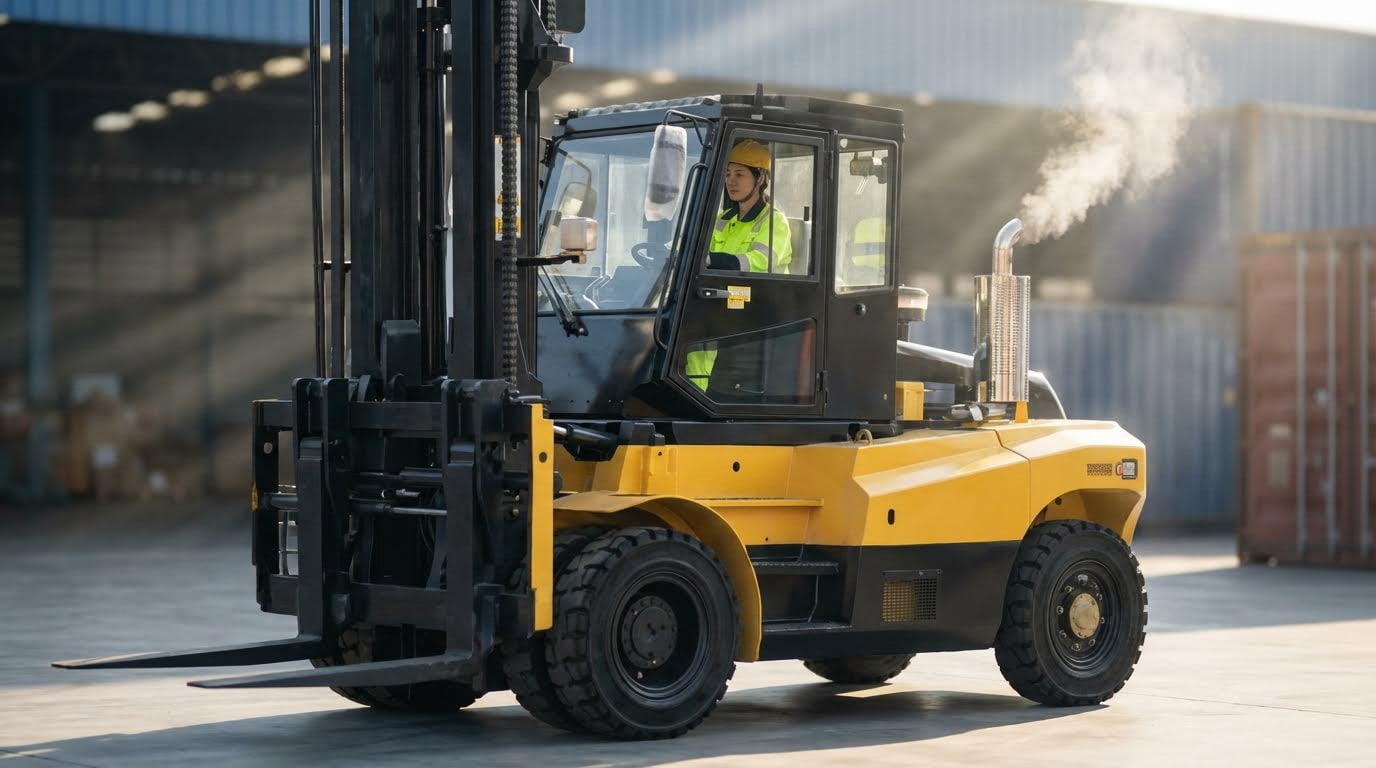
Daily checks are the foundation of learning how to drive a diesel forklift safely and without unplanned downtime. At the start of each shift, verify engine oil, fuel, coolant, hydraulic oil, and brake fluid levels are within the marked ranges, topping up with the specified fluids as needed for engine oil, fuel, coolant, hydraulic oil, and brake fluid checks. Walk around the truck to look for visible leaks, tire damage, or low pressure, and confirm that tires are correctly inflated or in good solid-tire condition for leakage and tire condition checks. Test all safety and warning devices, including seat belt, horn, lights, reverse alarm, and parking brake, and do not operate the truck if any of these systems fail for seatbelt, warning systems, and light functionality. Finally, check forks for cracks or bending, ensure they are locked, and confirm steering and service brakes operate smoothly during a short, controlled test drive for fork, brake, and steering operation checks.
- Fluids: engine oil, fuel, coolant, hydraulic oil, brake fluid.
- Rolling gear: tire pressure/condition, wheels and visible leaks under the truck.
- Safety systems: seat belt, horn, alarms, lights, parking brake.
- Load interface: forks straight and secure, mast movement smooth and controlled.
Weekly and monthly mechanical and hydraulic checks
Weekly and monthly inspections go beyond basic “how to drive a diesel forklift” skills and focus on keeping the machine structurally sound. On a weekly basis, check and top up hydraulic fluid, inspect hoses and belts for wear, and lubricate mast chains and rollers to reduce friction and shock loads in the lifting system for hydraulic fluid, hoses, belts, and mast lubrication. Also verify wheel and lug nut tightness, battery condition, exhaust integrity, and visibility of capacity plates and safety decals to maintain both mechanical reliability and regulatory compliance for wheel security, exhaust, battery, and decal checks. Monthly tasks typically include changing engine oil and filters, inspecting or replacing fuel filters, checking transmission and differential fluid levels, and lubricating wheel bearings and axles to protect drivetrain components under heavy load cycles for engine oil, fuel filters, driveline fluids, and lubrication. At the same time, test the brake system under load, adjust drive chain or shaft as required, clean the truck thoroughly, and update maintenance logs so issues are traceable and repairs can be planned for brake system checks, drive adjustment, cleanliness, and record keeping.
| Interval | Key focus areas |
|---|---|
| Weekly | Hydraulic level, hoses/belts, mast lubrication, wheels/lugs, exhaust, decals, auxiliary battery |
| Monthly | Engine oil and filters, fuel filter, cooling system, driveline fluids, wheel bearings, brakes, drive chain/shaft |
Emissions, filtration, and predictive maintenance trends
Modern guidance on how to drive a diesel forklift safely also includes controlling emissions and planning maintenance based on condition, not only hours. Air filters should be cleaned or renewed at specified intervals to prevent dust ingestion, maintain engine efficiency, and protect turbo and injection components for air filter cleaning and renewal. Coolant and hydraulic oil need periodic renewal, typically around major hour milestones, combined with leak checks to keep thermal and hydraulic systems stable under continuous duty for coolant and hydraulic oil renewal intervals. Soot particulate filters require regeneration or cleaning to keep backpressure within limits and ensure the engine meets emission requirements over its life for soot particulate filter regeneration requirements. By combining these scheduled tasks with trend data from inspections—such as recurring leaks, abnormal exhaust noise, or repeated filter clogging—sites can move toward predictive maintenance, reducing breakdowns during critical handling operations.
Examples of data to track for predictive maintenance
Track engine hours between oil changes, frequency of topping up hydraulic fluid, number of air filter cleanings per month, and any repeated warning-light events. This history helps maintenance teams adjust service intervals and address root causes before failures stop the truck in service.
Safe Load Handling, Driving Practices, And Site Planning
Load capacity, load center, and mast control
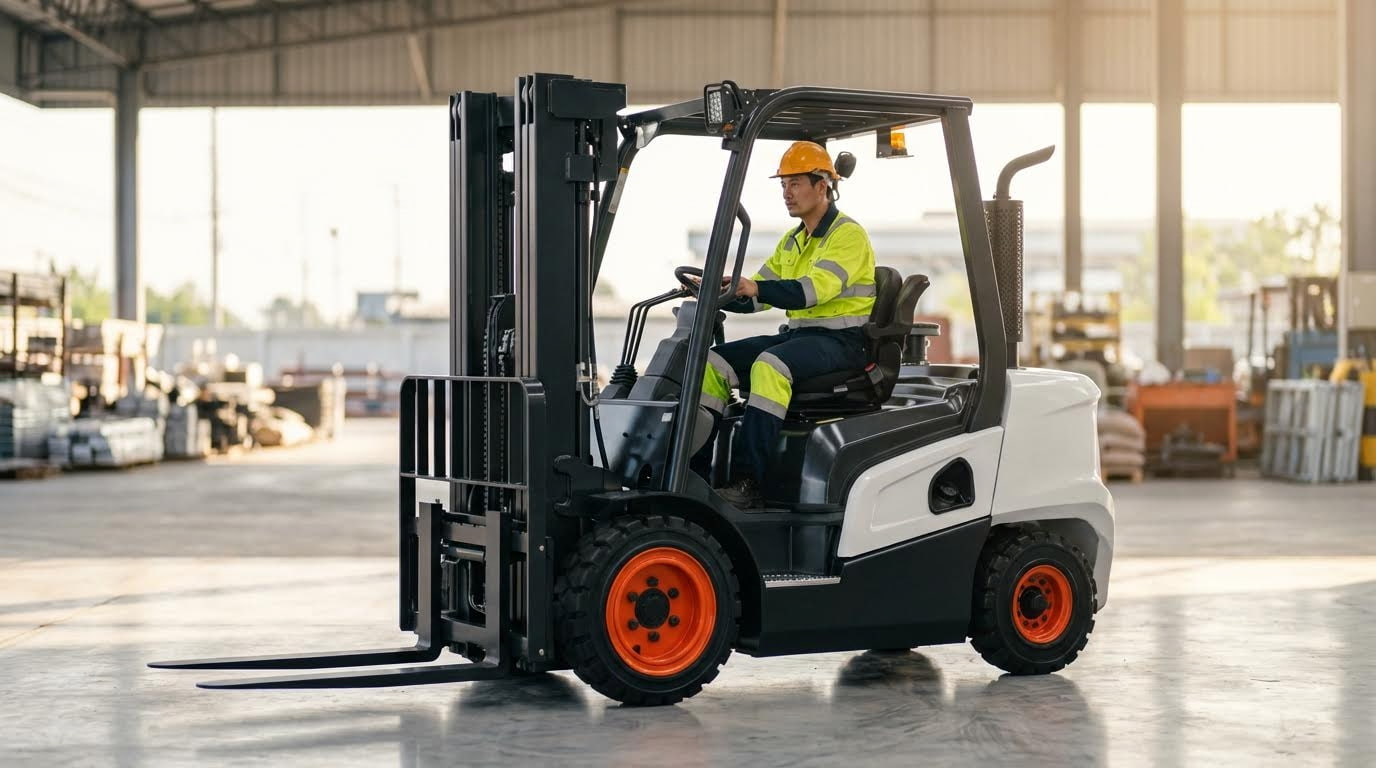
Understanding load capacity and load center is fundamental when learning how to drive a diesel forklift safely. The data plate on the truck states the rated capacity at a specified load center; many trucks use a 24‑inch load center, meaning the load’s center of gravity must be 24 inches or less from the fork face for the truck to carry its full stated capacity. If the load is off‑center, oversized, or not packed tightly, the effective load center increases and the truck can tip forward even if the nominal weight is below the plate rating because the moment about the front axle becomes too large. Always secure and center the load, keeping the heaviest side toward the carriage and front wheels to maximize stability and prevent shifting during travel.
- Approach the load straight on, stop about 20–30 cm (8–12 in) away, and keep the truck square to the pallet before inserting forks with the direction control in neutral and brakes applied.
- Level the forks, spread them to suit the pallet, and insert them at least two‑thirds of the load length so the weight is fully supported and evenly distributed between forks.
- Lift only after checking overhead clearance, raise just enough to clear the stack (about 10 cm / 4 in), then tilt the mast back slightly so the load rests against the backrest before traveling.
- Never travel with the mast or load tilted forward; this moves the center of gravity outward and drastically reduces longitudinal stability, especially on ramps or uneven ground and increases tip‑over risk.
High stacking and tiering considerations
When stacking high, place heaviest pallets on the bottom tiers and lighter ones on top to keep the combined center of gravity low. As mast height increases, reduce the individual load below the rated capacity and work more slowly to avoid mast sway particularly when reaching forward. Always return the mast to vertical before lowering and keep the forks 15–20 cm (6–8 in) above the floor when traveling unladen to avoid striking floor obstacles.
Traveling, braking, and visibility in real operations
Safe traveling technique is central to any procedure on how to drive a diesel forklift in live operations. The operator should accelerate smoothly, avoid sharp steering inputs, and keep speeds low when loaded or in congested areas to maintain control. Service brakes are used to control speed and stop, while the parking brake must be applied whenever the truck is parked or left unattended to prevent unintended movement. Braking should be progressive rather than abrupt, because sudden stops with a raised or heavy load can shift the center of gravity outside the stability triangle and cause a forward tip.
- Maintain safe stopping distances from pedestrians, other trucks, and fixed obstacles, and avoid tailgating or driving too close to dock edges to allow for emergency braking.
- Use the horn at blind corners, intersections, and doorway exits, and reduce speed so you can stop within the visible distance if a person or obstruction appears.
- Travel with the load low (just clear of the floor) and tilted back so it does not block the view; if the load is tall and blocks forward vision, drive in reverse while maintaining a clear line of sight and watching for pedestrians.
- On inclines, keep the load upgrade and never turn sideways on a slope, because lateral stability reduces sharply and the truck can roll over if the combined center of gravity moves outside the wheelbase footprint.
Dock, trailer, and railcar operations
When loading trailers, ensure truck brakes are set and wheel chocks placed under rear wheels before entering with a forklift to prevent movement. Fixed jacks may be needed to support semi‑trailers that are not coupled to a tractor, and railcars must be positively secured before dockboards are placed to avoid separation or upending. These measures keep the interface stable while the combined weight of the truck and load moves across it.
Layout, traffic management, and compliance documentation
Safe diesel forklift operation also depends on the site layout and traffic rules, not only on individual driving skill. Pedestrian routes should be clearly marked and physically separated from forklift aisles where possible, with crossings limited and well signed to reduce interaction points. Aisle widths must suit the truck’s turning radius and load dimensions so operators can turn and stack without encroaching into pedestrian zones or racking. Good lighting, mirror placement at intersections, and clearly visible capacity plates and safety decals all support operators in applying correct techniques for how to drive a diesel forklift within the site’s limits and staying within equipment ratings.
- Implement one‑way traffic flows where practical, with marked stop lines and speed‑limited zones in high‑risk areas such as docks, production lines, and busy crossings.
- Define parking, battery‑charging, and refueling areas so trucks are never left blocking exits, fire equipment, or pedestrian escape routes.
- Use formal checklists for pre‑operational inspections and keep maintenance and incident logs up to date and signed off after each inspection to demonstrate compliance and support investigations.
- Require operators to report any damage, near‑miss, or infrastructure strike immediately so corrective actions and engineering controls can be implemented and recorded in the safety management system.
Documentation and continuous improvement
Maintaining accurate records of operator training, refresher courses, and site‑specific inductions supports regulatory compliance and helps standardize best practice. Regular reviews of near‑miss reports, damage trends, and traffic observations allow supervisors to refine layouts, signage, and rules, closing the loop between documented procedures and real‑world behavior. This systems approach ensures that learning how to drive a diesel forklift safely is reinforced by the environment, not left to the operator alone.
“”
Key Takeaways For Safe, Efficient Diesel Forklift Operation
Safe diesel forklift operation depends on three linked pillars: trained operators, mechanically sound trucks, and a controlled site. Operator training builds understanding of the stability triangle, load center, and correct mast and fork use, so drivers keep the combined center of gravity inside the wheelbase during all maneuvers. Robust daily, weekly, and monthly checks then keep brakes, steering, hydraulics, and structure healthy, so the truck behaves predictably when loads or emergency stops push it to its limits.
Good site design and traffic rules complete the system. Clear aisles, marked walkways, one‑way flows, and documented capacities turn safe technique into repeatable practice across shifts. When teams log inspections, defects, and near‑misses, they can move toward predictive maintenance and continuous improvement instead of reacting to breakdowns and incidents.
The best practice for any operation is simple but strict. Authorize only trained drivers, enforce pre‑shift inspections, respect the capacity plate with every load, and keep the load low, centered, and tilted back whenever the truck moves. Combine this with disciplined layouts and records, and your diesel forklifts, pallet trucks, and other Atomoving handling tools will support high throughput without trading away safety.
Frequently Asked Questions
What’s the first thing you need to do before using a diesel forklift?
Before starting a diesel forklift, always conduct a pre-operation inspection. Check for any visible damage or mechanical issues. After starting the engine, perform an operational check to ensure everything is functioning correctly. OSHA Forklift Guide.
How should you drive a diesel forklift safely?
To drive a diesel forklift safely, ensure your path is clear before moving. Sound the horn as a warning if there are people or obstacles nearby. Use a spotter if your view is obstructed. Always follow the manufacturer’s guidelines for safe operation.
- Conduct pre-operation checks.
- Ensure the way is clear before moving.
- Use a spotter when visibility is limited.