Safe, efficient telehandler operation on industrial sites depended on a solid grasp of machine stability, rigorous operating discipline, and structured maintenance. This article outlined core stability and dynamic principles, detailed safe lifting and travel practices, and described inspection and preventive maintenance frameworks that matched modern regulatory expectations. It also examined how digital tools, from telematics to AI-supported analytics, enhanced checklist compliance, fault detection, and uptime. The final section translated these concepts into practical implementation guidance so operators, supervisors, and fleet managers could align training, procedures, and technology for reliable telehandler performance.
Core Principles Of Telehandler Stability And Dynamics
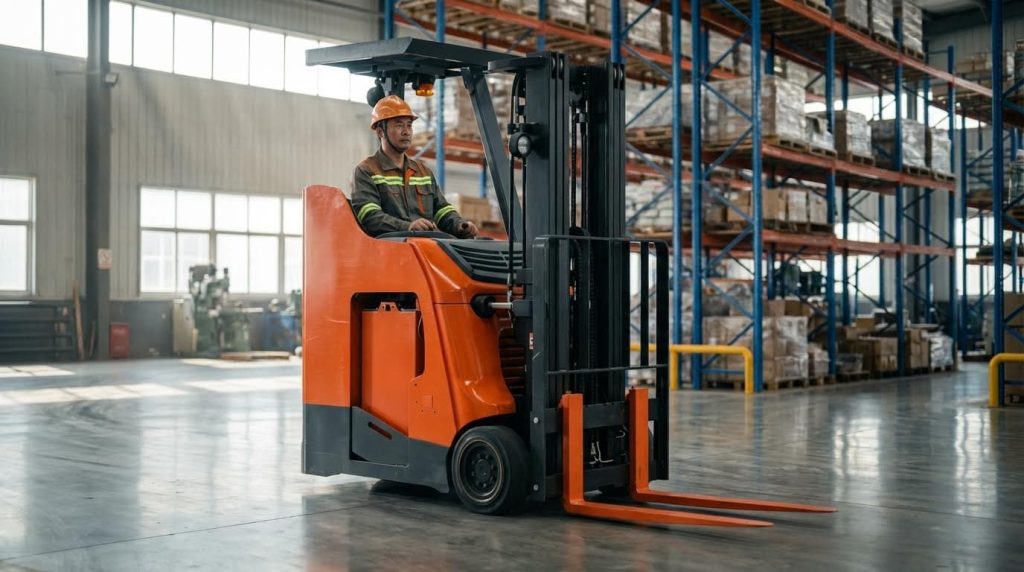
Telehandler stability relied on predictable geometry, controlled boom motion, and strict adherence to capacity limits. Operators who understood how loads, reach, and terrain interacted could prevent tip-overs and structural overloads while maintaining high productivity.
Stability Triangle, Center Of Gravity, And Tip-Over Risk
The telehandler stability triangle was defined by the two front wheels and the rear-axle pivot. The combined center of gravity of machine and load had to remain inside this triangle to avoid overturning. Adding a load shifted the center of gravity forward; raising the boom moved it upward and rearward, effectively shrinking the usable stability envelope. Side slopes, sudden steering inputs, or suspended loads could move the center of gravity outside the triangle, causing lateral or longitudinal tip-over. Operators mitigated this risk by keeping loads low, avoiding abrupt movements, and never exceeding the rated load for the given boom angle and extension.
Load Charts, Capacity Limits, And Reach Planning
Telehandler load charts provided the only reliable reference for safe lifting capacity at specific boom angles and extensions. These charts assumed firm, level ground, centered loads, matched forks, and properly inflated tires in good condition. Operators planned lifts by first confirming load mass, then checking the chart for the required vertical height and horizontal reach, performing a no-load test to verify geometry. Maximum allowable load was always the lowest value among the telehandler rating, attachment plate, fork rating, and the load chart. Operating without the correct attachment-specific load chart in the cab violated regulatory requirements and significantly increased tip-over risk.
Effects Of Terrain, Slopes, Wind, And Ground Conditions
Even a 1° side slope or minor surface irregularity could reduce stability when the boom was extended. Capacity charts typically assumed firm, level ground; soft soil, backfilled trenches, or partially cured concrete reduced bearing capacity and increased overturning risk. Wind loads on large, panel-type loads shifted the effective center of pressure and could induce unexpected boom and chassis movements. Icy or wet surfaces, low tire pressure, or worn tread reduced traction and made steering corrections more abrupt, further destabilizing the machine. Best practice required leveling the frame before lifting, confirming stabilizers contacted firm ground, and keeping travel speeds low on marginal surfaces.
Boom Positioning, Travel Height, And Dynamic Loads
Boom position strongly influenced both static and dynamic stability. A low, retracted boom with the load close to the chassis maximized the stability margin during travel. Raising the boom or extending it forward increased the overturning moment and reduced the effective width of the stability triangle, especially during braking or steering. Dynamic effects from sudden starts, stops, or direction changes amplified load swing, particularly with suspended or offset loads. Operators therefore traveled with loads as low as practicable without dragging, avoided moving with the boom raised above about 1.2 m to 1.5 m, and never used frame leveling or outriggers once a load was elevated above roughly 1.2 m; instead, they lowered the load, adjusted, and then re-lifted.
Safe Operating Practices For Lifting And Travel
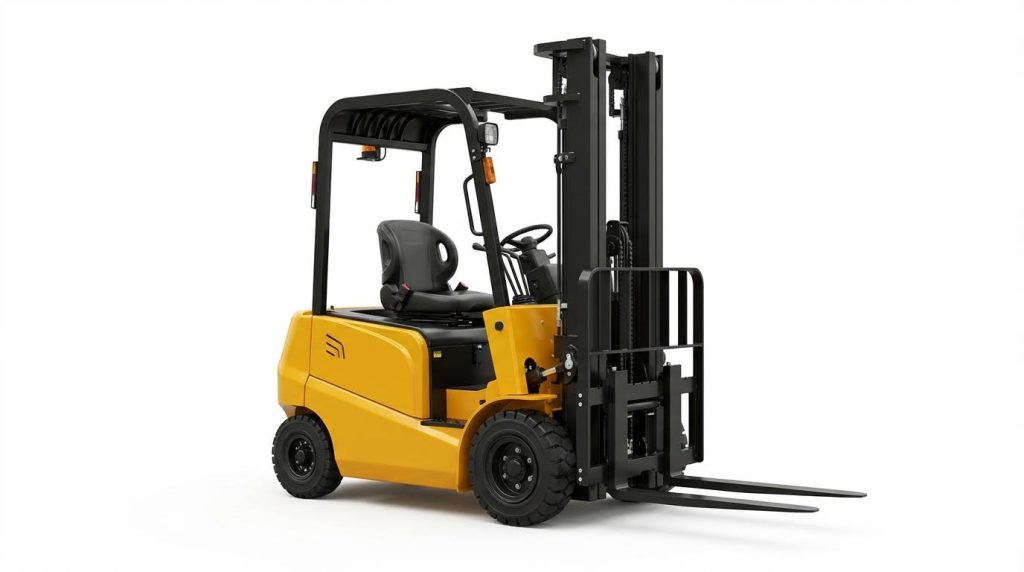
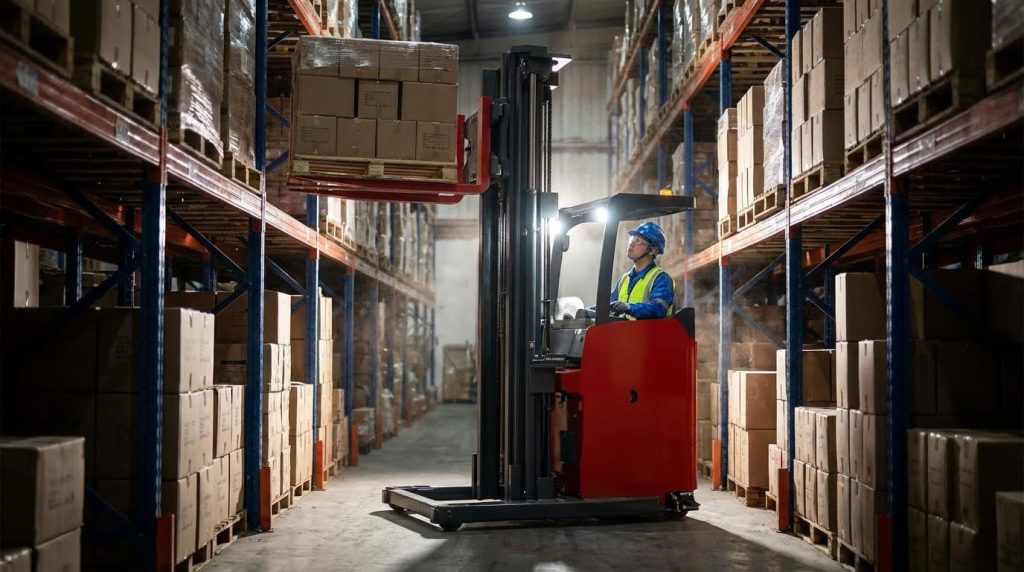
Safe telehandler operation on industrial sites depended on disciplined procedures for inspection, lifting, and travel. Operators reduced incidents when they combined formal training, structured checklists, and strict adherence to load charts and site rules. This section described practical methods to control risk while maintaining productivity.
Pre-Use Walkaround And Jobsite Hazard Assessment
Operators started each shift with a systematic walkaround inspection. They checked tires for cuts, cracks, and correct inflation, because underinflated or damaged tires reduced stability and traction on concrete. They inspected forks, carriage, boom, and attachments for cracks, bent sections, loose pins, and missing locking devices. Hydraulics, hoses, and tubelines required close attention for leaks, abrasion, or damaged fittings, since leaked oil created slip hazards on floors and indicated potential component failure.
Inside the cab, operators verified that seatbelt, horn, lights, gauges, backup alarm, wipers, and load charts were present and functional. They confirmed that steering, service brakes, and parking brake operated correctly during a short function check. On the jobsite, they walked the planned travel path and loading zones, identifying soft ground, side slopes, ramps, overhead obstructions, and weak concrete edges or corners. They noted exclusion zones, pedestrian routes, and nearby power lines, then adjusted their operating plan, speed, and load paths to keep adequate separation and avoid unstable surfaces.
Load Positioning, Fork Setup, And Attachment Changes
Correct load positioning started with matching the attachment to the load type, size, and weight. Operators adjusted fork spacing so both forks supported the load evenly, with the load centered laterally and placed as close as possible to the carriage. They checked that forks were a matched pair with adequate capacity and that the attachment identification plate, fork ratings, telehandler rating, and load chart all supported the planned lift. The effective capacity equaled the lowest rating among these sources.
Before lifting, operators verified that the boom and chassis were level using the frame-level indicator. They lifted slightly to perform a test raise, confirming boom angle and extension stayed within the load chart envelope for the required height and reach. Attachment changes followed manufacturer procedures only, using designated locking pins, quick-couplers, and hydraulic connections. After each change, they verified positive engagement, checked for hydraulic leaks, and ensured the correct capacity chart for that attachment was available in the cab. Operating without the proper chart or with unapproved attachments increased the risk of overloading and tip-over and violated regulatory expectations.
Travel Paths, Spotters, And Work Around People And Power Lines
Safe travel required planning and communication. Operators mapped their routes to avoid steep slopes, soft ground, and areas where the concrete slab had reduced thickness or recent repairs. They traveled with the load as low as practical, tilted slightly back when on forks, and maintained slow, deliberate movements to limit dynamic forces on the boom and chassis. They avoided traveling with the boom raised above approximately 1.2 m unless required in a controlled area, because higher loads raised the combined center of gravity and reduced stability.
When visibility was restricted by the load, structure, or lighting, operators used a trained spotter with clear hand signals or radio communication. They kept pedestrians out of loading zones using barriers, signage, or controlled access and relied on reversing alarms, mirrors, and cameras where fitted. Around overhead power lines, they established exclusion distances based on voltage, used spotters dedicated to line clearance, and avoided boom movements that could breach the safe approach boundary. They never used the telehandler to lift people unless using an approved order picking machines with procedures that kept the operator at the controls and prevented unintended movement.
Parking, Shutdown, And Emergency Procedures
Proper shutdown procedures reduced unintended movement and damage. At the end of a task, operators parked on firm, level ground away from traffic lanes, excavation edges, and drains. They lowered the forks or attachment fully to the ground, neutralized the transmission, applied the parking brake, and centered the steering if possible. They then shut down the engine, followed any required cool-down period, removed the ignition key, and exited using three points of contact.
Emergency procedures formed part of operator training and site induction. In the event of hydraulic failure, brake loss, or suspected structural damage, operators stopped the machine as straight and level as possible, lowered the load if safe, applied the parking brake, and shut down the engine. They secured the area, prevented others from approaching the machine or suspended load, and reported the defect according to site escalation rules. For contact with overhead power lines, operators stayed in the cab if no fire occurred, warned others to keep clear, and waited for power isolation by qualified personnel before exiting. These disciplined responses limited secondary injuries and equipment damage while supporting regulatory compliance.
Inspection, Maintenance, And Digital Monitoring
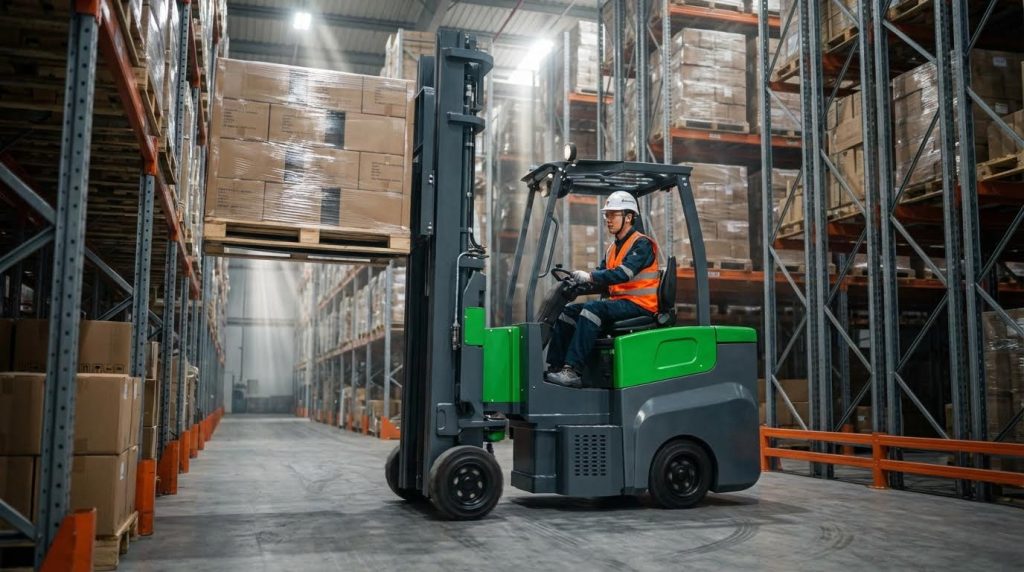
Inspection, maintenance, and digital monitoring formed the backbone of reliable telehandler operation on industrial sites. Structured checklists, hour-based service intervals, and data-driven tools reduced failures and extended asset life.
Daily Checklists And Critical Component Inspections
Daily checklists provided a standardized pre-use protocol that highlighted emerging defects before they became failures. A thorough walkaround typically covered safety decals, forks, carriage, tires, hydraulic hoses, mirrors, windows, and structural elements of the boom. Operators verified cab functions such as seatbelts, gauges, horn, lights, wipers, backup alarm, steering, service brakes, and parking brake. They also confirmed that load charts were present and legible, and that the hydraulic system could extend, retract, lift, and lower the boom without leaks. Fleets that implemented disciplined daily inspections reported up to 80% fewer failures and markedly lower downtime, because issues like tire cuts, loose wheel nuts, leaking hoses, and cracked forks were detected early. Effective programs required simple tools such as checklists, pressure gauges, visual wear indicators, and durable mounts, combined with clear escalation rules when defects exceeded thresholds.
Hour-Based Preventive Maintenance Intervals
Hour-based preventive maintenance aligned service tasks with actual machine usage, which improved component life and safety. Typical programs specified lubrication of axle pivots, boom pivots, and cylinder pivots with lithium-based grease after 50 operating hours, along with checks of hydraulic hoses and connections. At 100 hours, technicians usually inspected battery electrolyte levels, topped up with distilled water, verified wheel nut torque, and lubricated drive shaft joints. Around 250 hours or annually, they checked alternator and air-conditioning belt tension and greased restraint bar mechanisms. At 500-hour or six‑month intervals, fleets replaced engine oil and filter, fuel filter, hydraulic or hydrostatic filters, and axle and gearbox fluids to maintain viscosity and contaminant control. At 1 000 hours or yearly, they typically renewed hydraulic fluid, flushed the cooling system with a 50/50 ethylene glycol mixture rated to −30 °C, and inspected boom wear pads, pivot pins, and bushings. These structured intervals reduced unexpected breakdowns and supported regulatory compliance.
Integrating Checklists With CMMS, Telematics, And AI Tools
Digital integration transformed paper checklists into actionable maintenance intelligence. Mobile checklist applications allowed operators to capture defects with photos, meter readings, and standardized severity codes, then pushed this data into CMMS or enterprise asset management systems via REST APIs or webhooks. This integration automatically generated work orders, updated hour meters, and triggered notifications when critical components, such as brakes or hydraulic systems, showed anomalies. Telematics feeds added real‑time machine data, including utilization, fault codes, and location, which improved scheduling of preventive maintenance and reduced unplanned downtime. Aggregating checklist and telematics data in the cloud enabled analytics and machine learning to identify recurring failure modes, optimize inspection content, and refine tolerances. Fleets that adopted such systems reported substantial reductions in downtime and improved longevity, while maintaining full traceability for audits and safety investigations.
Training Operators For Condition Reporting And Escalation
Operators played a central role in condition monitoring, so targeted training on inspection and reporting procedures remained essential. Effective programs typically included 4–6 hours of instruction on pre-start walkarounds, defect classification, photo documentation, meter entry, and electronic signatures. Training emphasized how to distinguish critical defects, such as structural cracks or hydraulic leaks, from minor issues, and when to escalate findings to supervisors or maintenance teams. Hands-on practice with the actual checklist tools and telehandler models reinforced correct behaviors and reduced inspection variability. Ongoing coaching, spot audits, and feedback loops maintained accountability and ensured that operators did not bypass or rush inspections under schedule pressure. When combined with formal telehandler theory training aligned with OSHA, ANSI, and CSA standards, this approach created a robust safety culture and reliable data pipeline for predictive maintenance.
Summary And Implementation Guidance For Telehandlers
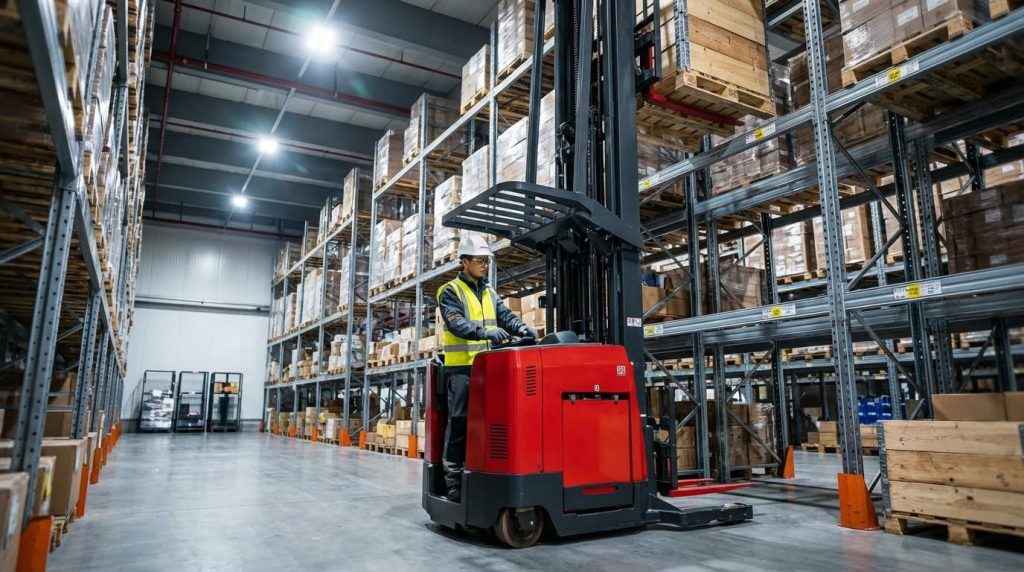
Safe, efficient telehandler operation on industrial sites required an integrated approach that combined stability control, disciplined operating practices, and structured maintenance. Core concepts such as the stability triangle, center of gravity movement, and strict adherence to load charts defined the safe working envelope for every lift. Operators who kept loads low, centered, and within rated reach, while accounting for terrain, wind, and tire condition, consistently reduced tip-over and struck-by risks.
In practice, high-performing fleets embedded safety into daily routines. Pre-use walkarounds, jobsite hazard assessments, and careful route planning limited exposure to weak concrete, blind spots, and overhead power lines. Standardized procedures for attachment changes, travel around pedestrians, and controlled shutdown ensured repeatable, compliant operation aligned with OSHA, ANSI, and CSA requirements. Online and practical training, refreshed on a three-year cycle or better, helped operators maintain competence with load charts, balance principles, and emergency responses.
Inspection and maintenance programs underpinned long-term reliability. Structured daily checklists, supported by hour-based preventive tasks at 50, 100, 250, 500, and 1,000 operating hours, extended component life and minimized unplanned downtime. When integrated with CMMS, telematics, and analytics, checklist data evolved into a predictive maintenance framework, enabling early detection of hydraulic, structural, and tire issues.
Going forward, sites could strengthen telehandler performance by combining rigorous training, digital monitoring, and clear site rules for lifting and travel. A balanced strategy recognized both the productivity benefits of telehandlers and the severe consequences of instability or overload. Organizations that treated stability principles, operator discipline, and data-driven maintenance as equal pillars achieved safer operations, higher availability, and more predictable lifecycle costs for their telehandler fleets.