Stand-up forklifts operated in dense warehouse environments introduced specific stability and tip-over risks that engineers and safety managers had to control systematically. This article examined the engineering basis of the stand-up truck stability envelope, including center-of-gravity behavior, load rating data, and facility layout constraints. It then detailed operational controls that reduced tip-over probability, from pre-shift inspections and load handling to speed management, gradients, and technology-based monitoring. Finally, it outlined OSHA-aligned tip-over response, post-incident procedures, and training strategies that helped organizations lower injury rates and legal exposure while improving overall materials-handling reliability.
Engineering The Stand-Up Forklift Stability Envelope
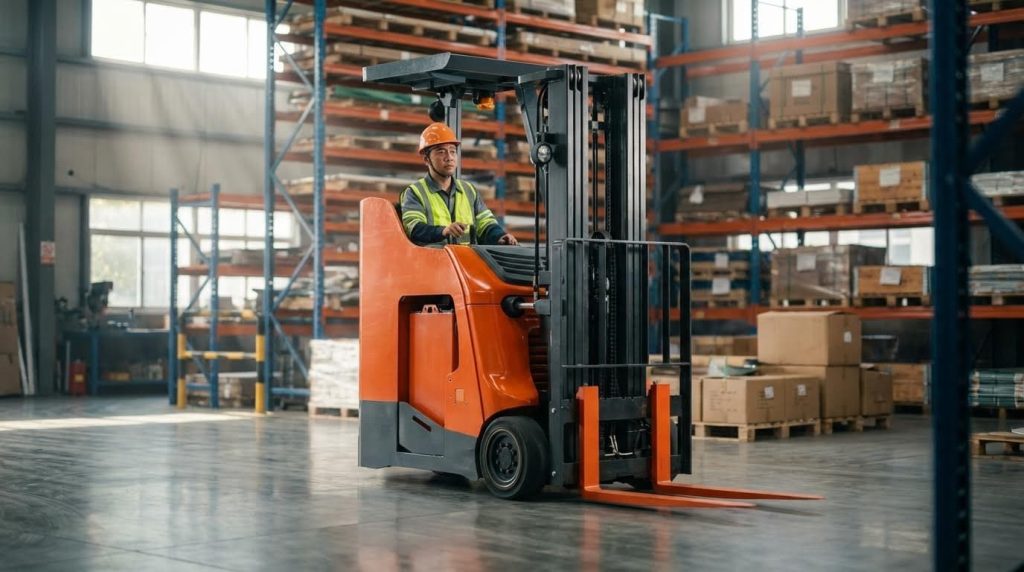
Engineering the stability envelope for stand-up forklifts required a detailed understanding of geometry, load paths, and operating conditions. Designers balanced compact dimensions with strict safety margins against lateral and longitudinal tip-over. Stability engineering linked directly to operator training, facility layout, and procedural controls. A well-engineered truck still relied on disciplined operation and maintenance to keep tip-over risk acceptably low.
Stability triangle and center-of-gravity fundamentals
The stability triangle defined the basic tip-over limits for counterbalanced forklifts. Its vertices lay at the contact patches of the front drive wheels and the pivot point of the rear support. The combined center of gravity of truck and load had to remain inside this triangle during all maneuvers. Raising the mast, extending the load center, braking sharply, or cornering aggressively shifted the center of gravity toward the triangle edges. On stand-up trucks, the narrower chassis and higher typical mast heights reduced lateral stability margins, so even modest side loads or uneven floors could move the center of gravity outside the triangle. Engineering analyses therefore considered dynamic effects, not only static loading, when defining rated capacities and operating limits.
Design differences: stand-up vs sit-down trucks
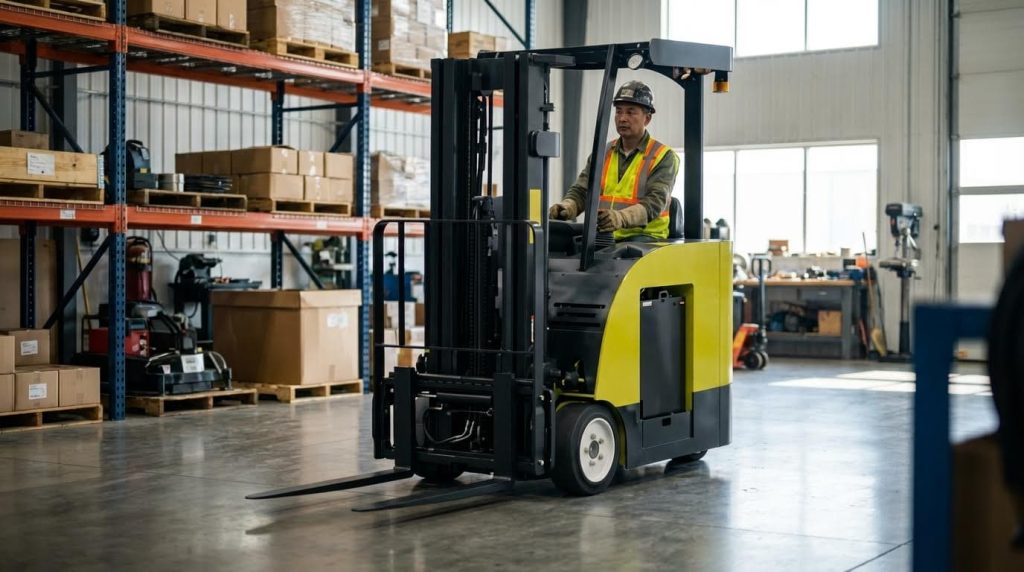
Stand-up forklifts used a different operator protection and stability strategy than sit-down trucks. The operator stood within a rear-entry compartment, protected by sidewalls and an overhead guard, rather than relying on a seat and belt. Chassis geometry typically favored tight turning radii for narrow aisles, which reduced the lateral base width compared with many sit-down counterbalanced models. This configuration increased sensitivity to abrupt steering inputs and high cornering speeds. Designers compensated using lower base capacities, different counterweight distributions, and specific guidance on how operators should step rearward out of the compartment during a tip-over. In contrast, sit-down trucks relied on the operator staying inside the protective frame and using the seat belt as primary restraint.
Load rating plates, mast height, and attachments
Load rating plates provided the engineering link between the designed stability envelope and day-to-day operation. These plates specified maximum allowable mass at defined load centers and mast heights, based on testing and calculations. As mast height increased, the allowable load decreased because the elevated center of gravity created a larger overturning moment. Attachments such as clamps, rotators, or extended forks added mass forward of the carriage and shifted the base center of gravity, which required derating the truck capacity. Engineers validated these deratings using combinations of static tilt tests and dynamic simulations. Operators needed to read and follow the specific rating plate installed on their truck, especially when attachments or non-standard forks were fitted, to avoid exceeding the engineered stability limits.
Facility layout: aisles, gradients, and floor conditions
The stability envelope of a stand-up forklift extended beyond the truck and into the facility layout. Narrow aisles, tight intersections, and blind corners increased lateral tip-over risk when operators turned with elevated loads. Gradients at ramps and loading docks altered the effective stability triangle, shifting the combined center of gravity toward the downhill edge. Engineering guidelines therefore limited allowable slopes and specified that stand-up trucks should travel slowly and with the load oriented to maintain control. Floor conditions also played a critical role; potholes, broken expansion joints, and wet or contaminated surfaces created sudden dynamic shocks and traction loss. Well-designed warehouses used marked travel lanes, controlled gradients, high-friction floor finishes, and strict housekeeping standards to preserve the stability margins that the forklift manufacturer had originally engineered into the truck. Operators often utilized equipment like semi electric order picker or warehouse order picker to navigate such environments efficiently. Additionally, tools like the scissor platform lift ensured safe elevation of goods in constrained spaces.
Operational Controls To Prevent Stand-Up Tip-Overs
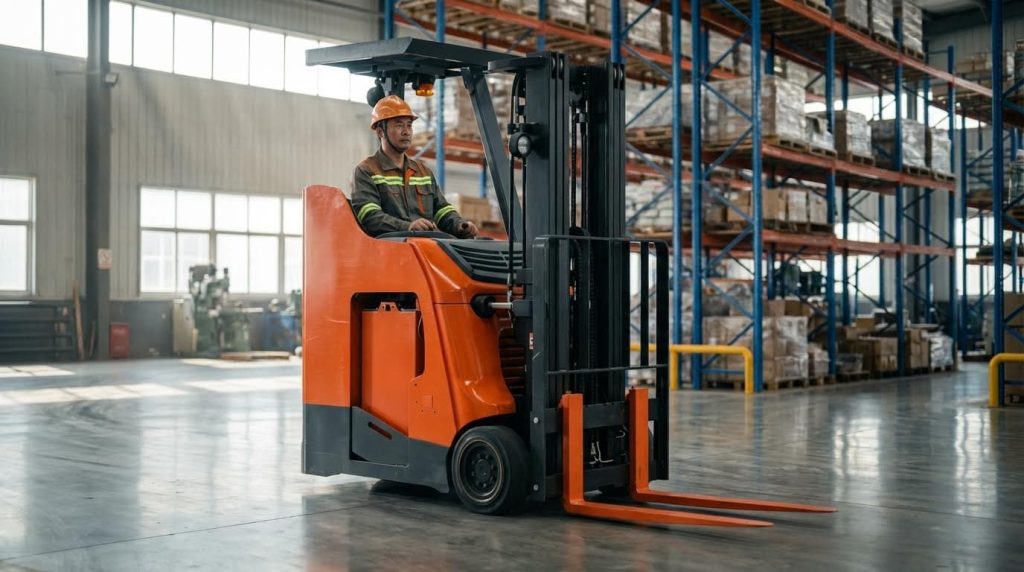
Operational controls formed the second layer of protection after engineering design. Effective controls translated stability theory into predictable, repeatable behavior on the warehouse floor. They combined disciplined inspections, codified driving rules, engineered traffic layouts, and data-driven monitoring. When implemented together, they significantly reduced stand-up forklift tip-over probability and severity.
Pre-shift inspection and functional safety checks
Pre-shift inspections ensured that a stand-up forklift entered service in a safe, known condition. Operators checked fluid levels, looked for leaks or cracks, and verified mast chains visually without placing hands between links. They inspected forks for wear, deformation, and correct locking, and confirmed that load backrests and finger guards functioned correctly. Tyres required careful review for pressure, cuts, and bulges, because degraded tyres altered stability and stopping distance. Operators also tested brakes, steering, hydraulic lift and tilt, and verified horns, alarms, lights, and seat or presence-detection systems. A documented checklist and logbook created traceability, supported regulatory compliance, and helped maintenance teams detect patterns before failures led to tip-overs or loss-of-control incidents.
Load handling, speed limits, and cornering practices
Correct load handling maintained the combined center of gravity inside the stability envelope. Operators centered loads on the forks, avoided exceeding rated capacity at the specified load center, and tilted the mast slightly back during travel. They kept forks low to the floor when moving, which reduced overturning moments if the truck stopped or turned suddenly. Defined speed limits by zone, enforced through procedures or electronic limiters, reduced lateral forces during cornering. Operators slowed before entering turns, steered smoothly, and avoided abrupt direction changes, especially with elevated loads. These practices reduced both lateral and longitudinal tip-over risk, particularly in narrow aisles where turning radii were tight and clearance to racking or structures was minimal.
Gradients, docks, and mixed traffic with pedestrians
Gradients and dock interfaces significantly influenced stand-up forklift stability. Operators traveled slowly on ramps, maintained loads upgrade when possible, and avoided turning on slopes to prevent side tip-overs. On steep descents, reversing under control reduced the tendency for the load to drive the truck forward and destabilize it. At loading docks, edge protection, wheel chocks, and dock lock systems limited the chance of sudden level changes or trailer movement. In mixed-traffic zones, marked pedestrian walkways, intersection mirrors, and clear right-of-way rules reduced collision and evasive-manoeuvre tip-overs. Clean, dry floors without debris or potholes preserved tyre grip and predictable braking distances, further stabilizing the truck during emergency stops or avoidance actions.
Telematics, sensors, and AI-driven safety systems
Telematics and sensor systems provided continuous feedback on how stand-up forklifts operated in real environments. Impact sensors, speed logging, and access control allowed supervisors to correlate harsh events with locations, shifts, or specific tasks. Proximity sensors, cameras, and pedestrian-detection systems increased situational awareness, especially at blind corners and high-traffic crossings. AI-driven analytics identified patterns such as repeated overspeed on ramps, frequent near-miss braking, or chronic overloading relative to rated capacity. Fleet management platforms then supported targeted interventions, including parameter adjustments, refresher training, or layout changes. When integrated with maintenance scheduling, these systems also triggered preventive service based on actual usage, helping keep critical stability-related components within design performance throughout the truck’s life.
Tip-Over Response And Post-Incident Procedures
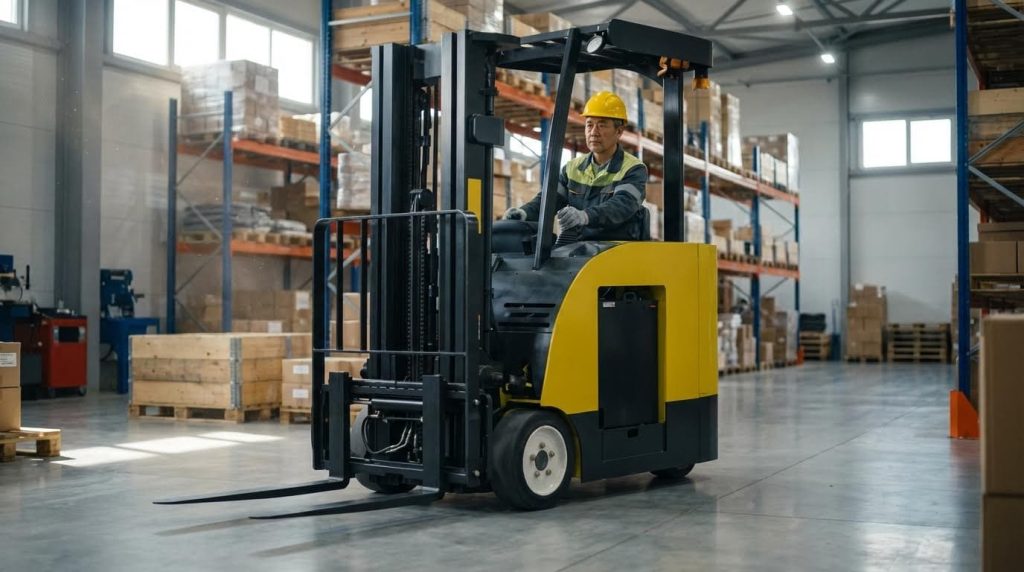
Tip-over response for stand-up forklifts required a structured, rehearsed approach that protected operators and bystanders. Facilities that integrated OSHA-aligned procedures, clear communication, and disciplined documentation typically reduced repeat incidents. This section described how to react during a tip-over, stabilize the scene, investigate rigorously, and embed learning through training and simulation.
OSHA-aligned tip-over response for stand-up trucks
OSHA guidance distinguished between sit-down and stand-up trucks because escape paths and protective structures differed. For rear-entry stand-up trucks, the recommended response during a lateral or longitudinal tip-over was to step backward clear of the truck, not sideways into the fall path. Operators needed to keep three points of contact while exiting, avoid jumping toward the direction of the tip, and move to a safe distance once clear. Training programs had to explain the physics of tip-overs, show video examples, and drill these actions until they became automatic under stress.
Emergency actions, area control, and first response
Immediately after a suspected tip-over, the operator or nearest witness had to stop all nearby truck movements and lower any elevated loads to the floor if safe to do so. Securing the truck with the parking brake, switching off power, and removing the key reduced secondary movement risks. The area then required rapid control: cordoning off the scene, isolating energy sources, and preventing pedestrian entry. First responders on site assessed injuries, provided first aid within their competence, and called emergency medical services for any suspected fractures, crush injuries, or loss of consciousness. Supervisors coordinated communication, ensured alarms or horns warned nearby personnel, and initiated the facility’s written emergency response plan.
Incident reporting, root-cause analysis, and OSHA logs
Post-incident, the organization had to document the event in line with OSHA reporting and recordkeeping requirements. This included capturing exact date and time, truck type, load characteristics, floor conditions, and environmental factors such as gradients or visibility. Investigators documented the scene with photographs, sketches, and preserved telematics data where available, then interviewed the operator and witnesses promptly while memories remained fresh. A structured root-cause analysis, such as a fault-tree or 5-Why method, identified underlying issues like inadequate training, incorrect truck selection, poor maintenance, or layout deficiencies. The findings informed corrective actions, which were logged, tracked to completion, and reflected in the OSHA 300 and related records when the case met reporting thresholds.
Training, drills, and digital twin-based simulations
Effective tip-over management relied on repeated, scenario-based training rather than a single classroom session. Facilities ran periodic drills that walked operators and supervisors through alarm raising, area isolation, first response, and documentation steps under timed conditions. Advanced operations used digital twin models of their warehouses to simulate gradients, aisle widths, and traffic patterns, then replayed virtual tip-over scenarios to test procedures. These simulations allowed safety teams to adjust speed limits, signage, and traffic rules before physical changes, improving cost-effectiveness. Integrating drill outcomes and simulation insights into refresher training kept procedures current, aligned with OSHA guidance, and adapted to evolving layouts and fleet technologies. For facilities using specialized equipment like walkie pallet truck, manual pallet jack, or low profile pallet jack, tailored training ensured operators were prepared for unique handling challenges.
Summary: Reducing Stand-Up Forklift Tip-Over Risk
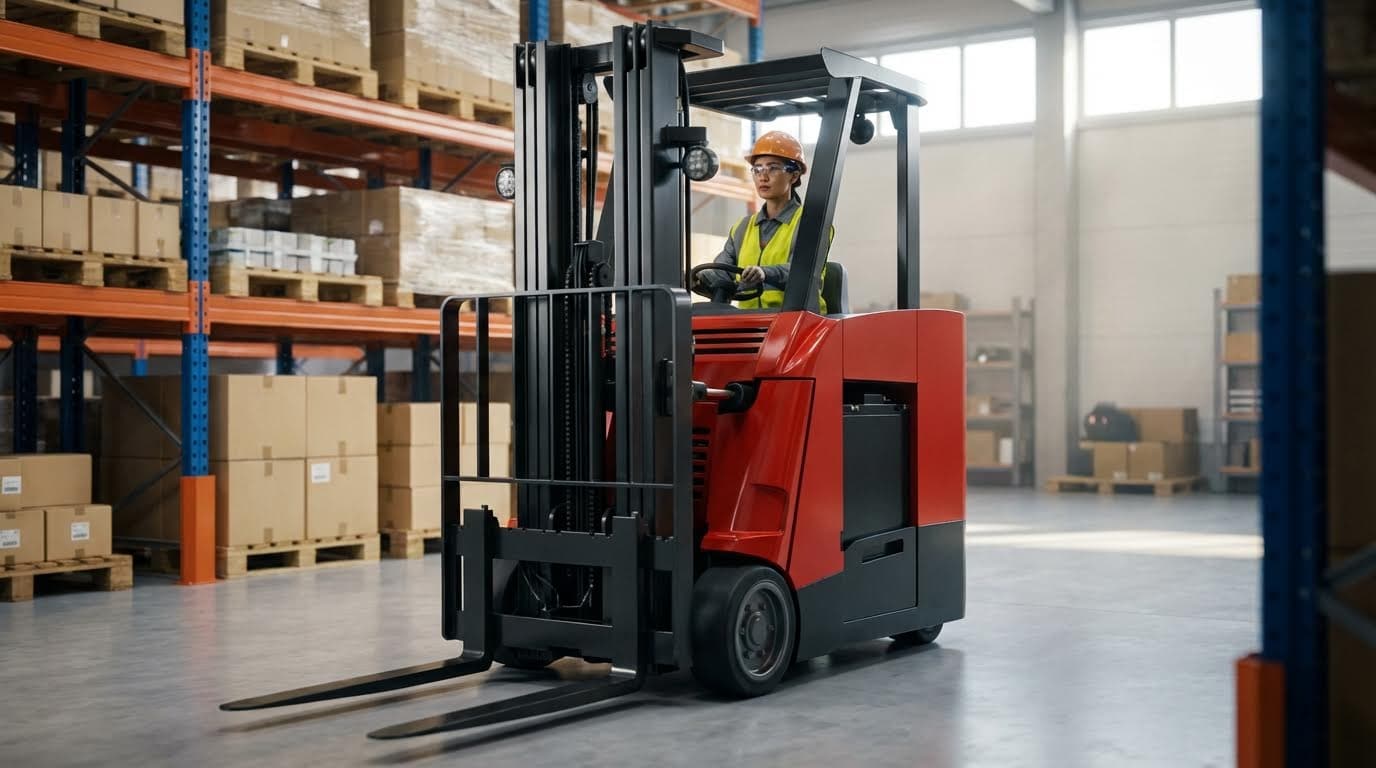
Reducing stand-up forklift tip-over risk required a combined engineering, operational, and organizational approach. Stability control started with correct truck selection, adherence to load rating plates, and layouts that limited steep gradients, tight turning radii, and poor floor conditions. Robust maintenance programs, including scheduled services every 250–500 operating hours and biannual professional inspections, kept braking, hydraulic, and mast systems within design performance, which reduced mechanical contributors to instability.
On the operational side, mandatory operator training and certification aligned with regulatory guidance significantly lowered incident rates. Effective programs covered stability triangle concepts, load positioning, speed management, cornering, dock approaches, and mixed-traffic interactions with pedestrians. Daily pre-shift inspections of brakes, tyres, mast chains, forks, hydraulics, and safety devices such as seatbelts, horns, and alarms helped identify emerging hazards before they produced rollovers or dropped-load events. Clear site rules, marked pedestrian walkways, speed limits, and prominent signage reinforced this behavior in busy warehouses.
Technology trends pointed toward broader deployment of telematics, proximity sensors, cameras, and fleet management systems. These tools enabled real-time monitoring of harsh cornering, overspeed, overloading, and near-miss patterns, supporting data-driven corrective actions. Digital twin simulations and structured drills improved operator responses during emergencies, including correct behavior in tip-overs and post-incident area control and reporting. Future stand-up forklift safety strategies would likely integrate these technologies with stronger safety cultures, closing gaps between written procedures and actual practice while maintaining compliance with evolving regulatory expectations.