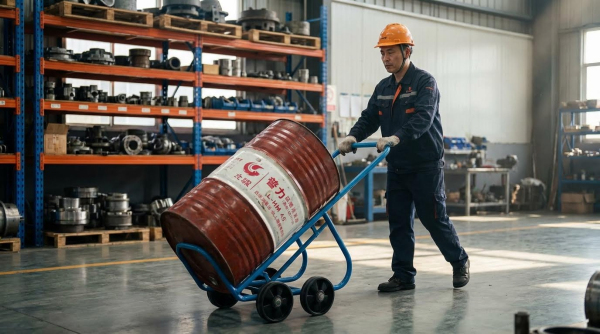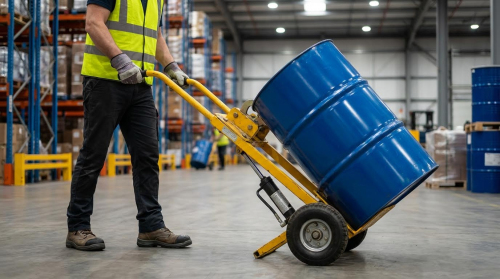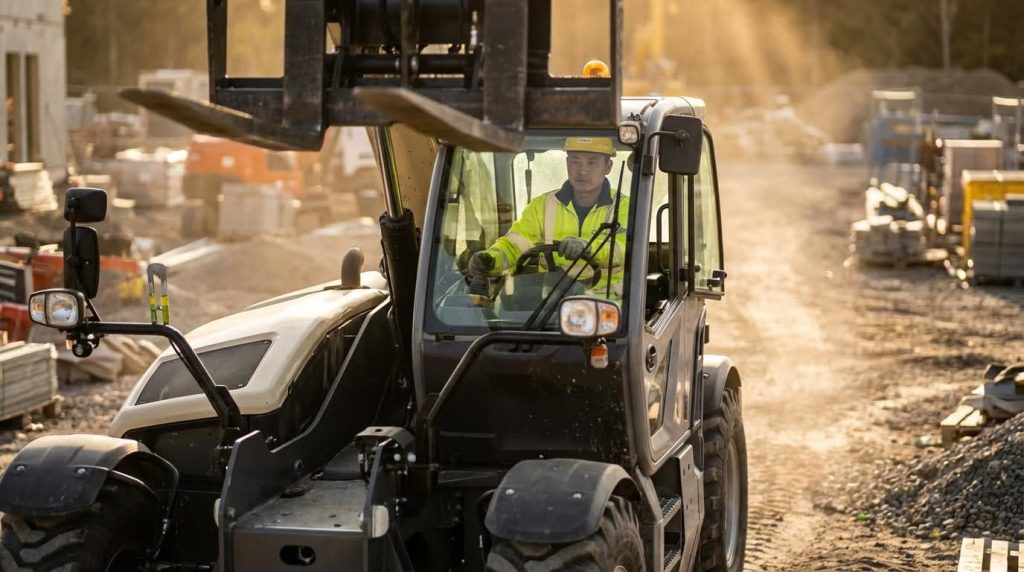
Telehandler forklifts and standard forklifts shared similar lifting roles but relied on fundamentally different architectures. This article examined how telescopic booms contrasted with mast-and-fork layouts, and how these choices affected stability, reach, and terrain capability. It then compared performance, duty cycles, and application domains across construction, agriculture, and warehousing, including safety and regulatory classifications. Finally, it addressed equipment selection, lifecycle cost, emerging digital technologies, and energy-efficient operation to support informed, engineering-driven decisions between telehandlers and conventional forklifts.
Core Design: Telehandler Vs. Standard Forklift
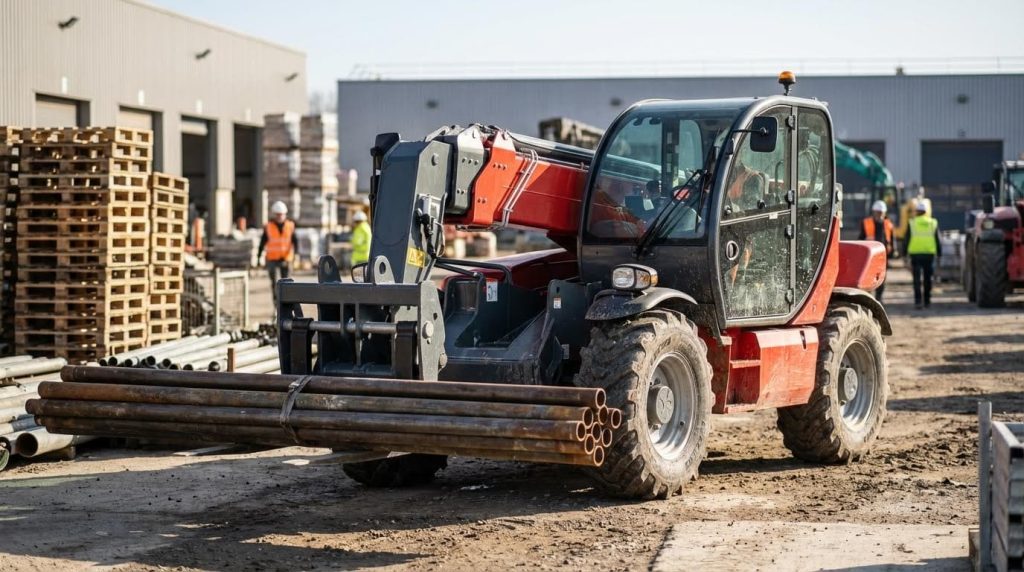
Core design differences between telehandlers and standard forklifts dictated their engineering trade-offs, performance envelopes, and safe use domains. Telehandlers integrated a telescopic boom and rough-terrain chassis, while standard forklifts relied on a mast-and-fork assembly optimized for compact, stable indoor handling. Understanding these structural and kinematic distinctions allowed engineers and fleet managers to match machine architecture to site conditions, lift geometry, and regulatory constraints.
Telescopic Boom Architecture And Kinematics
The telehandler used a telescopic boom with multiple nested sections that extended via hydraulic cylinders and chains. This boom provided both vertical and horizontal reach, enabling load placement above obstacles or set-back from the machine’s base. Kinematic behavior depended on boom angle, extension length, and slew, which together changed the load’s radius and effective moment arm. Engineers had to design boom sections, pins, and pivot points for high bending moments and torsion, especially at maximum outreach. The boom’s variable geometry required integrated sensors and load charts that derated capacity as radius and height increased.
The boom pivoted high on the chassis, which raised the load line and shifted the combined center of gravity as it extended. This dynamic shift made telehandlers more sensitive to side slopes and wind loads compared with vertical-only lifts. Designers compensated using long wheelbases, outriggers on some models, and robust counterweights. The architecture enabled versatile attachments at the boom head, but every attachment changed the load center and required dedicated capacity curves.
Mast-And-Fork Layout In Conventional Forklifts
Standard forklifts used a vertical mast assembly with staged rails, chains, and hydraulic cylinders to move the carriage and forks up and down. The mast provided primarily vertical motion, with limited tilt for load leveling and stacking. Because the load stayed close to the front axle and frame, the moment arm remained relatively short compared with a telehandler at reach. This geometry improved inherent stability and simplified capacity calculations under rated conditions.
Forklifts concentrated mass low in the chassis using integrated counterweights behind the rear axle. This layout kept the center of gravity inside a well-defined stability triangle during normal operations on level, smooth floors. The compact mast-and-fork design allowed tight turning radii and efficient operation in narrow aisles. However, the fixed mast height and lack of horizontal outreach restricted access to elevated or set-back locations that telehandlers could service. Attachments such as sideshifters or clamps adjusted functionality but did not alter the fundamental vertical-lift architecture.
Stability, Center Of Gravity, And Load Charts
Both telehandlers and forklifts relied on strict control of the combined center of gravity to prevent tip-over. In forklifts, the stability model used a triangular base between the front wheels and the pivoting rear axle. As long as the resultant load vector stayed within this triangle, the machine remained stable on level ground. Capacity plates specified maximum mass at a defined load center, typically 500 mm, and at specific mast heights and tilt angles.
Telehandlers faced more complex stability conditions because boom extension increased the horizontal distance from the front axle to the load. This longer lever arm quickly amplified overturning moments, especially at high boom angles and large radii. Load charts for telehandlers therefore presented capacity as a function of boom angle and outreach, often in a grid or envelope format. Operators interpreted these charts to avoid exceeding limits, and modern machines integrated electronic load management systems that cut out unsafe motions. Side-slope and wind effects had greater impact on telehandlers, so site assessments and derating factors played a larger role in planning lifts.
Rough Terrain Capability Vs. Indoor Maneuverability
Telehandlers used large-diameter tires, high ground clearance, and often all-wheel steering to traverse rough, uneven terrain. Axles with oscillation capability maintained tire contact on irregular surfaces, improving traction and load stability. The chassis geometry and suspension focused on absorbing shocks while keeping the boom and load as stable as practical. This configuration suited construction sites, stone yards, and agricultural fields where surfaces were unpaved and variable.
Standard forklifts prioritized maneuverability on smooth, prepared floors. Smaller solid or cushion tires, low ground clearance, and compact wheelbases enabled tight turns and precise pallet positioning in confined aisles. Their steering geometry and braking systems optimized control on flat concrete, not on deep ruts or loose gravel. Rough-terrain forklift variants existed, but they still lacked the outreach and boom articulation of telehandlers. Consequently, engineers and planners typically assigned telehandlers to outdoor, uneven environments and reserved conventional forklifts for indoor warehousing, manufacturing, and loading dock operations where surface conditions were controlled.
Performance, Reach, And Application Domains
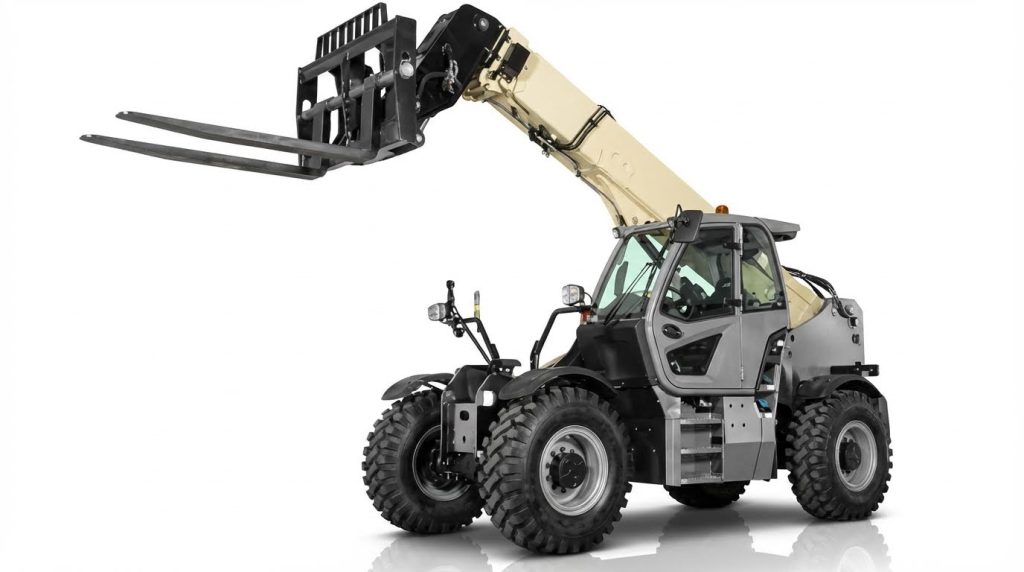
Performance comparisons between telehandlers and standard forklifts depended on reach geometry, terrain, and duty profile. Engineers evaluated vertical height, horizontal radius, and residual capacity together, not as isolated parameters. Application domains then followed naturally from these envelope and stability constraints. Understanding these relationships allowed more accurate fleet specification and risk control.
Vertical And Horizontal Reach: Height, Radius, Capacity
Telehandlers used a telescopic boom to provide both vertical and forward reach from a compact chassis. Typical construction-class units reached 15–17 m vertically and 8–10 m horizontally, whereas standard warehouse forklifts usually stayed below 6 m lift height. Forward reach shifted the load center away from the machine, which reduced allowable capacity as boom angle and extension increased. Load charts quantified this by giving rated capacity as a function of boom length, elevation angle, and slew position. Conventional forklifts, limited to mast height, provided more predictable vertical lifting with higher residual capacity at a given load center, but no meaningful horizontal outreach beyond the fork length.
Attachments, Duty Cycles, And Task Flexibility
Telehandlers supported a broad attachment ecosystem, including forks, buckets, work platforms, bale spikes, and grapple tools. The boom’s kinematics allowed these attachments to service tasks that previously required multiple machines. Engineers specified duty cycles by combining lift frequency, average load, and travel distance over rough terrain, which influenced hydraulic sizing and thermal design. Standard forklifts primarily used pallet forks and occasionally clamps or booms, so their task spectrum focused on palletized goods and repetitive stacking. Telehandlers therefore operated as multi-role assets on mixed-use sites, while forklifts optimized high-throughput, repetitive handling with relatively uniform loads and short, predictable cycles.
Typical Use Cases: Construction, Agriculture, Warehousing
Construction sites relied on telehandlers for placing loads on upper floors, scaffolds, or behind obstacles where a vertical mast could not reach. Their rough-terrain undercarriage and high ground clearance allowed operation on unfinished grades, stone yards, and mining zones. Agriculture used telehandlers to handle silage, grain, and bales, and to service elevated storage or feeding positions with a single machine. Standard forklifts dominated warehouses, distribution centers, and manufacturing plants, where smooth pavements and narrow aisles favored compact wheelbases and tight turning radii. In these indoor environments, the limited mast height still met racking requirements, and the lack of horizontal outreach was not a constraint.
Safety Standards, Training, And Regulatory Classes
Telehandlers fell into rough-terrain reach forklift classifications, often grouped with class 7 industrial trucks. Operators required task-specific training that covered boom dynamics, load chart interpretation, and terrain assessment. Safe operation procedures mandated pre-use inspections, functional tests of all controls, and site risk assessments before movement. Training programs combined classroom instruction with hands-on familiarization and required retraining after performance degradation, long inactivity, or incidents. Standards for related platforms, such as scissor platform lift under ANSI A92 or CSA B354, required that supervisors and occupants understood hazard recognition, fall protection, and machine selection. Forklift operators followed similar regulatory frameworks but with emphasis on mast stability, aisle navigation, and documentation of pre-operation inspections for each shift. Additionally, equipment like the manual pallet jack and walkie pallet truck played crucial roles in optimizing material handling efficiency within these safety guidelines.
Selection, Lifecycle Cost, And Technology Trends
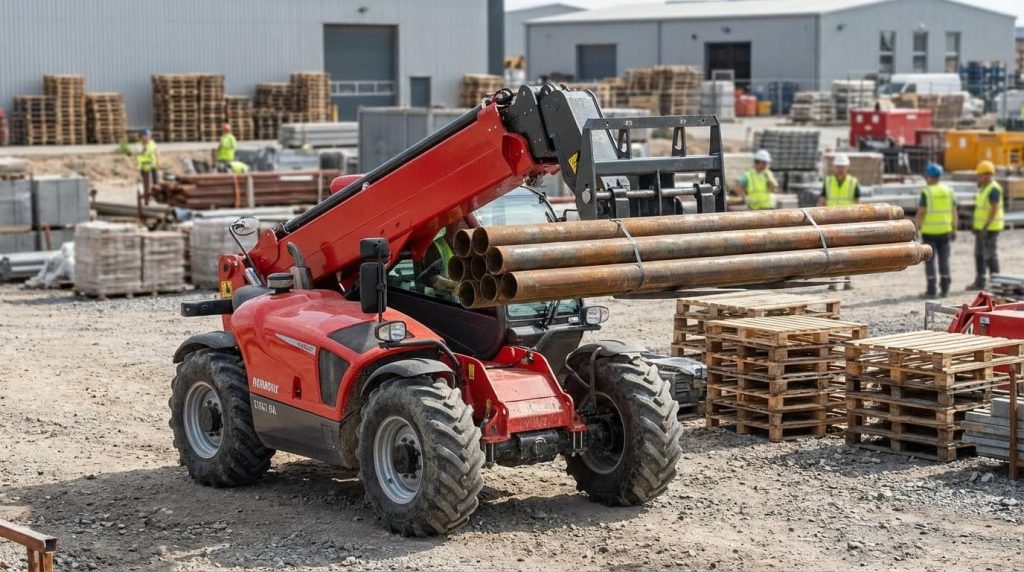
Engineering teams compared telehandlers and standard forklifts using structured selection criteria. They evaluated geometry, duty cycles, terrain, and regulatory constraints before committing capital. Lifecycle cost analysis then incorporated maintenance, downtime, fuel or energy use, and residual value. Recent technology trends, including AI diagnostics and alternative powertrains, further shifted optimal choices for different sites.
Engineering Criteria For Equipment Selection
Engineers first defined the required lift height, reach radius, and rated load for each task. Telehandlers covered applications needing forward outreach or placement over obstacles, such as scaffolds or bulk stockpiles. Standard forklifts suited repetitive pallet handling within fixed rack heights. Selection also considered terrain classification, aisle width, turning radius, and ground bearing pressure to maintain stability and throughput.
Load charts and stability envelopes guided the safe working range for telehandlers, especially at long boom extensions. Forklift mast configuration, including free lift and maximum mast height, constrained indoor layouts and racking design. Engineers checked compatibility with existing attachments, pallets, and load interfaces. They also verified compliance with relevant standards, including OSHA requirements and regional codes for powered industrial trucks and rough-terrain reach trucks.
Maintenance, Downtime Risk, And Lifecycle Economics
Lifecycle cost models treated acquisition price as only one component of total cost of ownership. Telehandlers typically required more complex maintenance due to their telescopic booms, hydraulic circuits, and rough-terrain axles. Standard forklifts usually showed lower parts counts and simpler mast systems, which reduced some service labor hours. However, high-intensity warehouse duty cycles could still drive significant wear on brakes, tires, and hydraulic components.
Planned maintenance schedules used engine hours and calendar intervals for inspections, fluid changes, and filter replacement. For telehandlers, engineers monitored boom wear pads, pivot pins, and steering joints to prevent structural degradation. Unplanned downtime carried large indirect costs, including delayed construction activities or disrupted warehouse flows. Fleet managers compared historical mean time between failures and parts lead times when specifying new machines.
Residual value and replacement intervals also influenced economic decisions. Rough-terrain exposure often accelerated depreciation for telehandlers compared with indoor forklifts. Some operators adopted component replacement strategies, such as proactive hose and belt renewal, to extend service life. Accurate cost tracking per operating hour helped identify when rebuilding or replacing a unit became more economical than continued repair.
AI Predictive Maintenance And Digital Twin Modeling
Recent fleets integrated telematics, sensors, and onboard diagnostics into both telehandlers and forklifts. Vibration, temperature, pressure, and duty-cycle data fed predictive maintenance algorithms. These AI models identified anomaly patterns before visible failures occurred, such as hydraulic leaks or bearing degradation. Maintenance planners then scheduled targeted interventions during low-demand windows, reducing unplanned stoppages.
Digital twin models created virtual representations of machines using structural, kinematic, and hydraulic data. Engineers simulated boom loads, mast deflections, and thermal behavior under representative duty cycles. They validated maintenance intervals and component design margins using these simulations. Over time, feedback from field data refined the models and improved failure predictions.
Predictive systems also optimized spare parts inventory. Algorithms estimated failure probabilities for critical components and recommended stocking levels. This approach reduced capital tied up in inventory while maintaining service readiness. Integration with work-order systems streamlined technician dispatch and documentation of completed tasks.
Energy Efficiency, Powertrains, And Sustainable Operation
Energy strategy became a central factor in equipment selection. Indoor forklifts increasingly used electric powertrains with lithium-ion or lead-acid batteries. These machines eliminated exhaust emissions at the point of use and reduced ventilation requirements. Telehandlers still relied heavily on diesel engines to deliver torque and range on remote or rough-terrain sites. However, hybrid and electric prototypes started to appear for lower-duty or urban projects.
Engineers compared energy consumption in kilowatt-hours per tonne-meter of lifted load. They evaluated idle time, travel distances, and lift frequency to size batteries or fuel tanks. Regenerative braking and lowering functions improved efficiency in some electric forklifts. For diesel units, proper engine sizing, aftertreatment systems, and low-rolling-resistance tires reduced fuel use and emissions.
Sustainability assessments included noise levels, local air quality, and compliance with emissions regulations. Facilities with strong decarbonization targets favored electric forklifts and, where feasible, electrically powered telehandlers or hybrid solutions. Charging infrastructure, grid capacity, and duty-cycle compatibility constrained adoption. Engineers balanced environmental benefits against operational reliability, ensuring that chosen powertrains still met productivity and uptime requirements.
Summary: Choosing Between Telehandlers And Forklifts

Telehandlers and standard forklifts addressed distinct engineering problems, which led to different structural layouts, kinematics, and stability envelopes. Telehandlers used a telescopic boom to provide combined vertical and horizontal reach, rough‑terrain capability, and attachment flexibility, while forklifts relied on a mast-and-fork system optimized for compact, stable vertical lifting in controlled indoor environments. Performance comparisons showed typical lift heights of approximately 6 m for warehouse forklifts and 17 m or more for telehandlers, with the latter maintaining capacity only within strictly defined load charts and boom radii.
From an application standpoint, telehandlers suited construction, mining support, and agriculture, where uneven ground, long outreach, and multi-role attachments justified higher acquisition and training costs. Forklifts remained the primary choice for warehousing, factory intralogistics, and loading docks, where short duty cycles, repetitive pallet handling, and tight-aisle maneuverability dominated requirements. Lifecycle economics depended on utilization profile: high outdoor, multi-task use favored telehandlers, whereas continuous pallet movement on smooth floors favored forklifts with lower fuel burn per tonne-metre and simpler maintenance.
Future developments pointed toward converging technologies: advanced stability control, digital load charts, and AI-based predictive maintenance already improved uptime and safety for both machine types. Integration of telematics, digital twins, and mixed powertrains, including high-efficiency diesel, hybrid, and battery-electric systems, supported lower emissions and better fleet right‑sizing. In practice, engineers should define maximum height and radius, terrain class, attachment needs, and regulatory training obligations first, then evaluate total cost of ownership rather than purchase price alone. A balanced fleet often combined both telehandlers and forklifts, each assigned to tasks that matched its engineered strengths, ensuring safe, efficient, and regulation-compliant material handling across the site.