

If you need to know how to lift a pallet without a forklift, you have multiple safe, engineered options instead of risky manual lifting. This guide compares key equipment types, capacities, and limits so you can match the right non-forklift solution to your loads, floors, and workflows while controlling injury risk and total cost of ownership.
Core Equipment Options For Non-Forklift Pallet Handling

Core equipment options for non-forklift pallet handling give you structured, safe ways to move and lift pallets using compact trucks, jacks, and stackers instead of ride-on forklifts. The right choice depends on distance, lift height, and how to lift a pallet without a forklift safely and repeatedly.
When you plan how to lift a pallet without a forklift, think in two layers: low-lift transport at floor level and vertical lifting into racking or onto machinery. Manual and electric pallet trucks cover floor moves, while high-lift trucks and stackers handle ergonomic or racking heights.
Manual pallet jacks and high-lift pallet trucks
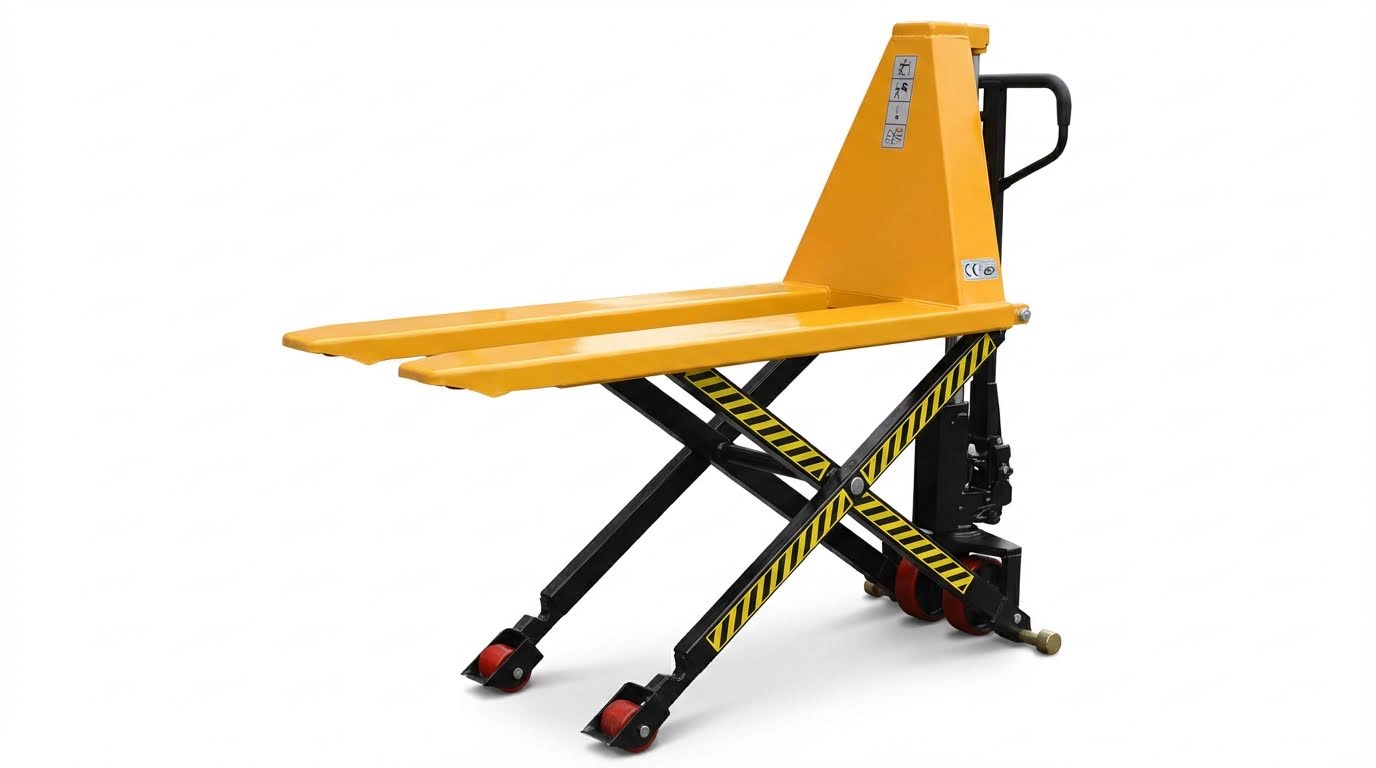
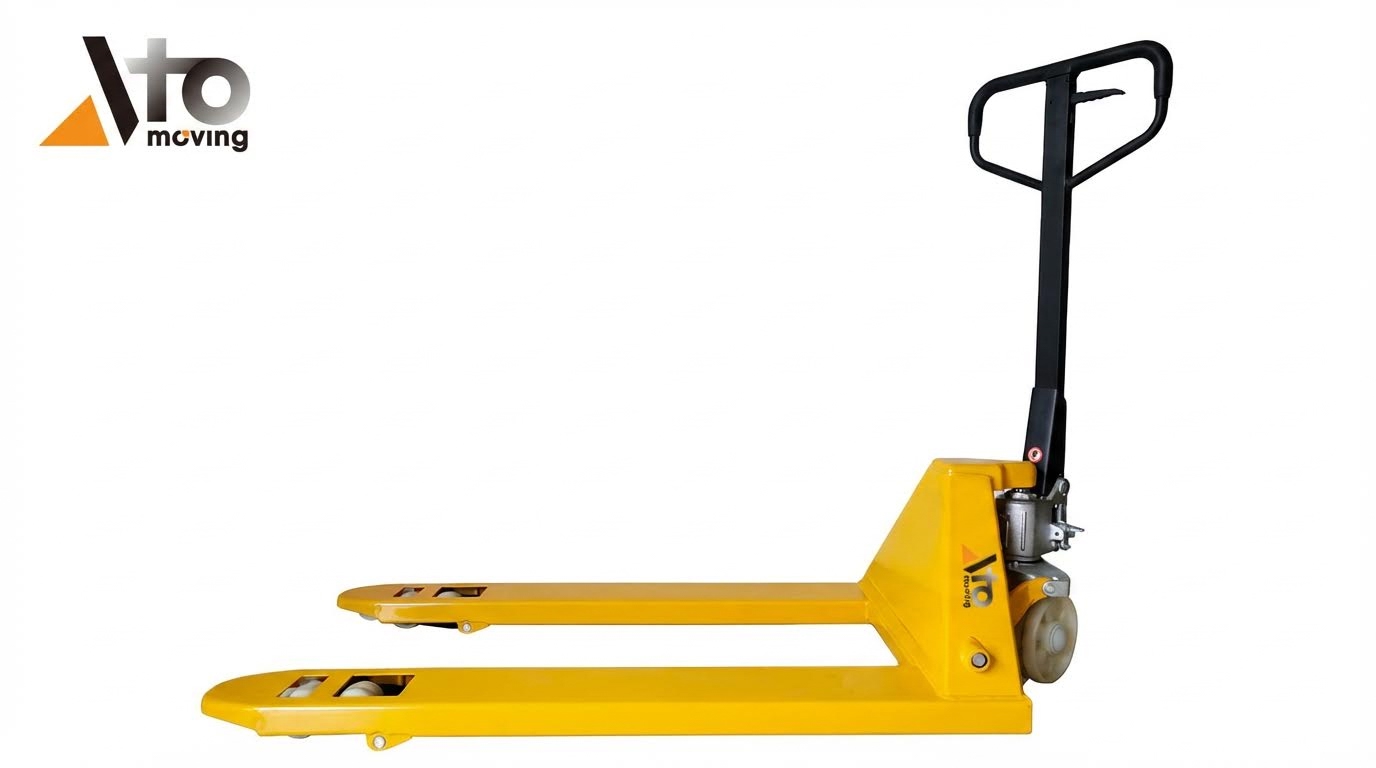
Manual pallet jacks and high-lift pallet trucks are the simplest way to lift a pallet without a forklift for short distances and low to medium lift heights, using only human power and compact hydraulic pumps. They are ideal where budgets are tight and aisles are narrow.
Both tools use a small hydraulic circuit to raise forks or platforms a few hundred millimetres, but their ergonomic role is different. Manual jacks focus on horizontal transport at floor level, while high-lift pallet trucks raise loads to working height for picking, packing, or assembly.
| Equipment Type | Typical Capacity (kg) | Lift Height Range (mm) | Best Operating Surface | Typical Use Case | Operational Impact |
|---|---|---|---|---|---|
| Manual pallet jack | 2,000–2,500 kg, heavy-duty up to ~3,000 kg (source) | Approx. 80–200 mm (25–50 mm ground clearance during travel) (source) | Smooth, level indoor floors | Dock-to-rack moves, staging pallets near lines, truck unloading ramps | Low-cost answer for how to lift a pallet without a forklift over short routes; limited by operator effort on long runs. |
| High-lift pallet truck | Up to ~1,000 kg (source) | Up to ~800 mm fork height (source) | Flat, even floors; usually indoor | Feeding workstations, pack benches, light assembly cells | Acts as both pallet truck and mini lift table, reducing bending and back strain at the pick face. |
- Manual pallet jack basics: Uses a hand-operated hydraulic pump to raise forks under a pallet – ideal when you need to move 2,000–3,000 kg pallets a few metres without investing in powered equipment.
- Correct fork engagement: Forks must be fully inserted and centred under the pallet deck – this prevents broken boards, uneven loading, and sudden tipping during travel.
- Ground clearance control: Operators typically raise pallets 25–50 mm off the floor – just enough to clear joints and thresholds while keeping the centre of gravity low for stability. Reference
- Safe operating technique: Pull on level floors and push when going down slopes – this reduces run‑away risk and keeps the operator out of the crush zone. Reference
- Pre-use inspection: Check wheels, forks, and hydraulic seals for damage or leaks – this avoids sudden loss of lift or steering effort when the pallet is already in motion. Reference
- High-lift pallet truck function: Raises pallets up to ~800 mm – this turns the pallet into an ergonomic work surface, cutting repetitive bending and twisting injuries. Reference
- Dual-role capability: Many high-lift units work as both pallet trucks and static lift tables – this saves floor space and capital by combining two functions into one chassis.
How manual pallet jacks fit into “no-forklift” workflows
In a typical small warehouse, manual pallet jacks cover all floor-level pallet moves: from receiving to storage, from storage to packing, and from packing to dispatch. When operators also need to pick from pallets at height, adding a few high-lift pallet trucks at key workstations is often the most economical way to lift a pallet without a forklift while keeping manual handling within safe limits.
💡 Field Engineer’s Note: If operators complain that “the jack is heavy,” check both floor condition and wheel type before blaming the truck. A worn concrete slab or wrong wheel compound can easily double the push–pull force, making a 2,000 kg pallet feel unmanageable by the end of a shift.
Electric pallet jacks, walkie stackers, and stackers
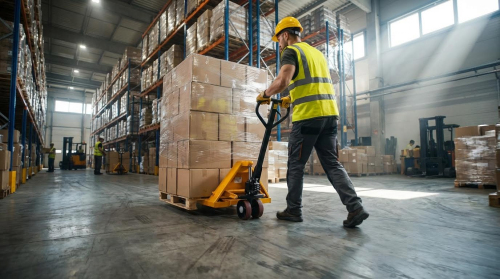
Electric pallet jacks, walkie stackers, and stackers are the most efficient way to lift and move pallets without a forklift when you need higher throughput, longer travel distances, or vertical stacking into racking up to about 5 m. They replace operator muscle with electric drive and lift motors.
These machines follow the same basic geometry as manual pallet jacks but add traction and lift motors powered by batteries. Electric pallet jacks focus on horizontal transport, while walkie and ride-on stackers extend lift height for loading mezzanines, racks, or machinery where a full forklift is not available or not justified.
| Equipment Type | Typical Capacity (kg) | Lift Height Range (mm) | Primary Function | Typical Application | Operational Impact |
|---|---|---|---|---|---|
| Electric pallet jack | Approx. 2,000–3,000 kg (source) | Similar to manual jacks, ~80–200 mm (travel height) | Powered horizontal pallet transport | Medium to long internal routes, cross-dock, supermarket back-of-house | Greatly reduces operator fatigue while moving heavy pallets continuously, ideal when manual jacks become a bottleneck. |
| Walkie stacker (electric) | Approx. 1,000–1,500+ kg (varies by model range) | About 2,000–5,000 mm lift height (source) | Vertical lifting and stacking of pallets | Feeding low to mid-level racking, loading small mezzanines | Enables “forklift-like” stacking in narrow aisles, with lower cost and smaller footprint than ride-on forklifts. |
| Manual stacker | Varies; designed for vertical stacking, often comparable to light electric stackers | Up to about 4,800 mm (16 ft) (source) | Non-powered vertical lift | Occasional access to higher shelves where power is not available | Covers occasional stacking tasks without batteries, but requires more operator effort and more floor space to manoeuvre. |
- Electric pallet jack advantages: Uses electric traction and lift motors to move 2,000–3,000 kg pallets over longer routes – cutting push–pull forces and keeping productivity high across big facilities. Reference
- High-throughput suitability: Powered jacks are preferred where pallets move continuously – they answer how to lift a pallet without a forklift in 24/7 operations without overloading staff physically. Reference
- Walkie stacker vertical reach: Electric walkie stackers lift pallets to roughly 2–5 m – this allows you to store product in racking bays that would otherwise require a forklift truck. Reference
- Stability envelope: Operators must respect both rated capacity and maximum lift height – overloading at height shifts the centre of gravity forward and can cause tip-over incidents. Reference
- Inspection routines: Regularly check forks, mast chains, and emergency stop circuits – this keeps the lifting system within design limits and ensures the truck stops safely during faults. Reference
- Battery management: Follow charging schedules and ventilate charging areas – this preserves battery life and mitigates gas build-up or overheating during charge cycles. Reference
- Manual stacker niche: Offers up to ~4.8 m lift without batteries – useful in low-usage areas or where power is restricted, but plan for higher operator effort and slower cycle times. Reference
When to choose electric vs manual pallet equipment
If your team moves only a handful of pallets per hour over distances under 15–20 m, manual pallet jacks and high-lift trucks are usually adequate. Once operators start walking hundreds of metres per hour with 2,000+ kg loads, or you need to stack above 1.5–2.0 m regularly, electric pallet jacks and walkie stackers become the safer, more economical way to lift pallets without a forklift over the life of the equipment.
💡 Field Engineer’s Note: Before buying electric stackers “for safety,” measure your narrowest aisle and tightest turn radius in millimetres. Many sites discover after delivery that outriggers or counterweights cannot clear pallet overhang or column guards, forcing awkward reverse driving and raising collision risk.
Engineering Considerations, Safety, And Performance
Engineering considerations for how to lift a pallet without a forklift focus on matching capacity, lift height, wheels, and power systems to the load and floor so you avoid tip-overs, strain injuries, and premature equipment failure.
When you remove forklifts from the equation, the engineering must do the safety work your truck used to do. That means you size equipment correctly, respect stability limits, choose the right wheel and floor combination, and maintain hydraulics and batteries to design standards.
Load capacity, lift height, and stability limits
Load capacity, lift height, and stability limits define the safe working envelope for non-forklift pallet equipment and are the first filters when deciding how to lift a pallet without a forklift in any application.
Every alternative device has a different safe “box” of mass vs. height. Exceeding the nameplate capacity or lifting a heavy pallet too high pushes the center of gravity outside the wheelbase and causes sudden, hard-to-catch tip-overs.
| Equipment Type | Typical Rated Capacity | Typical Lift Height | Key Stability Limits | Operational Impact / Best For… |
|---|---|---|---|---|
| Manual pallet jack | 2,000–3,000 kg capacity range | ≈25–50 mm fork rise for travel ground clearance | Load must be centered; forks fully inserted; safe only for low-level transport | Moving full pallets at floor level over short, smooth routes |
| High-lift pallet truck | Up to 1,000 kg rated load | Up to 800 mm fork height | Capacity drops as height increases; not for moving at full height | Ergonomic picking/packing at bench height from a single pallet |
| Electric pallet jack | ≈2,000–3,000 kg capacity | Low lift, similar to manual jacks | Still floor-level only; stability mainly affected by speed and turning radius | Higher-throughput horizontal pallet moves without manual pushing |
| Walkie / electric stacker | ≈1,000–2,000 kg typical | About 2–5 m lift height to racking | Capacity rating tied to specific lift height; off-center loads sharply reduce stability | Stacking pallets in low–medium height racking without a forklift |
| Lift tables / scissor lifts | Engineered with 10–20% margin above max load recommended margin | ≈1.0–1.5 m platform height | Stable if load footprint matches platform; risk if pallet overhangs | Static workstations where pallets are raised to ergonomic height |
| Pallet skates / heavy dollies | ≈1,000–3,000 kg load range | Floor-level, no vertical lift | Stability depends on wheelbase and even load distribution | Repositioning pallets where lifting is done by other means |
- Always read the nameplate: It states maximum kg at a specified load center – this is the non-negotiable limit that prevents structural failure and tip-over.
- Respect capacity vs. height charts: Stackers and lifts lose capacity as you go higher – ignoring this is a common cause of mast and frame overload.
- Keep the load low when travelling: Move with minimum safe ground clearance – this keeps the center of gravity inside the wheelbase.
- Avoid overhanging pallets: Pallets longer or wider than forks or platforms move the center of gravity outward – this makes even “within-rated” loads unstable.
- Center the load on the forks/platform: Uneven weight (e.g., liquids on one side) shifts the center of gravity – this can pull a jack or stacker sideways during turns.
How to quickly estimate if a pallet is safe for your device
Check the pallet’s marked mass or add up item weights. Compare to the equipment’s rated kg at the relevant lift height. If you are above 80–90% of rating, treat it as borderline and reduce lift height or switch equipment.
💡 Field Engineer’s Note: When you ask how to lift a pallet without a forklift into low racking, a walkie stacker is often the answer – but only if your aisles allow the stacker to stay straight. Trying to “crab” in at an angle with a partially raised pallet is where I see the majority of near-tip events.
Wheel materials, floor conditions, and rolling resistance
Wheel material and floor condition together determine how hard operators must push or pull, how controllable the pallet is, and whether your non-forklift solution actually works in the real building, not just on paper.
Even if capacity and lift height are correct, the wrong wheel on the wrong floor turns “safe” equipment into a strain-injury generator. Engineering for how to lift a pallet without a forklift must include rolling resistance and traction, not just load charts.
| Wheel Type | Typical Use Case | Floor Compatibility | Rolling Resistance / Traction | Operational Impact / Best For… |
|---|---|---|---|---|
| Polyurethane | Common on indoor pallet jacks and stackers material note | Smooth, sealed concrete or epoxy floors | Low rolling resistance, moderate traction | Best for long indoor runs with heavy pallets and minimal push force |
| Rubber (solid) | Indoor/outdoor, mixed surfaces material note | Rough concrete, ramps, slightly uneven areas | Higher grip, higher rolling resistance | Better where traction and shock absorption matter more than low push force |
| Nylon / hard plastic | Some low-cost pallet trucks and skates | Very smooth, clean concrete only | Very low rolling resistance, low traction, noisy | Useful for heavy loads in clean plants; poor on wet or dusty floors |
| Pneumatic / semi-pneumatic | Outdoor trolleys, yard dollies | Uneven ground, expansion joints, yards | Good shock absorption, moderate traction | Crossing thresholds and rough surfaces with partial or full pallets |
- Match wheel to surface: Use polyurethane on smooth indoor floors and rubber or pneumatic outdoors – this cuts operator effort and prevents skidding.
- Keep floors clean and level: Debris, oil, and potholes spike rolling resistance – this forces higher push/pull forces and increases slip risk.
- Control slopes: Even a 2–3% gradient can run away with a 2,000 kg pallet – plan routes that avoid or control ramps.
- Use chocks during loading on skates/dollies: Wheels let pallets move unexpectedly – chocks stabilize the load while you position or strap it.
- Check wheel condition daily: Flat spots, cracked treads, or seized bearings massively raise rolling resistance – this silently turns every move into a manual handling risk.
Simple field test for rolling resistance
Load a typical pallet on the chosen device. On level floor, measure how far it rolls after a gentle push. Very short travel distance or “dead stop” feel means high rolling resistance; consider wheel changes or floor repairs.
💡 Field Engineer’s Note: Many teams fix “hard to move” pallets by switching to electric jacks, when the real problem is worn polyurethane wheels on rough, cracked concrete. Fixing the floor or wheels is cheaper than adding batteries and still having poor control on slopes.
Hydraulics, batteries, and preventive maintenance
Hydraulics and batteries are the hidden systems that keep non-forklift pallet equipment lifting reliably; preventive maintenance on these components is what separates smooth operations from sudden downtime and unsafe workarounds.
When operators know how to lift a pallet without a forklift but the jack or stacker fails mid-lift, they start improvising with pry bars and manual lifting. That is exactly what good hydraulic and battery maintenance is designed to prevent.
| System | Key Components | Typical Issues | Preventive Actions | Operational Impact / Best For… |
|---|---|---|---|---|
| Manual hydraulic systems (jacks, high-lift trucks) | Cylinders, pump, valves, seals made from hardened steel and oil-resistant elastomers material data | Oil leaks, slow lifting, sinking under load | Inspect for leaks, keep fluid at correct level, replace worn seals, lubricate pivot points | Reliable low-cost lifting for manual pallet jacks and high-lift trucks |
| Electric pallet jack hydraulics | Electric pump, cylinder, control valves | Weak lift at end of shift, overheating, noisy pump | Follow service intervals, keep filters clean, avoid overloading to protect pump and valves | Consistent lifting for high-throughput horizontal moves |
| Stacker masts and chains | Lift chains, rollers, mast sections, tilt mechanisms | Chain stretch, roller wear, jerky lifting | Regular chain inspection, lubrication, tension checks, replace worn rollers | Safe vertical pallet handling up to 5 m without a forklift truck |
| Batteries (electric jacks & stackers) | Lead-acid or lithium cells, connectors, chargers | Reduced runtime, voltage drop, sulfation (lead-acid) | Follow charging schedules, ensure ventilation during charging, keep terminals clean and tight battery practices | Predictable uptime; avoids mid-route failures with loaded pallets |
- Do pre-use checks every shift: Look for hydraulic leaks, bent forks, damaged chains, and test the emergency stop – this catches failures before a loaded lift.
- Respect service intervals: Manufacturer schedules are based on fatigue and wear – stretching them shortens cylinder, chain, and pump life.
- Standardize charging routines: Use dedicated, ventilated charging areas for electric units – this reduces battery damage and fire risk.
- Train operators, not just mechanics: Basic OSHA-type training for pallet jacks and stackers teaches early fault recognition – operators are the first line of defense.
- Avoid DIY structural or hydraulic mods: Swapping wheels is fine; altering frames or hydraulic circuits is not – this can void safety ratings and warranties modification guidance.
Basic preventive maintenance checklist for non-forklift pallet equipment
Weekly: inspect wheels, forks, and handles; clean debris from axles. Monthly: check hydraulic fluid level, look for leaks, test lift/hold under rated load. Quarterly: full inspection of chains, mast, electrical cables, and battery condition with a competent technician.
💡 Field Engineer’s Note: Most “mysterious” sinking pallets on jacks are just worn seals and contaminated oil. Crews then start shimming pallets with blocks to gain height, which is unsafe. A simple seal kit and oil change is usually cheaper than the productivity you lose in one week of workarounds.
Matching Alternatives To Applications And Workflows
Matching equipment to your workflow is the real answer to how to lift a pallet without a forklift safely and efficiently. The right choice depends on where the pallet moves, how often, and over what distance and height.
Use the tables and lists below to link each non-forklift option to docks, production lines, racking, and different throughput levels.
Dock, production line, and racking applications
Dock, production line, and racking zones each favor different non-forklift pallet tools. Docks need horizontal movers, lines need ergonomic lifters, and racking needs vertical reach with tight-aisle maneuverability.
This is where you translate “how to lift a pallet without a forklift” into specific tools for each area of the building.
| Application Zone | Recommended Equipment | Typical Capacity / Height | Best For… | Operational Impact |
|---|---|---|---|---|
| Loading dock – truck to dock, cross-dock | Manual pallet jacks; Electric pallet jacks | 2,000–3,000 kg, lift 25–50 mm ground clearance (manual and electric jack data) | Short horizontal moves between truck, dock edge, and staging | Replaces forklifts for most dock moves where racking height is low and floors are smooth. |
| Inbound inspection / quality check stations | High-lift pallet trucks; Lift tables / scissor lifts | Up to 1,000 kg at 800 mm (high-lift trucks) and ~1.0–1.5 m for lift tables (high-lift & tables) | Bringing pallets to waist height for scanning, rework, or repacking | Cuts bending and overreaching, reducing back-strain and repetitive motion injuries. |
| Production line infeed/outfeed (floor level) | Manual pallet jacks; Pallet skates/dollies | 1,000–3,000 kg on skates/dollies; 2,000–3,000 kg on pallet jacks (skates/dollies) | Feeding and evacuating pallets at machine or line height | Enables “forklift-free” production zones by confining powered trucks to perimeter areas. |
| Assembly / kitting cells | High-lift pallet trucks; Lift tables / scissor lifts | Up to 800 mm with high-lift trucks; 1.0–1.5 m with lift tables (ergonomic lift data) | Working directly from pallets at ergonomic height | Turns pallets into adjustable-height workstations without a forklift or fixed mezzanine. |
| Low-level racking (up to ~2 m) | Manual stackers; Compact electric stackers | Manual stackers up to ~4.8 m (16 ft) (manual stacker data); electric walkie stackers about 2–5 m (walkie stacker heights) | Placing and retrieving pallets from first and second racking levels | Replaces counterbalance forklifts for lighter loads and narrower aisles. |
| Medium racking (2–5 m) in narrow aisles | Electric walkie stackers; Conveyor + vertical lifts | Walkie stackers 2–5 m; vertical lifts sized to pallet height + clearance (stackers & conveyors) | High-turn SKUs where forklifts are restricted | Supports dense storage with pedestrian-only aisles and reduced collision risk. |
| Truck loading without a dock | Scissor lift tables; Mobile lift platforms; Pallet skates/dollies | Lift tables up to ~1.0–1.5 m; skates/dollies 1,000–3,000 kg (tables) (skates/dollies) | Raising pallets to truck bed height and rolling into position | Creates a makeshift dock where no pit or dock leveler exists. |
To decide how to lift a pallet without a forklift in each of these zones, focus on three questions: required lift height, horizontal distance, and whether the operator must work directly from the pallet.
- Dock work: Use pallet jacks and dollies – they minimize capital cost while covering 90% of horizontal dock movements.
- Production work: Use high-lift trucks and lift tables – they reduce bending and improve takt time at workstations.
- Racking work: Use manual or electric stackers – they give you forklift-like reach with a smaller footprint and lower training burden.
How to choose between high-lift pallet trucks and lift tables at the line
Pick high-lift pallet trucks when you must also move the pallet between cells. Choose fixed or mobile lift tables when the pallet stays in one workstation for long periods and you want maximum stability and platform size flexibility.
💡 Field Engineer’s Note: In mixed dock/production areas, standard pallet jacks often get “borrowed” for ergonomic tasks they are not suited for. If operators are routinely tipping pallets to reach parts, that is your signal to deploy high-lift trucks or lift tables near the line.
Space constraints, throughput, and TCO-based selection
Space, throughput, and total cost of ownership (TCO) determine which non-forklift pallet solution is sustainable, not just which one can technically move the load today.
In tight aisles with moderate volumes, manual or compact electric equipment beats large forklifts on both safety and lifecycle cost.
| Constraint / Goal | Best-Fit Equipment | Typical Specs | Why It Fits | TCO / Operational Impact |
|---|---|---|---|---|
| Very tight aisles (≤2.0–2.2 m), low–medium volume | Manual pallet jacks; Manual stackers | 2,000–3,000 kg capacity, low lift (jacks); up to ~4.8 m lift (manual stackers) (jacks) (stackers) | Short travel distances, limited room to turn powered trucks | Lowest purchase price, minimal maintenance; labor cost rises if travel distances or volumes grow. |
| Moderate aisles (~2.3–2.7 m), medium–high volume | Electric pallet jacks; Electric walkie stackers | 2,000–3,000 kg capacity; lift to 2–5 m (electric jack data) (walkie stackers) | High daily pallet counts with frequent starts/stops | Higher upfront cost but lower operator fatigue and faster cycles; often best TCO above a certain volume. |
| Long horizontal routes (100–300 m+), low lift | Tow tractors with carts; Conveyor-based systems | Tow tractors up to ~27,000 kg towing; conveyors sized to pallet mass and friction (tow tractors) (conveyors) | Moving multiple pallets per trip between dock, storage, and production | Reduces traffic and driver count; higher capex but strong ROI in high-volume facilities. |
| Very high throughput, fixed routes | Powered roller or chain conveyors; Gravity roller conveyors | Continuous flow; gravity conveyors use slight slopes and end stops (gravity & powered conveyors) | Repetitive moves between the same points (e.g., depalletizing to wrapper) | Highest automation level; major capex but minimal labor per pallet moved. |