
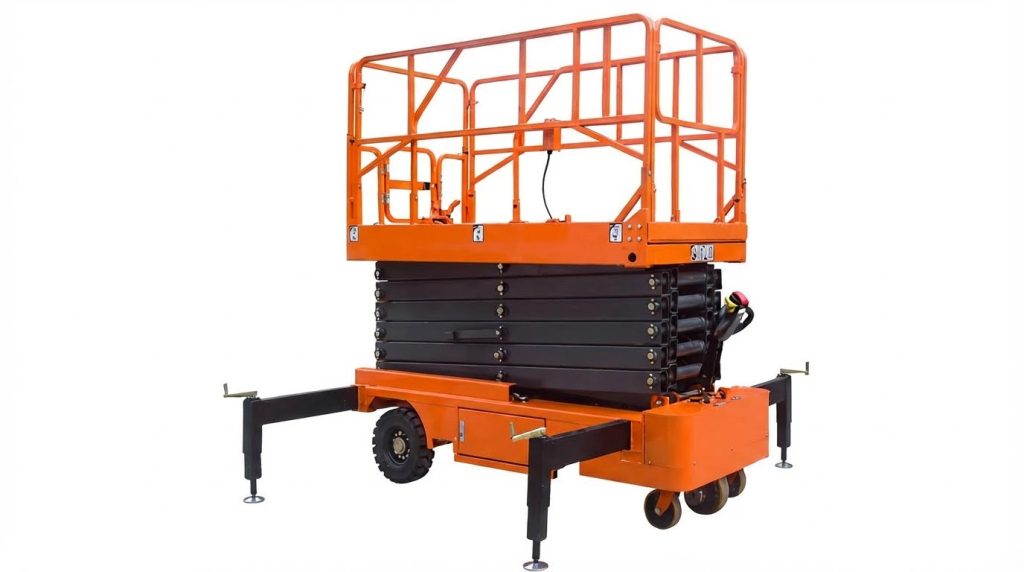
Whether you work in maintenance, construction, or facility management, you have likely asked yourself: is a scissor lift an aerial work platform, and does it matter for safety and specifications? This article explains how regulations classify scissor lifts, how they differ from other aerial work platforms in engineering terms, and what that means for fall protection, load ratings, and equipment selection. By the end, you will understand which standards apply, how to compare lift types, and how to specify the right machine for your site conditions and tasks.
How Standards Classify Scissor Lifts And AWPs
OSHA: Why Scissor Lifts Are Treated As Scaffolds
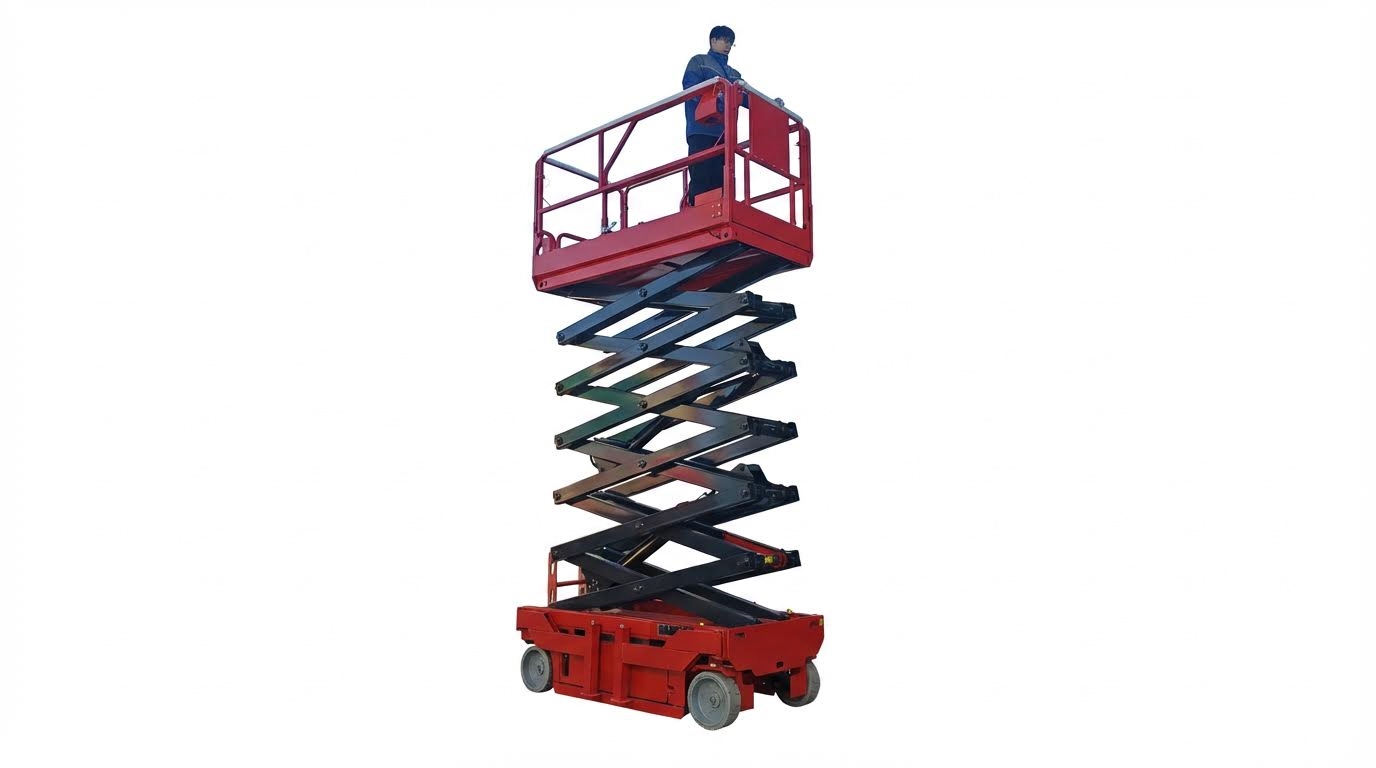
OSHA answered the question “is a scissor lift an aerial work platform?” by classifying scissor lifts as mobile supported scaffolds, not aerial lifts. OSHA defines them as mobile supported scaffold work platforms that move workers vertically using crossed “X” bracing. This X‑brace mechanism raises the platform straight up and down, so it does not meet the ANSI A92.2 aerial lift definition that OSHA adopted for its aerial lift rules. OSHA therefore applies scaffold standards, including the mobile scaffold section §1926.452(w), to scissor lifts.
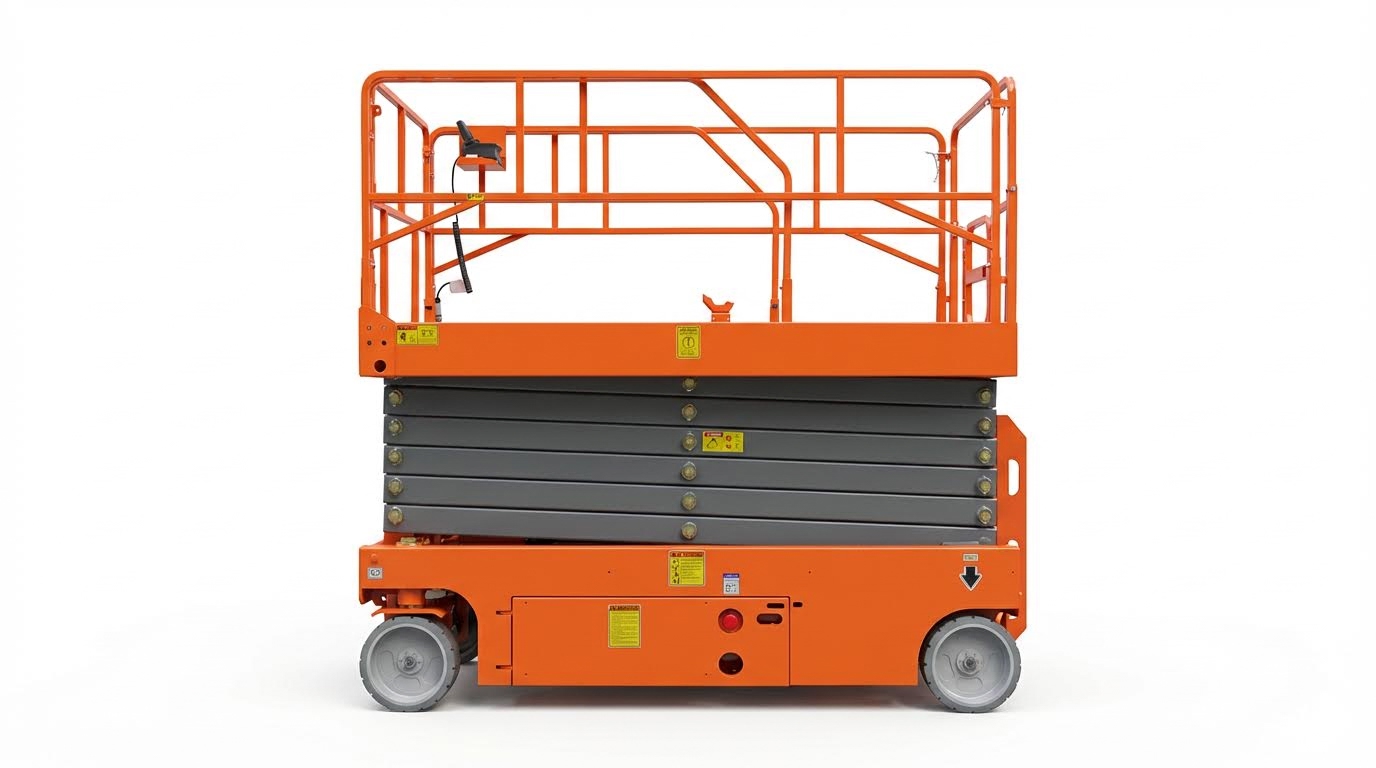
Because scissor lifts are classified as scaffolds, employers must follow scaffold and fall protection rules rather than aerial lift rules. Key applicable standards include 29 CFR 1910.27 and 1910.28 for general industry, 1910.29 for fall protection systems, and construction standards 1926.451 and 1926.452(w). OSHA requires guardrails on scissor lift platforms and expects workers to stand only on the platform, keeping work within easy reach to avoid overreaching and potential falls. When guardrails are complete and in good condition, OSHA does not require workers on scissor lifts to tie off with personal fall arrest, unlike on aerial lifts.
This scaffold classification drives specific stability and positioning requirements. Safe use practices include operating on firm, level surfaces, following manufacturer instructions for movement, isolating the lift from traffic, and limiting outdoor work to wind speeds below about 28 mph. OSHA also emphasizes positioning to prevent crushing and electrocution hazards: employers should use traffic control, spotters, and maintain at least 10 ft clearance from power lines. Under the scaffold rules, a competent person must inspect scissor lifts (as scaffolds) before each work shift and after any event that could affect structural integrity. The competent person is designated by the employer, must be able to identify hazards, and must have authority to correct them.
ANSI: Where Scissor Lifts Fit In A92 Equipment Families
ANSI takes a different but complementary approach when it answers “is a scissor lift an aerial work platform?” in its A92 family. ANSI uses the broader term “aerial work platforms” or “mobile elevating work platforms” (MEWPs) and then divides equipment into types and groups. Scissor lifts fall under elevating work platform standards such as ANSI A92.3 (manually propelled elevating aerial platforms) and A92.6 (self‑propelled elevating work platforms). In ANSI language, a self‑propelled scissor lift is an elevating work platform that travels under its own power and lifts the platform vertically.
From an engineering and specification standpoint, ANSI’s A92 structure groups scissor lifts with other vertical MEWPs rather than with boom‑type lifts. That means similar expectations on design factors such as platform guardrails, rated load, stability, and control systems across that vertical‑lift family. While OSHA treats scissor lifts as scaffolds for enforcement, ANSI still considers them a category of aerial or elevating work platform for design, manufacturing, and training standards. This dual perspective explains why facility teams often hear both terms: in the field, people may call a scissor unit an aerial platform, but OSHA compliance still follows scaffold rules.
For owners and specifiers, the key is to align internal procedures with both frameworks. Use ANSI A92 classifications to compare equipment types, capacities, and intended uses across scissor lifts, vertical masts, and boom lifts. At the same time, apply OSHA’s scaffold-based rules for inspections, competent‑person oversight, and fall protection when writing site procedures, training content, and job hazard analyses. Integrating both views helps answer “is a scissor lift an aerial work platform” in a practical way: it is an elevating work platform in ANSI’s family tree, but it is regulated as a scaffold in OSHA’s safety system.
Engineering Differences: Scissor Lifts Vs Other AWPs
Lifting Mechanisms And Stability Characteristics
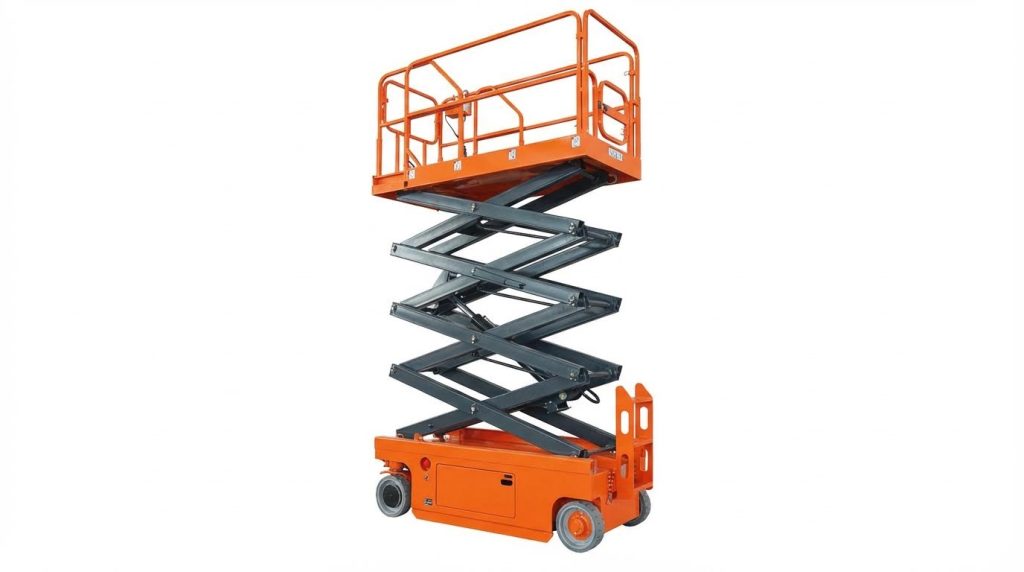
When facility managers ask “is a scissor lift an aerial work platform,” they are usually comparing its engineering to booms and mast lifts. A scissor lift uses an X‑brace mechanism that raises the platform straight up and down, with no built‑in horizontal outreach. This vertical-only motion keeps the center of gravity close to the base and delivers high inherent stability on flat, firm floors. In contrast, boom and mast‑type aerial work platforms use cantilevered arms that project the load away from the chassis, which increases reach but demands more sophisticated stability controls and wider outrigger or wheel footprints.
- Scissor lifts rely on crossed beams and a wide base to resist tipping, and are intended for level, unobstructed work areas. OSHA classifies them as mobile supported scaffolds, not aerial lifts, so their design assumptions mirror scaffold stability rules.
- Boom lifts trade some platform rigidity for the ability to reach over obstacles, using telescopic or articulating sections that create higher overturning moments and require tighter wind and slope controls. They typically operate safely in higher wind ranges than many slab scissor lifts, but only when fully deployed outriggers and load‑sensing systems are within spec.
- Vertical mast lifts are compact AWPs that extend a mast column rather than an X‑brace, often adding small outreach decks or jib sections. Their narrow chassis improves maneuverability in tight aisles but reduces lateral stability margin, so anti‑tilt and overload protection are critical. Many models integrate electronic tilt sensors and emergency descent systems to manage these risks.
Key stability implications
Because scissor lifts elevate straight up, operators must keep loads inside the guardrails and avoid overreaching to maintain the designed center‑of‑gravity envelope. Boom and mast AWPs require stricter controls on platform loading, boom angle, and slew position because small changes in outreach can generate large tipping moments.
Height, Reach, Load Capacity, And Duty Cycles
From an engineering perspective, the answer to “is a scissor lift an aerial work platform” depends less on labels and more on performance envelopes. Typical slab scissor lifts provide moderate working heights and high deck capacity, optimized for vertical access with tools and materials. Other AWPs, especially booms, prioritize reach and access geometry over raw platform capacity. Duty cycles also differ: scissor lifts tend to run many short up‑down cycles indoors, while booms often see longer travel and positioning cycles in outdoor construction or maintenance.
| Lift Type | Typical Working Height | Horizontal Reach | Relative Platform Capacity |
|---|---|---|---|
| Scissor lift | About 20–50 ft vertical working height for common models with higher capacities in heavier units | Minimal (primarily straight vertical) | High (often 1,000–2,500 lb class) sized for workers plus materials |
| Boom lift | Frequently above 100 ft working height, with some models up to about 180 ft depending on configuration | Substantial horizontal and up‑and‑over reach | Moderate (typically sized for 1–2 workers plus tools) |
| Vertical mast lift | Up to about 30 ft working height for many compact units | Very limited outreach, sometimes via small extension decks | Low–moderate (typically 1–2 workers, light tools) |
- Scissor lifts are engineered with relatively large deck areas and high rated capacities, but usable height can drop when approaching maximum load, as the structure and hydraulics reach design limits. Heavier loads can reduce achievable height by a noticeable margin, so specifiers must check load‑height curves, not just nameplate capacity.
- Boom lifts and telescoping AWPs extend reach by cantilevering the platform, which inherently limits platform capacity compared with scissor lifts of similar overall size. Some telescoping models can position platforms below grade as well as far above the base, which scissor mechanisms cannot do.
- Duty cycles for scissor lifts focus on frequent, short elevation changes and travel at low speeds on smooth floors, while booms often endure longer travel distances, rougher terrain, and extended periods at height. These patterns drive different design choices in structural fatigue margins, hydraulic sizing, and thermal management.
Power Options, Controls, And Emerging Technologies
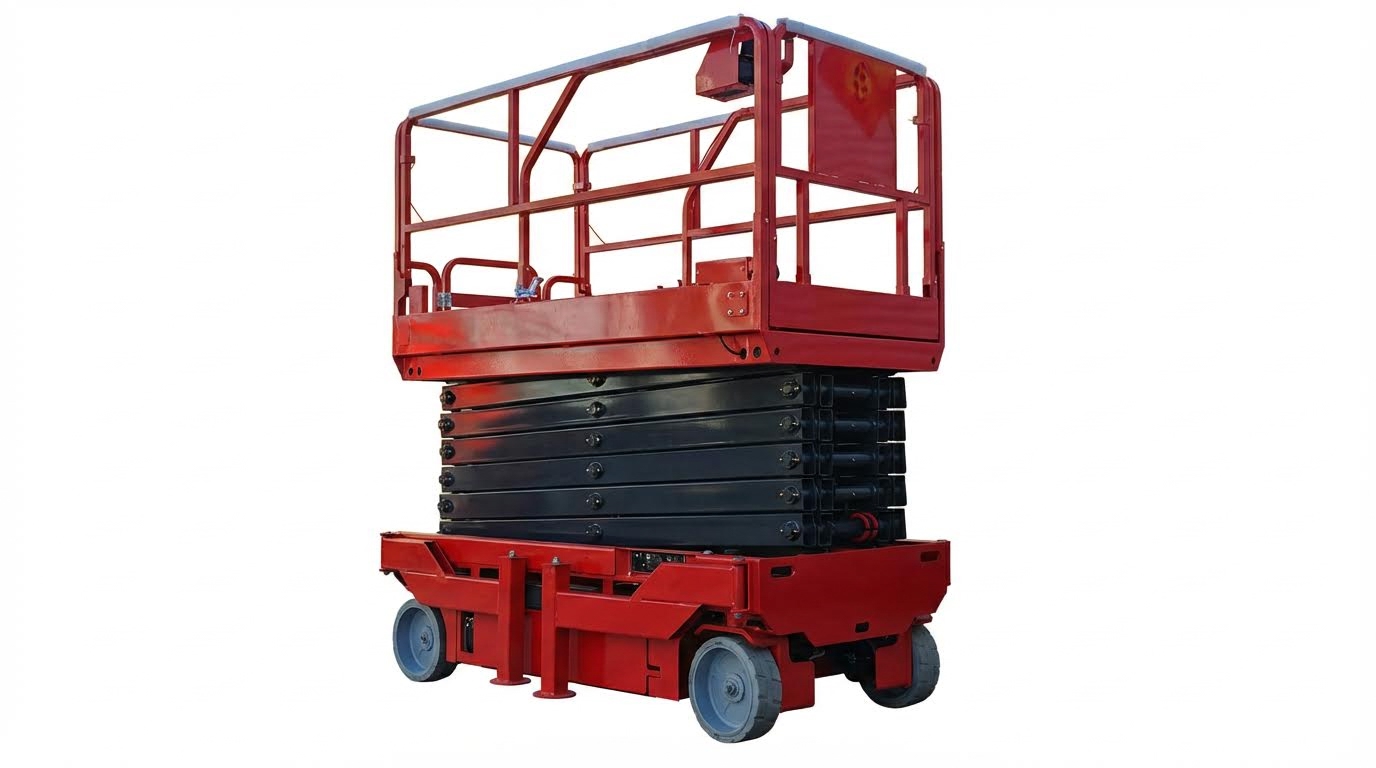
Another angle on “is a scissor lift an aerial work platform” is the control and power architecture it shares with other MEWPs. Scissor lifts increasingly use electric drive and lift systems for indoor work, where low noise and zero exhaust are critical. Booms and rough‑terrain AWPs still rely heavily on internal combustion or hybrid systems to deliver higher duty cycles and gradeability outdoors. Control systems across all types are converging toward integrated safety electronics and telematics, but the implementation details vary by lift family.
- Power sources
- Electric scissor lifts typically operate at low sound levels and produce no on‑site emissions, making them suitable for warehouses, manufacturing plants, and public interiors. Common configurations use battery packs sized for a full shift of intermittent use.
- Outdoor‑oriented boom lifts frequently use diesel or dual‑fuel engines for sustained power at high reach and on grades, with newer hybrid designs combining combustion engines and battery systems to cut fuel use and emissions. These hybrids target long duty cycles on construction and infrastructure projects.
- Control and safety systems
- Scissor lifts use relatively simple proportional controls for lift and drive, plus safety interlocks tied to guardrails, tilt sensors, and load limits. Because OSHA treats them as scaffolds, their primary fall protection is a compliant guardrail system rather than mandatory tie‑off. Regulations emphasize guardrail integrity, flat surfaces, and wind limits.
- Boom and other aerial work platforms typically integrate more complex control logic: envelope control, load‑sensing, speed derating at height, and mandatory personal fall arrest anchorage. Operator training therefore focuses heavily on articulation path planning and platform positioning.
- Emerging technologies
- Across both scissor lifts and other AWPs, manufacturers are adopting telematics for remote diagnostics, usage tracking, and maintenance planning, improving uptime and safety compliance.
- Advanced sensor suites—tilt, overload, proximity, and anti‑collision—are becoming more common, with particularly strong benefits for boom lifts working in congested industrial plants or near live traffic and utilities.
Why these differences matter for selection
Understanding these engineering distinctions helps answer “is a scissor lift an aerial work platform” in a practical way: scissor lifts behave like powered scaffolds optimized for vertical, high‑capacity indoor work, while booms, masts, and other AWPs are engineered around complex reach envelopes and outdoor conditions. Matching those design intents to your task, height, reach, and duty‑cycle requirements is the key to safe, cost‑effective equipment selection.
Selecting The Right Lift For Your Facility Or Project
Matching Equipment To Task, Environment, And Surface
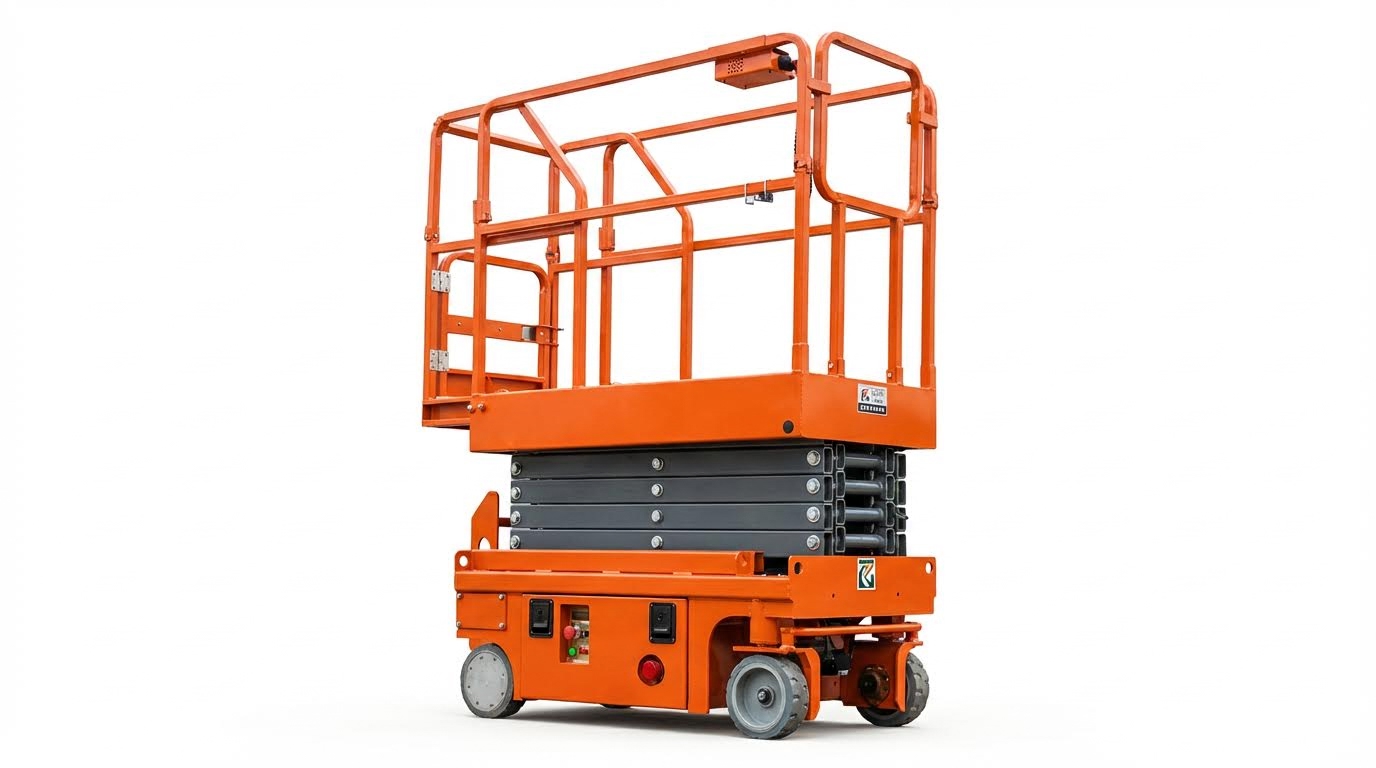
Start with the task, then back into the equipment choice. If you are asking “is a scissor lift an aerial work platform” from a practical standpoint, the answer is that scissor lifts function as vertical access platforms, while other AWPs provide outreach and obstacle clearance. Scissor lifts elevate straight up using an X‑brace mechanism and typically cover working heights in the 20–50 ft range with capacities around 1,000–2,500 lb, making them well suited for flat, indoor work such as maintenance, racking, and installations and heavier loads can reduce usable height by 15–25%. Boom and mast-type AWPs are preferable where you need horizontal reach, access over obstacles, or very high working elevations, including façade work, bridge or stadium lighting, and congested plant areas with some boom lifts exceeding 100 ft and compact vertical masts reaching up to about 30 ft while fitting through standard doorways for small or confined spaces. Surface and environment are critical: scissor lifts are optimized for firm, level ground and are typically limited to wind speeds below roughly 28 mph outdoors, so they are best on slabs and smooth floors, while rough-terrain or boom lifts with all‑terrain tires, higher ground clearance, and stabilizers handle uneven ground and slopes much more effectively when scissor lifts must be kept on firm, level surfaces and boom lifts dominate uneven landscapes with rough‑terrain features. Finally, match power source to the environment: electric scissor lifts with low noise and zero point‑of‑use emissions are preferred for indoor industrial facilities, while diesel or hybrid boom‑type AWPs are better suited to outdoor, long‑duty construction work where exhaust and noise are less constrained and hybrids combine batteries with combustion engines to manage emissions.
Safety, Training, And Inspection Requirements
Once you select equipment, you must align safety controls and training with how the unit is classified. Even though many users ask “is a scissor lift an aerial work platform,” OSHA treated scissor lifts as mobile supported scaffolds, so they fall under scaffold rules rather than aerial lift rules, and they must be equipped with compliant guardrail systems and operated on firm, level surfaces to prevent tipping with requirements drawn from 29 CFR 1910.27, 1910.28, 1910.29, 1926.451, and 1926.452(w). Operators need task‑specific training that covers load limits, fall protection, positioning, and worksite hazards such as power lines or traffic, and retraining is required whenever new hazards, new equipment types, or demonstrated skill gaps appear including handling materials within weight limits and recognizing electrical hazards and with retraining triggers when employees lack proficiency or face new site conditions. Daily or pre‑shift inspections by a competent person are mandatory for scaffold‑classified equipment, and checks should verify structural integrity, controls, brakes, guardrails, and safety devices so that any defect results in immediate removal from service until corrected with scaffolds inspected before each shift and after any event affecting structural integrity and including checks on tires, hydraulics, brakes, and safety devices. For aerial lifts that are not scissor lifts, tie‑off with a full‑body harness is typically required, whereas on scissor lifts configured as compliant scaffolds, guardrails can provide the primary fall protection without mandatory tie‑off, so your facility procedures must clearly distinguish between these categories to avoid both under‑ and over‑control of fall protection systems since aerial lift users must be tied off, while scaffold‑classified scissor lift users may rely on guardrails when adequate.
“”
Summary: Practical Implications For Specifiers And Owners
Scissor lifts sit at the intersection of scaffold and aerial work platform rules. OSHA treats them as mobile supported scaffolds, while ANSI groups them within vertical MEWPs. This split matters because it drives which fall protection, inspection, and training rules apply on your site. Treat a scissor lift like a powered scaffold with vertical motion, not like a boom.
Engineering differences reinforce this point. The X‑brace geometry keeps the load close to the base, which gives good stability on flat, firm floors and supports high deck capacities. Booms and mast lifts push the platform away from the chassis, so they reach farther but demand tighter controls on wind, slope, and load. Misunderstanding these envelopes leads to tip risk, structural overload, or overreliance on personal fall arrest instead of guardrail condition and surface quality.
For specifiers and owners, the best practice is simple. Start with task, height, reach, surface, and duty cycle. Use ANSI A92 to compare equipment families, then lock in OSHA’s scaffold rules for scissor lifts. Build procedures that clearly separate scissor lifts from boom‑type AWPs in training, inspections, and fall protection. When you do this, you can safely deploy scissor lifts and other platforms, control risk, and extract full value from assets such as Atomoving equipment across your portfolio.
Frequently Asked Questions
Is a scissor lift an aerial work platform?
Yes, a scissor lift is considered a type of aerial work platform (AWP). It is a motorized device designed to lift people to heights that are otherwise inaccessible. The crisscrossing metal braces give it the name “scissor” lift and allow the platform to rise vertically. Aerial Lift Basics.
What are the main differences between a scissor lift and other aerial work platforms?
Scissor lifts typically have larger platforms, allowing multiple workers to operate on them simultaneously. They are also more cost-effective and easier to store compared to other aerial lifts. However, other aerial lifts, such as boom lifts, can reach up and around structures, accessing hard-to-reach areas that scissor lifts cannot. Scissor vs Aerial Lifts.
Are scissor lifts classified as elevating work platforms (EWP)?
Yes, scissor lifts fall under the category of elevating work platforms (EWP). These platforms are designed to elevate workers safely to perform tasks at height. Scissor lifts are one of several types of EWPs, which also include boom lifts and self-propelled lifts. EWP Overview.