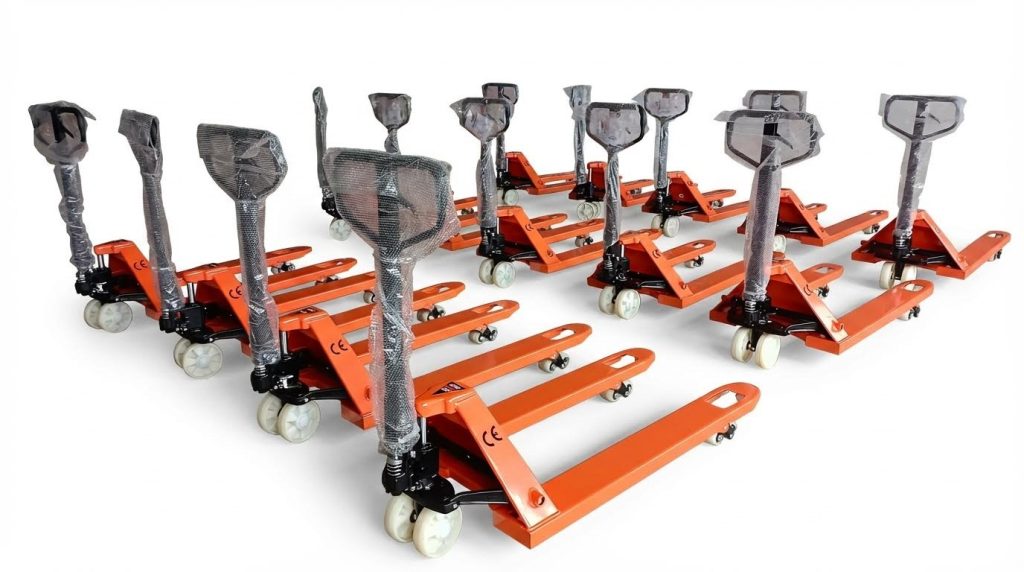
Electric pallet jack batteries sat at the center of reliability, throughput, and safety in material-handling operations. Engineers needed to balance chemistry selection, duty-cycle requirements, charging infrastructure, and safety systems to achieve predictable performance. This article examined battery chemistries and duty cycles, engineering design of charging areas and power systems, and maintenance and safety protocols under current regulatory expectations. It concluded with a structured summary of best practices and implementation steps that facilities could apply to upgrade existing fleets or design new installations.
Battery Chemistries And Duty-Cycle Requirements

Electric pallet jack battery selection depended on matching chemistry to duty-cycle, environment, and infrastructure constraints. Lead-acid, AGM, and lithium-ion each offered distinct trade-offs in energy density, maintenance, and lifecycle cost. Engineers needed to evaluate shift patterns, downtime windows, and ambient conditions before standardizing on a platform. Regulatory requirements and end-of-life handling also influenced technology choices.
Comparing Lead-Acid, AGM, And Lithium-Ion Options
Flooded lead-acid (FLA) batteries delivered robust performance for low to medium duty applications with predictable multi-hour charge windows. They required regular watering, ventilation during charge, and corrosion control on terminals, but offered low upfront cost and high recyclability. Absorbent glass mat (AGM) variants reduced electrolyte spill risk and maintenance needs, while retaining lead-acid voltage profiles and compatibility with conventional chargers. Lithium-ion chemistries, especially Lithium Iron Phosphate (LFP), provided higher usable capacity per kilogram, fast or opportunity charging, and minimal routine maintenance, at the expense of higher initial investment and BMS requirements.
Cycle Life, Depth Of Discharge, And Shift Planning
Cycle life depended strongly on depth of discharge (DoD) and charge strategy. Lead-acid batteries typically achieved their rated cycles when operators avoided deep discharges below roughly 20–30% state of charge and minimized partial “opportunity” charging that promoted sulfation. LFP packs tolerated frequent partial charges and higher DoD while still delivering 2,000–4,000 cycles to 80% capacity, which suited multi-shift operations with short breaks. Shift planning therefore had to align discharge windows, charger availability, and rest periods so that batteries completed full charge cycles when possible, while preventing both chronic overcharging and repeated deep discharge events.
Cold Storage, Ambient Limits, And Thermal Effects
Battery performance and longevity were highly temperature dependent. Optimal charging conditions generally lay between 15°C and 25°C; sustained operation or charging above this range accelerated aging, and excessive heat could halve expected life. Lead-acid batteries experienced reduced capacity in cold storage and needed careful charge-voltage compensation and ventilation for gas evolution. LFP-based lithium-ion systems maintained more stable power output in cold environments and supported opportunity charging, but still required thermal management and monitoring to avoid charging outside specified temperature windows and to mitigate thermal runaway risk.
Lifecycle Cost, Sustainability, And Recycling
Lifecycle cost analysis had to include purchase price, energy consumption, charger infrastructure, maintenance labor, downtime, and replacement intervals. Lead-acid and AGM batteries offered low acquisition cost and a mature recycling stream, with reported recycling rates around 99.1% in industrial markets, which supported sustainability objectives and regulatory compliance. However, their shorter cycle life and higher maintenance burden increased total cost of ownership in intensive, multi-shift fleets. Lithium-ion solutions imposed higher initial capital expense but reduced maintenance, enabled smaller battery fleets through fast charging, and extended replacement intervals, often lowering cost per operating hour. End-of-life strategies needed to address emerging lithium-ion recycling options while maintaining documentation and adherence to hazardous materials regulations.
Engineering Design Of Charging Areas And Power Systems

Layout, Clearances, Ventilation, And Heat Management
Engineers located pallet jack charging areas in cool, dry, well-ventilated zones away from direct sunlight. They allowed sufficient floor space for battery size, handling equipment, and safe access for maintenance and replacement. Clear aisles for forklifts and pallet jacks reduced collision risk and supported compliance with occupational safety rules. Designers spaced chargers to prevent mutual heating and to maintain airflow around heat sinks and cables.
Ventilation systems diluted gases released by lead-acid batteries during charging, reducing explosion and corrosion risks. Facilities used either natural cross-ventilation or mechanical exhaust, sized from gas evolution rates and room volume. Temperature control kept charging areas typically between 15 °C and 25 °C to limit thermal stress and capacity loss. Thermal monitoring and separation of high-power chargers reduced local hot spots and improved long-term battery life.
Power Supply Sizing, Charger Selection, And Compatibility
Power system design started with an inventory of truck fleets, battery voltages, capacities, and target charge times. Engineers calculated peak coincident load, then sized feeders, switchgear, and protection devices accordingly, often with diversity factors. For example, a 48 V, 500 Ah flooded lead-acid battery required roughly a 5 kW charger for an eight-hour charge profile. An equivalent lithium-ion pack supporting one-hour opportunity charging needed around 25 kW, which significantly changed upstream electrical design.
Charger selection depended on chemistry, with lead-acid systems favoring profiles that limited overcharge and stabilized current and voltage. Lithium-ion chargers operated with tighter voltage limits and communicated with integrated Battery Management Systems for protection. Engineers verified compatibility rather than assuming interchangeability, especially when reusing legacy FLA chargers with lithium packs. They also specified correct connectors, cable ratings, and interlocks to prevent misconnection and arcing.
Centralized Vs. Decentralized And Opportunity Charging
Centralized charging rooms historically concentrated batteries, chargers, ventilation, and fire protection in one controlled space. This approach simplified maintenance, electrolyte handling, and compliance documentation, but increased operator travel time and required larger dedicated rooms. Decentralized charging placed smaller charging clusters near work areas, which reduced non-productive travel and encouraged regular charging. Engineers then considered distributed electrical loads, local ventilation, and fire zoning at each cluster.
Opportunity charging strategies, especially with lithium iron phosphate batteries, supported short, frequent charges during breaks. This approach removed the need for battery swaps and reduced spare battery inventories. However, it required higher-power chargers and careful control of depth of discharge to avoid accelerated degradation. Design teams therefore modeled shift patterns, downtime windows, and state-of-charge profiles before selecting centralized, decentralized, or hybrid strategies.
Digital Monitoring, BMS, IoT, And Predictive Maintenance
Modern pallet jack batteries increasingly integrated Battery Management Systems that measured cell voltages, currents, and temperatures. These BMS units controlled charge acceptance, enforced safety limits, and logged detailed charge and discharge histories. When connected via IoT platforms, they transmitted state-of-charge and health data to fleet management dashboards. Engineers used these data streams to detect abnormal heating, imbalance, or chronic undercharging before failures occurred.
Predictive maintenance algorithms processed historical trends to estimate remaining useful life and optimal replacement timing. Facilities linked charger telemetry with BMS data to verify that charge profiles followed manufacturer recommendations. Real-time alerts notified supervisors about over-temperature events, excessive idle time at chargers, or repeated deep discharges. These digital layers turned charging areas from passive infrastructure into actively managed energy systems, improving availability and safety.
Maintenance, Safety Protocols, And Compliance

Maintenance and safety protocols for electric pallet jack batteries required a structured, documented approach. Facilities integrated chemistry-specific care, operator training, and engineered safeguards to comply with occupational and fire safety regulations. The following subsections outlined practical routines that aligned with regulatory expectations while extending battery service life and uptime.
Routine Inspection, Cleaning, And Watering Practices
Routine inspection started with visual checks for swelling, cracks, leaks, loose cables, and discolored insulation. Technicians inspected terminals for corrosion and verified that cap vent holes remained open to prevent pressure buildup. Monthly cleaning of battery tops with approved cleaners or warm water reduced surface leakage currents and corrosion, which otherwise accelerated self-discharge. For flooded lead-acid batteries, maintenance staff checked electrolyte or water levels every five charging cycles and after charging, keeping plates fully covered but avoiding overfill that caused acid overflow.
Distilled water with pH between 5 and 7 minimized mineral contamination and plate sulfation. Facilities recorded specific gravity readings, typically around 1.285 for fully charged standard traction batteries, at least monthly using a hydrometer to confirm state of charge and cell balance. Maintenance teams tightened connections to specified torque values and ensured insulation on handling equipment to prevent short circuits. Lithium-ion packs required less routine fluid maintenance but still needed regular inspection for case deformation, connector wear, and contamination on cooling surfaces.
Safe Charging Procedures And Operator Training
Safe charging procedures relied on clear protocols and trained, designated personnel. Employers assigned only authorized operators to connect chargers, swap batteries, and handle electrolyte, as required by occupational safety standards. Operators turned chargers off before connecting or disconnecting leads and confirmed that vent caps were installed on lead-acid batteries during charging. Parking brakes remained applied and truck controls switched off before any battery work, reducing unintended movement risks.
Training programs covered correct charger selection by chemistry, avoidance of using lead-acid chargers on lithium-ion packs unless explicitly compatible, and proper cable handling to prevent damage. Operators learned to avoid deep discharges below roughly 20–30% capacity and to complete full charge cycles once initiated when using conventional charging strategies. Facilities used written or digital sign-off sheets so no battery remained on charge unattended for extended periods. High-frequency and auto-shutoff chargers helped limit overcharge, but staff still monitored temperature and charge status, intervening if abnormal heating occurred.
Fire Protection, Emergency Planning, And Regulations
Fire protection and emergency planning combined engineering controls with procedural readiness. Charging areas included appropriate fire extinguishers, typically dry chemical units rated for electrical fires, positioned within easy reach yet outside likely spill zones. Facilities installed eye-wash and body-flush stations wherever electrolyte handling occurred, supporting compliance with safety and health regulations. Ventilation systems maintained air quality and limited accumulation of hydrogen or other gases during lead-acid charging.
Sites that used lithium-ion batteries informed local fire departments, since thermal runaway events required specific tactics and equipment. Safety Data Sheets for each battery chemistry remained accessible, and emergency response plans documented shutdown procedures, electrical disconnect locations, and isolation steps for damaged batteries. Regular drills and training ensured employees knew alarm protocols, evacuation routes, and initial containment actions. Management periodically reviewed plans with legal and safety experts to maintain alignment with local, national, and NFPA guidance on battery energy storage and industrial truck operations.
Behavior, Operating Practices, And Battery Life
Operator behavior strongly influenced battery life and fleet availability. Training emphasized smooth acceleration, controlled braking, and minimizing unnecessary travel or idling to reduce peak current draws and heat generation. Facilities defined charging thresholds, typically recharging after an eight-hour shift or when discharge exceeded about 30%, while avoiding frequent shallow top-ups that could shorten life for certain chemistries. For lead-acid batteries, managers discouraged opportunity charging outside defined windows unless chargers and procedures were designed for it.
Lithium-ion systems, especially Lithium Iron Phosphate types, supported structured opportunity charging, enabling partial charges during breaks without significant degradation when properly engineered. Supervisors used telematics or IoT-enabled BMS data to monitor state-of-charge profiles and detect misuse, such as repeated deep discharges or chronic overloading. Preventive maintenance schedules integrated operating data to adjust service intervals before failures occurred. This closed-loop approach linked operator practices, monitoring, and maintenance planning, maximizing cycle life while maintaining compliance with safety and equipment standards.
Summary Of Best Practices And Implementation Steps

Engineering teams who specified electric pallet jack batteries and charging systems followed a tightly integrated approach covering chemistry selection, charging infrastructure, maintenance, and safety. Lead-acid, AGM, and lithium-ion batteries delivered different trade-offs in cycle life, depth of discharge tolerance, cold-performance, and lifecycle cost, so engineers aligned chemistry choice with duty cycle, ambient conditions, and sustainability targets. Well-designed charging areas maintained 15–25°C, provided robust ventilation, adequate clearances, and correctly sized power distribution to support both conventional and opportunity charging without thermal or electrical overstress. Digital tools such as BMS, IoT connectivity, and predictive analytics supported real-time supervision of temperature, voltage, and state of charge, while also feeding maintenance and shift-planning decisions.
From an implementation standpoint, facilities typically started with a baseline assessment: fleet size, shift patterns, average daily energy use, and existing electrical capacity. They then selected battery chemistries and charger types, verified compatibility, and laid out charging zones with defined walkways, ventilation, fire protection, and eye-wash facilities in line with standards such as OSHA and NFPA guidance. Maintenance programs formalized watering intervals for flooded lead-acid units, monthly cleaning, equalization schedules where specified, and periodic checks of specific gravity or BMS logs. Operator training covered safe charging, connector handling, PPE, emergency response, and behaviors that influence battery life, such as avoiding deep discharge and unnecessary acceleration. Organizations that periodically reviewed performance data and updated their emergency response plans, recycling pathways, and training content adapted most effectively as battery and charger technologies evolved, maintaining safety while reducing total cost of ownership.