Knowing how to move a dead pallet jack safely is critical when equipment fails in the middle of a warehouse aisle, dock, or production line. This guide walks through failure scenarios, risk controls, and step‑by‑step movement methods so you can clear the area without creating new hazards. You will see practical options ranging from manual release and controlled pulling to forklift, tow‑bar, and chain‑assisted relocation, plus engineering controls that reduce the chance of repeat failures. Use it as a quick-reference framework to protect people, product, and infrastructure during unplanned pallet truck breakdowns.
Understanding Dead Electric Pallet Jack Scenarios
Common failure modes and root causes
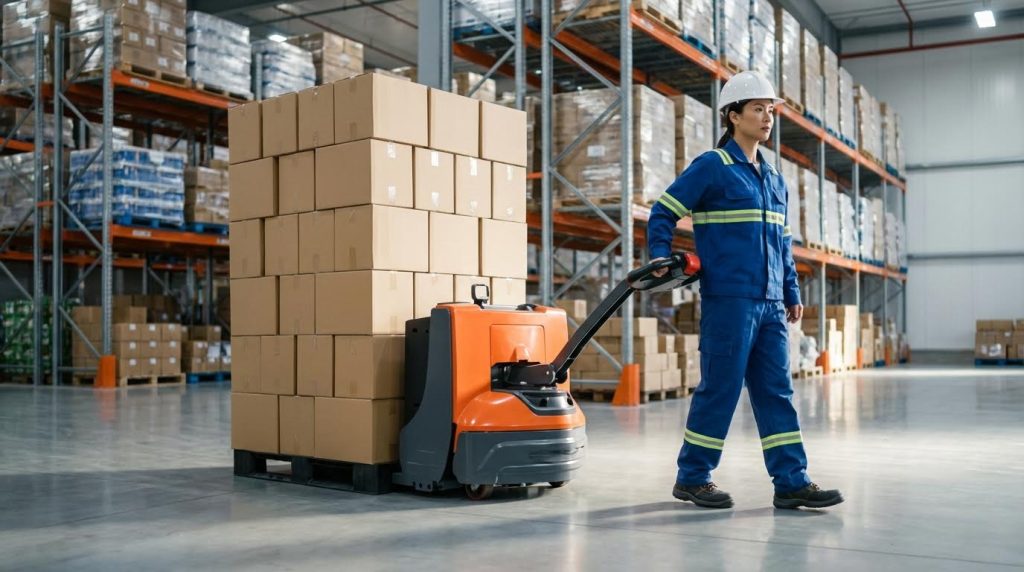
Before deciding how to move a dead electric pallet jack, it is important to understand why it stopped working. Most “dead” scenarios fall into a few broad categories: power supply issues, control or brake faults, and mechanical damage. Power problems often involve depleted or failed batteries, corroded terminals, or blown fuses and circuit breakers, which prevent current from reaching the drive and lift systems. Post-movement diagnostics typically include checking battery charge level, inspecting electrical connections for corrosion, and examining fuses and circuit breakers, along with reviewing error codes on the control panel and checking hydraulic fluid levels and leaks. These diagnostic checks help pinpoint the root cause.
Another common failure mode is a brake that will not release. Many electric pallet jacks use an electromagnetic or spring-applied parking brake that defaults to “on” when power is lost. If the manual brake release lever is not located and operated correctly, the unit will feel completely locked, leading operators to force it and risk damage. The manual release is usually near the handle base or under a small maintenance panel. Incorrect handling of this mechanism can cause sudden, uncontrolled movement.
Mechanical issues are the third major group. These include damaged wheels, bent forks, worn steering linkages, or internal hydraulic failures that prevent proper lifting or rolling. In some cases, the jack still moves but tracks poorly or drifts, which raises the risk during emergency relocation. Poor or irregular maintenance increases the probability of all these failure modes, since battery care, hydraulic checks, and electrical inspections are often skipped when equipment appears to be working. A structured preventive maintenance program significantly reduces unexpected “dead” events.
Risk profile when moving dead equipment
Once an electric pallet jack is dead, its built-in controls, braking, and power assistance are no longer available. That changes the risk profile compared with normal operation and affects every decision about how to move a dead electric pallet jack. With no powered braking, the unit can accelerate quickly on even mild slopes if pushed, especially when carrying or supporting a heavy load. This is why many procedures recommend using a controlled pulling motion instead of pushing, particularly on inclines, to maintain better control of the equipment. Pulling reduces the risk of the jack overrunning the operator.
There is also a higher crush and tip-over hazard when moving dead equipment. If the manual brake release is used without a clear path and proper manpower, the jack can roll unexpectedly, especially on uneven or sloped floors. For heavier units, guidelines for similar industrial trucks suggest using multiple people around the equipment to push and guide, with slow movement and constant communication, to prevent side rotation and trapping injuries. These principles carry over directly to dead electric pallet jacks.
Environmental and route conditions further increase risk. Obstructed aisles, debris, wet patches, and tight corners can turn a simple relocation into a high-risk task, because steering and braking control are limited. Best practice is to clear the surrounding area of personnel and obstacles, mark off the movement zone, and plan a route that avoids ramps and uneven surfaces wherever possible. This type of pre-move planning is a core safety control when relocating any dead material handling equipment.
Safe Movement Methods For Dead Electric Pallet Jacks
Preparing the jack and work zone for movement
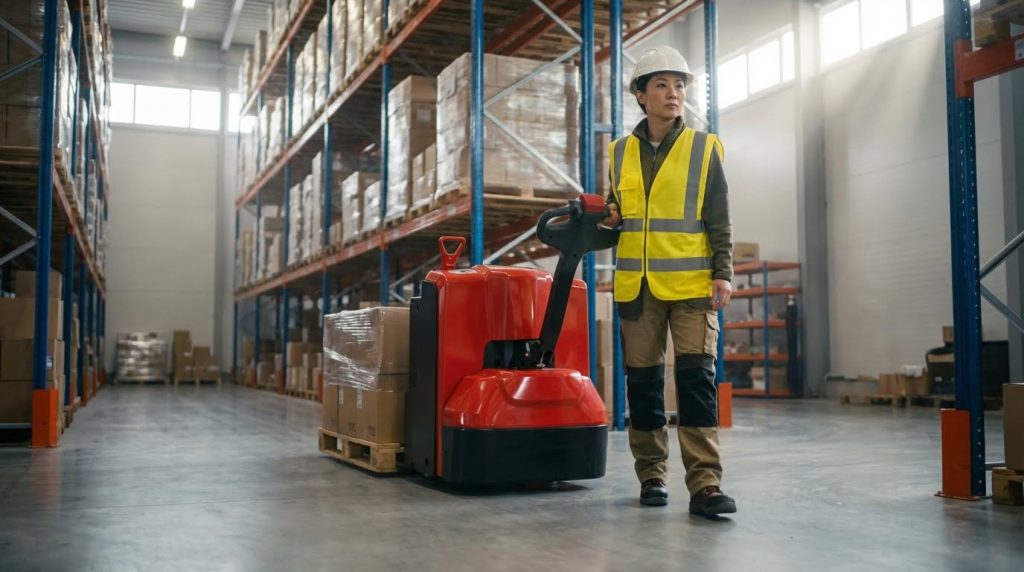
Before deciding how to move a dead electric pallet jack, lock out the power source and confirm the unit is switched off and unplugged to prevent accidental start-up. Clear a wide corridor along the planned route and use cones, tape, or signs to keep pedestrians and other traffic out of the movement zone before moving any non-operational material handling equipment. Walk the full path to check floor conditions, avoiding steep inclines, potholes, wet patches, and loose debris that could cause loss of control. Where the design allows, lower forks and any masts or platforms as much as possible to reduce the center of gravity and improve stability during relocation by lowering forks completely to the ground.
- Assign a spotter to manage communication and watch blind spots.
- Verify the jack’s approximate weight and compare it with the capacity of any assisting equipment.
- Equip all personnel with safety footwear, gloves, eye protection, and high-visibility vests in mixed-traffic areas including steel-toed boots, safety glasses, and work gloves.
Manual release, pushing, and controlled pulling
When planning how to move a dead electric pallet jack by hand, first locate and operate the manual brake release or tow valve so the drive wheel and load wheels can roll freely using the manual brake release lever before movement. Keep the handle in a comfortable, low-tension position and move at walking speed, maintaining clear verbal communication between all helpers. A controlled pulling motion usually offers better stability than pushing, especially on slight slopes, because the operator can brace their body weight and react sooner if the jack accelerates unexpectedly where pulling is recommended over pushing on inclines. For heavier units, add a second or third person to share the tractive effort and stabilize the chassis.
- Use manual pushing only for relatively light units and short distances, and never exceed the team’s safe force capability where lightweight models can be moved manually with multiple people.
- Position helpers at the rear and sides to control sideways rotation and prevent foot-crush points.
- Avoid manual movement on ramps; if unavoidable, keep the jack below the operator so the load remains uphill and move slowly with constant communication.
Forklift, tow bar, and chain-assisted relocation
For longer distances or heavier equipment, how to move a dead electric pallet jack safely often involves powered assistance. A forklift can lift and carry the disabled jack when an experienced operator centers the forks under strong structural members and raises it just high enough for ground clearance, maintaining balance to prevent tipping during travel by carefully inserting the forks and ensuring proper balance. Where rolling is preferred, a rigid tow bar connected to rated tow points on both machines provides more predictable geometry than chains, reducing shock loads and jack-knifing risk; speeds should stay around walking pace with very gentle starts and stops keeping tow-bar speeds below 2–3 mph. Chains should only be used when no better option exists, wrapped low around the base frame and attached to a suitable towing vehicle, with extremely slow acceleration and wide, planned turns to avoid side loading and instability requiring slow acceleration and sufficient maneuvering space.
Key selection guidelines for assisted movement
- Use a forklift when the jack’s weight is within rated capacity and you can lift from structurally strong points.
- Use a tow bar when rolling the jack over distance with good floor conditions and clear tow points.
- Use chains only as a last resort, with conservative speeds and an experienced operator controlling the towing vehicle.
Engineering Controls And Preventive Strategies
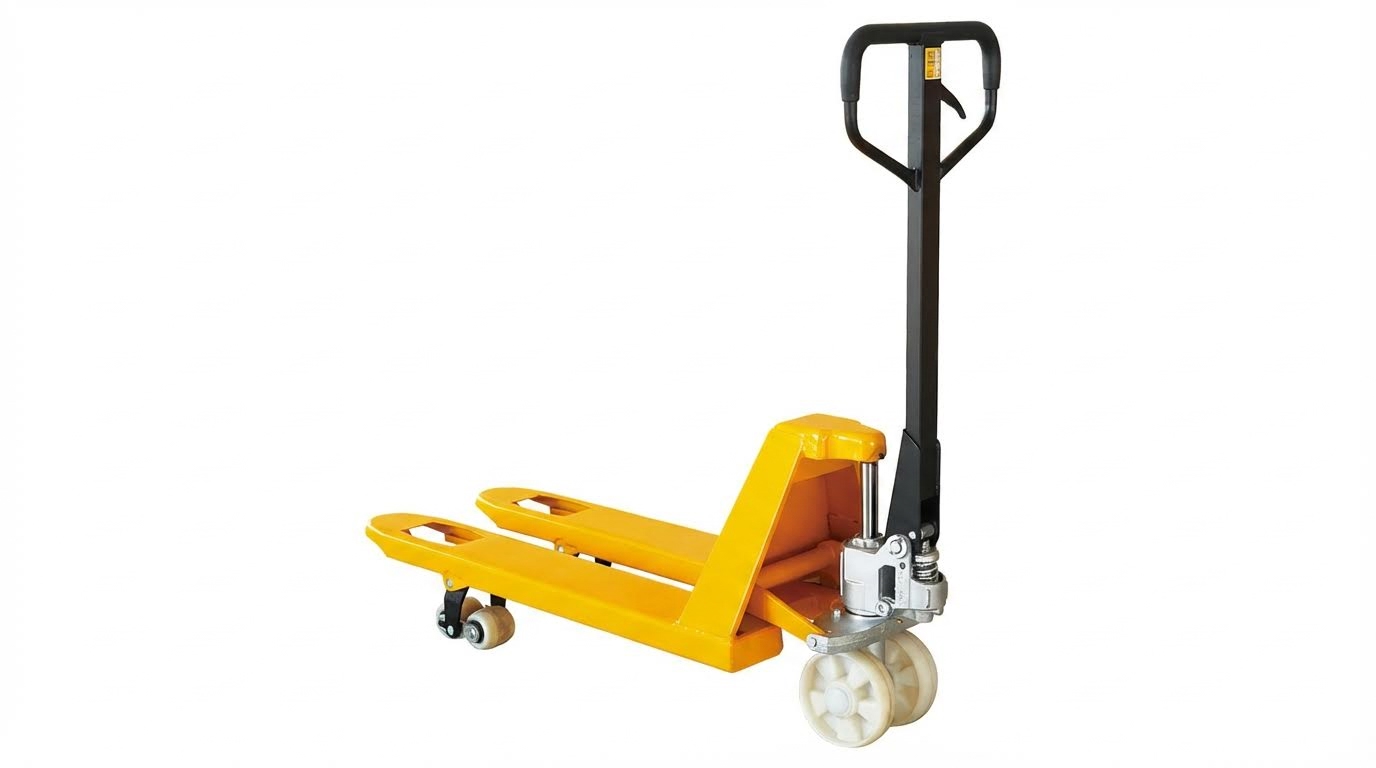
Using skates, dollies, and air casters for heavy units
When planning how to move a dead electric pallet jack that is very heavy or located in a tight area, engineered moving aids greatly reduce risk. The choice between skates, dollies, and air casters depends on floor condition, available space, and required positioning accuracy. These tools convert high concentrated wheel loads into multiple lower point loads, which protects slabs and reduces the manual force required from operators.
- Heavy-duty dollies: Best for relatively straight moves on sound concrete. Heavy moving dollies can support loads above 20,000 lb when positioned under strong structural points such as frame rails or axle locations Specialized moving equipment for heavy units. Use at least three dollies to create a stable base and chock them before loading or unloading.
- Hydraulic skates: Suitable when you must make small corrections to position, for example into a maintenance bay. Hydraulic skates combine wheels with jacking cylinders, so you can lift a section of the pallet jack a few centimeters, roll it, then set it back down with control Hydraulic skates for precise positioning. Always confirm the skate capacity exceeds the estimated share of the machine weight at that support point.
- Air casters: Ideal for very heavy units on smooth, sealed concrete. Air casters create a thin air film that lets a small team move large loads with low effort Air casters function effectively on smooth concrete floors. Because friction is extremely low, you must control movement with tag lines, spotters, and very small pushes to avoid uncontrolled drift.
Best-practice workflow with engineered moving aids
First, de-energize and secure the pallet jack, then survey the floor for cracks, slopes, and drains. Next, calculate approximate axle loads and select equipment with at least 125–150% of the expected point load for safety. Place skates or dollies under rigid structural members, not under plastic covers or battery trays. Throughout the move, keep speeds walking pace or slower and maintain clear communication between all spotters.
Battery, brake, and hydraulic design considerations
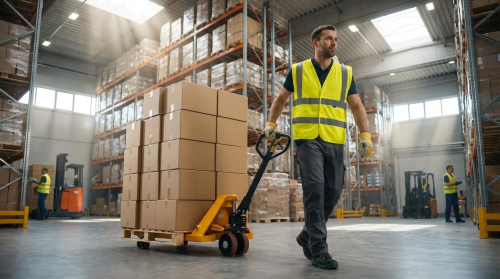
Understanding the built-in systems of the pallet jack is essential when deciding how to move a dead electric pallet jack and how to prevent future “dead” events. Battery, brake, and hydraulic design all influence rolling resistance, stopping distance, and the likelihood of unplanned motion during relocation. Good engineering controls aim to keep the unit stable when unattended, yet predictable and controllable when you intentionally release it to move.
- Battery and electrical design: Many dead pallet jack scenarios start with low charge, sulfated cells, or corroded connectors. After relocating a dead unit, a structured diagnostic should include checking state of charge, terminals, fuses, and visible wiring before returning it to service Diagnostic procedures post-movement. As a preventive measure, facilities benefit from scheduled battery maintenance and operator checks at the start of each shift.
- Brake design and manual release: Dead electric pallet jacks typically use spring-applied, electrically released brakes that default to “on” when power is lost. To move them safely, designers provide manual brake release levers or valves, usually near the tiller base or under a service cover Manual release of safety mechanisms. Clear labeling, guarded but accessible controls, and procedures that require wheel chocks before release all reduce runaway risk.
- Hydraulic system and parking stability: Hydraulics influence both lifting and how the jack behaves when parked. Design features such as check valves and slow-drop orifices help prevent sudden fork descent in the event of a line failure. Regular inspections for leaks and fluid level, combined with pre-use checks of lift and lower function, form part of a preventive maintenance plan that reduces unplanned failures and emergency moves Pre-operation inspection and hydraulic checks.
Preventive maintenance as an engineering control
A structured maintenance program ties all these elements together. Routine tasks include battery care, hydraulic inspection, and electrical checks, supported by operator walk-around inspections and documented defect reporting. Some facilities add sensors or telemetry to track usage and predict failures before the pallet jack dies in an aisle Preventive maintenance strategies. This combination of engineered hardware choices and disciplined maintenance greatly reduces the frequency and severity of dead-equipment movement events.
“”
Final Safety Checklist And Strategic Takeaways
Moving a dead electric pallet jack safely depends on planning, control, and respect for load paths. The loss of powered braking and steering turns a routine move into a high-risk task, so teams must slow down and treat it like a critical lift. Start by de-energizing the unit, surveying the route, and lowering forks to improve stability. This reduces stored energy and helps prevent sudden shifts.
Choose the movement method that fits the weight, distance, and floor conditions. Use manual release and controlled pulling for lighter units over short, level paths. Bring in forklifts, tow bars, or engineered aids when weight, slope, or distance increase. Keep speeds at walking pace, use spotters, and maintain clear communication to manage crush and tip-over risks.
Engineering controls and preventive maintenance close the loop. Good brake design, clear manual release points, healthy batteries, and sound hydraulics all cut the chance of future “dead” events. Facilities that pair robust equipment, such as Atomoving pallet trucks, with disciplined inspections face fewer emergencies and shorter downtime. As a best practice, treat every dead jack move as a planned operation: assess, control, move slowly, then diagnose and correct the root cause before returning the unit to service.
Frequently Asked Questions
How to Move an Electric Pallet Jack with a Dead Battery?
If your electric pallet jack is not functioning due to a dead battery, there are several methods you can use to move it safely. First, ensure the pallet jack is turned off and unplugged to prevent accidents. You can manually pull it, use a forklift, or employ a chain to drag it to a suitable location for maintenance or recharging. For longer distances or uneven surfaces, using a forklift is often the most efficient option. Safety Guide for Moving Pallet Jacks.
How to Transport an Electric Pallet Jack?
Transporting an electric pallet jack, especially over longer distances or onto a truck, may require additional equipment. If the pallet jack is too heavy to be moved manually, consider getting forklift assistance. A forklift can easily lift and transport the pallet jack to where it needs to go, saving time and effort. This method is particularly useful for navigating uneven surfaces or loading the pallet jack into a vehicle. Complete Guide to Transporting Pallet Jacks.