Equipment that lift pallets are machines designed to raise, move, and position palletized loads safely and efficiently, from simple hand jacks to fully automated pallet inverters and stacker cranes. When someone asks for “a machine to lift pallets of stuff,” the right answer depends on load weight, lift height, aisle width, and budget, not just the name of the device. This guide walks through core pallet-lifting equipment types, how forklifts and inverters fit into modern automated handling, and how to match each option to your facility’s layout, throughput, and safety requirements. By the end, you will know which pallet lifting machine best supports your operations, ergonomics, and long-term total cost of ownership.
Core Types Of Equipment That Lift Pallets
Core pallet-lifting equipment ranges from simple jacks to compact stackers, and each type is a different “machine to lift pallets of stuff” optimized for specific load, distance, and lift-height needs.
This section focuses on low‑level pallet transport and low‑to‑mid‑level stacking options. You will see how manual pallet jack and electric pallet jacks compare, then how walk‑behind and ride‑on stackers extend your vertical reach without jumping straight to forklifts.
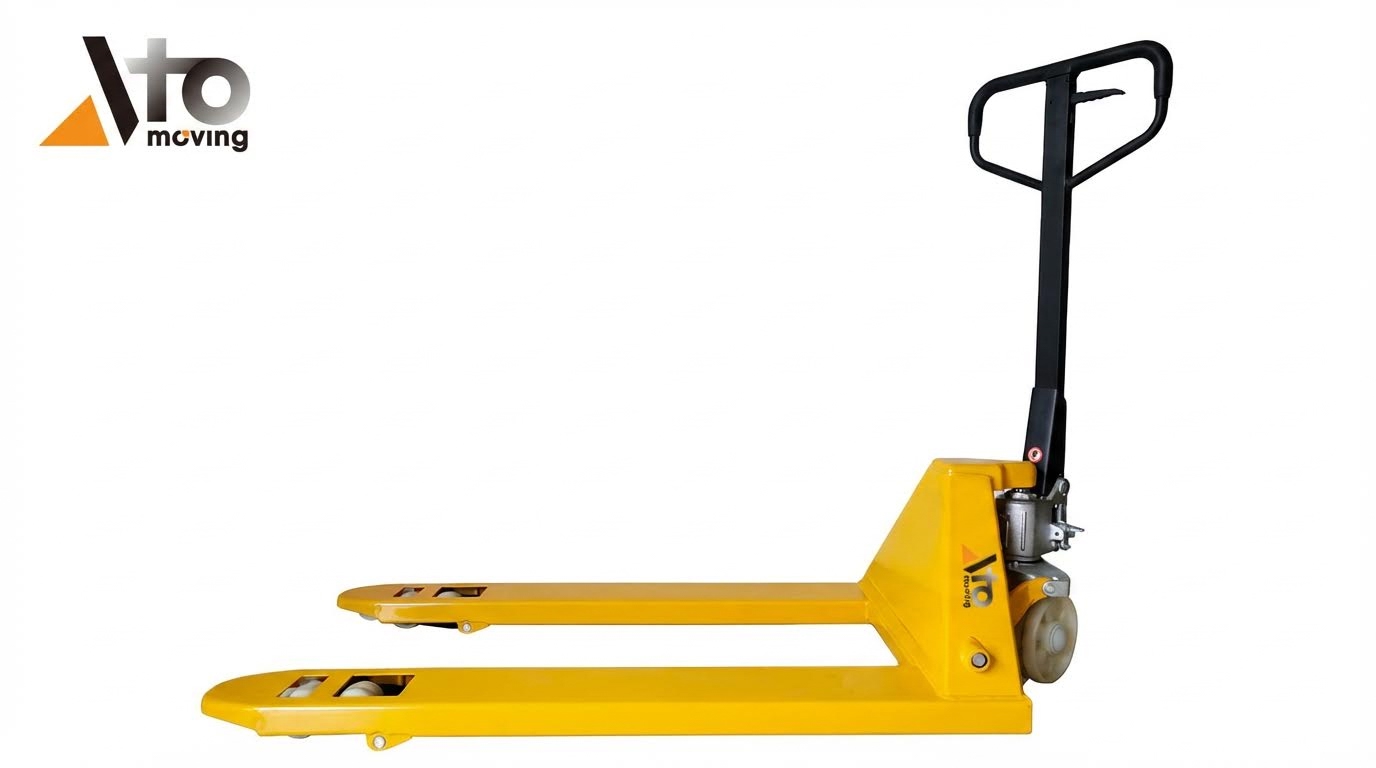
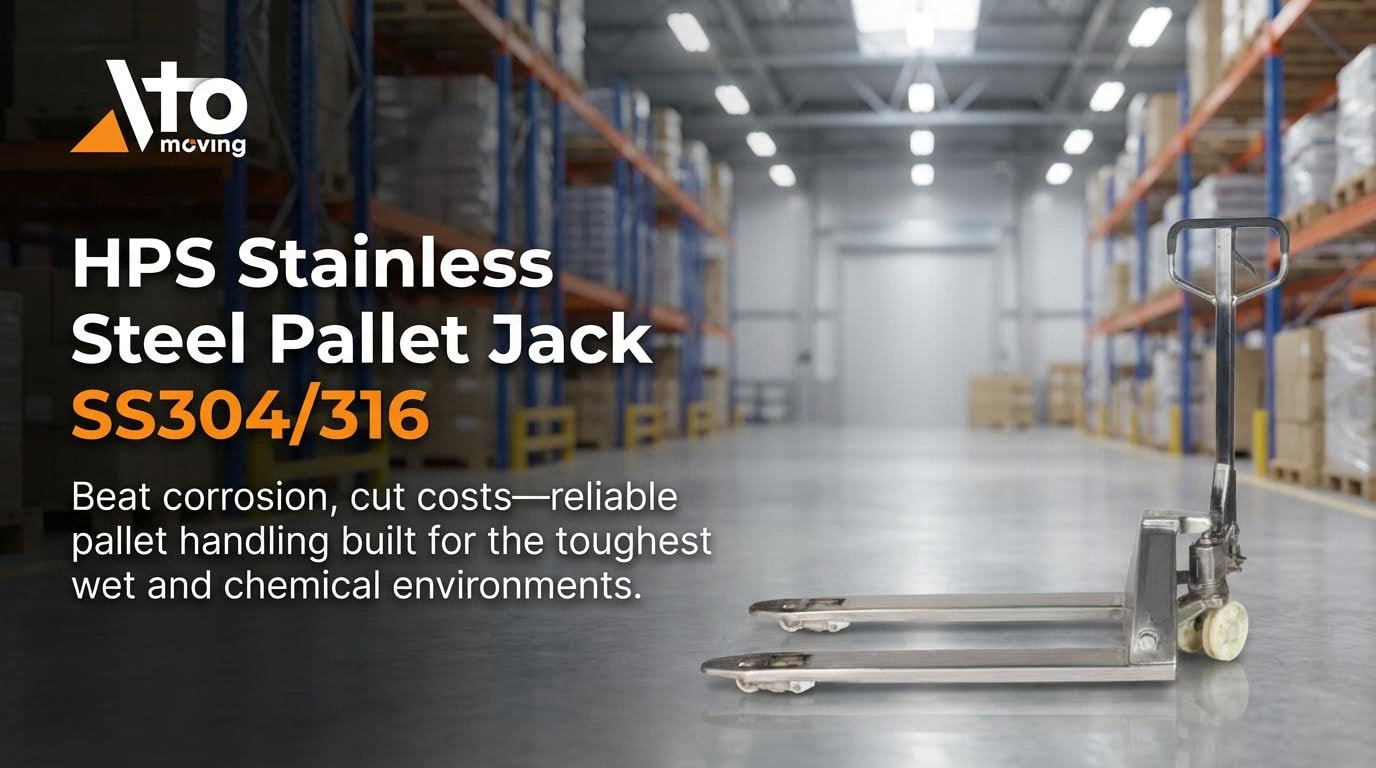
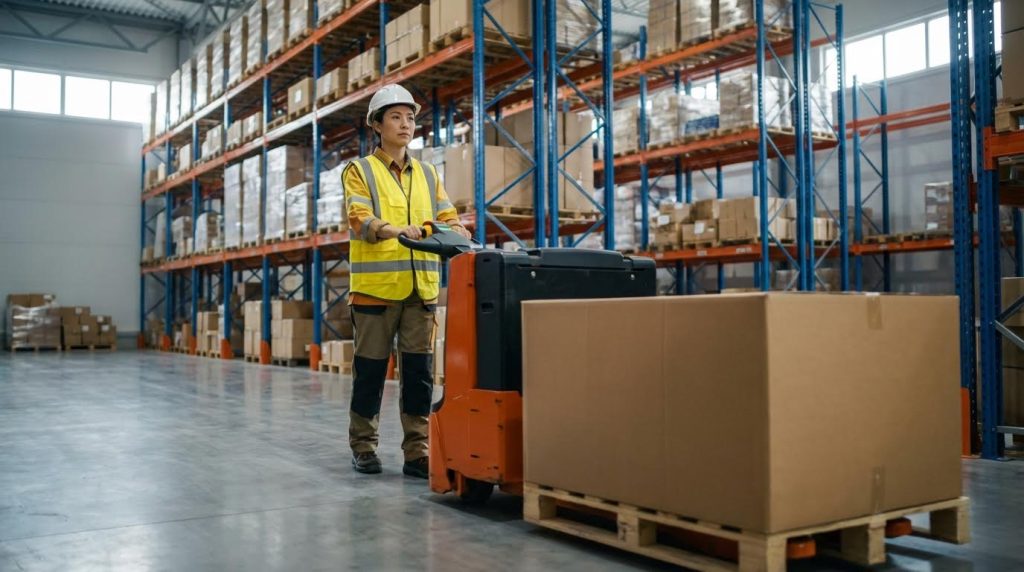
Manual And Electric Pallet Jacks
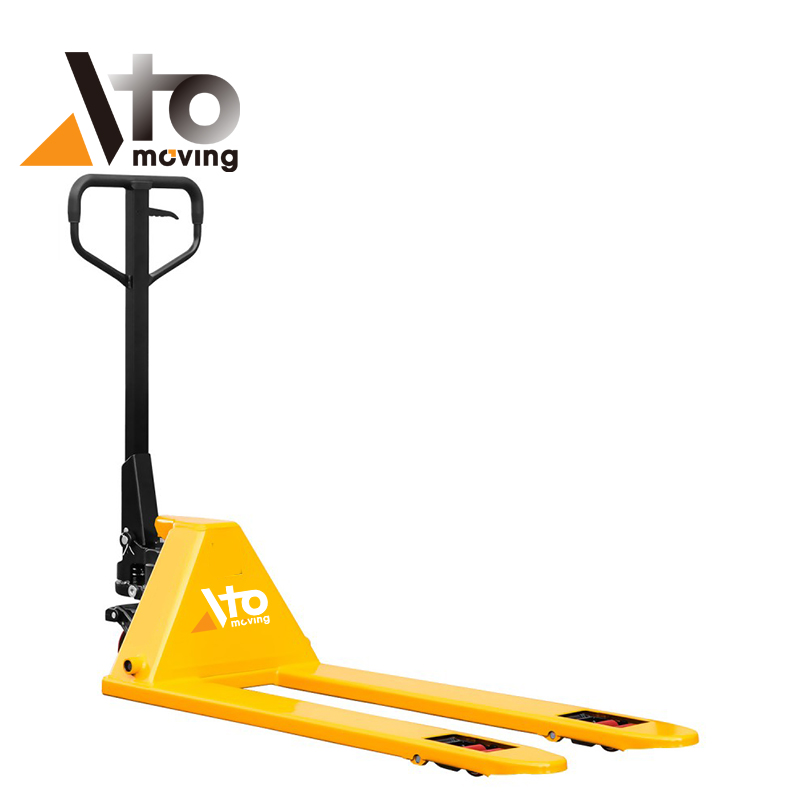
Manual and electric pallet jacks are low-lift trucks designed to move pallets at floor level, with manual units minimizing capital cost and electric units maximizing throughput and ergonomics for frequent moves.
Feature
Manual Pallet Jack
Electric Pallet Jack
Field Impact (Operator & Facility)
Typical capacity
≈1,000–2,500 kg (up to 2,500 kg common) capacity data
Manual jacks cut capital spend; electrics pay back via labor savings in multi-shift operations.
Maintenance complexity
Daily visual checks, wheel and bearing inspection, periodic lubrication; ≤3 hours/year typical maintenance info
Adds batteries, chargers, wiring, power electronics; some models use predictive diagnostics maintenance info
More components mean more potential failure points but also better tools to predict and prevent downtime.
Labor & ergonomics
Higher physical effort; suited to low daily pallet counts
Reduces operator strain and labor cost over time labor data
Directly impacts fatigue, injury risk, and sustainable pick rates across shifts.
In practical terms, a manual pallet jack is the lowest-cost, simplest machine to lift pallets of stuff a few centimeters off the ground and shuttle them short distances. An electric pallet jack turns that same basic function into a powered, higher-throughput solution that supports tighter labor planning.
Manual jacks for simplicity: Ideal where daily pallet movements are low, operators are multi-tasking, and capital budgets are tight.
Electric jacks for volume: Better where you see continuous dock activity, long travel paths, or three-shift operations, because they dramatically cut push/pull force and walking time.
Floor and ramp limits: Both types are low-clearance; they struggle on steep ramps and rough yards because small load wheels amplify every floor defect.
Safety and training: Electric units require more formal training and pre-use checks, aligning with OSHA/ISO powered industrial truck expectations even if classified differently from full forklifts.
💡 Field Engineer’s Note: Many sites overload manual pallet jacks “just for one trip,” which spikes handle force and wheel point-loading on concrete. Over time, this micro-cracking shows up as spalling near docks and in trailer pits.
How to decide between manual and electric pallet jacks
Think in pallets per hour and distance per pallet. When operators routinely exceed a few kilometers of walking per shift or push close to capacity loads, electric jacks usually return their higher purchase price through lower labor and injury costs.
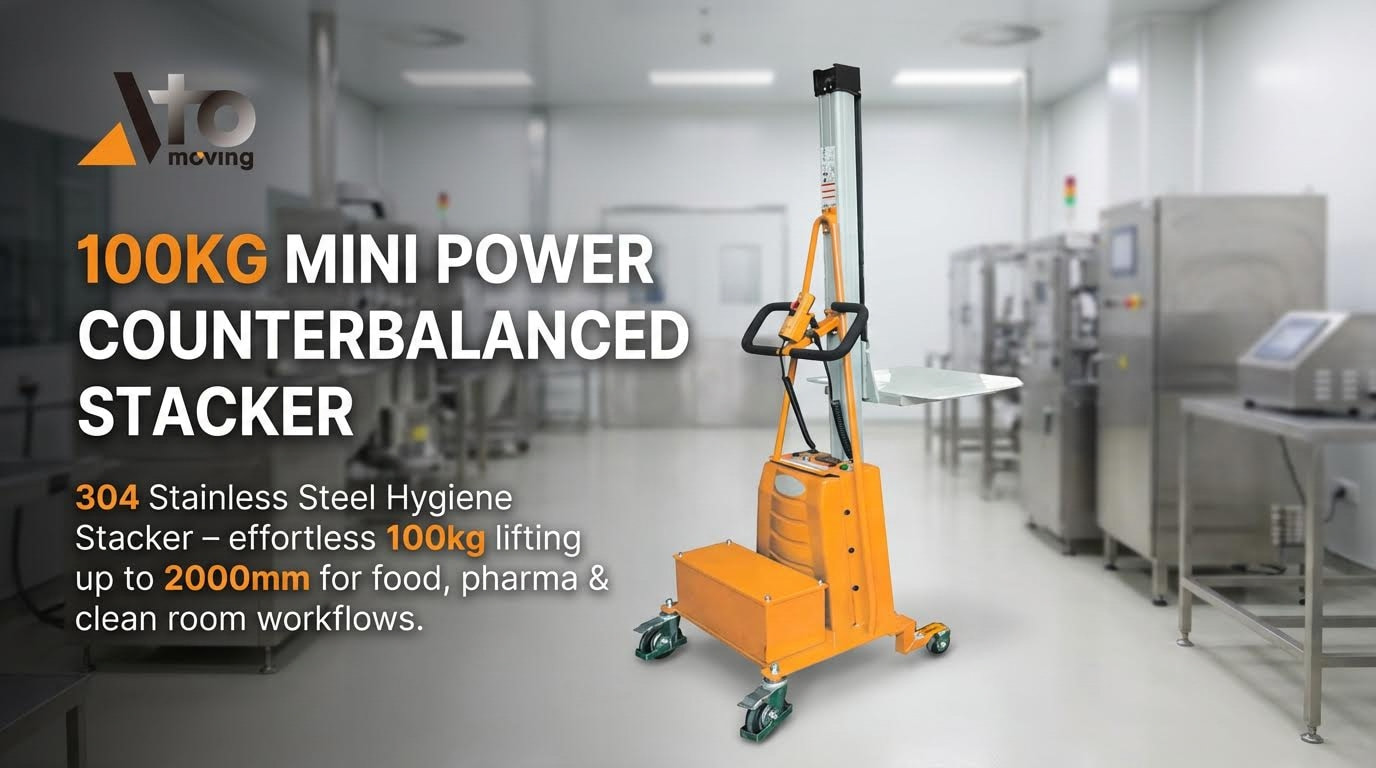
Walk-Behind And Ride-On Pallet Stackers
Walk-behind and ride-on pallet stackers are compact lift trucks that both transport and vertically stack pallets, bridging the gap between pallet jacks and full forklifts for low-to-mid racking heights.
Medium to high duty cycles, more continuous operation
Ride-on units are better where pallets are constantly moving between dock and racking.
Power system
Typically 24–36 V batteries shared with small electric trucks battery info
Often 36–48 V for higher travel speeds and lift performance battery info
Higher voltage supports faster, smoother lifting and driving with less current draw.
Best use case
Small to mid-size warehouses needing occasional stacking to 3–5 m stacker use case
Longer runs and frequent stacking where a full forklift is overkill
Ideal intermediate step when you outgrow pallet jacks but do not yet justify a fleet of forklifts.
From an operations standpoint, both walk-behind and ride-on stackers are still a machine to lift pallets of stuff, but they add vertical capability that transforms storage density. You gain the ability to place pallets into low and mid-level racking without bringing in a counterbalanced truck for every put-away.
Walk-behind stackers as “first forklift”: They are often the first powered lifting solution for growing facilities that need stacking but want lower purchase price and simpler training than full forklifts.
Ride-on stackers for distance: The operator platform matters once your typical pallet trip exceeds 30–50 m; riding instead of walking protects knees and keeps cycle times consistent across the shift.
Mast stability and floor flatness: Because loads rise to 4–6 m, floor levelness and mast deflection become important; uneven slabs translate directly into sway at height.
Attachments and flexibility: Many ride-on stackers can use simple attachments (e.g., different fork lengths), giving more flexibility than a basic pallet jack without the complexity of a full attachment-ready forklift.
💡 Field Engineer’s
Forklifts, Inverters, And Automated Pallet Handling
Forklifts, pallet inverters, and automated systems form the heavy-duty backbone when you need a machine to lift pallets of stuff at higher heights, tighter aisles, or fully automated throughput. This section explains how counterbalanced forklifts, reach trucks, pallet inverters, AGVs, and AS/RS stacker cranes each handle palletized loads, where they fit in your layout, and how they impact safety, storage density, and lifecycle cost.
💡 Field Engineer’s Note: Once you move beyond manual pallet jack, floor flatness, rack clearances, and traffic rules become non‑negotiable. Many “mysterious” tip-overs trace back to uneven slabs or mis-set rack beam heights, not the truck itself.
Counterbalanced And Reach Forklift Designs
Counterbalanced and reach forklifts are the primary choice when a facility needs a machine to lift pallets of stuff between truck docks and racking up to 10–12 m while balancing aisle width and storage density. Counterbalanced forklifts trade space for versatility, while reach trucks trade some capacity for narrow-aisle, high-bay performance.
Parameter
Counterbalanced Forklifts
Reach Forklifts / Reach Trucks
Field Impact For Operators & Planners
Typical capacity
1,500–5,000 kg (up to 50,000 kg heavy-duty) capacity data
Use counterbalanced where ground is rough and weather exposed; keep reach trucks on flat, finished slabs.
Stability principle
Rear counterweight balances front load on forks
Outriggers and pantograph / moving mast support load
Operators must respect load center; long or uneven pallets quickly eat into rated capacity at height.
Energy systems
Commonly 36–48 V traction batteries for indoor use battery data
Typically high-efficiency electric with 36–48 V batteries
Battery sizing and charging strategy set your maximum pallets/hour and shift length without swap-outs.
Best use cases
Truck loading, mixed indoor/outdoor work, production support, general “one truck does most tasks.”
High-bay storage, dense racking, narrow aisles, high SKU count DCs.
Pick counterbalanced for flexibility; pick reach when storage density and tall racking are the primary goals.
Why reach trucks allow narrower aisles than counterbalanced trucks
Reach trucks push the load into the rack using a moving mast or pantograph instead of turning the whole chassis. That means the truck itself can stay aligned with the aisle, so you don’t need extra width for swinging the rear end around. In practice, this saves 0.5–1.0 m of aisle width compared to a counterbalanced truck at the same lift height, which translates directly into more pallet positions per square metre.
💡 Field Engineer’s Note: When you convert from counterbalanced to reach trucks, re-check slab flatness and rack plumb. At 10 m high, a 5 mm floor dip can feel like a “swaying mast” to operators and slow them down by 15–20%.
Pallet Inverters And Load Rotation Systems
Pallet inverters and load rotation systems clamp, rotate, and transfer loads when you need a machine to lift pallets of stuff and flip, swap, or re-orient it without manual restacking. They solve problems that forklifts alone cannot handle efficiently, such as damaged pallets, hygiene segregation, and export pallet changes.
Core function: Rotates a clamped pallet load (often 90–180°) so you can change pallets, remove damaged boards, or free stuck product layers without hand-bombing cases.
Hygiene and pallet exchange: Enables fast transfer from “dirty” wooden pallets to “clean” plastic or in-house pallets at inbound, critical in food and pharma flows where pallet contamination is a risk.
Damage recovery: Allows you to salvage collapsed or leaning loads by reclamping and re-squaring, reducing write-offs and rework time versus manual re-stack.
Integration with forklifts: Usually loaded/unloaded by counterbalanced or reach trucks; the inverter does the rotation while the truck simply handles approach and removal.
Operator safety: Eliminates much of the manual case handling associated with re-palletising, cutting musculoskeletal risk and keeping you closer to OSHA and ISO ergonomics guidance.
Throughput impact: A single inverter can process pallet swaps in minutes, freeing forklifts for value-adding moves instead of tying them up at a rework area.
Typical pallet inverter use cases in real warehouses
Common applications include swapping CHEP or pooled pallets to internal pallets at receiving, moving export loads onto heat-treated pallets, rotating frozen blocks so they temper evenly, and flipping bagged product to relieve pressure points. In all these cases, the inverter turns a slow, two-person manual job into a fast, semi-automatic cycle with predictable handling time.
💡 Field Engineer’s Note: Plan inverter locations like you would a bottleneck machine: close to docks, with clear forklift approach lanes and buffer positions. Poor placement can add 30–60 seconds of dead travel to every pallet swap.
Automation, AGVs, And AS/RS Stacker Cranes
Automation, AGVs, and AS/RS stacker cranes turn “a machine to lift pallets of stuff” into a coordinated, software-driven system that moves and stores pallets with minimal human driving. Instead of a single truck and operator, you get fleets of vehicles and cranes controlled by WMS and traffic software.
Technology
How It Lifts & Moves Pallets
Typical Specs / Characteristics
Field Impact On Operations
Automated Guided Vehicles (AGVs)
Self-driving vehicles follow fixed paths (tape, wires, lines) to carry pallets between defined points AGV data
Run at moderate speeds on repeat routes; can be tugger style, fork-style, or unit-load platforms.
Ideal for repetitive flows (dock-to-buffer, buffer-to-line); reduces driver labour and standardises travel time.
Autonomous Mobile Robots (AMRs) for pallets
Use sensors, LiDAR, and maps to navigate dynamically around people and obstacles, not fixed paths AMR data
More flexible routing than AGVs; can reroute on the fly; typically lower top speeds for safety.
Best where layouts change or aisles are shared with people; supports stepwise automation without rebuilding the warehouse.
AS/RS stacker cranes (unit-load)
Rail-guided masts lift and shuttle pallets into high-density racking automatically stacker crane data
Heights often above 20 m; operate in very narrow aisles dedicated to automation AS/RS data
Maximises volumetric storage; replaces many forklifts with a few high-throughput cranes and conveyors.
Control & “digital twin” layer
WMS/WCS assigns missions, sequences moves, and can simulate layouts digitally digital twin data
Models throughput, queue lengths, and storage strategies before physical changes.
Reduces risk of mis-sizing systems; lets you test “what if we add a shift or new SKU family?” virtually first.
Investment scale
From individual AGVs/AMRs to full AS/RS
Substantial AS/RS projects commonly exceed ≈$1M investment data
Demands ROI analysis based on pallets/hour, labour savings, error reduction, and space cost.
Stabilise manual flows first: Standardise pallet types, load dimensions, and pick/put-away rules before automating; unstable processes simply fail faster when automated.
Map high-frequency lanes: Use time studies to find the heaviest pallet traffic routes—these are prime candidates for AGVs or AMRs.
Pilot with a narrow scope: Start with one or two lanes (e.g., dock to shipping buffer) to validate safety, throughput, and integration with your WMS.
Layer in AS/RS where justified: Once volumes and SKU profiles are stable, evaluate unit-load AS/RS for the densest, most repetitive pallet storage.
Use digital twins to de-risk: Simulate different fleet sizes, crane counts, and shift patterns to see bottlenecks before you pour concrete or sign large automation contracts.
💡 Field Engineer’s Note: In automated pallet systems, poor pallet quality is a hidden killer. Broken boards and inconsistent footprints jam AGVs and stacker cranes; budget for pallet standards and inspections, or your fancy system will spend its life in fault mode.
Final Thoughts On Selecting Pallet Lifting Machines
Choosing the right machine to lift pallets is an engineering decision, not a catalog pick. Load, lift height, aisle width, and floor quality all interact. If you ignore one factor, the others will punish you through damage, instability, or poor throughput. Low-level moves favor manual or electric pallet jacks, but once you add stacking, mast stability, floor flatness, and operator visibility become critical. Stackers and forklifts extend reach, yet they also magnify every defect in slab level and rack alignment.
At higher heights and tighter aisles, reach trucks, inverters, and automated systems demand disciplined design. You must respect load centers, pallet quality, and clearances, or you risk tip-overs and chronic slowdowns. Automation with AGVs, AMRs, or AS/RS only works if you first stabilize manual flows and standardize pallets and processes.
The best practice is simple. Start with a clear map of pallet flows, distances, and heights. Match equipment to those duty cycles, then verify geometry, floor tolerances, and safety rules before buying. Treat pallet quality and operator training as core design inputs, not afterthoughts. When in doubt, pilot a smaller Atomoving solution, measure real performance, and scale only when the data proves the case.
Frequently Asked Questions
What is a machine that can pick up pallets of stuff?
A forklift, also known as an industrial truck or lift truck, is a powered machine designed to lift and move materials over short distances. It is commonly used in warehouses and distribution centers to handle pallets efficiently. Forklift Overview.
What are some alternatives to forklifts for lifting pallets?
If you don’t have access to a forklift, you can use manual pallet jacks or electric pallet jacks. These tools allow you to safely and efficiently move pallets around a facility without the need for a forklift. Forklift Alternatives Guide.
What is a pallet jack and how is it used?
A pallet jack, sometimes called a pump truck, is a machine maneuvered by warehouse staff on foot. Both electric and manual models are available, and they are exclusively used for transporting pallets within a facility. Warehouse Equipment Tips.