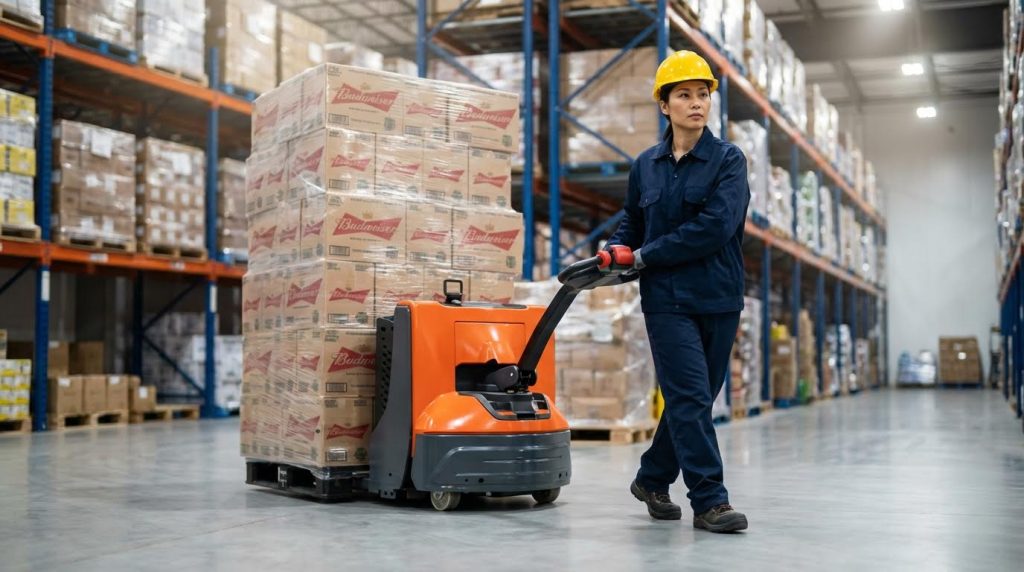
Selecting the right hydraulic fluid is critical if you want your pallet jack to lift smoothly, last longer, and stay safe in daily use. This guide explains what type of hydraulic oil for hydraulic pallet truck systems works best in real warehouse, cold store, and outdoor conditions. You will learn how viscosity, DIN 51524 oil classes, temperature, and duty cycle affect performance and service life. Use it as a practical, spec-driven checklist before you top up, change oil, or standardize fluids across your fleet.
Understanding Pallet Jack Hydraulic Oil Basics
How pallet jack hydraulics actually work
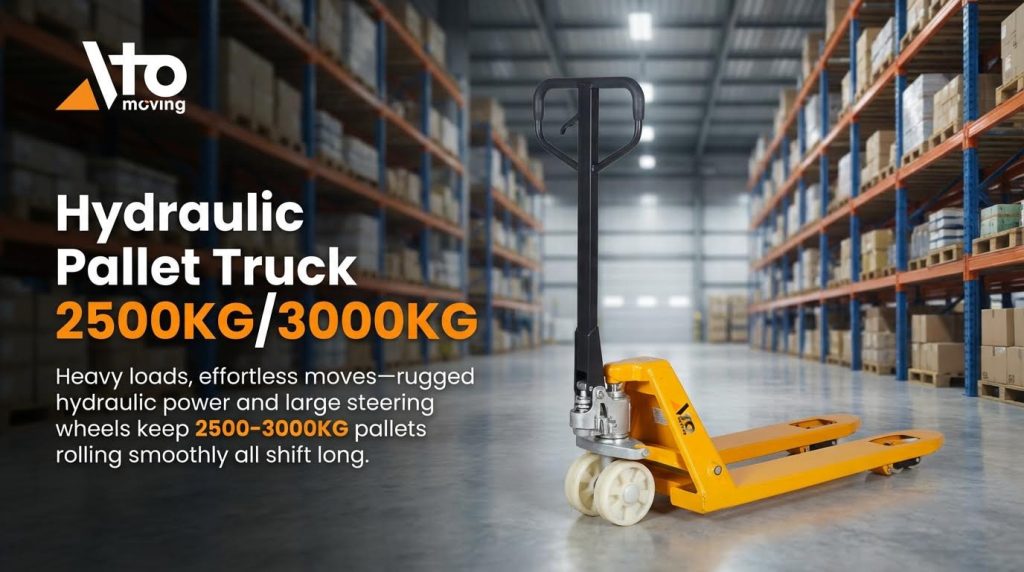
A manual pallet jack uses a compact hydraulic circuit to convert your pump strokes into lifting force. Each handle stroke drives a small pump piston that pressurizes hydraulic oil in the reservoir and sends it to the lift cylinder. Because hydraulic oil is nearly incompressible, this pressure moves the main piston, which raises the fork assembly and the load. When you pull the release lever, a valve opens and allows the oil to flow back to the reservoir, so the forks lower in a controlled way. If the system loses oil through leaks, tipping, or operation on slopes, the jack may fail to lift or will only lift partially because there is not enough fluid to transmit pressure. Typical causes of oil loss include worn piston seals, system leaks, and positioning the truck on an inclined surface. Understanding this basic circuit helps you decide what type of hydraulic oil for pallet jack use will keep pressure transmission reliable and safe.
Core functions of hydraulic oil in pallet trucks
In a pallet jack, the hydraulic oil does far more than just “make it go up and down.” It has four core jobs: power transmission, lubrication, sealing, and protection. The oil transmits pressure from the pump to the lift cylinder, lubricates sliding and rotating parts, forms a thin film that helps seal clearances around pistons and valves, and protects internal surfaces from corrosion and wear. Hydraulic oils for pallet trucks are formulated to ensure smooth piston movement, reliable pressure transfer, and corrosion protection, while resisting aging and sludge formation over long service intervals.
To perform these functions, the oil must have suitable viscosity, good lubricity, and stable behavior over the pallet jack’s working temperature range. If the oil is too thin, the jack may feel spongy, leak internally, and struggle to hold a load; if it is too thick, pumping effort rises and lift speed drops, especially in cold areas. That is why most manufacturers recommend anti-wear hydraulic oils in ISO 32 or ISO 46 grades for pallet jacks, which balance easy pumping with adequate film strength at operating temperature. Well-chosen hydraulic fluids also help with heat dissipation, foam control, and contamination management, all of which extend seal life and reduce the risk of sudden failure. When you ask what type of hydraulic oil for pallet jack systems is best, you are really choosing a fluid that can reliably handle all of these roles under your specific loads and temperatures.
Key Technical Criteria For Hydraulic Oil Selection

Viscosity choice: ISO 32 vs ISO 46 for pallet jacks
When deciding what type of hydraulic oil for pallet jack systems, viscosity is usually the first specification to confirm. ISO 32 hydraulic oil has a kinematic viscosity of about 32 cSt at 40°C and flows more easily in cold conditions, which helps reduce sluggish lifting at startup and minimizes cavitation in small hand-pump systems. ISO 46 hydraulic oil is thicker at around 46 cSt at 40°C and suits warmer ambient temperatures or applications with higher loads and longer pump cycles, where a stronger lubricating film is beneficial. For many hand pallet jacks, manufacturers recommend ISO 32 for general indoor use, with ISO 46 considered where average operating temperatures are higher or the truck works near its rated capacity for long periods. A practical rule is to select the lowest viscosity grade that still maintains stable lifting speed, good film strength, and acceptable leakage control at your typical operating temperature range.
Comparing DIN 51524 HL, HLP, HVLP and bio-oils
Beyond viscosity, the DIN 51524 classification helps narrow down what type of hydraulic oil for pallet jack hydraulics. DIN 51524-1 HL oils provide basic lubrication, corrosion protection, and ageing resistance for standard pressure ranges up to roughly 220 bar in simple hydraulic systems. DIN 51524-2 HLP oils add anti-wear and high-pressure additives, allowing operation at high pressures up to around 200 bar with better resistance to temperature rise and component scuffing in more heavily loaded pallet trucks DIN 51524 HL, HLP, HVLP overview. DIN 51524-3 HVLP oils further improve viscosity–temperature behavior and scuffing resistance, so the oil remains neither too thick in the cold nor too thin when the hydraulic unit heats up during intensive use HVLP properties. Bio-hydraulic oils, such as HETG or HEES types, offer biodegradability and are chosen in environmentally sensitive areas like food handling near drains or outdoor loading zones where leaks could reach soil or water, but they may cost more and can have different oxidation and seal-compatibility behavior Biodegradable hydraulic fluids. For most warehouse pallet jacks, HL or HLP mineral oils are adequate, while HVLP or bio-oils are justified when you expect wide temperature swings, long duty cycles, or strict environmental requirements.
Temperature, load, and duty cycle considerations
Temperature, load profile, and duty cycle tie together when specifying what type of hydraulic oil for pallet jack fleets. In cold stores or unheated loading docks, low pour point and good low-temperature fluidity are critical so the pump can build pressure without excessive effort; in some cold store manuals, a special low-temperature hydraulic oil or a 1:1 blend with standard oil is recommended to keep lifting performance stable at low ambient temperatures Cold store oil recommendation. For heavily loaded pallet jacks that operate near rated capacity, an HLP or HVLP oil with strong anti-wear additives and high ageing resistance helps maintain film strength on pistons, valves, and pump components under repeated high-pressure cycles High-pressure and temperature behavior. Where the duty cycle is light and intermittent, such as occasional pallet moves per shift, a standard HL oil with ISO 32 or ISO 46 viscosity is usually sufficient, provided it meets basic requirements for lubricity, oxidation stability, and corrosion protection Hydraulic oil requirements. In contrast, for intensive multi-shift operation, it is safer to specify an HLP or HVLP grade with good foam resistance and thermal stability, then back this up with regular oil checks and annual changes so the fluid continues to provide reliable power transmission, lubrication, and corrosion protection over the pallet jack’s service life.
Matching Oil Type To Application And Environment
Warehouse, cold store, and outdoor operation scenarios
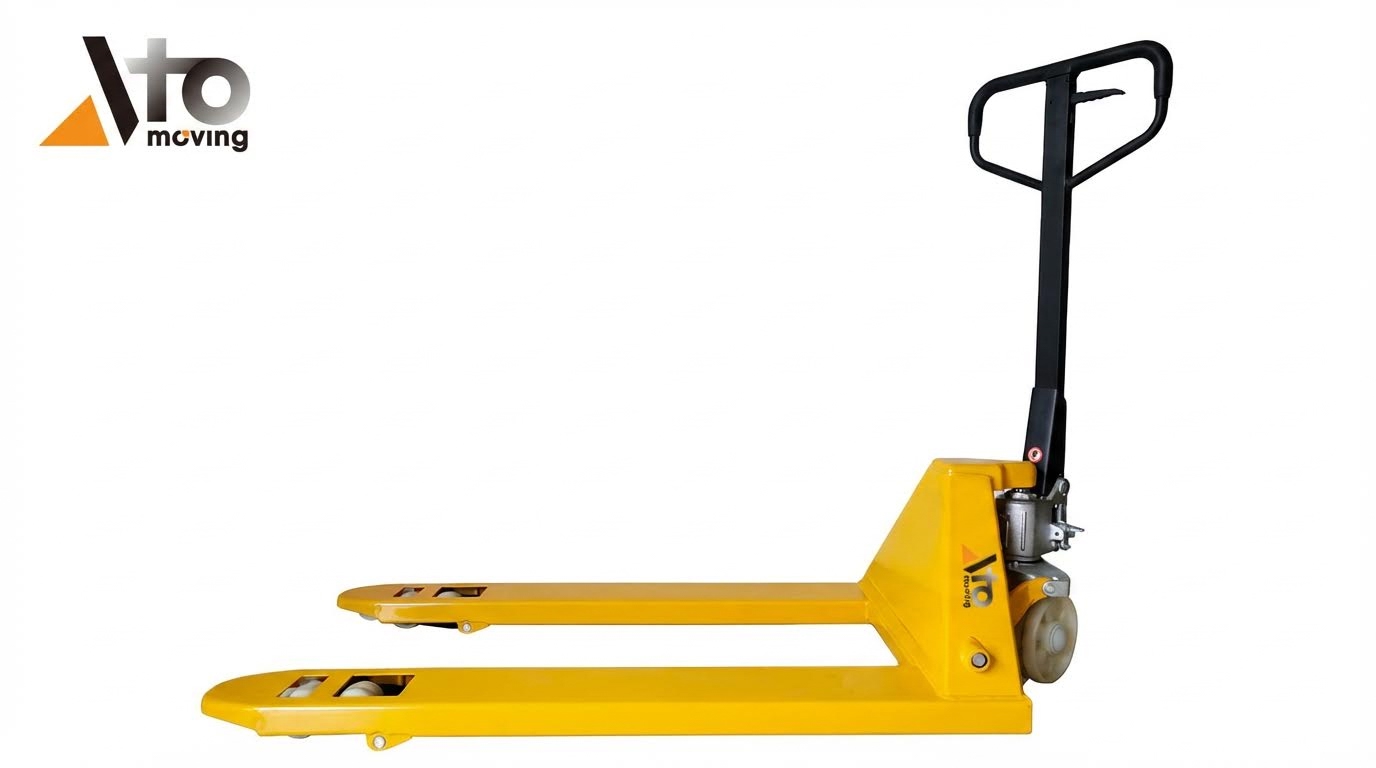
In standard indoor warehouses with moderate temperatures, mineral hydraulic oils that meet DIN 51524-1 HL or DIN 51524-2 HLP are usually sufficient for pallet jacks, as they provide stable lubrication, corrosion protection, and ageing resistance for pressures up to the typical 150–200 bar range of pallet truck hydraulics DIN 51524-1 HL and DIN 51524-2 HLP. For users asking what type of hydraulic oil for pallet jack in a general warehouse, an ISO 32 or ISO 46 oil with these DIN classifications usually matches OEM guidance ISO 32 or ISO 46 recommendation. In cold stores and freezers, low ambient temperature increases viscosity, so you should use lower-viscosity or HVLP-type oils with improved viscosity–temperature behavior to maintain pumpability and smooth lifting HVLP viscosity–temperature behavior. Some cold store operating instructions even specify mixing standard hydraulic oil 1:1 with a special cold-store hydraulic oil to secure function at very low temperatures 1:1 cold-store oil mix.
Outdoor pallet jack use adds temperature swings, moisture, and often dirt, so oil choice must balance viscosity, oxidation resistance, and water separation. In warm outdoor climates or high-load handling, ISO 46 hydraulic oil is often preferred over ISO 32 because its higher viscosity at 40 °C provides a stronger lubricating film under load ISO 32 vs ISO 46 data. Where oil leaks can reach soil or water (yards, loading ramps near drains, agricultural or marine environments), biodegradable bio-hydraulic oils (such as HETG or HEES types) reduce environmental impact and help with regulatory compliance Bio-hydraulic oils for sensitive areas Environmental considerations for hydraulic fluids. In all these scenarios, matching the oil’s viscosity grade and DIN class to the actual temperature range, duty cycle, and environmental sensitivity is the most reliable way to avoid sluggish lifting, cavitation, or premature seal wear.
Quick scenario-to-oil selection guide
| Scenario | Typical choice | Key reason |
|---|---|---|
| Indoor warehouse (15–30 °C) | Mineral HL or HLP, ISO 32 or 46 | Balanced lubrication and corrosion protection |
| Cold store / freezer | Low-temp or HVLP oil, often mixed 1:1 with standard oil | Maintains flow and lift at low temperatures |
| Outdoor, warm climate, heavy loads | HLP or HVLP, ISO 46 | Stronger film under higher load and temperature |
| Environmentally sensitive areas | Bio-hydraulic oil (HETG / HEES) | Biodegradability and lower ecological risk |
Maintenance intervals, refilling, and contamination control

Even if you choose the ideal hydraulic oil, poor maintenance quickly destroys its performance and shortens pallet jack life. A practical rule is to check oil level roughly every six months and change the oil about once per year for frequently used trucks Six‑month check and annual change. To refill, place the jack on a level floor, lower the forks fully, remove the reservoir plug, and add the specified ISO 32 or ISO 46 hydraulic fluid slowly with a clean funnel until the level reaches the bottom edge of the fill port, then pump the handle 10–15 times to purge trapped air before resealing Refilling and air bleeding procedure Pumping to purge air.
Contamination control is as important as level checks because dirt, water, and air bubbles accelerate wear and cause erratic lifting. Daily wiping of the forks, cylinder area, and wheels keeps dust and debris from being dragged into seals and bearings Daily cleaning routine. Oil that looks milky or cloudy indicates water ingress and should be replaced completely to prevent internal rust and loss of load-holding capability Moisture contamination indicators. Regularly inspecting for external leaks, worn piston seals, and operation on slopes helps you catch oil loss early and avoid running the hydraulic system with low fluid, which can prevent proper lifting and damage components Causes of oil loss.
- Always refill with the same fluid type and viscosity already in the system to avoid additive conflicts and seal issues Mixing different fluid types.
- If the pallet jack has been idle for more than a year, plan a full oil change before putting it back into regular service Change after long idle periods.
- Dispose of used oil through certified collection or recycling facilities in sealed, labeled containers to comply with environmental rules and prevent spills Used oil disposal guidance.
When operators understand both what type of hydraulic oil for pallet jack service is specified and how to keep that oil clean and at the right level, the hydraulic system typically runs smoother, with fewer leaks, less downtime, and a longer service life for the truck.
“”
Summary: Spec-Driven Oil Choices For Longer Service Life
The right hydraulic oil turns a pallet jack’s simple circuit into a safe, durable lifting system. Viscosity, DIN class, temperature range, and duty cycle must work together, not in isolation. If viscosity is wrong, seals lose their film, pumps cavitate, and operators struggle with stiff or spongy lifting. If additives are wrong, wear rises and internal leaks grow until the jack cannot hold a load.
Spec-driven selection is the safest approach. Start with the OEM recommendation, then confirm ISO 32 or ISO 46 based on real operating temperature and load. Choose HL, HLP, HVLP, or bio-oils to match pressure level, temperature swing, and environmental rules. In cold stores and outdoor use, prioritize low-temperature flow and stable viscosity. In heavy, multi-shift work, prioritize anti-wear and ageing resistance.
Maintenance closes the loop. Operators must keep oil clean, at the right level, and free from water and dirt. Standardize oil types across the fleet where possible and avoid mixing fluids. For Atomoving pallet jacks or any other brand, a clear oil specification, written maintenance routine, and regular checks give the best mix of safety, uptime, and service life.
Frequently Asked Questions
What type of hydraulic oil is used in a pallet jack?
Pallet jacks typically use ISO 32 or ISO 46 hydraulic oil, which provides the right viscosity for the hydraulic system to function efficiently. The exact type may vary depending on the manufacturer’s recommendations and the operating temperature range. Always refer to the equipment manual for specific guidance.
Do pallet jacks use hydraulics?
Yes, pallet jacks use hydraulics to lift loads. A hydraulic pump, activated by a handle, pressurizes the oil in the system, allowing the forks to rise. Pallet Jack Types Guide.
How does a pallet jack lift work?
A pallet jack lifts using a hydraulic mechanism. When you pump the handle, it pressurizes hydraulic oil into a cylinder, raising the forks. Lowering is achieved by releasing the valve, allowing the oil to flow back. Pallet Truck Mechanics.