Knowing how to fill pallet jack with oil correctly keeps your trucks lifting smoothly, protects seals, and prevents dangerous failures. This guide walks through how pallet jack hydraulics work, the exact filling and bleeding steps, and the right oil specs and intervals for long service life. You will also learn how to spot low, dirty, or wrong oil before it causes lift, drift, or leak problems. Use this as a practical, shop‑floor checklist to keep every pallet jack in safe, reliable service.
Why Hydraulic Oil Level Matters In Pallet Jacks
How pallet jack hydraulics actually work
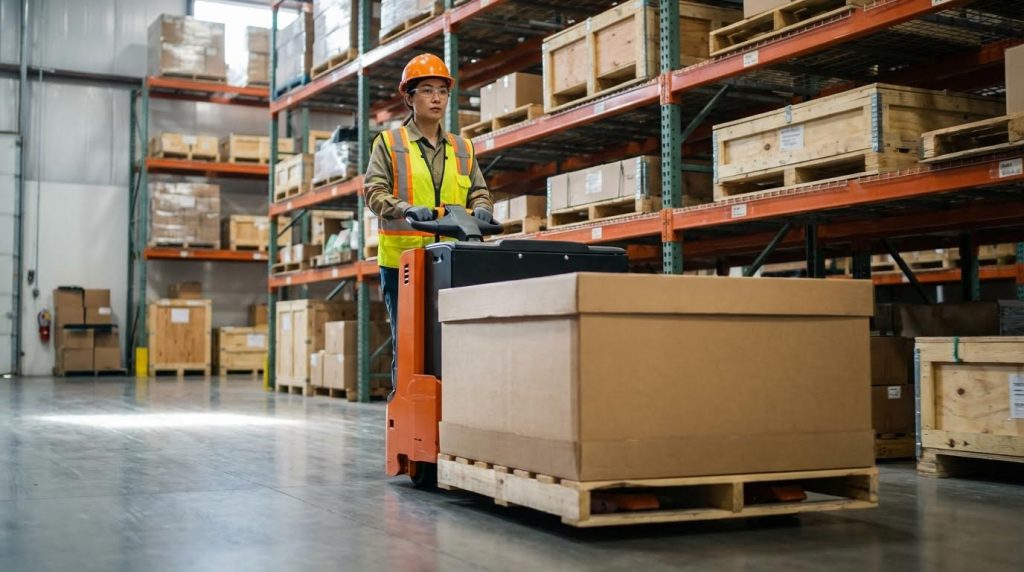
Inside a manual pallet jack, a compact hydraulic system turns your handle strokes into lifting force. The hydraulic pump pushes oil into a cylinder, and because oil is nearly incompressible, pressure in the cylinder forces the piston out and raises the forks. When you lower the control lever, a valve opens, oil flows back to the reservoir, and the forks come down in a controlled way.
For this system to stay reliable, three conditions must hold: the oil level must be correct, the oil must be clean, and the viscosity must match the design. If you want to learn how to fill pallet jack with oil correctly, you first need to understand that the pump, seals, and valves all depend on that oil film for both force transmission and lubrication. Wrong level or wrong oil changes how pressure builds and how fast internal parts wear.
Key hydraulic components in a pallet jack
- Handle and pump piston: Your pumping strokes drive a small piston that pressurizes the hydraulic oil.
- Check valves: One-way valves make sure oil only flows into the cylinder when you pump, not back into the reservoir.
- Hydraulic cylinder: Converts oil pressure into straight-line force to lift the fork frame.
- Reservoir: Stores hydraulic oil and supplies the pump inlet; its oil level is what you check and refill.
- Lowering / release valve: Opens a controlled path back to the reservoir so the load can descend smoothly.
- Seals and O‑rings: Keep oil in and air and dirt out; they rely on the right oil for lubrication and swelling behavior.
Because the reservoir volume is small (often well under a liter), even minor leaks or evaporation quickly shift the oil level outside the safe band. That is why most maintenance guides recommend checking hydraulic oil at least monthly or every few months, and replacing it about once a year for typical use conditions Cited Text or Data. When you know how to fill pallet jack with oil to the correct level, you keep this pressure system stable and predictable.
Effects of low, wrong, or contaminated oil
Oil problems in a pallet jack usually show up as lift issues, drift, noise, or leaks. The root causes fall into three buckets: low level, wrong grade, or contamination. Each one changes how pressure builds in the cylinder and how the pump and seals behave under load.
Typical symptoms vs. oil-related causes
| Observed symptom | Likely oil issue | Engineering reason |
|---|---|---|
| Forks will not lift or lift very slowly | Oil level too low, or viscosity too high | Pump draws air instead of oil, or thick oil causes high inlet losses and poor volumetric efficiency. |
| Forks lift, then drift down without touching the lever | Contaminated oil or damaged seals | Particles or sludge prevent valves from sealing, or worn seals let oil bypass internally under load. |
| Jerky or uneven lifting motion | Air bubbles in oil, low level, or dirty oil | Compressible air pockets and varying flow paths cause pressure spikes and stepwise movement. |
| Oil leaking around pump or cylinder | Overfilled reservoir or degraded seals | Thermal expansion and pressure push oil past seals; contaminated oil accelerates seal wear. |
| Handle feels “hard” but forks barely move | Wrong viscosity (too thick) or internal blockage | Pressure builds in pump chamber, but restricted flow and thick oil prevent adequate cylinder filling. |
Low hydraulic oil level is one of the most common problems. When the reservoir runs low, the pump starts pulling a mixture of oil and air. Air compresses under pressure, so some of your handle force goes into squeezing bubbles instead of lifting the load. The result is slow or no lift, and sometimes a “spongy” feel in the handle. Many troubleshooting guides list “forks do not lift” with low or insufficient hydraulic oil as a primary cause Cited Text or Data. Knowing how to fill pallet jack with oil to the proper mark is therefore a basic reliability task.
Using the wrong oil grade or viscosity creates a different set of issues. If the oil is much thicker than the recommended ISO VG32 / about 30 cSt at 40°C, the pump needs more suction force to pull it in, especially in cold conditions. That can cause cavitation, noisy operation, and poor lifting performance, and the jack may feel very hard to pump under load Cited Text or Data. If the oil is too thin, internal leakage past clearances increases, so the forks may struggle to reach full height with rated loads.
- Too low level: Causes air ingestion, cavitation, slow or no lift, and can burnish pump surfaces due to poor lubrication.
- Too high level (overfill): Reduces air space for thermal expansion, so pressure spikes can force oil past seals and create leaks.
- Too thick oil: Makes cold-start pumping difficult, reduces volumetric efficiency, and stresses handle linkages.
- Too thin oil: Increases internal bypass leakage, causes poor load holding and faster drift under static loads.
- Wrong additive package: May attack seal materials over time, leading to chronic seepage and premature seal failure.
Contaminated oil is the slow killer in pallet jack hydraulics. Water ingress (often from washing floors or outdoor use) turns the oil milky and reduces its lubricity. Solid particles from wear or dirt can wedge in valve seats and scratch the cylinder or pump bore. Maintenance instructions therefore call for checking oil appearance regularly and replacing it if it looks milky or dirty Cited Text or Data. When you drain and refill as part of learning how to fill pallet jack with oil properly, you are also flushing out these contaminants.
Why correct oil care improves safety and lifespan
- Reduced wear: Clean oil with the right viscosity maintains a stable film on pump and cylinder surfaces, slowing dimensional wear.
- Consistent load holding: Proper level and clean valves reduce unplanned fork drift under load, which is critical for operator safety.
- Predictable control: Correct oil behavior across temperature ensures the same lever feel on cold mornings and warm afternoons.
- Lower failure risk: Regular inspections for leaks and oil condition catch seal failures before they become sudden hydraulic loss.
- Better maintenance planning: A simple schedule of monthly checks and annual oil changes keeps the jack in service instead of on the repair bench.
From an engineering standpoint, hydraulic oil is both the “muscle” and the lubricant of the pallet jack. Maintaining the correct level and quality is not optional; it is the foundation for any step‑by‑step guide on how to fill pallet jack with oil and keep it lifting safely for years.
Step‑By‑Step Oil Filling And Bleeding Procedure
Safe preparation, PPE, and jack positioning
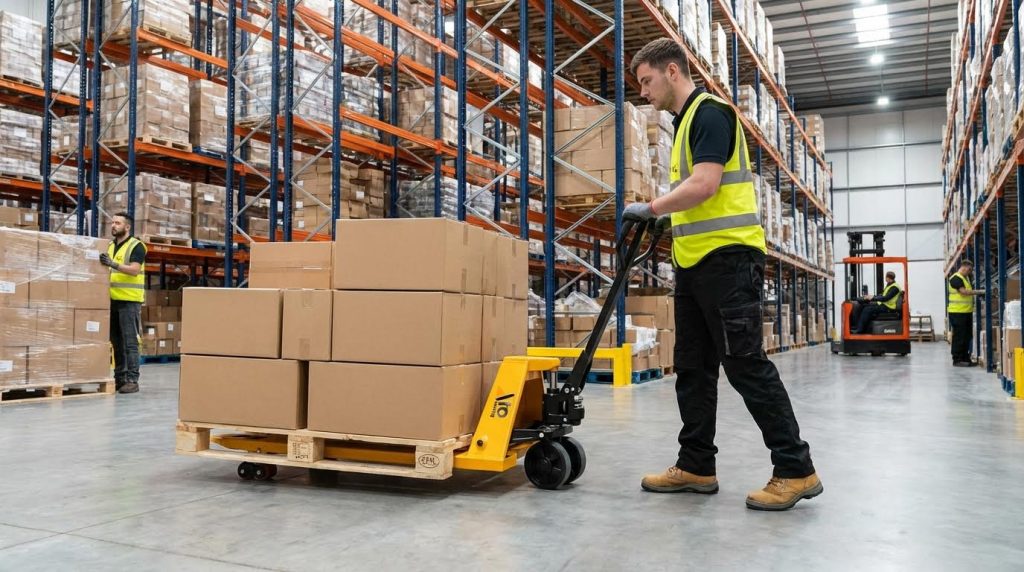
Before you even touch a plug or hose, you must set up the work area, protect yourself, and immobilize the manual pallet jack. Safe setup is a critical part of how to fill pallet jack with oil without spills, injuries, or damage.
- Work area and environmental safety
- Work on a flat, solid, well‑lit surface.
- Use absorbent pads or a drip tray under the hydraulic unit to catch spills and protect the floor.
- Keep ignition sources away from oily rags and waste containers.
- Personal protective equipment (PPE)
- High‑pressure fluid‑resistant gloves to avoid skin contact with oil and micro‑leaks.
- Safety goggles or a face shield to protect from splashes.
- Coveralls or work clothing that fully covers arms and legs.
- Tools and accessories to prepare
- Correct‑size wrenches or sockets for filler and drain plugs to avoid rounding.
- Clean funnel dedicated to hydraulic oil only.
- Drain pan or oil‑rated container for old fluid.
- Lint‑free rags for wiping and cleaning.
- Correct pallet jack positioning
- Lower the forks fully to the floor to depressurize the hydraulic circuit before opening any plug.
- Set the handle in the neutral/drive position so the jack cannot raise unexpectedly.
- On sloped floors, avoid working or use wheel chocks to prevent movement and rollback.
- When you need to lay the jack on its side
- If the filler is on the side of the pump, lower forks completely.
- Carefully lay the hydraulic pallet truck on its side with the oil drain or filler plug facing upward for access and correct filling level.
Why this prep step matters
Hydraulic oil under pressure can penetrate skin or spray into eyes if fittings or plugs are disturbed while the system is loaded. Lowering the forks and stabilizing the pallet jack removes stored energy and keeps the center of gravity low while you work.
Locating the reservoir, drain and filler plugs
Most operators know how to pump and steer a jack but not where the hydraulic oil actually sits. To master how to fill pallet jack with oil correctly, you must identify the reservoir, the drain, and the filler before you loosen anything.
- Typical reservoir location
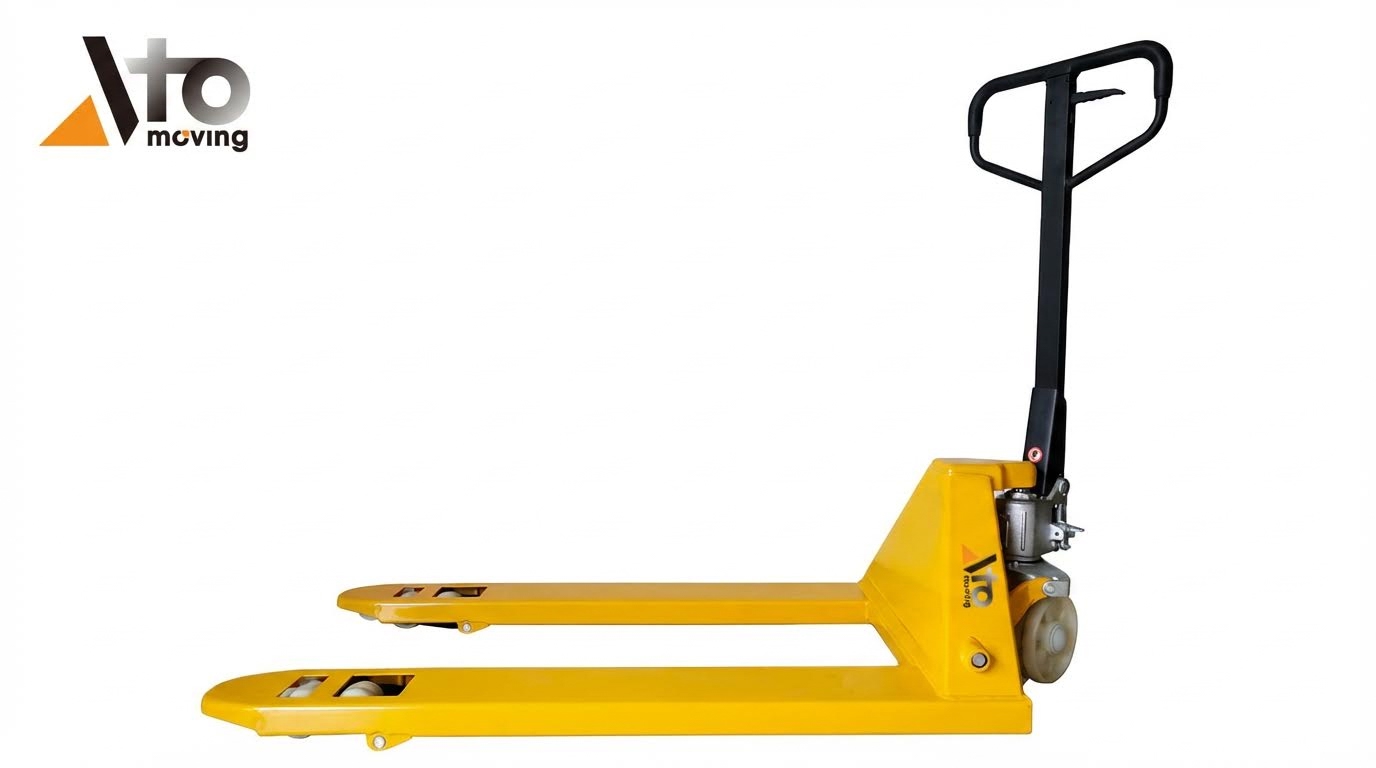
- Integrated into the hydraulic pump assembly at the base of the handle.
- Usually a small cast body behind or beneath the lift cylinder with one visible fill plug.
- Identifying the filler plug
- Often a small hex‑head or screw‑in plug near the top or side of the pump body.
- May be marked as “OIL” or with a symbol; if not, confirm via the jack’s manual.
- Always clean the area thoroughly before removing to prevent dirt entering the reservoir and damaging seals.
- Identifying the drain plug or drain method
- Some jacks have a distinct drain plug at the lowest point of the pump housing.
- Other models use the same port for filling and draining; the jack is simply rotated so the port is at the lowest point for draining and uppermost for filling to set the correct level.
- If no dedicated drain exists, old oil is usually removed using a suction pump through the fill port.
- Confirming oil level reference
- On many hand jacks, “full” is when oil reaches the bottom edge of the filler hole with forks fully lowered.
- Other designs specify a distance (e.g., 1–2 cm) below the lower edge of the cap to leave expansion space and prevent over‑pressure.
Quick locator checklist
If you are unsure, trace from the handle down to where the handle pivots into the pump block. Look for the solid metal housing that connects to the lift cylinder. The highest threaded plug on that housing is typically the fill point; the lowest is usually the drain.
Draining, refilling and bleeding air from the system

This is the core procedure that most people mean when they ask how to fill pallet jack with oil. Follow these steps in order to avoid trapped air, overfilling, or contamination.
- Prepare for draining
- Lower forks fully and set the control lever to LOWER, then neutral.
- Position the drain pan under the hydraulic pump.
- If the design requires it, lay the jack on its side with the drain plug at the lowest point to empty the reservoir completely.
- Drain the old hydraulic oil
- Slowly loosen the drain plug with the correct wrench; avoid sudden removal that can cause splashing and contamination.
- Allow oil to drain until flow stops; this can take several minutes.
- Inspect the drain plug and sealing washer for wear; replace if damaged.
- Wipe the seating surface clean before re‑installing the drain plug finger‑tight, then snug with a wrench.
- Inspect oil condition (optional but recommended)
- Milky appearance indicates water contamination and requires full change and system cleaning to prevent corrosion.
- Presence of metal particles suggests internal wear and need for further inspection.
- Refill with the correct hydraulic oil
- Return the jack to the required position for filling (upright or on its side with filler up, depending on design).
- Remove the filler plug; clean around the opening again.
- Insert a clean funnel and slowly pour the specified hydraulic oil grade (commonly ISO VG32 or 10W hydraulic oil) until the level reaches the bottom of the filler hole or about 1–2 cm below the lower edge of the cap, as specified to avoid overfilling.
- Typical hand pallet jack capacity is around 0.4 liters, but always follow the manufacturer’s data for your model.
- Reinstall and tighten the filler plug securely without overtightening.
- Bleed air from the hydraulic system
- Set the operating lever to the LOWER position.
- With forks unloaded, pump the handle several times (typically 10–15 strokes) to push air back to the reservoir and out through the return path until normal lift returns.
- Switch the lever to RAISE and test lifting; if motion is jerky or forks do not reach full height, repeat the bleeding cycle with additional pump strokes.
- Functional test and leak check
- Raise and lower the forks several times through their full stroke without load.
- Apply a moderate test load within the rated capacity and confirm smooth, even lifting and controlled lowering.
- Inspect around filler, drain, cylinder, and hose connections for any seepage or drips and re‑tighten if needed.
- Dispose of used oil correctly
- Transfer drained oil into a sealed, labeled container.
- Take it to an approved oil recycling or disposal facility; never pour into drains or onto the ground to avoid environmental harm.
| Step Group | Key Action | Typical Indicator of “Done Right” |
|---|---|---|
| Draining | Open lowest plug and fully empty reservoir into pan | No more drips after several minutes; plug and seat clean |
| Refilling | Add correct hydraulic oil grade to specified level | Oil just at filler hole or specified distance below edge |
| Bleeding | Handle pumped 10–15 times with lever in LOWER | Forks lift smoothly without jerks or hesitation |
| Leak Check | Inspect plugs, cylinder, and connections under test lift | No visible seepage or drops after several cycles |
Fast troubleshooting after filling
If forks will not lift after refilling, first confirm oil level, then repeat the bleeding process with the lever in LOWER and multiple pump strokes. If the forks still drift down under load, check for external leaks or worn seals; if the jack will not lower, the lowering valve may need minor adjustment.
Oil Specs, Maintenance Intervals And Troubleshooting
Recommended oil grades, viscosity and capacity
Choosing the right hydraulic oil is the foundation of learning how to fill pallet jack with oil correctly. The wrong grade or viscosity can cause hard pumping, weak lifting, and premature seal wear. Use this section as a quick engineering reference before you open the filler plug.
| Parameter | Typical Manual Pallet Jack | Notes |
|---|---|---|
| Oil type / standard | ISO VG32 hydraulic oil (10W industrial hydraulic oil) | Common spec for hand pallet jacks recommended by multiple service guides |
| Viscosity at 40°C | ≈ 30 cSt | Balanced flow and film strength for typical warehouse temperatures when filling the reservoir |
| System capacity | ≈ 0.4 L (0.1 gal) | Typical for many manual units; always confirm in the jack’s data plate or manual before filling |
| Fill level reference | Bottom of filler hole or 1–2 cm below lower edge of cap | Prevents overfilling and pressure‑related leaks during topping up |
| Electric pallet jacks (for reference) | L‑HV32 (‑5°C to 40°C), L‑HV15 (‑10°C to ‑5°C) | Annual oil replacement recommended for powered units with temperature‑matched grades |
When planning how to fill pallet jack with oil, always match viscosity to ambient temperature. Thicker oil than specified increases handle effort and can prevent full lift, while very thin oil can cause internal leakage and drift under load.
Practical oil selection tips
Stay with ISO VG32 unless you regularly work in extreme cold or heat and the manufacturer allows another grade. Avoid engine oil or ATF unless explicitly permitted in the manual, because additive packages and viscosity curves differ from dedicated hydraulic oils.
Inspection frequency and integrated lube checklist
Hydraulic oil checks only work if they are tied into a simple, repeatable inspection routine. The goal is to catch low level, contamination, or leaks before they turn into downtime or cylinder failure.
| Task | Recommended frequency | What to look for / do |
|---|---|---|
| Visual leak and damage check | Daily pre‑shift | Inspect around pump, cylinder, hoses, and under the jack for fresh oil spots and mechanical damage before use |
| Hydraulic function test | Daily | Lift and lower under light load; check for jerks, drift, or abnormal noises as part of safety checks |
| Oil level check | Monthly to 6‑monthly | Lower forks fully, open fill plug, confirm oil near opening without foaming or milky color and top up if needed |
| Oil replacement | Annually | Drain, refill with fresh ISO VG32, and bleed air from the system to restore performance |
| Bearings and axle lubrication | Monthly, and after wash‑downs | Grease wheels, axles, and fittings to prevent corrosion and drag as part of the lube routine |
| Wheel cleaning and inspection | Weekly or as needed | Remove string, film, and debris; check for flat spots and cracks to avoid rolling resistance |
| Chain alignment check | Daily quick look | Verify control chain is seated correctly if forks do not lower smoothly and reposition if needed |
Integrating these checks into your process makes how to fill pallet jack with oil just one step in a broader reliability program. The payback is lower handle effort, fewer breakdowns, and longer seal and wheel life.
- Always perform hydraulic checks with forks fully lowered and the jack unloaded.
- Keep the pump area clean so you can see new leaks quickly.
- Record oil changes and top‑ups; sudden increases in consumption usually indicate a leak.
Integrated lube checklist (quick copy‑and‑use)
Include these points on your PM sheet: 1) Check oil level and color. 2) Grease wheels and axles. 3) Inspect chain alignment. 4) Clean wheels and fork tips. 5) Wipe down pump and cylinder. 6) Function‑test lift, lower, and neutral positions.
Diagnosing lift, drift, and leak problems
When something feels wrong at the handle, start with simple hydraulic checks before assuming major component failure. Most issues trace back to oil level, oil condition, trapped air, or valve adjustment.
| Symptom | Probable hydraulic cause | Recommended action |
|---|---|---|
| Forks will not lift or lift very slowly | Low oil level, oil too thick, or air in system affecting pump output | Check and top up with ISO VG32, bleed air by pumping with lever in LOWER position, and ensure you are using the specified viscosity for the jack |
| Forks lift but drift down under load | Internal leakage past seals or contaminated oil carrying debris | Inspect oil for milky or dirty appearance, replace oil, and check cylinder and valve seals for wear or scoring if drift persists |
| Jerky or “stepped” lifting | Air bubbles in the hydraulic circuit after refilling or transport introduce compressibility | Bleed system: set lever to LOWER and pump handle several times, then retest under light load |
| Forks do not lower or lower very slowly | Lowering valve misadjusted or linkage/chain misaligned | Gently tighten or loosen lowering valve screw per manual and confirm control chain is correctly seated on the lever to restore smooth lowering |
| Visible oil on floor or frame | Seal damage, loose plugs, or chronic overfilling | Clean area, locate leak path, retighten filler/drain plugs, and replace damaged seals. Correct fill level during the next oil change to prevent recurrence |
- Always verify the operating lever is truly in the RAISE position when diagnosing “no lift.”
- If problems appear right after you learned how to fill pallet jack with oil, re‑check oil level and repeat the bleeding process.
- Persistent drift or loss of lift after fresh oil and bleeding usually points to worn seals or internal scoring that require professional repair.
When to stop and tag the jack out of service
Remove the pallet jack from service if you see: 1) Rapid fork drop under rated load. 2) Heavy external leaks you cannot tighten away. 3) Bent pump components or severe corrosion. Continuing to operate in these conditions risks sudden failure and load loss.
Final Checks To Extend Pallet Jack Service Life
Correct hydraulic oil care turns a pallet jack from a consumable tool into a long‑term asset. The right oil grade, clean reservoir, and correct fill level keep pressure stable, seals lubricated, and lift performance predictable. Bleeding air after refilling removes compressible pockets that cause jerky motion and poor load holding, which directly improves safety around people and products.
Regular inspections close the loop. Daily leak and function checks catch early seal damage. Monthly oil level checks prevent air ingestion and cavitation. Annual oil changes flush out water and particles that slowly grind away at cylinders and valves. When you pair this with wheel lubrication and cleanliness, you cut rolling resistance and reduce strain on the hydraulic unit.
For operations and maintenance teams, the best practice is simple. Standardize on ISO VG32 hydraulic oil for manual units unless the manufacturer of your Atomoving pallet jack specifies otherwise. Lock in a fixed inspection and oil‑change schedule. Always lower forks, depressurize the system, and work clean when opening plugs. Follow these habits, and your pallet jacks will lift smoothly, hold loads securely, and deliver long, low‑cost service life.
Frequently Asked Questions
How do you fill a pallet jack with oil?
To fill a pallet jack with oil, first ensure the operating lever is set to the “lower” position while standing behind the tow bar. Do not loosen or remove the oil cap. Instead, focus on priming the hydraulic system. Fill the suction hose with hydraulic oil until it is fully filled. Carefully reinstall the suction hose on the barb fitting and tighten the clamp to complete the process. Hydraulic Pump Priming Guide.
What should you do after filling the pallet jack with oil?
After filling the pallet jack with oil, pump the handle vigorously several times while keeping the operating lever in the “lower” position. This helps release any trapped air in the hydraulics and ensures proper operation. Always exercise caution when working with hydraulic systems. Pallet Jack Maintenance Tips.