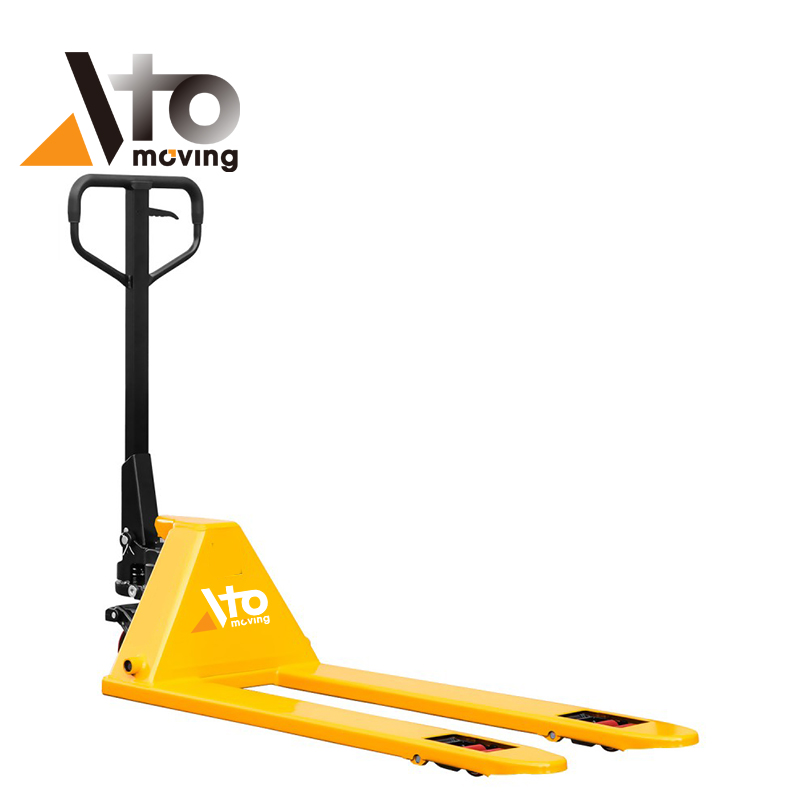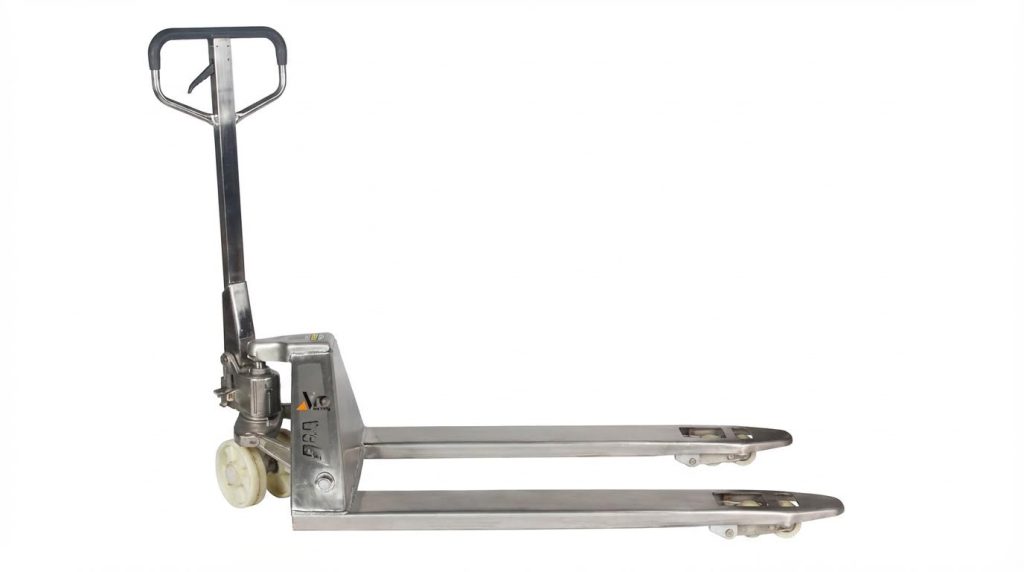
Knowing what is the lifting capacity of the pallet jack in real-world use is critical for safe, efficient material handling. This guide explains how to read rated capacity, how load center and pallet condition change what you can actually lift, and how to apply simple engineering safety factors. You will learn how to match pallet jack capacity to your aisles, floors, and duty cycle so operators stay within safe limits while maintaining productivity. Use it as a practical reference when selecting equipment, planning loads, and training your team.
Defining Pallet Jack Capacity And Key Parameters

Rated capacity and nameplate data
When people ask “what is the lifting capacity of the pallet jack,” they are really asking about its rated capacity. Rated capacity is the maximum load the truck can safely lift and move under defined conditions, assuming a stable, centered load on sound forks and pallet. It is normally shown on the nameplate or data label and expressed in kilograms or pounds, together with the reference load center distance. For example, a pallet jack might be rated to carry 4,400 lb at a 20 in load center, meaning it can safely support that weight when the load’s center of gravity is 20 in from the fork heel. Example of rated load and load center Overloading beyond the nameplate rating can cause structural damage, loss of stability, or brake and hydraulic failure, so operators should normally work at 80–90% of the marked capacity to maintain a safety margin. Recommended practice to stay below maximum rating For manual and semi-manual pedestrian-controlled pallet trucks, relevant standards define rated capacity as the maximum uniform load that can be lifted and transported with the load’s center of gravity on the truck center line. Definition of rated capacity for pedestrian trucks
Key items you will find on a pallet jack nameplate
- Rated capacity (kg or lb)
- Reference load center distance (e.g., 20 in or 600 mm)
- Truck type and configuration (manual, semi-manual, etc.) Scope for pedestrian-controlled pallet trucks
- Sometimes, limitations on lift height or surface conditions
Load center, load distribution, and stability
To understand what is the lifting capacity of the pallet jack in real conditions, you must account for load center and load distribution. The load center is the horizontal distance from the load’s center of gravity to the front face of the fork’s vertical section. Definition of load center As this distance increases, the overturning moment grows, so the effective capacity falls even if the nameplate rating stays the same. In practice, a truck that can handle 5,500 lb at a 20 in load center may be limited to about 2,640 lb when the load center moves out to around 39.5 in because of the higher tipping force. Effect of increased load center on capacity
Load distribution is just as critical as total weight. A safe load is evenly shared by both forks, with the center of gravity close to the fork heel and aligned with the pallet jack center line. Requirement for uniform load distribution Off-center, top-heavy, or overhanging loads increase the risk of tipping even when the total weight is below the rated capacity. Hazards from poor load distribution Pallet strength also matters: damaged or wet pallets can lose up to around 30% of their capacity, which can lead to deck failure before the pallet jack itself reaches its limit. Effect of moisture and damage on pallet capacity
| Parameter | What it means | Impact on usable capacity |
|---|---|---|
| Rated capacity | Maximum uniform load under standard conditions | Upper theoretical limit; should be derated in practice |
| Load center distance | Fork heel to load center of gravity | Longer distance reduces stability and effective capacity |
| Load distribution | How weight sits across forks and pallet | Off-center or uneven loads increase tipping risk |
| Pallet condition | Integrity, moisture, and damage level | Weak pallets can fail before truck reaches its rating |
“`
Engineering Factors That Change Real-World Capacity
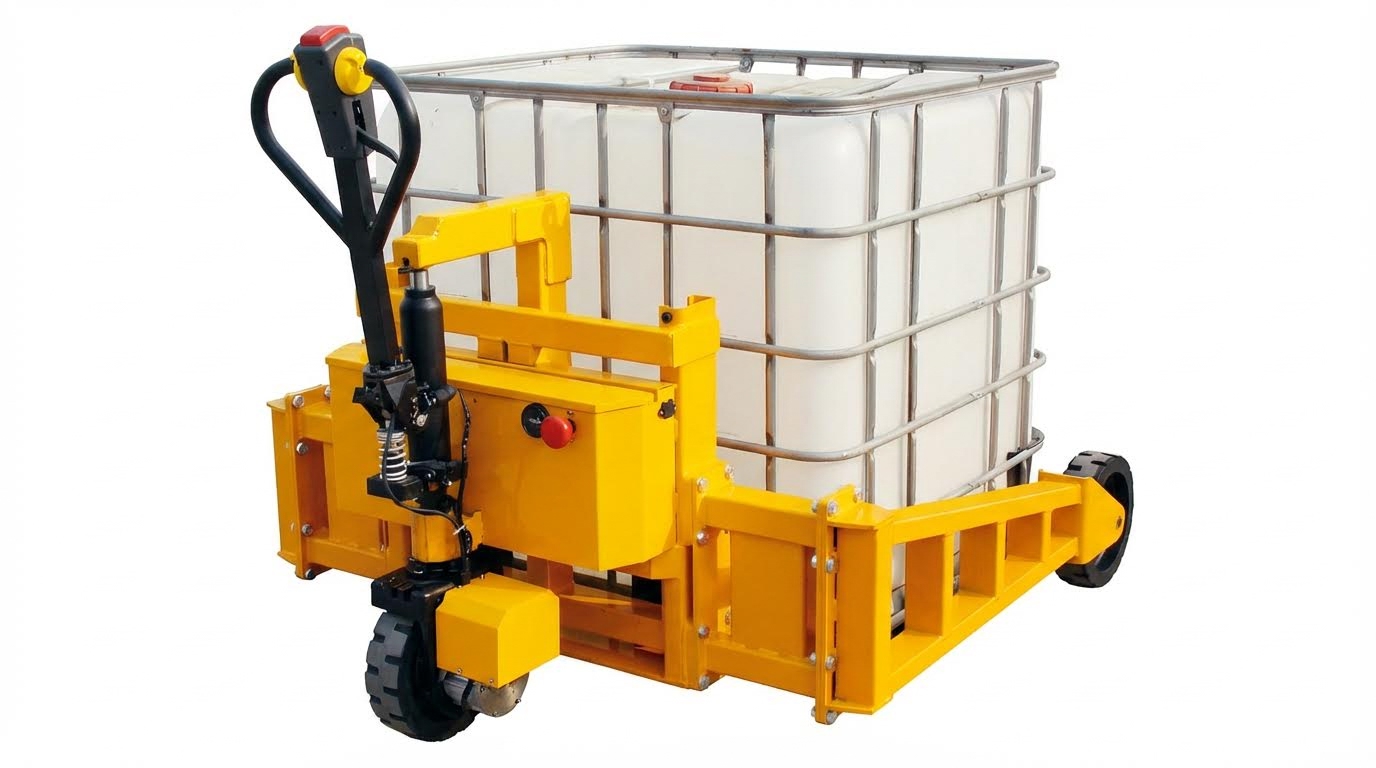
Hydraulic limits, wear, and maintenance condition
On paper, what is the lifting capacity of the pallet jack is defined by its rated load on the nameplate. In reality, hydraulic losses, mechanical wear, and poor maintenance can reduce that capacity long before you hit the number on the tag. Worn pumps, cylinders, or internal seals reduce the hydraulic force available to lift the load, especially on equipment that already operates at high pressures. Standards for pedestrian stacker trucks require pressure relief valves to limit system pressure to less than 115% of the preset value, and also limit load descent from internal leakage to 25 mm in the first 10 minutes under load for intended operation. If a pallet jack shows faster creep-down or struggles to raise a load that is within rating, its effective capacity is already reduced. Regular inspections for leaks, checking hydraulic fluid level, and scheduled replacement of fluid and seals every few months help keep real capacity close to the rated value as part of preventive maintenance. Wheel and tire wear also affects how much weight can be moved safely; flat spots or damaged wheels increase rolling resistance and steering forces, which standards cap at specific limits for a 1,000 kg load to protect operators. For electric pallet jacks, battery condition is another hidden limiter: undercharged or degraded batteries reduce lift speed and may prevent the truck from reaching full lift at higher loads, so full charging and clean terminals are key to maintaining usable capacity over the life of the truck.
Pallet strength, load type, and environment
Even when the pallet jack is in perfect condition, the pallet and the load can become the weak link in real-world capacity. Wooden pallets typically support 2,000–4,000 kg as static load, but only about 1,000–1,500 kg as dynamic load when moved by handling equipment such as pallet jacks or forklifts. If moisture weakens wood by around 30%, a pallet that was adequate in dry conditions may fail when used in a damp or cold environment. Uneven weight distribution, overhang, or tall, unstable stacks shift the load center away from the forks and reduce stability, even if the total mass is below the rated capacity. Environmental factors also influence what is the lifting capacity of the pallet jack in practice: sloped floors greater than about 5° can cut stability by roughly 30%, and hydraulic efficiency can drop by around 3% per 1,000 feet of altitude, requiring conservative de-rating of working loads in demanding environments. Routine pallet inspections before use, removal of damaged units, and loading practices that keep heavy items low and centered on the forks are essential to keep the practical capacity aligned with the truck’s rating and prevent pallet collapse.
Applying safety factors and basic capacity formulas
To turn the nameplate rating into a safe working limit, you need to apply both geometry and safety factors. A common approach is to adjust the rated capacity for any increase in load-center distance using a simple proportional formula: Safe Capacity ≈ Rated Capacity × (Standard Load Center ÷ Actual Load Center) as used for palletized loads. Once you have this adjusted value, you then divide by a safety factor, typically between 3 and 5 for lifting components, to cover dynamic effects and uncertainties in industrial lifting. In day-to-day pallet jack use, many operators effectively apply a simpler rule of thumb by limiting working loads to about 80–90% of the rated capacity, which aligns with common pallet loading guidance to avoid overstressing pallets and equipment under mixed conditions. This means that when you ask what is the lifting capacity of the pallet jack for a specific job, the practical answer is usually the lower of three numbers: the de-rated capacity from the load-center formula, the pallet’s dynamic capacity under actual conditions, and the operator’s chosen safety margin. By checking those three limits and documenting them in site procedures, you turn the theoretical rating into a realistic, safe capacity for everyday operation.
Matching Pallet Jack Capacity To Your Application
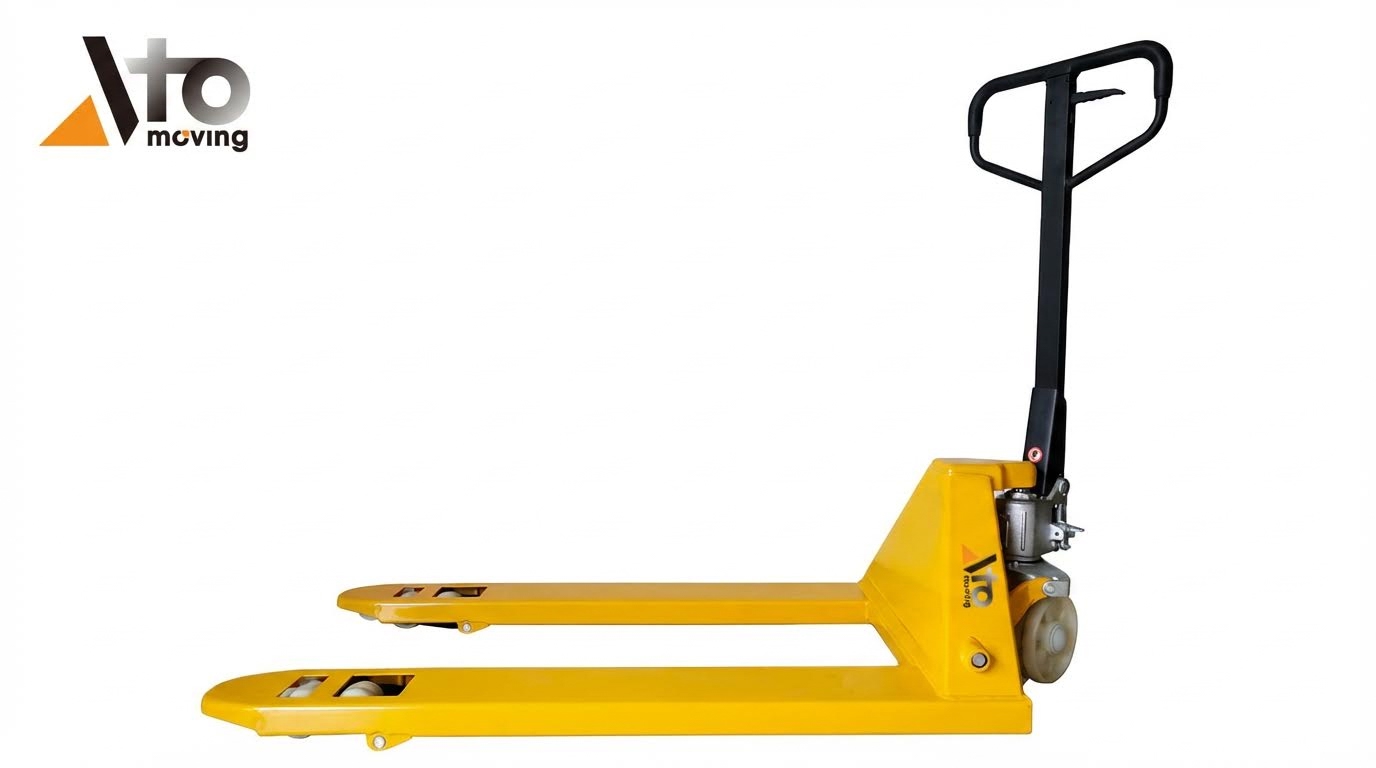
Typical capacities for manual and electric pallet jacks
When people ask what is the lifting capacity of the pallet jack, they usually mean the rated load on the nameplate. For pedestrian‑controlled manual pallet trucks, common rated capacities are up to 2,000 kg according to EN 1757‑2:2001 safety requirements for manual pallet trucks. In practice, many warehouse manual jacks fall in the 2,000–2,500 kg (4,400–5,500 lb) range at the standard load center. Electric pallet jacks and pedestrian stackers often cover similar or slightly higher capacities, but their actual usable capacity depends more on floor conditions, gradients, and battery state than on the hydraulic rating alone. Always treat the nameplate value as the upper limit, then apply a safety margin of 10–20% in daily operation, similar to pallet loading practice where industry guidance recommends working at 80–90% of maximum capacity for safe pallet use.
Typical capacity bands by jack type
- Light‑duty manual jack: around 1,000–1,500 kg, suitable for occasional moves.
- Standard warehouse manual jack: around 2,000–2,500 kg, general pallet handling.
- Pedestrian stacker (manual or semi‑manual): up to 1,000 kg under EN 1757‑1:2001 for pedestrian propelled stacker trucks.
- Electric pallet jack: often 1,500–3,000 kg, depending on model and duty.
Remember that the pallet itself has its own capacity limits. Standard wooden pallets typically support 1,000–1,500 kg dynamic load when moved by a truck under motion, so your effective system capacity is the lower of pallet, load, and pallet jack ratings.
Selection criteria for aisles, floor, and duty cycle
To choose the right pallet jack capacity, start from your heaviest realistic pallet, not just the average. Calculate total load as product weight plus packaging and securing materials, following the same logic used for pallet load calculations in shipping examples. Add a safety margin of roughly 10–20% to cover weight variation and measurement error, then check that both the jack’s rated capacity and the pallet’s dynamic capacity exceed this value.
| Selection factor | What to check | Impact on required capacity |
|---|---|---|
| Aisles and turning space | Aisle width, turning radius, and need to pull vs push | Narrow aisles favor smaller, easier‑to‑start jacks; very high capacities can be hard to maneuver safely. |
| Floor and gradient | Floor flatness, surface type, slopes > 5° | Slopes greater than 5° can reduce stability by about 30% in lifting operations, so you should derate practical load or move to powered equipment. |
| Floor bearing capacity | Slab design load, point loads at wheels | Heavier jacks and higher loads increase point loading and risk floor damage or settlement. |
| Duty cycle | Trips per shift, distance, and operating hours | High‑frequency, long‑distance work justifies electric jacks and encourages choosing capacity slightly above current needs. |
For pedestrian‑controlled trucks, standards limit the allowable starting, rolling, and steering forces at a 1,000 kg load to protect operators. In practice, this means very high‑capacity manual jacks can be difficult to move by hand in tight aisles or on rough floors, even if the nameplate says the load is allowed. When planning what is the lifting capacity of the pallet jack you actually need, balance nameplate capacity against ergonomics, pallet ratings, and your real floor and aisle conditions, then select the smallest capacity that safely covers your heaviest, worst‑case pallet..
“”
Summary: Safe, Realistic Capacity Planning For Pallet Jacks
Safe pallet jack capacity starts with the nameplate, but it does not end there. Load center, pallet condition, and load shape all change the real limit. As the load center moves out or the stack becomes taller and less stable, tipping risk rises fast, even when weight stays below the rated value.
Hydraulic wear, weak pallets, poor floors, and slopes all reduce usable capacity further. If you ignore these factors, the system will usually fail at the pallet, the floor, or stability long before the pallet jack structure reaches its design strength. That is why operators should treat the rated capacity as an upper boundary, then work to a lower, planned limit.
The most robust practice is simple. Start from the worst‑case pallet weight, adjust for actual load center, then apply a clear safety margin. Use the lowest of three numbers as your working limit: de‑rated truck capacity, pallet dynamic capacity, and your chosen safety factor. Document this in site rules and training.
When you select or use Atomoving pallet jacks this way, you turn a theoretical rating into a controlled, predictable system. You protect people, pallets, and floors while still hitting throughput targets.
Frequently Asked Questions
What is the maximum weight a pallet jack can lift?
A pallet jack’s lifting capacity depends on its type. Manual pallet jacks typically lift between 4,500 to 5,500 pounds. Heavy-duty models can handle up to 10,000 pounds, while lighter-duty versions may only support smaller loads. For safe operation, always check the manufacturer’s specifications. Pallet Jack Weight Guide.
Can a pallet jack lift a car?
No, pallet jacks are not designed to lift cars. While some heavy-duty models can handle significant weight, they are not suitable for automotive lifting tasks. Attempting to lift a car with a pallet jack could damage the equipment or create safety hazards. Always use appropriate tools for automotive work. Forklift vs Pallet Jack Guide.