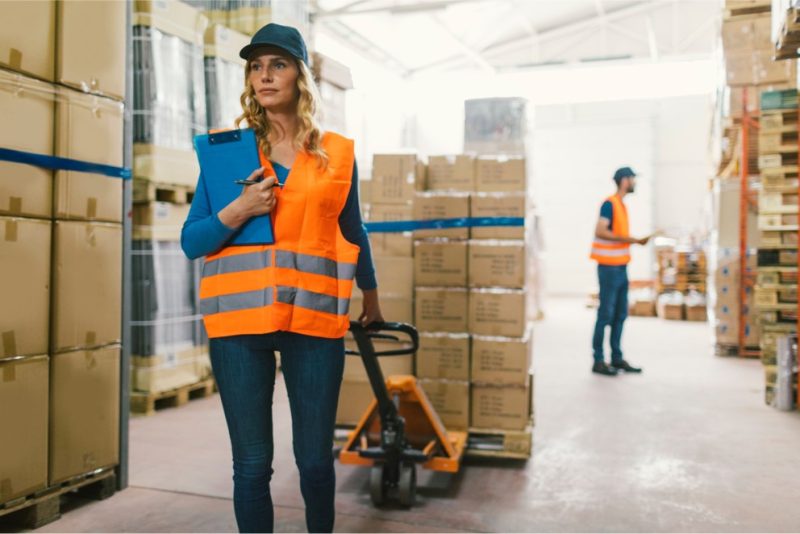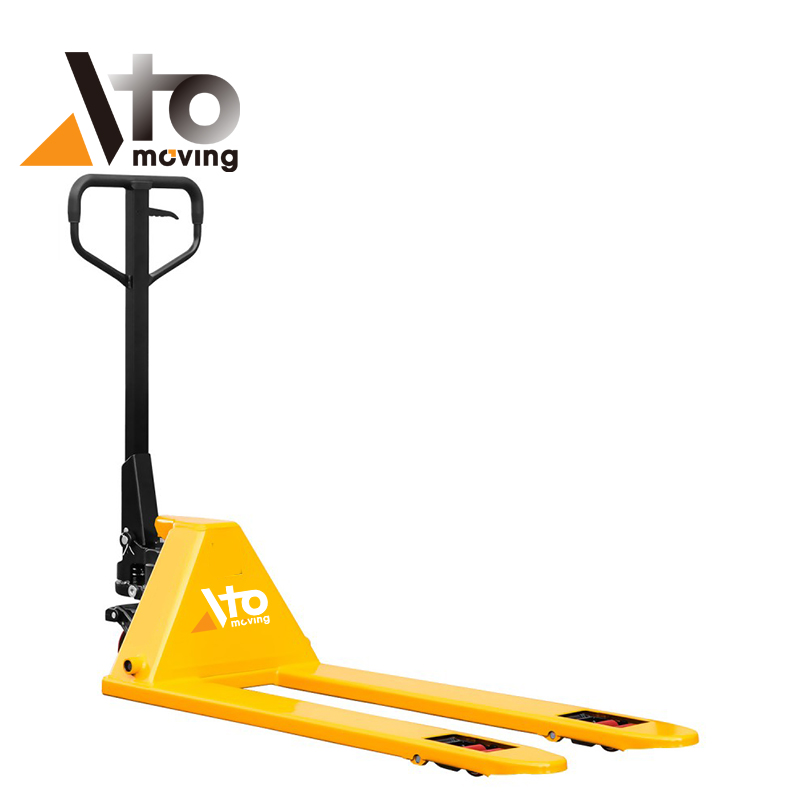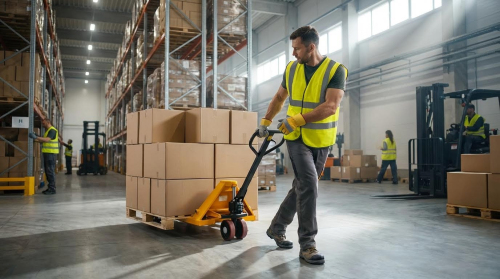
A hydraulic pallet truck is a manual, wheeled device that lifted and moved palletized loads using a compact hydraulic circuit. When operators asked “what is hydraulic pallet truck” in industrial contexts, they referred to a hand-powered unit with forks, pump, and steering handle sized for standard pallets. This article explained how the hydraulic circuit, mechanical structure, and operating cycle worked, then detailed key components, specifications, and design trade-offs that affected durability and ergonomics. It also covered application criteria, safety rules, and maintenance routines, before closing with lifecycle cost considerations and future trends in hydraulic pallet truck technology.
Core Functions And Operating Principles
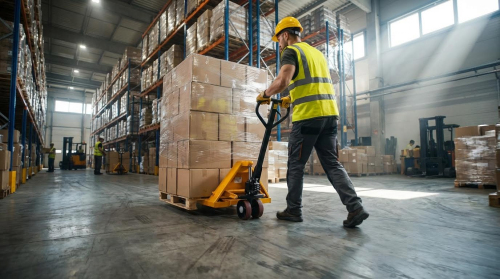
Hydraulic pallet trucks answered the question “what is hydraulic pallet truck” from an engineering viewpoint. They converted moderate human input into controlled lifting and rolling transport of palletized loads. Core functions depended on a compact hydraulic circuit, a stiff mechanical frame, and a simple but repeatable operating cycle. Understanding these principles allowed engineers and supervisors to specify, operate, and maintain trucks safely in demanding intralogistics environments.
Hydraulic Circuit: Pump, Cylinder, And Oil Flow
The hydraulic circuit defined what is hydraulic pallet truck in functional terms. A manual pump, integrated in the tow handle, pressurized hydraulic oil inside a sealed body. Each pump stroke drove a small plunger that forced oil through a check valve into the lift cylinder. Pressure built according to p = F/A, where F was handle force multiplied by linkage ratio and A was piston area.
As pressure increased, the piston in the lift cylinder extended and transferred force to the fork linkage. A lowering valve, usually a needle or spool type, controlled return flow from the cylinder to the reservoir. In the neutral position, internal passages bypassed flow so the operator could tow the truck without lifting or lowering. Correct oil viscosity, typically ISO VG 32 or similar low‑temperature hydraulic oil, ensured smooth motion and minimized internal leakage.
Overload protection relied on a pressure relief valve set slightly above rated capacity, for example around 105–110% of nominal load. When operators exceeded the design load, the valve opened and limited further pressure rise, so the forks stopped lifting instead of overstressing the frame. Air in the oil reduced bulk modulus, caused spongy lifting, and required bleeding cycles with repeated pump and release strokes. Clean, bubble‑free oil maintained predictable lift height per pump stroke and stable long‑term performance.
Mechanical Structure: Forks, Chassis, And Linkages
The mechanical structure converted hydraulic cylinder stroke into fork lift and supported the load path into the floor. Two parallel forks, usually 1150 mm long with 520–685 mm overall width, engaged standardized pallets through tapered tips and low closed height near 85 mm. High‑tensile steel sections resisted bending under typical capacities between 2000 kg and 5000 kg. Engineers verified deflection limits to keep fork tip sag within acceptable millimetre ranges at full load.
The chassis formed a welded steel frame that housed the pump unit, steering axle, and mounting points for the drawbar handle. Stress concentrations occurred around the front axle plates and pump mounting lugs, so designers used generous radii and reinforcement plates. A set of link arms connected the cylinder piston rod to the fork heels. As the piston extended, these arms rotated about pivot pins and lifted the forks through a small vertical travel, roughly from 85 mm to about 200 mm.
Load wheels under the fork tips carried most of the vertical load, while larger steer wheels at the drawbar end provided directional control. Polyurethane or nylon treads balanced rolling resistance, noise, and floor protection. Bushings or bearings at all pivot points minimized friction and wear; periodic lubrication kept operating forces low. The geometry of the linkage determined mechanical advantage and lift curve, so manufacturers optimized pin positions to achieve sufficient lift with a reasonable number of pump strokes.
Lift, Transport, And Lowering: Step-By-Step Cycle
The operating cycle of a hydraulic pallet truck clarified what is hydraulic pallet truck for everyday users. First, the operator positioned the forks in front of the pallet with the control lever in the lowered position, so the fork height remained near 85 mm. Steering movement aligned the tapered fork tips with the pallet openings. The operator then pushed or pulled the truck so the forks fully entered under the pallet deck.
For lifting, the control lever moved to the lift position, which closed the lowering valve and opened the pump inlet check. Repeated handle pumping pressurized the oil, extended the cylinder, and raised the forks to a transport height of roughly 100–200 mm, just enough to clear floor irregularities. The operator verified that the load stayed stable and within the rated capacity before moving. During transport, the control lever returned to neutral, isolating the cylinder and locking the fork height.
Safe travel practices required keeping the load low, pulling the truck on flat floors, and controlling speed in congested aisles. When the load reached the destination, the operator stopped, squared the pallet to the storage position, and switched the control lever to lower. This opened the lowering valve, allowed oil to flow back to the reservoir, and let the forks descend under gravity at a controlled rate. Once the pallet rested on the floor or rack beams and the forks were completely unloaded, the operator withdrew the truck. This simple hydraulic‑mechanical sequence enabled repeatable, low‑cost handling of palletized goods across warehouses, factories, and loading docks.
Key Components, Specs, And Design Choices
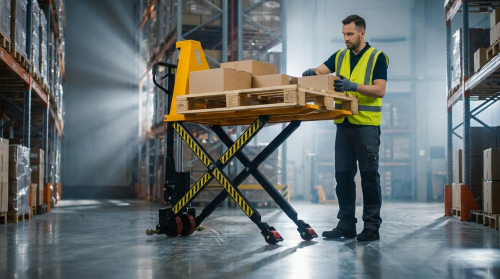
Understanding what is hydraulic pallet truck requires a close look at its core components and design parameters. Component selection and geometry determine load capacity, rolling resistance, and compatibility with standardized pallets and floors. Engineers balance structural strength, ergonomics, and lifecycle cost when specifying forks, wheels, materials, and safety devices. These design choices directly influence reliability, service intervals, and compliance with standards such as FEM 4.004.
Fork Geometry, Dimensions, And Pallet Interface
Fork geometry defines how effectively a hydraulic pallet truck interfaces with palletized loads. Standard fork length typically measures about 1150 mm, which matches EUR and most ISO pallet footprints. Overall fork width usually ranges from 520 mm to 685 mm over the outer edges, allowing engagement of both narrow and wide pallets without heel interference. Minimum fork height often sits near 85 mm, while maximum lift height reaches roughly 200 mm, which is sufficient for ground clearance during transport without compromising stability.
Rounded fork tips reduce impact when entering pallet openings and minimize damage to deck boards. Tapered fork profiles lower insertion force, especially with heavy wooden pallets or slightly deformed skids. Engineers specify fork thickness and section modulus based on rated capacity, commonly between 2000 kg and 5000 kg, to limit elastic deflection and prevent permanent bending. Correct dimensional tolerances ensure smooth entry into pallet pockets while maintaining adequate clearance from stringers and floor irregularities.
Wheels, Rollers, And Floor Condition Compatibility
Wheel and roller selection strongly affects how a hydraulic pallet truck behaves on different floor conditions. Typical designs use two steering wheels at the tow end, often around 200 mm in diameter, combined with smaller load rollers under each fork, usually about 80 mm in diameter. Polyurethane wheels provide low rolling resistance, good wear resistance, and reduced noise on smooth concrete. Nylon load rollers offer very low friction but transmit higher impact forces and suit hard, flat, dry floors.
For rougher surfaces or minor floor damage, larger diameter steering wheels and tandem load rollers distribute forces better and reduce point loading. Engineers consider contact pressure, floor hardness, and expected debris when choosing wheel materials and bearings. Precision ball bearings in wheels and rollers lower push–pull effort, which directly influences operator fatigue and productivity. For applications with wet or chemically aggressive floors, sealed bearings and corrosion-resistant wheel cores improve service life and reduce unexpected downtime.
Materials, Coatings, And Structural Durability
Hydraulic pallet truck frames and forks typically use high-tensile structural steel to handle repetitive loading cycles up to the rated capacity. Designers size sections to remain well below yield stress under maximum specified load, including dynamic factors from starting, stopping, and crossing thresholds. Weld quality at high-stress transitions, such as fork–heel areas and tow arms, plays a critical role in fatigue resistance. Finite element analysis often supports these decisions by identifying stress concentrations that require reinforcement or geometry changes.
Powder-coated finishes protect steel surfaces from corrosion caused by humidity, minor chemical exposure, and abrasion from pallets. In highly corrosive environments, such as food processing or cold storage with aggressive cleaning, stainless-steel variants or zinc-rich primers extend service life. Axles, pins, and linkages generally use hardened steel with surface treatments that resist wear at pivot points. Regular lubrication complements these material choices and keeps friction and noise low, preserving the designed structural performance over the truck’s lifecycle.
Safety Devices, Valves, And Ergonomic Controls
Safety devices in a hydraulic pallet truck focus on controlling hydraulic pressure, lowering speed, and operator interaction. An overload pressure relief valve protects the hydraulic circuit and structure when loads exceed the rated capacity, typically between 2000 kg and 5000 kg. This valve limits maximum system pressure so the forks do not continue to rise once the threshold is reached, reducing the risk of structural failure. Controlled-lowering valves meter oil flow from the cylinder, preventing sudden fork drop that could destabilize the load or injure operators.
Ergonomic tow handles integrate lift, lower, and neutral functions into a compact control head. Handle geometry and pivot height aim to keep wrist angles neutral and reduce push–pull forces during maneuvering. Rubberized or textured grips improve control, especially in cold or oily environments. Some designs incorporate slow-lowering modes or progressive valve actuation, giving operators precise control when positioning heavy pallets in racking or on loading docks. Together, these safety and ergonomic features shape how efficiently and safely the truck operates in daily warehouse and industrial workflows.
Application Criteria, Safety, And Maintenance
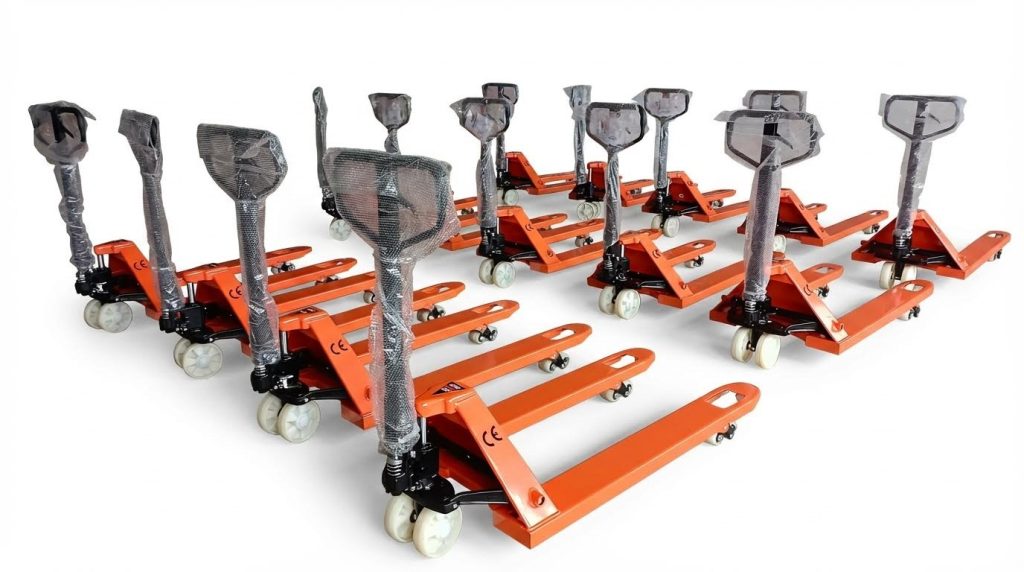
When professionals ask “what is hydraulic pallet truck performance in real operations?”, the answer depends strongly on application criteria, safety rules, and maintenance discipline. This section explains how to choose between manual and electric units, how to respect load limits, and how to structure inspections and troubleshooting. The focus stays on practical, standards-aligned routines that keep hydraulic pallet trucks reliable, safe, and cost-effective across their service life.
When To Choose Manual Vs. Electric Pallet Trucks
A hydraulic pallet truck is a hand-operated device that lifts pallets using a compact hydraulic pump and cylinder. Manual trucks suit low to medium throughput areas, short travel distances, and flat floors in warehouses, factories, and retail backrooms. They work best where typical loads stay within 2000–2500 kg and handling cycles per shift remain moderate. Electric pallet trucks become preferable when operators move heavier loads frequently, cover long aisles, or work on slopes and loading docks. Electric drive and powered lift reduce musculoskeletal strain and allow higher productivity in multi-shift operations. However, manual manual pallet jack remain advantageous where budgets are tight, ambient conditions are harsh for batteries, or usage is intermittent. In every case, the hydraulic lifting principle stays similar; the main difference lies in how traction and lift effort are supplied.
Load Limits, Stability, And Safe Operating Practice
Understanding what is hydraulic pallet truck capacity in relation to stability is critical for safe use. Typical rated capacities range from 2000 kg to 5000 kg, but operators must read the data plate and never exceed the specified limit. The load center usually aligns near the pallet midpoint; shifting the center of gravity forward increases tipping risk and fork bending. Operators should fully insert forks under the pallet, keep forks only 20–50 mm above the floor during travel, and avoid sudden stops or tight turns with elevated loads. On ramps, manual trucks should travel with the operator uphill of the load, descending backward to prevent runaways. Pulling on level floors often offers better visibility and control, while pushing can be safer in confined areas if the route is clear. Personal protective equipment such as safety shoes and gloves reduces injury risk from rolling loads and pinch points around wheels and linkages.
Inspection, Preventive Care, And FEM 4.004 Checks
Daily and periodic inspections determine what is hydraulic pallet truck readiness for safe operation. A short pre-use check should confirm straight forks without cracks, leak-free hydraulics, smooth handle movement, and clean, undamaged wheels. Weekly routines typically include lubricating pivot points, checking wheel bearings, tightening fasteners, and testing the overload valve and lowering control. Monthly care can extend to checking hydraulic oil level, looking for rust on the pump rod, and cleaning hidden areas around axles and fork tips. According to FEM 4.004, a competent person must perform at least one thorough inspection per year, documenting structural integrity, capacity compliance, and functional safety. These formal checks reduce sudden failures that disrupt material flow and help identify trucks nearing end-of-life due to persistent leaks, bent forks, or chronic wheel misalignment. Structured preventive maintenance extends service life and keeps lifecycle costs predictable.
Troubleshooting Hydraulics, Wheels, And Wear
Hydraulic issues often reveal what is hydraulic pallet truck weakness when maintenance lapses. Slow or jerky lifting usually indicates air in the hydraulic circuit or low oil level; bleeding the system by cycling the pump without load and topping up oil to the specified level typically restores performance. Persistent sinking of raised forks points to internal leakage past seals or a faulty lowering valve, which requires seal replacement or valve adjustment using the correct tools. Wheel and roller problems show as heavy steering, vibration, or floor damage; technicians should inspect for flat spots, cracked tread, and worn bearings, then replace components in pairs to keep tracking symmetrical. Uneven fork heights or pallet tilt may result from bent forks, twisted chassis, or worn linkage pins, all of which affect stability and must not be ignored. A disciplined troubleshooting approach—inspect, diagnose, repair, then function-test under a controlled load—keeps walkie pallet truck safe and ready for demanding industrial use.
Summary, Lifecycle Costs, And Future Trends
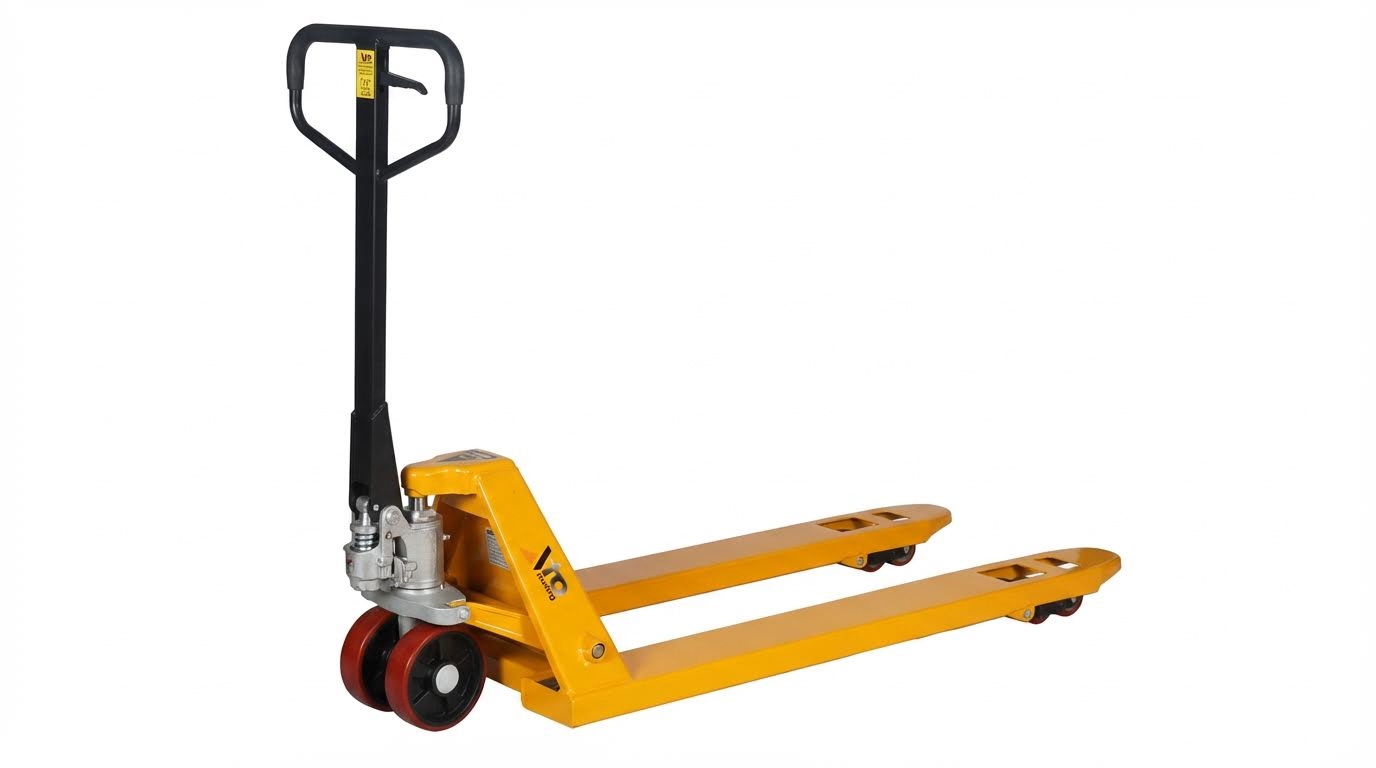
When engineers or buyers ask “what is hydraulic pallet truck” today, the answer covers far more than a simple hand jack. A hydraulic pallet truck is a manually powered, oil‑filled lifting device that raises palletized loads via a pump, cylinder, and linkage-driven fork assembly. Typical units lifted loads from about 85 mm to 200 mm fork height, carried 2000–5000 kg, and weighed roughly 60–85 kg. Design choices in fork geometry, wheels, materials, and safety valves determined how well the truck matched specific floors, pallets, and duty cycles.
Lifecycle cost analysis showed that acquisition price was only one component. Total cost depended on utilization rate, floor conditions, load spectrum, and maintenance discipline. Structured daily, weekly, and monthly inspections, combined with FEM 4.004 annual checks, prevented over 90% of failures and extended service life well beyond five years in typical warehouse use. Key cost drivers included hydraulic seal degradation, wheel and roller wear, fork deformation, and corrosion, all of which engineers could mitigate through correct oil selection, lubrication, and rust protection. Compared with electric pallet trucks, manual hydraulic units had lower energy and service costs but higher operator effort, which affected productivity in high-throughput operations.
Future trends for hydraulic pallet trucks focused on incremental but meaningful engineering upgrades rather than radical redesign. Manufacturers increasingly used high-tensile steels with optimized cross-sections to reduce tare weight while preserving a 2000–2500 kg rating. Surface technologies such as advanced powder coatings and zinc-rich primers improved corrosion resistance in cold stores and outdoor loading areas. Ergonomic control handles with low actuation forces and more precise lowering valves reduced operator strain and damage to fragile loads. Integration with digital asset-management systems, using QR codes or low-cost sensors, enabled condition-based maintenance and traceable FEM compliance. In the medium term, engineers could expect closer convergence between manual hydraulic trucks and compact electric-assist concepts, balancing human effort, cost, and sustainability while retaining the robust, simple hydraulic circuit at the core of the design.