Manual pallet jacks played a central role in warehouses, retail, and manufacturing, yet improper use caused avoidable injuries and equipment damage. This article outlined core safety principles, pre-use inspection and load handling techniques, and structured preventive maintenance for manual pallet trucks. It also examined hydraulic, wheel, and fork care, decision points for repair or replacement, and how these practices aligned with regulatory expectations and ergonomics. Together, these sections provided a practical framework for safe, efficient, and compliant manual pallet jack operation across the equipment lifecycle.
Core Safety Principles For Manual Pallet Jacks

Core safety principles for manual pallet jacks focused on controlling three factors: operator behavior, equipment condition, and environment. Industry guidance and OSHA data indicated that more than 20% of warehouse injuries involved improper equipment operation. Effective programs integrated regulatory expectations, task-specific PPE, and structured training on load handling and routing. These principles reduced acute incidents and also lowered long-term musculoskeletal disorders.
Regulatory Context And Employer Obligations
OSHA did not require a formal license or certification for manual pallet jack use. However, employers had a duty to train operators in safe operation, hazard recognition, and emergency procedures. Regulations required that equipment remained in safe condition through regular inspections and prompt repair or removal of defective trucks. Employers needed to post capacity labels, maintain clear aisles and exits, and ensure pallet jack use aligned with manufacturer instructions. Written procedures and refresher training supported compliance and reduced incident rates.
Operator PPE And Fit-For-Work Requirements
Operators needed task-appropriate PPE to manage crush, impact, and slip risks. Standard practice required work clothing without loose ends, safety shoes with toe protection, and durable gloves for load handling. In wet or contaminated areas, non-slip soles and, where necessary, cut-resistant gloves enhanced protection. Supervisors had to confirm operators were fit for work, not fatigued, and free from impairments that reduced reaction time or judgment. PPE use worked best when combined with housekeeping and speed control, not as a substitute for them.
Common Incident Scenarios And Root Causes
Typical incidents included foot crush injuries, hand and finger pinches, back strains, and tip-overs of unstable loads. Root causes often traced to overloading, poor weight distribution, and rushing in congested aisles. Operators sometimes tried to stop moving trucks with hands or feet, which led to fractures and lacerations. Riding on the pallet jack or using it to transport people created fall and crush hazards. Inadequate inspections allowed wheel damage or hydraulic faults to progress until sudden failure under load. Weak training and lack of visual reminders encouraged shortcuts and inconsistent practices.
Push vs Pull: Biomechanics And Risk Reduction
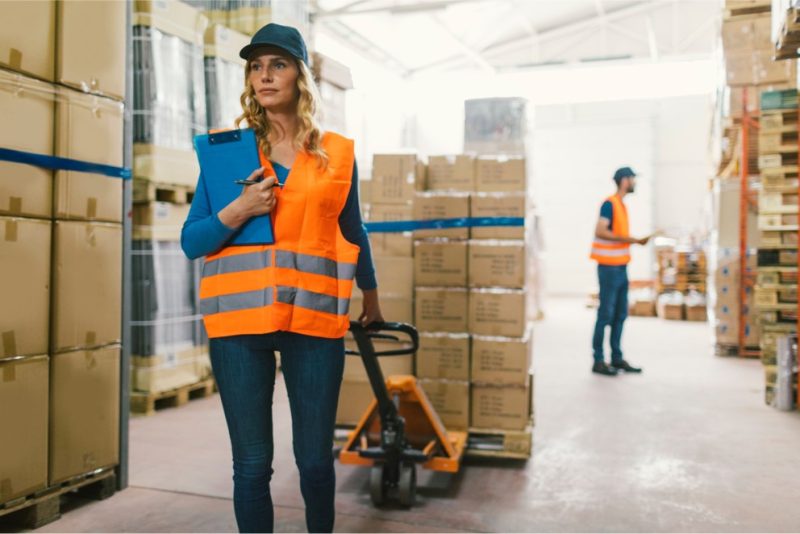
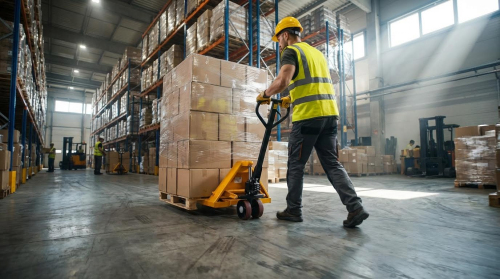
Guidance consistently recommended pushing manual pallet jacks instead of pulling them. Pushing allowed operators to face the travel direction, maintain a neutral spine, and use body weight more effectively. Pulling heavy loads increased lumbar disc loading and shoulder strain and reduced control on uneven floors. On level ground, pushing reduced the risk of sudden loss of balance and collisions with unseen obstacles. On slopes, operators needed to follow manufacturer guidance, typically keeping the load uphill and maintaining two-hand control while avoiding standing directly in front of the load. Training that demonstrated correct body posture and foot placement significantly lowered musculoskeletal injury rates.
Pre-Use Inspection And Load Handling Technique
Pre-use inspection and disciplined load handling determined whether manual pallet jacks operated safely in busy facilities. Structured checks reduced unexpected failures, while correct loading practices limited strain injuries and tip-over events. This section focused on practical, repeatable routines that safety managers could standardize across shifts.
Daily Visual And Functional Checks
Operators started with a 30-second visual scan of the pallet jack before use. They checked forks, frame, and handle for cracks, bent sections, or missing fasteners. Wheels required inspection for flat spots, embedded debris, or damaged bearings, because these defects increased rolling resistance and stopping distance. A functional test followed: operators pumped the handle three to six times to confirm smooth hydraulic lift without jerks or sinking. They verified that the lowering control, neutral position, and any parking brake moved freely and returned correctly. If the truck had sat unused, they cycled the handle 4–6 times in the lower position to purge air from the hydraulic circuit. Any oil leaks, abnormal noises, or restricted movement triggered removal from service and a maintenance report, in line with OSHA’s expectation to never operate damaged equipment.
Verifying Capacity, Load Rating, And Stability
Before loading, operators confirmed the rated capacity on the nameplate, typically 2 500–3 000 kg for standard manual jacks. They compared this rating with the estimated load mass, including pallet weight and any packaging, to avoid overload conditions that could cause structural failure or hydraulic collapse. Stability depended on both weight and its distribution; loads needed centering between the forks and within the pallet footprint. Tall or irregular stacks required restraint with straps or shrink wrap to prevent shifting during travel. Operators avoided stacking beyond a height where the center of gravity moved outside the wheelbase or obstructed the line of sight. If the load’s stability or mass remained uncertain, supervisors or material-handling engineers had to reassess the method, possibly splitting the load or using powered equipment.
Correct Fork Positioning And Pallet Engagement
Correct fork positioning started before entry into the pallet. Operators aligned the jack square to the pallet openings to prevent side loading on fork tips and entry rollers. They inserted both forks completely under the pallet until the heels almost touched the opposite deckboard, ensuring full support of stringers or blocks. Partial engagement increased bending stresses at the fork tips and risked breaking boards under dynamic loads. Once aligned, operators pumped the handle until the pallet cleared the floor by about 20–50 mm, just enough for smooth rolling without striking surface irregularities. They checked for visible deflection, pallet damage, or shifting items before moving off. During travel, forks stayed at minimal clearance; operators raised or lowered only when stationary, reducing instability and accidental contact with obstacles.
Operating On Ramps, Slopes, And Elevators
Ramps and slopes introduced additional gravitational forces that manual jacks handled poorly if misused. On inclines, operators kept the truck aligned straight up or down the slope and avoided diagonal movements or turning, which could cause lateral tip-over. For manual units, best practice required descending slopes backward with the operator above the load, maintaining control with both hands and stable footing. Uphill, the load stayed uphill of the operator to prevent runaway conditions. Elevators demanded a separate risk check: the rated elevator capacity had to exceed the combined mass of jack, load, operator, and any passengers. The load entered first, and only the operator accompanied it, with no one standing in the path of entry or exit. On any gradient or in lifts, operators moved slowly, monitored stopping distances, and followed site-specific procedures and manufacturer instructions to keep kinetic energy and collision risk low.
Preventive Maintenance And Lifecycle Management
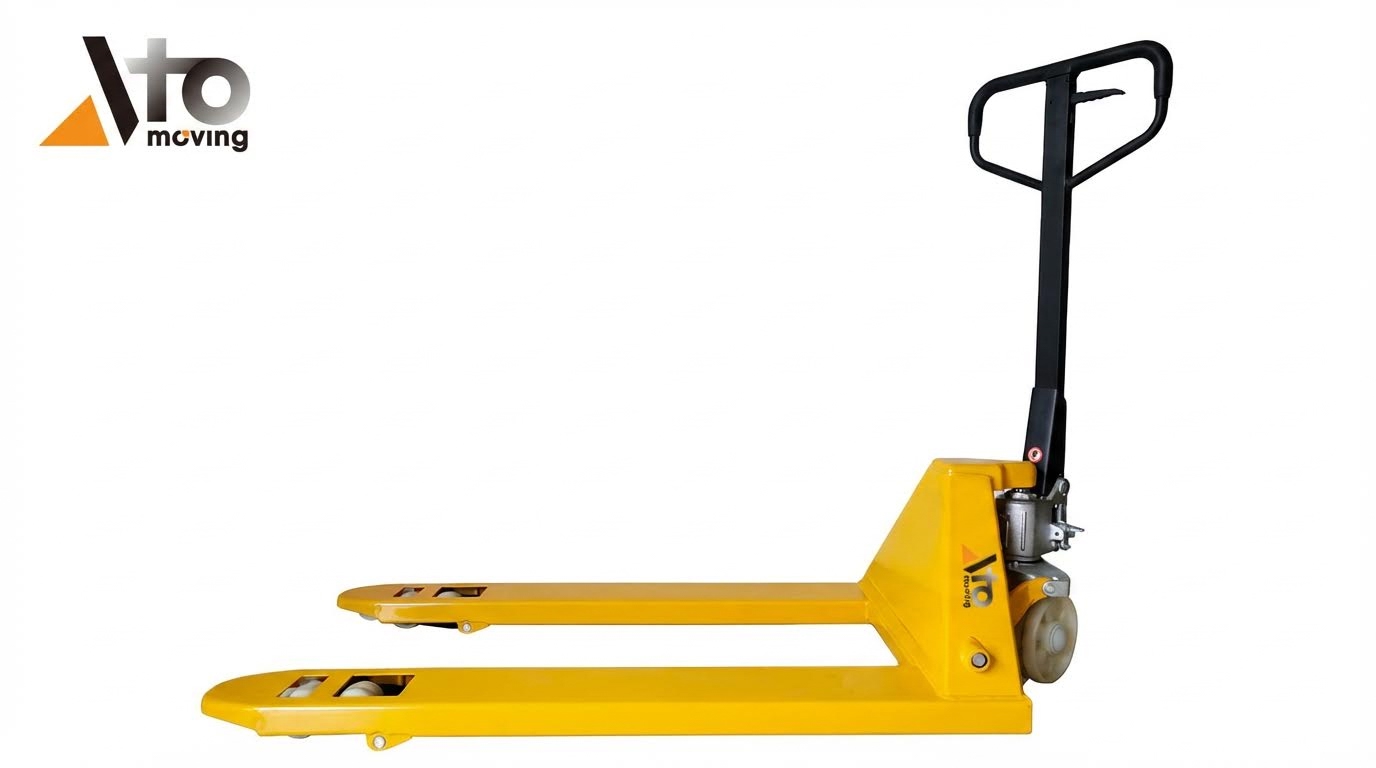
Preventive maintenance for manual pallet jacks reduced unexpected failures and extended service life. Structured daily, weekly, and monthly routines created predictable downtime and supported OSHA’s expectations for safe equipment. Effective lifecycle management combined hydraulic care, rolling-gear inspection, and clear replacement criteria based on measurable wear. This approach minimized accident risk, improved handling performance, and lowered total ownership cost.
Daily, Weekly, And Monthly Service Routines
Daily routines focused on fast checks that operators could perform during pre-use inspection. Typical practice included a 30-second visual scan of forks, wheels, and handle, a short hydraulic function check, and removal of debris around wheels. Weekly routines added lubrication of wheel axles, pivot joints, and center pivots, plus tightening of fork bolts and handle fasteners. Monthly care involved deeper cleaning, corrosion checks, fork straightness verification with a straightedge, and a more detailed hydraulic and wheel assessment.
Hydraulic System Care And Failure Indicators
The hydraulic unit required clean oil, sound seals, and air-free operation to lift rated loads. If a jack sat unused, air could enter the circuit, which operators purged by fully lowering the handle and pumping several cycles until smooth motion returned. Jerky lifting, sinking forks under load, or visible oil leaks indicated internal seal wear or contamination. Persistent leakage after seal replacement, rust streaks on the cylinder, or repeated loss of lift capacity signaled that major overhaul or replacement was more economical than continued repair.
Wheel, Fork, And Bearing Wear Management
Wheel and bearing condition directly affected rolling resistance, steering control, and floor damage. Daily checks targeted embedded debris such as nails or plastic, which operators removed to prevent flat spots and bearing overload. Weekly wheel spin tests and empty rolling checks helped detect noisy or rough bearings, misalignment, or wobble. Forks required routine inspection for cracks, bent tips, or loss of parallelism, because deformation changed load sharing and could trigger instability or pallet damage under high loads.
When To Repair, Upgrade, Or Replace The Jack
Repair decisions depended on structural integrity, hydraulic reliability, and rolling performance. Minor issues such as loose hardware, dry pivots, or contaminated wheels suited low-cost repair and lubrication. Bent forks, recurring hydraulic leaks despite seal replacement, or wheels that wobbled after axle changes indicated end-of-life for the core structure. At that point, facilities often upgraded to jacks with polyurethane or pneumatic wheels better matched to floor conditions, or to models with improved ergonomics, while retiring units that no longer met safety or capacity requirements.
Summary: Practical Guidelines And Future Trends

Manual pallet jacks remained essential in warehousing, retail, and manufacturing because they handled dense loads over short distances with minimal infrastructure. Safe operation depended on three pillars: competent operators, sound equipment, and disciplined procedures. Practical programs combined OSHA-aligned training, structured pre-use inspections, and conservative load-handling rules based on rated capacity and stability. Organizations that embedded these elements into standard work instructions reduced incident rates, extended equipment life, and minimized unplanned downtime.
From a technical standpoint, best practice programs standardized daily visual and functional checks, enforced push-over-pull handling, and required low fork travel height of approximately 2–5 cm to control stability. They defined clear ramp, slope, and elevator rules, including straight-line travel, descending backward with manual trucks, and pre-verifying supporting structure capacity. Preventive maintenance frameworks specified daily cleaning, weekly lubrication and fastener checks, and monthly hydraulic and structural inspections, with objective criteria for repair or replacement when forks bent, seals leaked persistently, or wheels wobbled after axle service.
Industry trends pointed toward tighter integration of manual pallet jack use with broader warehouse safety and digital asset-management systems. Facilities increasingly used inspection checklists on mobile devices, QR-tagged equipment histories, and visual capacity labels to support compliance and traceability. Future developments were likely to include ergonomic handle designs informed by biomechanical data, low-cost sensor add-ons for overload and gradient warnings, and standardized inspection tagging aligned with international safety standards. A balanced approach would keep manual pallet jacks in roles where they were inherently efficient, while complementing them with powered or automated solutions in high-volume or high-risk zones. This mix supported productivity targets without compromising worker safety or regulatory compliance.