Knowing how to drive a pallet jack safely is one of the fastest ways to cut handling damage, reduce injuries, and improve warehouse flow. This guide walks through fundamentals, step‑by‑step driving techniques, and practical tips for choosing, using, and maintaining both manual and electric pallet jacks. You will see how mechanics, safety rules, and inspection routines work together so operators stay in control in real-world conditions. Use it as a training baseline for new staff and a refresher for experienced operators aiming to boost safety and efficiency.
Fundamentals Of Pallet Jack Operation

Manual vs. electric pallet jack mechanics
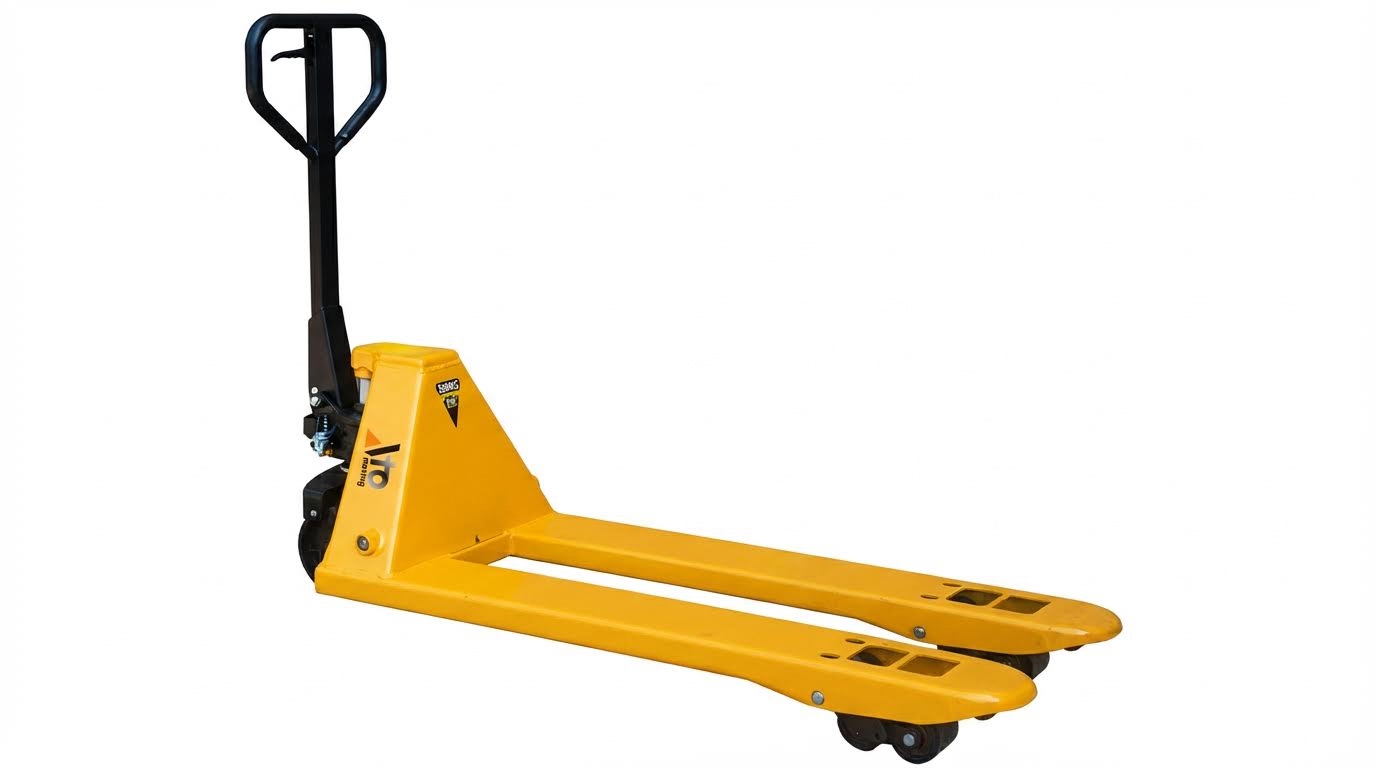
Understanding the mechanics of manual and electric units is the foundation of learning how to drive a pallet jack safely and efficiently. A manual pallet jack uses a simple hydraulic circuit: pumping the drawbar forces oil into a cylinder, which raises the forks and load with mechanical advantage. This system is robust and low maintenance but limited by the operator’s strength and duty cycle Hydraulic System Mechanism. Electric pallet jacks add traction and lift motors, batteries, controllers, and braking, so the machine provides both lifting and driving force with minimal manual effort Electric Motor Advantages.
- Typical manual capacity is in the 2,000–5,500 lb range, suitable for light to medium-duty shifts Load Capacity Differences.
- Electric units often handle up to about 8,000 lb and perform better on ramps, longer runs, and multi-shift operations Load Capacity Differences Terrain Suitability.
- Manual jacks are very compact and easy to pivot in tight aisles; electric models offset their larger size with powered steering and short turning radii Maneuverability in Tight Spaces.
- Electric trucks rely on lead-acid or lithium-ion batteries; lithium options support faster charging, opportunity charging, and longer life cycles Battery Technology Comparison.
From a control standpoint, learning how to drive a pallet jack manually means mastering body positioning, pump stroke, and low-speed maneuvering. For electric units, operators must also understand throttle, braking, and emergency features such as reverse buttons and automatic speed reduction in curves Safety Features. Choosing between manual and electric directly affects warehouse layout, aisle width, and the need for charging areas, so engineering and safety teams should align equipment choice with traffic volume and route length Impact on Warehouse Layout.
Core safety rules and compliance basics
Core safety rules define how to drive a pallet jack without exposing people, product, or infrastructure to avoidable risk. Operators must always respect the rated load, which for many manual units starts around 2,500 lb or more, and never exceed the nameplate capacity Load Limit Adherence. Before moving, they should inspect forks, wheels, hydraulics, and controls, then clear the travel path of debris, cables, and uneven surfaces that could destabilize the load Pre-Operation Inspection Path Inspection.
- Start and stop smoothly to avoid sudden jerks, lost loads, and musculoskeletal strain Starting Operation Safe Speed Operation.
- Keep speeds low, especially on slippery floors or in low-visibility zones, and use the horn at blind corners or intersections Speed Management Visibility Enhancement.
- Avoid steep ramps and uneven surfaces; if a gentle incline is unavoidable, keep the load uphill and forks low but clear of the floor Ramp Usage Avoid Uneven Surfaces.
- Never carry passengers and maintain a safe distance from dock edges and other marked hazard areas Passenger Prohibition Distance from Loading Docks.
From an ergonomics perspective, many safety programs now favor pushing over pulling to use stronger leg muscles and reduce back strain, though in some layouts controlled pulling can improve visibility Pushing Over Pulling Push vs Pull. Electric pallet jacks must also meet relevant truck safety standards such as EN ISO 3691-1 and ANSI B56.1, and only trained personnel should maintain batteries, brakes, and control systems Compliance and Standards Professional Maintenance. When these core rules are built into training, signage, and supervision, facilities see fewer incidents and more consistent, predictable pallet flows.
Step-By-Step: How To Drive A Pallet Jack Safely
Pre-use inspection and path preparation
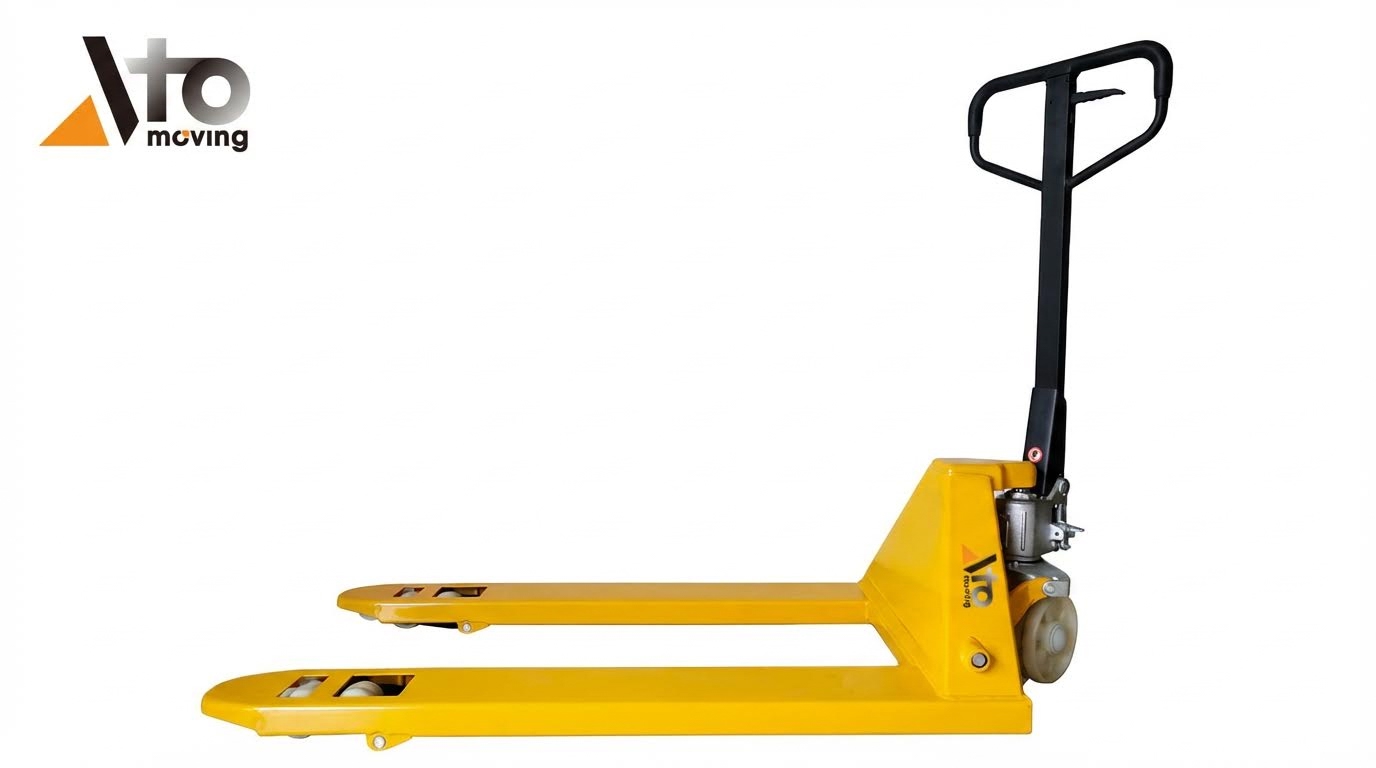
Before focusing on how to drive a pallet jack, confirm the truck itself is safe and the route is clear. Carry out a short pre-use check: look for bent or cracked forks, damaged wheels, oil leaks, and make sure the handle and controls move smoothly with full travel and return. For electric pallet jacks, visually check the battery, cables, and connectors, and verify the charge level before starting work to avoid power loss mid‑move. Then prepare your travel path: remove loose wrap, broken pallets, spills, and obstructions, and pay special attention to tight turns, doorways, and intersections where you may meet other traffic to maintain safe maneuvering space. Avoid uneven floors, steep ramps, and dock edges wherever possible, since these greatly increase the risk of losing control of the load and can cause roll‑away incidents.
Loading, fork positioning, and lifting technique
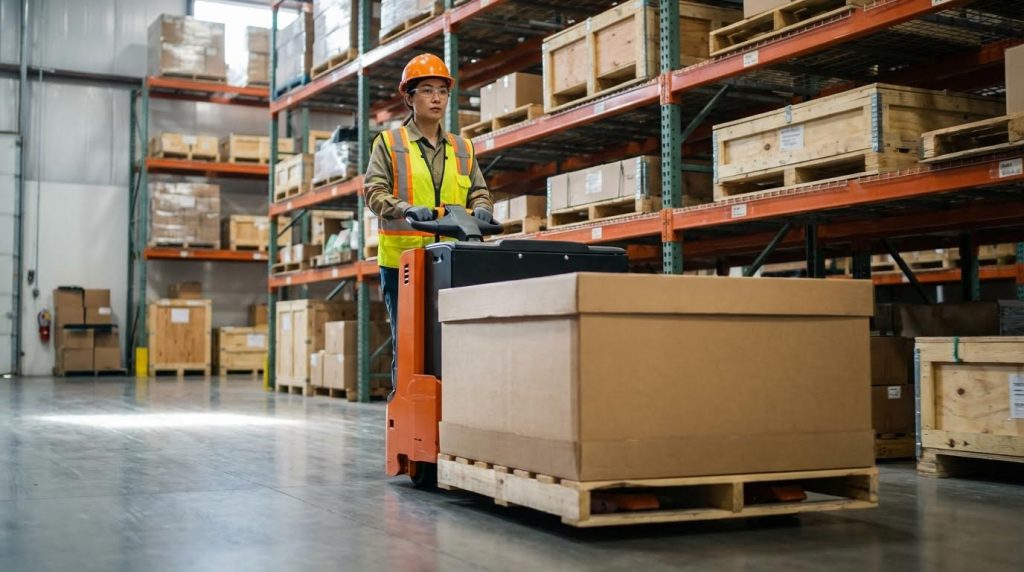
Safe control starts with correct loading before you drive a pallet jack. Check that the pallet is sound, with no broken deck boards or stringers that could collapse under weight and that it is rated for the intended load. Confirm the total load is within the pallet jack’s capacity; many manual units are rated around 2,000–2,500 kg or 2,500 lb and above, and exceeding this dramatically reduces stability and braking performance so check the data plate before use and never overload. Align the forks square to the pallet openings and center them under the load so both forks share the weight evenly, then insert them fully to the back of the pallet to prevent tip‑forward failures during travel and to keep the load stable. Raise the pallet only enough for ground clearance by pumping the handle (manual) or using the lift control (electric), keeping the center of gravity low to reduce the chance of overturning while you move and to maintain steering control.
Driving, speed control, and stopping procedures
When learning how to drive a pallet jack, always start movement smoothly and at low speed to avoid sudden jerks that strain the operator and destabilize the load especially with heavy or top‑heavy pallets. Use a push technique on level floors where possible to engage stronger leg muscles and reduce back strain, and keep the handle at a comfortable height and distance from your body to maintain clear visibility ahead while protecting shoulders and lower back. Control speed carefully: slow down in congested areas, at blind corners, and on potentially slippery surfaces, and on electric units use the built‑in braking system instead of abrupt handle movements to avoid skidding or collisions especially when visibility is limited. To stop safely, bring the jack to a controlled halt, then lower the forks slowly until the pallet is fully supported and level on the floor, making sure no feet or obstacles are under the forks before you drop the load and then returning the empty pallet jack with forks lowered to a safe, non‑trip parking position to eliminate unintended movement and trip hazards after completing the move.
Optimizing Use, Equipment Choice, And Maintenance
Push vs pull, ramps, and narrow-aisle techniques
Understanding when to push or pull is central to learning how to drive a pallet jack safely and efficiently. Many safety programs recommend pushing during level transport to use stronger leg muscles and reduce back strain, especially over distance. However, pulling can improve visibility and maneuverability in some tight turns and short repositioning moves, provided the operator keeps the load slightly behind and to the side of the body. The key is to match technique to task, always keeping the body close to the handle and avoiding twisting under load. On ramps and inclines, risk increases sharply because gravity can cause the load to freewheel. Best practice is to avoid slopes where possible, especially with heavy or unstable loads. If a ramp is unavoidable, keep the load on the uphill side, maintain a low, constant speed, and hold the forks just high enough (typically about 4–6 inches) to avoid catching on the surface while still keeping a low center of gravity when using pallet jacks on inclines. Narrow aisles demand slow, deliberate control and pre-planned paths. Operators should:
- Inspect the route for debris, damaged flooring, and protrusions before entry to prevent wheel obstruction and tip risk.
- Center the load on the forks and keep the handle in a mid-range angle for maximum steering control.
- Use short, controlled pushes or pulls rather than long strides to avoid striking racks or pallets.
- Reduce speed and sound a horn or verbal warning at cross-aisles and blind corners where other equipment may be moving to enhance visibility and collision avoidance.
These techniques help operators maintain stability, reduce strain, and avoid product or rack damage in constrained warehouse layouts.
Manual vs electric: productivity, TCO, and battery tech
Choosing between manual and electric models is a core part of optimizing how to drive a pallet jack for a given operation. Manual pallet jacks use a simple hydraulic pump actuated by handle strokes to raise the forks, which keeps purchase cost low and maintenance simple but limits productivity by operator strength and walking speed because all lifting and traction are manual. Electric pallet jacks add powered lift and drive motors, allowing faster travel, easier ramp work, and reduced fatigue, which is critical in high-volume or multi-shift warehouses where operators move heavier loads and cover longer distances. Studies and field data show that a typical operator might move around 30 pallets per hour with a manual unit, while an electric walkie can increase throughput to roughly 60–70 pallets per hour in comparable conditions, which can cut annual labor cost per operator by several thousand dollars and deliver payback on the electric unit in well under a year in busy operations based on productivity and labor savings analysis. Battery technology strongly influences total cost of ownership (TCO) for electric pallet jacks. Lead-acid batteries offer lower upfront cost but need regular water checks, equalization charges, and long charge windows of about 6–8 hours, which can require spare batteries or downtime due to their maintenance and charging profile. Lithium-ion batteries cost more initially but last several times longer, charge in a few hours, and allow opportunity charging during breaks with almost no routine maintenance, which simplifies fleet management and supports multi-shift use thanks to higher efficiency and advanced battery management systems. In low-volume, short-shift, or highly space-constrained environments, the lower cost and compact size of manual units often win. In high-frequency, longer-distance, or ramp-heavy applications, electric models usually provide better lifecycle value through higher throughput, lower strain injuries, and more consistent performance.
Inspection, lubrication, and predictive maintenance
Consistent maintenance is essential if you want to keep how to drive a pallet jack safe and predictable for every operator. A structured routine starts with a quick daily inspection, typically 5–7 minutes, covering a visual scan for debris on wheels, bent or cracked forks, leaks around the hydraulic unit, and a short lifting test to confirm smooth, even fork rise as part of daily maintenance routines. Weekly tasks typically include cleaning, lubricating wheel axles and pivot joints, and checking for loose fasteners so the frame does not rattle under load to maintain smooth operation and structural integrity. Monthly, maintenance teams should perform deeper checks: fork alignment with a straightedge, wheel inspection for cracks or flat spots, hydraulic fluid level verification, and a full-stroke hydraulic test to detect jerky motion or unusual noises that signal internal wear using a structured maintenance checklist. For electric pallet jacks, maintenance expands to include battery charge status, cable and connector condition, braking system performance, and functional tests of all drive and lift controls before the unit enters service each shift to ensure reliable electrical and braking systems. Predictive maintenance relies on logging defects and trends: repeated low-level hydraulic leaks, recurring wheel flat spots in a given zone, or frequent battery alarms all point to underlying issues such as overloaded routes, poor floor conditions, or incorrect charging practices. By combining daily operator checks, scheduled lubrication and tightening, and a simple issue log, facilities can extend equipment life, reduce unplanned downtime, and keep pallet jacks operating safely at their designed capacity.
“”
Key Takeaways For Safer, More Productive Handling
Safe pallet jack control depends on how well equipment choice, operating technique, and maintenance work together. When teams match manual or electric units to load, distance, and ramp use, they cut strain on operators and reduce near-misses. Correct loading and fork positioning keep the center of gravity low and inside the wheelbase, so the truck stays stable during turns, braking, and on gentle slopes. Clear, prepared routes and low, controlled speeds then turn that stability into predictable handling in tight aisles and shared spaces.
Daily inspections and simple lubrication routines keep hydraulics, wheels, and brakes performing as designed. This protects operators from sudden failures and protects product and racking from impact damage. For electric units, disciplined battery care and checks on safety functions are just as critical as driving skill. The most effective operations treat these practices as a single system: choose the right Atomoving pallet jack, train to a clear step‑by‑step method, and enforce short, regular maintenance checks. When leaders standardize this approach across shifts and sites, incident rates fall, throughput rises, and pallet jack handling becomes a reliable, low-risk part of the material flow instead of a frequent source of disruption.
Frequently Asked Questions
How to Safely Drive a Pallet Jack on an Incline?
When driving a pallet jack on an incline, always keep the load in front of you for better control. Do not walk backward unless going up the incline. If frequent use on ramps is required, ensure your pallet jack is equipped with brakes. Incline Safety Tips.
What Are the Key Skills Needed to Operate a Pallet Jack?
To operate a pallet jack effectively, practical experience with both manual and electric models is essential. Basic physical fitness is important, as is familiarity with warehouse management systems (WMS) and safety protocols. OSHA certification may also be required for certain roles. Pallet Jack Skills Guide.
Should You Push or Pull a Pallet Jack?
Always push a pallet jack rather than pulling it. Pulling can make the pallet jack difficult to control and may cause strain on your back, increasing the risk of injury. Pushing ensures safer and more efficient operation. Safe Pallet Jack Operation.
Is Certification Required to Operate a Pallet Jack?
Yes, certification is often required as pallet jacks are classified under OSHA regulations. To become certified, complete formal instruction, practical training, and a performance evaluation. Online courses are available to fulfill these requirements at your own pace. Certification Details.