Electric pallet jacks, or battery pallet lifts, transformed short-distance load handling in warehouses, retail backrooms, and industrial plants. This guide explains how to operate a battery pallet lift by focusing on core components, control logic, and safe maneuvering techniques. It also aligns daily operation with OSHA expectations, from structured pre-use inspections to compliant training practices. The full outline then progresses into step-by-step daily procedures and closes with best practices that affect equipment lifecycle, uptime, and total cost of ownership.
Core Components And Control Functions
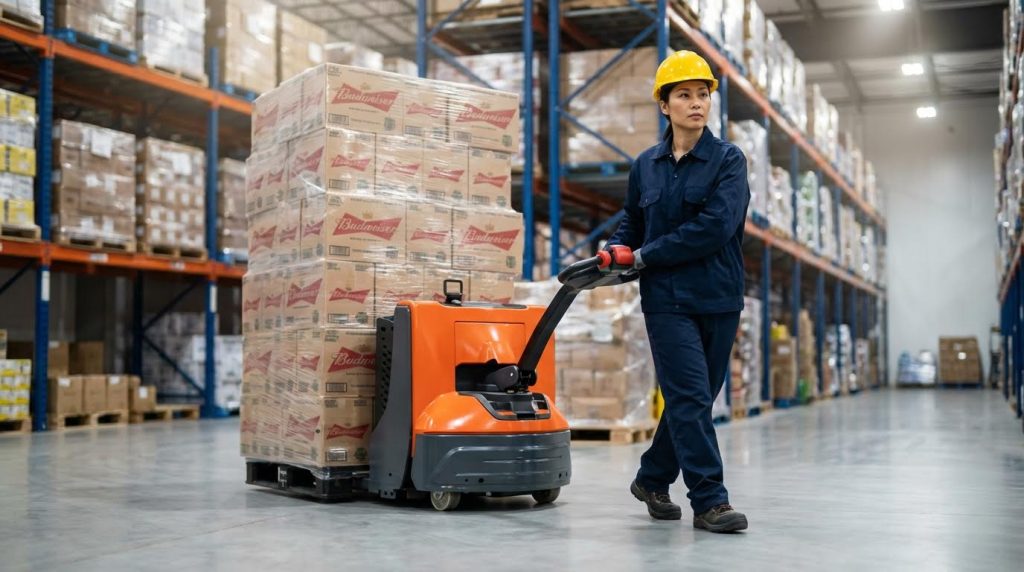
Understanding core components is the first step in learning how to operate a battery pallet lift safely and efficiently. This section explains operating modes, primary controls, safety functions, and battery systems that define day‑to‑day performance. Engineers and supervisors can use these details to standardize training, reduce incidents, and optimize runtime in demanding warehouse environments.
Walk-Behind Vs. Ride-On Operating Modes
Battery pallet lifts operated as walk-behind units placed the operator behind the drive wheel, holding a tiller handle. Ride-on units added a standing platform, so the operator rode with the truck for higher throughput over distance. Walk-behind modes usually offered tighter turning radii and higher precision in congested aisles. Ride-on configurations reduced operator fatigue and increased travel speed but required stricter training on clearances and stopping distance. When selecting a mode, engineers evaluated aisle width, average haul distance, and traffic density to balance maneuverability and productivity.
Control Handle, Throttle, And Steering Basics
The control handle on a battery pallet lift combined steering, traction control, and lift functions in one ergonomic assembly. Operators steered by pivoting the tiller left or right, which turned the drive wheel and changed the truck heading. A thumb or twist-grip throttle commanded forward or reverse travel and allowed fine speed modulation in tight spaces. Most designs incorporated a dead-man or “hold-to-run” feature that stopped traction when the handle moved to the full up or full down position. Understanding these basic controls allowed operators to position forks precisely and maintain stable, predictable motion in narrow aisles.
Lift, Lower, And Emergency Stop Functions
Lift and lower controls on a battery pallet lift actuated an electric-hydraulic pump that raised or lowered the forks under load. Buttons or rocker switches typically sat on the control head, enabling one-handed operation while steering. Operators lifted only enough to clear the floor, which kept the load center of gravity low and reduced tip-over risk during turns. An emergency stop or belly button switch provided immediate power cut-off if the truck approached the operator’s body or an obstruction. Correct use of these functions minimized impact forces, limited travel with elevated loads, and aligned with powered industrial truck safety guidance.
Battery Types, Runtime, And Charging Practice
Battery pallet lifts relied mainly on lead-acid or lithium-ion traction batteries, each with distinct performance characteristics. Lead-acid batteries required regular watering and equalization charges, while lithium-ion packs offered higher cycle life and opportunity charging with minimal maintenance. Typical runtime under mixed duty cycles ranged from approximately 2 hours to a full shift, depending on battery capacity, load mass, and travel profile. Operators monitored state of charge via on-board indicators and avoided deep discharge, which shortened battery life and increased downtime. Engineering teams established standardized charging practices, such as charging during breaks and storing trucks in cool, dry, ventilated areas, to maintain consistent runtime and reduce lifecycle cost for every battery pallet lift in the fleet.
Pre-Use Safety Checks And OSHA Compliance
Pre-use safety checks are the foundation of safe, efficient battery pallet lift operation. Consistent inspections reduce unplanned downtime, extend component life, and keep operators aligned with OSHA expectations. When facilities standardize checklists, workplace scans, and documentation, they turn “how to operate a battery pallet lift” into a controlled, auditable process rather than a personal habit. The following subsections describe how to structure those controls around equipment, environment, load, and training.
Structured Pre-Operational Inspection Checklist
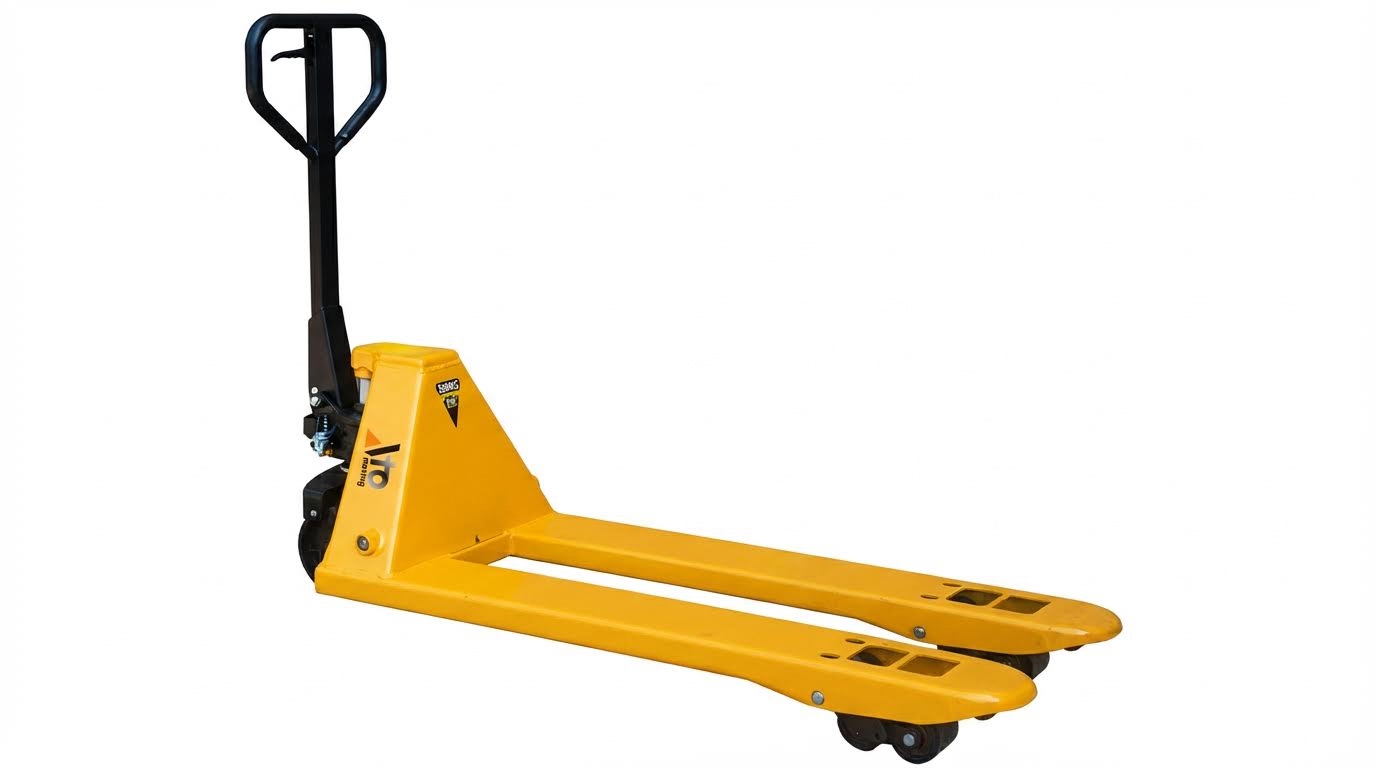
A structured pre-operational checklist for a battery pallet lift should separate power-off and power-on checks. Power-off, operators verify forks for cracks, bent tips, or misalignment, and inspect wheels and rollers for flat spots, embedded debris, or broken bearings. They check the battery compartment for securement, damaged cables, corrosion, and leaks, and confirm hydraulic components show no visible leaks at cylinders, hoses, or fittings. Power-on, they verify correct startup, check charge level, test horn and warning devices, and cycle lift, lower, and travel functions to confirm smooth, predictable response. Braking and emergency stop must function instantly and repeatably, with no drift or delayed engagement. All defects go into a log, and only qualified technicians clear tagged units for return to service.
Workplace Hazard Scan And Traffic Management
Before operating a battery pallet lift, the operator scans the travel path and work zone. They identify floor hazards such as holes, dock edges, ramps, loose grating, or pooled liquids that could reduce friction or support. Overhead, they check for low beams, sprinkler lines, and energized conductors, especially in staging areas and near dock doors. Effective traffic management uses marked pedestrian lanes, one-way equipment aisles, and defined high-traffic intersections with stop or yield rules. For tight aisles, supervisors set speed limits and passing rules to prevent head-on conflicts. Integrating the hazard scan into the pre-use routine ensures the operator does not treat “how to operate a battery pallet lift” as only a control exercise, but as route and risk planning as well.
Load Capacity, Stability, And Center Of Gravity
Safe operation starts with knowing the rated capacity on the data plate and never exceeding it. Operators confirm pallet weight from documentation or scale data, then compare it to the truck’s rated capacity at the specified load center distance, typically 600 millimetres. The load must sit flat on the pallet, with mass distributed evenly across both forks to maintain a low, centered combined center of gravity. Tall or uneven loads require additional securing with stretch wrap or straps to prevent shifting during acceleration, braking, or cornering. The forks should raise only high enough to clear the floor, which keeps the center of gravity low and reduces tipping risk on slopes or transitions. This disciplined approach to capacity and stability is essential to any procedure that explains how to operate a battery pallet lift in real warehouses.
Documentation, Training, And 1910.178(l) Alignment
OSHA 1910.178(l) required employers to train and evaluate operators of powered industrial trucks, including electric pallet jacks, on both truck-specific and workplace-specific hazards. Training programs covered controls, inspection steps, load handling, pedestrian interaction, and emergency responses, with formal instruction, practical exercises, and performance evaluation. Facilities documented initial training, refresher training, and evaluations, and retained inspection checklists to demonstrate that each battery pallet lift passed a pre-use safety check. Refresher training occurred after incidents, near misses, or observed unsafe behavior, and at defined intervals. Aligning documentation with 1910.178(l) ensured that “how to operate a battery pallet lift” was supported by verifiable competence, not informal coaching alone. This documentation also supported internal audits, insurance reviews, and continuous improvement of safety procedures.
Step-By-Step Daily Operating Procedures
Understanding how to operate a battery pallet lift safely required a repeatable daily routine. Operators followed consistent start-up, travel, and shutdown steps to control risk and protect equipment. The following procedures described a full operating cycle for walk-behind and ride-on electric pallet jacks in warehouse and industrial environments.
Starting, Positioning, And Approaching The Load
When learning how to operate a battery pallet lift, operators first verified that pre-use inspections were complete and documented. They ensured the forks sat fully lowered, the drive direction switch was neutral, and the area around the truck was clear. The operator then turned the key or main power switch on and confirmed that indicator lights, horn, and display functioned correctly. With the control handle in the operating position, they selected low speed for initial movements, especially in congested zones.
Approach to the pallet occurred in a straight line at a 90° angle to the entry side. The operator kept the battery pallet lift under tight control, maintaining a safe walking pace and keeping their body offset from the chassis to avoid foot and leg pinch points. They aligned forks with the pallet openings horizontally and vertically, ensuring adequate clearance from deck boards and stringers. The forks then entered the pallet fully, with tips not protruding excessively from the opposite side where they could strike racking or other loads.
Lifting, Traveling, And Maneuvering In Tight Aisles
Once the forks engaged the pallet completely, the operator used the lift control to raise the load just high enough to clear the floor, typically 50–75 mm. Keeping the load low reduced the center of gravity height and improved stability on uneven or sloped floors. The operator checked that the load sat evenly on both forks, with no overhang that could contact obstacles or compromise visibility. If the load appeared unstable, they lowered it and re-stacked or banded it before continuing.
During travel, the operator maintained clear sightlines, choosing to travel forks trailing when visibility with forks leading was restricted. Speed remained low in intersections, blind corners, and near pedestrians, with the horn used before entering cross-aisles or doorways. In tight aisles, the operator used short, deliberate tiller movements and minimal throttle input to avoid sudden directional changes. They kept the truck centered in the aisle, allowing clearance on both sides for racking, column guards, and other structures.
For ride-on units, the operator stood fully inside the designated platform area with stable footing and both hands on the control handle. For walk-behind units, they stayed to the side of the battery pallet lift, never directly behind the chassis where they could be pinned against walls or equipment. On ramps, they followed facility rules, typically traveling with the load upgrade and avoiding turns on slopes to prevent lateral tip risk.
Parking, Power-Down, And Post-Use Inspection
At the end of a move, the operator positioned the truck in a designated parking area away from fire exits, electrical panels, and emergency equipment. They ensured the surface was level and capable of supporting the truck and any residual load. The forks were fully lowered to the floor to remove stored energy from the hydraulic system and reduce trip hazards. If the truck had a parking brake, the operator applied it before leaving the operating position.
Power-down steps included returning direction controls to neutral, switching the key or main power off, and removing the key where required by site policy. The operator then performed a brief post-use inspection, checking forks, wheels, and covers for new damage that might have occurred during the shift. Any defects, unusual noises, or performance issues were recorded in the logbook and reported to supervision or maintenance. Trucks with safety-critical faults were tagged out of service in line with facility lockout and defect isolation procedures.
Daily Cleaning, Lubrication, And Basic Troubleshooting
Daily cleaning formed an essential part of how to operate a battery pallet lift responsibly. Operators wiped down control surfaces, handles, and display areas to remove dust, oils, and packaging debris that could affect grip or visibility. They cleared string wrap, banding, or fibers from wheels and axles to prevent drag and uneven wear. The fork tops and heel areas were kept free of dirt that might interfere with pallet entry or cause slippage.
Where permitted by site procedures, operators applied light lubricant to specified pivot points and wheel bearings at defined intervals, following the manufacturer’s maintenance schedule. They checked the battery charge level at the end of use, connecting the truck to an approved charger if the state of charge had dropped below the recommended threshold. Basic troubleshooting included verifying that the emergency stop was released, the battery connector was fully seated, and the control handle was in the correct position if the truck failed to move. Issues beyond these simple checks were escalated to qualified technicians, with operators avoiding unauthorized adjustments to electrical, hydraulic, or control systems.
Summary Of Best Practices And Lifecycle Impacts

Operating teams that understand how to operate a battery pallet lift typically achieved higher throughput, lower incident rates, and longer asset life. Best practice combined three pillars: disciplined pre-use inspection, standardized operating sequences, and structured maintenance aligned with manufacturer guidance and OSHA 1910.178(l). Facilities that embedded these routines into daily work usually reduced unplanned downtime and extended major component life, especially batteries, drive units, and hydraulic systems.
From a lifecycle perspective, correct battery care had the largest cost impact for an electric pallet jack fleet. Avoiding deep discharge, respecting charge windows, and keeping terminals clean significantly extended runtime stability and delayed pack replacement. Regular cleaning, fork and wheel inspection, and verification of safety devices limited progressive damage and kept the truck within its original performance envelope. Accurate logs of inspections, defects, and repairs also supported root-cause analysis and evidence for regulatory audits.
In practice, the most effective programs treated “how to operate a battery pallet lift” as a system that included the operator, the truck, and the traffic environment. Sites defined speed limits, aisle priorities, and parking zones, then reinforced them through recurrent training and short toolbox talks. Looking ahead, higher adoption of lithium-ion batteries, integrated telematics, and smart chargers would likely shift focus toward data-driven maintenance and energy optimization, while OSHA-aligned operator training would remain the foundation for safe, efficient material flow over the full equipment lifecycle.