Understanding how high can a pallet jack lift is fundamental when specifying equipment for warehouses, production lines, and loading docks. This article explains core lift height ranges and design basics, then links those limits to real application needs such as ground transport, racking, and stacking. You will see how pallet standards, fork geometry, load center, and floor conditions influence safe usable lift, not just catalog values. Finally, we connect lift performance to engineering design, maintenance routines, and lifecycle considerations so you can choose the right hydraulic pallet truck or walkie pallet truck with confidence.
Core Lift Height Ranges And Design Basics
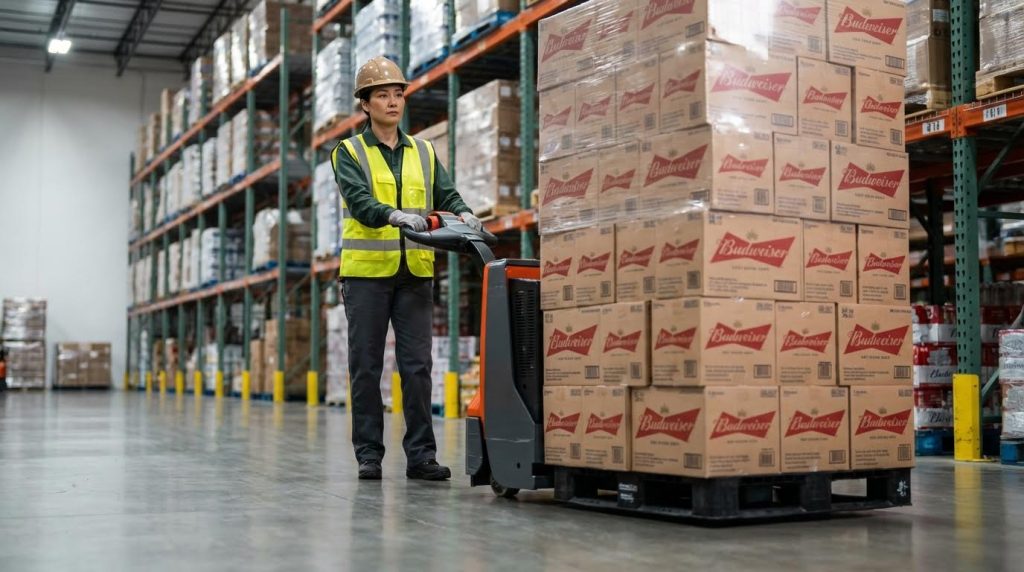
Engineers evaluating how high can a pallet jack lift must understand standard lift ranges and structural constraints. Core parameters include minimum and maximum fork heights, fork geometry, and ground clearance, which together define safe usable lift. These design basics differed between manual, electric, and high-lift variants and governed compatibility with standardized pallets. The following sections outline typical values and engineering considerations that influence specification and selection.
Typical Lift Heights For Manual Pallet Jacks
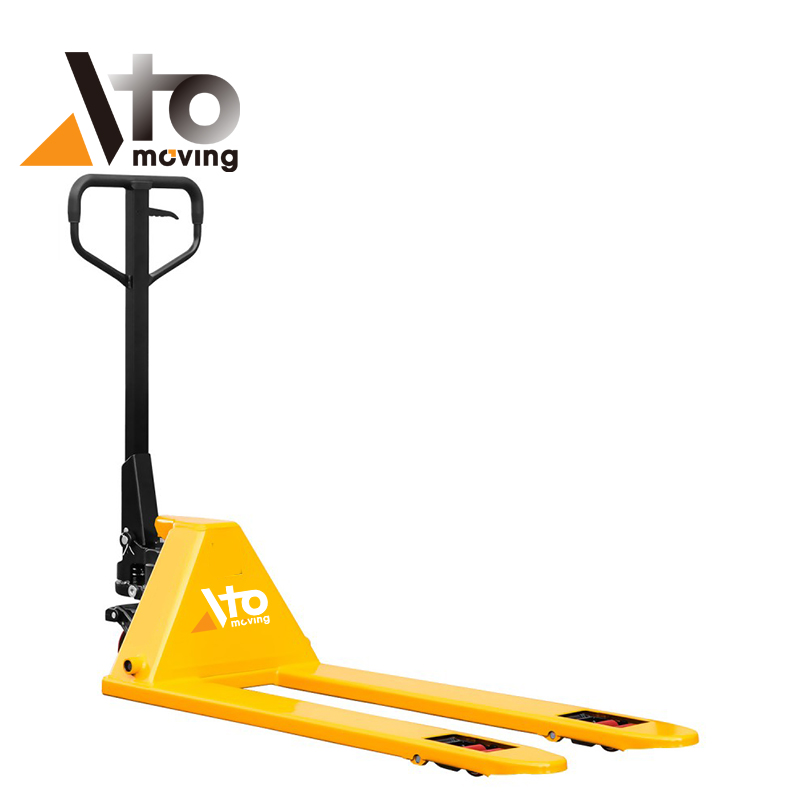
Manual pallet jacks historically operated with a minimum fork height near 75 mm to 85 mm. This low profile allowed entry under standard wooden pallets with minimal approach resistance. Typical maximum fork height ranged from 190 mm to 210 mm, which equated to roughly 7.5 inches to 8.3 inches of lift. That range answered the core question of how high can a pallet jack lift for ground handling tasks. The design intent was not vertical stacking but creating 80 mm to 120 mm clearance between pallet bottom and floor. That clearance reduced friction, allowed traversal over small thresholds, and maintained a low load center for stability. Load capacities usually ranged between 1,680 kg and 5,000 kg, so hydraulic geometry prioritized force over stroke length. Engineers balanced pump displacement, lever ratio, and cylinder stroke to achieve full lift within a manageable number of handle pumps.
Typical Lift Heights For Electric Pallet Jacks
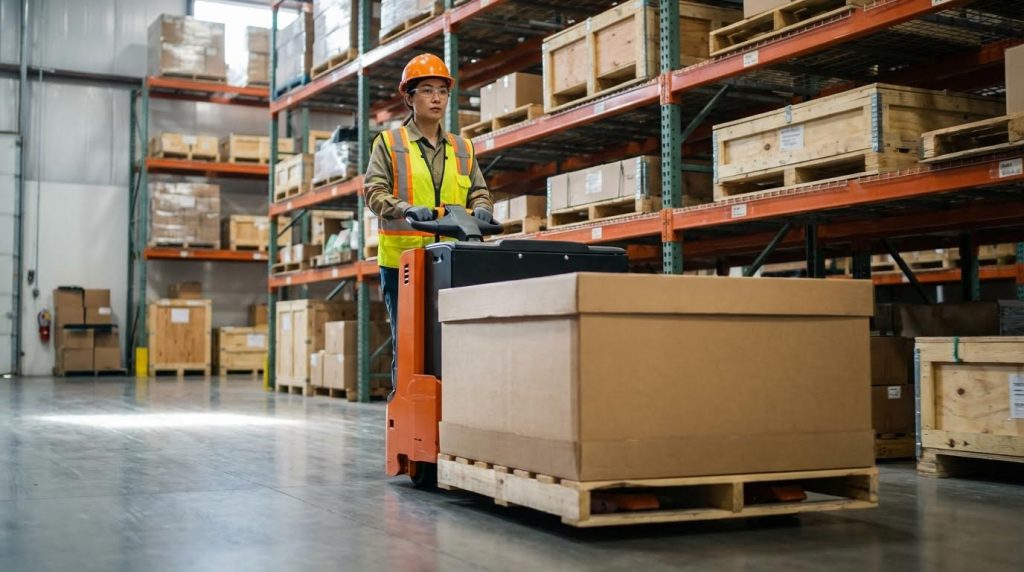
Standard electric pallet jacks used a similar ground-handling concept but with powered lift and travel. Minimum fork heights often matched manual units at roughly 75 mm to 90 mm for pallet entry. Maximum fork heights typically fell between 200 mm and 305 mm, depending on model and intended duty. Many walkie and rider pallet jacks lifted to about 200 mm, enough to clear uneven floors and dock plates. Some electric designs offered extended lift up to about 300 mm to 305 mm for improved clearance or special applications. However, they still did not replace true stackers, which used masts and lifted to several meters. Electric units prioritized consistent lift speed under load, often using DC or AC drive motors and proportional valves. Their powered systems enabled precise control when maneuvering heavy loads in tight aisles, with lift limits tuned to maintain stability and braking performance.
High-Lift And Semi-Electric Variants
High-lift pallet trucks bridged the gap between conventional pallet jacks and stackers. These units used scissor mechanisms or extended hydraulic cylinders to reach lift heights around 800 mm. That elevation allowed operators to position pallets at ergonomic working heights for picking or assembly. Semi-electric pallet trucks combined manual or limited electric travel with powered lift functions. Some models provided lift heights near 410 mm to 535 mm, higher than standard jacks but lower than full high-lift designs. These configurations suited loading benches, packing lines, or low-level shelf interfaces where moderate elevation improved productivity. Engineers had to consider increased overturning moments as lift height grew, so wheelbase, outrigger geometry, and load center ratings became critical. High-lift designs often derated capacity compared with low-lift jacks to preserve safety margins at maximum elevation.
Key Fork Dimensions And Ground Clearances
Fork dimensions constrained both how high can a pallet jack lift and where it could operate. Typical fork lengths ranged from 1,150 mm to 1,220 mm, matching common pallet depths. Overall fork widths usually fell between 520 mm and 685 mm to suit regional pallet standards. Individual fork sections often measured about 160 mm to 230 mm in width and roughly 50 mm to 60 mm in thickness. Minimum lowered height around 75 mm to 85 mm allowed entry into nine-legged or perimeter-base pallets while avoiding floor contact. Ground clearance under the chassis might be about 30 mm at minimum to protect components yet pass over minor irregularities. When fully raised, fork tips sat roughly 190 mm to 210 mm above the floor on standard units, while the underside of the pallet cleared the ground by approximately 90 mm. Wheel sizes, such as steering wheels near 180 mm to 200 mm in diameter and smaller bogie wheels under the forks, also influenced effective clearances and ramp performance.
Matching Lift Height To Application Requirements
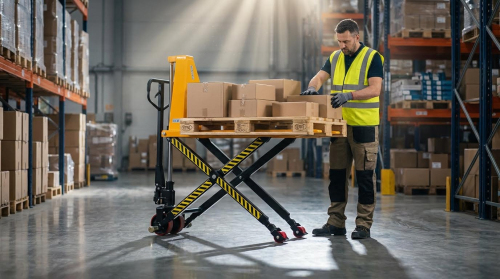
Engineers should link the question “how high can a pallet jack lift” directly to the task profile, pallet interface, and site conditions. Typical manual pallet jacks lift to about 190–210 mm, while electric and high-lift variants can reach 300–800 mm or more, but not every extra millimetre is useful or safe. The correct specification balances lift height, load center, gradeability, and floor quality to keep stability margins within acceptable limits. This section explains how to translate application requirements into a rational lift-height choice.
Ground-Level Transport Vs. Stacking Tasks
For ground-level transport, the engineer only needs enough lift to clear floor irregularities and dock plates. Manual and standard electric pallet jacks with maximum lift heights around 190–210 mm already raise the pallet by roughly 90–120 mm above the floor, which is adequate for most internal moves. In contrast, stacking or interfacing with conveyors, mezzanines, or workstations often requires higher lift, where battery-powered stacker with mast heights from 1,600 mm to 4,000 mm become necessary. Selecting a low-lift pallet jack for stacking forces operators into unsafe practices, such as using ramps or shims, to gain extra height. Conversely, specifying a high-lift truck where only transport is needed can increase cost, reduce maneuverability, and add unnecessary stability constraints.
Pallet Standards, Fork Widths, And Compatibility
How high can a pallet jack lift only matters if the forks actually fit and support the pallet correctly. Standard fork lengths of 1,150–1,220 mm and outer fork widths of 520–685 mm match common 1,000×1,000 mm and 1,200×1,200 mm pallet formats. Double walkie pallet truck, for example, typically use 550 mm or 685 mm fork widths with lengths around 1,100–1,200 mm to match specific nine-legged or Sichuan-shaped pallets. Double-sided Tian-shaped pallets often remain incompatible, even when the forks pass through, because the deck geometry prevents vertical support and safe lifting. Engineers should map pallet opening height and bottom deck geometry to the pallet jack’s minimum fork height, usually 75–90 mm, to ensure entry, then confirm that the maximum lift height provides sufficient under-clearance for transport without over-tilting or overstressing the pallet.
Load Capacity, Load Center, And Stability
Lift height, rated capacity, and load center form a coupled design triangle. Manual pallet jacks with capacities from roughly 1,680 kg to 5,000 kg assume a standardized load center, typically 500 mm from the fork heel, and a maximum lift height near 200 mm. As lift height increases, especially on semi-electric and high-lift models reaching 410–800 mm, the combined center of gravity rises, which reduces stability margins against tipping and frame deflection. Engineers should check the capacity curve versus height where available, rather than assuming full rated capacity at maximum lift. When the application requires tall loads or higher lift, specifying a lower nominal capacity or stricter load-centering rules can preserve safety. In layout design, keep heavy loads at lower lift heights and reserve maximum lift for lighter or more compact loads.
Safety Margins, Gradeability, And Floor Conditions
Real-world conditions often define how high a pallet jack can lift safely rather than the catalogue value. Travel over uneven floors, expansion joints, or dock levelers demands extra under-clearance, but higher lift also increases the overturning moment, especially on grades. Electric units may specify gradeability around 8% loaded and 15% unloaded; operating near these limits with the forks at full lift height significantly reduces safety margins. Engineers should define procedures that limit travel speed and grade use when the forks are raised, and keep forks as low as practical during motion. Floor flatness, surface hardness, and joint design must match wheel diameters, such as 180×50 mm or 200×50 mm steering wheels and corresponding bogie wheels, to avoid impact loads that can exceed design assumptions. Specifying appropriate lift height, then validating it against gradeability and floor quality, yields a pallet handling system that remains stable, controllable, and compliant with safety requirements.
Engineering, Maintenance, And Lifecycle Factors

Engineering and maintenance decisions strongly influence how high can a pallet jack lift throughout its service life. Hydraulic integrity, mechanical alignment, and digital monitoring determine whether a jack still achieves its nominal 190–210 mm lift, or an electric or high-lift variant continues to reach 300–800 mm safely. This section explains how system health, fault modes, and predictive tools interact, so engineers can keep actual lift height close to design limits.
Hydraulic System Health And Lift Performance
The hydraulic circuit sets the practical upper limit on how high can a pallet jack lift under real operating conditions. In a healthy system, a standard manual unit reaches its rated 190–210 mm fork height, while electric and semi-electric designs achieve specified values up to about 305 mm or higher for high-lift models. Oil compressibility is low, so any trapped air, cavitation, or micro-leakage immediately reduces effective stroke and therefore lift height. Engineers should monitor lift speed loaded and unloaded, pump handle or motor effort, and any mid-stroke hesitation as leading indicators of hydraulic degradation. Maintaining correct oil grade, typically ISO VG 32 hydraulic oil, and keeping contamination below recommended particle counts preserves seal life and stable lift performance over the equipment lifecycle.
Common Faults Limiting Achievable Lift Height
Several recurring faults directly reduce how high can a pallet jack lift compared with its nameplate rating. Low hydraulic oil level shortens the usable cylinder stroke, so the forks stop 10–30 mm below design height even with normal pumping. Trapped air from transport, inverted storage, or poor bleeding causes spongy motion, slow rise, or complete failure to reach full elevation. Worn piston seals, scored cylinder bores, or leaking hose connections create internal bypass, which manifests as forks that creep down under load or stall before maximum height. Misadjusted pressure relief valves can also cap lift height; if cracking pressure is set too low, the valve opens prematurely and diverts flow back to tank. Bent push rods, deformed linkages, or twisted fork frames add mechanical losses, so the same pump stroke no longer translates into full vertical travel.
Inspection, Bleeding, And Oil Replacement Routines
Structured inspection routines are essential to keep actual lift height within specification for both manual and electric pallet jacks. Technicians should verify maximum fork height with a steel rule at scheduled intervals, comparing readings against the nominal 190–210 mm range, or the higher values for semi-electric or high-lift units. If measured lift is low, the first steps are checking oil level, inspecting for external leaks, and bleeding air by cycling the pump from fully lowered to fully raised several times, or by using a dedicated bleeder screw where fitted. Oil replacement intervals depend on duty cycle, but changing hydraulic fluid when it darkens, emulsifies, or shows particulates prevents valve sticking and seal wear that would otherwise limit lift. Documented routines that include rod corrosion checks, seal lip inspections, and relief valve function tests help maintain consistent answers to the question of how high can a pallet jack lift over years of use.
Digital Tools, Sensors, And Predictive Maintenance
Digital tools increasingly support accurate control of how high can a pallet jack lift and for how long it sustains that performance. On advanced electric pallet trucks and stackers, position sensors on the mast or cylinder can measure fork elevation to within a few millimetres, enabling overload cut-outs when load plus height exceed safe stability envelopes. Embedded pressure transducers track hydraulic load profiles and detect anomalies such as rising leakage or abnormal pressure spikes that precede loss of lift height. Connected telematics platforms aggregate lift-cycle counts, maximum height usage, and temperature data to build predictive maintenance models. These models help planners schedule seal replacements or oil changes before users notice reduced lift, rather than after a jack fails to reach a required 200 mm clearance or a 1600–4000 mm stacking height on a powered stacker.
Summary: Choosing The Right Pallet Jack Lift Height
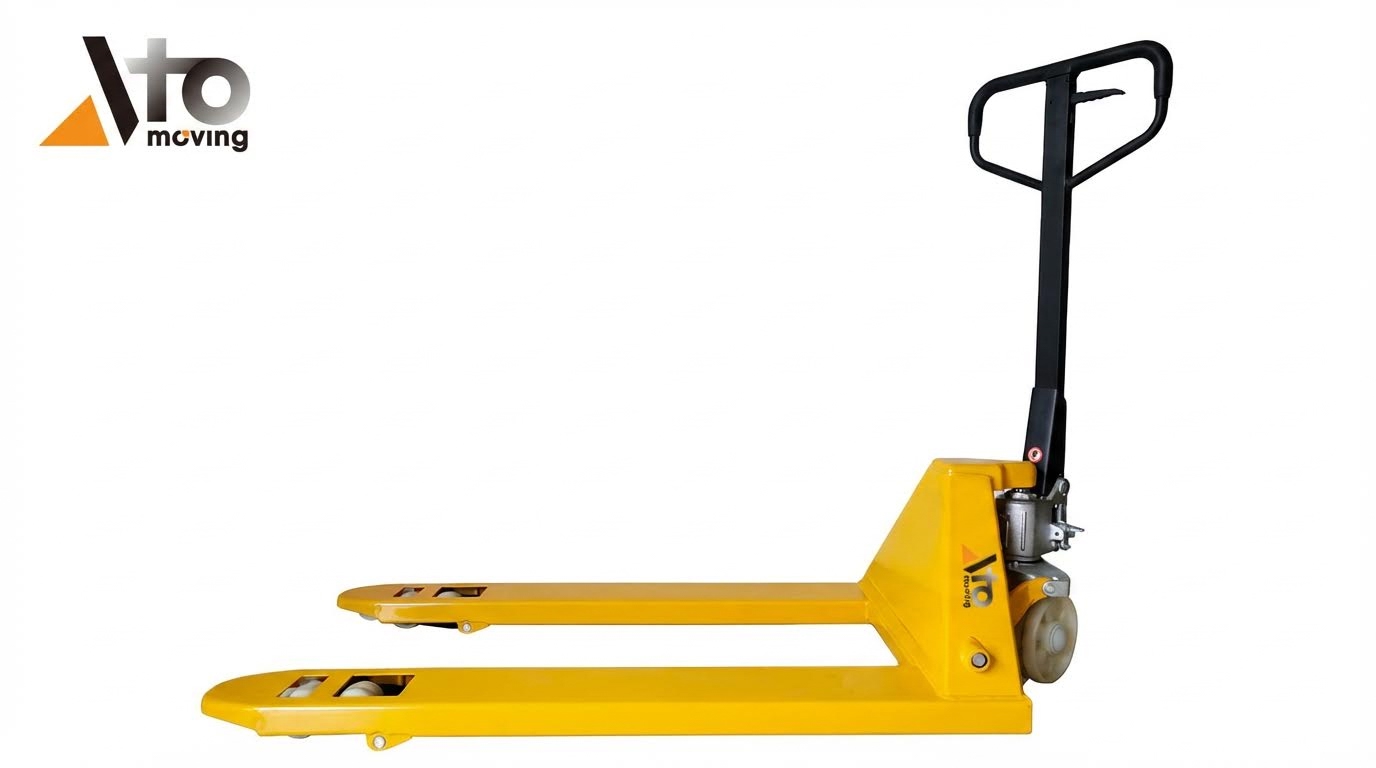
When engineers and operators ask “how high can a pallet jack lift,” the realistic answer stays close to the ground. Standard manual pallet jacks typically raise forks from about 75–85 mm up to roughly 190–210 mm. Electric pallet jacks usually match this range, while high-lift and stacker-type equipment extend from 410 mm up to 800 mm for high lift pallet trucks and 1 600–4 000 mm for electric stackers. Selecting the correct lift envelope therefore depends on whether the task is pure ground transport, ergonomic height positioning, or true vertical stacking.
The key technical takeaway is that lift height, load capacity, and load center form a coupled design space. A manual jack that lifts only 200 mm can still carry 1 680–5 000 kg because the load center stays low and stable. As lift height increases into the hundreds or thousands of millimetres, equipment must shift from pallet jacks to stackers with masts, reinforced chassis, and defined load centers around 500 mm. Floor flatness, gradeability limits near 8–15 %, and pallet compatibility (fork length 1 150–1 220 mm, outer width about 520–685 mm) further constrain safe operation.
From a lifecycle perspective, the practical ceiling for how high a pallet jack can lift is often set by maintenance quality rather than catalog data. Trapped air, low or contaminated hydraulic oil, and worn seals all reduce achievable height and slow lifting speeds. Routine inspection, bleeding, and oil replacement keep real-world lift close to rated values and extend service life. Looking forward, wider use of sensors and predictive diagnostics will help monitor stroke, load, and hydraulic health in real time, tightening safety margins while allowing engineers to push performance. For current projects, the balanced approach is to specify only as much lift as the application and pallet standard truly require, then back that choice with disciplined maintenance and operator training.