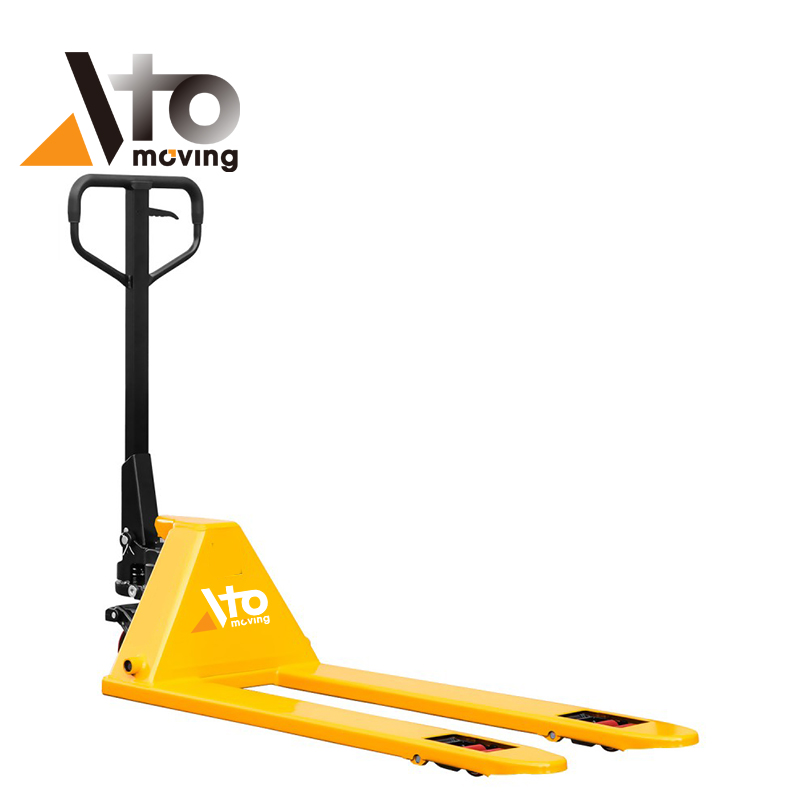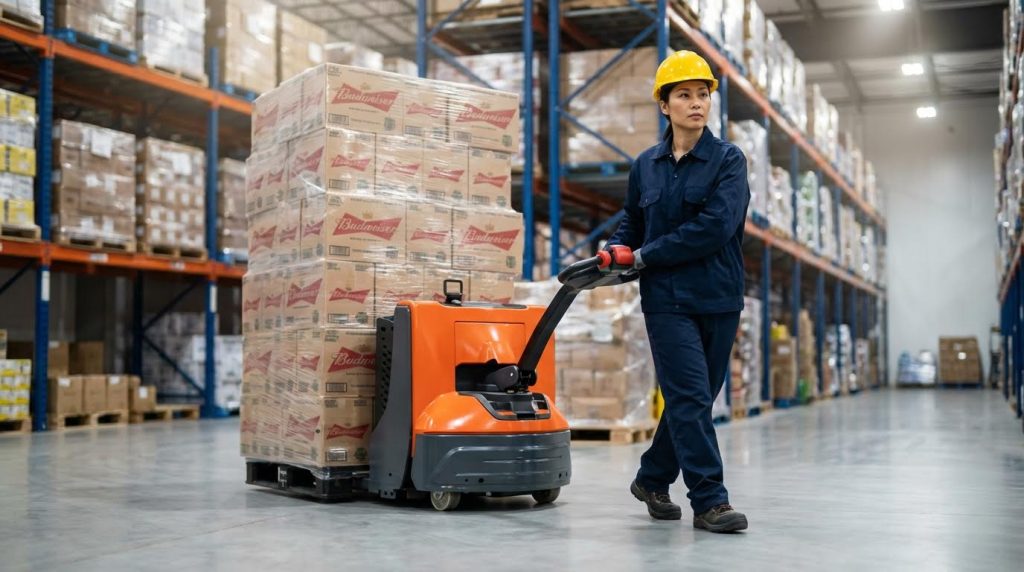
Understanding how much a pallet jack can lift requires more than reading a nameplate. Engineers evaluate jack type, fork geometry, hydraulics, and stability to define safe working limits. This article walks through typical capacities by pallet jack class, the mechanical and structural factors that govern those limits, and how to size equipment correctly for real facility loads. It concludes with practical capacity recommendations so operators and engineers can align safety, productivity, and lifecycle cost when specifying or using hydraulic pallet truck or low profile pallet jack.
Core Pallet Jack Types And Typical Capacities
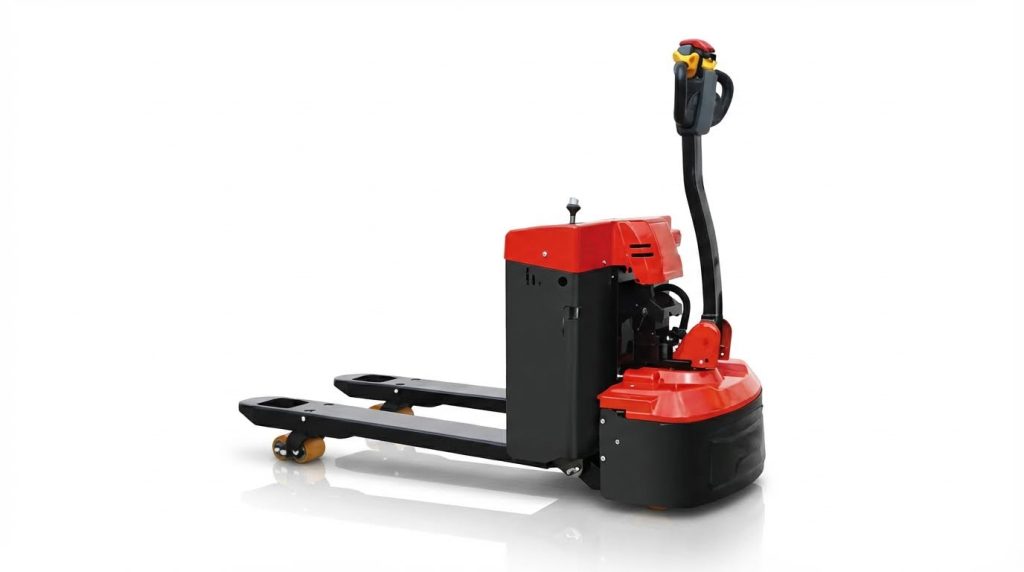
Understanding how much can a pallet jack lift starts with its basic type. Capacity varies with the power source, frame design, and intended duty cycle. Engineers and safety managers should treat the nameplate rating as an upper engineering limit, not a target operating weight.
Manual Pallet Jacks: Common Ratings And Limits
Manual pallet jacks typically lifted between 1,000 kg and 2,500 kg in standard warehouse use. Typical catalog ratings ranged from 1,000 kg for high-lift or light-duty units up to about 2,500 kg for general transport trucks. Some heavy-duty designs with reinforced forks and oversized hydraulics reached approximately 3,600 kg, but those units required higher push forces and better floor conditions. Operators still needed at least 25 mm clearance between pallet and floor to avoid snagging, which limited maximum lift height but not capacity. In practice, engineers usually specified 70–80% of the rated capacity as the operational limit to account for off-center loads, worn wheels, and uneven floors. When users asked how much can a pallet jack lift manually, the safest answer relied on the stamped capacity, reduced by a defined safety margin in site procedures.
Electric Walkie Jacks: Capacity And Duty Cycles
Electric walkie pallet jacks usually covered the 1,500 kg to 3,600 kg capacity band. Typical models for dock work and store replenishment carried around 1,800–2,500 kg, while high-capacity walkies for bulk storage or beverage distribution reached about 3,600 kg. The electric drive and powered lift reduced operator input forces but introduced duty-cycle limits governed by motor heating and battery discharge. Continuous operation at or near rated capacity shortened runtime and increased thermal stress on contactors and controllers. Engineers therefore matched capacity not only to “how much can a pallet jack lift” once, but also to the expected number of loaded lift cycles per hour. For multi-shift operations, walkies with higher amp‑hour batteries and robust cooling delivered more consistent performance at the top end of their rating.
Rider Pallet Jacks For High-Throughput Operations
Rider pallet jacks, including end-controlled and center-rider types, targeted high-throughput horizontal transport. Their typical rated capacities sat between 2,700 kg and 3,600 kg. These units handled double or triple pallet trains, so engineers evaluated capacity per fork set and per train. When users calculated how much can a pallet jack lift in cross-dock or long-aisle applications, they considered both static lifting capacity and dynamic stability at travel speed. Higher capacities increased braking distances and lateral forces in turns, so facilities often limited travel speed with heavy loads. Rider platforms, sprung suspensions, and ergonomic controls allowed operators to sustain high cycle counts without excessive fatigue, but only when loads stayed inside the rated envelope and on suitable floors.
Specialty High-Lift And All-Terrain Pallet Trucks
Specialty pallet trucks traded pure capacity for extra functionality. High-lift pallet trucks, which elevated loads to workbench height, typically offered capacities around 1,000 kg. Scissor mechanisms and longer lift strokes introduced higher bending moments in the frame, which constrained how much the pallet jack could lift safely. All-terrain pallet trucks, designed for construction sites or yards, also clustered near 1,000 kg capacity due to larger wheel diameters, wider frames, and uneven ground conditions. Pneumatic or large polyurethane wheels reduced point loading on rough surfaces but shifted the limiting factor to stability rather than pure hydraulic strength. When specifying these units, engineers prioritized ground clearance, wheelbase, and track width before chasing higher nameplate capacities. This approach ensured that the rated “how much can a pallet jack lift” remained achievable under real outdoor conditions, not just on a smooth test floor.
Engineering Factors That Govern Capacity
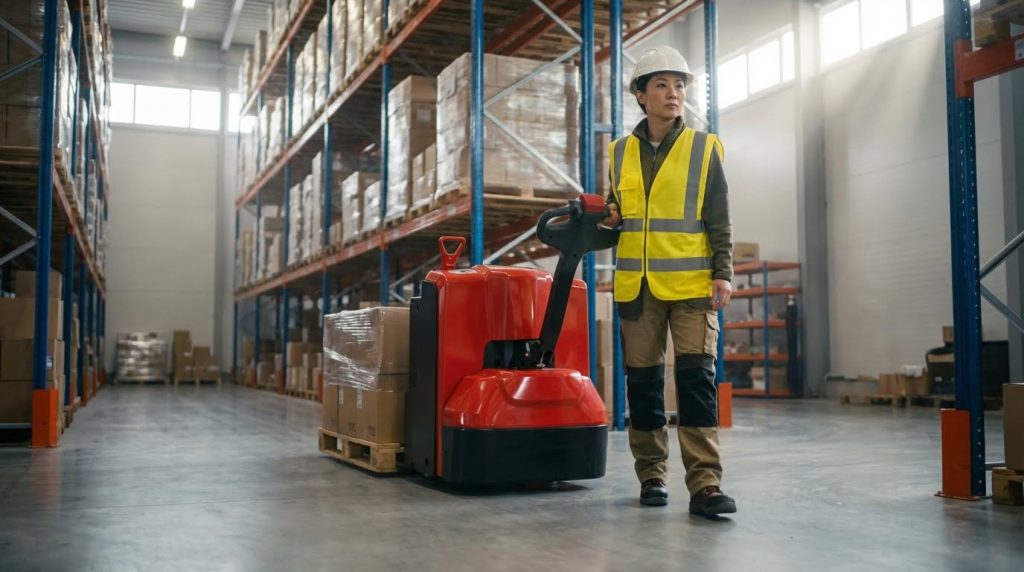
Engineering factors answered the question “how much can a manual pallet jack lift” long before marketing labels existed. Structural stiffness, hydraulic limits, wheel–floor interaction, and stability geometry jointly set the true safe capacity. Understanding these parameters helped engineers explain why typical pallet jacks lifted between 1,000 kg and about 3,600 kg, and why overloading even below published limits could still cause failures under adverse conditions.
Fork Geometry, Deflection Limits, And Pallet Support
Fork geometry defined how much a hydraulic pallet truck could lift without excessive deflection or yielding. Engineers sized fork thickness, width, and length so elastic deflection stayed within tight limits at rated load, typically a few millimetres at mid-span. Longer forks increased bending moment and reduced stiffness, so a 3,000 mm fork with the same section as a 1,150 mm fork could not safely lift the same mass. Capacity ratings assumed the pallet deck fully supported both forks, with load centred over the fork length. Poor pallet condition, broken deck boards, or point loads shifted stresses, causing local yielding or permanent fork bend even when the nominal capacity label had not been exceeded.
Wheel Materials, Floor Conditions, And Rolling Resistance
Wheel material, diameter, and bearing quality strongly influenced how much a walkie pallet truck could lift in real operations. Polyurethane wheels offered low rolling resistance on smooth concrete and supported typical rated capacities up to about 3,600 kg, while nylon wheels tolerated higher point loads but transmitted higher shock. On rough or contaminated floors, rolling resistance increased sharply, so operators needed greater push force and risked musculoskeletal injuries even below nameplate capacity. Engineering calculations used rolling resistance coefficients and floor flatness tolerances to estimate starting and rolling forces for a given load and wheel set. When planners asked “how much can a pallet jack lift on this floor,” the realistic answer often became 60–80% of the rated capacity once gradients, joints, and debris were considered.
Hydraulic System Design, Safety Factors, And Wear
The hydraulic pump and cylinder defined the theoretical lift force, but engineers built in safety factors and wear allowances. A typical hand pallet jack used a small-bore cylinder that generated enough pressure to lift around 2,500–3,500 kg with a manual handle force that stayed within ergonomic guidelines. Designers applied safety factors of at least 1.5–2.0 on burst pressure and structural strength, then derated further to account for seal wear, oil contamination, and temperature effects over the equipment life. As components wore, internal leakage increased and effective capacity dropped, even though the label stayed the same. Regular inspections for oil leaks, sinking forks under static load, and rust on the pump rod were essential to ensure that the pallet jack still safely lifted its rated mass.
Stability, Center Of Gravity, And Load Distribution
Stability geometry answered a different version of the question “how much can a pallet jack lift safely.” Even if the structure and hydraulics could generate the force, the combined centre of gravity of truck and load had to stay within the support polygon formed by the wheels. Loads positioned too far forward, too high, or offset laterally reduced the tipping margin, especially during cornering or on ramps. Engineers modelled the system as a rigid body on three or four contact points and checked stability under braking, acceleration, and small floor angles. Capacity ratings assumed the load sat low, centred across both forks, with forks fully inserted under the pallet and raised just 20–50 mm above the floor. In practice, poor load distribution, stacked unstable pallets, or partial fork engagement reduced the safe liftable mass well below the marked capacity and significantly increased tip and spill risk.
Selecting The Right Capacity For Your Facility

Facility managers who ask “how much can a pallet jack lift” should start from their real loads, duty cycles, and environments. Correct capacity selection reduces incidents, unplanned downtime, and energy use while keeping capital costs under control. The following subsections walk through a structured engineering approach that aligns pallet jack ratings with safety, compliance, and lifecycle performance.
Matching Load Profiles, Cycles, And Environments
Engineers should first define the actual load envelope, not just catalog ratings. Document minimum, typical, and peak pallet weights, including packaging, dunnage, and any added fixtures. Manual pallet jacks in warehouses typically lifted up to about 2,500 kg, while heavy-duty electric and rider units reached about 3,600 kg. If peak loads exceed 80% of a jack’s rated capacity during normal operations, that model is undersized. Also quantify cycle intensity: trips per shift, shifts per day, and average travel distance. High-cycle dock work with 3,300–8,000 lb loads suited electric walkies or riders, while intermittent light handling tolerated manual trucks. Finally, map environments: smooth indoor concrete, mixed indoor–outdoor, or rough yards. Rough floors, ramps, and temperature extremes increased rolling resistance and stress, which justified higher capacity ratings and different wheel materials.
Safety Margins, Compliance, And Operator Training
Rated capacity answered “how much can a pallet jack lift” under controlled test conditions, not in degraded field states. Engineers typically applied a design margin, often 10–25%, above the heaviest expected load to account for dynamic effects, uneven floors, and wear. Facilities had to comply with local regulations and standards that referenced safe use, inspections, and training obligations, such as OSHA requirements in the United States. Written procedures needed to state that operators must never exceed the nameplate capacity and must keep forks fully inserted under the pallet. Training programs should cover reading capacity plates, recognizing unstable or oversized loads, and understanding how ramps and turns derate practical capacity. Refresher training, incident reviews, and visible signage near loading areas reinforced correct behavior and reduced overload-related failures.
Lifecycle Costs, Maintenance, And Predictive Tools
Capacity choice affected total cost of ownership as much as it affected safety. Undersized pallet jacks operated near their limit, which accelerated wheel wear, hydraulic seal failures, and fork deformation. Oversized units cost more upfront and could increase energy consumption for powered models, but often extended service life and reduced downtime. Maintenance data showed that structured daily and weekly inspections prevented most failures, especially for hydraulics and wheels. Engineers should factor scheduled maintenance time, spare parts availability, and required tools into capacity planning. Predictive maintenance tools, even simple spreadsheets or CMMS logs, helped correlate failures with overload events or specific routes. When a facility upgraded capacity, it often reduced unplanned repairs, scrap from damaged pallets, and ergonomic complaints from operators pushing heavy loads close to the jack’s rating.
Digital Twins, Telematics, And Data-Driven Sizing
Modern fleets increasingly used telematics and digital twins to answer “how much can a pallet jack lift in real operations” instead of relying only on nameplate data. Onboard sensors recorded load weight, travel distance, speed, and impact events. Engineers analyzed this data to build load histograms, identify overload frequency, and detect routes with excessive shocks or grade demands. Digital models of the facility allowed simulation of new layouts, racking heights, and throughput scenarios before purchasing additional units. This approach supported right-sizing: selecting a mix of manual, electric walkie, and rider jacks with capacities aligned to actual demand. Historical telematics trends also informed replacement timing, highlighting when aging units no longer met safe capacity expectations. Over time, data-driven sizing reduced both capital expenditure and risk, while keeping pallet jack capacity closely matched to evolving operational needs.
Summary And Practical Capacity Recommendations

The question “how much can a pallet jack lift” required a precise engineering answer and practical guidance. Manual pallet jacks typically lifted up to 2,500 kg, with common commercial ratings around 2,000–2,500 kg. Electric walkie and rider pallet jacks handled higher capacities, often in the 1,500–3,600 kg range, depending on chassis design, fork section, and duty cycle. High-lift and all‑terrain variants usually traded maximum capacity, often around 1,000 kg, for extended lift height or rough‑surface capability.
From an engineering standpoint, safe capacity depended on fork section modulus, allowable deflection, and full pallet support under the stringers. Wheel material and diameter, combined with floor flatness and rolling resistance, governed how close operators could work to the rated load in real conditions. Hydraulic systems used design safety factors above the nameplate rating, but wear, leaks, and trapped air reduced effective lifting performance over time. Stability analysis around the combined center of gravity remained critical, especially when moving on slopes or turning with elevated loads.
For practical implementation, facilities should size pallet jacks so typical loads used only 60–80% of rated capacity. This margin absorbed dynamic effects, uneven floors, and occasional overload tendencies while extending component life. Operators needed clear answers to “how much can a pallet jack lift” for each truck on site, using visible capacity labels, training, and simple rules for uneven or unstable loads. Lifecycle planning should include daily inspections, scheduled hydraulic oil changes, and periodic fork straightness checks to keep real capacity aligned with the nameplate rating.
Looking forward, telematics, digital maintenance logs, and load-sensing technologies will refine capacity management. Data from actual load spectra and travel cycles will support more accurate sizing and replacement decisions. However, the fundamentals will not change: respect the rated capacity, keep loads low and stable during travel, and maintain adequate engineering safety factors. Facilities that integrate these principles into procedures and procurement will achieve higher throughput with fewer failures and lower injury risk.