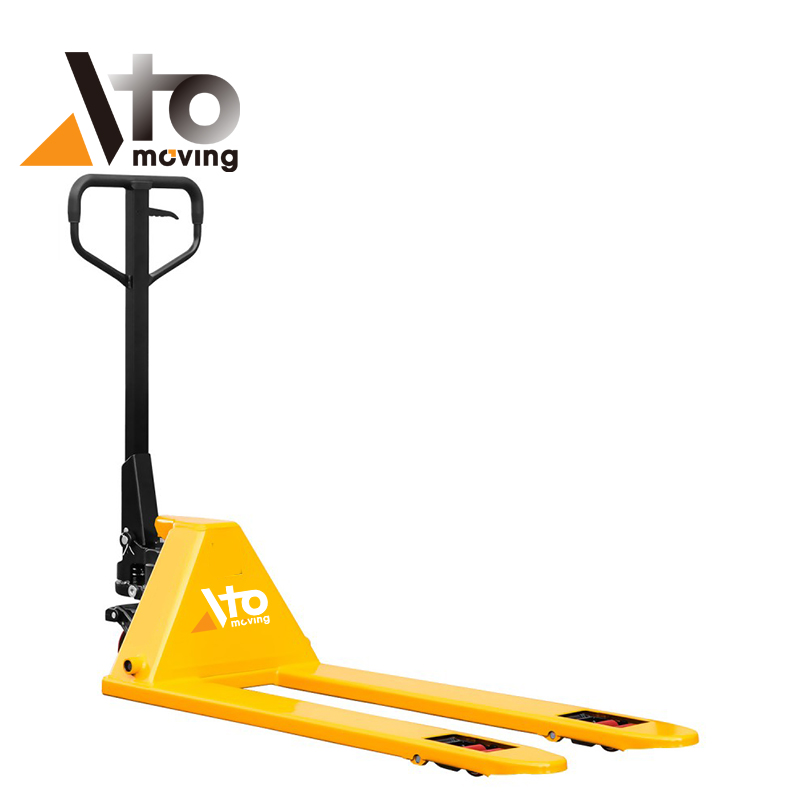
Pallet jack safety and productivity depend on knowing exactly what the lifting capacity of the pallet jack is in real operating conditions. This article explains how manufacturers define pallet jack load ratings, how to read capacity labels, and how factors like load center, fork wear, and floor conditions change safe capacity. It also covers how to interpret data plates, apply derating formulas in daily operations, and use inspections and digital tools to protect rated capacity. Together, these sections give engineers, supervisors, and operators a clear framework for setting safe limits and avoiding overload incidents.
Key Concepts In Pallet Jack Load Ratings

Engineers and safety managers asking “what is the lifting capacity of the pallet jack” must look beyond a single number on the nameplate. Capacity depends on load center, lift height, attachments, tire condition, and the floor. These concepts determine whether a manual pallet jack can safely move a given load without loss of stability or structural overload.
Rated Capacity, Load Center, And Stability Triangle
The rated capacity answers “what is the lifting capacity of the pallet jack” under standardized conditions. Manufacturers usually rate pallet jacks at a 600 mm load center with a uniformly distributed load. If the actual load center exceeds this value, effective capacity decreases in direct proportion. A practical engineering approximation is: New Capacity = Rated Capacity × (Rated Load Center ÷ Actual Load Center). The stability triangle concept, adapted from forklift theory, helps visualize overturn risk. The combined center of gravity of the truck plus load must stay inside the base formed by the wheel contact points. As the load center increases, the combined center of gravity shifts toward the edge of this base, reducing the allowable capacity before instability occurs.
How Lift Height And Mast Position Affect Capacity
When users ask “what is the lifting capacity of the pallet jack at full height,” the answer is usually lower than the base rating. For low-lift manual pallet jacks, forks typically rise only 150–200 mm, so vertical height has minimal effect on stability. High-lift electric pallet jacks or stackers operate differently. As lift height increases, the load center of gravity rises and moves slightly away from the chassis due to mast deflection and geometry. This shift increases overturning moments and reduces safe capacity, especially near maximum height. Capacity charts often specify a higher rating at mid-height and a derated value at maximum height. Operators must match the planned lift height to the corresponding rating on the data plate rather than relying on a single nominal capacity.
Effects Of Attachments And Fork Extensions
Attachments and fork extensions directly change what is the lifting capacity of the pallet jack in real use. Additional devices add dead weight and usually move the effective load center forward. Both effects reduce the remaining structural and stability margin. For example, long fork extensions may allow handling deeper pallets but push the load center beyond the standard 600 mm. Using the earlier formula, a rated 2 000 kg jack at 600 mm may drop to 1 600 kg if the actual load center becomes 750 mm. Regulatory practice required updated capacity labels when attachments altered load handling characteristics. Engineers should calculate derated capacity for each attachment configuration and document it on revised data plates and operating procedures.
Tire Type, Fork Wear, And Floor Conditions
Tires, forks, and floors answer the practical side of “what is the lifting capacity of the hydraulic pallet truck today, in this aisle.” Cushion-type wheels on smooth concrete provided predictable friction and stable support. Pneumatic or larger-diameter wheels handled uneven surfaces but introduced more compliance and potential sway. Worn or under-inflated wheels reduced contact area and stability, lowering the real safe capacity below the nameplate value. Fork wear affected structural capacity even when the hydraulic system still lifted the load. A 10% loss in fork thickness historically reduced fork load capacity by about 20%, which required removal from service. Floor conditions such as slopes, joints, and debris changed effective stability margins. On inclines, safe practice kept loads within rated capacity while orienting the heaviest side uphill. Engineering-based inspections that checked tire condition, fork thickness, and floor integrity were essential to keep actual operating capacity aligned with the original design rating.
Reading And Interpreting Capacity And Data Plates
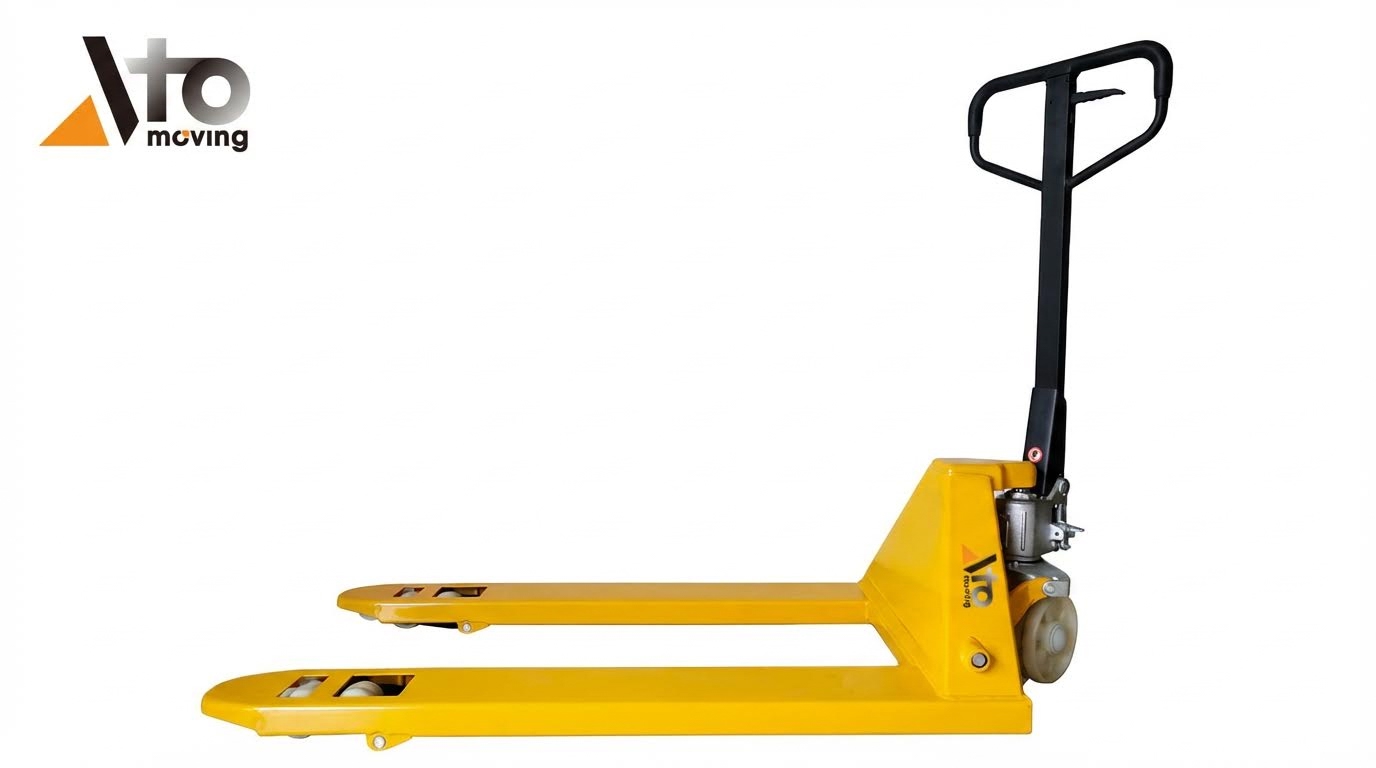
Capacity and data plates provide the primary answer to “what is the lifting capacity of the pallet jack” in any facility. Operators must read these plates before relying on handbook values or rules of thumb. Correct interpretation links rated capacity, load center, and lift height to real loads on the floor. Misreading or ignoring the plate increases the risk of tip‑over, structural failure, and regulatory violations.
Typical Label Formats On Manual And Electric Jacks
Manual pallet jacks usually carry a simple stamped or printed rating, for example “Capacity 2 000 kg @ 600 mm.” This value describes the maximum total load across both forks at the specified horizontal load center. Electric pallet jacks often use a more detailed plate that lists rated capacity, load center, maximum lift height, truck weight, and sometimes battery weight. High‑lift or ride‑on units may show multiple capacity values for different lift heights or configurations. When checking what is the lifting capacity of the pallet jack, operators must match the actual truck configuration to the data plate in front of them.
Understanding Load Center Charts And Derating Tables
Capacity plates on powered pallet jacks frequently include load center charts or derating tables. These tables show how lifting capacity decreases as the load center increases beyond the standard 600 mm. A typical table might list 1 200 kg at 600 mm, reducing to 1 000 kg at 700 mm and lower values at higher centers. The underlying relation often follows the formula: new capacity = (rated load center ÷ actual load center) × rated capacity. Charts may also combine load center and lift height, giving a grid of safe capacities; operators must locate the intersection that matches their actual load geometry.
OSHA Requirements For Updated Data Plates
Regulators such as OSHA required that pallet jacks and similar trucks display legible, accurate capacity information. When attachments, fork extensions, or custom platforms changed the load center or truck weight, the employer had to obtain an updated data plate from a qualified entity. The revised plate needed to state the reduced capacity and new rated load center clearly. Operating a truck after modification without an updated plate violated OSHA requirements and undermined the answer to “what is the lifting capacity of the pallet jack” in that configuration. Training programs had to cover how to find and interpret the latest plate before lifting.
Common Misreadings That Lead To Overloading
Several recurring interpretation errors caused operators to overload pallet jacks despite visible ratings. A frequent mistake involved reading the rated capacity while ignoring the stated load center, then lifting long or overhanging loads whose actual center lay farther out. Another error occurred when operators used the highest value on a multi‑line plate without checking the corresponding lift height or attachment condition. Some users treated the capacity as “per fork” rather than total, effectively doubling the safe load. Others relied on faded or incorrect plates after modifications. Preventing these errors required targeted training, clear signage, and routine audits that asked operators to explain, in practice, what is the lifting capacity of the pallet jack they were using under specific load conditions.
Applying Load Ratings In Real Operations

Operators often ask what is the lifting capacity of the pallet jack in real conditions, not just on the label. Rated values assumed ideal load geometry, intact components, and good floors. Real operations introduced off‑center loads, irregular pallets, wear, and digital monitoring. This section explained how to translate nameplate capacity into safe, adjusted capacity in the field.
Calculating Adjusted Capacity For Off-Center Loads
Actual loads rarely sat perfectly at the rated load center. When the center of gravity shifted outward, effective capacity dropped. A practical rule used the proportional formula: New Safe Capacity = (Rated Load Center / Actual Load Center) × Rated Capacity. For example, a pallet jack rated 2 000 kg at a 600 mm load center only safely carried 1 600 kg when the load center moved to 750 mm. Technicians also considered vertical load position; higher lift increased overturning moment and further reduced usable capacity. Supervisors documented typical load dimensions so operators could estimate load center quickly rather than guess.
Handling Irregular, Overhanging, And Tall Loads
Irregular and overhanging loads changed the answer to what is the lifting capacity of the pallet jack under those conditions. Overhang shifted the center of gravity away from the fork heel, so the operator treated the effective load center as the distance to the combined center of gravity, not just pallet length. Tall loads raised the center of gravity and reduced stability, especially when turning or traveling on slopes. Best practice kept the heaviest portion of the load as close as possible to the fork heel and limited travel speed with tall stacks. For unstable items, engineers specified unitization methods like banding, stretch wrap, or intermediate pallets to restore a compact, predictable load geometry.
Inspection Routines That Protect Rated Capacity
Daily inspections preserved the rated capacity that the data plate stated. Fork thickness measurements were critical; a 10% loss in fork thickness reduced fork capacity by about 20%, which effectively lowered what is the lifting capacity of the pallet jack. Inspectors checked for fork tip cracks, bent blades, leaking hydraulics, worn or flat-spotted wheels, and damaged handles. They verified that the capacity label remained legible and matched any modifications. Maintenance teams replaced components at defined wear thresholds rather than waiting for failure, keeping the mechanical safety margin aligned with the original design assumptions.
Digital Tools, IoT, And Predictive Maintenance
Digital tools increasingly supported capacity management in high-throughput facilities. IoT load sensors on pallet jacks measured real load weight and compared it to rated capacity in real time, warning operators when they approached limits. Fleet management platforms logged overload events, travel profiles, and shock impacts, enabling predictive maintenance and targeted retraining. Some systems combined load data with fork wear and wheel condition to estimate the current safe working capacity, refining answers to what is the lifting capacity of the pallet jack today, not just when new. These technologies reduced overload-related incidents and optimized service intervals based on actual duty cycles rather than fixed calendars.
Summary Of Safe Pallet Jack Capacity Practices
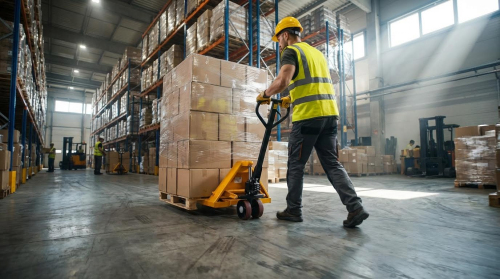
Operators who ask “what is the lifting capacity of the pallet jack” need a structured, repeatable approach rather than a single number. Safe practice started with the data plate, which stated rated capacity, load center, and lift height. The operator then compared the actual load geometry, attachments, and floor conditions against those rated conditions. Where the actual load center exceeded the rated load center, the operator applied a derating calculation before lifting.
In typical warehouse operations, manual pallet jacks handled about 2,000 kg at low lift heights, while powered units ranged roughly from 800 kg to 1,200 kg at a 600 mm load center. These figures only remained valid when forks, wheels, and hydraulics stayed within wear limits and the floor was level and clean. Attachments or fork extensions reduced capacity and required updated capacity labels to comply with safety regulations similar to OSHA requirements for forklifts. Trained operators treated the label as the upper limit under ideal conditions, not a target under marginal conditions.
Industry practice moved toward tighter integration of inspections, digital records, and IoT sensors to protect rated capacity. Daily checks of fork thickness, wheel condition, and hydraulic integrity helped maintain the original design strength. Predictive maintenance systems used usage hours, impact events, and travel patterns to schedule repairs before capacity was compromised. Future pallet jack fleets were expected to incorporate more on-board diagnostics and connected load monitoring to give real-time feedback when operators approached or exceeded safe limits.
From a practical standpoint, safe capacity management combined three elements. First, read and understand the capacity and load center information on the plate. Second, calculate or conservatively estimate adjusted capacity whenever the load was off-center, tall, or overhanging, or when using attachments. Third, enforce disciplined inspection and maintenance routines so the mechanical condition of the pallet jack supported the labeled rating. This balanced view recognized that technology, training, and procedures all played critical roles in answering “what is the lifting capacity of the hydraulic pallet truck” for each specific task and environment.