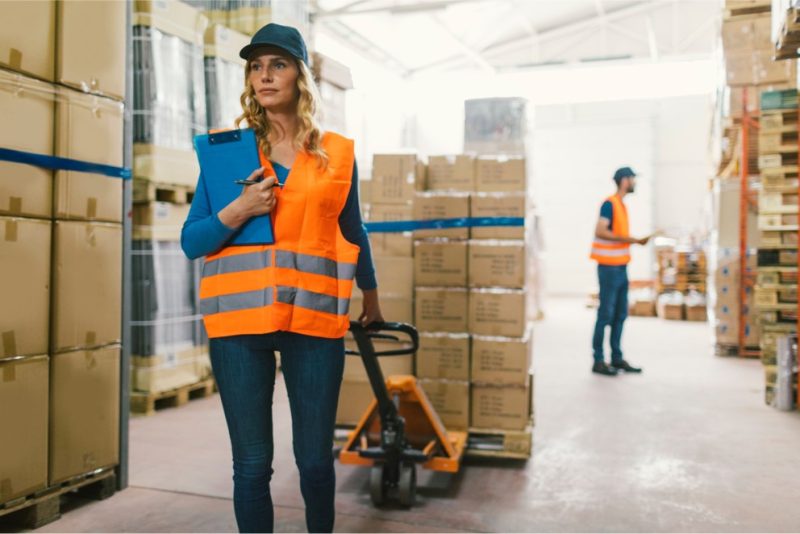
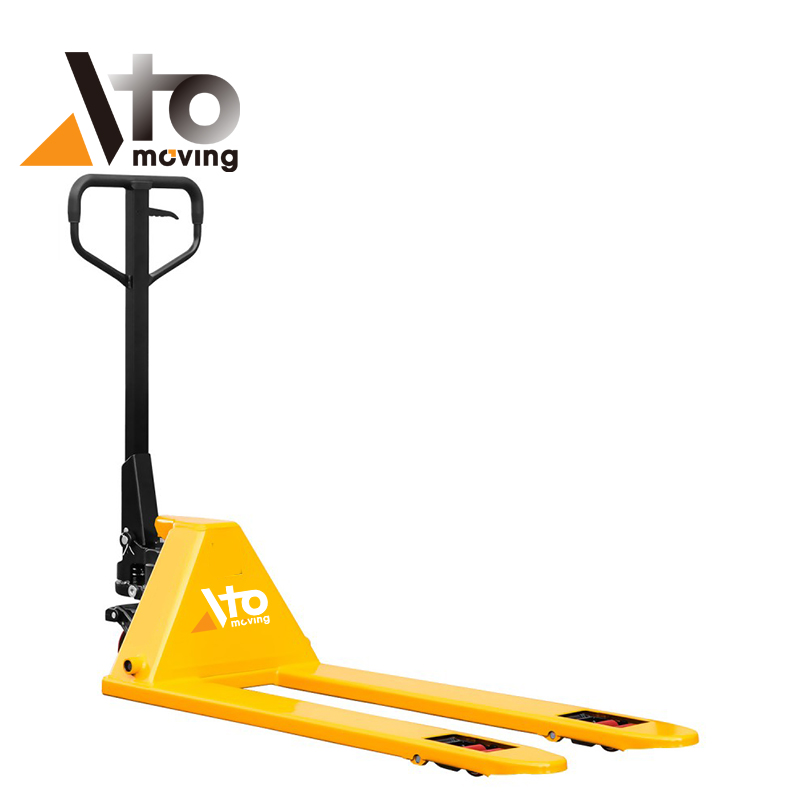
Pallet jack maneuvering and steering required precise control, disciplined safety practices, and consistent mechanical upkeep across warehouse environments. This article examined steering fundamentals for manual and motorized pallet jacks, including tiller positions, neutral settings, speed control, turning radius, and stability limits under different loading conditions. It then addressed safe techniques for corners, aisles, ramps, rough floors, and high-pedestrian areas, linking maneuvering methods with ergonomics and operator fatigue. Finally, it reviewed inspection and maintenance of wheels, pivots, steer components, and hydraulics, before summarizing best practices and emerging trends in pallet jack steering performance and safety.
Fundamentals Of Pallet Jack Steering Control
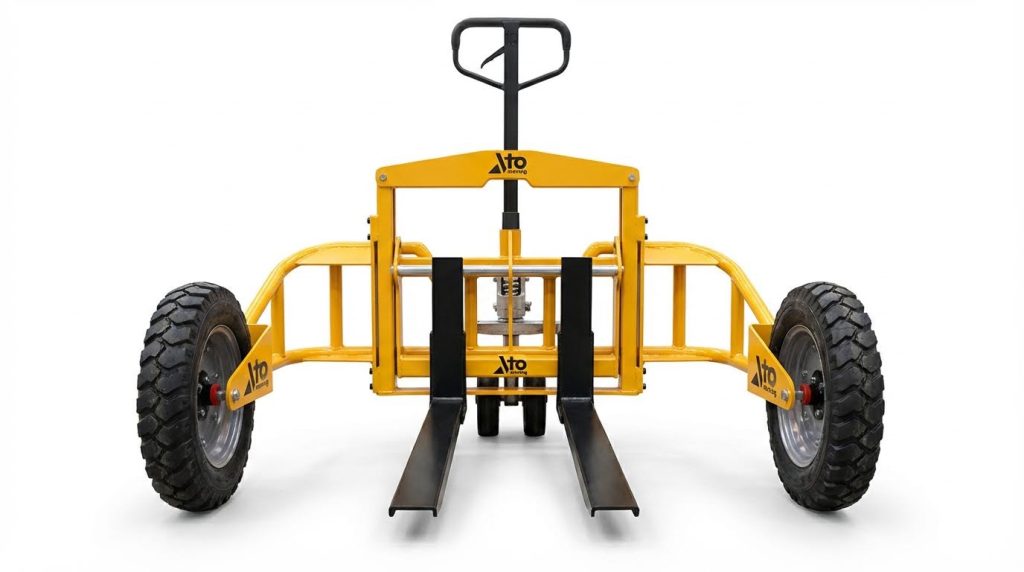
Pallet jack steering relied on simple mechanical linkages for manual units and integrated electro-hydraulic control for motorized models. Understanding how steering geometry, load position, and operator input interacted was critical for safe operation. This section outlined the core steering principles that governed maneuverability, stability, and ergonomic performance in typical warehouse environments.
Manual Vs. Motorized Pallet Jack Steering
Manual pallet jacks used a direct mechanical connection between the tiller arm and steer wheels. The operator applied force at the handle to pivot the steer wheels through a center pivot, with no power assist. Motorized pallet jacks, including walkies and walkie-riders, used an electric drive motor and often an electro-hydraulic system to control travel, braking, and lift from the steering handle. Their steering still depended on a tiller arm, but speed, direction, and braking were integrated into the control head, so small inputs could produce significant motion. Manual units offered fine low-speed control but required higher physical effort, while powered units improved productivity and reduced strain but demanded stricter training due to higher kinetic energy and longer stopping distances.
Tiller Arm Positions, Neutral, And Speed Control
The tiller arm position directly affected both steering leverage and speed control. For manual pallet jacks, operators typically kept the handle in an upright or slightly lowered position to maximize control and minimize foot-strike risk. The neutral position on the hydraulic actuating lever disconnected the pump, allowing the forks to stay raised while the handle moved freely with minimal resistance. On motorized pallet jacks, the steering handle incorporated directional switches, a throttle, and a neutral or coast function, with some designs limiting travel speed when the tiller was near-vertical for creep or tight-space maneuvering. Correct use of neutral on slopes or during parking reduced unintended movement and decreased wear on drive and brake components.
Turning Radius, Load Center, And Stability
Turning radius depended on the geometry between the steer wheels, fork length, and tiller pivot, and it changed with load size and position. A longer load or an off-center load effectively increased the swept path, requiring more clearance at corners and intersections. Stability related to the combined center of gravity of the pallet jack and load; as the load center moved higher or farther from the forks’ heel, the tipping moment increased during sharp turns or abrupt stops. Operators therefore needed to reduce speed before turning and avoid tight pivots with elevated or top-heavy loads to maintain a stable support polygon. Understanding these relationships allowed planners to set aisle widths and turning zones that matched equipment capability and typical pallet sizes.
Pulling Vs. Pushing In Different Conditions
Pulling a manual pallet jack generally provided better control and reduced spinal loading on level floors. When pulling, the operator could face the travel direction, maintain a safer arm posture, and react quickly to obstacles. However, on declines or near walls and fixed structures, safety guidance recommended pushing to prevent the load from overrunning the operator or trapping them between the forks and an obstruction. On rough or uneven floors, controlled pulling at low speed helped the operator feel resistance changes and avoid sudden snags that could twist the tiller or destabilize the load. Selecting between pulling and pushing based on slope, space constraints, and surface condition was a key element of safe steering strategy.
Safe Maneuvering In Tight And High-Risk Areas
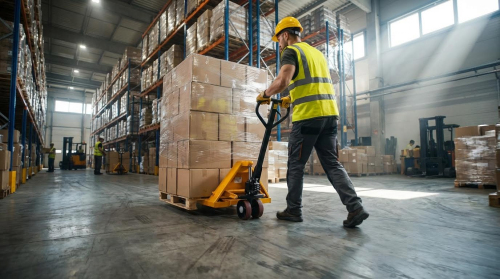
Safe maneuvering in constrained and high-risk areas required disciplined speed control, precise steering, and constant situational awareness. Operators relied on correct tiller positions, proper load handling, and route planning to keep loads stable and prevent collisions. Training programs emphasized that most pallet jack incidents occurred during turning, working on ramps, or moving near pedestrians and fixed structures. Applying structured techniques in these environments significantly reduced impact forces, underfoot injuries, and load shifts.
Techniques For Corners, Aisles, And Intersections
Operators used the steering handle or tiller arm to navigate corners and narrow aisles with smooth, progressive movements. They kept speeds low through turns to avoid tipping the load or striking racking, walls, or equipment. In tight spaces, keeping the handle fully upright improved control and reduced the turning radius, especially for walkie and walkie-rider units. Powered stacker operators learned the pivot characteristics of their specific model, including how turning radius changed with load length and fork elevation. Approaching intersections, they reduced speed, sounded any available warning device, and covered the brake or stop function. Training materials stressed coming to a complete stop before final positioning, then lowering the load fully before withdrawing the forks.
Operating On Ramps, Declines, And Rough Floors
Guidelines required extra caution on ramps and declines because gravitational forces increased stopping distance and tipping risk. On declines, operators typically traveled in reverse with the load upgrade to prevent the jack from overrunning them and to maintain better control. For manual pallet jacks, procedures recommended pulling on level surfaces but pushing when going down inclines or working close to walls and obstacles. Rough or worn floors with ruts and bumps increased rolling resistance and shock loads into the frame, which destabilized stacked loads and stressed the operator’s hands and arms. OSHA and university safety guidance recommended maintaining floors in good condition and planning routes that avoided surface defects where possible. Operators kept fork height to the minimum safe travel height to reduce the overturning moment when hitting floor irregularities.
Pedestrian Safety And Team Communication
Training programs on motorized pallet jacks highlighted that many serious accidents involved pedestrians pinned between the truck and fixed objects. Operators therefore maintained clear sight lines, slowed before blind corners, and stopped immediately if anyone entered the travel path. When large or tall loads blocked forward visibility, a trained spotter walked ahead to guide travel and confirm clearance on both sides. Operators used concise verbal cues and hand signals to coordinate movements, especially in congested docks and warehouse intersections. They never allowed riders on pallet jacks, since horseplay and unauthorized riding had historically led to crush and run-over incidents. End-of-shift procedures required parking in designated areas with forks fully lowered to eliminate tripping and impact hazards for pedestrians.
Ergonomics, Load Height, And Operator Fatigue
Ergonomic practices aimed to reduce bending, twisting, and excessive hand force during pallet handling. In grocery and cold storage warehouses, where individual boxes weighed 80–100 kilograms, raising the working height significantly lowered back strain. Methods included using pallet jacks with higher fork elevation capability, stacking extra empty pallets, or placing palletizers on the forks to keep product near waist level. Pulling the jack on level surfaces generally provided better body mechanics and control than pushing, reducing back and shoulder loading. OSHA guidance linked flat-spotted wheels and damaged floors to higher steering forces and increased hand, arm, and finger stress. Regular wheel maintenance and hydraulic inspections therefore supported both safety and long-term operator comfort. Training programs also stressed pacing work, avoiding sudden exertion, and recognizing fatigue as a factor that degraded steering precision and hazard perception.
Steering Performance, Inspection, And Upkeep
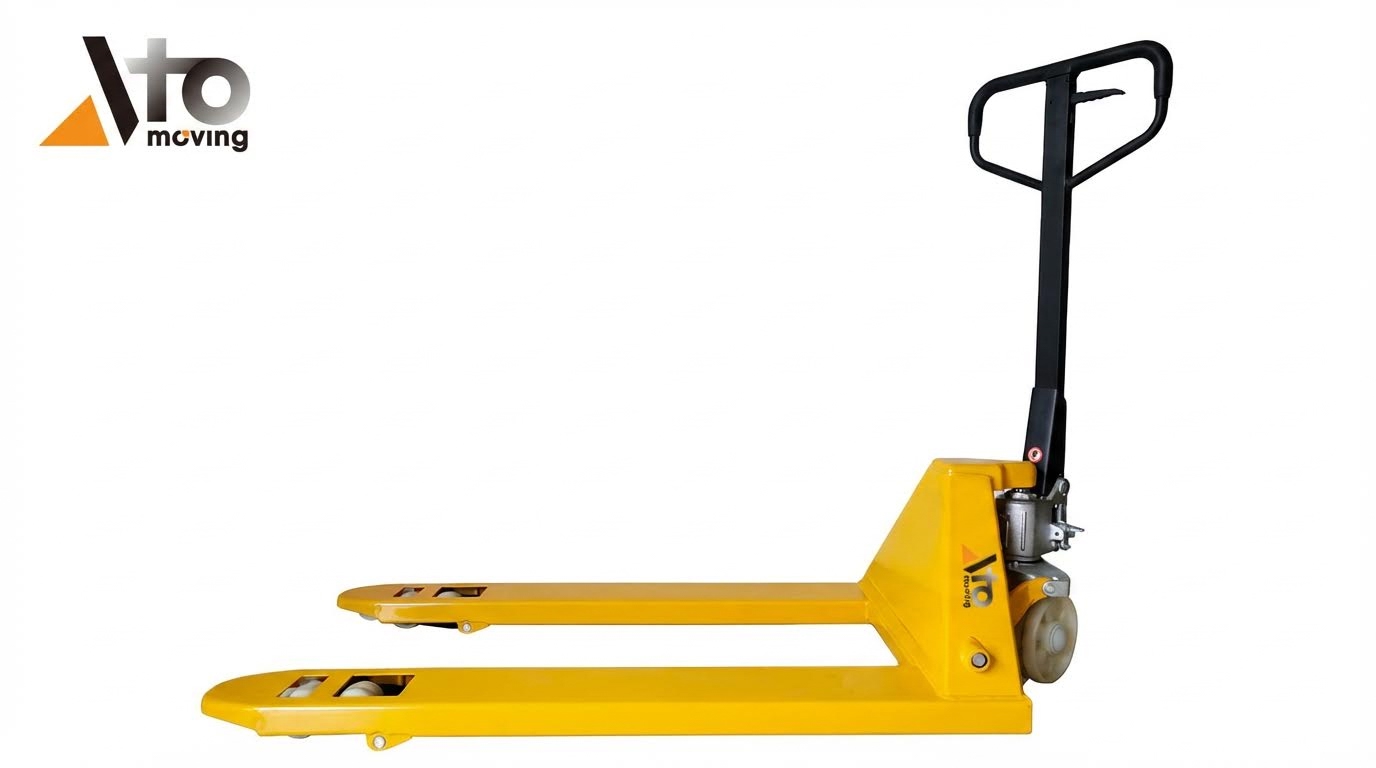
Steering performance in pallet jacks depended heavily on the rolling system and the condition of steering components. Systematic inspection and upkeep reduced hand force, improved tracking, and prevented steering-related incidents. Maintenance programs focused on wheels, lubrication, alignment, and hydraulics to keep maneuvering predictable in tight warehouse layouts.
Wheel Condition, Materials, And Flat-Spot Control
Wheel condition directly governed steering effort, turning precision, and load stability. Solid rubber and polyurethane wheels could develop flat spots, chips, and embedded metal, which increased rolling resistance and caused vibration and steering kickback. OSHA guidance indicated that flat-spotted wheels contributed to unstable loads and higher hand and arm stress. Inspectors checked for cracks, loose tread, impaired turning, and diameter loss exceeding about 6 millimetres from nominal size; beyond that threshold, replacement became necessary. Upgrading to polyurethane wheels improved longevity and reduced noise on smooth indoor floors, while regular wheel spin tests helped detect grinding that indicated bearing wear before catastrophic failure.
Lubrication Of Pivots, Axles, And Handle Joints
Lubrication of the steering pivot, wheel axles, and handle joints kept steering light and consistent across the full tiller travel. Stiff steering often traced back to a dry center pivot, which technicians treated with white lithium grease for durable, low-friction operation. Multi-purpose oil on handle pivot joints reduced play, eliminated squeaks, and improved the responsiveness of directional inputs. Silicone spray on wheel axles minimized dirt buildup and maintained free rolling without attracting excessive debris. Maintenance plans typically specified weekly or monthly lubrication intervals, adjusted for usage intensity and contamination levels, while avoiding pressure-washing, which forced water into hydraulic and bearing interfaces.
Steer Wheel Replacement And Alignment Checks
Steer wheel replacement restored proper tracking when wheels showed flat spots, embedded metal, or excessive diameter wear that caused rubbing on the traverse. Technicians first laid the pallet jack on its side for safe access, then removed the cap with a flathead screwdriver and extracted the snap ring and washer using snap-ring pliers. After installing the new wheel and spacer, they reseated the snap ring fully in the axle groove and tapped the cap back on with a plastic hammer to avoid deforming components. A post-replacement spin test confirmed smooth, free rotation without catching or dragging. Alignment checks verified that steer wheels turned symmetrically and did not contact the frame, which would increase steering force and create erratic tracking in narrow aisles.
Hydraulic Issues, Sinking Forks, And Leak Control
Hydraulic condition indirectly affected steering by altering load height, weight transfer, and operator control during maneuvers. Sinking forks indicated internal leakage across seals or valves, which changed load distribution during travel and could destabilize steering, especially on ramps or rough floors. Regular inspections looked for external oil leaks at cylinders, hoses, and fittings, and for reduced lifting capacity that signaled degraded seals. Technicians avoided pressure-washing to protect hydraulic components and instead used controlled cleaning methods to keep contamination away from moving joints. Addressing leaks early prevented sudden fork drop, reduced the risk of overloading the steering system, and limited costly overhauls caused by prolonged low-fluid or contaminated operation.
Summary Of Best Practices And Future Trends

Effective pallet jack steering depended on three foundations: trained operators, disciplined maneuvering techniques, and systematic maintenance. Operators reduced incident rates when they pulled loads on level ground, kept travel speeds low in turns, and used neutral handle positions for controlled starts, stops, and parking. Safe practice also required strict adherence to rated capacity, use of spotters when visibility was limited, and consistent pedestrian awareness in aisles, intersections, and loading areas. Pre-use inspections of wheels, hydraulics, controls, and forks prevented failures such as sinking forks, flat-spotted wheels, and stiff steering that increased strain and collision risk.
From an industry perspective, maintenance programs that monitored wheel wear limits, verified free steering motion, and avoided aggressive cleaning methods such as pressure washing extended equipment life and reduced downtime. Ergonomically, raising load heights, improving floor conditions, and favoring powered over manual movement where feasible reduced musculoskeletal stress and whole-body vibration exposure. Future developments pointed toward smarter pallet jacks with integrated sensors for load monitoring, speed limiting in high-risk zones, and proximity alerts for pedestrians, aligning with evolving safety and regulatory expectations. Telematics-based maintenance scheduling and standardized, model-specific operator training modules were also likely to expand.
For practical implementation, facilities benefited from combining written procedures, hands-on training, and periodic refresher assessments focused on steering control in tight spaces, ramps, and congested areas. Checklists for wheels, pivots, hydraulics, and controls supported weekly and monthly maintenance routines and ensured compliance with occupational safety guidance. A balanced approach recognized that technology upgrades could improve safety and productivity, but only when supported by disciplined inspection practices, operator accountability, and continuous improvement of floor conditions and traffic management. Over time, sites that integrated these elements typically achieved lower injury rates and more predictable material-handling performance.