Pallet jack maximum lift height directly affects clearance, stability, and compatibility with pallets, docks, and racking. This article explains how manufacturers define lift height and summarizes typical ranges for manual, electric, and high-lift designs. It then examines the engineering constraints, including fork geometry, hydraulics, structure, and safety standards that cap practical heights. Finally, it provides selection guidelines so engineers and facility planners can specify lift heights that match operations while controlling lifecycle cost and risk.
Defining Pallet Jack Lift Height And Key Ranges
What “Maximum Lift Height” Technically Means
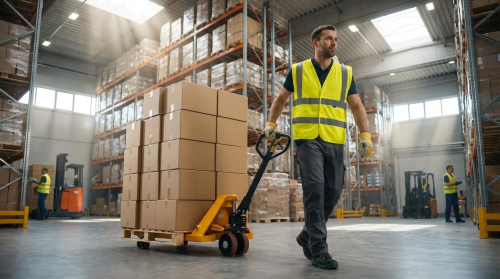
Engineers defined maximum lift height as the vertical distance from the floor to the top surface of the forks at full elevation. Specifications usually listed both minimum fork height and maximum fork height to describe the usable stroke. The difference between these values represented the effective lifting height or hydraulic lift. In practice, operators focused on pallet clearance, which was the gap between the underside of the pallet and the floor when raised. Guidance from Michigan State University indicated that about 25 mm of clearance (approximately one inch) usually provided sufficient room for safe travel. Safety literature emphasized that operators should not use pallet jacks as elevating work platforms or for stacking; maximum lift height only needed to support horizontal transport. Designers therefore optimized fork stroke for stability, compactness, and cost rather than vertical reach.
Typical Lift Ranges For Manual And Electric Jacks
Standard low-lift manual pallet jacks historically offered maximum fork heights around 180 mm to 200 mm. For example, several ONEN hand pallet truck models specified a maximum fork height of 195 mm with a lifting height of 110 mm. CUBLIFT standard 3-ton jacks typically reached about 195 mm, while stainless scale-equipped models such as the BHA variant reached roughly 220 mm. Electric walkie and rider pallet jacks operated in a similar low-lift range, often between 190 mm and 235 mm. Crown’s PR 4500 stand-up rider truck, for instance, provided a maximum lift height of about 235 mm. These values delivered enough clearance for common pallets while keeping the center of gravity low for stability. Safety guidance from industrial sources recommended lifting only enough to clear the floor, usually near 25 mm, even though the mechanical maximum was higher. This practice improved maneuverability, reduced tipping risk, and limited fork and wheel stress.
High-Lift And Specialty Pallet Jack Categories
High-lift pallet jacks formed a distinct category from standard low-lift trucks. These designs used scissor mechanisms or extended masts to raise pallets to workbench heights for ergonomic picking or assembly. Some modern high-lift models reportedly reached vertical heights up to about 2.4 m, or roughly 8 feet. Engineers designed these units for stationary or slow-speed use because the elevated center of gravity significantly reduced stability during travel. Load capacities for such specialty jacks often decreased compared with low-lift models, aligning with typical ranges between 1 000 kg and 1 500 kg. Other specialty variants included pallet jacks with integrated scales, stainless construction, or rider platforms. Scale-equipped stainless units, such as CUBLIFT’s BHA model, combined corrosion resistance with lift heights around 220 mm to support weighing at low elevation. Electric rider-style jacks with maximum fork heights near 205 mm targeted high-throughput dock operations. Across these categories, manufacturers balanced lift height, capacity, and stability based on the intended application and safety margins.
Engineering Factors That Limit Lift Height

Engineering constraints defined the practical lift height of pallet jacks. Designers balanced fork geometry, hydraulics, structure, and stability against typical pallet and floor conditions. Safety standards and design margins then fixed conservative limits, usually below 250 mm for standard low-lift trucks. Higher lifts required different architectures, such as scissor or mast-type designs.
Fork Geometry, Pallet Design, And Clearance Needs
Fork geometry set the baseline for minimum and maximum lift. Standard low-profile forks typically had lowered heights around 75 mm to 85 mm to enter EUR or GMA pallets under load. Maximum fork heights for conventional hand trucks clustered between 190 mm and 220 mm, as reported for several ONEN and CUBLIFT models, and about 235 mm for Crown’s PR 4500. This range provided roughly 25 mm to 40 mm of pallet clearance above the floor, exceeding the approximately 25 mm (1 inch) clearance recommended by Michigan State University for safe travel. Pallet deck thickness, bottom board arrangement, and notch geometry constrained how low the forks could start and how much upward travel was actually useful before losing stability or interfering with racking or trailer floors.
Hydraulic, Structural, And Stability Constraints
The hydraulic circuit determined achievable stroke, but structure and stability usually limited usable height first. Hand pallet jacks used compact single- or dual-acting hydraulic cylinders sized to provide about 110 mm of lifting stroke in typical ONEN designs. Beyond approximately 220 mm fork height, bending moments in the forks and linkages increased sharply when transporting heavy loads, accelerating fatigue in welds and pivot joints. Center-of-gravity elevation reduced the stability margin, especially during turning, braking, or on uneven floors. High-lift pallet trucks that reached heights up to about 8 feet therefore used scissor or mast mechanisms with braced structures and larger bases to control deflection and tipping, rather than simply extending standard low-lift geometries.
Influence Of Load Capacity, Wheel Type, And Floor Quality
Load capacity and lift height interacted through stress and contact pressure. CUBLIFT models with capacities from 1 000 kg to 5 000 kg typically kept maximum lift around 195 mm to 220 mm to maintain acceptable fork deflection under rated load. Heavier-capacity jacks required thicker or higher-strength steel forks, which increased minimum fork height and limited geometry options. Wheel type, such as polyurethane versus nylon, affected rolling resistance and vibration but also influenced stability when the load was elevated. Harder, smaller wheels transmitted more shock on rough floors, which destabilized tall loads at higher lift heights. Floor quality, including flatness, joints, and debris, further constrained safe effective lift; operators needed only minimal clearance to avoid snagging, so engineers avoided excessive stroke that encouraged operators to travel with the pallet unnecessarily high.
Safety Standards, Compliance, And Design Margins
Safety and conformity requirements fixed conservative upper bounds on lift height for low-lift pallet trucks. International standards for industrial trucks, such as ISO-based and EN-derived norms, required stability tests with rated loads at maximum lift and specified tilt and braking conditions. Manufacturers therefore added design margins in cylinder pressure, fork yield strength, and bearing capacities so that rated loads at maximum height stayed below critical limits. Guidance from safety organizations and training materials, including MSU and industry safety bulletins, emphasized keeping loads as low as practicable and avoiding sharp turns at height. As a result, designers optimized stroke to provide just enough clearance for typical pallets and dock transitions while maintaining wide stability margins, rather than pursuing maximum possible lift from the hydraulic system alone.
Selecting The Right Lift Height For Your Facility
Matching Lift Height To Racks, Trailers, And Dock Levels
Engineers matched pallet jack lift height to the lowest transfer interface in the material flow. Typical floor-to-pallet clearance needs stayed near 25 mm, as guides from Michigan State University indicated. Standard manual pallet jacks with 195 mm to 235 mm maximum fork height already exceeded this requirement. They allowed loading from ground into trailers, onto low dock plates, or onto short ramps without bottoming the pallet. High-lift pallet trucks or scissor-lift variants became relevant only when operators needed waist-height picking or feeding machines. For dock operations, designers checked trailer bed heights, dock leveler geometry, and pallet thickness to confirm that jack lift height cleared dock lips but did not force unstable high travel. The best practice kept travel height to minimal safe clearance and used fixed infrastructure, not pallet jack lift, to bridge large level differences.
Manual Vs. Powered Jacks: Ergonomics And Throughput
Manual pallet jacks suited short horizontal distances and low cycle counts. Their limited lift height around 195 mm reduced ergonomic strain compared to hand carrying but still required walking and pumping effort. Powered walkie or rider jacks with similar 200 mm to 235 mm lift heights improved throughput by reducing push forces and travel time. Facilities with high daily pallet moves, long aisles, or frequent dock loading typically selected powered units to limit musculoskeletal risk. Engineers evaluated operator heart-rate data, push-pull force measurements, and shift distance to justify the upgrade. Lift height itself did not differ drastically between manual and powered types, but powered models sustained rated lift at higher duty cycles and on moderate grades. For stand-up riders, designers also considered operator visibility at low travel heights and the risk of over-lifting near 8 ft capable specialty units, keeping most loads low during motion.
Lifecycle Cost, Maintenance, And Predictive Monitoring
Lifecycle cost analysis treated lift height as one driver of component stress. Higher lift capability increased stroke on hydraulic cylinders, extended linkage motion, and raised bending moments in forks and masts for high-lift designs. Standard low-lift pallet jacks around 195 mm maximum height experienced relatively modest structural fatigue when maintained correctly. Maintenance programs focused on hydraulic seals, fluid cleanliness, fork straightness, and wheel condition to preserve rated lift. Predictive monitoring used inspection intervals, failure histories, and sensor data from advanced units to forecast when lift performance would degrade. Facilities compared capital cost of high-lift or sensor-equipped jacks against avoided downtime, reduced damage to pallets, and lower injury rates. Where operators routinely approached maximum lift height, engineers shortened inspection intervals and tracked drift in maximum achievable height as an early warning of hydraulic or structural issues.
Digital Twins, Sensors, And Advanced Control Features
Digital twins for pallet handling systems modeled lift height interactions with floor flatness, pallet design, and rack or dock interfaces. Engineers used these models to test whether a 195 mm or 235 mm maximum lift height provided enough clearance under worst-case deflection and wheel wear. Embedded sensors on advanced pallet jacks measured fork height, load mass, and travel speed. Control logic then limited travel speed at higher lift positions and discouraged operators from moving with elevated loads, consistent with safety guidance to keep loads low. Height sensors also helped ensure operators lifted only to the minimal required clearance, improving stability and reducing energy use on electric units. Fleet management platforms aggregated lift-height usage profiles to refine equipment selection and layout design. Over time, digital twins and sensor feedback supported iterative optimization, often confirming that modest, well-controlled lift heights offered the best balance of safety, throughput, and cost.
Summary: Practical Guidelines For Pallet Jack Lift Height
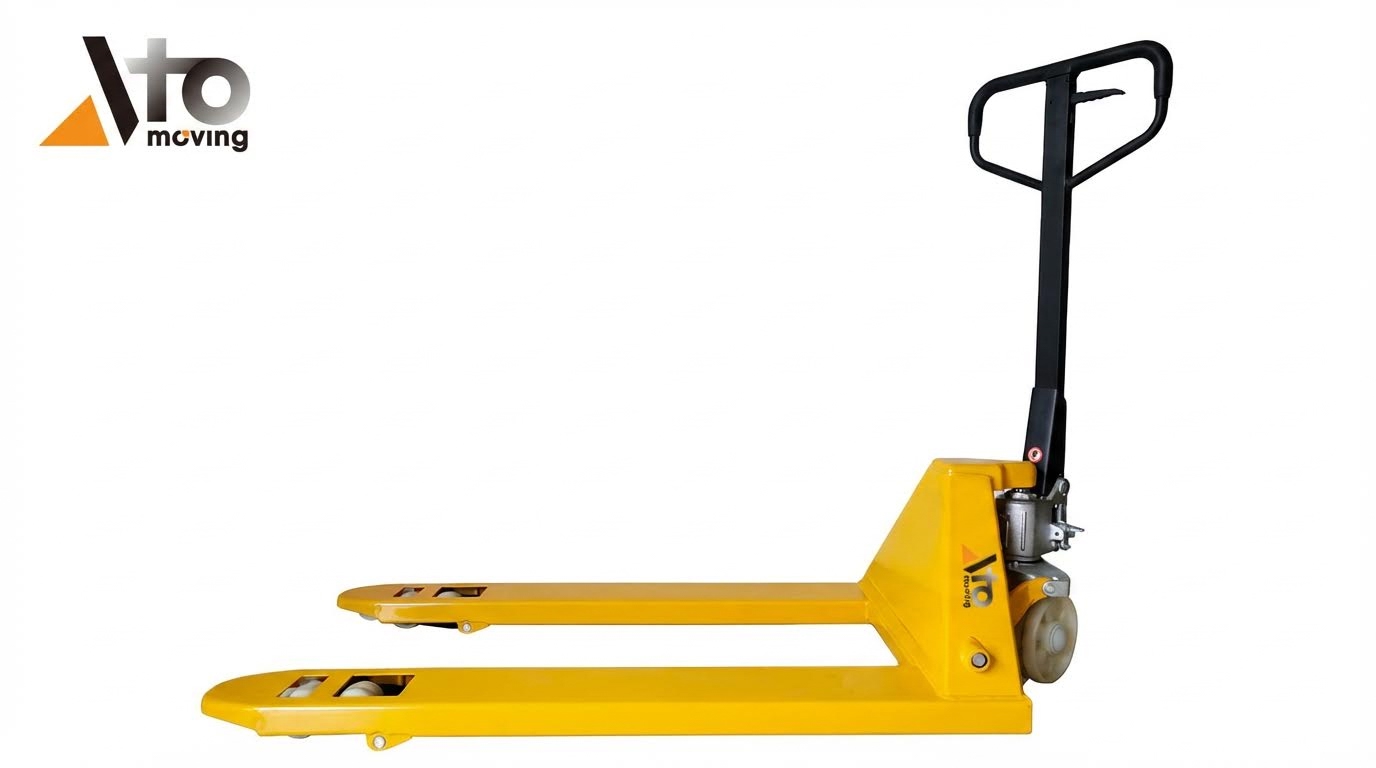
Pallet jack maximum lift height historically stayed in the 180–235 mm range for standard low-lift trucks. Typical examples included 195 mm for many hand pallet trucks, about 205–220 mm for several electric and scale-equipped models, and roughly 235 mm for rider trucks such as stand‑up pallet trucks. High-lift and scissor-type pallet jacks extended this range significantly, and a few specialized designs reportedly reached lift heights close to 2.4 m, but those units functioned more like compact stackers than conventional pallet jacks.
Engineering constraints continued to center on fork geometry, hydraulic stroke, and the need to keep the load’s center of gravity low for stability. Designers balanced lift height against load capacity, wheelbase, and wheel type, while accounting for real-world floor conditions and required safety factors. In practice, facilities rarely needed more than 25–50 mm of clearance under the pallet; operators typically targeted about 25 mm (≈1 inch) clearance to maintain stability and maneuverability while avoiding unnecessary lift.
From an implementation standpoint, engineers and facility planners benefited from mapping all transfer points: dock plates, trailers, conveyors, and rack entry levels. They then specified pallet jacks whose maximum fork height exceeded the highest required interface by a modest margin, while still supporting the pallet standard in use and the worst-case floor tolerances. Lifecycle cost analysis favored robust hydraulic systems, protected bearings, and suitable wheel materials, because degraded components reduced effective lift and increased rolling resistance.
Looking forward, integration of sensors, load cells, and basic telematics in powered pallet trucks supported safer operation near maximum lift and capacity. Digital twins and fleet analytics enabled verification that actual operating envelopes stayed within design limits, and they helped optimize clearances for new layouts. The technology trend pointed toward smarter control of a still relatively small lift envelope, rather than dramatically higher lift heights, since stability and ergonomics imposed hard practical limits for pallet jack-class equipment.