Riding on pallet jacks looks like a time-saver, but in most facilities it is a serious safety and compliance risk. This article explains exactly when is it acceptable to ride on a pallet jack, how “riding” is defined, and why most safety rules prohibit using pallet trucks to carry people. You will see the engineering reasons behind tip‑overs and impact hazards, what OSHA/ANSI training and liability standards require, and where purpose‑built ride‑on or personnel‑lift solutions fit in. Use it as a practical guide to set policy, train operators, and design safer, more efficient material‑handling operations.
Defining “Riding” On Pallet Jacks And The Safety Rules
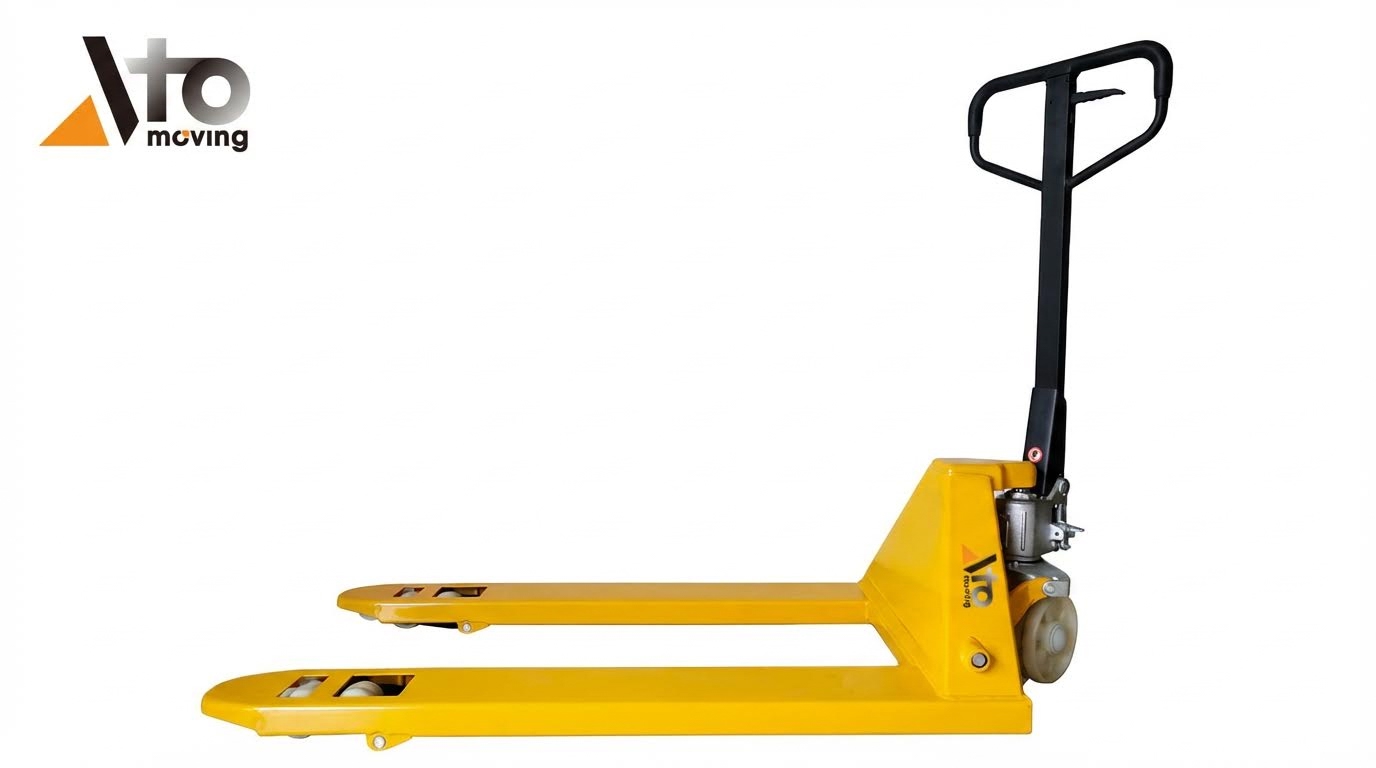
Manual vs. powered pallet jacks in OSHA terms
In safety and compliance language, manual pallet jacks are treated as simple material-handling tools, while powered pallet jacks fall under “powered industrial trucks.” OSHA’s Powered Industrial Truck Standard applies to electric pallet jacks and walkie riders, which require formal training, evaluation, and documented certification for operators. Operators of powered industrial trucks must complete a structured training and evaluation program, with recertification typically every three years. This difference is critical when you ask when is it acceptable to ride on a pallet jack, because “riding” only becomes a designed function on certain powered units, never on standard manual trucks.
- Manual pallet jacks are intended only for walking operation, with the operator on foot pushing or pulling the load. Guidance for safe use focuses on pushing instead of pulling, keeping forks low, and maintaining clear paths, not on carrying people. Safe operating procedures for manual trucks emphasize pushing, low fork height, and clear walkways.
- Powered pallet jacks (electric walkies, walkie riders, center‑control riders) include drive motors, brakes, and controls similar to forklifts. OSHA requires pre‑operation inspections, attention to brakes, steering, controls, and warning devices before use. Daily pre-operation checks on powered units must cover brakes, steering, controls, warning devices, and power source status.
- Training expectations are much higher for powered units because they can move faster, carry heavier loads, and introduce higher kinetic energy in any collision. OSHA-focused electric pallet jack training covers hazards, inspections, load handling, and maneuvering in tight or mixed-traffic environments.
Across both categories, pallet jacks are defined as load-handling devices, not people carriers. That is why general safety rules and training materials consistently state that personnel must not ride on standard pallet jacks during operation.
What “riding” means in real warehouse practice
On the floor, “riding” a pallet jack usually means someone using the jack like a scooter or platform instead of walking beside it. This can be a person standing on the forks, on the load, or on the frame while another worker steers and pulls or drives. Many operators also consider “riding” to include sitting or standing on the pallet jack while it is being towed by another vehicle. Safety guidance is clear that these behaviors are prohibited and that pallet jacks are not designed to transport personnel. Operators are specifically prohibited from sitting or standing on the pallet truck during operation, and pallet trucks must not be used to transport personnel.
- Typical unsafe “riding” behaviors include:
- Standing or sitting on the forks or load while another person moves the jack.
- Using momentum to “surf” the jack down an aisle, with feet on the frame.
- Letting a powered pallet jack pull someone on a manual jack or cart.
- These actions undermine basic safe-use rules that require clear walking paths, controlled speed, and stable, evenly distributed loads. Safe practice is to keep forks 1–2 inches off the floor, push rather than pull, and avoid debris or wet areas that could cause a jolt or slip.
- Riding also conflicts with ergonomic and traffic‑safety expectations. Operators are supposed to walk, maintain line of sight, and give pedestrians the right of way, not occupy the equipment as a passenger. Electric pallet jack safety training stresses pedestrian right of way, horn use at intersections, and avoiding blind spots.
In practical terms, when is it acceptable to ride on a pallet jack comes down to design intent and written policy. Riding is only considered at all on purpose‑built rider or platform models with designated operator stations, and even then, only by trained, authorized operators following site‑specific rules. On all other pallet jacks, any form of riding is a clear violation of safe operating practice.
Why Riding Is Almost Never Acceptable: Engineering And Compliance
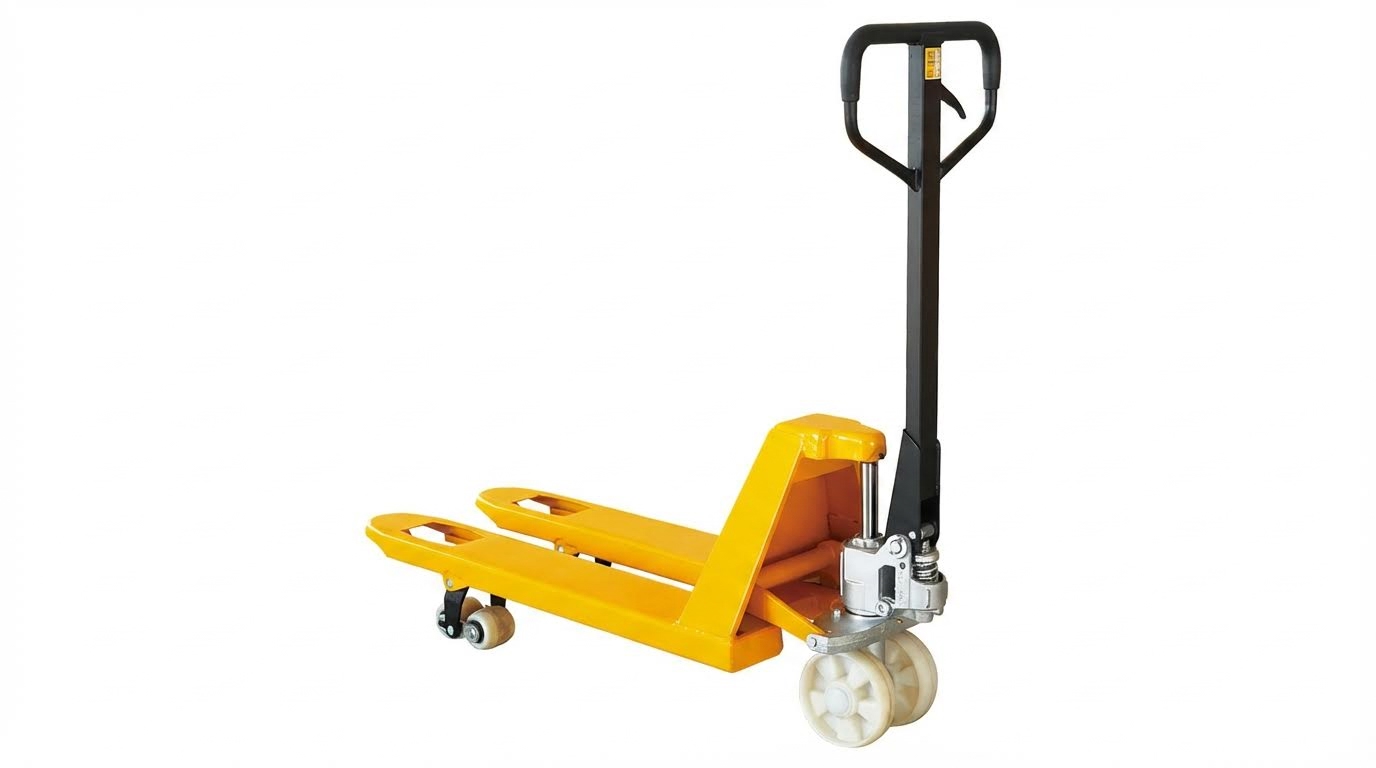
Stability, center of gravity, and tip‑over risk
From an engineering standpoint, pallet jacks are designed to carry loads, not people. The wheelbase, fork length, and steering geometry assume the only live load is the operator walking behind or ahead, not standing on the forks or pump body. When a person rides, their weight shifts the combined center of gravity upward and often toward one side, which sharply reduces the stability margin, especially during turns, ramp work, or when the load is stacked high.
Safe operation already depends on correct load placement and height to prevent tipping. Guidance for manual pallet trucks stresses keeping the load evenly distributed on the forks and avoiding excessively tall or unstable stacks to reduce tip‑over risk by controlling fork positioning and load height. Adding a rider on top of that load or on the forks pushes the system closer to its tipping line, so a small floor defect, pothole, or sudden steer input can cause a loss of balance.
Manufacturers and safety guidance also warn against operating pallet jacks on ramps and recommend keeping the load uphill and forks low to maintain control when inclines cannot be avoided. Riding in these conditions makes the operator part of the unstable mass; if the jack stops suddenly or the operator shifts weight, the center of gravity can pass outside the wheelbase and the unit can roll or slide. This is why, when people ask when is it acceptable to ride on a pallet jack, the stability analysis alone usually leads to “almost never” for walkie‑type equipment.
Braking distance, impact energy, and pedestrian hazards
Riding on a pallet jack also changes how it behaves dynamically. Extra body weight increases total mass, which increases momentum and impact energy at any given speed. At the same time, the operator has less ability to step clear or react because they are physically on the equipment instead of walking with it. Even a low‑speed collision with a fixed object or pedestrian can then produce crushing injuries to feet, legs, or torsos.
Safe‑use guidance for pallet trucks emphasizes speed control and maintaining safe speeds, especially with heavy loads or in tight spaces, to keep stopping distances manageable because momentum and braking distance grow with load. Riding encourages higher travel speeds and “coasting,” and it often forces the operator to use one hand or awkward body positions for steering, which further degrades control. If the handle kicks back or the wheels strike debris, the rider is at high risk of being thrown or having limbs run over.
Pedestrian safety rules for powered pallet equipment require operators to give pedestrians the right of way, use horns at intersections, and avoid blind spots to protect people on foot. A rider‑mounted operator stands higher or leans forward, which can reduce direct sightlines to feet, pallet corners, or low obstacles. Combined with longer stopping distances and higher impact energy, this is why engineering and safety practice treat riding as an unacceptable amplification of risk rather than a productivity shortcut.
OSHA/ANSI rules, training, and liability exposure
From a compliance perspective, the question when is it acceptable to ride on a pallet jack intersects directly with OSHA’s powered industrial truck rules and related training duties. Training programs for electric pallet jacks teach operators to conduct pre‑use inspections, understand hazards, and follow best practices for load handling and maneuvering in different environments as part of OSHA compliance. These programs treat manual and powered pallet trucks as load‑handling tools, not personnel carriers, and explicitly prohibit transporting people.
Written guidance for manual pallet trucks states that operators are prohibited from sitting or standing on the pallet truck during operation and that pallet trucks must not be used to transport personnel because they are not engineered as rider platforms. When an employer allows or informally tolerates riding, they are effectively authorizing use outside the manufacturer’s instructions and outside recognized safe practice, which can be cited as a violation of the general duty to provide a workplace free from recognized hazards.
OSHA‑aligned training and evaluation frameworks for powered industrial trucks require documented instruction, periodic evaluation, and refresher training after incidents or unsafe behaviors to keep unsafe practices from becoming normalized. If an injury occurs while someone is riding a pallet jack that was never designed for riders, investigators will compare site practice against this training, the manufacturer’s manual, and published safety guidance. That comparison usually leaves little doubt: riding is a known, documented prohibited action, so it exposes both the operator and the employer to avoidable liability as well as preventable harm.
Exception Cases: Ride‑On Designs, Personnel Lifts, And Safe Alternatives
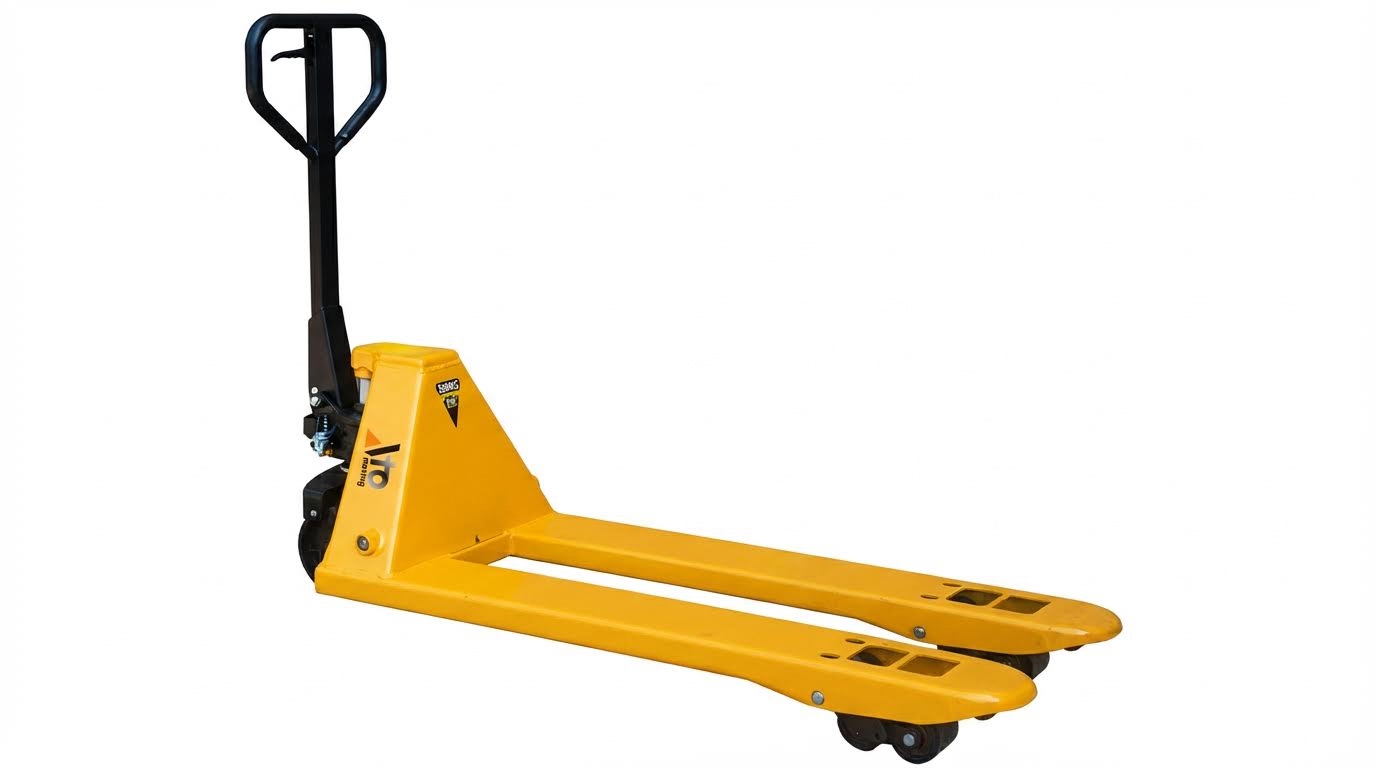
Purpose‑built rider pallet jacks and platform trucks
The only time it becomes close to answering “when is it acceptable to ride on a pallet jack” is when the equipment is purpose‑built as a rider unit, not a walk‑behind truck. These machines have a fixed operator platform, guarded operating position, and controls designed for standing travel. They are engineered so the combined center of gravity of truck, operator, and load stays within the stability triangle during turning and braking, unlike a manual jack that is only designed for walking control.
- Dedicated rider controls usually include dead‑man pedals, guarded direction and speed controls, and emergency stop.
- Operator platforms often have side or rear guards to keep feet and legs inside the profile of the truck.
- Rated capacity, travel speed, and braking systems are matched to the higher kinetic energy of a rider configuration.
Even with rider‑type designs, operators must still follow standard pallet truck practices such as staying within rated capacity, securing unstable loads, and keeping forks low during travel to maintain stability by positioning the load evenly and keeping forks just off the floor. For conventional manual pallet jacks, by contrast, standing or sitting on the forks or frame is specifically prohibited because these trucks are not designed to carry personnel and must not be used to transport people. That distinction—purpose‑built rider vs. walk‑behind—is the key engineering boundary for any riding policy.
Using lift trucks to elevate personnel: platform and guard rules
When facilities ask when is it acceptable to ride on a pallet jack or similar equipment to work at height, the only compliant path is to treat the truck as a lifting device for a secured work platform, not as a man‑lift by itself. Safety rules require a properly designed personnel platform that is mechanically secured to the forks or carriage and fitted with guardrails on all open sides. The platform must prevent workers from contacting the mast chains or moving parts, and its floor must support the intended live load with a suitable safety factor.
- Guardrails must meet standard height and mid‑rail requirements, with toe boards where falling objects are a risk.
- The truck’s hydraulic system must be capable of holding the platform without dropping at an unsafe rate in the event of a failure and must limit descent speed if a component fails.
- An operator must remain at the controls whenever personnel are elevated, and vehicle travel with the platform raised is either prohibited or limited to very slow speeds under strict conditions.
Overhead guards and load backrests also play a role in protecting elevated workers from falling objects, as they are required to withstand specified impact loads and limit opening sizes while maintaining visibility. In practice, this means you do not “ride” a pallet jack or lift truck directly; you work from a guarded platform that meets structural and guarding rules, with a trained operator stationed at the controls at all times.
Engineering safer solutions: automation, Li‑ion, and traffic control
From an engineering standpoint, the safest answer to “when is it acceptable to ride on a pallet jack” in a modern warehouse is “almost never—design the system so people do not need to ride.” Automation and better truck technology reduce the temptation to use makeshift riding positions for speed. For example, powered pallet trucks with efficient batteries and ergonomic controls let operators walk beside the load at controlled speeds instead of climbing on, while still maintaining productivity. Training and certification requirements for powered industrial trucks reinforce this, since operators must show they can handle loads, steer, brake, and navigate tight spaces safely before operating independently through formal evaluation and periodic retraining.
- Automated or semi‑automated pallet movers can take over long horizontal transport runs, keeping pedestrians out of high‑traffic aisles.
- Li‑ion and other advanced batteries support opportunity charging and consistent power, so operators are less likely to “hitch a ride” to make up time lost to low‑battery performance.
- Engineered traffic management—marked travel lanes, pedestrian walkways, and right‑of‑way rules—reduces close interactions between people and trucks by separating powered equipment from foot traffic wherever possible.
These engineered controls work alongside basic pallet truck rules such as pushing rather than pulling, keeping forks low, and maintaining clear, debris‑free paths to avoid jolts and loss of control. Combined with clear policies that forbid riding on non‑rider pallet jacks, these measures create a system where the safest behavior is also the easiest and most efficient for operators to follow.
“”
Final Assessment: Policy, Training, And Safe Operating Culture
The engineering and compliance picture is clear. Standard pallet jacks are load movers, not people carriers. Riding shifts the center of gravity, increases momentum, and extends stopping distance. It also blocks sightlines and puts the operator’s body in the crush zone. These effects turn a simple handling tool into a high‑risk vehicle, even at low speed.
OSHA and ANSI expectations reinforce this. Manuals, training programs, and inspection checklists all assume walking operation. When leaders tolerate riding, they move outside manufacturer instructions and accepted practice. That choice exposes workers to preventable injuries and the company to avoidable citations and claims.
The best practice is simple and strict. Ban riding on all non‑rider pallet jacks in written policy. Allow travel on equipment only where the truck is purpose‑built for riders or fitted with a compliant personnel platform, and only for trained, authorized operators. Back the policy with documented training, refresher sessions after incidents, and consistent supervision.
Finally, design the operation so no one feels pressured to ride. Use suitable Atomoving equipment, smart traffic layouts, and, where justified, automation for long runs. In a mature safety culture, walking beside the pallet jack is normal behavior, not a slowdown.
Frequently Asked Questions
When is it acceptable to ride on a pallet jack?
Riding on a pallet jack is generally not acceptable and is considered unsafe unless the equipment is specifically designed for riders. OSHA classifies pallet jacks as Class III forklifts, and they are primarily intended for material transport, not personal transport. Pallet Jack Safety FAQs.
- Pallet jacks are designed to move materials, not people.
- Only use models explicitly rated for rider operation if necessary.
- Always follow manufacturer guidelines and workplace safety policies.
Is it illegal to ride a pallet jack?
While not always “illegal,” riding a pallet jack that isn’t designed for passengers can violate OSHA regulations and workplace safety standards. According to OSHA, operators must complete proper training for any powered industrial truck, including pallet jacks. OSHA Pallet Jack Guidelines.
- Improper use may result in fines or penalties under federal safety laws.
- Employers are responsible for ensuring compliance with safety rules.
- Never use a pallet jack for riding unless approved by the manufacturer.