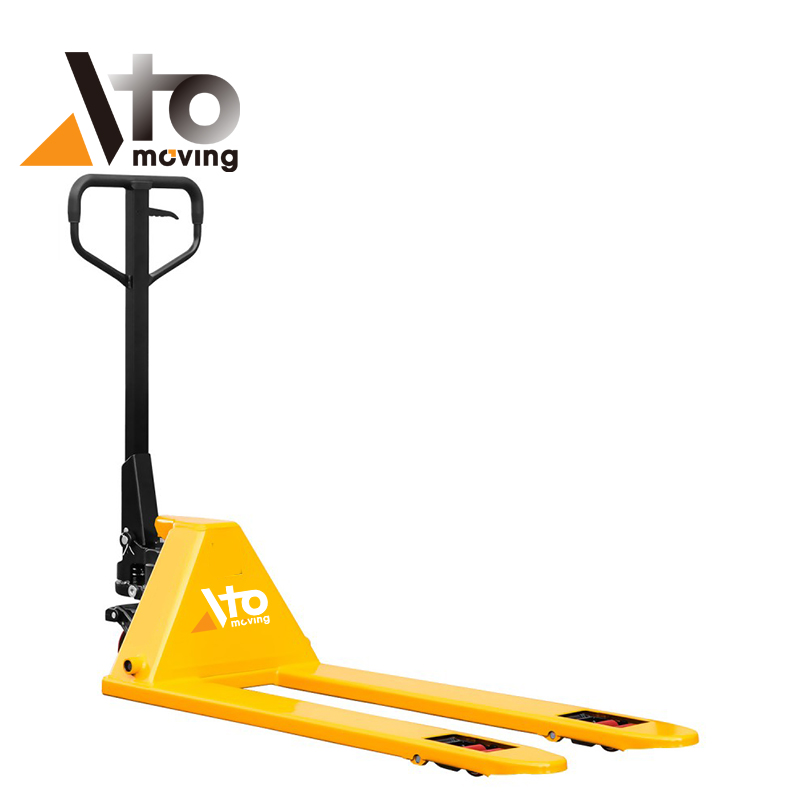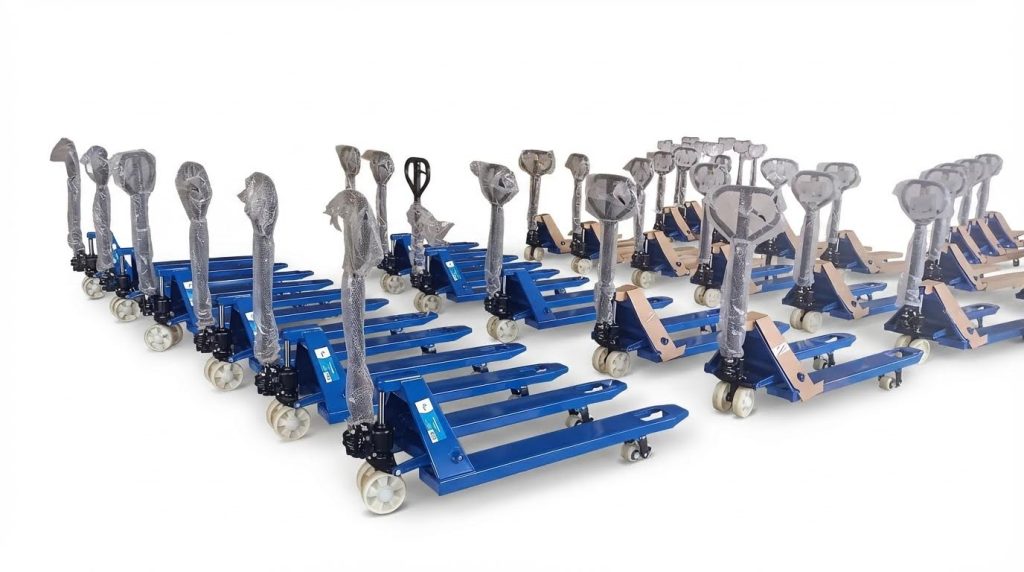
Pallet jacks supported high-throughput material flows in warehouses, plants, and logistics hubs. Their safe use depended on clearly defined load limits, disciplined operating techniques, and structured maintenance programs. This article examined how to define and interpret safe load ratings, plan and move stable loads, and maintain both manual and electric pallet jacks in industrial environments. It also reviewed how emerging technologies such as telematics and predictive analytics reshaped safe handling limits and operator practices across modern operations.
Defining Safe Load Limits For Pallet Jacks

Safe load limits defined pallet jack performance envelopes in industrial operations. Engineers and safety managers relied on these limits to prevent structural failure, tip‑overs, and musculoskeletal injuries. Clear understanding of rated capacity, documentation, overload effects, and operator qualification formed the basis of compliant pallet handling programs.
Rated Capacity Ranges For Manual And Electric Units
Manual pallet jacks historically carried rated capacities between 2 000 kg and 3 000 kg for standard warehouse models. Industry data from manufacturers such as Apollo Forklift reported typical ratings of 2 500 kg for standard units and up to 3 000 kg for heavy‑duty designs. Narrow or specialty manual units often had lower capacities, around 1 400 kg to 2 000 kg, due to reduced fork section and wheel spacing. Electric pallet jacks frequently matched or exceeded manual ratings, but their effective safe capacity depended strongly on battery condition, grade, and travel speed. In all cases, operators had to treat the manufacturer’s stated capacity as an absolute upper bound, not a target value. Safety programs required verification of load mass before handling, especially for dense materials such as metals, liquids, or stone.
Interpreting Nameplates, Labels, And Manuals
Nameplates and capacity labels provided the primary reference for safe handling limits. These markings identified maximum rated load, sometimes at specified load centers or fork lengths, and occasionally included derated capacities for attachments or extended forks. Operators needed to cross‑check the nameplate information with the user manual, which explained any conditional limits, such as reduced capacity on slopes or with elevated forks. Best practice required operators to confirm that the identification plate matched the actual unit in service and had not been painted over or removed. When labels were missing or illegible, safety guidance treated the pallet jack as out of service until the correct rating documentation was restored. Manuals also described correct stacking, load centering, and fork positioning, which directly influenced the usable portion of the rated capacity.
Effects Of Overload On Stability And Components
Overloading a pallet jack increased risk through both structural and stability mechanisms. Excess mass accelerated wear and potential fracture in forks, axles, wheels, and hydraulic components, particularly at welds and pivot points. Hydraulic overload could cause seal damage, internal leakage, or sudden loss of lift, which in turn destabilized the supported load. From a stability perspective, heavy loads shifted the combined center of gravity closer to the support polygon edges defined by the wheels. This shift reduced the margin against tipping during turning, braking, or travel over uneven floors. Industry guidance therefore emphasized stable, evenly distributed loads, with the heaviest portion centered over the front wheels and forks fully inserted. Smooth, gradual starts, controlled stops, and avoidance of sharp turns with full loads further mitigated overload‑related incidents.
Regulatory Training And Operator Qualification
Regulations treated pallet jacks, especially powered units, as powered industrial trucks requiring formal training and evaluation. In jurisdictions aligned with OSHA rules, electric pallet jack operators had to be at least 18 years old and certified for the specific truck class and application. Training programs covered load capacities, nameplate interpretation, pre‑use inspections, safe travel practices, and parking procedures. Online and classroom courses typically required a passing score, often 80% or higher, followed by on‑site practical evaluation. Refresher training occurred after incidents, near‑misses, or workplace changes, ensuring operators remained current with site‑specific hazards and procedures. Organizations that enforced strict qualification standards and periodic retraining generally achieved lower rates of overload, tip‑over, and pedestrian impact events.
Load Planning, Stability, And Operating Techniques
Center Of Gravity, Wheel Position, And Load Balance
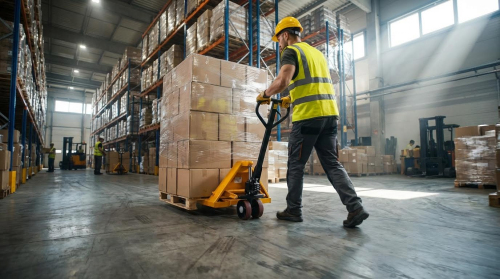
Operators planned loads so the combined center of gravity stayed over the pallet jack’s load wheels. Guidelines from Apollo Forklift emphasized centering the heaviest portion of the load over the front wheels to maximize stability. Uneven loading shifted the center of gravity toward one fork tip or toward the handle, which increased tipping and steering forces. Best practice required stacking goods so weight distributed evenly across both forks and across the pallet footprint. Stable loads used tight stacking patterns, stretch wrap, or bands to prevent shifting during transport. Technicians verified that stacked height did not exceed what allowed clear visibility and safe doorway clearance.
Fork Insertion, Lift Height, And Clearance Targets
Safe operation required full fork insertion under the pallet before lifting, as multiple safety guides stated. Incomplete engagement concentrated load on a short fork length and increased fork bending and pallet failure risks. Michigan State University EHS guidance recommended lifting the pallet only about 25 mm above the floor for travel. This clearance limited the drop height if a failure occurred and kept the center of gravity low. Operators raised loads using smooth, consistent pumping on manual units to avoid jerky motions that destabilized stacked goods. Electric pallet jack operators lifted just enough to clear floor irregularities and then stopped, avoiding unnecessary vertical travel.
Push Vs Pull Practices, Corners, And Inclines
Safety sources historically differed on push versus pull for manual pallet jacks. Michigan State University EHS recommended pulling on level floors, and pushing only near walls or on downslopes to keep the operator clear of the load path. Other safety publications advised pushing heavy loads for better body mechanics and visibility. Industrial policies therefore typically specified method by site risk assessment and training program. All sources agreed that operators should avoid sharp turns with elevated loads to prevent lateral tipping. On inclines, operators moved straight up or down, keeping the load uphill for manual units and following manufacturer and training guidance for powered trucks.
Speed Control, Path Planning, And Pedestrian Safety
Safe handling limits depended strongly on speed and route selection, not only on rated capacity. Training materials required operators to plan a clear path, remove obstacles, and identify ramps, wet spots, or uneven joints before moving. Operators maintained low, controlled speeds, especially with heavy or tall loads and in congested aisles. Guidance from Apollo Lift US and Atlantic Training stressed avoiding sudden stops, rapid acceleration, and abrupt direction changes, which could shift loads or cause loss of control. When visibility was restricted, a trained spotter guided the movement and watched for pedestrians. Operators stopped immediately if anyone entered the travel path and kept loads low to maintain a clear forward view where possible.
Inspection, Maintenance, And Emerging Technologies
Daily Checks Of Wheels, Hydraulics, And Controls
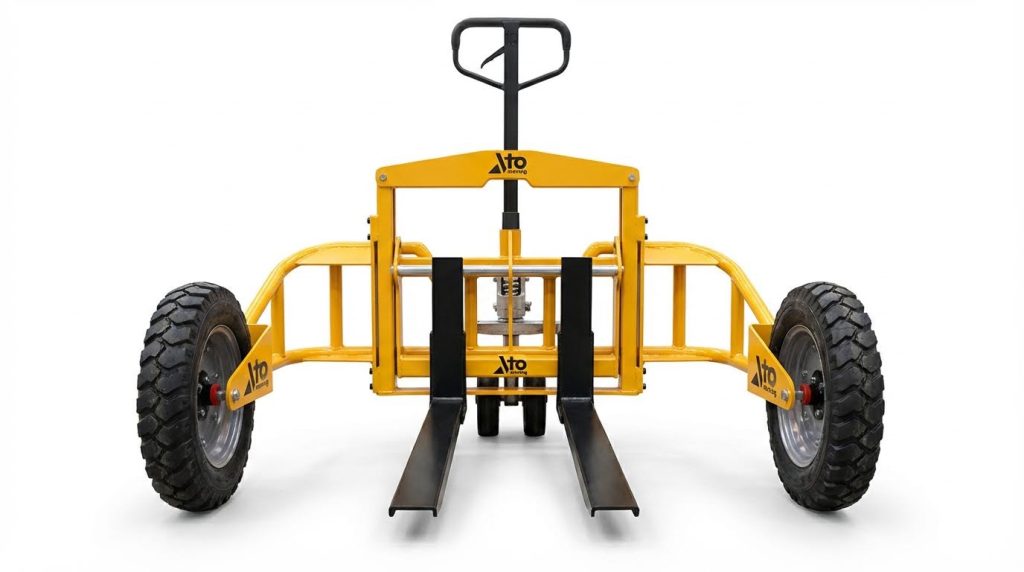
Operators performed a brief pre-use inspection before moving any load. They visually checked wheels and rollers for flat spots, embedded debris, cracked hubs, and loose fasteners. They confirmed forks were straight, with no visible bending, cracking, or excessive wear at the tips and heel. For hydraulic systems, they checked for oil leaks at the pump body, ram, and hose connections, and verified smooth, progressive lifting without jerks.
Handle and control levers had to return to neutral reliably and actuate lowering without sticking. On electric units, operators tested horn, emergency stop, direction controls, and the “belly button” reverse switch before entering traffic areas. They verified the parking position: forks fully lowered and truck clear of walkways when parked. These checks aligned with OSHA-required pre-use inspections and reduced in-service failures in high-throughput operations.
Preventive Maintenance And Lifecycle Cost Control
Maintenance teams scheduled periodic inspections based on hours of use, environment, and manufacturer recommendations. Typical tasks included lubricating pivot points, checking hydraulic oil level and condition, and measuring fork thickness loss against ISO/EN limits. Technicians replaced worn wheels and bearings before they generated floor damage, vibration, or tracking issues. They also inspected handle linkages and pump seals to prevent sudden loss of lift during operations.
Planned maintenance reduced unplanned downtime and extended service life, lowering lifecycle cost per pallet moved. Facilities tracked failure modes and repair history to optimize replacement intervals for seals, wheels, and batteries. They integrated pallet jack maintenance into broader asset management systems, aligning with safety audits and regulatory documentation. This structured approach supported consistent load-handling performance and predictable budgeting.
Electric Pallet Jack Batteries And Safety Features
Electric pallet jacks relied on properly maintained batteries for traction, lift, and safety systems. Operators checked state of charge, connector integrity, and visible cable damage before each shift. For lead-acid batteries, maintenance staff monitored electrolyte levels, cleaned terminals, and enforced correct charging procedures to avoid sulfation and overheating. Lithium-ion packs required verification of battery management system indicators and observance of manufacturer-specific charging rules.
Safety features such as emergency stop buttons, key switches, horns, and direction reverse switches protected operators in congested aisles. Pre-use tests confirmed that the “belly button” reverse function stopped or reversed travel when the operator was pinned. Speed control settings, creep modes, and automatic brake functions supported safe handling on ramps and in tight spaces. Proper training ensured operators understood these features and did not bypass interlocks or alarms.
Digital Twins, Telematics, And Predictive Analytics
Modern fleets increasingly used telematics modules to capture usage hours, travel distances, impact events, and overload incidents. These data streams fed digital maintenance logs and supported condition-based servicing instead of fixed-interval schedules. Some systems integrated with warehouse management platforms to link pallet jack utilization with shift patterns and congestion hotspots. This information allowed safety managers to target training, adjust routes, and refine speed limits.
Digital twin and predictive analytics tools modeled component wear based on load profiles, floor conditions, and operator behavior. Algorithms flagged abnormal vibration, high impact frequencies, or repeated overloads that accelerated wheel and hydraulic degradation. Maintenance teams then intervened before failures affected throughput or safety. Over time, these technologies supported optimized fleet sizing, extended asset life, and documented compliance with internal safety standards and external regulations.
Summary Of Pallet Jack Safe Handling Limits And Practices
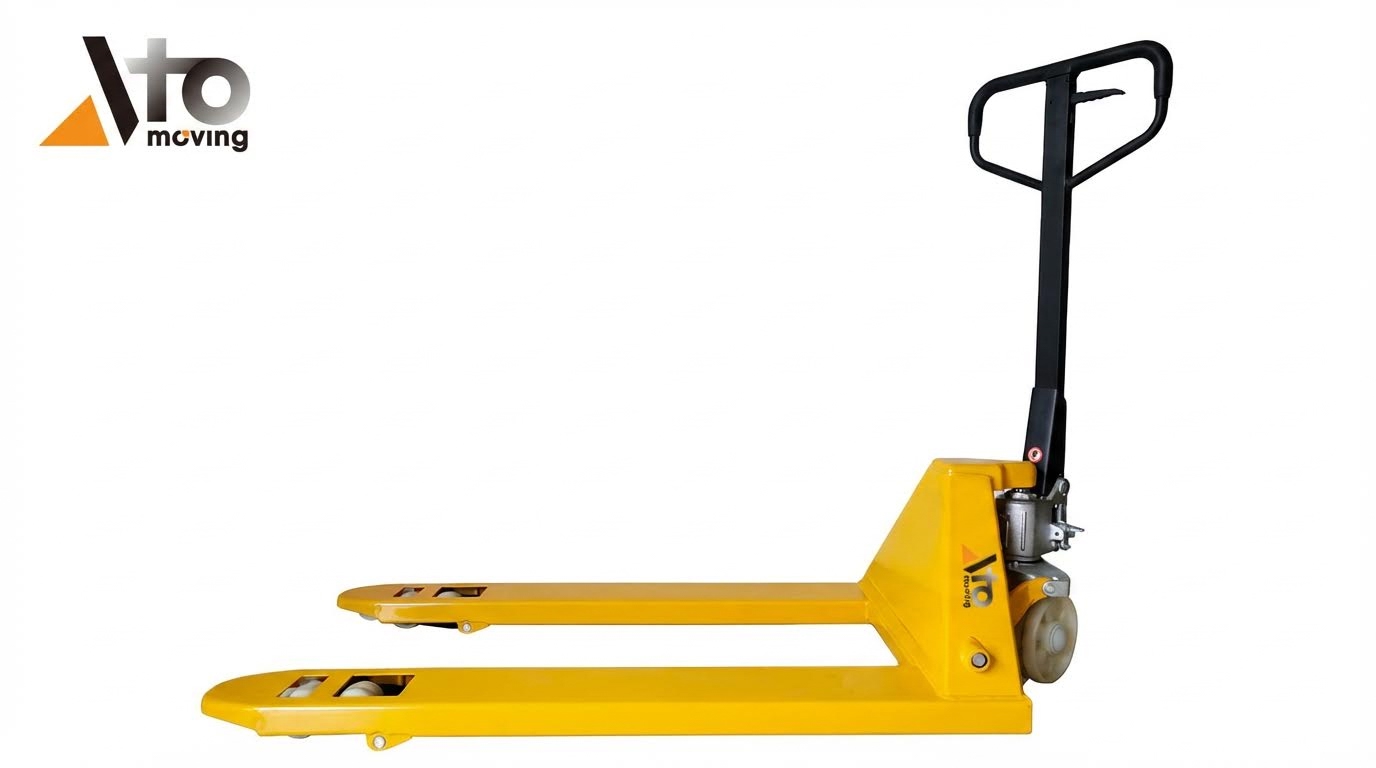
Pallet jack safe handling limits relied on three pillars: capacity control, stability management, and trained operation. Rated capacities for manual and electric units typically ranged between 1,300 kg and 3,000 kg, and operators had to verify the exact value on the nameplate or in the manual before every task. Overloading increased the risk of structural failure, hydraulic damage, and tipping, especially when combined with poor stacking or uneven fork loading.
Stable operation required centered, evenly distributed loads with the heaviest mass over the front wheels, forks fully inserted, and fork height kept just high enough to clear the floor, usually about 25 mm. Smooth acceleration, gradual stops, and avoidance of sharp turns, ramps, and uneven surfaces reduced dynamic load shifts. Facilities needed clear travel paths, controlled speed, and strict pedestrian separation, with spotters used whenever visibility was obstructed.
Regulations demanded that operators be trained and, for powered units, certified for the specific equipment class and workplace. Daily inspections of wheels, forks, hydraulics, controls, and, for electric units, batteries, supported safe operation and reduced lifecycle costs by catching defects early. Emerging technologies such as telematics, digital twins, and predictive analytics increasingly supported data-driven load control, maintenance scheduling, and incident prevention, but they did not replace fundamental practices like respecting nameplate limits, wearing appropriate PPE, and maintaining disciplined driving techniques.