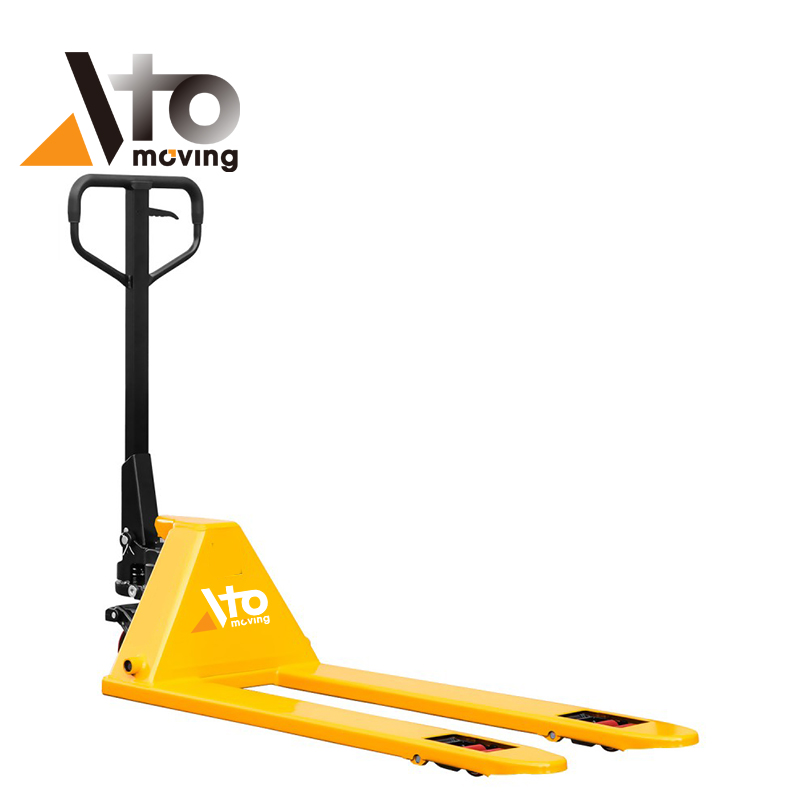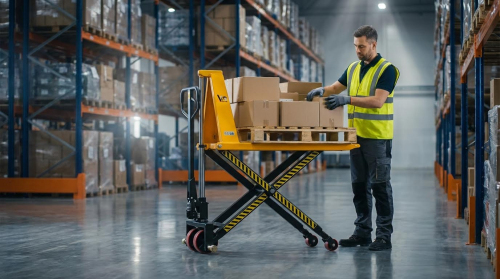
Pallet trucks played a central role in warehouse and distribution operations, but improper use created significant safety and compliance risks. This article examined the regulatory framework for manual and powered pallet trucks, including OSHA and comparable global standards, and clarified when formal certification applied. It then outlined effective operator training, evaluation, and recertification models, with attention to site-specific hazards and digital tracking of competencies. Finally, it reviewed inspection and maintenance regimes, from daily checks to FEM 4.004 compliance, and discussed how emerging technologies such as AI-based predictive maintenance and digital twins influenced future pallet truck design and safety management.
Regulatory Framework For Pallet Truck Operation

The regulatory framework for pallet truck operation defined clear requirements for powered units while promoting structured risk controls for all material handling equipment. OSHA classified electric pallet jacks and powered pallet trucks as powered industrial trucks, which placed them under 29 CFR 1910.178. Internationally, regulators aligned around comparable expectations for operator competence, equipment condition, and documented oversight. Understanding these converging rules helped facilities design globally consistent safety and compliance programs.
OSHA And Global Standards For Powered Pallet Trucks
OSHA treated electric pallet jacks as Class III forklifts under 29 CFR 1910.178, which triggered full powered industrial truck requirements. Operators needed formal instruction, practical training, and a documented performance evaluation before independent use. Brazilian regulations, as summarized by Huayaba, mirrored this structure with classroom content, hands-on practice, and periodic evaluations at least every three years. Institutional programs, such as TWU’s EH&S rules, added local controls including equipment-specific road tests and mandatory PPE like steel toe footwear. Across regions, regulators emphasized stability principles, safe operating procedures, and accident prevention as core curriculum topics.
Manual Vs. Powered Trucks: Where Certification Applies
OSHA did not mandate operator certification for purely manual pallet trucks, because they lacked a motor and fell outside the powered industrial truck definition. However, powered pallet jacks, electric pallet trucks, and electric stackers required full OSHA-compliant training and evaluation. Universities and large employers often extended structured training and inspection regimes to manual trucks, even without a federal certification mandate, to reduce injury rates. Brazilian guidance and institutional best practices similarly recommended consistent inspection, load control, and route management for both manual and powered units. This risk-based approach closed gaps where manual equipment still posed significant crush, strain, or tip hazards.
Age Limits, Licensing, And Operator Authorization
OSHA required powered pallet truck operators to be at least 18 years old, aligning with broader powered industrial truck rules. Employers needed to verify age and competence before authorizing an individual to operate electric pallet jacks or stackers. TWU’s EH&S program illustrated a layered model, where operators obtained an Equipment Operator’s License after completing training and passing a driving road test on the specific truck type. Both OSHA and institutional policies treated authorization as conditional, allowing revocation after incidents, unsafe behavior, or significant rule violations. Refresher training and re-evaluation followed serious accidents or observed unsafe operation to restore authorization.
Documentation, Recordkeeping, And Audit Readiness
Regulators and institutional standards placed strong emphasis on complete, traceable documentation for pallet truck operations. Employers maintained records of operator training dates, course content, quiz or exam scores, and certification expiration, typically on a three-year cycle. Facilities also documented daily and periodic equipment inspections, maintenance actions, and incident or near-miss reports, often using standardized logbooks or digital checklists. Products such as CSA or MOL-compliant logbooks supported electric pallet trucks by providing pre-printed daily checklists, repair request forms, and preventive maintenance logs. During OSHA or internal audits, these records demonstrated due diligence, supported root-cause analysis, and showed that unsafe equipment or operators were identified and corrected in a timely, systematic way.
Operator Training, Evaluation, And Recertification
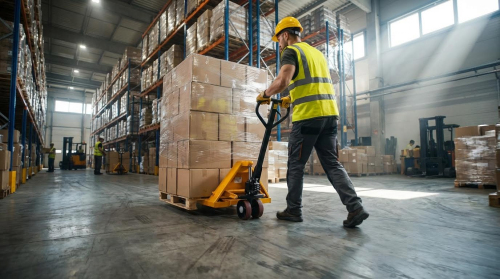
Effective pallet truck training programs integrated regulatory requirements with practical site realities. Organizations treated operator development as a continuous process, not a one-time event. Structured training, systematic evaluation, and scheduled recertification cycles reduced incident rates and supported legal compliance. Digital tools increasingly supported this lifecycle by standardizing content and preserving auditable records.
Formal Instruction, Practical Tests, And Road Evaluations
Regulators such as OSHA classified powered pallet trucks as powered industrial trucks and required a three-part training structure. Formal instruction used classroom or online modules to cover stability, load handling, equipment limits, and accident prevention. Courses like the OSHA-compliant two-hour online program satisfied the theory component and required minimum scores of 70–80% on quizzes and final exams. Practical training followed, where trainees operated the specific truck type under supervision, practiced starting, stopping, maneuvering, and emergency procedures, and applied load charts in realistic scenarios. A documented performance or “road” evaluation then verified that the operator could control the truck, respect pedestrian right-of-way, and execute maneuvers such as tight turns, ramp travel, and confined-space operation without unsafe behaviors. Institutions such as university EH&S departments added equipment-specific road tests and PPE verification, including steel toe footwear, before issuing an operator license.
Triennial Refresher Training And Trigger Events
Most frameworks aligned on a three-year maximum validity period for powered pallet truck certifications. OSHA guidance and online course providers recommended retraining at least every three years, while Brazilian regulations mandated triennial refreshers or sooner if needed. Trigger events required immediate or accelerated retraining, including accidents, near-misses, observed unsafe operation, or documented violations of site rules. Additional triggers included assignment to a new truck type, significant process changes, or modifications to traffic routes or storage layouts that affected risk profiles. Organizations that tied recertification to these triggers, rather than relying only on calendar intervals, maintained higher competency levels and reduced repeat incidents. Licensing bodies such as university EH&S units reserved the right to suspend or revoke authorization before the three-year mark when operators failed to meet performance expectations.
Site-Specific Hazards, Pedestrians, And Traffic Flows
Robust training programs went beyond generic forklift theory and addressed local hazards. Instructors mapped typical travel paths, pinch points, intersections, and ramp zones, then integrated these into practical exercises and toolbox talks. Operators learned to manage mixed traffic areas, maintain safe separation distances, and yield to pedestrians at crossings and blind corners. Training highlighted environmental factors such as poor lighting, floor contamination, and uneven surfaces that affected stopping distances and stability. Operators of both manual and powered pallet trucks practiced techniques for pushing rather than pulling, controlling speed in congested aisles, and handling slopes without turning on ramps. Facilities that formalized pedestrian routes, marked exclusion zones, and synchronized training for both operators and pedestrians achieved better compliance and fewer contact incidents. Site-specific modules also addressed special loads, such as tall or unstable pallets that restricted visibility and required spotters or alternative handling methods.
Digital Tools For Training Records And Competency Tracking
Digital platforms increasingly supported pallet truck safety programs by centralizing training and competency data. Learning management systems hosted formal instruction modules, tracked quiz scores, and recorded completion of theory components. Integrated databases stored road test results, license issue dates, and three-year expiration deadlines, enabling automated reminders for upcoming recertifications. Some organizations linked inspection and incident reporting apps with training records, so a serious incident or repeated checklist failures automatically flagged an operator for retraining. Electronic logbooks and CSA/MOL-compliant forms for powered trucks captured daily checks, repair requests, and near-miss reports, which safety teams could analyze for training gaps. Facilities that adopted barcoded or RFID operator IDs enabled quick verification of authorization status at the truck, improving audit readiness. Over time, these digital ecosystems allowed trend analysis, identification of high-risk behaviors, and targeted refresher content rather than generic retraining.
Inspection, Maintenance, And Emerging Technologies
Daily Checks, FEM 4.004, And Logbook Implementation
Daily pre-use inspections reduced unexpected pallet truck failures and aligned with FEM 4.004 annual inspection requirements. Effective routines combined a 30-second visual scan, a short cleaning step, and a brief functional test. Operators checked wheels for debris, forks for bends or cracks, handles for smooth pumping, and visible hydraulic leaks. They verified capacity markings and compared them with intended loads before operation.
Weekly tasks included lubricating wheels with silicone spray, oiling pivot joints, and tightening fork and handle fasteners. Monthly programs focused on deep cleaning, rust protection, and detailed geometry checks of forks and pump rods. FEM 4.004 required at least one documented expert inspection per year for material handling equipment, including pallet trucks. Facilities used structured logbooks or digital forms to record daily checks, defects, corrective actions, and annual inspection reports.
CSA/MOL-compliant logbooks supported electric pallet trucks by providing standardized daily checklist pages, repair request forms, and incident reporting templates. Mounting the logbook directly on the truck or near charging stations improved inspection discipline. Supervisors reviewed entries to detect recurring defects or operator misuse. Consistent documentation supported regulatory audits and demonstrated due diligence in case of incidents.
Hydraulic, Wheel, And Structural Integrity Assessment
Hydraulic systems required routine functional tests to detect sluggish lifting, creeping descent, or failure to hold loads. Operators performed a short hydraulic test by pumping the handle several times and observing lift speed and stability under a known load. Low hydraulic oil levels, air in the circuit, or worn seals typically caused poor performance. Bleeding the system and topping up oil often restored normal operation, while persistent issues indicated the need for component replacement.
Maintenance personnel periodically adjusted lowering valves when trucks failed to descend smoothly or dropped loads too quickly. This adjustment required correct tools, such as a spanner wrench and screwdriver, and adherence to manufacturer procedures. Wheels and rollers experienced high localized stresses, especially on rough floors and at maximum capacity. Technicians inspected tread surfaces for cracks, flat spots, and embedded debris, and checked bearings for excessive play or rough rotation.
Structural assessments focused on fork straightness, heel thickness, and weld integrity at high-stress junctions. Bent forks altered load distribution and increased tip-over risk, so technicians removed from service any truck with visible deformation. Corrosion on pump rods, frames, or welds signaled reduced fatigue life and required cleaning, rust treatment, or part replacement. Annual FEM 4.004 inspections combined these checks into a formal report, ensuring the truck remained structurally sound for rated duty.
Electric Stackers: Batteries, Controls, And PPE
Electric pallet stackers required additional attention to batteries, control systems, and electrical safety. Pre-shift checks verified charge level, secure battery anchoring, intact cables, and correct charger connections. Operators followed manufacturer guidance on charging intervals and avoided frequent shallow charges that shortened battery life. Extreme temperatures, high current peaks, and repeated short trips historically accelerated capacity loss.
Control checks covered travel, lift, and lowering functions, as well as emergency stop buttons and horn operation. Operators confirmed smooth acceleration, predictable braking, and responsive tiller arm steering before entering traffic areas. Any unusual noises, vibrations, or control delays triggered immediate removal from service and maintenance notification. Regular cleaning around contactors and sensors reduced electrical faults and improved reliability.
PPE requirements reflected institutional policies and risk assessments. Steel toe safety shoes protected against crushed feet during load handling, while high-visibility garments improved detectability in dense traffic. In high-risk environments, operators also used gloves, safety glasses, and hard hats. Training emphasized maintaining clear sightlines, securing loads to preserve visibility, and respecting pedestrian exclusion zones.
AI Predictive Maintenance And Digital Twin Modeling
Emerging technologies applied AI and digital twins to pallet truck and stacker fleets to improve uptime and safety. Sensor data from wheel encoders, hydraulic pressure switches, battery management systems, and control units fed predictive algorithms. These models detected patterns linked to bearing wear, hydraulic leakage
Summary Of Key Safety, Compliance, And Design Lessons
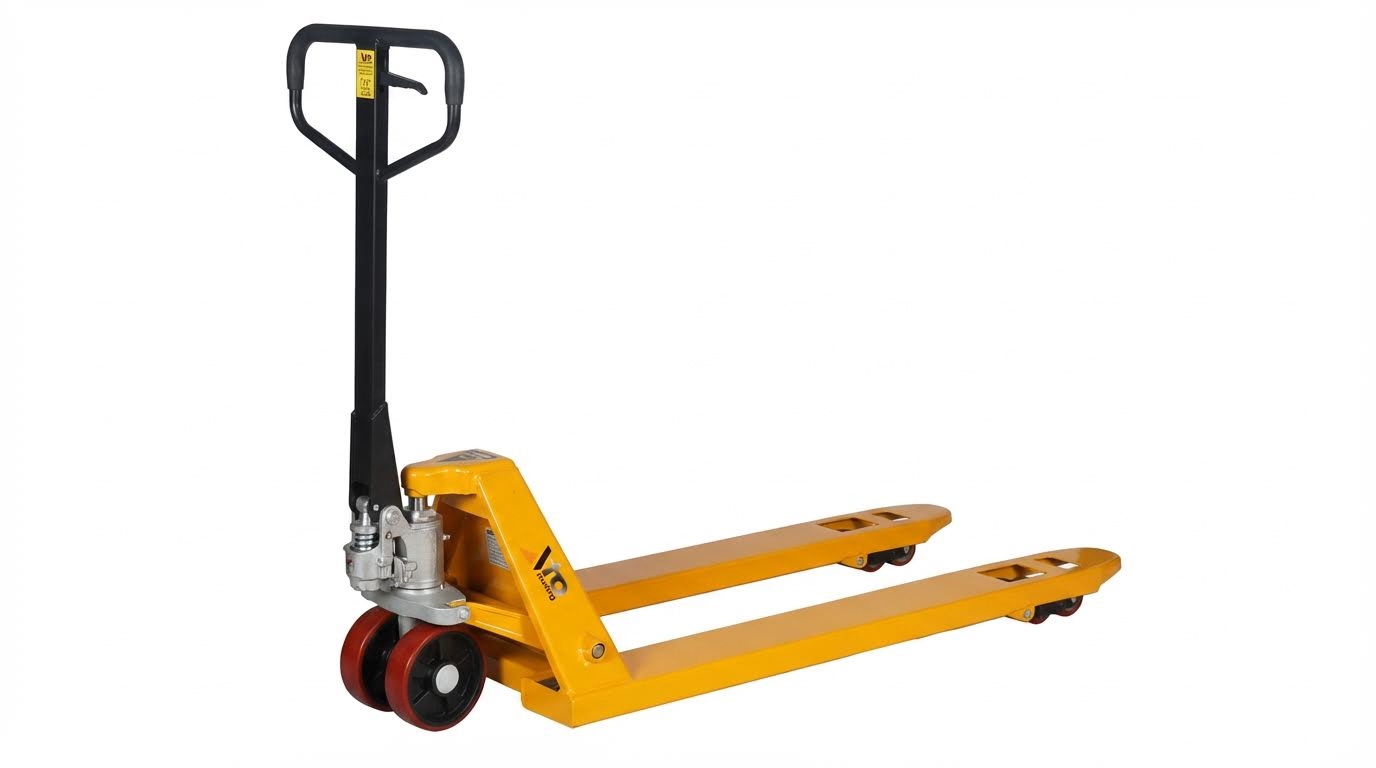
Pallet truck safety depended on a clear regulatory framework, structured training, and disciplined maintenance. OSHA classified powered pallet jacks as Class III forklifts, which triggered mandatory operator training, evaluation, and age limits of 18 years or older. Brazilian regulations and institutional programs, such as TWU’s, aligned closely, reinforcing the need for formal instruction, practical road tests, and three‑year license validity with immediate revocation after unsafe incidents. Manual pallet trucks did not require OSHA certification, yet best practice still relied on documented inspections and operator awareness of load limits and ergonomics.
Effective programs integrated daily pre‑use checks, FEM 4.004 annual inspections, and structured logbooks that captured maintenance, incidents, and corrective actions. Routine tasks such as hydraulic oil checks, wheel and fork inspections, and basic cleaning significantly reduced failure rates and unplanned downtime. For electric pallet trucks and stackers, batteries, control systems, and PPE requirements, including steel‑toe footwear and visibility garments, formed a core part of risk control.
Industry trends moved toward digital tools, including electronic checklists, training record systems, AI‑driven predictive maintenance, and early digital‑twin modeling for design optimization. These technologies improved audit readiness, extended equipment life, and reduced accident frequency. Organizations implementing these measures needed clear responsibilities, standardized procedures, and periodic competency reviews to keep systems effective. Overall, the evolution of pallet truck technology and regulation favored integrated safety-by-design, data‑driven maintenance, and continuous operator development rather than one‑time certification events.