Knowing how to service a pallet jack correctly turns a “consumable” tool into a long‑life asset. This guide walks through daily, weekly, and monthly routines for both manual and electric jacks so you can cut failures, protect operators, and control total cost of ownership. You will see exactly which components matter most, what intervals to use, and how preventive maintenance outperforms run‑to‑failure in real warehouses. Use it as a practical checklist to standardize your pallet jack service program across sites and shifts.
Maintenance Fundamentals For Manual And Electric Jacks
Key components that drive pallet jack longevity
Before you decide how to service a pallet jack, you need to know which components actually control life, safety, and repair cost. For both manual and electric units, a small group of parts carries almost all the stress, wear, and failure risk.
The table below maps those critical components to typical failure modes and the maintenance actions that prevent them.
| Component group | Typical failure / symptom | Key maintenance actions | Applies to |
|---|---|---|---|
| Forks & frame | Bent blades, cracked welds, worn fork tips, twisted frame, sinking under load |
| Manual & electric Cited Text or Data |
| Hydraulic pump, cylinder & seals | Sluggish lift, sinking forks, visible oil leaks, rust streaks on pump rod, noisy operation |
| Manual & electric Cited Text or Data Cited Text or Data |
| Control handle, linkage & lowering valve | Jerky lifting, handle not returning, forks won’t lift or won’t lower, hard steering |
| Manual & electric Cited Text or Data |
| Wheels, rollers, axles & bearings | Flat spots, cracked tread, noisy rolling, heavy pull force, floor damage |
| Manual & electric Cited Text or Data Cited Text or Data |
| Chains, linkages & steering joints | Uneven fork lift, delayed response from handle, steering “play” or binding |
| Manual & electric Cited Text or Data Cited Text or Data |
| Brakes & electric drive (electric jacks) | No drive, weak braking, unexpected roll, fault codes |
| Electric only Cited Text or Data Cited Text or Data |
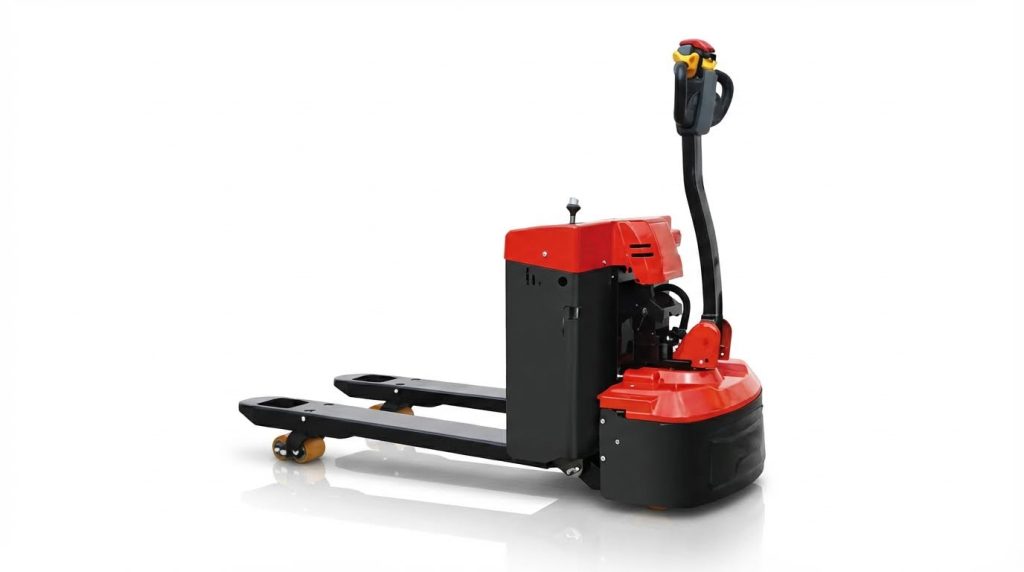
| Battery & charger (electric jacks) | Short run‑time, low power, failure to start, charger alarms, corroded terminals |
| Electric only Cited Text or Data Cited Text or Data |
When you build your maintenance plan around these components, you cover over 80% of real‑world failure modes. That is the engineering core of how to service a pallet jack efficiently instead of reacting to breakdowns.
Quick daily “go / no‑go” checklist for operators
Train operators to run this 60–90 second check before use:
- Walk around the jack and look for oil on the floor, bent forks, or loose / missing bolts.
- Check wheels and rollers for debris, cracks, or flat spots and clear any obstructions. Cited Text or Data
- Verify the handle lifts and lowers smoothly without jerks or sticking.
- Do a quick hydraulic test by pumping the handle several times and checking lift speed and stability. Cited Text or Data
- On electric units, confirm the brake stops the truck and the steering feels normal. Cited Text or Data
Preventive maintenance vs. run-to-failure strategies
Facilities often ask whether it is cheaper to run pallet jacks to failure and replace them, or to invest in structured preventive maintenance. Data from broader industrial studies shows that planned preventive maintenance reduces unplanned downtime by more than three times and extends equipment life by roughly 20–40%. Cited Text or Data
For pallet jacks, the choice between preventive and run‑to‑failure strategies directly affects safety risk, downtime, and total cost of ownership (TCO). The comparison below summarizes the trade‑offs so you can design a realistic program for how to service a pallet jack in your operation.
| Strategy | Core idea | Typical practices | Main advantages | Main risks / costs |
|---|---|---|---|---|
| Preventive maintenance | Service on a schedule before failure occurs |
|
|
|
| Run‑to‑failure (reactive) | Use the jack until it breaks, then repair or scrap |
|
|
|
In practice, a hybrid approach works best. Low‑value, lightly used jacks in non‑critical areas can run closer to failure, while high‑throughput or safety‑critical jacks follow a strict preventive schedule.
- Use a standardized daily checklist for all units, regardless of strategy.
- Assign weekly and monthly tasks to in‑house maintenance for core fleet units.
- Schedule annual professional inspections to catch hidden structural or hydraulic issues. Cited Text or Data Cited Text or Data
- Increase inspection frequency in harsh conditions such as cold rooms, wet docks, or abrasive dust. Cited Text or Data
When does run‑to‑failure make sense for pallet jacks?
Run‑to‑failure can be acceptable when:
- The jack is very low cost and lightly used.
- A spare is always available, so downtime has little impact.
- The environment is clean and loads are well below rated capacity.
- You still perform a basic safety walk‑around to catch obvious hazards.
Even in these cases, you should log failures and replacement dates. That data will tell you whether switching to a light preventive program would cut your TCO over the next replacement cycle.
Final Thoughts On Pallet Jack Service Programs
Routine pallet jack maintenance is not just a checklist. It is a way to control risk, cost, and uptime with simple, repeatable actions. When teams focus on forks, hydraulics, wheels, and controls, they target the parts that actually fail under load. Daily walk‑arounds catch bent steel, oil leaks, and bad wheels before they turn into dropped pallets or injured operators.
Planned service also protects the hydraulic circuit and rolling gear, so the jack tracks straight and lifts at a known speed. That stability reduces operator strain and keeps capacity close to the nameplate rating. On electric units, disciplined battery care and brake checks keep stopping distance and run‑time predictable, which is critical in tight aisles.
Run‑to‑failure may look cheaper on paper, but it shifts cost into emergency repairs, scrapped units, and unsafe events. A structured program with daily checks, weekly lubrication, and monthly deep inspections gives better life and lower real TCO.
The best practice is clear. Treat pallet jacks as core assets, standardize routines across shifts, and log every defect and repair. Use Atomoving guidance and parts where needed, and review the data yearly to tune intervals. That is how you turn low‑tech trucks into reliable, long‑life tools.
Frequently Asked Questions
How to Service a Pallet Jack?
Servicing a pallet jack involves routine maintenance to ensure safe and efficient operation. Start by inspecting the wheels and forks for wear or damage, as these components are critical for movement and load stability. Next, check the hydraulic system for leaks and ensure the pump is functioning properly. Lubricate moving parts like joints and axles to reduce friction. If the pallet jack is electric, test the battery and charging system, ensuring proper voltage levels. Always refer to the manufacturer’s manual for specific service intervals and procedures.
- Inspect wheels, forks, and hydraulic systems regularly.
- Lubricate moving parts to prevent wear.
- Test the battery and charging system for electric models.
How to Reset an Electric Pallet Jack?
If your electric pallet jack stops working correctly, you may need to reset it. First, turn off the pallet jack and disconnect it from the power source. Locate the reset button, typically near the battery compartment, and press it for 10-20 seconds. Reconnect the power source and conduct a test run to confirm it’s functioning properly. This process can resolve minor electrical issues and restore normal operation. For more details, refer to Reset Guide.