Safe pallet lifting depends on understanding how to lift a pallet with the right method, equipment, and controls. This article covers core principles such as load ratings, center of gravity, inspections, PPE, and ergonomic risk management. It then details safe techniques for manual handling, pallet jacks, and electric pallet trucks, followed by forklift-based pallet lifting and integrated systems. Finally, it summarizes best practices and engineering impacts that help reduce injuries, improve throughput, and extend equipment life in industrial and logistics environments.
Core Principles Of Safe Pallet Lifting

Safe pallet lifting starts with engineering controls, correct technique, and disciplined inspection routines. Understanding how to lift a pallet safely requires control of load magnitude, load position, and operator exposure to force. These core principles apply equally to manual lifting, manual pallet jack, and forklifts, and they underpin compliant warehouse and factory design. Applying them systematically reduces musculoskeletal disorders, struck-by incidents, and load collapse events.
Understanding Load Ratings And Center Of Gravity
Every pallet, pallet jack, and forklift had a rated capacity defined by the manufacturer and relevant standards. Operators must compare the actual pallet mass, including packaging and wrap, with the lowest rated component in the system. The load’s center of gravity should sit between the forks and as close as possible to the truck’s heel or operator end. Off-center or high-stacked loads shift the combined center of gravity outward, which reduces stability and increases tip-over risk. When planning how to lift a pallet, engineers specify maximum stack heights and layer patterns that keep the center of gravity low and central. Loads with uneven mass distribution, such as liquids or mixed cartons, require tighter limits and slower travel speeds.
Pre-Use Inspection Of Pallets And Equipment
Before lifting, workers should visually inspect pallets for broken deck boards, split stringers, exposed nails, and contamination. Damaged pallets increase the probability of fork punch-through, sudden collapse, or load shift during travel. Pallet jacks and forklifts require quick pre-use checks of forks, wheels, hydraulic systems, and controls. Flat-spotted wheels, fork cracks, hydraulic leaks, or stiff steering all increase required push or pull force and degrade control. Operators should verify that forks raise and lower smoothly, that parking brakes and horns function, and that battery charge is adequate for electric trucks. When defects appear, the equipment must be tagged out and reported instead of being used with workarounds.
PPE, Signage, And Traffic Management Controls
Personal protective equipment complements, but does not replace, engineering and administrative controls. Safety footwear with toe protection and slip-resistant soles reduces injury severity if a pallet or wheel contacts the foot. Gloves improve grip on pallet edges and shrink wrap, lowering the chance of sudden slips during lifting or pulling. High-visibility clothing helps powered equipment operators maintain line-of-sight in dense traffic zones. Clear floor markings and signage define pedestrian walkways, equipment lanes, pallet staging areas, and maximum floor load limits. One-way traffic routes and designated crossing points reduce intersection conflicts between pallet jacks, forklifts, and pedestrians. Mirrors at blind corners and speed-restricted zones around docks and racking further lower collision risk.
Ergonomic Risk Factors In Pallet Handling
Key ergonomic risks during pallet work include high load weight, long reach distances, trunk flexion, twisting, and high push or pull forces. Workers often bent deeply at the waist to place or lift cartons from the lowest pallet layer, which increased lumbar disc loading. Raising pallets using height-adjustable jacks, stacked empty pallets, or pallet weighing scales kept work near elbow to waist height and reduced bending. When planning how to lift a pallet manually, weight limits and team-lift thresholds should reflect national ergonomic guidelines, typically around 23 kg under ideal conditions. Pushing pallet jacks instead of pulling reduced shoulder and back strain and improved directional control. Smooth, well-maintained floors minimized rolling resistance, whole-body vibration, and shock loads from bumps or ruts. Task rotation and micro-breaks helped manage fatigue for high-frequency order picking and palletizing operations.
Manual Handling And Pallet Jack Lifting Methods
This section explains how to lift a pallet safely using manual techniques, hand pallet jacks, and electric pallet trucks. It focuses on body mechanics, equipment setup, travel rules, and ergonomic aids that reduce strain and injury risk. The guidance applies to warehouses, distribution centers, and manufacturing sites where operators routinely handle unit loads on pallets.
Manual Lifting: Body Mechanics And Weight Limits
When deciding how to lift a pallet or its contents manually, start with a weight assessment. Establish site-specific limits, for example restricting solo lifts to approximately 20–25 kg and requiring team lifting above 23 kg or 50 lb. Inspect the palletized product for loose items, sharp edges, or shifting loads before handling. Plan the path so you avoid twisting, reaching over obstacles, or stepping onto uneven surfaces.
Use a neutral spine posture when lifting boxes from or onto pallets. Place feet shoulder-width apart, one foot slightly forward for balance. Bend at the hips and knees, keep the load close to the body, and lift by driving through the legs rather than the back. Avoid rapid or jerky movements, which increase peak spinal loads.
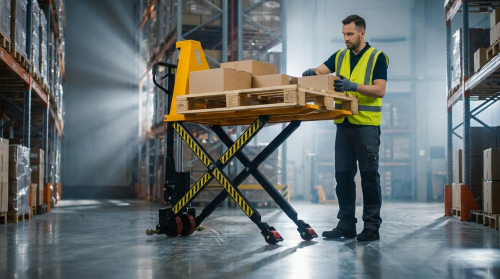
Limit lifts from floor level by engineering the task, not just coaching technique. Raise the working height with empty pallets, scissor-lift tables, or adjustable pallet stands so the lowest layer approaches knee to mid-thigh height. This change reduces trunk flexion and disc compression forces significantly. Rotate workers between lifting, driving, and administrative tasks to control fatigue and cumulative trauma.
Back belts did not demonstrate reliable injury-prevention benefits according to mid-1990s NIOSH evaluations, so do not treat them as primary controls. Emphasize PPE that actually reduces acute injury risk, such as safety shoes with toe protection and grip, cut-resistant gloves, and eye protection where strapping or broken wood is present. Combine these administrative and engineering measures to keep manual pallet lifting within acceptable ergonomic limits.
Hand Pallet Jacks: Setup, Lifting, And Travel Rules
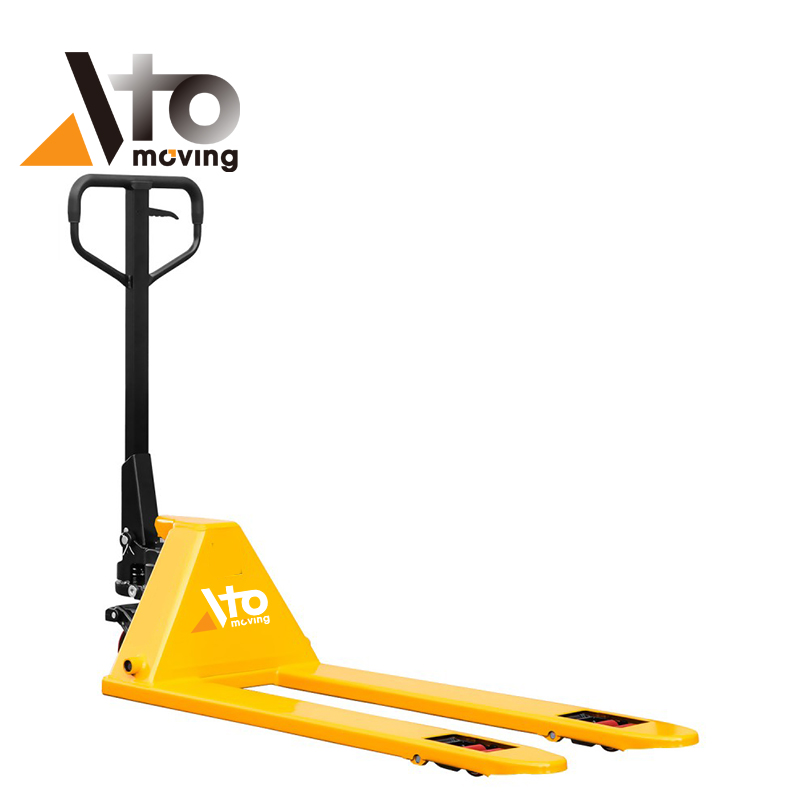
When using a hand pallet jack to lift a pallet, begin with a pre-use inspection. Check forks for cracks or bends, wheels for flat spots or embedded debris, and the frame for distortion. Test the handle return spring, parking position, and hydraulic system by pumping the handle three times under no load; sluggish or uneven lifting indicates low fluid or internal wear. Verify that the rated capacity on the nameplate meets or exceeds the intended pallet weight.
Approach the pallet squarely so the forks align parallel with the deckboards. Insert both forks fully under the pallet until the heel nearly contacts the stringers or blocks. Center the load laterally on the forks so the combined center of gravity lies between the two fork blades. Pump the handle using leg power rather than back or arms, keeping a stable stance and avoiding overextension of the shoulders.
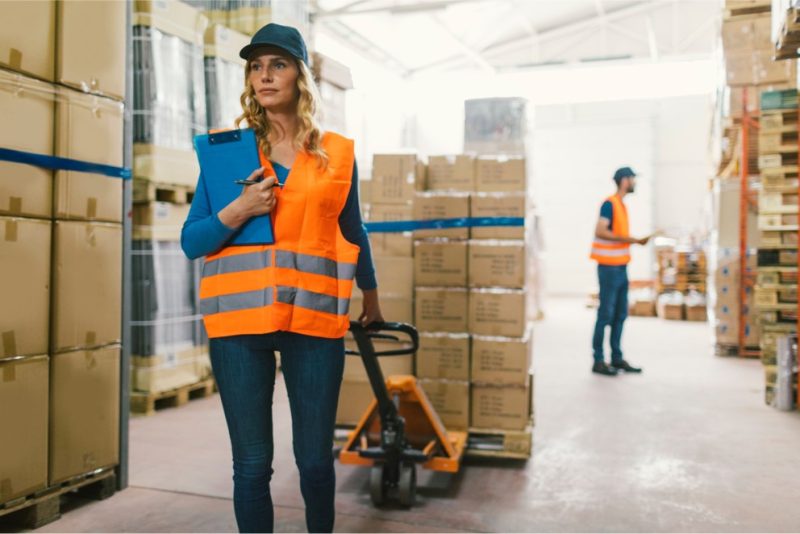
During travel, pushing is generally safer than pulling because it reduces spinal shear forces and improves visibility. Keep the pallet low, typically 50–75 mm above the floor, to maintain a low center of gravity and minimize tip risk. Maintain a walking pace, avoid sudden stops or sharp turns, and keep clear of ruts, bumps, and wet patches that increase rolling resistance and shock loading. On slopes, move straight up or down; keep the load upgrade when going uphill and downgrade when descending, while keeping control of the handle.
When you reach the destination, stop, align the pallet with storage or staging marks, and lower the forks fully until they no longer support the load. Confirm that the pallet sits flat on a stable, level surface before withdrawing the forks. Park the jack with forks lowered and handle in a safe position, outside traffic aisles and emergency exits. Regular lubrication of wheels and pivots, along with tightening loose fasteners, preserves predictable handling forces over the equipment life.
Electric Pallet Trucks: Controls, Speed, And Slopes
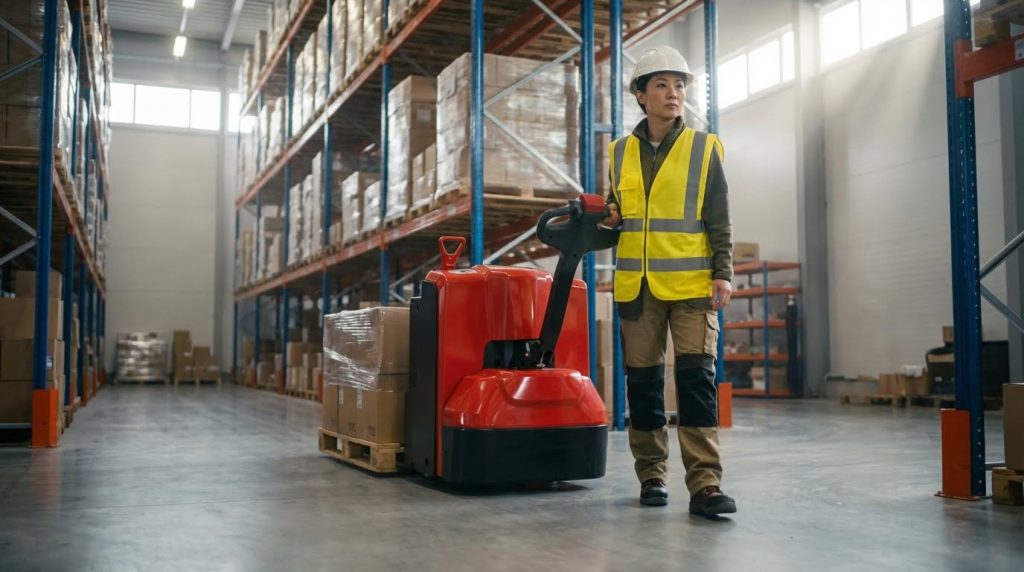
Electric pallet trucks change how to lift a pallet by shifting effort from the operator to powered hydraulics and traction. Before use, inspect forks, wheels, and chassis for damage, and check for hydraulic leaks around cylinders and hoses. Verify that emergency stop, horn, and direction controls function correctly. Confirm that the battery is adequately charged, connectors are secure, and any electrolyte levels meet manufacturer specifications.
Operate the travel and lift controls smoothly to avoid shock loads on the palletized product. Approach the pallet straight, insert forks fully, then raise only enough to clear the floor. Maintain low fork height during travel to limit overturning moments and maintain clearance under racking beams or dock plates. Use the slow or creep mode in congested areas, near pedestrians, or when positioning loads in tight spaces.
Speed management is critical because electric pallet trucks can generate higher kinetic energy than manual units. Set and enforce site speed limits tailored to aisle width and visibility. Reduce speed before turns and keep a wider turning radius with high or top-heavy loads. Maintain clear sightlines; if the load obstructs vision, travel in reverse when safe and maintain awareness of pedestrian traffic patterns.
On slopes, follow manufacturer guidance and site procedures. Travel straight up or down gradients, never diagonally, and keep the load upgrade to retain traction and control. Avoid operating on damaged floors with ruts or potholes that can cause wheel impact, vibration, and loss of stability. At the end of the shift, park in designated charging or storage areas, lower forks, neutralize controls, and remove the key where applicable. Schedule periodic professional servicing, typically every 6–12 months depending on duty cycle, to maintain consistent braking, steering, and lifting performance.
Ergonomic Aids: Raised Pallets, Palletizers, And Atomoving
Engineering controls significantly improve how to lift a pallet with minimal musculoskeletal risk. Raising pallets is a first-line strategy. Stacking empty pallets under a working pallet or using height-adjustable platforms can move the lowest pick level from floor height to near knee or waist height. This change reduces forward bending angles and manual handling forces during picking and stacking.
Palletizers and lift tables automate or semi-automate the build and breakdown of pallet loads. Mechanical or powered palletizers can maintain product at an optimal working height, typically between 750 mm and 1100 mm. As layers are added or removed, the platform elevates or lowers to keep work within this ergonomic window. This approach helps stabilize load quality while reducing cumulative spinal loading and shoulder elevation.
Atomoving and similar ergonomic aids support safe pallet movement by reducing push and pull forces and enabling controlled positioning. When integrated into workflows, these aids allow operators to handle equivalent throughputs with lower peak exertions and improved posture. They also enable better control on uneven floors, reducing sudden shocks transmitted through the arms and spine.
When selecting ergonomic aids, perform a task-based risk assessment that includes load weight, handling frequency, reach distance, and vertical lift range. Compare solutions by quantifying reductions in required force, trunk flexion angle, and repetition rates. Ensure compatibility with existing pallets, racking clearances, and dock equipment. Train workers not only on control use but also on hazard recognition, such as pinch points and crush zones around moving platforms. Properly implemented aids, combined with training and maintenance, provide durable reductions in injury risk and support higher, safer productivity in pallet-handling operations.
Forklift-Based Pallet Lifting And System Design
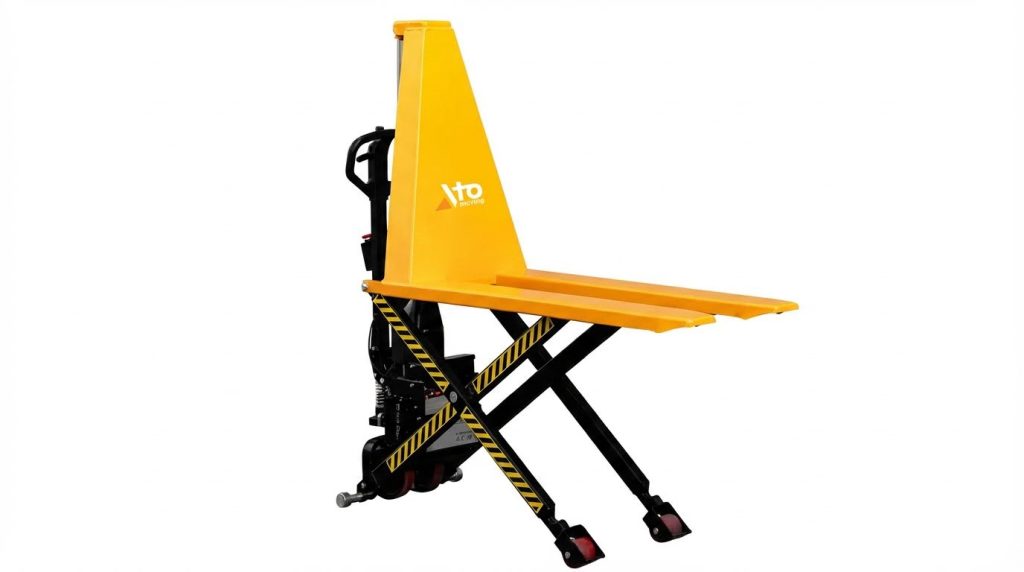
Forklifts played a central role in defining how to lift a pallet safely in high-throughput facilities. Good system design coordinated forklifts with pallet jacks, AGVs, and manual handling to minimize strain and collision risk. Engineers considered approach geometry, floor quality, and traffic patterns together rather than as isolated elements. This section focused on translating those design principles into day‑to‑day forklift practice.
Forklift Approach, Fork Positioning, And Mast Use
Safe forklift pallet lifting started with a straight, controlled approach. Operators aligned the truck square to the pallet, stopped, and then inched forward so both forks entered fully and evenly. Partial fork entry or angled approach shifted the load center of gravity forward, which reduced residual lifting capacity and increased tip‑over risk. Fork height matched the pallet opening, avoiding contact with deck boards that could crack and destabilize the stack.
Once the forks sat fully under the pallet, operators lifted only enough to clear the floor, typically 50–100 millimetres. Keeping the load low reduced overturning moments during travel and helped maintain traction on uneven floors. The mast tilted back slightly to pull the load against the backrest, improving longitudinal stability and preventing units from sliding off during braking. Engineers sized backrests and fork lengths so the load profile stayed within the rated load center specified on the data plate.
During stacking, operators raised the load only when stationary and directly in front of the rack or stack. They positioned forks level with the target support surface, then moved slowly forward before lowering. Tilting forward occurred only after the pallet fully contacted the support, which prevented edge loading and pallet damage. Clear sightlines, mirrors, and where needed spotters, supported precise mast control in congested areas.
Load Stability, Stacking Patterns, And Floor Quality
Understanding how to lift a pallet safely also required careful attention to load geometry and floor conditions. Stable loads kept the center of gravity low and central between the forks, with heavier items placed in the bottom layers. Column or interlocked stacking patterns were selected based on product rigidity and packaging; interlocking improved resistance to shear but could reduce vertical strength for some cartons. Stretch wrap, corner posts, and strapping controlled unitized loads and prevented shifting during acceleration, braking, or vibration.
Engineers specified maximum pallet height and mass per location so that combined load and rack or floor capacity stayed within design limits. Overhanging product increased the effective load center and reduced the allowable rated capacity of the truck. Pallet condition also mattered; cracked stringers, missing boards, or crushed blocks compromised support and could cause sudden load drops when lifted. Routine pallet inspection and rejection criteria formed part of standard operating procedures.
Floor quality directly affected forklift handling and load stability. Ruts, bumps, and spalled joints generated shocks that increased the risk of load displacement and whole‑body vibration exposure. Flat spots on solid rubber or polyurethane wheels, often caused by parking under heavy load, worsened these dynamics and degraded steering accuracy. Planned floor maintenance, joint repairs, and wheel replacement programs maintained predictable rolling resistance and limited steering effort, which reduced operator fatigue and incident rates.
Integrating Pallet Jacks, Forklifts, And AGVs
Modern facilities rarely relied on a single technology for how to lift a pallet; instead they integrated forklifts, pallet jacks, and AGVs into a coordinated system. Forklifts typically handled high lifts, dock work, and long horizontal moves. Hand and electric pallet jacks supported case picking, short transfers, and last‑metre placement in aisles or staging zones. AGVs or automated pallet trucks took over repetitive routes between production, storage, and shipping to reduce manual traffic density.
System design started with a traffic management plan that separated pedestrians from powered equipment wherever possible. Marked lanes, one‑way systems, and designated crossing points minimized conflict between forklifts, pallet jacks, and AGVs. Speed limits reflected mixed‑traffic conditions and floor conditions, with lower limits near pick modules and staging areas. Sensors, warning lights, and audible alarms on powered equipment increased detectability at intersections and blind corners.
Handover points between technologies were engineered for stability and ergonomics. For example, forklifts might place pallets at waist‑height stands so pallet‑jack or manual handlers avoided deep bending. Clear rules defined who had right‑of‑way in shared zones and how to park equipment without obstructing AGV paths. Data from warehouse management systems supported slotting strategies that reduced travel distances and unnecessary pallet transfers, further lowering exposure to lifting and transport risks.
Training, Certification, And Safety Compliance
Effective training underpinned every aspect of how to lift a pallet with forklifts and related equipment. Operators received formal instruction covering load ratings, center‑of‑gravity behaviour, and the impact of mast height and tilt on stability. Practical exercises demonstrated correct approach, fork positioning, and travel techniques on level floors and slopes. Training emphasized maintaining low load height during travel, controlled speeds, and the importance of inspecting pallets and forks before each lift.
Regulatory frameworks in most regions required operator certification for forklifts and powered pallet trucks. Employers documented theoretical testing, practical evaluation, and periodic refresher training, especially after incidents or process changes. Programs highlighted the limits of personal protective equipment such as back belts, referencing guidance that their effectiveness in preventing back injuries had not been proven. Instead, they focused on engineering controls and correct use of mechanical aids.
Safety compliance extended beyond individual skills to management systems. Written procedures defined inspection frequencies, defect reporting, and lockout of unsafe equipment. Maintenance teams followed schedules for wheels, hydraulics, and brakes, ensuring that handling forces stayed within ergonomic guidelines. Audits of stacking quality, floor condition, and traffic discipline identified gaps between design intent and actual practice. Continuous improvement based on incident data and near‑miss reports kept pallet lifting operations aligned with evolving standards and best practice.
Summary Of Best Practices And Engineering Impacts
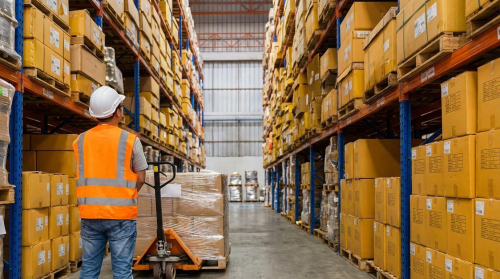
Safe strategies for how to lift a pallet combined manual technique, engineered controls, and disciplined maintenance. Operators reduced injury risk when they inspected pallets and equipment, centered loads within rated capacity, and used power assistance instead of pure manual force wherever feasible. Engineering controls such as raised work heights, pallet weighing scales, and well-maintained floors significantly lowered bending, push–pull forces, and whole‑body vibration. Training, certification, and recurrent refreshers ensured that procedures for manual pallet jack, forklifts, and manual handling remained aligned with regulations and site rules.
From an engineering perspective, the main impacts appeared in ergonomics, system design, and asset life. Ergonomic design focused on waist‑height working zones, controlled slopes, and traffic segregation between pedestrians and equipment. System designers integrated pallet jacks, forklifts, and automated vehicles into coherent material‑flow layouts, with clear routes, signage, and stacking rules that preserved load stability. Reliability engineering emphasized structured inspection intervals, lubrication regimes, and timely replacement of worn wheels, bearings, and hydraulic components to keep operating forces within acceptable limits.
Future trends pointed toward greater automation, sensor‑based monitoring, and data‑driven ergonomic assessment. Smart equipment could log load weights, travel paths, and impact events, allowing engineers to refine layouts and speed limits. However, even with advanced technology, correct manual technique, conservative load ratings, and robust training would remain essential foundations. Operations that balanced human factors, mechanical design, and preventive maintenance achieved safer pallet lifting, higher throughput, and lower lifecycle costs without over‑reliance on any single technology.