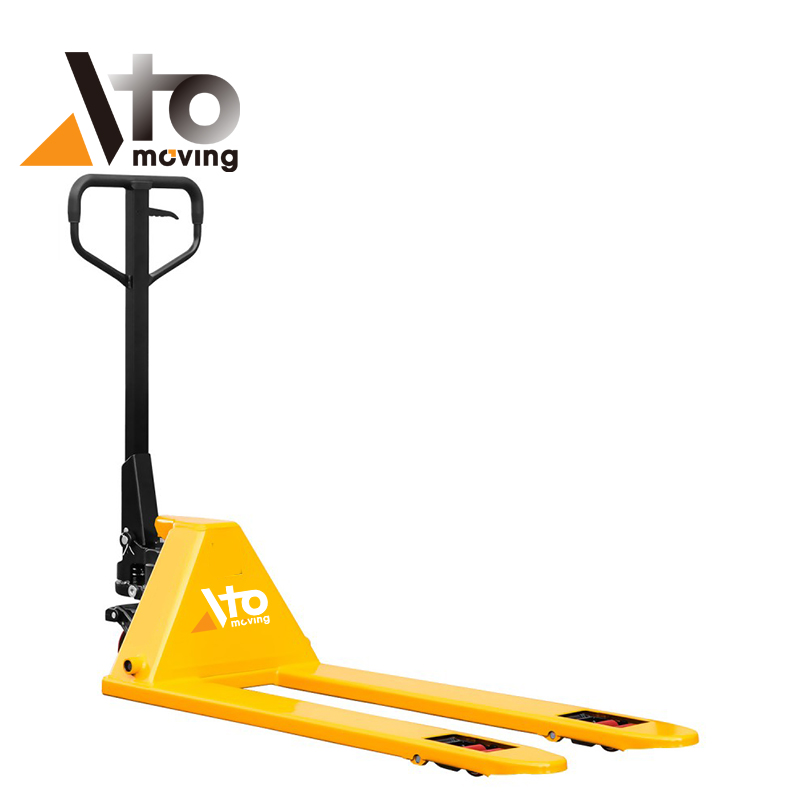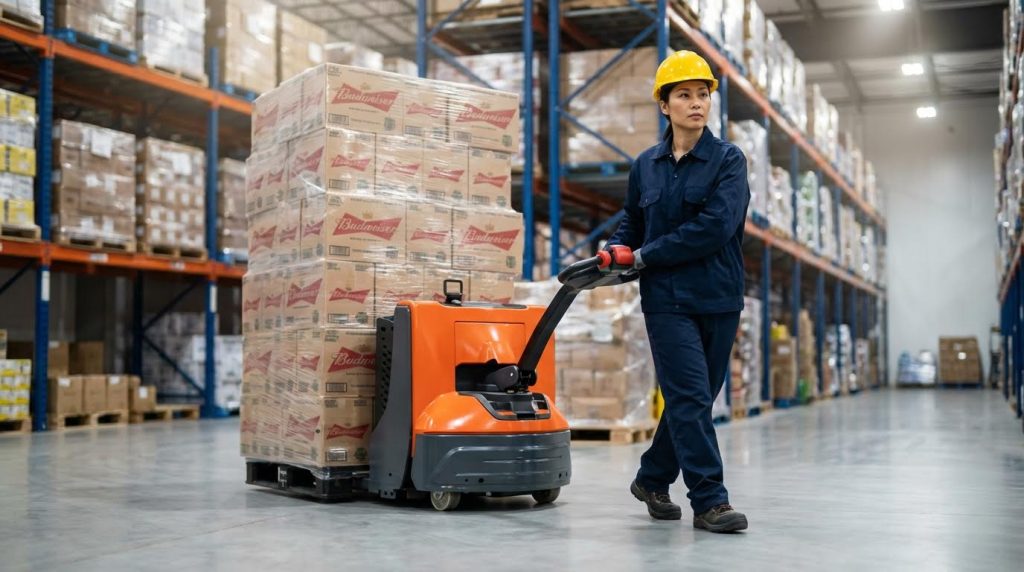
Learning how to use a pallet jack step by step is one of the fastest ways to move loads safely and efficiently in any warehouse or shop. This guide walks beginners through core components, safety rules, and real-world operating techniques for manual, electric, and robotic pallet jacks. You will see clear steps, practical checklists, and key specs so you can handle pallets confidently without damaging goods, floors, or equipment. By the end, you will know exactly what to inspect, how to move, and how to maintain a pallet jack for long, reliable service life.
Understanding Pallet Jack Basics And Safety
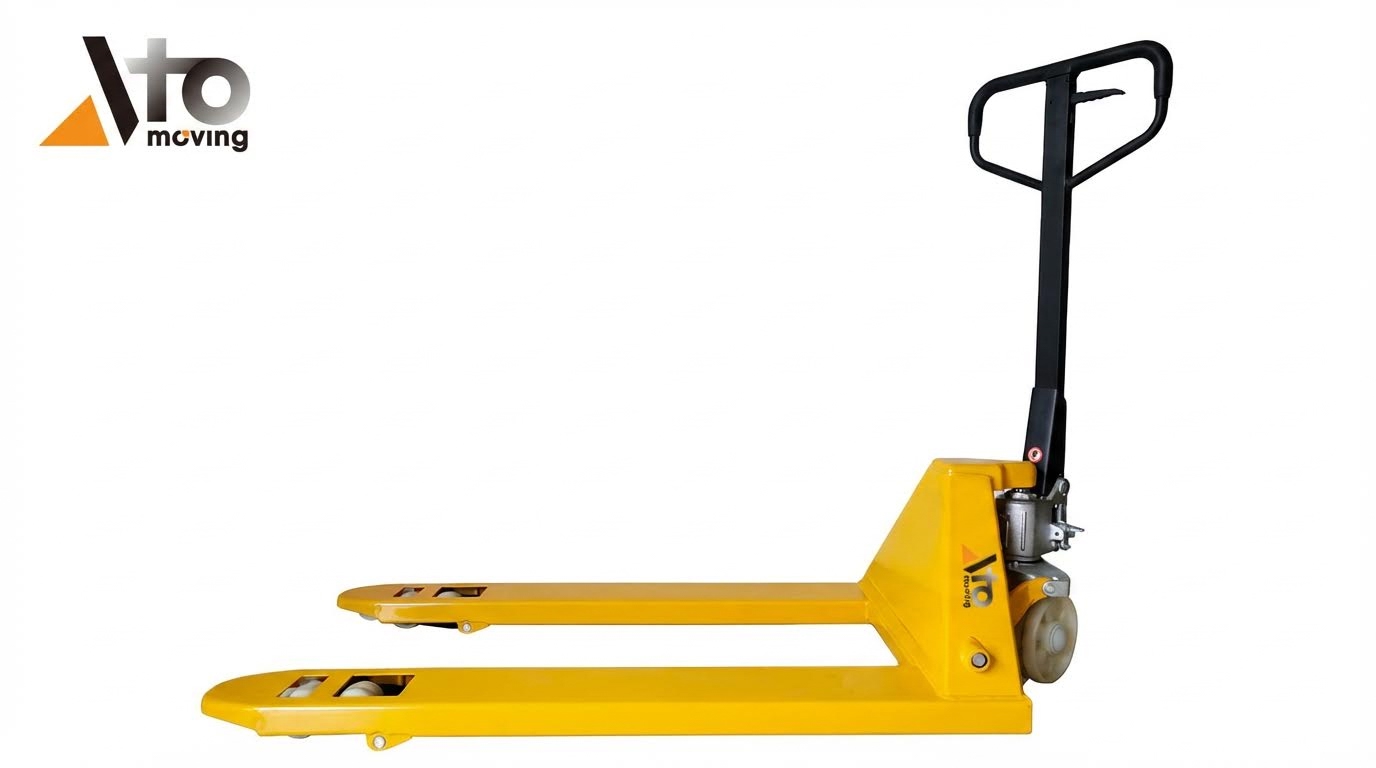
This section builds the foundation for how to use a pallet jack step by step. You will learn what each main component does, which safety rules matter most, and how capacity and stability limits keep loads under control. Use this knowledge before you ever pump the handle or move a pallet.
Main pallet jack components and functions
A manual pallet jack is a simple lever-and-hydraulic machine. Each visible part has a direct impact on safety, maneuvering, and load stability.
| Component | Main function | What to check before use |
|---|---|---|
| Handle & control lever | Steering, pulling/pushing, and selecting LIFT / NEUTRAL / LOWER positions | Moves smoothly, no cracks, control lever returns and clicks positively |
| Hydraulic pump & cylinder | Converts handle pumping into fork lifting force | No visible oil leaks, forks lift evenly when pumped, no jerky motion Cited Text or Data |
| Forks (blades) | Support and carry the pallet under its deck boards | No bends or cracks, tips not deformed, clean surfaces for full pallet contact |
| Entry/exit rollers | Help forks slide into and out of pallets | Roll freely, no missing or flat-spotted rollers |
| Steer wheels | Support the rear of the jack and provide steering | No chunks missing, no wobble, free rotation Cited Text or Data |
| Load wheels (under fork tips) | Carry most of the load weight under each fork | Even wear, no embedded debris, smooth rolling |
| Push rods & linkages | Transfer handle motion to pump and lowering valve | Secure fasteners, no bent rods, no excessive play |
| Data plate / rating label | Shows rated capacity and sometimes load center | Legible rating, matches your intended load range |
Why component checks matter before operation
A cracked fork or leaking hydraulic cylinder can fail suddenly under load. A jammed wheel or stiff handle can force the operator into awkward postures and increase strain. A missing or unreadable data plate makes it impossible to verify capacity, which is a core part of safe operation.
- Inspect wheels, forks, and hydraulic system for visible damage or leaks before every shift. Cited Text or Data
- Confirm the handle and control lever move freely and return to neutral.
- Check that forks raise and lower smoothly when you pump and release the handle.
- Verify the data plate capacity is higher than the total load you plan to move.
Key safety standards and operator training
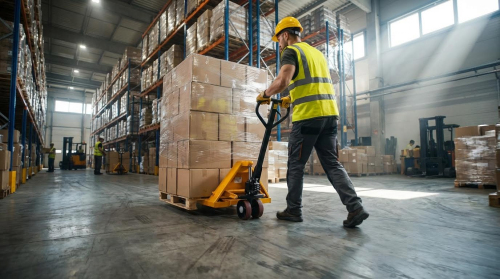
Safe pallet jack use depends more on training and habits than on hardware. Basic safety rules align with general industrial truck standards and good manual handling practice.
- Pre-use inspection is mandatory: A quick visual and functional check before each shift catches fork cracks, hydraulic leaks, and wheel damage early. Cited Text or Data
- Know the rated capacity: Never exceed the value on the data plate, including pallet and packaging weight. Cited Text or Data
- Use correct body mechanics: Push instead of pull whenever possible to reduce back strain and improve control. Cited Text or Data
- Control speed: Keep walking speed below normal pace, especially on wet floors or tight aisles. Avoid sudden starts, stops, or sharp turns with a load. Cited Text or Data
- Maintain clear visibility: Limit stack height so you can see over or around the load. If you cannot see, do not move.
- Protect feet and hands: Wear safety footwear and keep feet clear of wheels and forks during lifting and lowering.
- No riders: No one should stand on the forks or ride the pallet jack under any condition.
Core topics to cover in operator training
Effective training should cover: identifying components and their functions, reading the data plate, doing a pre-use inspection, correct fork positioning under pallets, safe pushing and steering techniques, operating on ramps and in elevators, and parking with forks fully lowered. These topics turn a written procedure on how to use a pallet jack step by step into consistent, safe behavior in real workplaces.
Rated capacity, load center, and stability limits
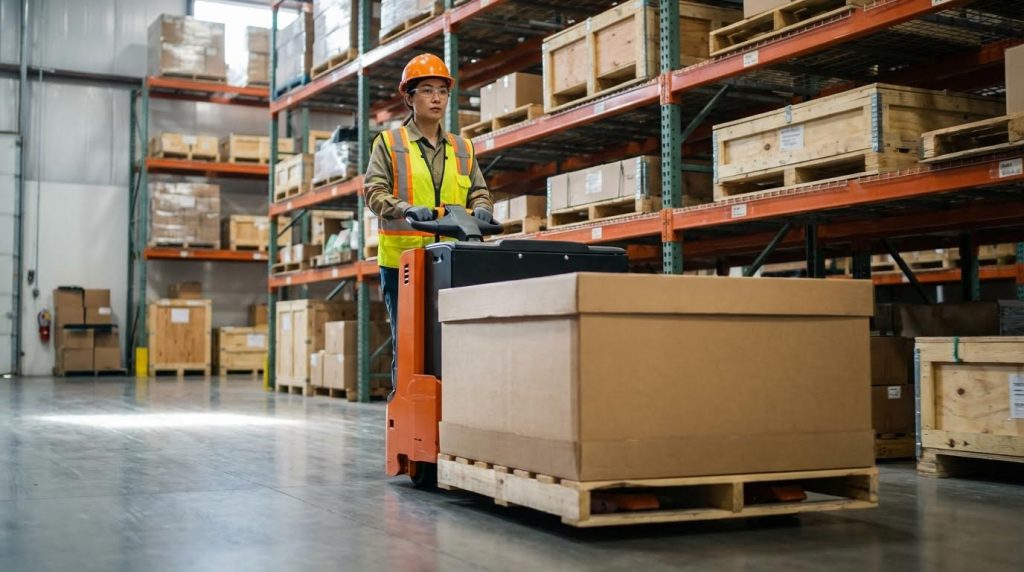
Every pallet jack has a maximum safe load and a preferred location for that load’s center of gravity. Respecting both keeps the jack stable and predictable.
| Parameter | Typical range / definition | Practical implication |
|---|---|---|
| Rated capacity | About 2,000–5,500 kg for standard manual pallet trucks Cited Text or Data | Total of load + pallet + packaging must stay at or below this value. |
| Load center | Horizontal distance from fork heel to the load’s center of gravity, usually near mid-length of the forks | Load should sit centered between forks and not hang far beyond fork tips. |
| Stack arrangement | Heaviest items at the bottom, lighter at the top Cited Text or Data | Reduces tipping risk and keeps combined center of gravity low and central. |
| Fork lift height | Typically about 25–40 mm of ground clearance when traveling Cited Text or Data | Enough to clear the floor without raising the center of gravity more than needed. |
- Confirm the total load mass, including pallet and packaging, does not exceed the rated capacity on the data plate. Cited Text or Data
- Center the pallet on the forks so weight is shared evenly left-to-right and front-to-back. Cited Text or Data
- Keep the combined center of gravity near the geometric center between the forks, with the heaviest items at the bottom of the stack. Cited Text or Data
- Lift only enough to clear the floor; avoid unnecessary extra height when traveling.
How this ties into step-by-step pallet jack use
When you apply rated capacity and load center rules, each step in how to use a pallet jack step by step becomes safer. You inspect the data plate before loading, choose a sound pallet, center the load on the forks, limit stack height for visibility, then travel with low fork height and controlled speed. These small choices keep the jack within its stability envelope and prevent tip-overs or lost loads.
Step-By-Step Operation Of A Manual Pallet Jack
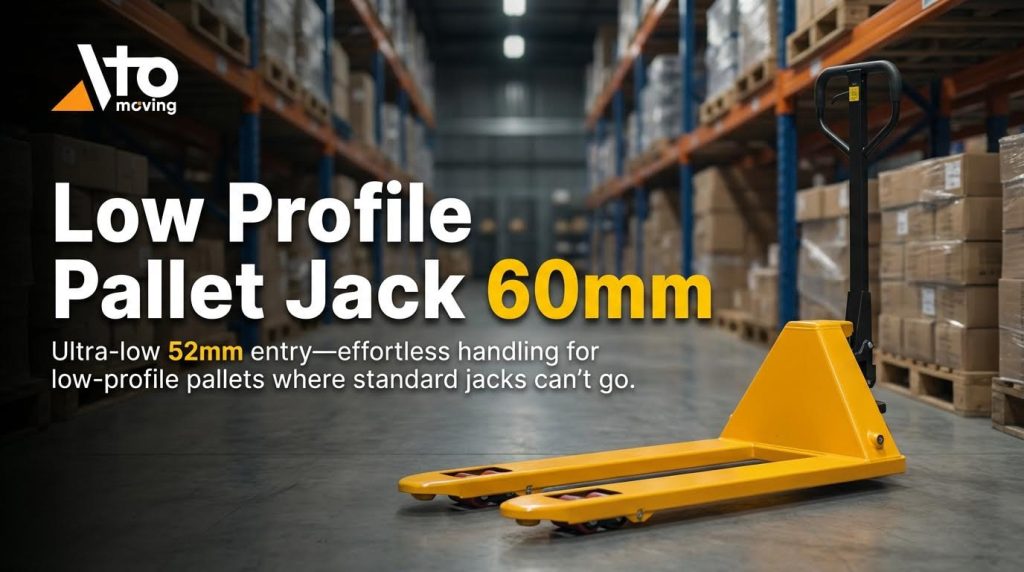
Pre-use inspection and functional checks
Before you think about how to use a pallet jack step by step, you must confirm the truck is safe. A fast, structured pre-use inspection prevents breakdowns and injuries.
- Walk around the pallet jack and look for bent forks, cracked welds, or leaking oil on the frame or floor. The forks, wheels, and hydraulic unit should show no obvious damage.
- Check wheels and rollers for flat spots, embedded debris, or missing pieces. Spin them by hand if possible to feel for binding or wobble.
- Inspect the handle, control lever, and linkage. The handle should move freely, and the raise/neutral/lower positions must engage positively without sticking. Controls should operate smoothly.
- Perform a quick hydraulic test: set the lever to RAISE and pump the handle several times. The forks should lift evenly and hold height without drifting down. Sluggish or jerky lifting can indicate low oil or air in the system. A short 5–7 minute inspection before each shift is recommended.
- Verify chains and linkages are seated correctly on their guides. Misaligned chains can stop the forks from lowering or raising properly. Daily checks should include chain alignment.
- If you find leaks, cracks, severe wear, or control problems, tag the jack out of service and report it. Never “work around” a fault with loaded pallets.
Quick functional test sequence
1) Lever to LOWER: forks go fully down. 2) Lever to RAISE: pump handle, forks lift smoothly. 3) Lever to NEUTRAL: jack rolls freely with forks holding their height. Any deviation means the jack needs repair before use.
Positioning forks and preparing the pallet load
Correct pallet and fork positioning is the core of how to use a pallet jack step by step. Poor positioning causes broken pallets, unstable loads, and damaged product.
- Inspect the pallet: reject pallets with broken deck boards, missing blocks, or loose nails. The pallet must support the full load weight safely. Only sound pallets should be used.
- Check load capacity: compare the total load (goods + pallet + packaging) to the pallet jack’s rated capacity on its data plate. Typical manual pallet trucks handle roughly 2,000–5,500 kg, but you must follow your specific rating. Common rated capacities fall in this range.
- Build a stable stack: place the heaviest items at the bottom and lighter ones on top. Keep the combined center of gravity low and near the middle between the forks to maintain stability during travel. Heaviest items should always be at the base.
- Control stack height so you can see over or around the load. If you cannot maintain clear forward or side visibility, reduce height or use spotters or alternative equipment. Limited height improves stability and visibility.
- Align the pallet jack: center the jack behind the pallet, forks parallel to the pallet deck boards. The fork width should match the pallet openings so both forks sit fully on stringers or blocks.
- Lower the forks completely before entry. Then push the jack so the forks slide straight into the pallet openings until they are almost flush with the opposite end. Forks should be fully inserted and centered under the load.
| Step | Action | Key Checkpoint |
|---|---|---|
| 1 | Inspect pallet | No broken boards, no missing blocks, no loose nails |
| 2 | Verify load weight | Total load ≤ pallet jack rated capacity |
| 3 | Stack and center load | Heaviest items at bottom, center of gravity between forks |
| 4 | Align and insert forks | Forks fully inserted, centered, forks fully lowered before lifting |
Visibility and aisle planning
Plan your travel path before lifting. Confirm you have enough aisle width to turn, no overhead obstructions for tall stacks, and no pedestrians stepping into blind corners.
Lifting, traveling, and steering in tight aisles
This is the part most people think of when asking how to use a pallet jack step by step. The goal is simple: lift just enough, move smoothly, and steer with control.
- Set the control lever to RAISE and pump the handle with smooth, rhythmic strokes. Use steady pumping to avoid jolting the load.
- Lift the pallet only enough for ground clearance, typically a few centimeters (about 25–40 mm) above the floor, so the load stays low and stable. Clearance in this range is usually sufficient.
- Move off slowly, keeping the handle at a comfortable angle for leverage and braking. Whenever possible, push the pallet jack instead of pulling it to reduce back strain and improve control. Pushing is recommended over pulling.
- Keep your speed below normal walking pace, especially on wet floors, in congested zones, or where visibility is limited. Slow movement reduces instability.
- Avoid sudden starts, hard stops, and sharp direction changes; these can shift the load and increase tipping risk. Use slow, steady turns.
Steering in tight aisles requires planning your path and using the jack’s pivot effectively. Small handle movements produce large fork swings, so you must steer early and gently.
- Use the handle’s full pivot range to “swing” the load around corners. Start your turn early while the load is still centered in the aisle.
- Keep the load close to the ground and as centered as possible to minimize sway.
- Watch both fork tips and pallet corners when passing racking, posts, or other loads to avoid impact damage.
- When space is extremely tight, make short, controlled “S” movements: roll forward slightly, angle the handle, then straighten and repeat to inch the pallet into position.
- To park or set down the load, stop in the desired position, set the lever to LOWER, and allow the pallet to settle fully before pulling the forks out. Forks should be fully lowered before withdrawal.
| Phase | Operator Action | Safety Focus |
|---|---|---|
| Lifting | Pump handle smoothly, minimal clearance | Prevent load shift and pallet damage |
| Traveling | Push, walk at or below normal pace | Maintain control, avoid slips and collisions |
| Turning | Use wide, slow arcs, no sudden movements | Reduce tipping risk in tight aisles |
| Parking/Unloading | Lower fully, then withdraw forks straight | Prevent catching or dragging pallet boards |
Compact step-by-step checklist
1) Inspect jack and area. 2) Check pallet and load capacity. 3) Insert forks fully and center load. 4) Lift 25–40 mm only. 5) Push at walking speed, steer smoothly. 6) Lower fully and pull forks straight out. Repeat the same pattern for every move.
Advanced Handling, Environments, And Maintenance
Ramps, elevators, and uneven floor conditions
Advanced environments are where even a beginner who knows how to use a pallet jack step by step can get into trouble fast. Focus on controlling speed, keeping the load stable, and protecting your own escape path.
- Always keep the load on the uphill side on ramps and slopes.
- Move slowly and in a straight line on inclines; avoid turning.
- Confirm elevator capacity before entering with a loaded jack.
- Lower forks as much as possible on ramps and in elevators.
- Slow down on rough, cracked, or wet floors to protect wheels and load.
Safe ramp and slope technique
On ramps, keep the load uphill from your body so gravity helps you control the truck instead of pulling it away from you. Move at a walking pace or slower and avoid sudden changes in direction. Turning on an incline can shift the center of gravity outside the wheelbase and cause the pallet jack to tip or the load to slide. Loaded pallet jacks should never be parked on slopes; move them to a level floor and lower the forks fully before leaving them unattended. These practices align with standard ramp handling guidance for pallet trucks. Typical safety guidance warns against parking loaded pallet jacks on slopes
Elevator entry and exit
Before you roll a pallet jack into an elevator, check the elevator’s load rating plate and compare it to the combined weight of the jack, pallet, load, and operator. The load should enter first, with the forks kept low to reduce tip risk. No other people should pass through the doorway at the same time you enter or exit with the load, to avoid crush points between the pallet and door frame. Once inside, keep the pallet jack still, forks low, and body positioned so you have a clear escape path if the load shifts. These methods follow typical elevator safety protocols for palletized loads. Elevator handling recommendations emphasize capacity checks and single-operator movement
Uneven, damaged, or slippery floors
On rough or damaged floors, keep fork height just high enough for clearance and reduce speed to limit shock loads into the frame and hydraulic unit. Avoid holes, expansion joints, and dock plates with large gaps that can stop the small load wheels abruptly. On wet or dusty floors, walking speed should stay below normal walking pace to prevent wheel slip and loss of steering control. Pushing instead of pulling gives better braking leverage and keeps the load in front of you, which is especially important on low-friction surfaces. Industry guidance recommends reduced speed and pushing on low-friction floors
Comparing manual, electric, and AMR pallet jacks
Choosing the right type of pallet jack is part of learning how to use a pallet jack step by step in the real world. The best option depends on load weight, travel distance, aisle width, and automation goals.
| Type | Typical load capacity range | Power source | Best for | Limitations |
|---|---|---|---|---|
| Manual pallet jack | ≈ 2,000–5,500 kg for standard trucks Typical capacities for standard pallet trucks fall in this range | Human push/pull and manual hydraulic pump | Short distances, tight aisles, low to medium throughput | Operator fatigue, speed limited to walking pace, no powered lift |
| Electric pallet jack | Similar to manual for capacity; often 1,500–3,000+ kg (typical industry range) | Battery-powered traction and often powered lift | Longer runs, frequent handling, ramps, and docks | Higher cost, battery maintenance, less ideal in very tight spaces |
| AMR pallet jack (autonomous) | Example payload around 1,200 kg for a typical AMR pallet jack model One AMR pallet jack specification lists a 1,200 kg payload | Lithium-ion battery, onboard navigation and control | Automated pallet moves, repetitive routes, 24/7 operations | High initial investment, requires mapping, rules, and IT integration |
Key performance and environment differences
Manual pallet jacks rely on the operator for all traction, so they work best on smooth, level floors and in short-haul applications. Electric pallet jacks add powered drive and often powered lift, which reduces strain and improves performance on ramps and over thresholds. AMR pallet jacks use onboard sensors and software to navigate, detect pallets, and avoid obstacles, which suits structured indoor environments with consistent traffic patterns. One AMR example used for pallet handling offered a maximum speed of about 1.5 m/s and up to 10 hours of active operation on a lithium-ion battery. Representative AMR pallet jack data lists a 1.5 m/s max speed and long battery runtime
Safety and sensing capabilities (AMR vs. manual/electric)
With manual and most basic electric pallet jacks, the operator provides all hazard detection and decision-making. AMR pallet jacks add multiple layers of sensing, such as safety laser scanners for 360° protection, 3D cameras and lidar for pallet and obstacle detection, and ultrasonic sensors to confirm pallet placement on the forks. One AMR design combined three safety laser scanners, five 3D cameras, a top-mounted 3D lidar, and an ultrasonic sensor to supervise pallet engagement. A typical AMR pallet jack specification lists multiple scanners and cameras for full coverage
Environmental limits and indoor use
Manual pallet jacks tolerate a wide range of indoor temperatures as long as hydraulic oil and seals are suitable. Electric and AMR pallet jacks are more sensitive to temperature, humidity, and dust due to electronics and batteries. One AMR pallet jack example was designed for indoor use only, with a typical operating temperature range of 5–25 °C and short-term tolerance to 40 °C, humidity from 20–95 % non-condensing, and an IP52 rating for dust and water resistance. Representative AMR specifications define indoor-only use and moderate environmental limits
Daily inspection, lubrication, and hydraulic care

Good maintenance makes every step of how to use a pallet jack step by step smoother and safer. A short daily routine plus scheduled lubrication and hydraulic checks can double the life of a manual pallet jack.
| Task | Typical frequency | Main checkpoints or actions |
|---|---|---|
| Pre-use inspection | Before every shift | Look for fork cracks, bent tips, hydraulic leaks, uneven or damaged wheels, loose or jerky handle movement. Standard checklists include forks, wheels, hydraulics, and handle |
| Quick daily maintenance | 5–7 minutes before use | 30-second visual scan, 3-minute cleanup of forks and frame, 1-minute hydraulic lift test by pumping handle several times. A typical routine suggests a short daily inspection and cleaning cycle |
| Lubrication of wheels and pivots | About monthly, or after wash-down | Silicone spray on wheel axles, multi-purpose oil on pivot joints, white lithium grease on center pivot. Maintenance guidance calls for monthly lubrication of key points |
| Hydraulic oil check | About every 6 months | Inspect oil level; top up with appropriate hydraulic oil if lifting becomes sluggish or noisy. Typical guidance recommends periodic checks and top-ups |
| Hydraulic oil replacement | About annually | Lower forks, lay jack on its side, remove filler plug, drain and refill with suitable hydraulic oil to correct level, then reinstall plug. Annual replacement is commonly recommended for manual pallet trucks |
- Keep wheels clean and avoid curbs or impacts to prevent flat spots and premature wear. Maintenance advice highlights regular wheel cleaning and avoiding overloading
- Check chain alignment daily so the control lever can raise and lower forks correctly.
- If forks do not lift with the lever in RAISE, bleed air by setting the lever to LOWER and pumping several times. Typical troubleshooting includes bleeding air from the hydraulic circuit
- Fine-tune the lowering valve if forks fail to lift or will not lower, following the manufacturer’s adjustment procedure. Adjustment of the lowering valve is a common fix for lifting issues
- Store pallet jacks unloaded with forks fully lowered, away from ramps, dock edges, and emergency exits. Parking recommendations call for forks fully lowered in safe, level areas
Why this maintenance matters for daily operation
Proper inspection and lubrication reduce rolling resistance, make steering lighter, and keep the hydraulic system responsive so each lifting stroke is efficient. Clean wheels track straighter and reduce vibration into the handle, which improves control in tight aisles and on ramps. Correct oil level and air-free hydraulics prevent sudden loss of lift under load. In practice, operators who follow this routine find that the mechanical steps of using a pallet jack stay predictable, which is critical for safe, repeatable material handling.
Final Thoughts On Safe, Efficient Pallet Jack Use
Safe pallet jack work depends on one idea: control. You control the machine, the load, and the path. Component checks, capacity limits, and careful steering all serve this goal. When operators inspect forks, wheels, and hydraulics before each shift, they remove hidden failure points that can turn a simple move into an injury.
Respecting rated capacity and load center keeps the center of gravity inside the wheelbase. Low fork height, centered pallets, and stable stacks make tip-overs unlikely, even in tight aisles or on rough floors. On ramps, elevators, and damaged surfaces, speed control and body position protect both the operator and the load.
Choosing between manual, electric, and AMR pallet jacks shapes long-term safety and productivity. Manual units suit short, light moves. Electric and AMR options fit heavier, longer, or repetitive runs when used within their environmental limits. In every case, daily inspection, lubrication, and hydraulic care keep performance predictable and extend service life.
The best practice for operations teams is clear. Standardize a simple checklist, train to it, enforce capacity and visibility rules, and pair the right pallet jack type with the job. When you do this, Atomoving pallet jacks become reliable, low-risk tools that move product efficiently shift after shift.
Frequently Asked Questions
How to operate a pallet jack step by step?
Using a pallet jack is straightforward if you follow these steps:
- Locate the release lever and move the pallet jack towards the load.
- Engage the lever to lower the prongs and position them under the pallet. Pallet Jack Guide.
- Use the handle to lift the load by moving it to the “down” position.
- Move the load by keeping the handle in the neutral position.
- Lower the load by moving the handle to the “up” position when done. Pallet Jack Operation Tips.
How to operate a pallet jack on an incline?
Operating a pallet jack on an incline requires extra caution:
- Always keep the pallet jack in front of you when going down an incline for better control.
- If frequent use on inclines is required, use a hand pallet truck equipped with brakes.
- Ensure the load is secure on the pallet to prevent slipping or shifting during movement. Incline Safety Guidelines.